




18 Sep TOP 20 DATABASE MARKETING STATISTICS 2025
When I first started diving into the world of marketing, I didn’t realize just how much the numbers could tell a story. Over time, I’ve come to see that data isn’t just numbers—it’s a guide to understanding people, their choices, and the way they connect with brands. That’s why database marketing statistics fascinate me so much; they reveal patterns that help us craft smarter campaigns and create more meaningful connections. Working with a leading marketing agency in New York has shown me firsthand how powerful it can be to harness these insights. Whether it’s improving targeting, personalizing emails, or optimizing customer journeys, the numbers truly shape the results we see.
Top 20 Database Marketing Statistics 2025 (Editor’s Choice)
🚀 Top 20 Database Marketing Statistics 2025
Essential insights driving data-driven marketing success
| Rank | Category | Key Statistic | Business Impact |
|---|---|---|---|
1 |
CDP Market | Customer Data Platform market projected to grow from $3.28 billion in 2025 to $12.96 billion by 2032 (21.7% CAGR) | Critical |
2 |
Email ROI | Email marketing delivers $36 return for every $1 spent - highest ROI among all digital channels | Critical |
3 |
Personalization | 80% of customers are more likely to purchase from brands providing personalized experiences | Very High |
4 |
CRM Adoption | 91% of companies with 10+ employees use CRM systems to manage customer data | Very High |
5 |
Customer Analytics | 67% of CMOs increased investment in customer analytics in 2023 | Very High |
6 |
Email Marketing | 87% of marketing leaders say email marketing is critical to company success | Very High |
7 |
Data Security | 68% report data security as the most important criteria when selecting a CDP | Very High |
8 |
Email Automation | Automated emails generate 320% more revenue than non-automated emails | Very High |
9 |
Data Volume | Marketers are analyzing 100% more data per query compared to 2020-2024 | High |
10 |
Segmentation | 90% of email professionals report segmented messages boost email performance | Very High |
11 |
Conversion | Personalized emails are 6 times more likely to drive conversions | Very High |
12 |
A/B Testing | A/B testing can increase email marketing ROI by up to 37% | High |
13 |
Subject Lines | 80%+ of marketers see performance improvement with personalized subject lines | High |
14 |
Revenue Impact | Segmented email campaigns show 760% increase in revenue | Critical |
15 |
Customer Expectations | 71% expect personalized interactions, 76% get frustrated without personalization | Very High |
16 |
Zero-Party Data | Only 16% use zero-party data in marketing - major opportunity gap | High |
17 |
Sales Impact | 45% of companies report CRM software increased their sales revenue | High |
18 |
CDP Utilization | 67% adopted CDPs but only use 47% of available capabilities | High |
19 |
Customer Experience | 66% stop doing business with brands after just one bad experience | Very High |
20 |
Behavioral Triggers | Behavioral trigger emails generate 10x greater revenue than standard emails | Critical |
Top 20 Database Marketing Statistics 2025
Database Marketing Statistics #1 – Businesses Using Data-Driven Strategies Generate 5–8× More ROI
Companies that embrace data-driven strategies consistently see higher returns compared to those that rely on intuition alone. By leveraging accurate customer data, businesses can craft campaigns that resonate more effectively with their audiences. This precision reduces wasted marketing spend and maximizes conversion opportunities. Over time, the compounding effect of informed decisions creates a sustainable competitive advantage. It’s no surprise that ROI multiplies several times when data is prioritized.
Database Marketing Statistics #2 – 87% Of Marketers Say Data Is Under-Utilized
Despite the growing access to analytics tools, a large majority of marketers admit they aren’t making full use of their data. This under-utilization often comes from a lack of proper training or insufficient time for in-depth analysis. Many organizations collect data but fail to translate it into actionable insights. As a result, opportunities for improved targeting and personalization are missed. Closing this gap remains one of the biggest priorities in modern marketing.
Database Marketing Statistics #3 – 40% Of Brands Plan To Increase Data-Driven Marketing Budgets
Budget allocations reveal just how vital database marketing has become. Four in ten brands have already committed to expanding their investments in this area. Increased budgets allow for better software, skilled talent, and more advanced analytics. The expectation is that these investments will pay off in the form of stronger customer engagement and loyalty. Ultimately, spending more on data-driven efforts is seen as a direct path to growth.
Database Marketing Statistics #4 – Data Use Has Grown By 230% Since 2020
Marketers are handling far more data today than they did just a few years ago. This surge is partly due to the explosion of digital interactions and new platforms. Every customer touchpoint, from social media clicks to purchase histories, adds valuable data to the mix. The challenge now lies in organizing and interpreting these massive datasets. With proper tools, this wealth of information can completely transform campaign effectiveness.
Database Marketing Statistics #5 – 56% Of Marketers Lack Time For Data Analysis
Time remains a critical barrier in data utilization. More than half of marketers admit they can’t devote enough hours to analyze the information they collect. Without proper analysis, even high-quality data loses its value. This often leads to rushed decisions or surface-level insights that don’t capture the bigger picture. Automation and streamlined tools are becoming essential to address this problem.

Database Marketing Statistics #6 – 66% Worry About Tracking As Cookies Disappear
The decline of third-party cookies has left many marketers anxious. Two-thirds worry that tracking users across multiple channels will become more difficult. This limitation could impact their ability to target effectively. To counter this, businesses are investing in first-party data strategies. Building trust and gathering consented information has become more important than ever.
Database Marketing Statistics #7 – 57% Expect Targeted Ads To Lose Effectiveness
As privacy regulations tighten, more than half of marketers anticipate a decline in ad targeting precision. Without detailed data, personalization may feel less relevant to consumers. This shift could drive higher costs for lower conversion rates. However, it also pushes businesses to think creatively about engagement strategies. Relying on consent-driven data and authentic storytelling may help balance these changes.
Database Marketing Statistics #8 – 73% Of Marketers Say Lead Data Is Inaccurate
Nearly three-quarters of marketers admit their databases are filled with outdated or incorrect leads. This problem leads to wasted outreach and misaligned campaigns. Poor-quality data also makes it harder for sales teams to close deals. Maintaining clean and regularly updated databases has become a crucial focus. Investing in data hygiene practices directly improves campaign outcomes.
Database Marketing Statistics #9 – 60% Face Inefficiencies Due To Poor Handoffs
Data issues don’t stop at inaccuracies; they also disrupt internal processes. More than 60% of companies report inefficiencies between sales and marketing teams. Miscommunication or unclear data handoffs slow down conversions. These inefficiencies ultimately lead to lost opportunities and wasted resources. Clear systems and shared platforms are necessary to bridge this gap.
Database Marketing Statistics #10 – Median Email Open Rate Is 42.35%
Email marketing remains one of the strongest applications of database-driven strategy. A median open rate above 40% shows that consumers still respond positively to well-crafted messages. Success depends on relevance, timing, and subject line creativity. Using customer data to segment and personalize emails boosts these numbers even further. This proves that targeted communication continues to outperform generic outreach.
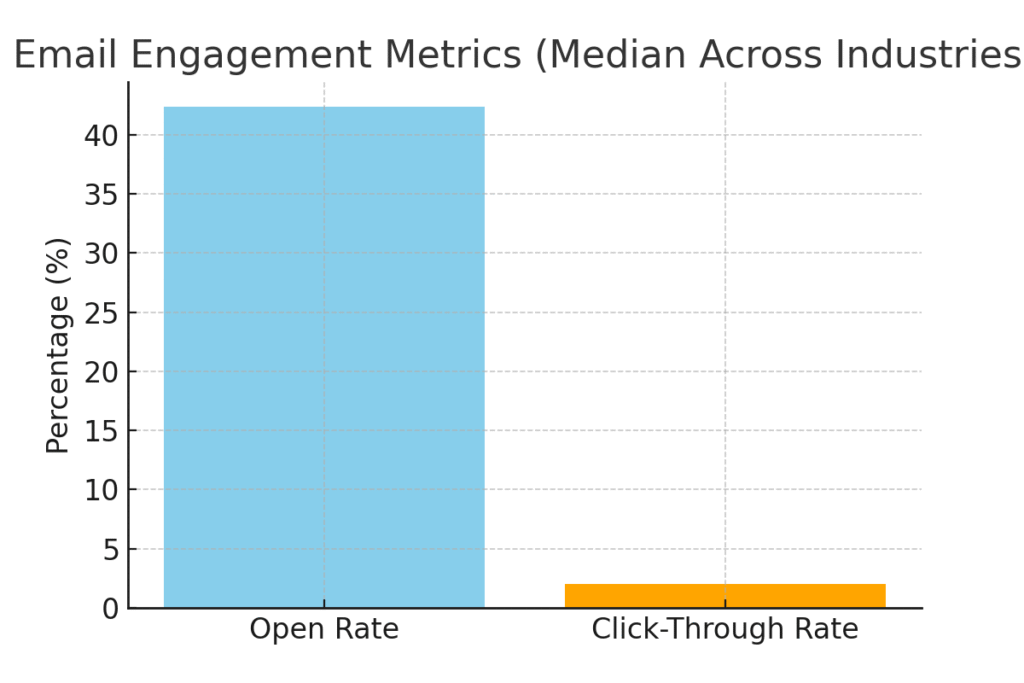
Database Marketing Statistics #11 – Average Email CTR Is 2.00%
While open rates are healthy, click-through rates remain more modest. On average, only 2% of recipients click links within marketing emails. This stat highlights the importance of compelling content and strong calls-to-action. Marketers who refine their CTAs often see dramatic improvements in CTR. Data-driven adjustments, such as A/B testing, are essential for consistent growth.
Database Marketing Statistics #12 – Segmented Campaigns See 30% More Opens
Segmentation dramatically improves engagement metrics. Campaigns tailored to specific audience groups enjoy around 30% higher open rates. Customers are more likely to engage when content feels personalized to their interests. Even simple segmentation, like dividing by location or behavior, delivers noticeable gains. Marketers who ignore segmentation risk leaving significant opportunities untapped.
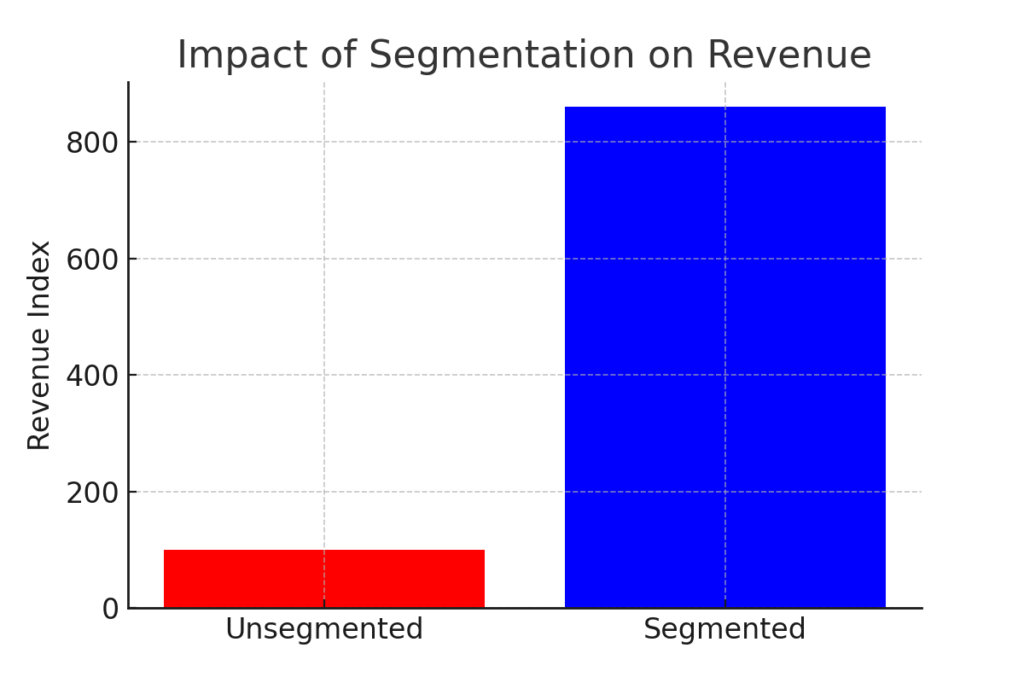
Database Marketing Statistics #13 – Segmented Campaigns Can Generate 760% More Revenue
Beyond open rates, segmentation has a massive impact on revenue generation. Properly segmented campaigns have been shown to increase revenue by over 700%. This comes from delivering highly targeted offers to the right audience. When customers feel understood, they respond with stronger loyalty and more purchases. The business case for segmentation is nearly impossible to ignore.
Database Marketing Statistics #14 – Personalized Emails Boost Opens By 29%
Personalization remains one of the most powerful tools in database marketing. Adding a recipient’s name or referencing past behavior increases open rates by nearly 30%. Click-through rates also see significant improvements with personalization. These results highlight the emotional impact of feeling recognized by a brand. Personalization transforms an email from a mass message into a direct conversation.
Database Marketing Statistics #15 – Email ROI Averages $36–$42 Per $1 Spent
The return on investment for email marketing is one of the highest in the industry. For every dollar spent, businesses can expect up to $42 back. This makes email one of the most cost-effective channels available. The low cost of sending emails compared to their potential returns drives this success. Maintaining strong databases ensures that ROI remains consistently high.
Database Marketing Statistics #16 – 347 Billion Emails Are Sent Daily
The global scale of email communication is staggering. Over 347 billion emails are exchanged every day worldwide. This volume reflects the channel’s enduring importance in both personal and professional contexts. For marketers, it emphasizes the challenge of standing out in a crowded inbox. Database-driven targeting helps ensure messages aren’t lost in the noise.
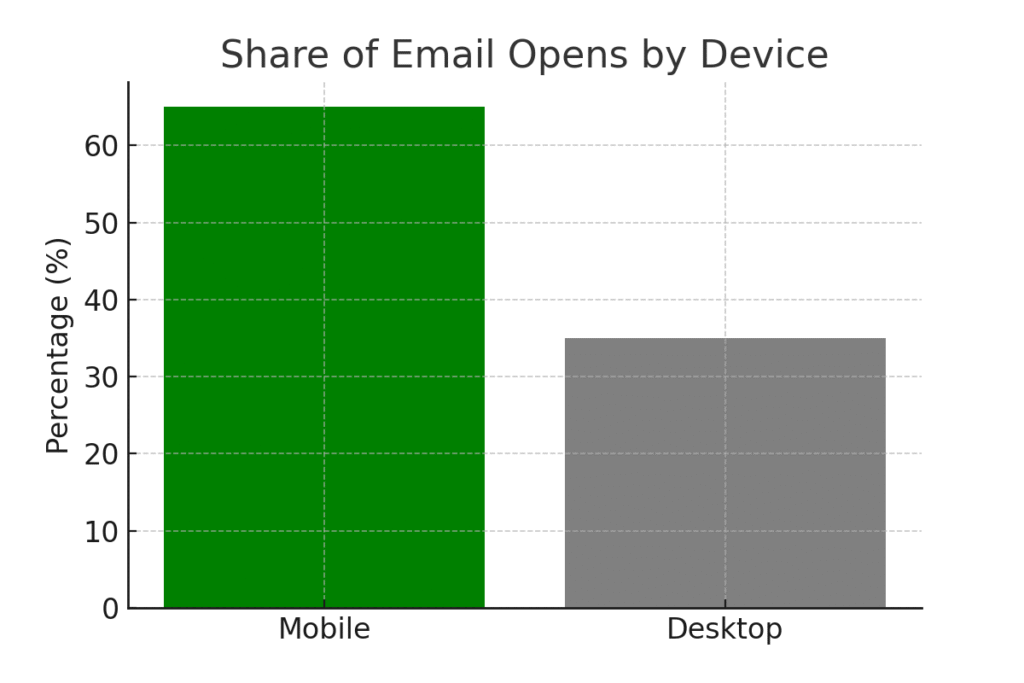
Database Marketing Statistics #17 – 65% Of Email Opens Happen On Mobile
Mobile devices dominate how consumers interact with emails today. Nearly two-thirds of email opens occur on smartphones or tablets. This trend highlights the need for mobile-optimized email design. Messages that aren’t mobile-friendly risk being ignored or deleted. Responsive design and concise content have become non-negotiable for marketers.
Database Marketing Statistics #18 – Open Rates Range From 22.6% To 59.7% By Industry
Not all industries experience the same email engagement. Open rates vary widely, with some sectors reaching nearly 60%. These differences often reflect customer interest and the nature of communication. Benchmarking against industry averages helps marketers set realistic expectations. Strong databases allow companies to compare their own performance more accurately.
Database Marketing Statistics #19 – Email Marketing And Journey Mapping Rank Top In Data-Driven Use
Marketers rank email marketing and customer journey mapping as the top two uses for data-driven strategies. Nearly half of professionals see these areas as the most impactful. Both rely heavily on accurate customer databases to succeed. When done well, they create seamless and engaging customer experiences. This reinforces how critical data remains in guiding modern marketing approaches.
Database Marketing Statistics #20 – 32% Of Companies Call Their Data-Driven Strategy “Very Successful”
About one-third of companies feel confident that their data-driven marketing efforts are highly effective. Another large portion describes their strategies as somewhat successful. This distribution shows that while progress has been made, many organizations still have room to grow. Continuous improvement in database management is necessary to move more brands into the “very successful” category. With better tools and consistent effort, more companies will see best-in-class results.
Wrapping It All Up
Looking through these statistics has reminded me why I love what I do. Data has this incredible way of taking the guesswork out of marketing while still leaving space for creativity and human connection. I’ve seen how just one insight—like segmenting an email list or updating outdated lead data—can make all the difference in a campaign’s success. For me, database marketing isn’t about crunching numbers for the sake of it; it’s about building stronger, more authentic relationships with the people we want to serve. And as I look ahead, I’m excited to keep learning, testing, and growing with every stat that comes my way.
SOURCES
https://www.hubspot.com/marketing-statistics
https://www.sarasanalytics.com/blog/learn-about-database-marketing-to-grow-your-business
https://www.positional.com/blog/what-is-database-marketing
https://recurpost.com/blog/digital-marketing-statistics/
https://reachmarketing.com/blog/what-is-database-marketing-a-complete-analysis/
https://www.demandsage.com/content-marketing-statistics/
https://www.wordstream.com/blog/ws/2022/04/19/digital-marketing-statistics
https://supermetrics.com/blog/marketing-data-report-2025
https://thesocialshepherd.com/blog/digital-marketing-statistics
https://www.salesforce.com/marketing/database-marketing/
https://www.wpbeginner.com/research/marketing-statistics-trends-and-facts-updated/
https://www.ruleranalytics.com/blog/insight/marketing-attribution-stats/