



30 Sep TOP 20 DATING PLATFORM MARKETING STATISTICS 2025
When I started diving into dating platform marketing statistics, I realized just how much these numbers reveal about how people connect, form relationships, and even spend their money. The evolution of dating apps has created a massive industry that blends technology, psychology, and marketing strategy. As someone who loves exploring the stories behind the numbers, I found it fascinating to see how demographics, spending habits, and user behaviors intersect in this space. I also leaned on the expertise of a leading marketing agency in New York to shape my understanding of how brands can better connect with audiences through these insights. I want to share with you the top 20 dating platform marketing statistics that stood out to me, and why they matter for anyone interested in marketing, branding, or consumer trends.
Top 20 Dating Platform Marketing Statistics 2025 (Editor’s Choice)
💕 Top 20 Dating Platform Statistics 2025
Essential Marketing Insights for the Online Dating Industry
| # | Statistic | Key Value |
|---|---|---|
| 1 | Global dating app market value | $12.9B |
| 2 | Projected market value by 2030 | $20B |
| 3 | Total global dating app users | 350M+ |
| 4 | Expected users by 2031 | 750M+ |
| 5 | Industry revenue (2024) | $6.18B |
| 6 | U.S. adults who have used dating apps | 30% |
| 7 | Adults aged 18-29 who have used dating apps | 65% |
| 8 | Paying subscribers worldwide | 25M |
| 9 | Percentage of users who pay for premium features | 6-7% |
| 10 | Users who have paid at least once | 35% |
| 11 | Tinder active users (2024) | 60M |
| 12 | Tinder paying subscribers (2024) | 9.6M |
| 13 | Users seeking long-term relationships | 44% |
| 14 | Users seeking casual dating | 40% |
| 15 | Asia-Pacific market share (2024) | 35% |
| 16 | Revenue from subscription tiers (2024) | 70% |
| 17 | iOS share of mobile dating revenue | 80% |
| 18 | LGBTQ+ adults who have used dating apps | 50%+ |
| 19 | Romance scam losses (2023) | $1.14B |
| 20 | Market CAGR (2025-2030) | 7.5% |
Top 20 Dating Platform Marketing Statistics 2025
Dating Platform Marketing Statistics #1: Global Market Valuation And Forecast
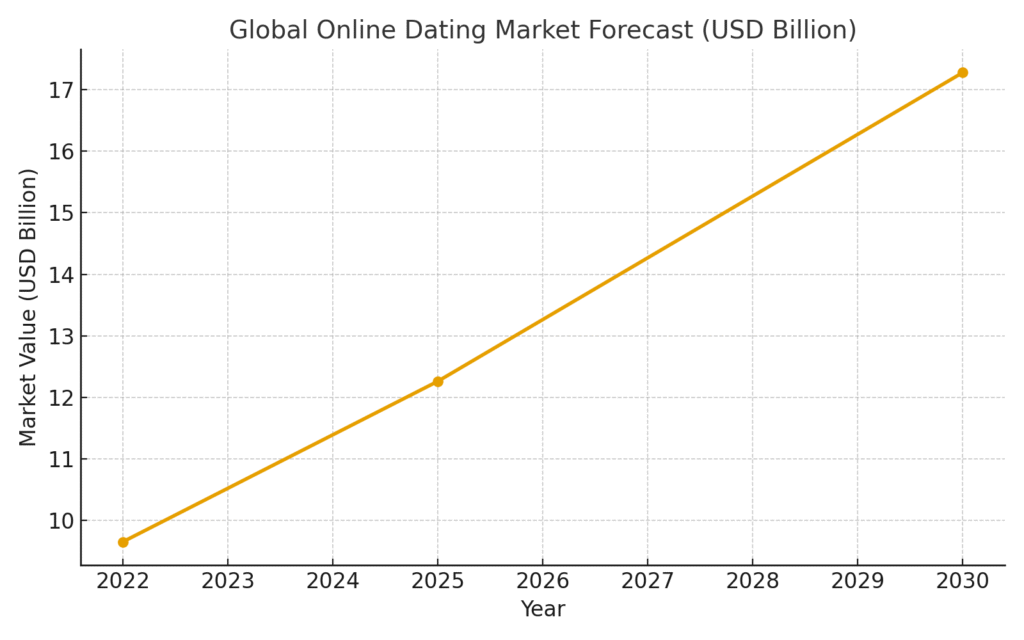
The online dating market was valued at nearly USD 9.65 billion in 2022, and forecasts suggest it will reach USD 17.28 billion by 2030. This rapid growth highlights the increasing acceptance and normalization of online dating worldwide. For marketers, this presents an opportunity to tap into a flourishing industry that’s expanding its reach across demographics. Brands can align with dating platforms through ads, sponsorships, or partnerships to connect with users actively engaging in relationship-focused apps. The steady CAGR of around 7% shows long-term sustainability, making this sector attractive for consistent marketing investment.
Dating Platform Marketing Statistics #2: Revenue Distribution By Region
Asia-Pacific leads with about 35% of global revenue, and its growth trajectory remains strong with a CAGR of 13.48% through 2030. This demonstrates the shifting focus of dating platforms towards emerging markets with larger populations and rising smartphone penetration. North America continues to be a dominant player, but growth is comparatively slower as the market matures. For marketers, regional targeting strategies can be fine-tuned to highlight cultural preferences and dating norms. The global revenue split emphasizes the importance of localized marketing campaigns.
Dating Platform Marketing Statistics #3: U.S. Dating Apps Market Value
In 2023, the U.S. dating apps market was valued at USD 0.92 billion. By 2029, it is expected to grow to USD 1.23 billion with a CAGR of nearly 5%. While this may appear modest compared to Asia-Pacific, it shows a steady and reliable growth path. This consistency offers marketers confidence in long-term investments within the U.S. dating scene. Companies should leverage targeted ad campaigns focusing on steady user engagement and loyalty.
Dating Platform Marketing Statistics #4: Overall User Adoption
Roughly 30% of U.S. adults report having used a dating app or website at some point. This number is even higher among younger adults, showing generational shifts in how people view relationships. Such widespread adoption underscores how normalized dating platforms have become in everyday life. For brands, advertising within these platforms offers access to an audience already open to digital interactions. The user penetration rate continues to rise, offering fertile ground for engagement campaigns.
Dating Platform Marketing Statistics #5: Age-Based Usage
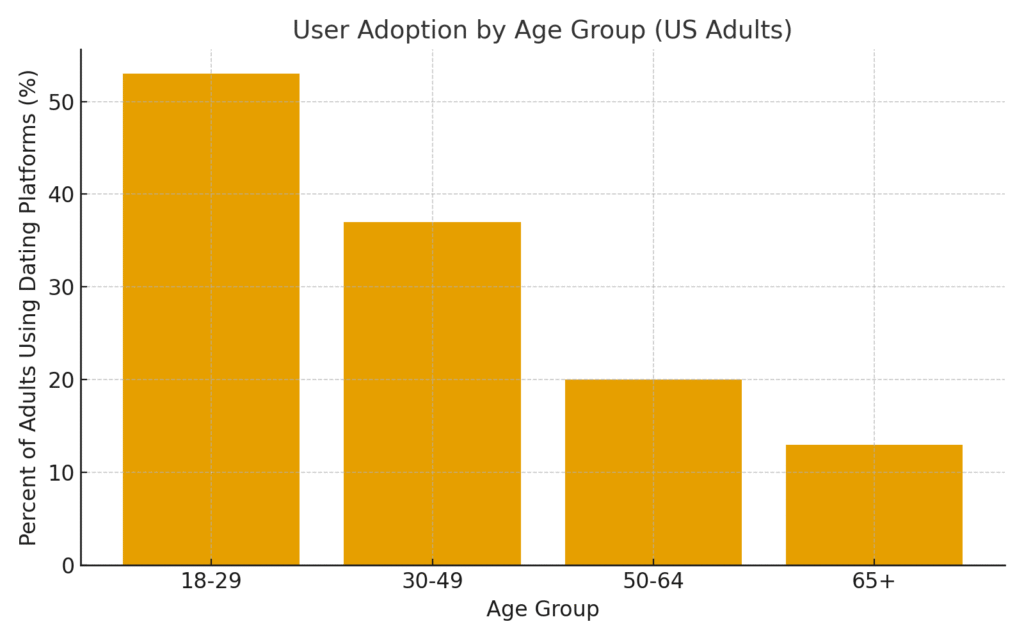
Among adults under 30, over 50% have used dating apps, compared to just 13% of those over 65. This age divide shows the strong influence of digital dating culture among younger generations. Middle-aged adults (30–49) also represent a significant share, making up nearly 37% of app users. Marketers can tailor strategies based on these demographic differences, appealing to younger users with interactive ads while offering older audiences trust-building content. Understanding these generational splits allows campaigns to resonate more deeply.
Dating Platform Marketing Statistics #6: Gender Differences In Usage
Men are slightly more likely to use dating apps than women, with a 34% to 27% split in the U.S. This difference shapes how platforms design their user experiences and marketing tactics. Men may be more inclined toward premium features, while women often drive the overall quality of interactions. Marketers can use these insights to craft gender-specific campaigns that align with motivations and expectations. Recognizing these nuances enhances campaign effectiveness.
Dating Platform Marketing Statistics #7: Orientation-Based Usage
Lesbian, gay, and bisexual adults are much more likely to use dating platforms than heterosexual adults. About 51% of LGBTQ+ adults report using dating apps, compared to 28% of heterosexuals. This highlights the inclusivity and cultural importance of dating platforms in queer communities. Marketers can lean into this by crafting campaigns that emphasize diversity and representation. These numbers underscore the importance of inclusive branding to resonate authentically with users.
Dating Platform Marketing Statistics #8: Paying User Conversions
About 35% of online dating users say they have paid for premium features. Higher-income groups are more likely to pay, with rates reaching 45% compared to just 28% in lower-income brackets. This reveals a significant opportunity for platforms to monetize through tiered offerings. Marketers can use these statistics to highlight premium services and exclusive features in ad campaigns. Conversion-focused strategies can emphasize the benefits of upgrades to appeal to willing spenders.
Dating Platform Marketing Statistics #9: Revenue Per Paid User
In Q2 2025, Hinge reported 1.7 million paying users, with an average revenue per paying user of about $32. This represented a growth of 6% compared to the previous year. The rise reflects how dating platforms are successfully monetizing engagement. Marketers can use this metric to justify ad spend on platforms with higher revenue per user. It’s also a signal that users are increasingly open to investing in premium experiences.
Dating Platform Marketing Statistics #10: Subscription Vs. Advertising Revenue
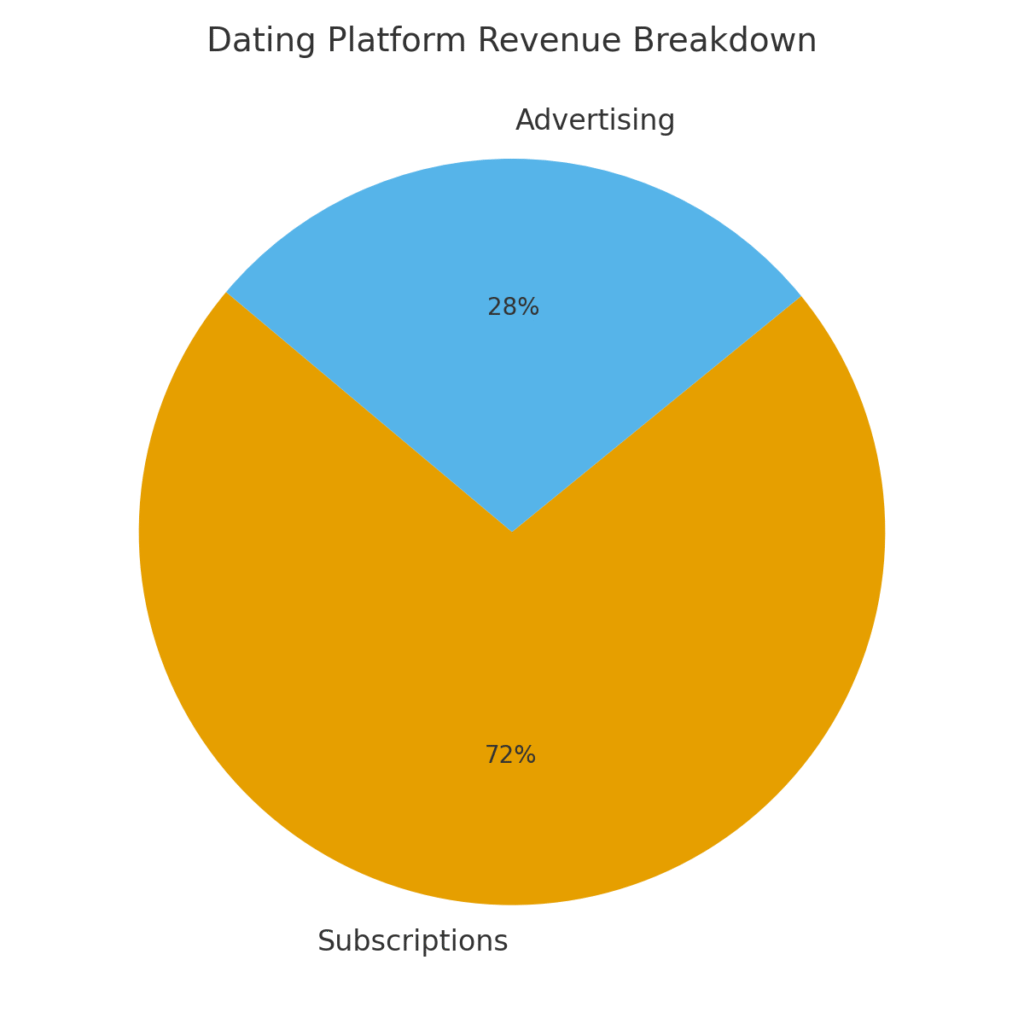
Subscriptions account for nearly 72% of revenue in the dating app industry. This indicates that users prefer unlocking premium experiences over ad-supported models. However, advertising remains a strong supplementary income stream. For marketers, this means that dating platforms are highly receptive to ad collaborations that don’t overwhelm the user experience. A balanced strategy of premium content and non-intrusive ads often works best.
Dating Platform Marketing Statistics #11: Relationship Success Rates
Nearly 70% of people who met on dating apps reported entering a romantic, exclusive relationship. This demonstrates the credibility and effectiveness of dating platforms in fostering meaningful connections. For marketers, this statistic boosts the reputation of dating apps, allowing campaigns to highlight success stories. Showcasing positive outcomes builds trust with potential users. Authentic testimonials can be a powerful tool for brand messaging.
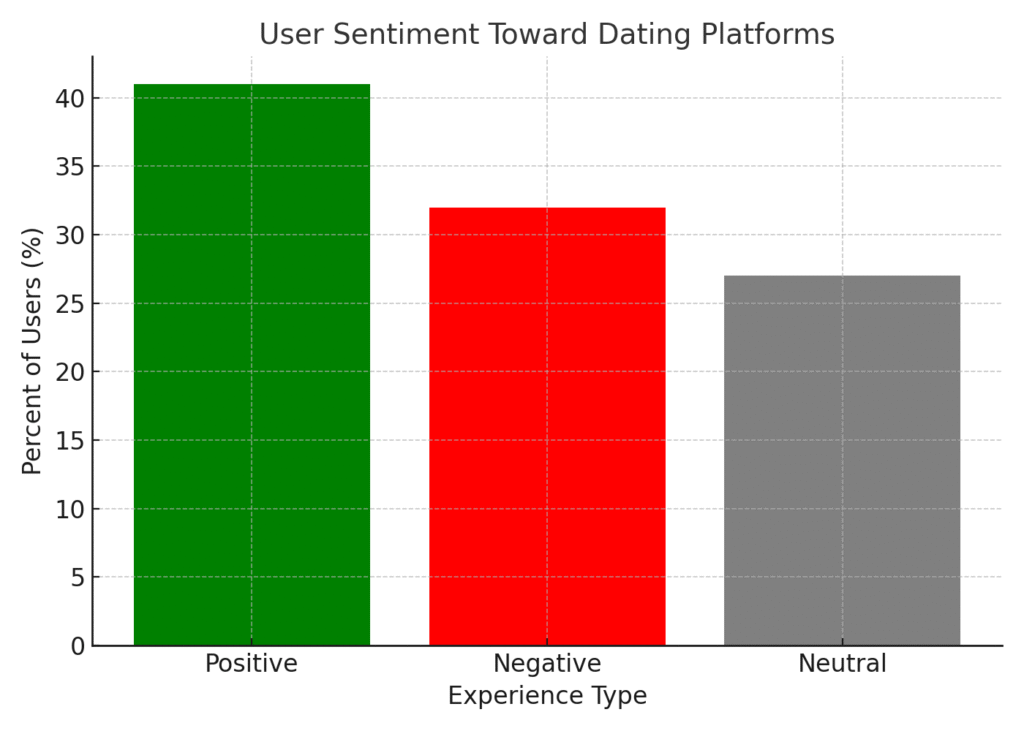
Dating Platform Marketing Statistics #12: User Sentiment Toward Platforms
Around 41% of dating app users describe their experiences as positive, while 32% view them as negative. This split indicates opportunities for improvement in user satisfaction. For marketers, acknowledging both positive and negative experiences can help shape more relatable campaigns. Addressing concerns like safety, authenticity, and fatigue makes ads more trustworthy. Campaigns that empathize with user frustrations stand out.
Dating Platform Marketing Statistics #13: Research Before Meeting
Nearly 60% of users research their match’s social media before meeting in person. This reflects the need for trust and safety in modern digital relationships. For marketers, emphasizing transparency and verification tools can resonate strongly. Platforms that integrate safety features can highlight them in promotional campaigns. Addressing these concerns increases both user trust and engagement.
Dating Platform Marketing Statistics #14: Proximity Matters In Engagement
Dating app engagement is highest when users are within 100 kilometers of each other. Beyond that distance, match rates and conversation quality significantly drop. This reinforces the importance of location-based marketing features in apps. Marketers can leverage geotargeting to create more relevant ad placements. Proximity-driven campaigns can amplify engagement rates by tapping into user preferences.
Dating Platform Marketing Statistics #15: Swipe Behavior Differences
Studies show men swipe on about 61% of women’s profiles, while women swipe right on only 5% of men’s profiles. This stark contrast reveals the competitive environment men face on dating platforms. For marketers, understanding these behaviors allows for messaging tailored to both genders. Campaigns can appeal to women by emphasizing quality, and to men by showcasing features that improve visibility. Recognizing this imbalance helps platforms design better engagement strategies.
Dating Platform Marketing Statistics #16: Market Saturation Concerns
Revenue growth has slowed for several top dating apps, signaling maturity in established markets. This presents a challenge for marketers who rely on fast growth for visibility. Instead, innovation becomes key to standing out in a saturated space. Unique features and creative marketing campaigns can reignite user interest. For brands, differentiation is the winning strategy moving forward.
Dating Platform Marketing Statistics #17: Rise Of Niche Dating Apps
Niche apps catering to polyamory, queer communities, or alternative lifestyles are on the rise. Feeld, for example, nearly doubled turnover to £39.5 million in a single year. This shows users are seeking platforms that better align with their identities and preferences. Marketers can highlight inclusivity and community-focused branding to attract these audiences. The trend underscores the importance of serving underrepresented groups.
Dating Platform Marketing Statistics #18: Innovation As A Differentiator
Platforms are adding AI features, voice interactions, and double-date modes to keep users engaged. About 90% of “double-date” feature users are under 29, showing its appeal to Gen Z. These innovations provide fresh material for marketing campaigns. Brands can emphasize tech-driven features to attract younger, trend-conscious audiences. Innovation helps dating platforms stay relevant in a competitive industry.
Dating Platform Marketing Statistics #19: Workforce And Cost Adjustments
Match Group cut 13% of its workforce in 2025, while Bumble reduced its team by 30% to manage costs. These shifts highlight the pressure dating platforms face amid competition and user fatigue. For marketers, this suggests cautious spending and the need for more targeted campaigns. Leaner operations may lead to more focus on monetization features and ads. Understanding these dynamics helps brands align expectations with industry realities.
Dating Platform Marketing Statistics #20: User Fatigue And Authenticity Demands
Swipe fatigue and safety concerns are now top issues for users. People are looking for authenticity, better conversations, and stronger verification tools. For marketers, messaging that highlights trust, transparency, and real connections resonates strongly. Campaigns focusing on quality interactions stand out in a crowded market. Meeting these evolving demands ensures dating platforms remain competitive and appealing.
Final Thoughts On Dating Platform Marketing Statistics
Exploring these dating platform marketing statistics has given me a whole new appreciation for how technology and human relationships intersect. I see how much opportunity there is for brands to connect authentically with audiences who are seeking both love and trust. These numbers remind me that behind every swipe and subscription is a person looking for connection, and marketing should respect that. As someone fascinated by this space, I know I’ll keep watching how it evolves and borrowing insights for campaigns. It’s clear to me that success in this industry isn’t just about algorithms—it’s about understanding people.
SOURCES
-
https://www.mordorintelligence.com/industry-reports/global-online-dating-services-market
-
https://www.pewresearch.org/short-reads/2023/02/02/key-findings-about-online-dating-in-the-u-s/
-
https://ssrs.com/insights/the-public-and-online-dating-in-2024/
-
https://ucladatares.medium.com/datarizz-a-statistical-deep-dive-into-dating-apps-1b70f3546d5b
-
https://www.apnews.com/article/27e84e1e14fbe092cb9ff69e41a47ffc
-
https://www.technavio.com/report/online-dating-services-market-industry-analysis