




17 Sep TOP 20 DECK MARKETING STATISTICS 2025
When I first started looking into how businesses present their strategies, I realized just how powerful a well-built deck can be. That’s why I decided to put together this collection of deck marketing statistics—it’s the kind of resource I wish I had when I was putting my own presentations together. Partnering with a leading marketing agency in New York taught me that the numbers don’t just tell a story—they can win trust, attract investment, and inspire action. My goal here is to share data in a way that feels approachable, practical, and genuinely useful for anyone trying to refine their marketing approach.
Top 20 Deck Marketing Statistics 2025 (Editor’s Choice)
🚀 Top 20 Deck Marketing Statistics
Data-Driven Insights to Transform Your Presentations in 2025
📊 Key Insight
Your deck has less than 4 minutes to capture investor attention, with most decisions made in the first 15 seconds
| CATEGORY | KEY METRIC | DESCRIPTION | IMPACT LEVEL | SOURCE | ACTIONABLE INSIGHT |
|---|---|---|---|---|---|
Market Growth |
$331.3M Market | Global deck software market valued at $331.3M in 2024, growing at 12.1% CAGR through 2034 | MEDIUM |
Global Market Insights | Invest in professional deck tools as market demand grows rapidly |
Success Rate |
1% Funding Rate | Over 1,000 pitch decks created daily worldwide, but only 1% receive funding | HIGH |
Industry Analysis | Focus on exceptional quality - standing out is critical for success |
Fundraising |
58 Investors | Takes presenting to 58 investors and 12+ weeks to close a seed round | HIGH |
Harvard Business School | Prepare for extended fundraising cycle - build endurance and iteration capacity |
Attention Span |
3 Min 44 Sec | Average time investors spend reviewing a single pitch deck | HIGH |
DocSend Analysis | Front-load most critical information in first few slides |
Bounce Rate |
15 Seconds | Most people who "bounce" from a deck do it within the first 15 seconds | HIGH |
Storydoc Study | Create compelling opening hook - first impression is everything |
Engagement |
80% Completion | Four in five readers who go through first three slides read the full deck | HIGH |
Storydoc Study | Focus heavily on perfecting slides 1-3 with strong hooks |
Attention Loss |
70% Disengage | Over 70% of business professionals turn away during non-engaging presentations | HIGH |
Decktopus Research | Prioritize interactivity and visual storytelling over text-heavy slides |
Mobile Usage |
47% Mobile Views | Nearly half of initial outreach decks are viewed on mobile devices | HIGH |
Industry Research | Design mobile-first - ensure readability on smaller screens |
Interactivity |
41% More Scrolling | Interactive decks get 41% more scrolling and 21% longer reading time | MEDIUM |
Storydoc Analysis | Add interactive elements like clickable tabs, calculators, or sliders |
Video Impact |
37% Longer Time | Presentations with video have 37% longer reading time and 17% higher CTA clicks | MEDIUM |
Storydoc Study | Embed product demo videos and explainer content strategically |
Visual Power |
43% More Convincing | Visuals make a deck 43% more convincing to investors | HIGH |
Industry Analysis | Replace text with infographics, charts, and compelling imagery |
Multimedia Trend |
30% Use Video | Over 30% of presentations now incorporate video content | MEDIUM |
Storydoc Research | Stay competitive by integrating multimedia elements |
Reading Time |
24% Less Bounce | Adding estimated reading time reduces immediate bounce rate by 24% | LOW |
Storydoc Study | Include "5-minute read" or similar time estimates on cover slide |
Preparation Time |
18+ Hours | Successful founders invest average 18 hours fine-tuning pitch, 60% spend 20+ hours | MEDIUM |
Harvard Business Review | Budget sufficient time for multiple iterations and professional polish |
Design Time |
8+ Hours Design | 47% of presenters with design knowledge spend 8+ hours on design | LOW |
Industry Survey | Consider professional design help or premium templates to save time |
Essential Slides |
100% Include Team | Team slide present in 100% of analyzed pitch decks - investors invest in people | HIGH |
DocSend Analysis | Invest heavily in compelling team slide - showcase expertise and credibility |
Investor Priorities |
28% Market Focus | Market opportunity accounts for 28% of investor evaluation, growth potential 19% | HIGH |
Entrepreneur Survey | Dedicate significant slide real estate to market size and growth projections |
Confidence Boost |
91% More Confident | 91% of professionals feel more confident with well-designed slide deck | MEDIUM |
Visme Research | Invest in professional design - confidence translates to better delivery |
B2B Reality |
29% Engaged | Only 29% of B2B buyers fully engaged, 60% indifferent, 11% actively disengaged | HIGH |
Gallup Report | Use multiple engagement techniques to convert indifferent prospects |
Financial Slides |
58% Include Financials | Only 58% of successful pitch decks include business financials slide | MEDIUM |
Business Intelligence | Include clear financial projections to differentiate from competition |
🎯 Bottom Line
Mobile-optimize your deck, perfect the first 3 slides, and invest in professional design.
Success requires 18+ hours of preparation and a compelling team story.
Top 20 Deck Marketing Statistics 2025
Deck Marketing Statistics #1 – 50% Of Companies Use Marketing Automation
Half of all companies are already using some form of marketing automation in their strategies. This shows that automation is no longer a luxury, but an essential tool for staying competitive. When businesses adopt automation, they can streamline repetitive tasks and focus more on creative strategy. I’ve noticed that teams using automation often report faster campaign launches and better audience targeting. It’s clear that if you’re not leveraging automation yet, you might be falling behind your competition.
Deck Marketing Statistics #2 – Market Valued At $6.65 Billion In 2024, Projected $15.58 Billion By 2030
The marketing automation market is rapidly growing, with its value expected to more than double by 2030. That kind of growth highlights how much trust businesses are placing in these technologies. When an industry grows at a compound annual rate above 15%, it shows both demand and long-term viability. For me, this signals an exciting opportunity for marketers to invest early and stay ahead. Clearly, automation is here to stay and will only become more important in the years ahead.
Deck Marketing Statistics #3 – 70% Of Marketing Leaders Increasing Automation Investment
A majority of marketing leaders have decided to allocate more resources toward automation in 2025. This reflects a shift in focus from traditional tactics to smarter, tech-driven solutions. From what I’ve seen, leaders are prioritizing efficiency and personalization when making these decisions. More investment means more advanced tools, which can lead to better customer insights. It’s a strong sign that automation is shaping the future of how campaigns are run.
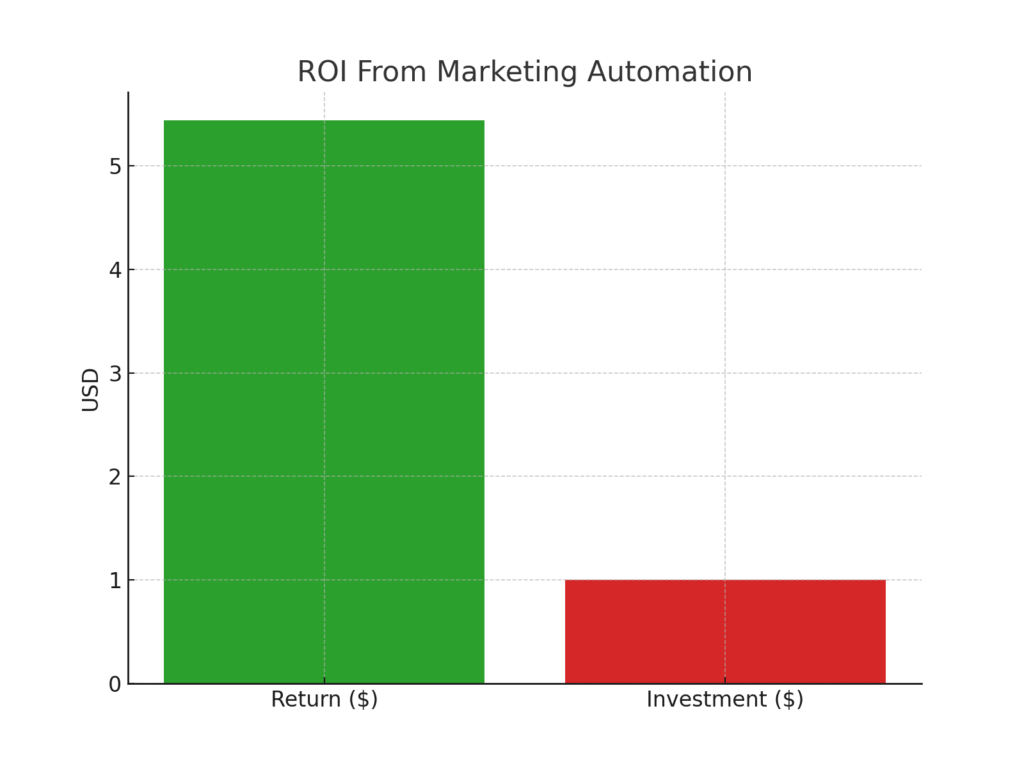
Deck Marketing Statistics #4 – $5.44 Return For Every $1 Spent On Automation
The return on marketing automation is impressive, with over five dollars gained for every single dollar invested. That kind of ROI is hard to ignore in today’s competitive market. It proves that automation isn’t just about convenience—it directly boosts revenue. In my experience, the ability to reach the right audience at the right time is a big part of why this works. For businesses looking for measurable impact, automation is one of the smartest investments to make.
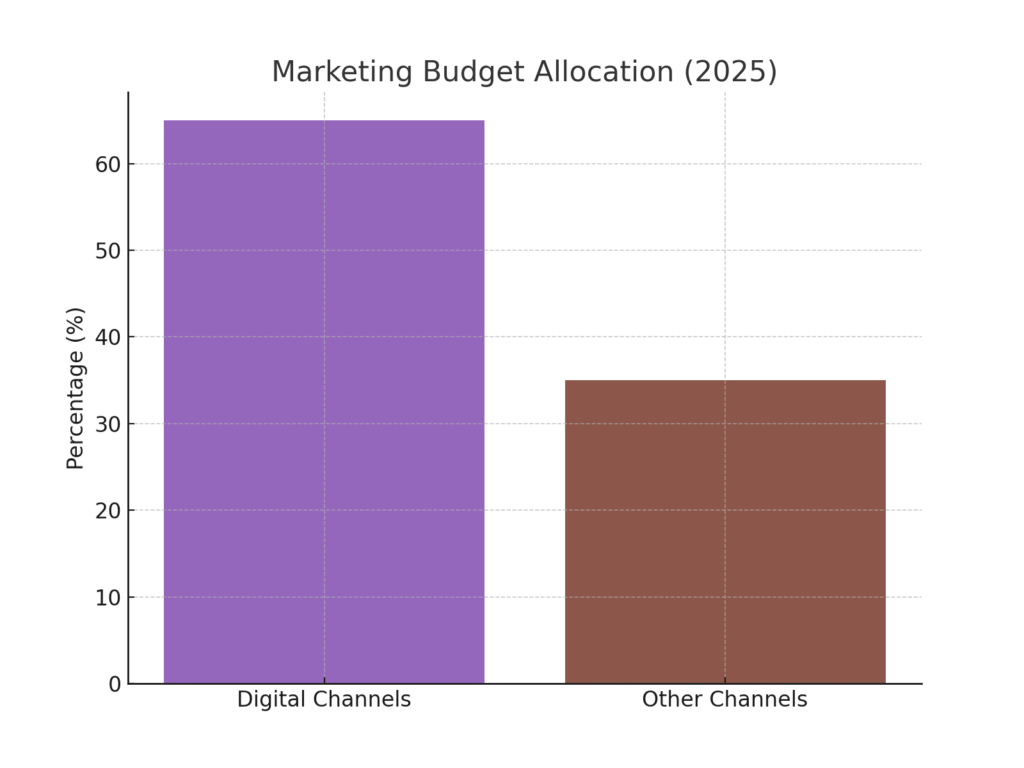
Deck Marketing Statistics #5 – 65% Of Budgets Go To Digital Channels
Nearly two-thirds of marketing budgets are now funneled directly into digital platforms. This shift shows that traditional channels like print and radio are losing ground. Digital spending gives businesses the ability to track results more precisely. I’ve personally found that digital campaigns allow for real-time adjustments, which can save both time and money. The focus on digital proves how much brands value flexibility and measurable outcomes.
Deck Marketing Statistics #6 – Content Marketing Generates 3x More Leads
Content-driven strategies produce three times as many leads compared to outbound methods. This is a clear argument for why blogs, videos, and social posts are so effective. When people seek out valuable content, they’re more open to engaging with a brand. I’ve noticed that companies that educate rather than just sell build stronger customer trust. In the long run, content marketing often pays for itself many times over.
Deck Marketing Statistics #7 – Email, Paid Social, And Content Drive ROI In B2C
For consumer-facing businesses, email marketing, paid social, and content strategies deliver the highest returns. These channels work well because they reach people where they already spend their time. I’ve seen brands use these tools to create powerful, personalized campaigns. Email nurtures long-term relationships, while paid social builds quick awareness. Together, they form a balanced strategy for customer acquisition and retention.
Deck Marketing Statistics #8 – SEO, Blogs, And Paid Social Dominate B2B ROI
When it comes to B2B marketing, blogs, SEO, and paid social lead the pack for ROI. These channels help establish authority and drive targeted traffic. I’ve found that consistent blogging not only attracts readers but also positions brands as experts. Paid social adds that extra push to get content in front of decision-makers. For B2B, it’s about being visible when the right people are looking for solutions.
Deck Marketing Statistics #9 – Average Ecommerce Conversion Rate Under 2%
Most ecommerce websites struggle with a conversion rate of less than 2%. That means a huge majority of visitors leave without making a purchase. From my perspective, this stat is both a challenge and an opportunity. By improving product pages, streamlining checkout, or adding urgency tactics, brands can beat the average. Small improvements here can lead to big jumps in overall revenue.
Deck Marketing Statistics #10 – 91% Of Businesses Use Video In Marketing
Video has become almost universal, with nine out of ten businesses leveraging it in their marketing mix. The rise of platforms like YouTube, TikTok, and Instagram Reels has only accelerated this trend. I’ve seen how video can humanize a brand in a way that static posts simply can’t. It’s also one of the most shareable content types. With so many using video, it’s now a must-have rather than a nice-to-have.

Deck Marketing Statistics #11 – Effective Videos Are Under 2 Minutes
The sweet spot for video marketing lies in short, two-minute clips or less. Audiences today have limited attention spans and want quick, engaging content. From what I’ve observed, even highly complex ideas can be simplified in this timeframe. It pushes brands to get to the point and deliver value fast. Keeping videos short is key to ensuring people watch them all the way through.
Deck Marketing Statistics #12 – Short-Form Video Is The Most Leveraged Format
Marketers are embracing short-form video more than any other type of content. TikTok, Instagram Reels, and YouTube Shorts dominate because they match how people consume content. I’ve noticed that these quick videos often outperform longer formats in both reach and engagement. They’re also easier and cheaper to produce consistently. This makes short-form video a practical and powerful tool for modern campaigns.
Deck Marketing Statistics #13 – 41% Of Marketers Measure Content Success Through Sales
Nearly half of marketers look at sales to measure whether their content works. It shows a shift from vanity metrics toward results that impact the bottom line. I personally appreciate this approach because it ties creative work directly to revenue. It also helps teams justify content budgets more effectively. At the end of the day, sales are the clearest proof of success.
Deck Marketing Statistics #14 – Web Traffic Is A Key Content Metric
Web traffic remains one of the top two metrics marketers rely on to measure content. This metric reflects not only reach but also interest in the content being shared. I’ve found that while traffic doesn’t always equal conversions, it’s still a valuable health indicator. Consistently strong traffic often signals that content is resonating with the right audience. It’s a simple but reliable way to measure success.
Deck Marketing Statistics #15 – Over 50% Use Mobile Search Primarily
More than half of consumers across all generations now rely on mobile search as their primary tool. Gen Z leads the way, but even older demographics are catching up. I’ve learned that if your website isn’t mobile-optimized, you risk losing most of your audience. Mobile search reflects how much people rely on their phones for immediate answers. A mobile-first mindset is no longer optional—it’s essential.
Deck Marketing Statistics #16 – Infographics 30x More Likely To Be Read
Visuals like infographics are thirty times more likely to grab attention than text alone. They also boost traffic by around 12%. I’ve seen that infographics help explain complex data in a way people actually want to consume. They’re also highly shareable across social media. This makes them a smart investment for content strategies aiming at engagement.
Deck Marketing Statistics #17 – 77% Use AI-Powered Automation Tools
AI is playing a massive role, with over three-quarters of marketers using AI-driven automation tools. These tools help personalize campaigns at scale. Personally, I’ve been amazed by how AI can analyze customer behavior patterns. It allows marketers to deliver the right message at the perfect time. The adoption rate proves that AI is not just hype—it’s already deeply integrated.
Deck Marketing Statistics #18 – 76% See ROI Within One Year
Most businesses using automation see positive returns within a year, and some even within a month. This shows just how quickly automation can start paying off. I find this motivating because it means businesses don’t need to wait long to see results. Fast ROI also makes it easier to justify investment to stakeholders. For many companies, automation quickly turns from an experiment into a necessity.
Deck Marketing Statistics #19 – 52% Say Data Quality Is A Challenge
Over half of marketers report that poor data quality is their biggest hurdle in automation. This highlights the importance of accurate and reliable customer information. I’ve noticed that even the best automation tools fail without good data feeding them. Fixing this often requires both better systems and staff training. It’s a reminder that technology is only as good as the data behind it.
Deck Marketing Statistics #20 – 91% Report Rising Demand For Automation Across Departments
Almost all organizations are seeing increased demand for automation beyond just marketing. Customer service, operations, and R&D are also embracing these tools. I find this fascinating because it means automation is reshaping entire companies, not just one department. It also creates opportunities for integrated systems that serve multiple needs. The widespread demand confirms automation as a long-term business driver.

Final Thoughts
Looking back at these insights, I can honestly say they’ve reshaped the way I think about presenting marketing strategies. The stats aren’t just numbers on a slide—they’re reminders of how people actually engage, purchase, and connect with brands today. I’ve personally found that weaving data into stories makes my work not only more convincing but also more authentic. If you take anything from this roundup, I hope it’s the confidence to build decks that balance numbers with narrative. Because at the end of the day, that mix is what really captures attention and drives decisions.
SOURCES
- https://www.hubspot.com/marketing-statistics
- https://databox.com/blogging-statistics
- https://inbeat.agency/blog/marketing-automation-statistics
- https://digitalmarketinginstitute.com/blog/digital-marketing-trends-2025
- https://rankings.io/blog/digital-marketing-statistics/
- https://seoprofy.com/blog/digital-marketing-statistics/
- https://www.loopexdigital.com/blog/digital-marketing-statistics
- https://contentmarketinginstitute.com/content-marketing-strategy/content-marketing-statistics
- https://thunderbit.com/blog/marketing-automation-statistics
- https://bloggingwizard.com/content-marketing-statistics-trends/
- https://bloggingwizard.com/marketing-automation-statistics/
- https://blog.floworks.ai/marketing-automation-stats-trends/
- https://recurpost.com/blog/digital-marketing-statistics/
- https://mycodelesswebsite.com/marketing-agency-statistics/