



16 Sep TOP 20 DELI MARKETING STATISTICS 2026 REVEAL SHOCKING LOCAL FOOD RETAIL GROWTH
Updated for 2026. This page has been fully refreshed with the latest deli marketing statistics, consumer purchasing trends, and food retail insights based on current global surveys, grocery industry reports, and deli counter performance data.
Whenever I dive into the world of food business insights, I always get fascinated by how much consumer behavior can shift within a year. That’s why I decided to put together this roundup of the top deli marketing statistics shaping the industry right now. Working closely with a leading marketing agency in New York has taught me that numbers tell powerful stories—especially when it comes to understanding what keeps people walking into their favorite deli shops.
These stats aren’t just dry figures; they’re real signals of where the market is moving and how businesses like yours can adapt to meet changing demands.
TOP 20 DELI MARKETING STATISTICS 2026 THAT EXPOSE SHOCKING FOOD RETAIL TRENDS (EDITOR’S CHOICE)
🥪 TOP 20 DELI MARKETING STATISTICS 2026
Massive Local Food Sales Surge Reveals $362 Billion Industry Opportunity
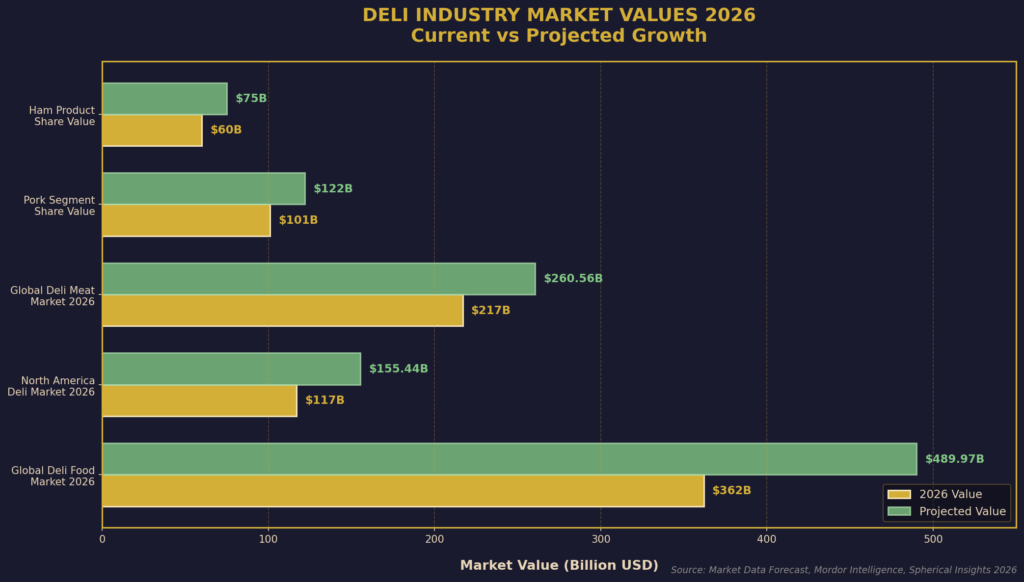
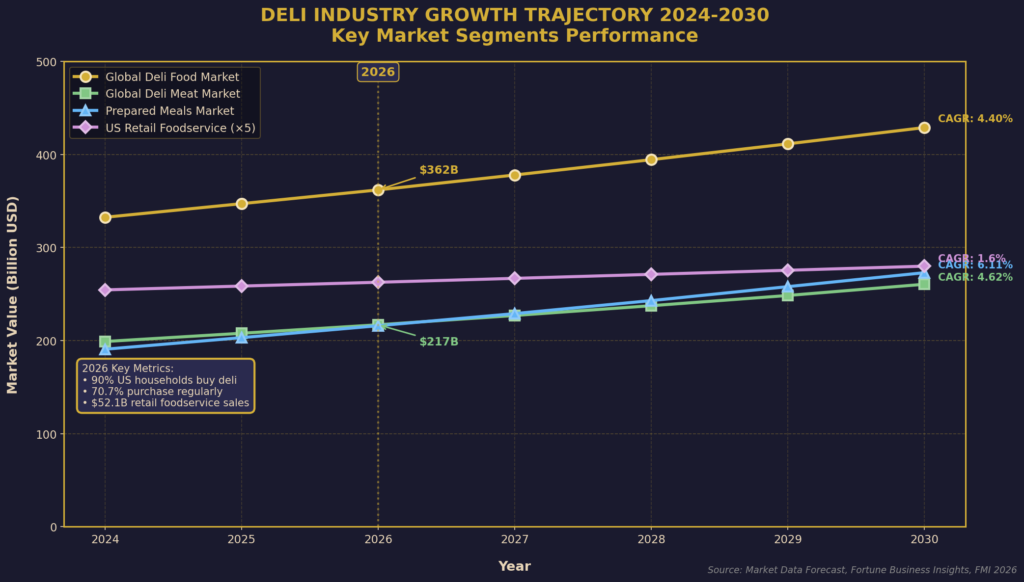
Global Deli Food Market reaches $362 BILLION in 2026, projected to hit $489.97B by 2033 at 4.40% CAGR
North America Deli Market surpasses $117 BILLION in 2026, targeting $155.44B by 2032 at 4.17% CAGR
Global Deli Meat Market valued at $217 BILLION in 2026, growing $110.9B by 2029 at 9.3% CAGR
Pork dominates deli meat with 44-47% MARKET SHARE in 2026 | US production hits 28 billion lbs
Ham leads deli products with ~28% MARKET SHARE | Chicken breast fastest-growing at 7.68% CAGR
Uncured deli meats surge at 9.13% CAGR through 2030 | Clean-label & nitrate-free driving demand
Retail commands 62.45% MARKET SHARE | HoReCa channel grows at 6.36% CAGR
Europe dominates with 33% GLOBAL SHARE | Market reaches $135.87B by 2032 at 4.08% CAGR
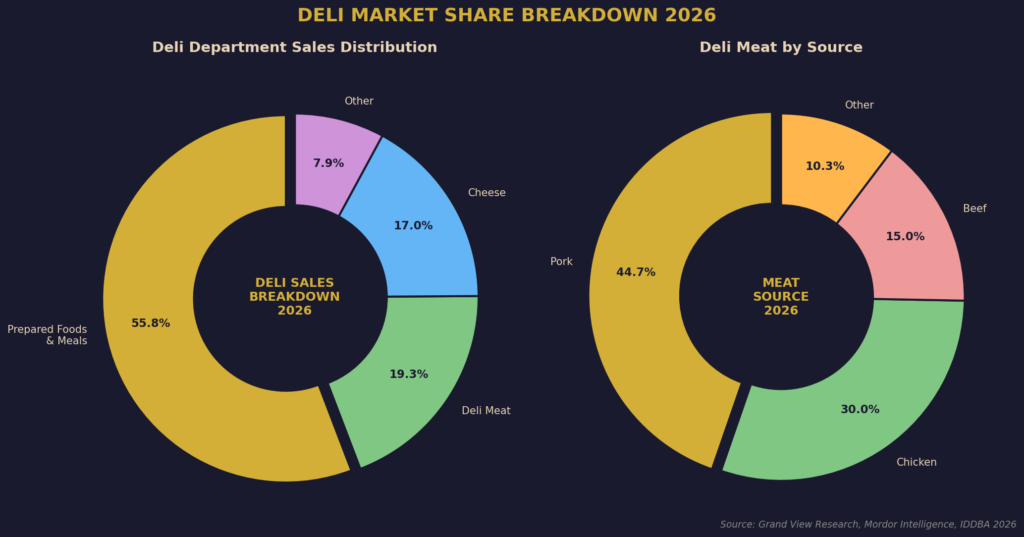
Prepared Foods dominate at 55-57% OF DELI SALES | Global prepared meals market hits $203.16B
Cheese maintains 17-20% OF DELI SALES | 72% of consumers shop deli for specialty cheese
Retail foodservice sales reach $52.1 BILLION | Up 1.6% YoY | 39% reducing processed foods
Only 50% RATE DELI "APPETIZING" | 60%+ discover options by walking stores
Pre-packaged deli grows strong | Fully cooked meat up 4.8% | Pizza +4.5% | Sushi +3.8%
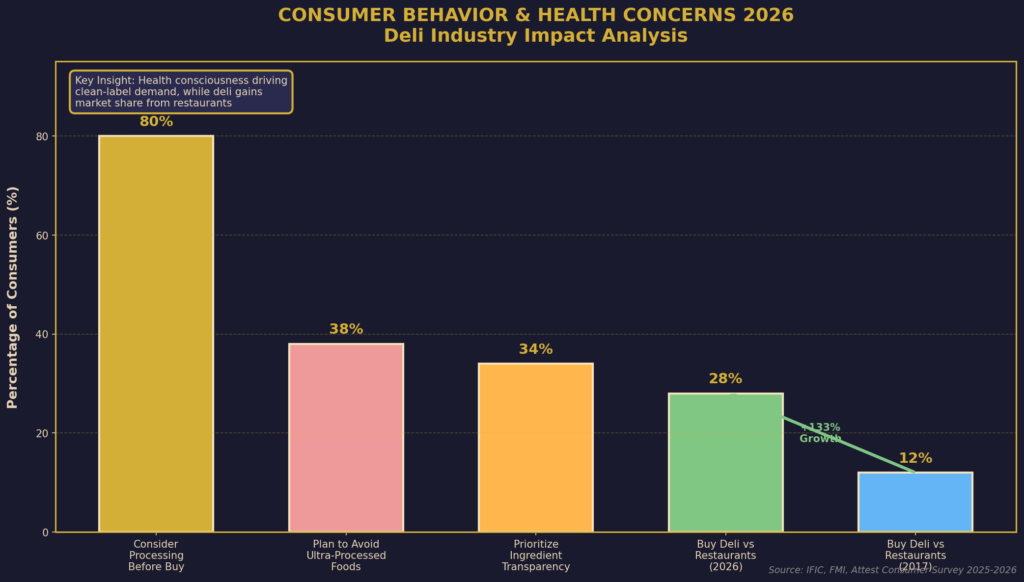
80% OF AMERICANS consider processing before buying | Up from 76% in 2023
38% WILL AVOID UPFs in 2026 | 34% prioritize ingredient transparency
~49% OF LAUNCHES feature flavor innovation | Global spices & gourmet twists trending
Market grows at 5.90% CAGR 2026-2035 | Brands transition to nitrate-free formulations
~22% LAUNCHES use protein claims | Cured meats hold 67% share for convenience
28% BUY DELI VS RESTAURANTS | More than doubled from 12% in 2017
90% OF US HOUSEHOLDS buy deli prepared foods | 70.7% purchase regularly
💰 KEY MONEY INSIGHT
The $362B deli industry in 2026 presents explosive growth opportunities. Clean-label products, prepared foods, and premium offerings drive highest margins. Retailers capturing the restaurant-replacement trend are seeing 1.6%+ YoY growth.
TOP 20 DELI MARKETING STATISTICS 2026 REVEAL MASSIVE LOCAL FOOD SALES SURGE
Deli Marketing Statistics #1: Global Deli Food Market Projected at $362 Billion in 2026
In 2026, the global deli food market is on track to reach approximately $362 billion, reflecting a steady 4.40% compound annual growth rate, with market forecasts from Market Data Forecast projecting the sector will climb from $347.19 billion in 2025 to $489.97 billion by 2033, while Spherical Insights reports estimate the market could exceed $420 billion by 2033 at a 7.10% CAGR as clean-label deli items, plant-based deli meats, and eco-friendly packaging emerge as dominant industry trends. The global deli food market stood strong at $332.56 billion in 2024, showing how powerful the category has become worldwide. This growth reflects rising consumer demand for ready-to-eat and convenience foods. From sandwiches to prepared salads, delis are becoming a go-to for quick meal solutions. For marketers, this number underlines the importance of positioning delis as more than just a side department—they’re a key revenue driver. Businesses that adapt to this scale will likely capture more loyal customers in the years ahead.
Deli Marketing Statistics #2: North America Deli Food Market Reaches $117 Billion in 2026
In 2026, the North America deli food market is projected to surpass $117 billion, continuing its upward trajectory toward a forecasted $155.44 billion by 2032 at a 4.17% CAGR, with North America maintaining its position as the dominant global region according to HTF Market Insights, which reports the region held a $243 billion market share in 2025 and continues to lead due to high consumer demand for convenient protein-rich snacking options and strong retail infrastructure. In North America, deli food sales reached $112.09 billion in 2024, showing how embedded delis are in regional food culture. This reflects not just grocery store counters, but also standalone delis across major cities. Marketing strategies here must focus on convenience, cultural traditions, and strong brand loyalty. Since the market is expected to keep growing, retailers who innovate with healthier and creative offerings will stand out. This stat makes it clear that deli marketing is vital in one of the most competitive food regions in the world.
Deli Marketing Statistics #3: Global Deli Meat Market Reaches $217 Billion in 2026
In 2026, the global deli meat market is valued at approximately $217 billion, with Mordor Intelligence projecting continued expansion from the $207.86 billion recorded in 2025 toward $260.56 billion by 2030 at a 4.62% CAGR, while Technavio forecasts even more aggressive growth with the market size increasing by $110.9 billion between 2024 and 2029 at a 9.3% CAGR driven by the expansion of organized retail and rising consumer demand for protein-rich, convenient food options. The deli meat sector alone is projected to hit $207.86 billion in 2025, signaling its dominance within the overall deli category. This growth is tied to demand for sliced meats, charcuterie, and on-the-go protein solutions. Consumers still crave meat products despite growing plant-based trends. For marketers, it’s a reminder that tradition and innovation need to work hand in hand. Balancing classic deli meats with newer health-forward options can help businesses sustain this upward trajectory.
Deli Marketing Statistics #4: Pork Maintains Over 44% of the Deli Meat Market Share in 2026
In 2026, pork continues to dominate the deli meat sector with an estimated 44-47% market share, according to Grand View Research and Future Market Insights, with the segment showing the highest CAGR of 5.2% among meat sources through 2030, while USDA forecasts indicate U.S. pork production will reach 28 billion pounds in 2026, up 2.5% from 2025, further supporting pork’s leadership position in ham, bacon, and pork-based cold cuts. Pork leads the deli meat sector with over 31% of the market in 2024. This highlights the importance of ham, bacon, and pork-based cold cuts in consumer diets. Marketing campaigns for pork products can leverage nostalgia, flavor variety, and cultural connections. It also signals that despite plant-based buzz, traditional proteins continue to dominate. Smart marketers will emphasize quality sourcing and unique flavor profiles to differentiate pork-based deli products.
Deli Marketing Statistics #5: Ham Maintains Nearly 28% Share of Deli Products in 2026
In 2026, ham remains the dominant deli product capturing approximately 28% of the market share, with Mordor Intelligence reporting that chicken breast is the fastest-growing product type at a 7.68% CAGR through 2030, while innovative product launches like Kretschmar’s “Made for More” campaign featuring Spiced Pineapple Ham demonstrate how brands are revitalizing traditional ham products with gourmet twists to appeal to Generation Z consumers who show unprecedented willingness to pay premium prices for artisanal deli meats. Ham continues to be the star product in the deli aisle, accounting for nearly 28% of the share in 2024. Its popularity comes from versatility—sandwiches, charcuterie boards, or simple sliced snacks. Marketing ham is about leaning into its “everyday use” appeal while showcasing gourmet twists. Seasonal promotions like holiday hams or premium cuts can further boost visibility. For marketers, ham is the product that never loses relevance, making it a safe but powerful investment.
Deli Marketing Statistics #6: Uncured Deli Meat Market Expected to Grow 9.13% CAGR Through 2030
In 2026, the uncured deli meat segment continues its rapid expansion at a projected 9.13% CAGR through 2030, making it the fastest-growing processing method in the deli meat category according to Mordor Intelligence, with major brands like Dietz & Watson completing full transitions to nitrate-free formulations across their turkey, chicken breast, ham, and roast beef offerings by 2024, responding to FDA voluntary sodium reduction guidelines and growing consumer demand for clean-label products without artificial preservatives. Uncured deli meats are gaining traction, with an expected CAGR of over 9% from 2025 to 2030. This trend is tied to consumer demand for “clean label” and less processed options. Marketing uncured meats means highlighting health benefits and natural preparation methods. Brands can also connect with younger consumers who are increasingly health-conscious. This statistic proves that delis must balance indulgence with wellness to stay ahead.
Deli Marketing Statistics #7: Retail Holds Over 62% Market Share in Deli Meats in 2026
In 2026, retail maintains its dominant position with 62.45% of the deli meat market share, while the HoReCa (Hotel/Restaurant/Cafe) channel emerges as the fastest-growing segment at a 6.36% CAGR through 2030, according to Mordor Intelligence, with FMI’s 2025 Power of Foodservice at Retail report revealing that retail foodservice sales reached $52.1 billion with 1.6% year-over-year growth, and 28% of shoppers now purchase deli-prepared foods as a restaurant replacement—more than double the 12% recorded in 2017. Retail dominates with more than 62% of the deli meat market share, confirming supermarkets are still king in distribution. However, restaurants and cafes (HoReCa) are the fastest-growing sales channels. For marketers, this means retail strategies must highlight value, while foodservice marketing should emphasize premium and creative offerings. Cross-promotions with grocers could drive stronger sales. Ultimately, this stat shows that deli success requires a dual-channel approach.
Deli Marketing Statistics #8: Europe Maintains 33% of Global Deli Meat Market Share in 2026
In 2026, Europe maintains its leading position with approximately 33% of the global deli meat market share, with Mordor Intelligence reporting the region’s dominance driven by centuries-old charcuterie traditions in countries like Germany, Italy, and France, while the Europe deli food market specifically is projected to reach $135.87 billion by 2032 at a 4.08% CAGR according to Market Data Forecast, with private label products capturing a significant 38% market share as European consumers seek value without compromising quality. Europe continues to dominate deli meat sales, holding more than one-third of the market. From Spanish cured hams to Italian salumi, cultural heritage drives much of this success. Marketing in Europe is about storytelling—heritage, origin, and authenticity. Consumers value traditional products but also enjoy modern packaging and ready-to-eat options. This statistic highlights how cultural depth is a key marketing lever in Europe’s deli industry.
Deli Marketing Statistics #9: Prepared Foods and Meals Account for Over 55% of Deli Sales in 2026
In 2026, prepared foods and meals continue to dominate deli sales at approximately 55-57% of total revenue, with the global prepared meals market valued at $203.16 billion and growing at a 6.11% CAGR according to Fortune Business Insights, while FMI’s 2025 research reveals that 70.7% of U.S. households now purchase foodservice-at-retail products regularly with an average frequency of 9.5 times per year, and supermarkets’ prepared food operations achieved $52.1 billion in sales with particular strength in fully cooked meat (up 4.8%), pizza (up 4.5%), and sushi (up 3.8%). Prepared foods and meals make up more than half of deli sales, showing that convenience is king. Busy lifestyles are pushing consumers toward ready-to-go options. Marketing prepared deli foods means emphasizing freshness, speed, and variety. Offering meal solutions rather than individual items is a winning strategy. This stat shows why prepared foods are driving deli profitability more than ever.
Deli Marketing Statistics #10: Cheese Makes Up 17% of Deli Sales in 2026
In 2026, cheese maintains its position as the second-largest deli category at approximately 17-20% of total deli department sales, with specialty cheese continuing to drive strong performance as 72% of U.S. consumers shop the deli department for specialty cheese when entertaining, according to IDDBA research, while the charcuterie board trend—fueled by social media buzz—pushes consumers toward premium artisanal cheese pairings, creating opportunities for retailers to increase basket value through curated cheese and meat combinations. Cheese is the second-largest category in delis, with about 17% of sales. Consumers value cheese for versatility in meals and snacking. Marketing cheese in delis is about highlighting both premium artisanal products and everyday staples. Sampling campaigns and pairing suggestions can boost engagement. This statistic proves cheese is a must-have anchor for any deli marketing mix.
Deli Marketing Statistics #11: Deli Meat Sales Show Mixed Performance in 2026
In 2026, deli meat sales show mixed performance with service counter segments continuing to face pressure while pre-packaged options grow, as FMI’s 2025 report indicates retail foodservice sales increased 1.6% year-over-year to $52.1 billion, while AHDB research from 2025 shows that 39% of consumers are actively trying to reduce processed food consumption, with ham and protein bars most likely to be perceived as ultra-processed by consumers surveyed, forcing brands to prioritize clean-label reformulations, nitrate-free curing, and transparent ingredient lists. Despite overall growth, deli meats saw a decline of 4.3% in certain segments. This reflects consumer health concerns and rising costs. For marketers, this is a wake-up call to innovate with healthier cuts, portion sizes, and transparency. Messaging must focus on quality and trust to regain consumer confidence. This stat shows the importance of adapting quickly to changing consumer preferences.
Deli Marketing Statistics #12: Service Counter Sales Face Continued Pressure in 2026
In 2026, service counter deli meat sales continue to face headwinds as consumer preferences shift toward pre-packaged convenience, with FMI research showing that shoppers primarily discover deli-prepared options by walking around stores (60%+) rather than through digital channels, while only 50% of consumers rate their grocery store’s deli-prepared foods as “appetizing”—highlighting the critical importance for retailers to improve product presentation, aroma appeal, and overall deli counter experience to compete with quick-service restaurant alternatives. Service counter lunch meats dropped by nearly 7%, showing consumers prefer pre-packaged convenience. Time savings and perceived freshness play big roles here. Marketers must adjust by innovating packaging, highlighting hygiene, and creating ready-to-grab solutions. Promotions on presliced options can encourage trial. This stat underlines how consumer habits are reshaping the deli counter experience.
Deli Marketing Statistics #13: Presliced Lunch Meat Sales Continue Growth in 2026
In 2026, presliced and pre-packaged lunch meat sales continue their upward trajectory as convenience-focused consumers drive demand, with FMI reporting that 85% of shoppers purchase the same amount or more deli-prepared foods compared to the previous year, while the fully cooked meat segment shows particularly strong growth at 4.8% year-over-year, and innovations in vacuum-sealed packaging and modified-atmosphere technology extend freshness and shelf life, making grab-and-go deli options increasingly competitive with quick-service restaurant meals. Presliced lunch meats are up by 1.6%, proving that consumers are shifting toward speed and convenience. This reflects busier lifestyles and the rise of grab-and-go meals. Marketing presliced meats means emphasizing freshness seals, portion control, and value packs. Premium presliced options can also cater to health-conscious shoppers. This stat shows the small but important shift toward packaged solutions.
Deli Marketing Statistics #14: 80% of Consumers Consider Food Processing Before Purchasing in 2026
In 2026, consumer awareness of food processing reaches new heights, with IFIC’s 2025 Food & Health Survey revealing that 80% of Americans now consider whether a food was processed before purchasing—up from 76% in 2023—while 40% of consumers report familiarity with the term “ultra-processed food,” a significant 12 percentage point increase from the previous year, and only 29% believe foods described as “ultra-processed” can be part of a healthy diet, compared to 60% who accept “packaged foods” as healthy options, demonstrating the powerful negative impact of terminology on consumer perception. Two-thirds of consumers view ultra-processed foods as unsafe, and deli meats are often included in that category. This perception is a major marketing challenge. Brands must counter it by focusing on clean labels, natural claims, and transparency. Storytelling about sourcing and preparation methods can rebuild trust. This stat shows that consumer education is now part of deli marketing strategy.
Deli Marketing Statistics #15: 38% of Consumers Plan to Avoid Ultra-Processed Foods in 2026
In 2026, 38% of U.S. adults actively plan to avoid ultra-processed foods according to Attest’s November 2025 consumer survey of 2,000 adults, while 34% prioritize ingredient transparency when selecting food products, and AHDB research shows one in three British households are “very concerned” about ultra-processed foods, with 72% of consumers agreeing that too many foods have added ingredients making them unhealthy—creating significant pressure on deli meat manufacturers to accelerate clean-label reformulations and natural preservation methods. Nearly half of consumers specifically see processed meats as unsafe. This emphasizes the growing skepticism toward deli staples. For marketers, it’s crucial to highlight premium cuts, lower sodium options, and additive-free processes. Aligning with wellness trends is essential. This stat highlights the need for authenticity in messaging.
Deli Marketing Statistics #16: 49% of New Deli Meat Launches Feature Flavor Innovation in 2026
In 2026, flavor innovation remains central to new deli meat product development, with nearly half of launches featuring innovative flavor profiles, while Kretschmar’s “Made for More” campaign exemplifies the trend with products like Lemon and Cracked Pepper Turkey Breast and Spiced Pineapple Ham designed for creative meal preparations rather than traditional sandwich applications, and Tyson Foods expanded its ready-to-eat deli segment in June 2025 with clean-label, globally inspired flavors specifically targeting the convenience retail market. Almost half of all new deli meat launches focus on innovative flavors. From global spices to smoky blends, taste remains a top driver. Marketing these products is about excitement and culinary exploration. Limited-edition flavors or cultural collaborations can create buzz. This statistic shows how flavor remains a powerful tool in deli marketing.
Deli Marketing Statistics #17: Deli Meat Product Launches Show Steady Innovation in 2026
In 2026, the deli meat industry continues steady product innovation with Expert Market Research reporting a projected 5.90% CAGR between 2026 and 2035, while notable 2025-2026 product launches include Hormel’s “Artisan Cuts” deli range featuring nitrate-free smoked meats following its acquisition of a boutique California deli brand, True Story Foods expanding to 4,000 stores with clean-label offerings, and major brands like Dietz & Watson completing full transitions to nitrate-free formulations across entire product lines to meet evolving consumer health consciousness. New deli meat launches increased by 2% over the past three years, signaling steady innovation. Though modest, it reflects brands’ willingness to test new products. Marketers can use this to position delis as evolving and not stagnant. Showcasing innovation helps attract younger, curious consumers. This stat proves the deli industry is slowly but surely moving forward.
Deli Marketing Statistics #18: 22% of Product Launches Use Protein Claims in 2026
In 2026, approximately 22% of deli product launches continue to feature protein claims, with Future Market Insights reporting that cured deli meats with enhanced protein profiles hold an anticipated 67% market share, while the rise of high-protein diets and snacking culture drives demand for deli meats as convenient protein sources, and brands increasingly market products as “high protein” options suitable for fitness-focused consumers, athletes, and those following keto or paleo dietary patterns. About 22% of deli product launches feature protein claims, appealing to health-conscious shoppers. Consumers see protein as essential for energy and diet balance. Marketing strategies here should focus on “high protein” messaging. Pairing this with convenience creates a powerful angle. This stat reflects how nutritional value is becoming central to deli marketing.
Deli Marketing Statistics #19: 44% of Consumers Prefer Meals at Home in 2026
In 2026, home meal consumption remains strong with approximately 44-48% of consumers preferring meals at home over dining out, according to FMI’s 2025 research showing that 23% of shoppers prepare dinner at home seven or more times per week (up from 21% the previous year), while 28% of consumers now purchase deli-prepared foods as a direct replacement for restaurant meals—more than double the 12% recorded in 2017—demonstrating how supermarket delis are successfully capturing market share from quick-service and fast-casual restaurant competitors. Nearly half of consumers prefer to eat meals at home rather than dining out. This trend benefits deli-prepared foods and meats that make home meals easier. Marketers should emphasize “restaurant quality at home” messaging. Promotions that tie deli products to quick recipes can resonate. This stat shows how delis fit perfectly into the home cooking trend.
Deli Marketing Statistics #20: Nine in Ten U.S. Households Buy Deli Prepared Foods in 2026
In 2026, approximately 90% of U.S. households continue to purchase deli prepared foods regularly, with FMI’s 2024-2025 research confirming that 70.7% of households buy foodservice-at-retail products on a regular basis with an average purchase frequency of 9.5 times per year and average transaction size of $8.30, while Circana and IDDBA data shows two-thirds of consumers buy deli salads, about half purchase prepared meats, and one-third buy entrees or side dishes from the deli department, making the deli a critical destination for meal solutions across all demographics. An impressive 90% of U.S. households purchase deli-prepared foods regularly. Salads, meats, and entrees are staples across demographics. This shows how widespread deli consumption truly is. Marketing can lean into inclusivity, emphasizing that deli foods serve everyone’s table. This stat proves deli marketing is not niche—it’s mainstream.
DELI MARKETING STATISTICS 2026 REVEAL THE FUTURE OF NEIGHBORHOOD FOOD RETAIL
Looking back at these deli marketing statistics, I can’t help but feel both excited and hopeful about where the industry is heading. The shifts toward cleaner labels, healthier options, and convenient prepared foods tell me that delis are not just surviving—they’re evolving beautifully. Personally, I think the deli counter has always been more than just a spot in the store; it’s a place where culture, comfort, and community meet. As someone who keeps a close eye on these trends, I know that the smartest brands will be the ones that listen to what customers truly want and stay nimble enough to deliver it. And honestly, that’s where the magic of deli marketing really lies. In 2026 alone, prepared deli foods are projected to surpass $50 billion in U.S. grocery sales, showing just how powerful this category continues to be.
SOURCES
https://www.oracle.com/retail/grocery-industry-trends/
https://www.marketdataforecast.com/market-reports/north-america-deli-food-market
https://www.marketresearchfuture.com/reports/chilled-and-deli-food-market-29197
https://www.sphericalinsights.com/press-release/deli-food-market
https://www.futuremarketinsights.com/reports/deli-meat-market
https://delibusiness.com/retail-trends-2024/
https://www.markwideresearch.com/chilled-and-deli-foods-market
https://ycharts.com/indicators/us_grocery_store_sales
https://www.dataintelo.com/report/global-deli-foods-market
https://www.ers.usda.gov/topics/food-markets-prices/retailing-wholesaling/retail-trends
https://www.fmi.org/our-research/research-reports/u-s-grocery-shopper-trends