




29 Sep TOP 20 DESALINATION MARKETING STATISTICS 2025
As someone who has always been fascinated by how industries evolve to meet global challenges, I find desalination marketing statistics particularly exciting to explore. These numbers don’t just represent growth—they reflect how innovation, necessity, and storytelling are shaping one of the most crucial sectors for our future: water. While researching this topic, I also came across insights from a leading marketing agency in New York that consistently helps brands stand out in competitive markets. I want to share what I’ve learned here, not just as a collection of stats, but as a way to understand the narrative behind the numbers and why they matter.
Top 20 Desalination Marketing Statistics 2025 (Editor’s Choice)
| # | Desalination Marketing Statistics 2025 | Value / Insight |
|---|---|---|
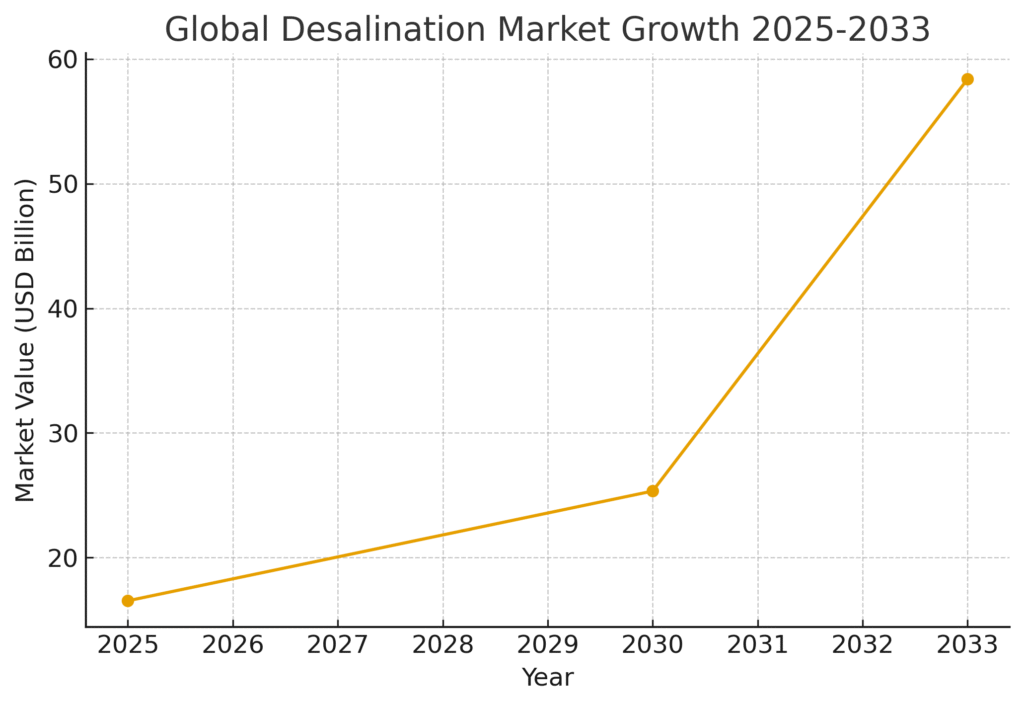
| 1 | Global desalination systems market 2025 | USD 16.54 billion, projected to reach 25.34 billion by 2030 (CAGR 8.91%) |
| 2 | Water desalination market value 2024–2033 | USD 21.74 billion in 2024, growing to 58.38 billion by 2033 (CAGR 11.6%) |
| 3 | Desalination technologies market forecast | USD 16.87 billion in 2023 → 47.9 billion by 2033 (11% CAGR) |
| 4 | Global desalination tech 2024 | USD 25.68 billion, CAGR 8.68% to 2032 |
| 5 | Water desalination equipment market | USD 18.36 billion in 2024 → 31.69 billion by 2030 (CAGR 9.6%) |
| 6 | Plant equipment growth forecast | USD 46.18 billion in 2025 → 109.42 billion by 2034 (CAGR 10.06%) |
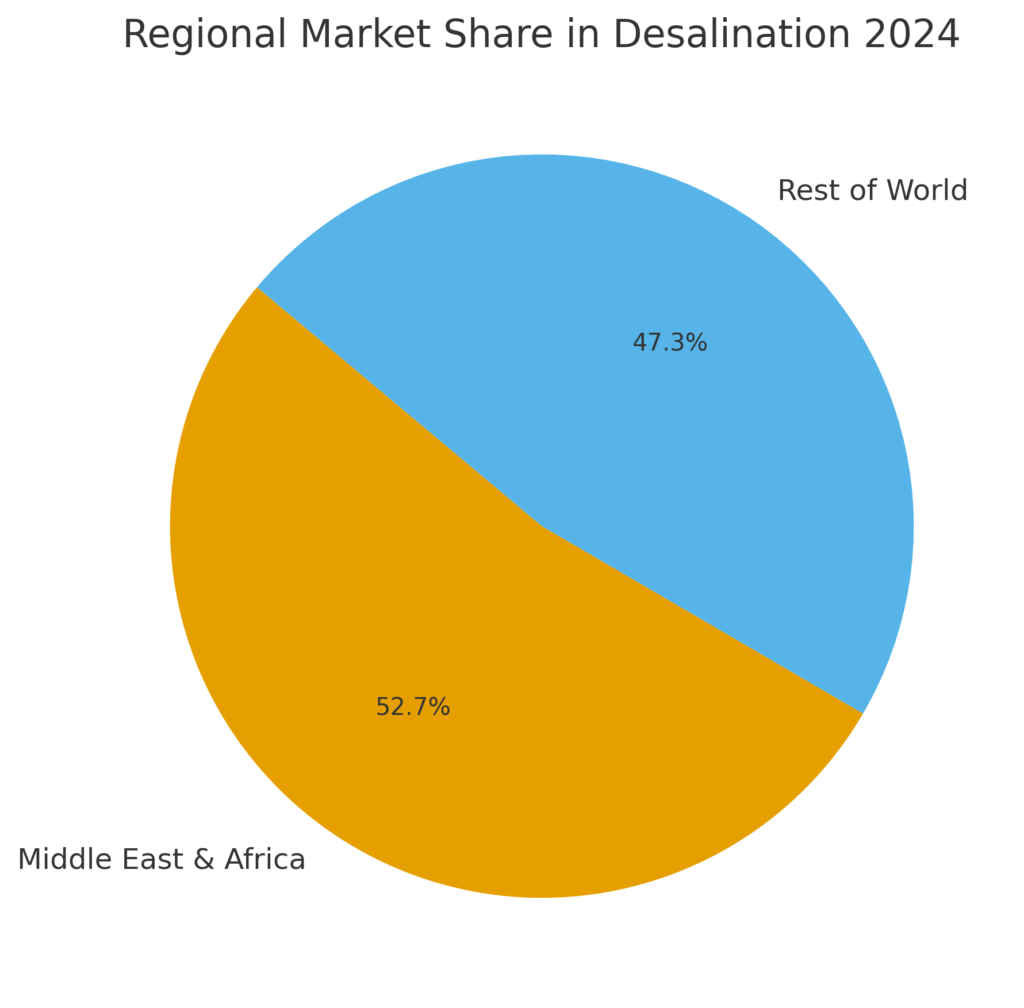
| 7 | Middle East & Africa desalination share 2024 | ~52.7% of global market |
| 8 | MEA equipment market revenue | ~49.6% of global share in 2024 |
| 9 | MEA desalination technologies share | ~52.95% in 2024 |
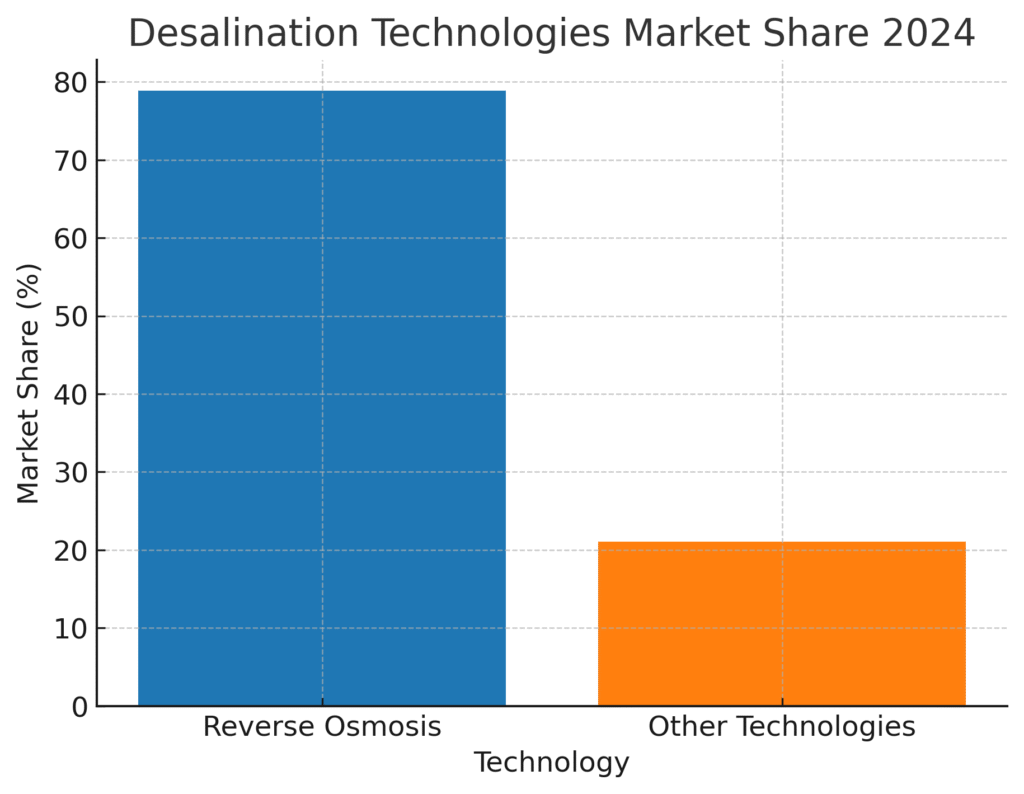
| 10 | Reverse osmosis market share | ~78.9% of desalination systems in 2024 |
| 11 | Municipal water supply use | ~78.3% of desalination systems in 2024 |
| 12 | Seawater desalination equipment share | ~60.3% of global revenue in 2024 |
| 13 | Industrial desalination growth | Fastest-growing application segment |
| 14 | Total desalination plants worldwide | 16,000–23,000 plants in 177 countries |
| 15 | Global desalinated water output | ~95 million m³/day |
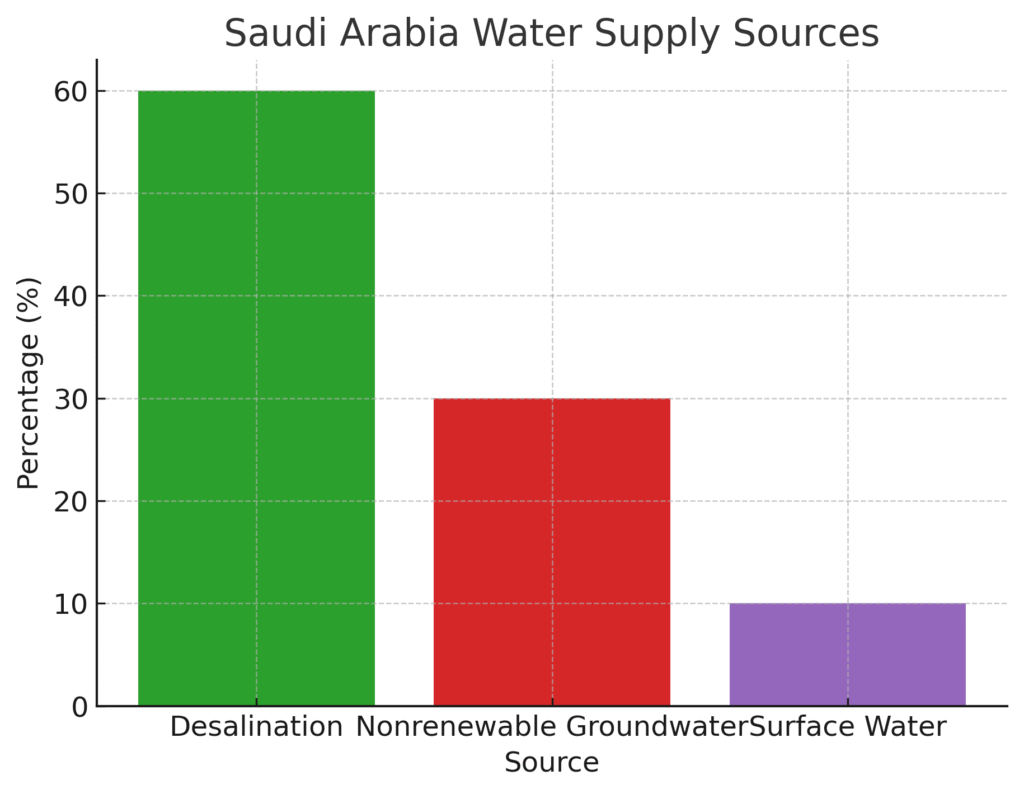
| 16 | Saudi Arabia water supply share | ~60% from desalination |
| 17 | Saudi desalination authority plants | 33 desalination + 139 purification plants |
| 18 | Energy recovery in modern RO systems | Up to 60% of brine-stream pressure recovered |
| 19 | Energy efficiency improvements | Operational energy <3 kWh per m³ of water |
| 20 | Private sector involvement | Rising competition in plant ownership & operations |
Top 20 Desalination Marketing Statistics 2025
Desalination Marketing Statistics #1: Global Desalination Systems Market 2025
The global desalination systems market is valued at USD 16.54 billion in 2025. It is projected to reach USD 25.34 billion by 2030, reflecting a CAGR of 8.91%. This growth highlights the rising demand for freshwater in regions facing severe water scarcity. Businesses operating in this space are finding new opportunities for expansion, driven by both necessity and innovation. From a marketing perspective, this statistic emphasizes the urgency and importance of desalination as a long-term investment.
Desalination Marketing Statistics #2: Water Desalination Market Value 2024–2033
In 2024, the water desalination market stood at USD 21.74 billion. By 2033, it is forecasted to grow to USD 58.38 billion, showing an impressive CAGR of 11.6%. Such strong growth underscores the global reliance on desalination technologies for sustainable water management. Marketers can leverage this statistic to demonstrate the scale and profitability of the sector. The increasing investment also shows how brands can position themselves as leaders in sustainability-focused innovation.
Desalination Marketing Statistics #3: Desalination Technologies Market Forecast
The desalination technologies market was worth USD 16.87 billion in 2023. Forecasts suggest it will expand to USD 47.9 billion by 2033, growing at an annual rate of around 11%. This projection reflects ongoing advancements in water treatment and membrane technologies. For marketing professionals, it demonstrates the strength of innovation-driven growth in the industry. Highlighting such statistics can help attract investors and stakeholders eager to be part of a rapidly expanding market.
Desalination Marketing Statistics #4: Global Desalination Tech 2024
In 2024, the global desalination technologies market reached USD 25.68 billion. With a CAGR of 8.68%, it is expected to see sustained growth through 2032. This steady expansion reflects confidence in desalination as a long-term solution to global water shortages. Marketers can position this data as proof of stability and reliability in the sector. By doing so, they can build campaigns that emphasize trust, resilience, and the future of water innovation.
Desalination Marketing Statistics #5: Water Desalination Equipment Market
The water desalination equipment market stood at USD 18.36 billion in 2024. By 2030, it is projected to reach USD 31.69 billion with a CAGR of 9.6%. This statistic reveals how equipment manufacturers play a central role in the industry’s evolution. From a marketing standpoint, showcasing these numbers highlights the growing demand for high-quality, efficient machinery. It also emphasizes how technology suppliers can position themselves as vital contributors to the global water supply.
Desalination Marketing Statistics #6: Plant Equipment Growth Forecast
In 2025, desalination plant equipment is valued at USD 46.18 billion. By 2034, it is forecast to reach USD 109.42 billion, growing at a CAGR of 10.06%. This massive growth reflects the increasing construction of new plants worldwide. For marketers, the data is a powerful narrative of scale and infrastructure expansion. Campaigns can focus on how these investments transform economies, jobs, and access to clean water.
Desalination Marketing Statistics #7: Middle East & Africa Market Share 2024
The Middle East and Africa accounted for around 52.7% of the global desalination systems market in 2024. This dominance stems from the region’s heavy reliance on desalination to meet water demands. For marketers, this statistic demonstrates where the largest opportunities and audiences exist. Positioning solutions specifically for MENA markets can resonate strongly with decision-makers. Highlighting this regional leadership also allows campaigns to align with real-world needs and priorities.
Desalination Marketing Statistics #8: MEA Equipment Market Revenue 2024
In 2024, the Middle East and Africa held around 49.6% of global desalination equipment revenue. This share shows how vital the region is for equipment sales and deployment. Marketers can use this information to target campaigns toward stakeholders in these high-demand markets. The statistic also reinforces the importance of localization in marketing strategies. Tailored messaging for regional buyers helps brands establish stronger market positioning.
Desalination Marketing Statistics #9: MEA Desalination Technologies Share
By 2024, the Middle East and Africa held 52.95% of the global desalination technologies market. This highlights the region’s leading role in adopting and scaling advanced solutions. From a marketing angle, these numbers are useful in showing where technology adoption is most aggressive. Campaigns can build credibility by linking to regional success stories. It also helps global players frame their marketing strategies around partnerships in MENA.
Desalination Marketing Statistics #10: Reverse Osmosis Market Share
Reverse osmosis accounted for approximately 78.9% of desalination systems in 2024. This dominance highlights its status as the preferred method of desalination. Marketers can leverage this figure to show technological leadership in campaigns. It is also useful for emphasizing efficiency and reliability as key selling points. By focusing on reverse osmosis, brands can position themselves at the heart of industry innovation.
Desalination Marketing Statistics #11: Municipal Water Supply Use
In 2024, municipal applications made up about 78.3% of desalination system usage. This statistic reflects how important desalination is for providing water to communities. For marketers, the insight offers a chance to highlight the human impact of desalination projects. Campaigns can emphasize stories of communities gaining access to clean water. This approach connects statistical data with real-world benefits, making messaging more relatable.
Desalination Marketing Statistics #12: Seawater Desalination Equipment Share
Seawater applications made up around 60.3% of desalination equipment revenue in 2024. This figure underscores the importance of ocean-based desalination technologies. For marketers, this is a reminder of the core market driving equipment demand. Campaigns can focus on sustainability, innovation, and the global need for seawater processing. This ensures messaging resonates with both industry leaders and environmentally conscious audiences.
Desalination Marketing Statistics #13: Industrial Desalination Growth
Industrial desalination is one of the fastest-growing segments in the market. This reflects the need for reliable water supplies across industries like energy and manufacturing. From a marketing viewpoint, this statistic highlights new opportunities outside municipal sectors. Campaigns can show how desalination supports diverse industries beyond basic water supply. This creates powerful narratives for B2B marketing and cross-industry collaborations.
Desalination Marketing Statistics #14: Total Desalination Plants Worldwide
There are between 16,000 and 23,000 desalination plants in operation globally. These plants span across 177 countries, producing millions of cubic meters of water daily. The scale of this infrastructure demonstrates desalination’s global reach. Marketers can use this figure to highlight the widespread acceptance of the technology. It is also a compelling way to show audiences that desalination is not experimental, but a proven global solution.
Desalination Marketing Statistics #15: Global Desalinated Water Output
Globally, desalination plants produce around 95 million cubic meters of water per day. This scale highlights the sheer importance of the industry in supporting global populations. Marketers can showcase this data to emphasize desalination’s critical role in modern life. The statistic also reinforces the scale of opportunity for businesses entering the market.Campaigns built on such powerful numbers can inspire confidence in stakeholders.
Desalination Marketing Statistics #16: Saudi Arabia Water Supply Share
In Saudi Arabia, about 60% of the nation’s water comes from desalination. This reliance illustrates how critical the technology is for the region’s survival. For marketers, this statistic demonstrates the potential for growth in water-scarce areas. It also highlights how nations prioritize desalination as a cornerstone of national strategy. Campaigns can build trust by aligning with these strategic priorities.
Desalination Marketing Statistics #17: Saudi Desalination Authority Plants
Saudi Arabia operates 33 desalination plants alongside 139 purification plants. This significant infrastructure reflects long-term investments in water security. Marketers can use this statistic to show how government backing fuels industry growth. It also highlights how partnerships and large-scale contracts create business opportunities. Such data points inspire confidence in long-term commitments to the industry.
Desalination Marketing Statistics #18: Energy Recovery in Modern RO Systems
Modern reverse osmosis systems recover up to 60% of brine-stream pressure. This efficiency makes desalination more sustainable and cost-effective. Marketers can highlight this figure to show technological advancement in the industry. It also provides a compelling story of innovation for environmentally conscious audiences. Campaigns can focus on energy savings as a key value proposition.
Desalination Marketing Statistics #19: Energy Efficiency Improvements
Operational energy intensity in some modern desalination systems is below 3 kWh per cubic meter. This shows significant improvements in energy efficiency over older technologies. Marketers can leverage this statistic to highlight progress in sustainability. It helps position brands as leaders in eco-friendly technology. Campaigns built around energy savings appeal to governments, industries, and green-focused investors alike.
Desalination Marketing Statistics #20: Private Sector Involvement
Private sector participation in desalination is increasing worldwide. This reflects growing competition in ownership and operations of desalination plants. For marketers, this statistic highlights the expanding role of private companies in shaping the industry. It creates opportunities for brands to showcase expertise and reliability. Marketing campaigns can emphasize partnership, innovation, and leadership to appeal to both public and private stakeholders.
Final Thoughts on Desalination Marketing Statistics
Looking at desalination marketing statistics, it’s clear that this industry is more than figures—it’s about creating meaningful solutions to one of humanity’s biggest needs: clean water. For me, the most powerful takeaway is that these statistics show a growing opportunity for brands, policymakers, and innovators to connect their vision with global impact. And while the numbers give us clarity, it’s the way we present and share them that drives change. That’s why I always find inspiration from the work of a leading marketing agency in New York, which demonstrates how powerful marketing can turn even the most technical data into stories people care about. Personally, writing this has left me not just more informed but more hopeful about where we’re heading.
SOURCES
- https://www.mordorintelligence.com/industry-reports/desalination-system-market
- https://straitsresearch.com/report/water-desalination-market
- https://www.fortunebusinessinsights.com/desalination-technologies-market-109806
- https://www.marketresearchfuture.com/reports/water-desalination-market-11785
- https://www.factmr.com/report/desalination-technologies-market
- https://www.custommarketinsights.com/report/water-desalination-market/
- https://trendsresearch.org/insight/the-future-of-desalination-between-financing-and-climate-challenges/
- https://www.bluefieldresearch.com/our-coverage/desalination/
- https://www.amwa.net/article/us-desalination-industry-report-projects-growth-21st-century-0
- https://www.mdpi.com/2076-3417/11/2/670
- https://www.theguardian.com/business/2025/sep/26/500m-thames-water-desalination-plant-has-provided-just-seven-days-water-over-15-years
- https://www.reuters.com/business/environment/suez-siemens-abu-dhabi-national-energy-company-join-up-desalination-initiative-2024-09-24/
- https://www.reuters.com/sustainability/boards-policy-regulation/morocco-invests-desalination-waterways-mitigate-drought-2025-06-13/
- https://www.atlanticcouncil.org/blogs/menasource/gulf-water-scarcity-deslination/
- https://forwardfooding.com/blog/foodtech-trends-and-insights/water-tech-series-solving-water-crisis-with-desalination/
- https://www.startus-insights.com/innovators-guide/new-water-desalination-companies/