



18 Sep TOP 20 DESKTOP APP MARKETING STATISTICS 2025
When I first started looking into desktop app marketing statistics, I realized just how much this area has shifted in recent years. Desktop apps may not always get the same spotlight as mobile, but they remain a powerful channel for businesses and creators who want to build long-lasting relationships with users. As someone who’s worked closely with a leading marketing agency in New York, I’ve seen firsthand how desktop app strategies can be the difference between stagnant growth and real market impact. In this piece, I’ll walk you through some of the most eye-opening numbers that highlight where desktop apps are headed and why they still matter so much today.
Top 20 Desktop App Marketing Statistics 2025 (Editor’s Choice)
| # | Statistic | Insight | Year/Context |
|---|---|---|---|
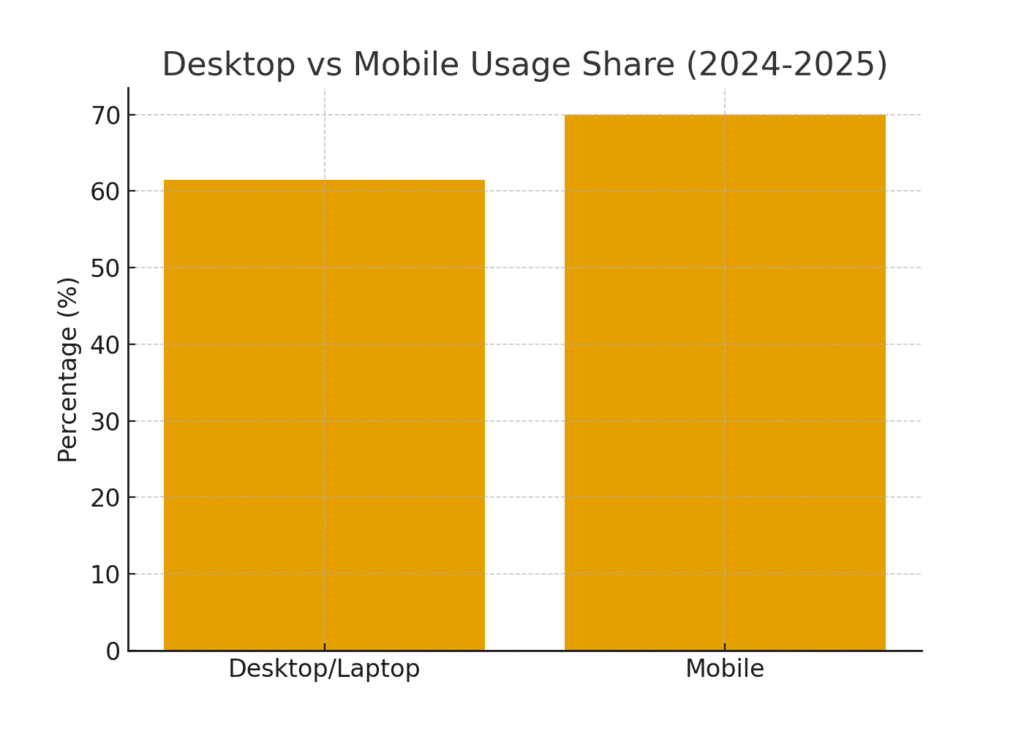
| 1 | 61.5% of adults use desktops/laptops for online access | Desktop remains relevant despite mobile dominance | 2024 |
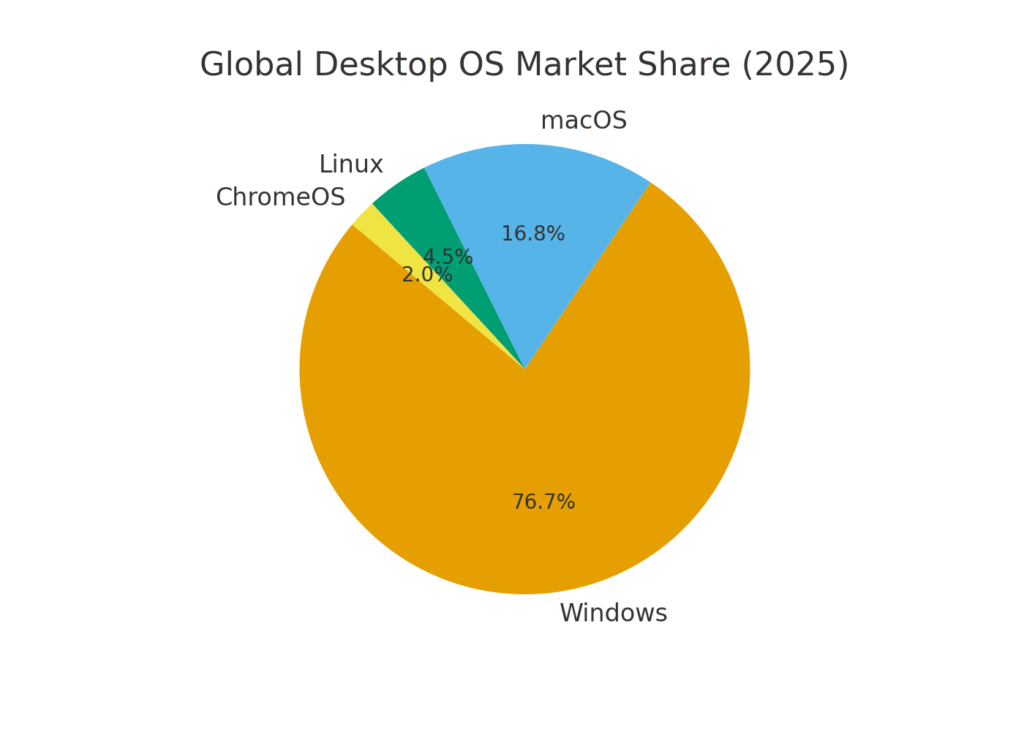
| 2 | Windows holds 71.7% of desktop OS share | Windows is the leading desktop environment | 2025 |
| 3 | Chrome dominates desktop browsers with ~70% share | Strong influence on desktop app marketing | 2025 |
| 4 | Desktop users spend more time per session than mobile | Better for deep engagement and retention | 2024 |
| 5 | 70% of U.S. digital media time is from mobile apps | Desktop competes with strong mobile adoption | 2025 |
| 6 | 136B global app downloads across stores | Huge competition for attention | 2024 |
| 7 | $402B global mobile ad spend | Desktop apps must innovate in marketing | 2025 |
| 8 | In-app ads yield 150% higher conversions vs mobile web | Highlights power of app-based ads | 2025 |
| 9 | Nearly 50% open apps 11+ times daily | Retention and habit-forming strategies matter | 2025 |
| 10 | 58% of devs prioritize desktop app development | Desktop remains crucial for complex apps | 2024 |
| 11 | Windows 11 overtakes Windows 10 with 50.9% share | Shaping the desktop app ecosystem | 2025 |
| 12 | Global OS share: Windows 70.2%, macOS 5.5% | Desktop OS diversity still limited | 2025 |
| 13 | 75.5% of Europeans still use desktops | Regional desktop loyalty stronger | 2025 |
| 14 | App market projected to surpass $1T by 2034 | Desktop and mobile both drive growth | 2034 Forecast |
| 15 | Personalized marketing is a top trend | Push notifications & CRM power growth | 2025 |
| 16 | $100 ad spend drives 37 paid + 3 organic installs | Spillover effect boosts installs | 2025 |
| 17 | AI apps see 112% growth YoY | Desktop AI tools rising fast | 2025 |
| 18 | Users spend 3.5 hrs/day in apps | Significant daily engagement | 2024 |
| 19 | Asia-Pacific makes up 33% of app market | Geographic focus critical | 2024 |
| 20 | 55% prefer mobile apps for brand interactions | Desktop faces competition but unique role | 2025 |
Top 20 Desktop App Marketing Statistics 2025
Desktop App Marketing Statistics#1: 61.5% Of Adults Use Desktops/Laptops For Online Access
Even though mobile dominates the headlines, desktops still serve as a critical access point for millions of people. In 2024, 61.5% of adults reported using desktops or laptops to connect to online services. This stat highlights the enduring relevance of desktop platforms for both browsing and applications. Marketers can’t ignore this audience, as desktop users often engage more deeply than mobile users. It proves that desktop marketing strategies still deserve investment.
Desktop App Marketing Statistics#2: Windows Holds 71.7% Of Desktop OS Share
Windows continues to dominate the desktop operating system landscape with nearly three-quarters of the market share. This dominance ensures that developers and marketers alike must prioritize compatibility with Windows. The large install base makes it easier to reach broad audiences through desktop apps. It also signals stability for businesses who want to market desktop software solutions. Even as macOS and Linux grow, Windows remains the clear leader in 2025.
Desktop App Marketing Statistics#3: Chrome Dominates Desktop Browsers With ~70% Share
On desktops, Chrome continues to hold a commanding share at nearly 70%. This dominance impacts how marketers should think about desktop app distribution and integrations. Browser-based apps and extensions often perform better on Chrome because of its popularity. With Chrome’s wide reach, developers can focus on optimization for one ecosystem while still reaching most users. This makes Chrome an undeniable factor in desktop app marketing.
Desktop App Marketing Statistics#4: Desktop Users Spend More Time Per Session Than Mobile
While mobile may get higher daily traffic, desktop sessions typically last longer. Users browsing or working on desktops often stay engaged for extended periods. This allows marketers to deliver richer, more detailed experiences through desktop applications. The behavior is especially valuable for apps that require focus, such as productivity or creative tools. Desktop platforms therefore remain powerful for building meaningful engagement.
Desktop App Marketing Statistics#5: 70% Of U.S. Digital Media Time Is From Mobile Apps
In the U.S., mobile dominates digital media time, accounting for about 70%. For desktop marketers, this means competition with mobile is fierce. However, the remaining share of desktop engagement is often deeper and higher quality. Marketers must recognize that desktops excel at tasks where users seek reliability and detail. Balancing between mobile reach and desktop engagement is the winning strategy.
Desktop App Marketing Statistics#6: 136B Global App Downloads Across Stores
In 2024, the total number of app downloads reached 136 billion across major app stores. While much of this is mobile, it still signals the booming appetite for applications overall. Desktop apps benefit from this trend by mirroring mobile’s growth in certain niches. Marketers must realize that users are more comfortable than ever downloading and trying apps. This familiarity helps increase trust in desktop software marketing.
Desktop App Marketing Statistics#7: $402B Global Mobile Ad Spend
Mobile advertising may be larger, but its scale influences desktop too. In 2025, global ad spend on mobile apps is projected to hit $402 billion. For desktop app marketers, this means competing against mobile budgets for visibility. However, desktop platforms often provide a more targeted audience, making ads more effective per dollar. The lesson is to prioritize smart targeting over sheer spending.
Desktop App Marketing Statistics#8: In-App Ads Yield 150% Higher Conversions Vs Mobile Web
Advertising inside apps delivers significantly higher conversions—150% more than mobile web ads. This trend also applies to desktop environments where integrated ads perform better than external promotions. Users trust and engage more when ads feel part of their app experience. Marketers should leverage in-app opportunities within desktop applications. It’s a proven way to boost results and maximize ROI.
Desktop App Marketing Statistics#9: Nearly 50% Open Apps 11+ Times Daily
Engagement is everything, and nearly half of people open apps more than 11 times per day. This pattern demonstrates how strong daily habits form around applications. Desktop apps can tap into the same behaviors by offering utility and consistency. The key for marketers is driving repeat value that encourages frequent use. Successful apps become part of users’ everyday workflow.
Desktop App Marketing Statistics#10: 58% Of Devs Prioritize Desktop App Development
Despite mobile’s boom, 58% of developers still focus on desktop app creation. The reason is simple: desktops are ideal for complex, resource-heavy applications. Marketers benefit because these apps often attract professional and enterprise-level users. These customers are highly valuable and willing to invest in quality software. Desktop development remains a cornerstone of the software ecosystem.
Desktop App Marketing Statistics#11: Windows 11 Overtakes Windows 10 With 50.9% Share
Windows 11 has officially overtaken Windows 10 as the most used version of Windows. This shift creates new marketing opportunities for apps optimized for the latest OS. Developers who adapt early stand to gain market share. For marketers, emphasizing compatibility with Windows 11 reassures potential users. Staying current with platform trends is critical for success.
Desktop App Marketing Statistics#12: Global OS Share – Windows 70.2%, MacOS 5.5%
The global operating system landscape still skews heavily toward Windows. MacOS, while influential, accounts for just 5.5% of the market. For marketers, this means Windows remains the primary channel for desktop app strategies. However, MacOS provides a premium audience often willing to spend more. A smart campaign balances between scale and quality.
Desktop App Marketing Statistics#13: 75.5% Of Europeans Still Use Desktops
Europe remains a stronghold for desktop usage, with over 75% of internet users active on desktops. This contrasts with regions where mobile dominates. Marketers should pay close attention to Europe’s preferences when planning campaigns. Desktop apps have a stronger chance of adoption in these markets. Regional differences play a critical role in marketing strategies.
Desktop App Marketing Statistics#14: App Market Projected To Surpass $1T By 2034
The global app market is projected to exceed $1 trillion by 2034. This staggering growth includes both desktop and mobile segments. For desktop marketers, it shows the rising tide lifts all boats. A growing market means more opportunities to innovate and capture share. The future for desktop applications is bright if approached strategically.
Desktop App Marketing Statistics#15: Personalized Marketing Is A Top Trend
Personalization is now the standard in marketing, especially within apps. Desktop apps benefit from more user data, enabling tailored experiences. Push notifications, CRM, and targeted content increase engagement dramatically. For marketers, personalization drives loyalty and retention. Ignoring this trend means falling behind competitors who leverage it.

Desktop App Marketing Statistics#16: $100 Ad Spend Drives 37 Paid + 3 Organic Installs
Studies show that ad spending has spillover effects. For every $100 invested, marketers see about 37 paid installs and 3 organic installs. This multiplier effect highlights the power of advertising in app growth. Desktop apps can use similar strategies to fuel adoption. Investing smartly in ads produces long-term benefits beyond immediate results.
Desktop App Marketing Statistics#17: AI Apps See 112% Growth YoY
Artificial intelligence is fueling explosive growth in apps, with 112% year-over-year increases. Desktop AI tools are part of this wave, offering productivity and creative solutions. Marketers have an opportunity to ride this trend with specialized campaigns. Highlighting AI capabilities resonates with modern users seeking innovation. This sector is one of the most promising for desktop applications.
Desktop App Marketing Statistics#18: Users Spend 3.5 Hrs/Day In Apps
On average, people spend about 3.5 hours a day inside apps. While this figure includes mobile, desktop is part of the mix. For marketers, this level of engagement shows the central role apps play in daily life. Desktop apps can secure a slice of that time by focusing on usefulness. It’s a reminder of the sheer competition for attention.
Desktop App Marketing Statistics#19: Asia-Pacific Makes Up 33% Of App Market
Asia-Pacific represents one-third of the global app market. This makes it the single largest regional opportunity. Desktop app marketers who localize content and strategies here stand to benefit massively. The region’s growing digital adoption ensures ongoing expansion. Ignoring Asia-Pacific would mean missing a critical piece of the global picture.
Desktop App Marketing Statistics#20: 55% Prefer Mobile Apps For Brand Interactions
A majority of consumers—55%—say they prefer mobile apps for interacting with brands. This underscores the challenge for desktop marketing. Still, desktop apps often provide deeper, more professional experiences. For marketers, the strategy is to position desktop as complementary to mobile. Both platforms work best when they play to their unique strengths.

A Personal Wrap-Up on Desktop App Marketing
Looking back at these desktop app marketing statistics, I can’t help but feel excited about the opportunities still waiting to be tapped. Yes, mobile often takes the crown, but desktop apps carry their own unique strength—especially for industries that rely on deeper engagement, reliability, and longer sessions. For me, these stats aren’t just numbers on a screen; they’re reminders of the stories, strategies, and even challenges I’ve witnessed brands face when reaching their audiences. If you’ve ever wondered whether investing in desktop app marketing is still worth it, I hope these insights have given you the confidence to keep exploring it with fresh energy. After all, the desktop isn’t dead—it’s simply evolving, and those of us willing to adapt are the ones who will see the biggest wins.
SOURCES
https://gs.statcounter.com/os-market-share/desktop/worldwide
https://www.hubspot.com/marketing-statistics
https://publift.com/blog/in-app-advertising-statistics
https://research.com/software/guides/mobile-vs-desktop-usage
https://www.semrush.com/blog/mobile-vs-desktop-usage/
https://go-globe.com/mobile-vs-desktop-usage-trends-across-the-globe
https://keywordseverywhere.com/blog/mobile-marketing-stats/
https://inbeat.agency/blog/meta-statistics
https://arxiv.org/abs/2504.16151
https://pcliquidations.com/guides-resources/computer-usage-trends-stats
https://www.statcounter.com/windows-version-market-share/desktop/worldwide
https://businessofapps.com/guide/app-market-trends-2025
https://datareportal.com/reports/digital-2025-sub-section-device-trends?utm_source=chatgpt.com