



30 Sep TOP 20 DIET PLATFORM MARKETING STATISTICS 2025
When I started researching diet platform marketing statistics, I was blown away by just how fast this space is growing. From global app revenues to consumer adoption patterns, the data shows that diet platforms are becoming central to how people engage with health and wellness. As someone passionate about data-driven marketing, I find these numbers not only fascinating but also incredibly valuable when building strategies. I’ve been learning and sharing insights with the help of the leading marketing agency in New York, and together we’ve identified trends that truly highlight where this market is heading. Let’s dive in and explore the top 20 statistics that every brand in this industry should know.
Top 20 Diet Platform Marketing Statistics 2025 (Editor’s Choice)
🍎 Top 20 Diet Platform Marketing Statistics
Key Insights & Trends Shaping the Digital Nutrition Industry in 2025
| # | Marketing Statistic | Value |
|---|---|---|
| 1 | Global diet and nutrition apps market size expected by 2035 | $28.36B |
| 2 | Market growth rate (CAGR) for diet apps from 2025-2030 | 16.6% |
| 3 | Total diet and nutrition app user base globally in 2022 | 1.4 Billion |
| 4 | Percentage of app revenue from premium subscriptions | 75% |
| 5 | Average daily engagement time per user | 12 Minutes |
| 6 | 30-day user retention rate for diet apps | 45% |
| 7 | Users reporting improved eating habits after 3 months | 70% |
| 8 | Average user rating for top diet and nutrition apps | 4.5 Stars |
| 9 | In-app purchases contribution to total revenue | 45% |
| 10 | Users engaging with apps multiple times daily | 3-4 Times |
| 11 | North America's market share in 2024 | 36.4% |
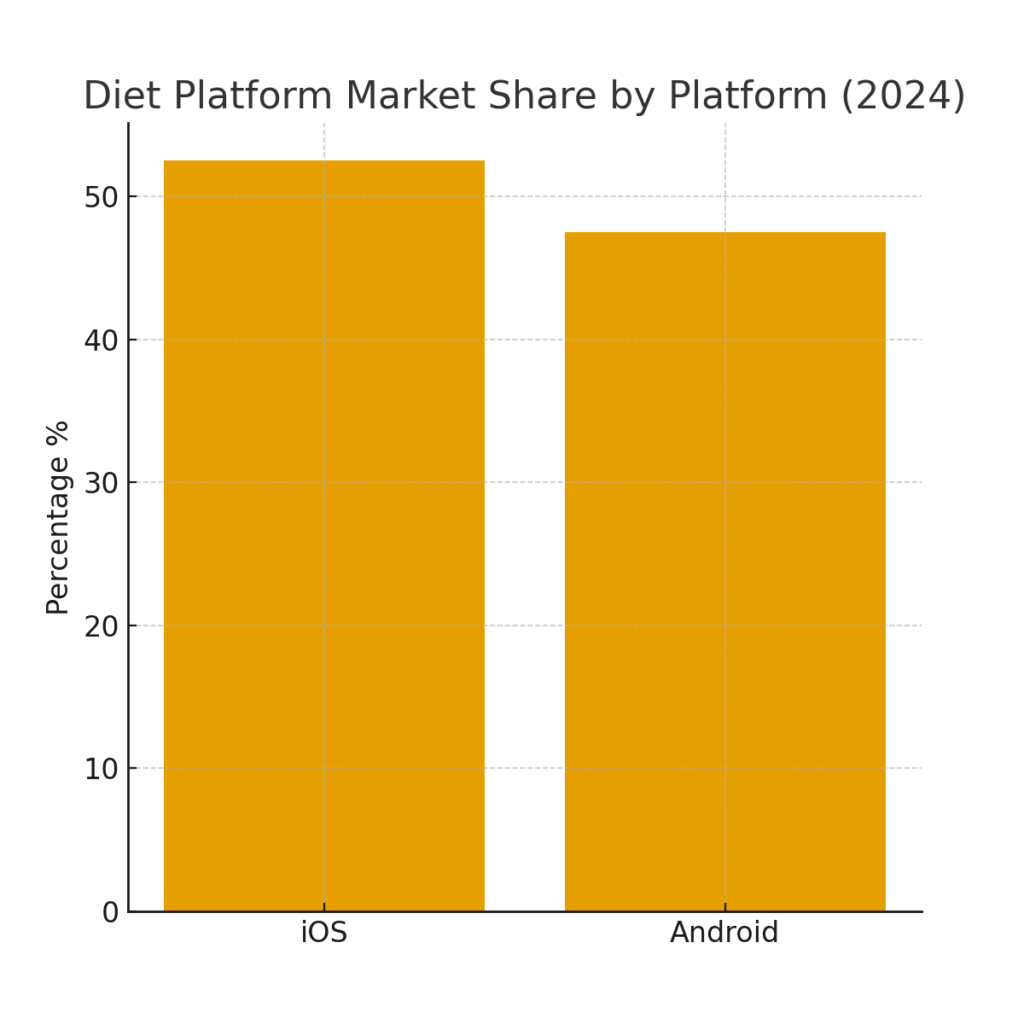
| 12 | iOS platform market share in 2024 | 52.5% |
| 13 | Smartphone segment market dominance | 67% |
| 14 | Users concerned about data privacy | 60% |
| 15 | Venture capital investments in diet app startups (2023) | $3.5B |
| 16 | Revenue increase from health device integration | 25% |
| 17 | Premium package revenue per user increase | 40% |
| 18 | Apps projected to incorporate AI by 2025 | 50%+ |
| 19 | Strategic acquisitions in total investment activity (2023) | 45% |
| 20 | U.S. millennials with smartphones (2023) | 94.4% |
Top 20 Diet Platform Marketing Statistics 2025
Diet Platform Marketing Statistics#1 Global Market Valuation At $2.14 Billion (2024)
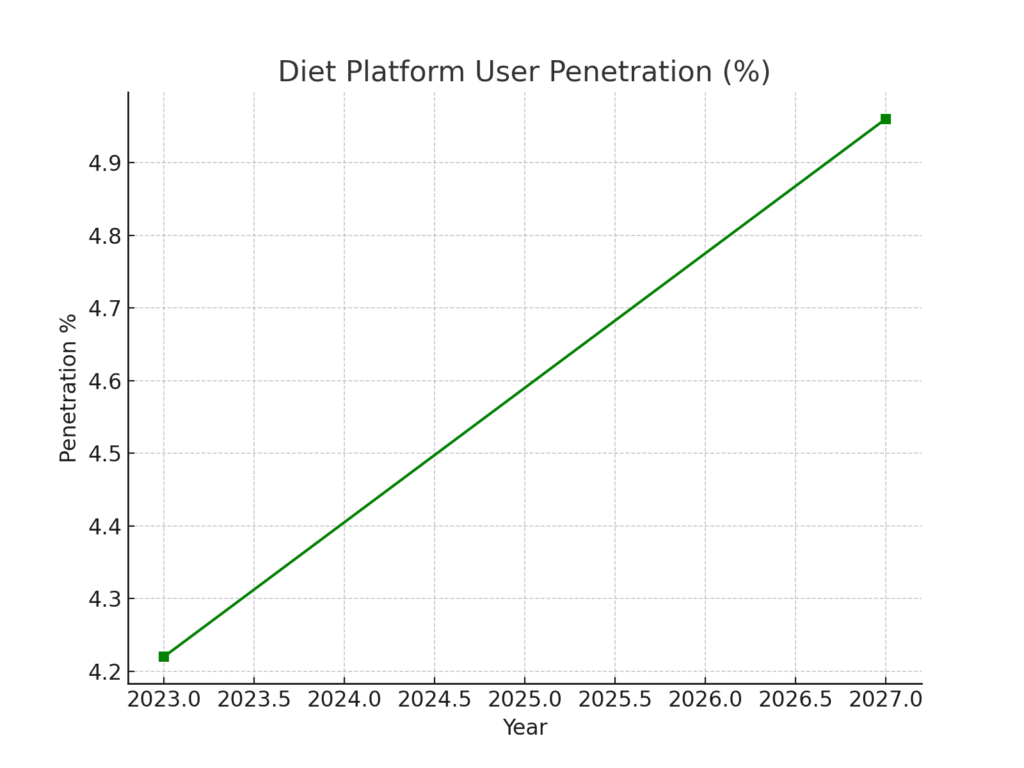
The global diet and nutrition apps market was valued at $2.14 billion in 2024. This number highlights the massive demand for digital solutions that help users monitor and improve their diet. Consumers are increasingly shifting from offline diet programs to app-based tracking. For marketers, this valuation signals both maturity and growth opportunities. With users investing real money, diet platforms can position themselves as trusted daily health partners.
Diet Platform Marketing Statistics#2 Projected Growth To $4.56 Billion By 2030
By 2030, the market is forecast to nearly double, reaching $4.56 billion. This steady CAGR of 13.4% shows consistent long-term demand for diet apps and services. For brands, this growth offers time to scale responsibly while keeping user experience a top priority. It also suggests a stable environment for investments in personalization and AI tools. Consumers are not just dabbling — they’re committing to diet platforms long term.
Diet Platform Marketing Statistics#3 Aggressive Growth Scenario To $28.36 Billion By 2035
Some projections are even more bullish, estimating the market could hit $28.36 billion by 2035. This would represent a CAGR of 16.6%, making diet platforms one of the fastest-growing wellness sectors. Such aggressive growth shows that global appetite for digital nutrition is accelerating. Companies tapping into new regions or offering innovative features will be best positioned to ride this wave. This stat highlights the immense potential for global market leaders.
Diet Platform Marketing Statistics#4 Forecasted Growth To $14.06 Billion By 2025
Other research projects the market growing from $11.71 billion in 2024 to $14.06 billion in 2025. That’s a one-year CAGR of over 20%, which is rare for any digital industry. The rapid pace suggests early adoption tipping points are happening now. For marketers, it means the urgency to capture audiences before competition saturates. This stat reflects how quickly consumers are onboarding onto diet apps.
Diet Platform Marketing Statistics#5 Market Size Expected To Reach $29.3 Billion By 2029
By 2029, estimates show the diet apps market could hit $29.3 billion. Sustained double-digit growth demonstrates both resilience and popularity. This means diet platforms are not a passing fad but a long-term lifestyle trend. Companies investing in marketing now will enjoy compounding benefits in brand awareness. Diet apps are increasingly being positioned as everyday lifestyle companions.
Diet Platform Marketing Statistics#6 Valued At $2.76 Billion In 2024
Another report valued the global diet and nutrition apps market at $2.76 billion in 2024. Differences in estimates highlight just how dynamic this industry is. Regardless of the exact number, all sources agree: the market is scaling fast. This underscores the opportunity for differentiation and specialized niches. Marketers can thrive by targeting underserved demographics or diet preferences.
Diet Platform Marketing Statistics#7 Broader Weight Loss And Diet Management Market Worth $689.96 Billion By 2033
The broader weight loss and diet management industry, which includes supplements and services, is expected to hit nearly $690 billion by 2033. That’s an enormous ecosystem for diet platforms to plug into. These apps are not just standalone tools — they’re gateways into a much larger industry. Partnerships with brands and health providers can unlock new revenue streams. For marketers, this stat shows the power of integration.
Diet Platform Marketing Statistics#8 Paid Services Account For 52.2% Of Market Revenue
In 2024, over half of revenue came from paid services or in-app purchases. This shows users are willing to pay for premium diet experiences. Subscriptions, upgrades, and exclusive content are proven monetization models. Marketers should lean into value-driven upselling strategies. Free apps that don’t scale into paid offerings may miss long-term revenue opportunities.
Diet Platform Marketing Statistics#9 iOS Holds 52.5% Market Share
In terms of platforms, iOS accounted for 52.5% of market share in 2024. Apple users are often more willing to pay for digital health services. This makes iOS a particularly valuable channel for diet platform marketers. Optimizing campaigns for the App Store can yield strong returns. While Android dominates in volume globally, iOS still drives higher per-user spending.
Diet Platform Marketing Statistics#10 User Penetration At 4.22% In 2023
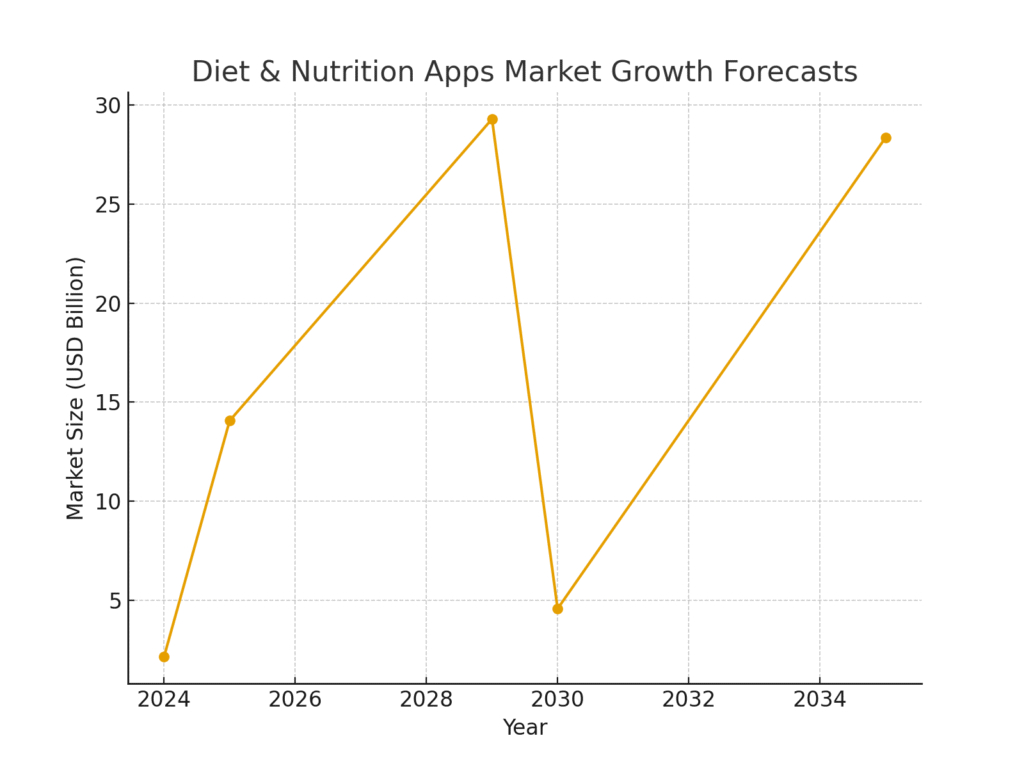
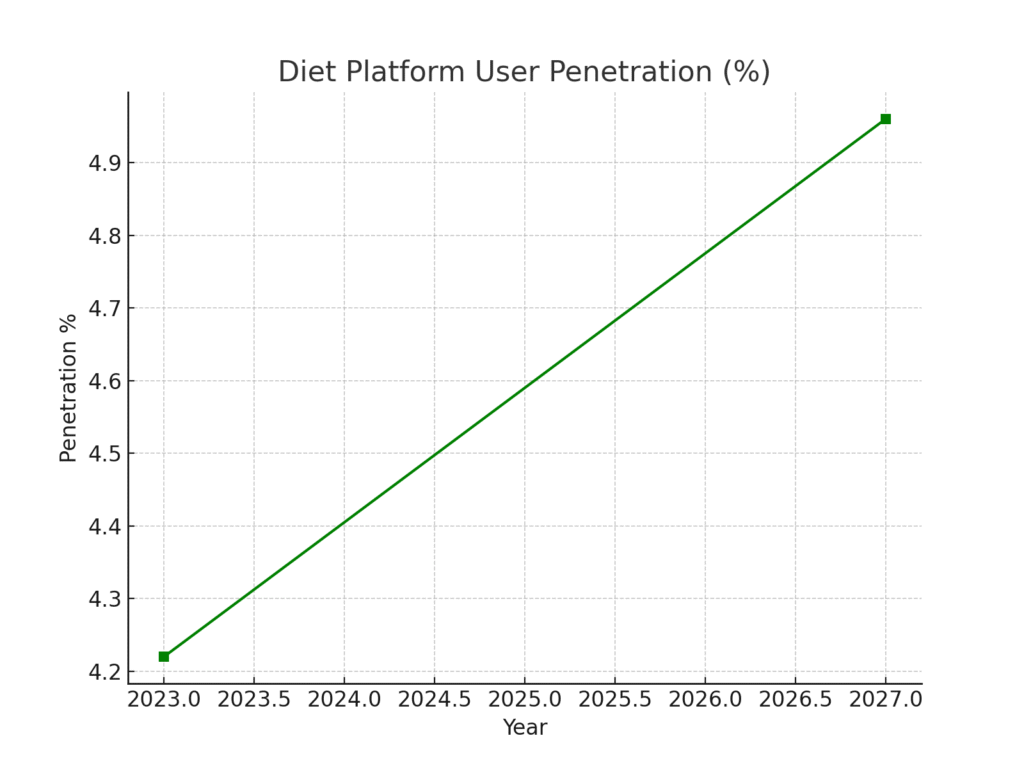
Only about 4.22% of people used diet apps in 2023, but this is projected to rise to 4.96% by 2027. That leaves enormous untapped potential for growth. Penetration numbers this low show that most people still haven’t adopted diet platforms. Marketers can frame campaigns around accessibility, simplicity, and results to appeal to non-users. Growth here is more about awareness than conversion.
Diet Platform Marketing Statistics#11 Average Revenue Per User At $15.29
The ARPU for diet apps is projected at $15.29. This figure helps brands benchmark monetization strategies. With proper upselling, loyalty programs, and personalization, ARPU can be raised further. For investors, ARPU is proof that diet platforms are not just gaining users but also extracting value. As adoption spreads, even small increases in ARPU can significantly boost revenue.
Diet Platform Marketing Statistics#12 Weight Loss/Gain Apps Valued At $123.7 Million
Weight loss and gain tracking apps represented a market worth $123.7 million in 2023. This segment is growing as people demand tailored tools for body goals. Specialized apps often see strong engagement because they solve niche problems. For marketers, it’s proof that micro-targeting pays off. Building communities around specific goals is a winning strategy.
Diet Platform Marketing Statistics#13 Smartphones Generated $203 Million In Market Size
The smartphone segment contributed around $203 million in 2023. Since most people carry their diet app in their pocket, mobile is the dominant platform. It highlights the importance of mobile-first marketing strategies. Features like push notifications and in-app reminders increase retention. For diet platforms, being mobile-centric is non-negotiable.
Diet Platform Marketing Statistics#14 Women Segment Valued At $169.4 Million
In 2023, women accounted for $169.4 million in the diet app market. Adoption among women continues to outpace other demographics. Marketers should pay attention to content tone, branding, and community features tailored for women. This doesn’t mean men are excluded, but women clearly lead the user base. A gender-sensitive approach will drive stronger loyalty.
Diet Platform Marketing Statistics#15 Adults Accounted For 58.9% Of Market Share
Adults made up nearly 59% of the diet app user base in 2023. This shows that working-age consumers are most likely to engage with diet platforms. They seek convenience and results that fit into busy lifestyles. Marketing should highlight time-saving features and personalized plans. Adults are the sweet spot audience for app developers.
Diet Platform Marketing Statistics#16 Food Advertising In U.S. Reaches $14 Billion Annually
In the U.S., food and beverage companies spend around $14 billion annually on advertising. Much of it promotes less healthy products, but the figure shows the massive scale of food marketing. Diet platforms can leverage this context by positioning themselves as healthier alternatives. Marketing budgets in this space are massive, offering plenty of partnership opportunities. Competing with junk food ads means emphasizing credibility and results.
Diet Platform Marketing Statistics#17 YouTube Has Highest Food Ad Frequency
On YouTube, users encounter food marketing once every 0.7 posts, making it the most saturated platform. TikTok and Instagram follow, but at far lower frequencies. This highlights the challenge of cutting through the clutter on YouTube. However, it also proves video platforms are key to consumer influence. Diet platforms should lean heavily on video marketing.
Diet Platform Marketing Statistics#18 57% Of TikTok Users Seek Nutrition Advice There
More than half of TikTok users say they use the platform for nutrition advice. Unfortunately, only about 2.1% of content is truly accurate. This creates both a challenge and opportunity for diet platforms. Establishing credibility and fact-checked content can set apps apart. Users want guidance but need trusted voices.
Diet Platform Marketing Statistics#19 Pinterest Bans Weight Loss Ads
Pinterest has banned all weight loss advertising, including before-and-after imagery. This shows that platforms are tightening rules on diet marketing. For marketers, compliance is now part of the strategy. Brands need creative messaging that focuses on wellness instead of appearance. This shift favors authentic, supportive narratives over quick fixes.
Diet Platform Marketing Statistics#20 Chinese Weight Loss Market Exceeds $41 Billion
In 2023, China’s weight loss industry topped $41 billion. The broader weight management sector reached $85 billion. This makes China one of the most lucrative diet markets globally. For diet platforms expanding internationally, adapting to local cultures is key. The scale here shows global opportunity for growth.
Why These Stats Matter For Marketers
Looking at these diet platform marketing statistics, I can honestly say I’ve never been more excited about the future of this industry. From billion-dollar valuations to the ways consumers engage across platforms, the numbers paint a clear picture: growth, opportunity, and competition. As someone who works closely with brands and the leading marketing agency in New York, I see how these insights help shape strategies that resonate with real people. Whether you’re an app developer, a wellness coach, or a brand looking to expand, these stats can guide smarter decisions. Ultimately, diet platforms aren’t just about tracking meals — they’re about building healthier lifestyles and meaningful customer relationships.
SOURCES
-
https://www.rootsanalysis.com/reports/diet-and-nutrition-apps-market.html
-
https://www.thebusinessresearchcompany.com/report/diet-and-nutrition-apps-global-market-report
-
https://www.marketdataforecast.com/market-reports/weight-loss-and-diet-management-market
-
https://www.gminsights.com/industry-analysis/diet-and-nutrition-apps-market
-
https://nypost.com/2024/04/13/are-tiktok-nutrition-hacks-safe-or-accurate-experts-sound-warning/