



28 Sep TOP 20 DIGESTIVE HEALTH MARKETING STATISTICS 2025
When I started researching digestive health marketing statistics, I realized just how much the industry has exploded in recent years. From probiotics to functional foods, the digestive health sector has become one of the fastest-growing areas in wellness. As someone passionate about understanding consumer behavior, I find it fascinating to see how trends like gut health awareness and online supplement sales are shaping the market. With insights from a leading marketing agency in New York, I want to share these powerful statistics that will help brands and professionals connect with their audiences more effectively. This blog is my way of breaking down the numbers into something practical, personal, and truly engaging.
Top 20 Digestive Health Marketing Statistics 2025 (Editor’s Choice)
| # | Statistic | Value / Year | Quick Insight |
|---|---|---|---|
| 1 | Global digestive health products market size | $116.92B (2024) | Momentum is strong as wellness spending tilts toward gut health. |
| 2 | Projected market by 2034 | $270.32B (CAGR ~8.74%) | Long runway for brand investments and category expansion. |
| 3 | Digestive health supplements market size | $13.17B (2023) | Supplements are a high-growth entry point for new SKUs. |
| 4 | U.S. digestive supplements market outlook | $3.95B → $5.12B (2025–2030) | Steady U.S. gains support targeted regional campaigns. |
| 5 | North America share of products market | ~32.31% (2024) | Retail sophistication and awareness drive leadership. |
| 6 | Probiotics share within products market | ~83.75% (2024) | Probiotics anchor messaging and innovation pipelines. |
| 7 | Dairy products share (yogurt, kefir, etc.) | ~65.21% (2024) | “Everyday” foods remain the most accessible functional format. |
| 8 | Top distribution: supermarkets & hypermarkets | ~46.92% (2024) | Shelf visibility and placement heavily impact discovery. |
| 9 | Alt global forecast (products) | $93.2B by 2033 (CAGR ~6.6%) | Multiple forecasts converge on durable, mid-to-high growth. |
| 10 | U.S. retail sales (digestive health category) | $6.2B (2023) | Strong baseline for trade-marketing and retail activations. |
| 11 | U.S. probiotic share (supplements) | ~49.22% (2024) | Science-led probiotic claims resonate with shoppers. |
| 12 | Format growth: gummies/chewables (U.S.) | CAGR ~6.33% (to 2030) | Taste + convenience pull younger and compliance-averse users. |
| 13 | Channel mix: specialty stores vs online (U.S.) | 33.78% specialty; online CAGR ~7.67% | Balance brick-and-mortar with performance e-commerce. |
| 14 | Search interest growth “gut health” | +35% (2024) | SEO content around gut terms delivers compounding traffic. |
| 15 | Consumers prioritizing gut health (U.S.) | ~1 in 4 adults | Normalization unlocks mainstream adoption and messaging. |
| 16 | Global market trajectory (201–2031) | $38.8B → $90.2B (CAGR 8.8%) | Reinforces long-term category resilience. |
| 17 | Asia Pacific share (historical leadership) | ~46.48% (2019) | Cultural diet patterns support functional food uptake. |
| 18 | Dairy-based functional foods share | ~74% (2023) | “Food first” positioning works alongside supplements. |
| 19 | Products market forecast to 2030 | $61.4B (CAGR ~7.75%) | Emerging markets add significant incremental demand. |
| 20 | Asia Pacific revenue share (supplements) | ~43.3% (2023) | Localize claims, formats, and retail partnerships for APAC. |
Top 20 Digestive Health Marketing Statistics 2025
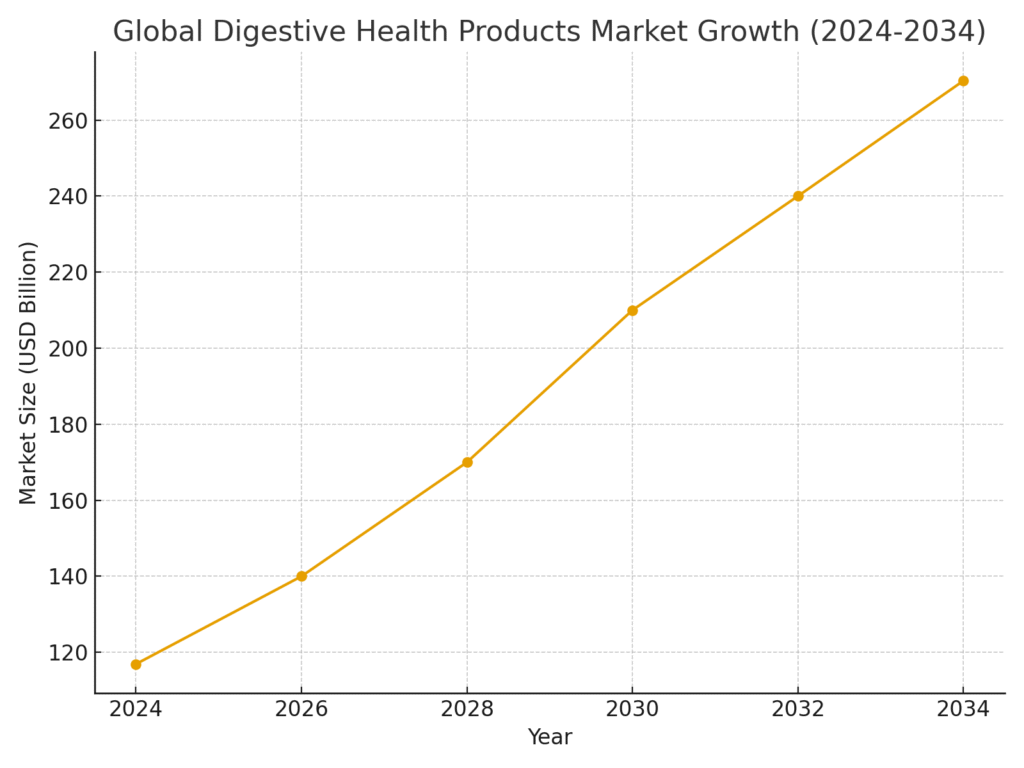
Digestive Health Marketing Statistics #1 – Global Market Valued At $116.92 Billion In 2024
The digestive health products market reached an impressive $116.92 billion in 2024. This figure highlights how much consumers are prioritizing gut health. Brands investing in this sector are finding new opportunities for expansion. With a CAGR of 8.74%, the market is expected to nearly triple by 2034. This growth makes digestive health one of the strongest segments in wellness.
Digestive Health Marketing Statistics #2 – Digestive Health Supplements Market Worth $13.17 Billion In 2023
Digestive health supplements alone generated $13.17 billion in 2023. This includes probiotics, enzymes, and fiber-based products. The segment’s 9.6% CAGR shows consistent demand for quick, convenient solutions. Consumers are moving toward daily supplement routines for preventative care. For marketers, this is a clear signal to focus on educational campaigns around product benefits.
Digestive Health Marketing Statistics #3 – U.S. Digestive Supplements Market Projected At $5.12 Billion By 2030
The U.S. market is a major player, expected to hit $5.12 billion by 2030. That’s up from $3.95 billion in 2025, showing steady momentum. This growth suggests strong consumer trust in digestive health products. Brands with localized U.S. campaigns can benefit from consumer loyalty. It also underscores the importance of targeted regional marketing.
Digestive Health Marketing Statistics #4 – North America Holds 32.31% Of Market Share In 2024
North America accounted for 32.31% of the digestive health market in 2024. This dominance shows how health-conscious American and Canadian consumers are. With an emphasis on dietary supplements and functional foods, the region sets trends globally. For marketers, tapping into North American consumer behavior is key. This regional leadership offers valuable lessons for emerging markets.
Digestive Health Marketing Statistics #5 – Probiotics Dominate With 83.75% Market Share
Probiotics are by far the most popular digestive health product, making up 83.75% of the market in 2024. Consumers link probiotics directly to improved gut health. Marketing messages highlighting live cultures resonate strongly. Brands that emphasize science-backed probiotic benefits often outperform. This overwhelming demand cements probiotics as the anchor of digestive health.
Digestive Health Marketing Statistics #6 – Dairy Products Hold 65.21% Market Share
Dairy products like yogurt and kefir remain leaders in digestive health. In 2024, they held 65.21% of the global market. These products combine nutrition with probiotic benefits. Dairy-based functional foods appeal to both traditional and modern consumers. For marketers, dairy remains a safe but competitive sector.
Digestive Health Marketing Statistics #7 – Supermarkets And Hypermarkets Lead With 46.92% Share
Nearly half of digestive health products are purchased in supermarkets and hypermarkets. This makes retail placement critical. In-store marketing and shelf visibility strongly influence purchase decisions. Shoppers often discover new digestive health products in these environments. Brands investing in retail strategies see higher conversions.
Digestive Health Marketing Statistics #8 – Market To Reach $93.2 Billion By 2033
The digestive health products market is forecasted to reach $93.2 billion by 2033. This represents a steady 6.6% CAGR. It proves that consumer demand for gut-friendly products isn’t slowing down. Long-term investments in this sector are low-risk and high-reward. For marketers, this provides confidence in consistent campaign ROI.
Digestive Health Marketing Statistics #9 – U.S. Digestive Health Retail Sales Hit $6.2 Billion In 2023
Retail sales in the U.S. digestive health category reached $6.2 billion in 2023. This number illustrates the scale of consumer spending power. Retailers are now prioritizing digestive health sections in stores. Consumers are open to trying multiple digestive products at once. For brands, bundling and cross-promotions can increase average cart value.
Digestive Health Marketing Statistics #10 – Probiotics Hold 49.22% Share In U.S. Digestive Supplements
In the U.S., probiotics represent nearly half the digestive supplement market. This demonstrates their strong consumer trust. Marketing that emphasizes the science behind probiotics is effective. The product format—capsules, powders, and gummies—adds to consumer choice. Probiotic dominance is expected to continue well into the next decade.
Digestive Health Marketing Statistics #11 – Gummies And Chewables Grow At 6.33% CAGR
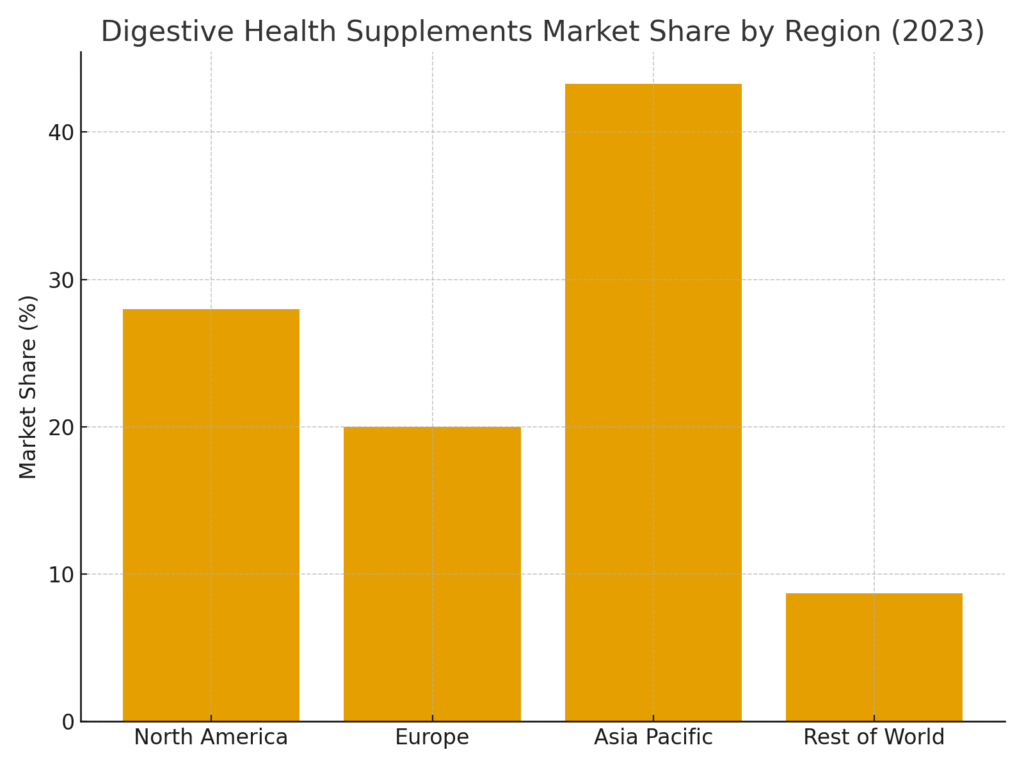
Gummies and chewables are the fastest-growing format in U.S. digestive supplements. Their 6.33% CAGR makes them attractive to younger demographics. These formats are convenient and often perceived as more enjoyable than pills. Marketers can use fun packaging and taste-focused campaigns to win over customers. This trend proves that convenience drives consumer loyalty.
Digestive Health Marketing Statistics #12 – Specialty Stores Hold 33.78% Share; Online Retail Growing Fast
Specialty health stores account for 33.78% of digestive supplement sales. However, online retail is growing at 7.67% CAGR. This shift highlights how consumers trust e-commerce for health products. Digital marketing and influencer campaigns are crucial for online growth. For brands, balancing retail and e-commerce presence is now essential.
Digestive Health Marketing Statistics #13 – Searches For “Gut Health” Rose 35% In 2024
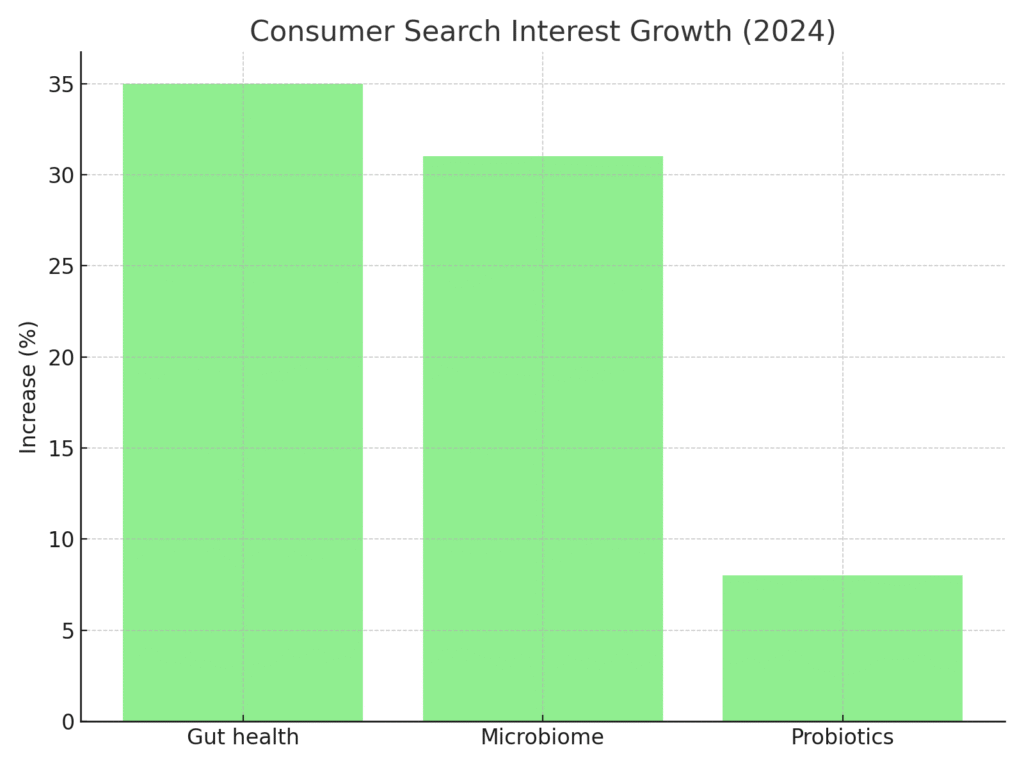
Search interest in “gut health” rose by 35% in 2024. “Microbiome” saw a 31% rise, while “probiotics” increased by 8%. This shows growing awareness and curiosity from consumers. Content marketing that taps into these keywords can drive high traffic. SEO-driven strategies will yield strong results for digestive health brands.
Digestive Health Marketing Statistics #14 – 1 In 4 Americans Prioritize Gut Health
A 2022 survey revealed that 25% of Americans rank gut health as a top health concern. This shows digestive wellness is no longer niche. Consumers actively seek gut-friendly foods and supplements. Marketers can leverage this by normalizing digestive health conversations. The stigma around gut health has largely disappeared.
Digestive Health Marketing Statistics #15 – Market To Reach $90.2 Billion By 2031
The digestive health market was valued at $38.8 billion in 2021 and is projected to reach $90.2 billion by 2031. That’s a CAGR of 8.8%. These figures show a long-term upward trend. Brands investing now can secure a strong future position. For consumers, digestive health is becoming a permanent lifestyle priority.
Digestive Health Marketing Statistics #16 – Asia Pacific Held 46.48% Share In 2019
Asia Pacific dominated the digestive health market in 2019 with a 46.48% share. Countries like China, Japan, and India lead in functional food consumption. Traditional diets already emphasize gut health. This gives brands an edge when launching digestive products. Marketers must localize messaging to fit cultural preferences.
Digestive Health Marketing Statistics #17 – Dairy-Based Functional Foods Represent 74% Of Segment
In 2023, dairy-based functional foods accounted for 74% of the digestive health products segment. This includes products like yogurt, kefir, and cheese. These foods bridge the gap between everyday diets and functional benefits. Consumers view them as natural and accessible. Marketers can emphasize tradition and taste alongside health benefits.
Digestive Health Marketing Statistics #18 – Market Expected To Reach $61.4 Billion By 2030
The global digestive health products market is forecasted to hit $61.4 billion by 2030. With a 7.75% CAGR, this highlights significant global demand. These numbers suggest growing opportunities across all product types. Emerging markets will play a big role in this expansion. Marketers should be prepared for rapid regional adoption.
Digestive Health Marketing Statistics #19 – Enzymes Growing At 5.89% CAGR In U.S. Market
Digestive enzymes are projected to grow steadily in the U.S. at 5.89% CAGR. Consumers view them as effective for immediate relief. This niche within digestive health is gaining popularity. Brands that educate consumers on enzymes can build trust. It’s a segment ripe for targeted product innovation.
Digestive Health Marketing Statistics #20 – Asia Pacific Holds 43.3% Of Supplement Revenue Share
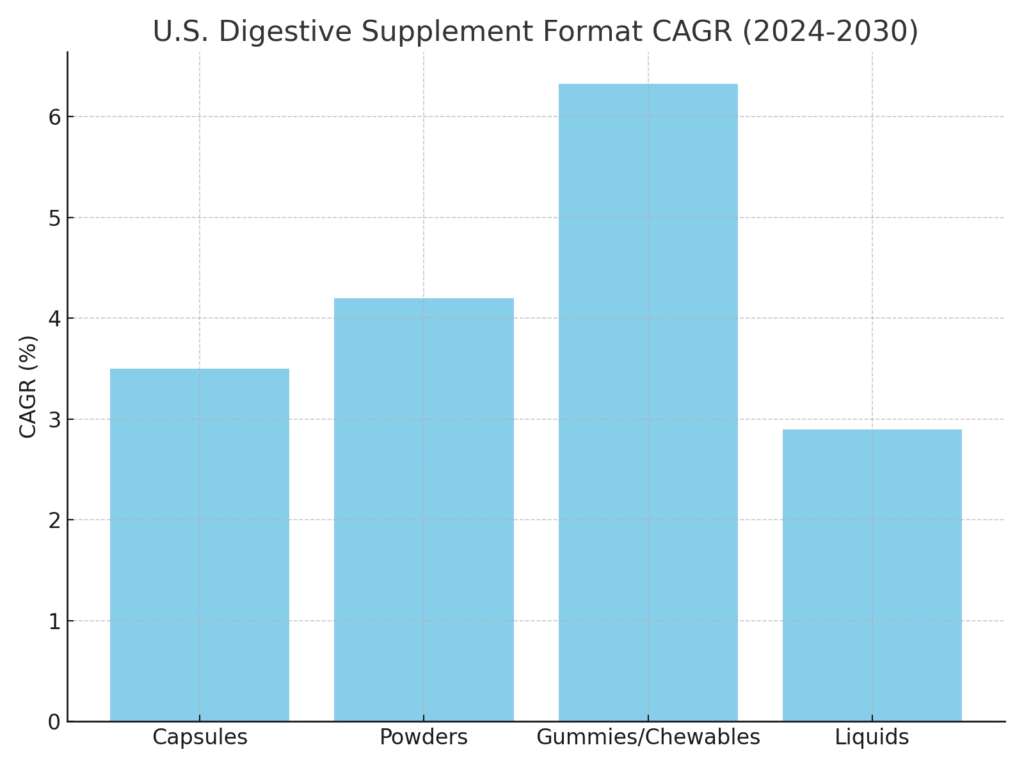
Asia Pacific accounted for 43.3% of digestive supplement revenue in 2023. This solidifies the region as a global leader. Rising disposable incomes and urbanization fuel demand. Global brands are investing heavily in APAC distribution. For marketers, this is a clear call to localize and expand in Asia.
Why Digestive Health Marketing Statistics Matter
Looking at these digestive health marketing statistics, I feel both inspired and excited about the opportunities in this sector. As someone passionate about the intersection of health and marketing, it’s clear that digestive wellness is more than a passing trend—it’s a lifestyle shift. From probiotics to e-commerce growth, the data shows us where consumer attention is heading. By learning from these numbers, we can craft smarter campaigns that resonate deeply with audiences. For me, sharing these insights is about helping brands not just sell products, but also make a positive impact on people’s health.
SOURCES