



28 Sep TOP 20 DISASTER PREVENTION MARKETING STATISTICS 2025
When I first began exploring disaster prevention marketing statistics, I realized how much these numbers shape the way we prepare and respond to unexpected events. They are not just figures on a page, but powerful insights that highlight the role of communication, preparedness, and awareness in protecting communities. Partnering with a leading marketing agency in New York has shown me how the right strategies can turn data into impactful campaigns that actually save lives. I want to share these findings with you in a way that feels both personal and practical, so we can see how statistics can truly make a difference in disaster prevention.
Top 20 Disaster Prevention Marketing Statistics 2025 (Editor’s Choice)
| # | Statistic | Description |
|---|---|---|
| 1 | Global Market Value At $63.85B (2024) | The disaster management market reached $63.85B, showing rapid growth in prevention investments. |
| 2 | Market To Reach $199.91B (2034) | Projected CAGR of 12.1%, reflecting prevention becoming a core global priority. |
| 3 | Preparedness Systems At $190.36B (2024) | Strong demand for communication and risk alert systems highlights tech-driven prevention. |
| 4 | Preparedness To Hit $426.45B (2034) | Massive growth in prevention systems creates opportunities for impactful campaigns. |
| 5 | Disaster Management At $101.62B (2025) | Billions invested worldwide show the urgency of safeguarding people and economies. |
| 6 | Market Growing To $174.62B (2034) | 6.2% CAGR proves rising confidence in disaster prevention as a global strategy. |
| 7 | $1 Invested Saves $13 | Preparedness offers high ROI by reducing damages and boosting resilience. |
| 8 | $6 In Damages, $7 In Jobs Saved | Breakdown of ROI highlights both economic and human benefits of prevention. |
| 9 | Emergency Market To $297B (2035) | Growth from $159.7B in 2025 emphasizes rising investments in prevention. |
| 10 | 50M Tweets During Hurricane Sandy | Social media plays a vital role in spreading awareness and prevention messages. |
| 11 | 26-Hour Awareness Advantage | Twitter networks gave users life-saving awareness well before disaster strikes. |
| 12 | 5% Posts Gain 95% Attention | Only a few posts dominate engagement during crises, stressing message clarity. |
| 13 | 30,000 Disaster Tweets Categorized | Classified into 36 groups, improving campaign targeting and response strategies. |
| 14 | 1/3 Residents Misjudge Flood Risks | Many underestimate their risk, showing need for better awareness campaigns. |
| 15 | Prevention Messaging More Effective | Proactive campaigns drive higher engagement than recovery-focused messaging. |
| 16 | Category 5 Storms Gain 4.6× Attention | Severity framing boosts engagement, showing perception’s role in awareness. |
| 17 | Social Marketing Aids Elderly Preparedness | Campaigns promoting water storage proved effective in vulnerable groups. |
| 18 | Lessons From Hurricane Katrina | Marketing perspective improved adoption of self-protective behaviors. |
| 19 | Prevention CRM Campaigns Win | Cause-related prevention messages outperform recovery in motivating action. |
| 20 | Social Media Underutilized | Countries miss opportunities by not using social media for prevention campaigns. |
Top 20 Disaster Prevention Marketing Statistics 2025
Disaster Prevention Marketing Statistics #1: Global Market Value At $63.85 Billion In 2024
The global natural disaster management market reached $63.85 billion in 2024, showcasing the increasing recognition of prevention and preparedness. This market is expected to continue expanding as governments, NGOs, and private organizations allocate more resources to safety and awareness campaigns. For marketers, this growth highlights an opportunity to design impactful campaigns that resonate with both public and private stakeholders. Investing in disaster prevention communication today can amplify trust and visibility for brands tomorrow. This statistic underscores how disaster prevention has become a mainstream focus in the global marketplace.
Disaster Prevention Marketing Statistics #2: Market Projected To Reach $199.91 Billion By 2034
By 2034, the natural disaster management market is projected to reach $199.91 billion, reflecting a 12.1% CAGR. This growth emphasizes how prevention strategies are becoming critical investments worldwide. Marketing within this expanding sector can help organizations show leadership in resilience and safety. As businesses align themselves with prevention efforts, they also build credibility and customer trust. This projection demonstrates how disaster prevention marketing can be tied to long-term, sustainable growth.
Disaster Prevention Marketing Statistics #3: Preparedness Systems Market At $190.36 Billion In 2024
The disaster preparedness systems market stood at $190.36 billion in 2024, indicating strong investment in technology and communication tools. From early warning systems to digital risk alerts, the tools are designed to keep communities safe and aware. Marketing plays a crucial role in ensuring these systems reach the public in understandable ways. With clear messaging, adoption rates can significantly improve. This shows the importance of marketers bridging the gap between technology and community awareness.
Disaster Prevention Marketing Statistics #4: Market To Hit $426.45 Billion By 2034
Forecasts show that the preparedness systems market will grow to $426.45 billion by 2034. This signals a major opportunity for campaigns that promote prevention awareness globally. When more organizations invest in preparedness tools, marketing ensures those innovations reach the people who need them most. Campaigns that highlight real-life benefits and safety outcomes drive both engagement and adoption. This rapid growth points to prevention as not just a safety concern but also a thriving industry.
Disaster Prevention Marketing Statistics #5: Disaster Management Market At $101.62 Billion In 2025
By 2025, the disaster management market is expected to hit $101.62 billion. This number indicates the sheer scale of global investments being made to safeguard people and economies. For marketers, this is a chance to showcase campaigns that highlight preparedness and prevention over reaction. Brands that align themselves with safety messaging often gain stronger community loyalty. This statistic proves that disaster prevention is now a critical global priority.

Disaster Prevention Marketing Statistics #6: Market Growing To $174.62 Billion By 2034
The disaster management market is projected to reach $174.62 billion by 2034. This steady CAGR of 6.20% highlights confidence in the prevention sector. Marketing professionals can leverage this momentum by creating campaigns that highlight resilience and preparedness. Strong storytelling around disaster prevention can elevate brand value while saving lives. This growth highlights how prevention is no longer optional but essential.
Disaster Prevention Marketing Statistics #7: Every $1 In Preparedness Saves $13
Studies show that every $1 invested in disaster preparedness results in $13 of savings. These savings come from reduced damages, cleanup, and preserved economic stability. Marketers can use this powerful ROI to justify prevention campaigns to policymakers and organizations. Highlighting the cost-effectiveness of preparedness makes campaigns more persuasive. This is one of the most compelling arguments for prevention-focused communication.
Disaster Prevention Marketing Statistics #8: $6 Saved In Damages, $7 In Jobs Preserved
Breaking down the ROI, $6 of every $13 saved comes from reduced damages and $7 from preserved jobs and income. This highlights both the human and financial value of prevention investments. Marketing campaigns that show real-life examples of preserved livelihoods can connect emotionally with audiences. By framing prevention as both economic and human protection, campaigns resonate on multiple levels. This statistic bridges fiscal responsibility with human well-being.
Disaster Prevention Marketing Statistics #9: Incident & Emergency Management Market To Reach $297 Billion
By 2035, the incident and emergency management market is expected to grow from $159.7 billion in 2025 to $297 billion. This steady CAGR of 6.4% reflects the rising need for prevention and response solutions. Marketing in this space has the potential to highlight both technology and community safety. Campaigns that showcase innovation in prevention build trust among citizens and stakeholders. This growth trend confirms that prevention is a cornerstone of global safety strategies.
Disaster Prevention Marketing Statistics #10: 50 Million Tweets During Hurricane Sandy
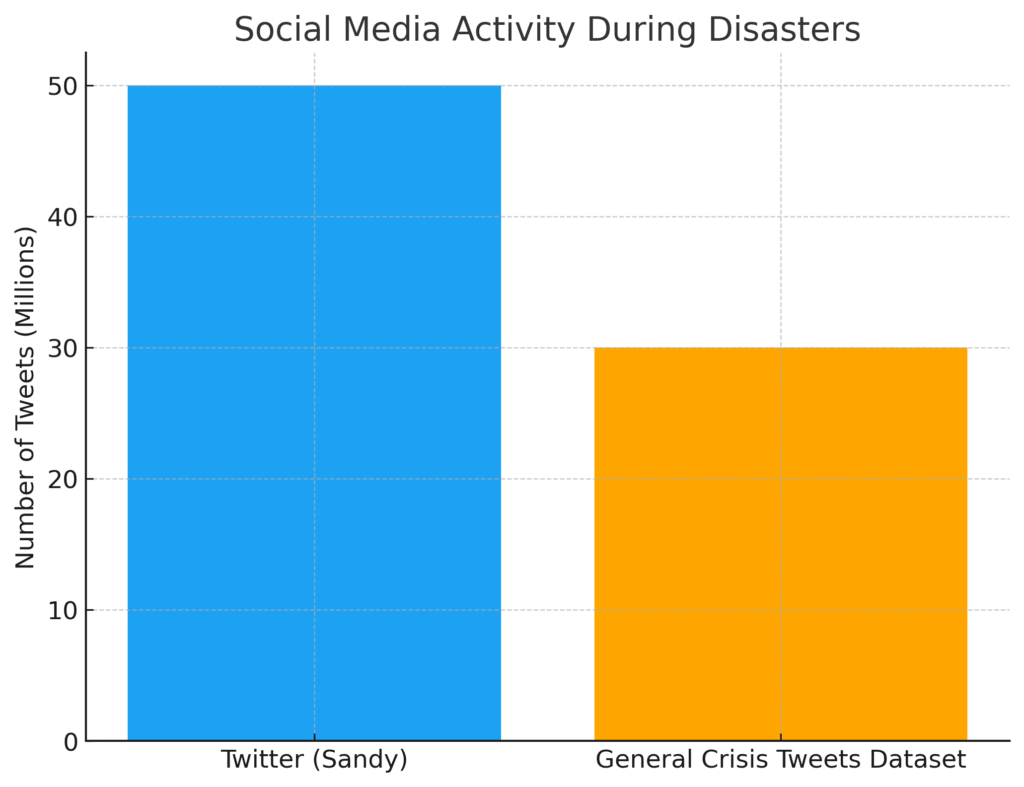
Over 50 million tweets were posted during Hurricane Sandy, illustrating how social media amplifies disaster communication. This massive flow of real-time information highlights the importance of preparedness messaging. Marketers can leverage social platforms to create educational campaigns long before crises happen. These platforms ensure wide reach and rapid spread of critical information. This statistic shows the undeniable power of social media in disaster prevention.
Disaster Prevention Marketing Statistics #11: Awareness Advantage Of 26 Hours On Twitter
Research shows that networked Twitter users had an awareness advantage of up to 26 hours before a disaster event. This finding demonstrates how information networks can serve as early-warning systems. Marketers can highlight these insights to promote the value of timely communication tools. Prevention messaging on social platforms could give communities life-saving hours of preparation. This reinforces the role of marketing in harnessing digital networks for safety.
Disaster Prevention Marketing Statistics #12: 5% Of Posts Capture 95% Of Attention
In crisis communication studies, 5% of posts gained 95% of user attention. This shows that not all messages receive equal visibility during emergencies. Marketers can use this to craft targeted, high-impact campaigns that break through noise. Ensuring prevention messages are clear, concise, and shareable maximizes reach. This finding underscores the importance of quality over quantity in prevention campaigns.
Disaster Prevention Marketing Statistics #13: 30,000 Disaster Tweets Categorized Into 36 Classes
A dataset of 30,000 disaster-related tweets was classified into 36 categories. This categorization improves how response and prevention messages are filtered and prioritized. Marketers can adopt similar segmentation strategies for disaster campaigns. By understanding audience behaviors, prevention messages can be better tailored. This statistic reflects the importance of data-driven disaster prevention communication.
Disaster Prevention Marketing Statistics #14: One-Third Of Residents Misjudge Flood Risks
Research shows that more than one-third of residents in flood-prone zones believe they are safe. This misperception leaves communities highly vulnerable to disaster impacts. Marketing campaigns that educate people about actual risks can close this awareness gap. By using relatable examples, prevention messaging becomes more impactful. This statistic reminds us of the urgency in spreading accurate disaster information.
Disaster Prevention Marketing Statistics #15: Prevention Messaging Often Outperforms Recovery
Studies show that prevention-oriented messaging outperforms recovery-oriented messaging in driving preparedness actions. This highlights the power of framing campaigns around proactive behaviors. Marketers can design campaigns that motivate people to act before disaster strikes. Using prevention narratives also builds a sense of empowerment in communities. This statistic confirms that prevention messaging should be at the core of disaster communication.

Disaster Prevention Marketing Statistics #16: Category 5 Storms Gain 4.6x More Attention
Analysis shows that Category 5 storms generate 4.6 times more attention than Category 1 storms, even with equal damage levels. This highlights the role of perception and urgency in public engagement. Marketing campaigns can harness this insight by emphasizing severity in prevention messaging. When people perceive greater risks, they are more likely to take action. This statistic demonstrates the psychological element of disaster marketing.
Disaster Prevention Marketing Statistics #17: Social Marketing Boosts Elderly Preparedness
A social marketing pilot focused on elderly populations showed success in encouraging water storage. Using the marketing “4 Ps,” the campaign increased awareness and adoption of preparedness behaviors. Marketers can replicate this success by tailoring campaigns to vulnerable groups. By focusing on accessibility, disaster prevention campaigns reach those who need it most. This statistic proves the effectiveness of applying classic marketing principles to disaster prevention.
Disaster Prevention Marketing Statistics #18: Lessons From Hurricane Katrina Campaigns
Hurricane Katrina studies revealed that social marketing approaches improve adoption of self-protective behaviors. Treating individuals as customers of preparedness messaging made campaigns more relatable. This strategy shows that prevention marketing is not just about informing, but engaging. Campaigns that use empathy and storytelling resonate deeply with affected populations. This statistic highlights the value of human-centered disaster prevention marketing.
Disaster Prevention Marketing Statistics #19: Prevention-Framed CRM Campaigns Are More Effective
Cause-related marketing campaigns framed around prevention proved more effective than those centered on recovery. This is especially true for highly involved consumers who prefer proactive action. Marketers can design prevention campaigns that emphasize empowerment and resilience. By framing prevention as a shared responsibility, brands also strengthen consumer trust. This statistic supports the use of forward-looking messaging in disaster campaigns.
Disaster Prevention Marketing Statistics #20: Social Media Underutilized In Prevention Campaigns
Many countries still underutilize social media in disaster prevention campaigns compared to response. This is a missed opportunity for marketers to reach audiences before crises occur. Platforms like Facebook, X, and Instagram can be powerful tools for prevention messaging. Marketers should design strategies that integrate prevention content into everyday feeds. This statistic highlights the untapped potential of social media for proactive disaster awareness.

Final Thoughts on Disaster Prevention Marketing Statistics
As I wrap this up, I can’t help but feel that disaster prevention marketing statistics remind us of the responsibility we carry when it comes to sharing accurate, timely information. These insights are more than just numbers; they’re lessons that can guide us toward safer, stronger communities. By translating them into meaningful campaigns, we can create awareness that helps people act before a disaster strikes. I’ve learned that every effort counts, whether it’s a local preparedness drive or a global prevention strategy. My hope is that these statistics inspire you to think about the role we all play in prevention and how much of a difference we can make together.
SOURCES
- https://www.preventionweb.net/news/disaster-management-market-size-worth-usd-19991-billion-2034-cagr-121
- https://www.polarismarketresearch.com/industry-analysis/natural-disaster-management-market
- https://www.precedenceresearch.com/disaster-preparedness-systems-market
- https://www.uschamberfoundation.org/disasters/unpacking-the-roi-of-disaster-preparedness
- https://www.factmr.com/report/incident-and-emergency-management-market
- https://guides.library.georgetown.edu/edm/stats
- https://phoenixnap.com/blog/disaster-recovery-statistics
- https://invenioit.com/continuity/disaster-recovery-statistics/?srsltid=AfmBOoq7caIZvtnL83uRql6MhWA10dV9gMKez1_yQcnBTLa84pyxDhRT
- https://koddi.com/blog/impact-of-natural-disasters-on-digital-marketing/
- https://www.warc.com/newsandopinion/opinion/disaster-marketing-where-the-four-ps-meet-the-three-fs-of-climate-change/en-gb/6331
- https://4thoughtmarketing.com/articles/marketing-during-disasters-when-pausing-is-the-best-strategy/
- https://www.clearvoice.com/resources/marketing-during-crisis/
- https://apps.usfa.fema.gov/pdf/efop/efo43356.pdf
- https://arxiv.org/abs/2111.07187
- https://arxiv.org/abs/2004.14456
- https://www.marketsandmarkets.com/PressReleases/natural-disaster-management.asp