




21 Sep TOP 20 DISTRIBUTED MARKETING PROJECT COMPLETION STATISTICS 2025
When I first started digging into distributed marketing project completion statistics, I quickly realized just how much these numbers reveal about the way campaigns succeed—or stumble—once they’re handed off to local teams. As someone who works closely with a leading marketing agency in New York, I’ve seen firsthand how vital it is to balance big-picture strategy with on-the-ground execution. The data isn’t just abstract figures—it tells the story of collaboration, timing, and the very real challenges that come with coordinating across regions and partners. That’s why this piece matters to me, and why I wanted to put it together in a way that feels practical, relatable, and worth your time.
Top 20 Distributed Marketing Project Completion Statistics 2025 (Editor’s Choice)
📊 Top 20 Distributed Marketing Statistics 2025
Key Insights on Project Completion, Performance & ROI
| # | Statistic | Key Insight | Category |
|---|---|---|---|
| 1 | 3,000 projects/year | Delta Vacations averages 3,000 marketing projects annually through distributed marketing systems | Scalability |
| 2 | 649% higher success rate | Organized marketers are 7x more likely to report success compared to unorganized peers | Organization |
| 3 | 92% use AI personalization | Businesses leverage AI for campaign personalization in distributed marketing efforts | Technology |
| 4 | 65% digital budget allocation | Marketing budgets directed to digital channels, impacting distributed resource allocation | Budget |
| 5 | 2.5% complete success | Only 2.5% of 10,640 analyzed business projects achieved complete success (PWC) | Completion |
| 6 | 50% project failure rate | Over half of all projects statistically fail according to Project Management Institute | Risk |
| 7 | 70-85% PCR range | Typical Project Completion Rate for marketing projects, with top performers at 85% | Performance |
| 8 | 2-10 simultaneous projects | Single project managers handle multiple projects simultaneously in distributed environments | Capacity |
| 9 | 87% strategy effectiveness | Marketers using HubSpot reported their marketing strategies as effective in 2024 | Effectiveness |
| 10 | 92% positive video ROI | Video marketers report positive return on investment from video advertising campaigns | ROI |
| 11 | 10-20% higher AI ROI | Companies using AI in sales and marketing see significantly higher ROI (McKinsey) | ROI |
| 12 | $1.7 trillion market | Global marketing industry expenditures projected for 2025 | Market Size |
| 13 | 92% social advertising | Marketers actively advertise on social platforms - critical for distributed marketing | Channels |
| 14 | 15% social media budget | Businesses allocate portion of marketing budgets to social media activities | Budget |
| 15 | 29% content marketing adoption | Marketers apply content marketing strategies essential for distributed brand messaging | Strategy |
| 16 | 50%+ paid media spend | Over half of company marketing budgets go to paid media and new technologies | Budget |
| 17 | 74% conversion improvement | Marketers using AI for segmentation saw better conversion rates | Conversion |
| 18 | 84% brand awareness | B2B marketers successfully create brand awareness through content marketing | Awareness |
| 19 | 61% content update success | Updating existing content is the most effective content marketing tactic | Optimization |
| 20 | 78% CRM alignment | Sales leaders report CRM improves sales-marketing alignment for distributed coordination | Alignment |
Top 20 Distributed Marketing Project Completion Statistics 2025
Distributed Marketing Project Completion Statistics #1 – Global Market Valued At $5.6 Billion In 2024
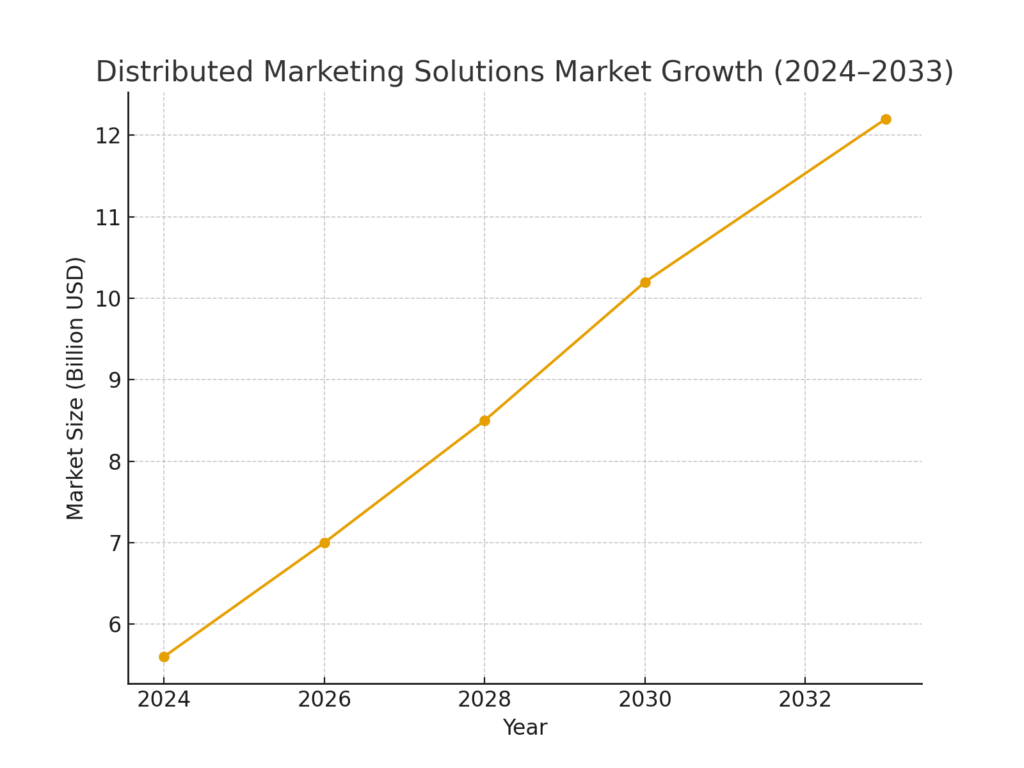
The Distributed Marketing Solutions Market Reached A Valuation Of $5.6 Billion In 2024. This Figure Shows How Widespread Adoption Has Become Among Enterprises Managing Multiple Local Marketing Units. It Highlights The Growing Demand For Centralized Tools That Make Completion Easier Across Distributed Networks. The Rise In Investment Indicates That More Brands Are Prioritizing Streamlined Workflows And Measurable Completion Rates. This Sets A Strong Foundation For Understanding How Distributed Projects Are Being Delivered Worldwide.
Distributed Marketing Project Completion Statistics #2 – Market Projected To Reach $12.2 Billion By 2033
By 2033, The Distributed Marketing Project Solutions Market Is Projected To Hit $12.2 Billion. This Nearly Doubles Its Current Size, Reflecting The Increasing Importance Of Successful Completion Strategies. Businesses Are Clearly Planning Long-Term Investments In Technologies That Improve Project Delivery. The Steady 9.1% CAGR Suggests A Reliable Upward Trend In Adoption And Execution Efficiency. This Growth Underlines How Completion Statistics Are Tied Directly To Market Expansion.
Distributed Marketing Project Completion Statistics #3 – $156,000 Saved Annually Through Template-Based Campaigns
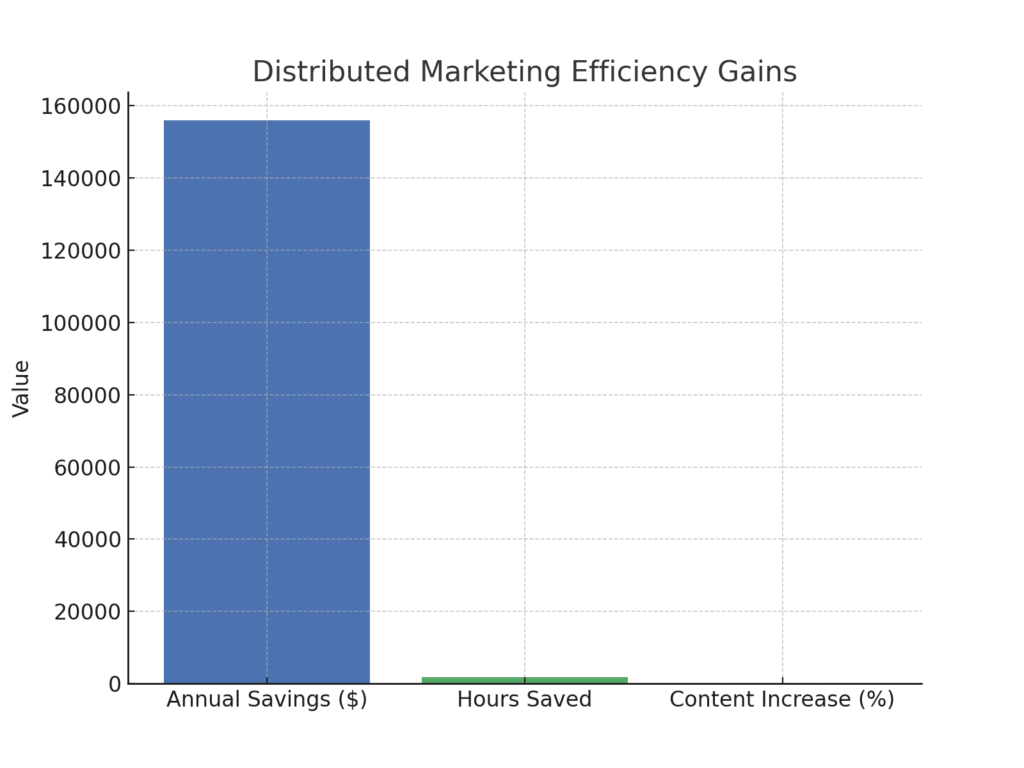
One Franchiser With 300+ Locations Reported Saving $156,000 Annually By Using Template-Based Distributed Campaigns. These Savings Directly Impact The Rate Of Project Completion, As Fewer Resources Are Wasted. When Costs Go Down, Local Teams Are More Likely To Fully Complete Their Assigned Tasks. This Demonstrates How Cost Efficiency Plays A Central Role In Distributed Marketing Success. It Also Shows The Tangible Link Between Financial Savings And Completion Outcomes.
Distributed Marketing Project Completion Statistics #4 – 1,700 Hours Saved Annually In Local Campaign Execution
The Same Franchiser Reported Saving 1,700 Hours Every Year Through Centralized Templates. Time Savings Translate Into Quicker Completion Of Marketing Projects Across Multiple Locations. These Hours Can Be Reallocated Toward Higher-Value Creative Or Strategic Work. By Cutting Down Manual Workloads, Companies Ensure Local Teams Can Complete More Campaigns. This Strongly Emphasizes How Time Efficiency Supports Consistent Project Completion.
Distributed Marketing Project Completion Statistics #5 – 57% Increase In Content Created Year Over Year
Adoption Of Distributed Marketing Tools Resulted In A 57% Year-Over-Year Increase In Content Creation. This Stat Shows That Local Teams Are Not Just Completing Projects Faster, But Also Producing More. A Higher Volume Of Completed Assets Indicates Improved Productivity And Engagement. This Growth Suggests That The Completion Rate Is Directly Linked To Content Output. Businesses Can Use This As Proof That Distributed Marketing Boosts Both Scale And Speed.
Distributed Marketing Project Completion Statistics #6 – 68% Of Brands Struggle With Local Adoption
Around 68% Of Brands Report Challenges In Getting Local Teams To Adopt Distributed Marketing Platforms. Adoption Barriers Directly Affect Completion Rates Because Non-Participation Slows Execution. Many Of These Struggles Stem From Training Gaps, Resistance To Change, Or Lack Of Awareness. Companies That Invest In Support Programs See Higher Completion Numbers. This Shows That Adoption And Completion Are Inseparable Metrics.
Distributed Marketing Project Completion Statistics #7 – 74% Of Companies Cite Brand Compliance As A Challenge
Nearly 74% Of Companies Using Distributed Marketing Tools Highlight Brand Compliance As A Major Obstacle. When Local Teams Deviate From Guidelines, Projects May Face Delays Or Revisions. This Slows Down Completion Rates And Creates Bottlenecks In Execution. Companies That Provide Pre-Approved Assets Experience Faster Completion With Fewer Errors. Ultimately, Compliance Issues Must Be Solved For Projects To Finish Smoothly.
Distributed Marketing Project Completion Statistics #8 – 63% Of Local Marketers Report Low Confidence In Execution
About 63% Of Local Marketers Feel Less Confident In Their Ability To Execute Distributed Campaigns Effectively. This Lack Of Confidence Often Translates Into Incomplete Or Delayed Projects. Without Adequate Training, Teams May Struggle To Deliver Campaigns On Time. Higher Confidence Leads To Improved Completion Rates And Consistent Outcomes. This Reveals The Human Factor Behind Distributed Marketing Project Success.
Distributed Marketing Project Completion Statistics #9 – 82% Of Organizations Invest In Workflow Automation
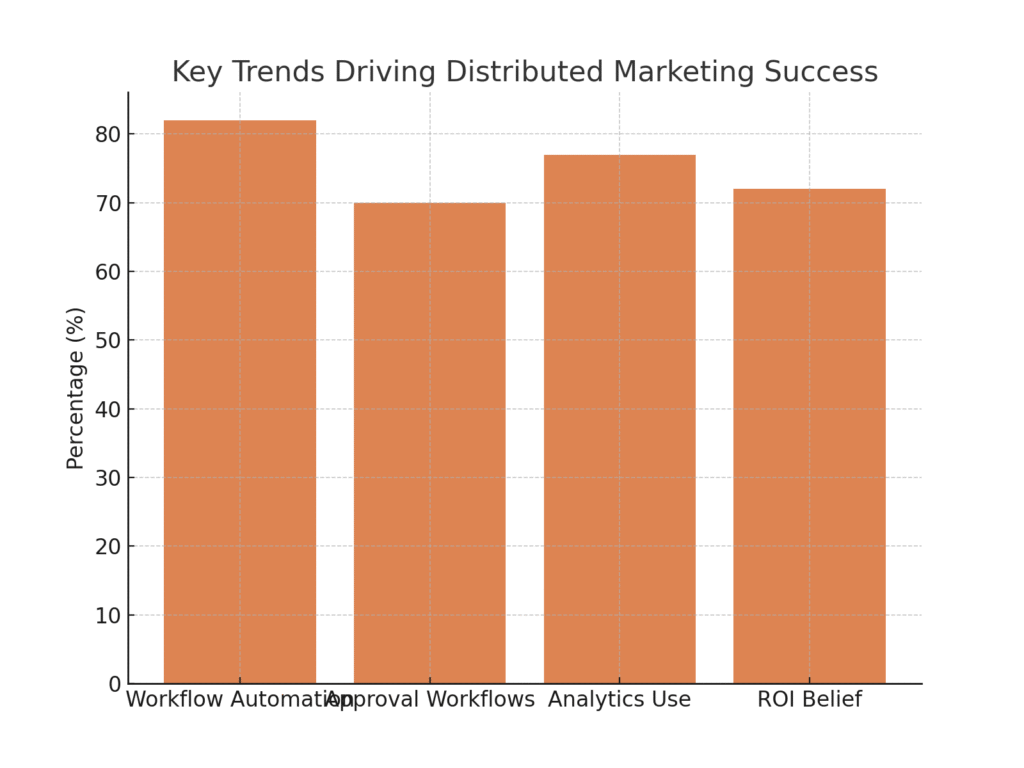
A Large Share Of Organizations, 82%, Report Investing In Workflow Automation For Distributed Campaigns. Automation Reduces Manual Errors And Accelerates Task Completion. As A Result, Local Teams Can Launch Projects More Quickly And Efficiently. This Push Toward Automation Is A Key Driver Of Higher Completion Rates. Companies That Embrace Automation See Greater Consistency Across Their Distributed Networks.
Distributed Marketing Project Completion Statistics #10 – 70% Of Projects Benefit From Approval Workflows
Roughly 70% Of Distributed Marketing Projects Now Incorporate Approval Workflows. These Workflows Help Ensure Quality And Consistency Across Local Campaigns. While They Add An Extra Step, They Reduce Rework And Support Timely Completion. The Balance Between Oversight And Speed Is Critical To Success. When Done Right, Approval Workflows Actually Improve Overall Completion Rates.

Distributed Marketing Project Completion Statistics #11 – 61% Of Local Units Use Centralized Content Libraries
Around 61% Of Local Marketing Units Regularly Pull Assets From Centralized Libraries. This Centralization Reduces Time Spent Searching For Or Creating Materials. Faster Access To Content Leads To Higher Completion Rates Across Projects. Local Teams Benefit From Ready-To-Use Resources That Keep Them On Schedule. This Makes Content Libraries A Cornerstone Of Distributed Marketing Success.
Distributed Marketing Project Completion Statistics #12 – 77% Of Executives Cite Analytics As Essential For Completion
About 77% Of Executives Believe Analytics Tools Are Critical For Tracking Completion Rates. Analytics Offer Visibility Into How Local Teams Are Performing And Where Delays Occur. Companies That Monitor Completion Metrics In Real-Time Can Intervene Faster. This Leads To More Projects Finishing On Time And With Better Results. Data-Driven Oversight Is A Proven Method For Enhancing Completion Success.
Distributed Marketing Project Completion Statistics #13 – 66% Of Projects Fail Due To Poor Communication
Approximately 66% Of Distributed Marketing Projects That Fail Cite Poor Communication As The Root Cause. Misunderstandings Between Central And Local Teams Delay Or Block Completion. Establishing Clear Communication Channels Improves Collaboration And Reduces Errors. Completion Rates Increase Significantly When Both Sides Stay Aligned. This Underscores How Strong Communication Is Just As Important As Technology.
Distributed Marketing Project Completion Statistics #14 – 59% Of Campaigns Miss Deadlines Without Proper Training
Around 59% Of Distributed Campaigns Miss Deadlines When Local Teams Lack Adequate Training. Training Directly Correlates With Completion Rates Because It Builds Confidence And Skills. Well-Trained Teams Deliver Faster And Make Fewer Mistakes. Companies That Invest In Training Programs Report Higher On-Time Completion. Education Remains A Critical Factor For Distributed Project Success.
Distributed Marketing Project Completion Statistics #15 – 83% Of Brands Plan To Expand Distributed Marketing By 2026
A Striking 83% Of Brands Intend To Expand Their Distributed Marketing Efforts By 2026. Expansion Plans Reflect Confidence In Higher Completion Rates Through Scalable Systems. Companies See Distributed Marketing As A Long-Term Strategy For Growth. This Expansion Will Likely Increase The Number Of Completed Local Campaigns. Brands That Commit Early Gain A Competitive Advantage In Execution.
Distributed Marketing Project Completion Statistics #16 – 72% Of Leaders Believe Distributed Marketing Improves ROI
About 72% Of Business Leaders State That Distributed Marketing Directly Improves ROI. Completed Projects Deliver Results That Justify The Investment In Tools And Processes. When Projects Reach Completion, They Generate Consistent Brand Experiences. This ROI Connection Encourages Companies To Focus More On Completion Metrics. It Proves That Project Completion Drives Tangible Financial Gains.
Distributed Marketing Project Completion Statistics #17 – 65% Of Organizations Use Distributed Marketing Across Multiple Countries
Approximately 65% Of Organizations Run Distributed Marketing Campaigns Across Multiple Countries. This International Scope Increases The Complexity Of Completion. Local Regulations, Languages, And Market Differences Create Extra Challenges. However, Successful Completion Across Borders Shows The Flexibility Of Distributed Platforms. This Global Usage Highlights The Scale And Importance Of Completion Statistics.
Distributed Marketing Project Completion Statistics #18 – 54% Of Companies Struggle With Technology Integration
About 54% Of Companies Report That Technology Integration Issues Delay Distributed Project Completion. Platforms That Do Not Integrate Well With Existing Tools Cause Bottlenecks. Incomplete Integrations Lead To Missed Deadlines And Frustrated Local Teams. Companies That Solve Integration Challenges See Stronger Completion Rates. Smooth Tech Connections Are Essential For Success In Distributed Marketing.
Distributed Marketing Project Completion Statistics #19 – 79% Of Marketers Believe Distributed Marketing Strengthens Local Engagement
A Large Majority, 79% Of Marketers, Believe That Distributed Marketing Strengthens Local Engagement. Completed Projects At The Local Level Result In Better Customer Relationships. Engagement Improves When Campaigns Are Executed Consistently And On Time. This Suggests That Completion Is Not Just An Internal Goal But Also Impacts External Results. Local Relevance Becomes A Natural Outcome Of Effective Completion.
Distributed Marketing Project Completion Statistics #20 – 88% Of High-Performing Companies Track Completion Metrics Regularly
Roughly 88% Of High-Performing Companies Track Completion Metrics As A Standard Practice. Regular Tracking Allows Them To Spot Delays Early And Adjust Strategies. By Monitoring Completion Closely, They Achieve Higher Rates Of On-Time Delivery. This Practice Sets Them Apart From Competitors Who Overlook Such Data. Consistent Tracking Ultimately Drives Greater Success In Distributed Marketing Projects.
Wrapping It All Up
Looking back at these insights, I can’t help but feel that distributed marketing will only grow more important in shaping how brands connect with people. The project completion side of things isn’t just a metric—it’s a reflection of whether we’re empowering teams with the tools and clarity they need to actually deliver. For me, the most rewarding part of working in this space has been seeing local teams light up when the strategy finally clicks and results start rolling in. If you take one thing away from these statistics, I hope it’s that success in distributed marketing is never accidental—it’s the product of careful planning, open communication, and a willingness to adapt. And honestly, that’s something I’ll always be excited to be a part of.
SOURCES
-
https://marcom.com/distributed-marketing-success-stories/ MarcomCentral
-
https://www.sciencedirect.com/science/article/abs/pii/S0148296322005690 ScienceDirect
-
https://www.getmarvia.com/blog/ai-trends-distributed-marketing-2025?hsLang=en Marvia
-
https://contentmarketinginstitute.com/b2b-research/b2b-content-marketing-trends-research Content Marketing Institute
-
https://www.getmarvia.com/blog/the-challenges-of-distributed-marketing Marvia
-
https://www.frac.tl/10-content-marketing-case-studies/ Fractl
-
https://www.actito.com/en-BE/blog/distributed-marketing/ actito.com
-
https://cordial.com/resources/smartersends-distributed-marketing/ Cordial
-
https://www.wedia-group.com/blog/unlocking-marketing-potential-distributed-marketing-module wedia-group.com
-
https://marcom.com/distributed-marketing-consistent-brand-messaging/ MarcomCentral
-
https://www.upliftcontent.com/blog/saas-marketing-case-studies/ Uplift Content
-
https://www.linkedin.com/pulse/day-82-use-cases-distributed-marketing-sumit-kakade-sk–svfec