




18 Sep TOP 20 DOG MARKETING STATISTICS 2025
When I first started exploring the world of dog marketing statistics, I was amazed at how much these numbers reflect the deep bond people share with their pets. Every figure tells a story—whether it’s about the rise in premium dog food sales, the surge of online shopping for pet products, or the way younger generations are reshaping how brands connect with dog owners. As someone who genuinely loves seeing how data transforms into real strategies, I find these insights invaluable for both marketers and pet enthusiasts. Partnering with a leading marketing agency in New York has shown me just how powerful these statistics can be when applied creatively, and I’m excited to walk you through the trends that matter most in 2025.
Top 20 Dog Marketing Statistics 2025 (Editor’s Choice)
🐕 Top 20 Dog Marketing Statistics 2024-2025
Essential insights for pet industry marketers and business owners
| Rank | Category | Key Statistic | Description & Impact |
|---|---|---|---|
1 |
📊 Market Size |
94 million households |
U.S. households own a pet, with 89.7 million dogs representing the highest number ever recorded |
2 |
🌍 Global Growth |
$427.75B by 2032 |
Global pet care market projected to reach $427.75 billion by 2032, growing at 6.60% CAGR |
3 |
🇺🇸 US Market |
$250B by 2030 |
U.S. pet market to reach $250 billion by 2030, advancing at 9.80% CAGR from $157B in 2025 |
4 |
🐕 Market Share |
51.9% share |
Dogs dominate the U.S. pet market with 51.9% market share in 2024 |
5 |
🏠 Household Stats |
45.5% of homes |
45.5% of all U.S. households now own dogs, up from 31.6% in 1996 |
6 |
👥 Demographics |
30% Millennials |
Millennials lead pet ownership at 30%, followed by Gen X and Boomers at 25% each, Gen Z at 20% |
7 |
💰 Annual Spending |
$2,351 per year |
Average American dog owner spends $2,351 annually on their dog, vs $1,443 for cats |
8 |
📈 Lifetime Cost |
$28,801 lifetime |
Average lifetime cost of owning a dog across the United States |
9 |
🏥 Vet Costs |
$214 per visit |
Average veterinary visit cost for dogs in 2024, down from $265 in 2023 |
10 |
🛒 E-commerce |
$147.59B by 2030 |
Global pet care e-commerce market projected to reach $147.59B by 2030 from $94.89B in 2024 |
11 |
📦 Amazon Growth |
+15% growth |
Amazon grew dog category sales by 15% over the past year, driven by Subscribe & Save |
12 |
📱 Mobile Commerce |
71.6% mobile |
Mobile devices lead pet care e-commerce at 71.6%, followed by desktop at 27.3% |
13 |
📘 Facebook CTR |
1.68% CTR |
Pet care industry Facebook ads achieve 1.68% CTR, nearly double the 0.89% industry average |
14 |
💡 Facebook CPC |
$0.61 per click |
Pet industry Facebook ads cost only $0.61 per click vs $1.68 industry average |
15 |
📧 Email Marketing |
37.14% open rate |
Pet care industry email campaigns achieve 37.14% open rates, indicating strong engagement |
16 |
🌟 Influencer Trust |
69% trust rate |
69% of consumers trust influencer recommendations, making pet influencer marketing highly effective |
17 |
📈 Influencer Market |
$21.1B industry |
Influencer marketing industry worth $21.1B with 67% of brands increasing budgets in 2025 |
18 |
📱 Gen Z Behavior |
TikTok + Instagram |
Gen Z relies heavily on TikTok, YouTube and Instagram to discover and purchase pet products |
19 |
💊 Pet Wellness |
+9.2% buy rate |
Pet wellness category showed 9.2% increase in buy rate, driven by skincare to dental care |
20 |
🛡️ Pet Insurance |
$676 annually |
Average dog insurance premium is $676/year ($56/month), with 17% industry growth in 2023 |
Top 20 Dog Marketing Statistics 2025
Dog Marketing Statistics #1 – U.S. Pet Industry Expenditure Reached $152 Billion In 2024
The U.S. pet industry hit an impressive $152 billion in 2024, showing how significant pets have become in consumer spending. This figure covers categories like food, treats, services, and veterinary care. For marketers, this growth signals an expanding market with new opportunities to engage pet owners. Dogs, being the most common household pets, play a major role in this number. Brands that focus on dogs can expect steady demand as spending is projected to rise even further in 2025.
Dog Marketing Statistics #2 – Pet Food And Treat Sales Hit $65.8 Billion In 2024
Pet food and treats accounted for $65.8 billion of the total U.S. market in 2024. This makes it the largest category, proving that nutrition and indulgence for pets are top priorities for owners. For dog marketing, this highlights the importance of positioning brands around quality, health benefits, and taste. Premium and organic treats are especially in demand as owners treat dogs like family. Marketers should focus on highlighting transparency and wellness in campaigns.
Dog Marketing Statistics #3 – Global Pet Industry Valued At $246–261 Billion In 2023–2024
The global pet industry reached an estimated $246–261 billion in 2023–2024. This massive market shows the worldwide love and investment people make in their pets. Dogs represent the largest portion of this value, making them the biggest target for product and service marketers. Growth is being fueled by rising ownership in emerging markets. Global campaigns that highlight cultural diversity and dog care trends can help brands reach new audiences.
Dog Marketing Statistics #4 – 94 Million U.S. Households Own A Pet In 2024
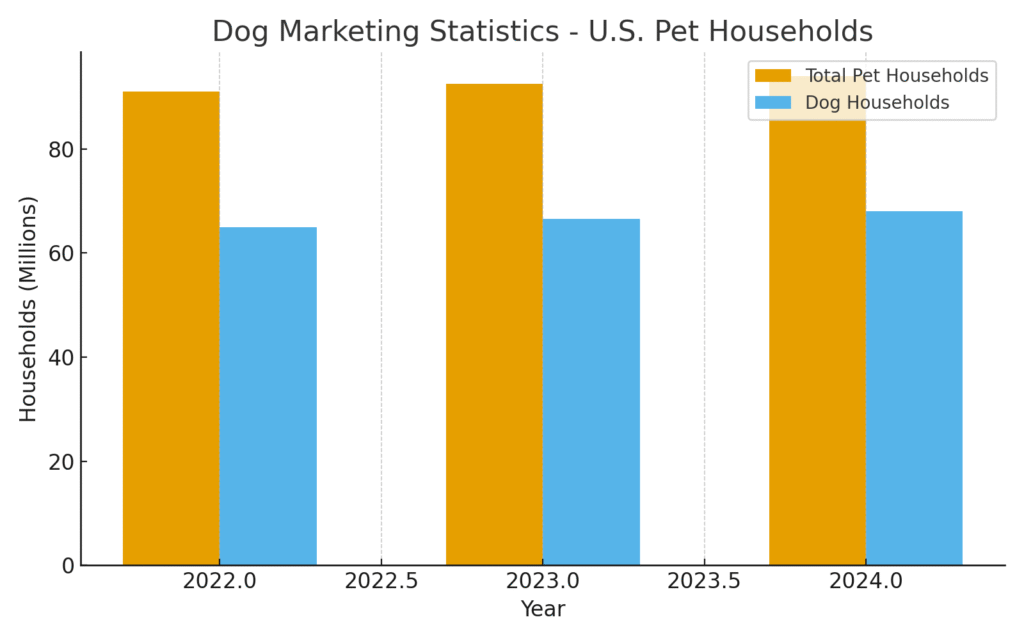
By 2024, 94 million households in the U.S. had at least one pet. Dogs are the most common pets among these households. For marketers, this represents an enormous audience of dog owners open to products and services. The sheer size of this population provides room for niche campaigns targeting different lifestyles. Whether focusing on city-dwelling dog owners or suburban families, personalization is key.
Dog Marketing Statistics #5 – 68 Million U.S. Households Own Dogs
Out of all pet-owning households, 68 million are specifically dog owners. This dominance makes dogs the clear focus for many brands in the pet industry. Marketing campaigns for dog products can target this majority segment with confidence. From food and toys to health services, the demand for dog-centered solutions continues to grow. Dog ownership numbers confirm that the canine category is the backbone of pet marketing.

Dog Marketing Statistics #6 – Gen Z Is Driving Growth In Pet Ownership
Gen Z households are increasingly becoming pet owners, often with two or more pets. This shift means marketers must adapt to younger buyers who value digital-first experiences. Gen Z dog owners are highly active on platforms like TikTok and Instagram. They expect brands to be authentic and socially responsible. Tailoring campaigns to this tech-savvy group can create long-term brand loyalty.
Dog Marketing Statistics #7 – Millennials And Gen Z View Pets As Family
Millennials and Gen Z are more likely to treat pets as family members. This perspective leads them to spend more on premium dog products. Marketing strategies should tap into the emotional bond between owners and dogs. Brands that highlight love, companionship, and health benefits tend to resonate strongly. Storytelling that mirrors family values can make dog marketing campaigns more impactful.
Dog Marketing Statistics #8 – E-Commerce Pet Sales Grew 9% In 2024
Online pet sales grew by around 9% in 2024, outpacing physical retail. Dog products such as food subscriptions, supplements, and toys lead much of this growth. The shift reflects consumer preference for convenience and direct delivery. Marketing campaigns should emphasize online ordering, discounts, and flexible subscriptions. Investing in strong e-commerce branding can yield long-term success in the dog market.
Dog Marketing Statistics #9 – 40% Of Pet Owners Buy Food And Treats Online
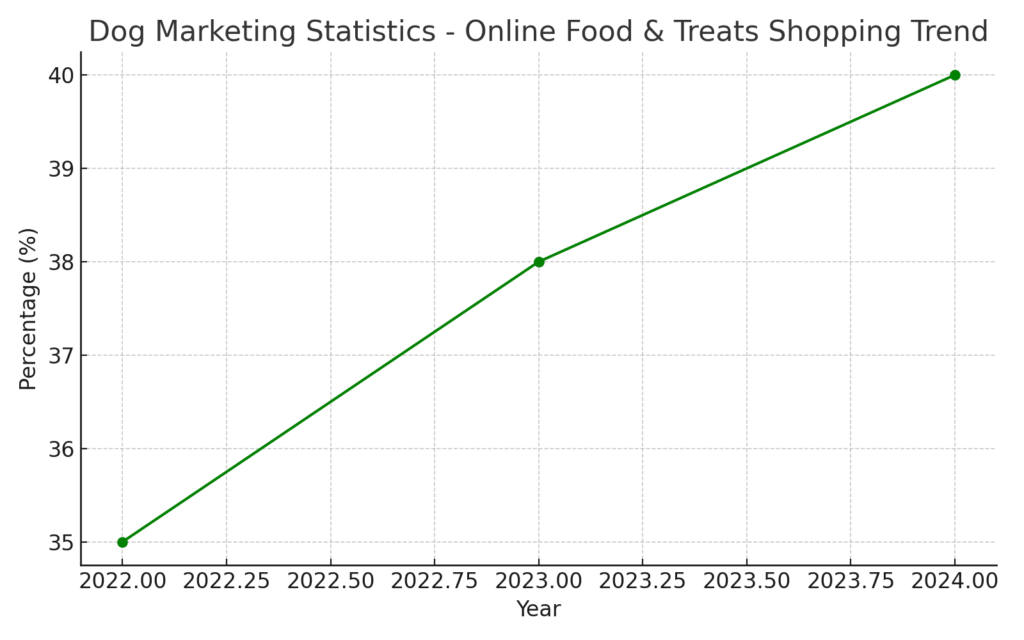
About 40% of pet owners now buy food and treats online. This shows how digital platforms are central to consumer behavior. For dogs, recurring orders of kibble, raw diets, or treats fit seamlessly into e-commerce models. Subscription-based services are especially popular with dog owners. Marketing should highlight reliability, personalization, and auto-delivery features to attract these buyers.
Dog Marketing Statistics #10 – Pet Accessories Market To Grow By $9.2 Billion By 2025
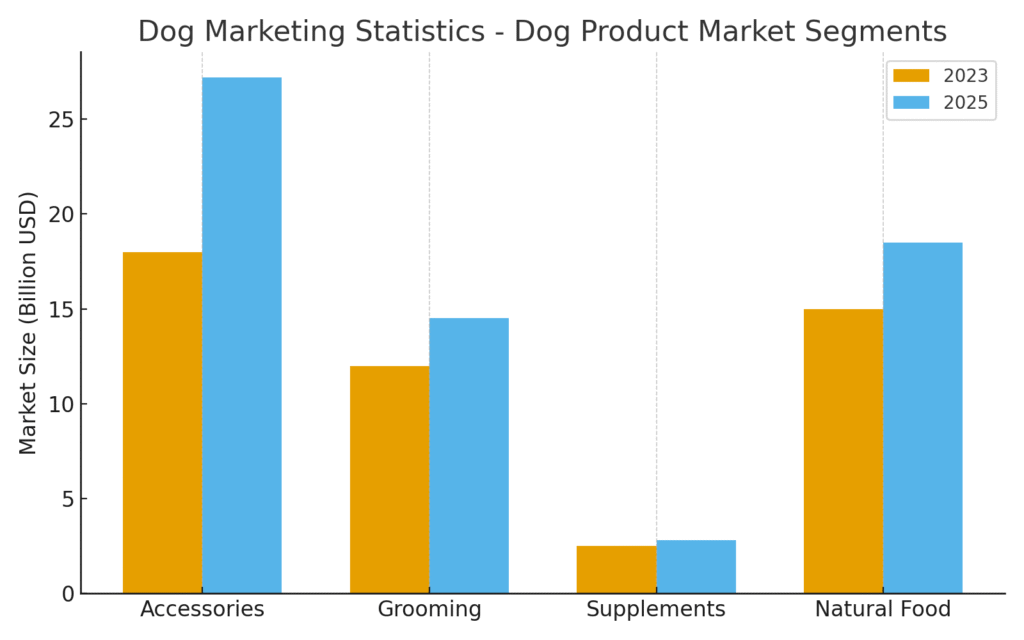
The pet accessories segment is set to grow by $9.2 billion between 2022 and 2025. This includes items like collars, leashes, clothing, and beds for dogs. Dog owners often buy accessories not just for utility but for style and identity. Marketers should leverage trends in fashion and personalization to appeal to these buyers. Showcasing lifestyle content featuring dogs can boost accessory sales.
Dog Marketing Statistics #11 – Grooming Products Market Will Reach $14.5 Billion By 2025
The global grooming product market is projected to hit $14.5 billion by 2025. Dogs require regular grooming, making them the main driver of this growth. Shampoos, conditioners, and grooming tools are high-demand items. Marketing strategies should focus on hygiene, comfort, and wellness. Visual campaigns showing transformation before and after grooming are highly persuasive for dog owners.
Dog Marketing Statistics #12 – 50.34% Of Pet E-Commerce Traffic Comes From Direct Visits
Over 50% of traffic to pet e-commerce sites comes from direct visits. This suggests strong brand loyalty and recognition. Dog-focused companies benefit when owners return directly to their platforms. Marketing efforts should invest in brand consistency and memorable user experiences. Direct engagement helps reduce reliance on paid ads and builds long-term trust.
Dog Marketing Statistics #13 – Email Marketing Open Rates Average 37.14% In Pet Care
Email campaigns in the pet niche see average open rates of 37.14%. For veterinary and animal categories, rates are even higher at 45.8%. This shows email is still a powerful tool for dog-related marketing. Campaigns featuring promotions, health tips, and product launches perform well. Personalization and timely reminders, such as for grooming or vet visits, boost effectiveness.
Dog Marketing Statistics #14 – Bounce Rate For Pet E-Commerce Is 39.3%
Pet e-commerce sites average a bounce rate of 39.3%. This is lower than the broader e-commerce average of 45.5%. For dog brands, this indicates users are more engaged and interested. Reducing bounce rates further requires clear navigation and engaging product descriptions. Marketing should ensure landing pages are optimized for quick trust-building.
Dog Marketing Statistics #15 – Facebook Ads CTR Is 1.68% In Pet Category
Facebook ads for pets & animals achieve a click-through rate of 1.68%. This is higher than many industries, making it a strong channel for dog marketers. CPC in this category averages around $0.61, making campaigns cost-effective. Ads featuring dogs often perform better due to their visual appeal. Brands should leverage storytelling and video content to maximize results.
Dog Marketing Statistics #16 – Over 50% Of Owners Prefer Eco-Friendly Dog Products
More than half of pet owners are willing to pay more for eco-friendly products. This trend is especially strong among dog owners who value sustainability. Marketing messages around green packaging, organic ingredients, and ethical sourcing resonate well. Brands that adopt sustainability practices can capture a loyal customer base. Highlighting certifications and environmental initiatives boosts credibility.
Dog Marketing Statistics #17 – 42% Of Owners Pay More For Premium Pet Food
Around 42% of dog and cat owners choose to spend extra on premium food. For dogs, this includes grain-free, raw, and specialty diets. The trend reflects a growing focus on pet health and wellness. Marketing should emphasize quality, sourcing, and nutritional benefits. Positioning products as premium solutions can command higher loyalty and margins.
Dog Marketing Statistics #18 – Natural Pet Food Market Growing 4–5% Annually
The global natural pet food market is expanding at a 4–5% annual rate. Dogs are central to this demand, as many owners shift away from artificial ingredients. Natural positioning creates opportunities for organic, holistic, and wellness-focused brands. Marketing campaigns should showcase ingredient transparency and health outcomes. As trends align with human wellness movements, dog products benefit greatly.
Dog Marketing Statistics #19 – U.S. Pet Supplement Sales Were $2.49 Billion In 2023
Pet supplements in the U.S. reached $2.49 billion in 2023. Dog owners are investing in vitamins, probiotics, and joint health products. This category is fueled by aging pets and increased awareness of preventive care. Marketers should highlight benefits and safety assurances to build trust. Clear labeling and educational content can strengthen consumer confidence.
Dog Marketing Statistics #20 – Veterinary Access And Affordability Remain A Challenge
Many dog owners face difficulties affording or accessing veterinary care. This challenge shapes spending habits and product decisions. Affordable health products and tele-vet services are becoming popular alternatives. For marketers, positioning products as supportive of pet health at lower cost is key. Brands that show empathy toward affordability concerns can build stronger customer trust.
Why These Dog Marketing Insights Matter
Looking back at these dog marketing statistics, I can’t help but feel inspired by the opportunities they open up for brands that want to connect on a deeper, more authentic level with dog owners. The data isn’t just numbers—it represents people’s choices, emotions, and the love they have for their pets. For me, that’s what makes marketing in this space so meaningful. By understanding where the industry is heading, we can build campaigns that don’t just sell, but actually resonate with people and their four-legged companions. As I continue to learn and apply these insights, I know they’ll help shape strategies that feel both personal and impactful. After all, in today’s world, marketing is less about pushing products and more about building trust—and that’s exactly what these stats remind me to focus on.
SOURCES