



18 Sep TOP 20 DOORBELL CAMERA MARKETING STATISTICS 2025
When I first started exploring the world of smart home technology, I was struck by how quickly doorbell cameras were becoming a household staple. As I dug deeper into the numbers, I realized these devices aren’t just gadgets – they’re reshaping the way families think about safety, convenience, and even home value. That’s why I put together this collection of doorbell camera marketing statistics, so you can see the full picture of where the market stands and where it’s heading. And because I know how important it is to make sense of data in a way that actually helps brands grow, I’ve leaned on insights from a leading marketing agency in New York that understands how to translate numbers into real results. My goal here is to share not only the stats but also the story they tell about how consumer habits and technology are evolving side by side.
Top 20 Doorbell Camera Marketing Statistics 2025 (Editor’s Choice)
| Stat # | Statistic | Year / Timeframe | Region / Segment |
|---|---|---|---|
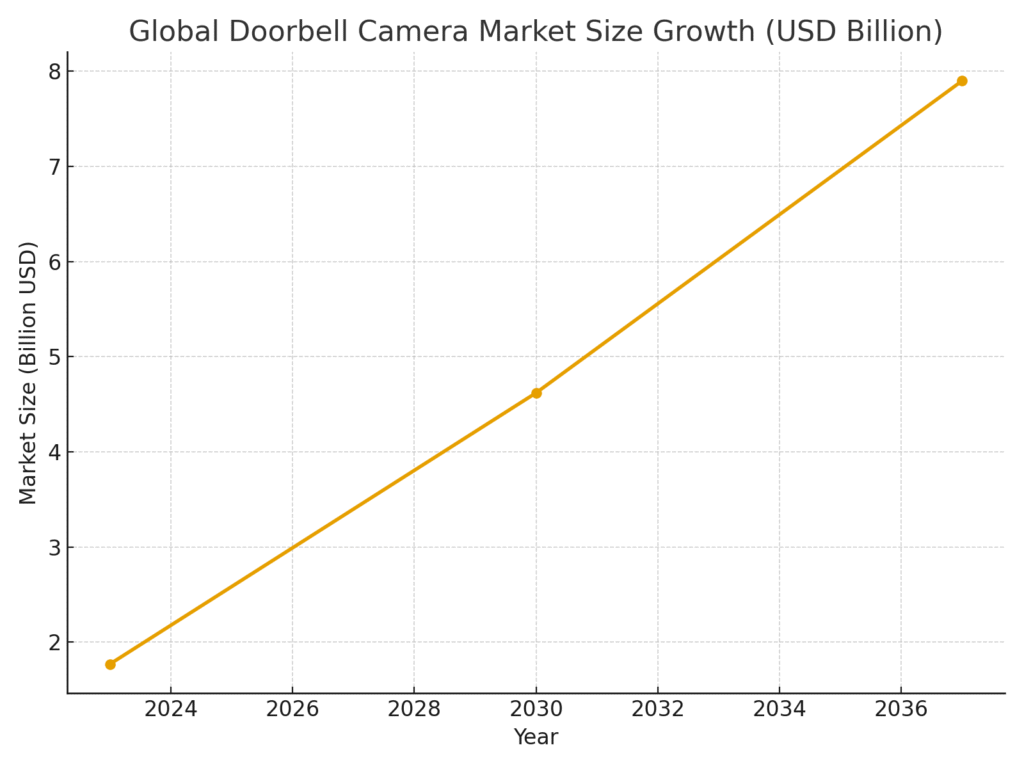
| 1 | Global market size reached $1.77 billion | 2023 | Worldwide |
| 2 | Market expected to hit $4.6 billion | 2030 | Worldwide |
| 3 | Market projected to $7.9 billion | 2037 | Worldwide |
| 4 | CAGR growth projected up to 15% | 2024–2030 | Worldwide |
| 5 | North America leading global revenue | 2023 | North America |
| 6 | U.S. market valued at $418 million | 2023 | United States |
| 7 | Wired models captured most U.S. sales | 2023 | United States |
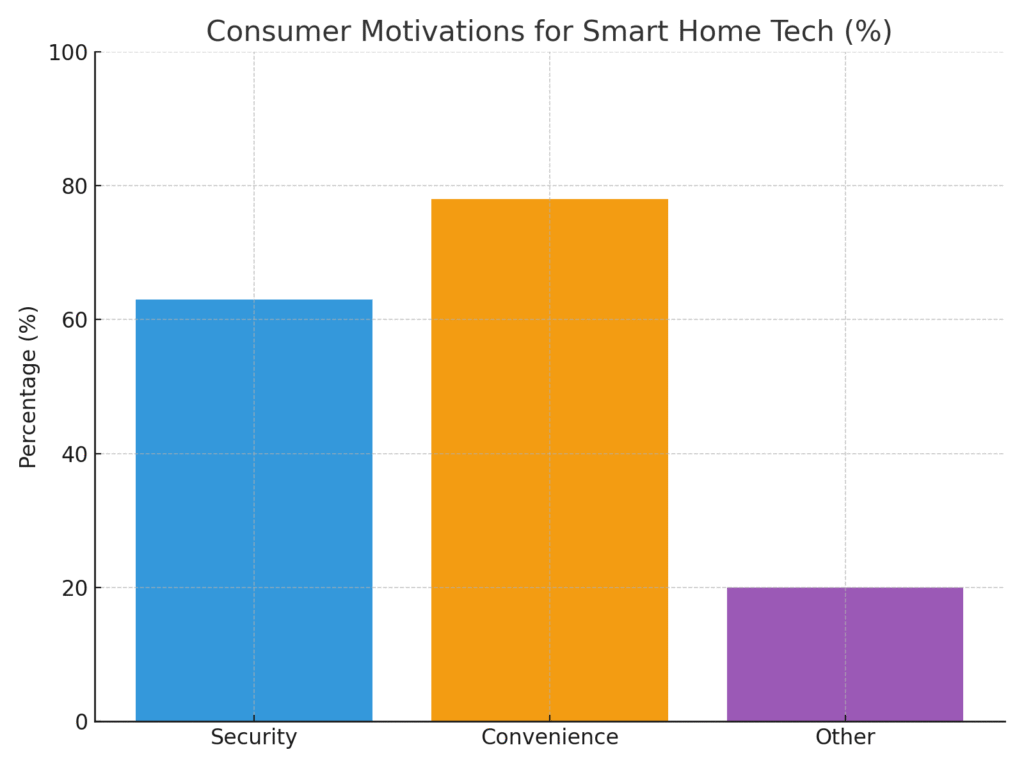
| 8 | Europe holds 27–30% market share | 2023 | Europe |
| 9 | Asia-Pacific expected fastest growth | 2024–2030 | Asia-Pacific |
| 10 | Wired models still dominate globally | 2023 | Worldwide |
| 11 | Wired share at 52.7% in U.S. | 2023 | United States |
| 12 | Advanced features like AI drive sales | 2024 | Worldwide |
| 13 | Smart home integration boosts adoption | 2024 | Worldwide |
| 14 | 16% of U.S. homes had video doorbells | 2021 | United States |
| 15 | 63% purchase for security reasons | 2022 | Worldwide |
| 16 | 78% motivated by convenience | 2022 | Worldwide |
| 17 | Smart doorbell sales growing 27% YoY | Forecast | United States |
| 18 | High price remains adoption barrier | 2024 | Worldwide |
| 19 | Connectivity issues limit adoption | 2024 | Emerging Markets |
| 20 | Privacy & data concerns growing | 2024 | Worldwide |
Top 20 Doorbell Camera Marketing Statistics 2025
Doorbell Camera Marketing Statistics #1 – Global Market Size At $1.77 Billion In 2023
The global doorbell camera market was valued at $1.77 billion in 2023, marking a strong base for its rapid growth. This figure reflects how mainstream video doorbells have become in modern households worldwide. Increasing adoption of smart home devices and growing safety concerns have fueled this expansion. Consumers are prioritizing security solutions that are easy to install and integrate with existing smart systems. This market value highlights the early stages of a much larger growth trajectory.
Doorbell Camera Marketing Statistics #2 – Market Expected To Reach $4.6 Billion By 2030
Forecasts suggest the doorbell camera market will hit around $4.6 billion by 2030. This dramatic increase showcases the sustained consumer interest in connected home security devices. Manufacturers are innovating with wireless options, AI features, and better resolution to meet demand. The projected rise also signals opportunities for retailers and marketers to expand offerings. Clearly, the market is nowhere near saturation, but still climbing fast.
Doorbell Camera Marketing Statistics #3 – Market Could Reach $7.9 Billion By 2037
Research indicates the video doorbell market might surpass $7.9 billion by 2037. This long-term outlook demonstrates confidence in the continued adoption of smart security products. With rising urbanization, safety awareness, and smart city initiatives, demand is likely to stay strong. More households will see video doorbells as standard equipment rather than a luxury. For marketers, this statistic emphasizes the importance of planning for sustained growth.
Doorbell Camera Marketing Statistics #4 – CAGR Projected Up To 15%
Reports highlight growth rates between 8.5% and 15% depending on timeframe and region. A CAGR this high is a strong indicator of an expanding, lucrative industry. Investors and businesses see these numbers as proof of the market’s resilience. It also reflects evolving consumer expectations for affordable, user-friendly security. Such growth forecasts drive competition and push innovation further.
Doorbell Camera Marketing Statistics #5 – North America Leading Revenue In 2023
North America dominated global revenue in 2023, showcasing its early adoption of smart home tech. Consumers in the U.S. and Canada have embraced doorbell cameras for convenience and safety. High disposable income and strong smart home infrastructure play major roles. Marketing efforts in this region are already highly competitive. This leadership also sets trends that influence other global markets.
Doorbell Camera Marketing Statistics #6 – U.S. Market At $418 Million In 2023
The U.S. alone generated about $418 million in doorbell camera sales in 2023. This makes it one of the single largest markets worldwide. Growth projections expect it to reach over $1 billion by 2030. Such figures show how deeply integrated doorbell cameras are becoming in American households. They also highlight the opportunity for U.S. marketers to further capitalize on this expanding demand.
Doorbell Camera Marketing Statistics #7 – Wired Models Leading In The U.S.
In 2023, wired doorbell cameras captured the majority share in the U.S. market. While wireless devices are gaining popularity, wired systems still appeal to many for their reliability. They connect seamlessly with home electrical systems, ensuring stable performance. Consumers often prefer them for permanent installations and higher security perception. This stat underscores the importance of segmenting marketing campaigns by product type.
Doorbell Camera Marketing Statistics #8 – Europe Holding 27–30% Market Share
Europe accounts for roughly 27–30% of the global market. Increasing urbanization and safety concerns are key adoption drivers. Consumers across countries like the U.K., Germany, and France are leading purchases. Local data privacy laws also impact how video doorbells are marketed. This sizable share demonstrates Europe’s role as an important growth contributor.
Doorbell Camera Marketing Statistics #9 – Asia-Pacific Growing Fastest
Asia-Pacific is predicted to be the fastest growing region for doorbell cameras. Rising middle-class income and rapid urban expansion fuel demand. Countries such as China, India, and Japan are adopting smart home devices at increasing rates. Local manufacturers are also entering the market with affordable models. This trend creates fresh opportunities for global and regional marketers alike.
Doorbell Camera Marketing Statistics #10 – Wired Models Still Dominate Globally
Globally, wired models continue to generate the highest revenue. Their stability and long-term reliability make them a trusted option. However, wireless models are catching up quickly thanks to ease of installation. Consumers’ choice between wired and wireless often comes down to lifestyle and home type. This segmentation is crucial for targeting the right audiences with tailored messaging.
Doorbell Camera Marketing Statistics #11 – Wired Share At 52.7% In U.S. 2023
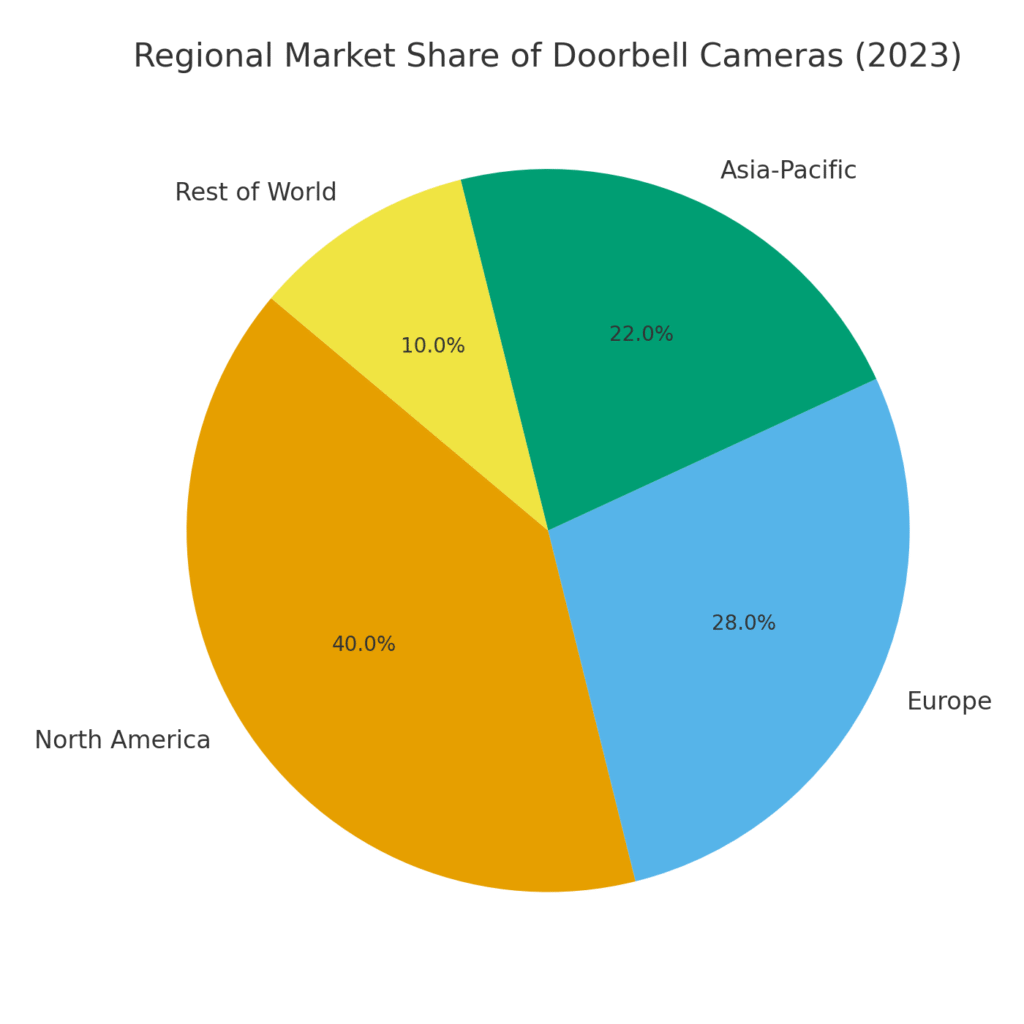
In the U.S., wired doorbell cameras held a 52.7% revenue share in 2023. This number proves their ongoing relevance despite wireless growth. Homeowners often choose wired systems when renovating or building. They also reduce dependency on Wi-Fi strength, ensuring smoother performance. Marketers should highlight reliability when promoting wired systems to these consumers.
Doorbell Camera Marketing Statistics #12 – Advanced Features Driving Sales
Features such as motion detection, two-way audio, and cloud storage boost consumer appeal. AI-powered recognition and high-resolution video are becoming standard expectations. These innovations make doorbell cameras more than just recording devices. They offer real-time monitoring and enhanced control over home safety. Highlighting features is a powerful strategy for influencing buyer decisions.
Doorbell Camera Marketing Statistics #13 – Smart Home Integration Boosts Adoption
Compatibility with smart assistants like Alexa and Google Assistant has driven adoption. Consumers value products that fit easily into their existing ecosystems. Integration adds convenience, such as viewing camera feeds on smart displays. This trend reflects the broader smart home movement. Marketers must emphasize connectivity benefits to resonate with modern buyers.
Doorbell Camera Marketing Statistics #14 – 16% Of U.S. Homes Had Video Doorbells In 2021
By 2021, about 16% of U.S. households already had a video doorbell. This penetration rate shows significant progress in just a few years. It also reflects consumers’ increasing trust in these technologies. More households have likely joined since then as prices fall. This data demonstrates a strong foundation for further growth.
Doorbell Camera Marketing Statistics #15 – 63% Buy For Security Reasons
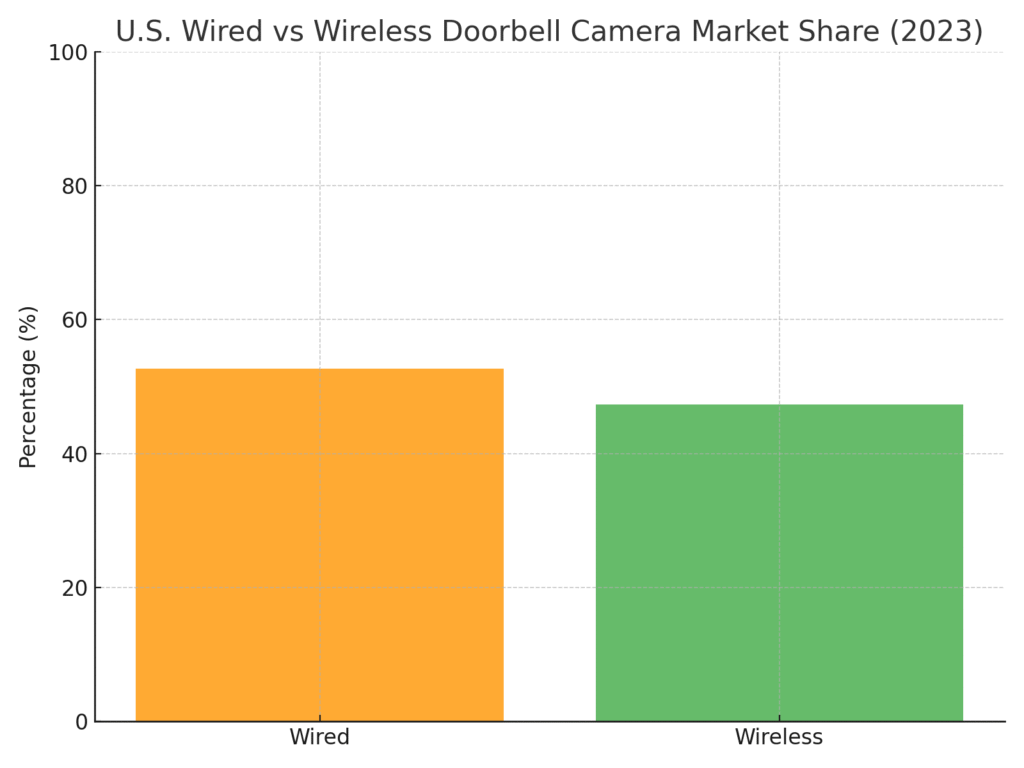
A survey revealed 63% of smart home device owners prioritize security as their top reason for buying. Doorbell cameras directly address this need by providing visibility and deterrence. Consumers often see them as the first line of protection. Security concerns are not just practical but also emotional drivers of adoption. Marketing campaigns that highlight safety benefits resonate strongly with this audience.
Doorbell Camera Marketing Statistics #16 – 78% Value Convenience In Smart Tech
Around 78% of adults say convenience is their biggest motivator when buying smart devices. Doorbell cameras fit perfectly into this preference by simplifying home access and monitoring. Users appreciate the ability to check who’s at the door remotely. Convenience adds daily value beyond just safety. This makes it a central marketing angle to emphasize.
Doorbell Camera Marketing Statistics #17 – U.S. Sales Growing 27% Year-Over-Year
Smart doorbell sales in the U.S. are projected to grow at 27% annually. Such growth outpaces many other smart home categories. It demonstrates how quickly consumer behavior is shifting in favor of video security. Retailers and brands can capitalize by expanding stock and product variations. This momentum signals a long-lasting demand cycle.
Doorbell Camera Marketing Statistics #18 – Price Still A Barrier
Despite strong growth, high cost remains a barrier for some consumers. Many households hesitate to invest due to upfront device prices and subscription fees. Manufacturers are working to create affordable options to expand adoption. Pricing strategies will continue to shape market reach. Addressing affordability in marketing can attract more budget-sensitive buyers.
Doorbell Camera Marketing Statistics #19 – Connectivity Issues Limit Adoption
Internet and power reliability hinder doorbell camera usage in certain markets. In regions with weaker infrastructure, adoption is slower. These challenges create opportunities for innovation in offline and hybrid models. Marketers should understand local barriers when entering new regions. Tailored campaigns addressing these concerns can help boost trust.
Doorbell Camera Marketing Statistics #20 – Privacy And Security Concerns Growing
Consumers are increasingly concerned about data privacy in connected devices. Doorbell cameras often store footage on the cloud, raising security questions. Brands that highlight encryption and safety protocols gain consumer trust. Transparent communication about privacy practices is becoming a selling point. This statistic reflects the importance of trust in future marketing campaigns.
Why These Statistics Matter
Looking over these insights, I can’t help but think about how much potential there is for businesses that choose to act on them. Whether you’re a small retailer trying to stock the right products or a larger brand planning your next campaign, these doorbell camera marketing statistics highlight just how much demand and innovation is driving this space. Personally, I see this as more than just a market trend – it’s about giving people peace of mind at home, and that emotional connection is something marketers can’t afford to overlook. By staying ahead of the curve and learning from the data, we have the chance to not just meet consumer expectations but to exceed them. And honestly, that’s what makes working in this industry so exciting for me – knowing that with the right strategy, we can turn numbers into meaningful impact.
SOURCES