




21 Sep TOP 20 ECONOMY BRANDS MARKETING STATISTICS 2025
In today’s competitive marketplace, economy brands are gaining incredible momentum as more consumers prioritize value without compromising quality. By analyzing the latest economy brands marketing statistics, businesses can better understand how to connect with cost-conscious shoppers while still building trust and loyalty. As trends continue to evolve across digital platforms, influencer partnerships, and customer retention strategies, it becomes clear that affordability alone is no longer enough—brands must also deliver a strong identity and consumer experience. To help navigate these insights, we’ve drawn inspiration from research and strategies that even a marketing agency in New York would highlight, making this guide both data-driven and practical. Whether you’re running a budget-friendly product line or a private label, these statistics will give you the clarity needed to make smarter marketing decisions in 2025.
Top 20 Economy Brands Marketing Statistics 2025 (Editor’s Choice)
| # | Statistic / Trend | Key Insight for Economy Brands |
|---|---|---|
| 1 | Private label/store brand usage is rising | Consumers increasingly choose private labels for value, boosting opportunities for economy brands. |
| 2 | 81% of consumers need to trust a brand | Trust-building through quality, reviews, and transparency is critical even for budget brands. |
| 3 | Email marketing delivers high ROI ($36-$40 per $1) | Economy brands with limited budgets can use email for cost-effective customer engagement. |
| 4 | 70–75% of budgets go to digital marketing | Digital-first strategies are essential to stay competitive with larger brands. |
| 5 | SEO & content marketing among top ROI drivers | Content can level the playing field without needing massive ad spend. |
| 6 | Influencer/creator marketing is growing fast | Micro-influencers can help economy brands reach audiences affordably. |
| 7 | 55% of first impressions are visual | Even low-cost brands need attractive packaging and visuals to look trustworthy. |
| 8 | 77% prefer brands they follow on social media | Social media boosts retention and customer preference for economy brands. |
| 9 | Gen Z researches brands on TikTok & Instagram | Presence on youth-favored platforms is vital for long-term growth. |
| 10 | Over half want brands to take a stand on issues | Budget brands benefit by aligning with consumer values and ethics. |
| 11 | Digital ad spend continues to rise | Economy brands must invest in paid ads, with careful targeting. |
| 12 | Mobile dominates brand discovery | Mobile-optimized sites and fast UX are a must for budget-conscious consumers. |
| 13 | Visual content increases engagement | Infographics and visuals help economy brands appear professional and shareable. |
| 14 | Short videos under 2 minutes perform best | Reels, TikToks, and Shorts can drive strong awareness at low cost. |
| 15 | Average e-commerce conversion < 2% | Optimizing landing pages and checkout flows is critical for ROI. |
| 16 | Inflation drives trade-down buying behavior | Economy brands should emphasize discounts, essentials, and loyalty programs. |
| 17 | Brand value is shaped by trust & innovation | Reputation and digital presence matter even for affordable brands. |
| 18 | Reviews heavily influence purchases | Positive online reviews can significantly lift sales for economy products. |
| 19 | Performance marketing rising in importance | Economy brands must double down on ROI-focused campaigns. |
| 20 | Retention is cheaper than acquisition | Loyalty programs and repeat purchase models maximize margins. |
Top 20 Economy Brands Marketing Statistics 2025
Economy Brands Marketing Statistics #1: Private Label/Store Brand Usage Is Rising
Private label and store brands are seeing significant growth as consumers look for affordable alternatives. This trend is especially strong during times of inflation, where saving money becomes a priority. Economy brands can capitalize on this shift by highlighting value and quality in their messaging. Retailers are also giving private labels more visibility, making them more competitive with big names. This proves that affordability, when paired with trust, can drive loyalty.
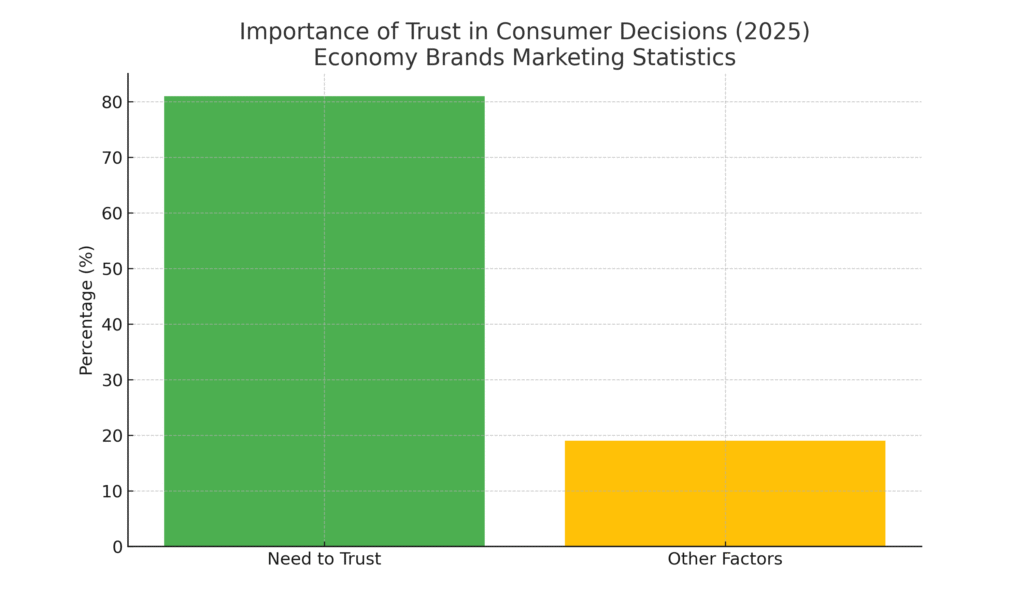
Economy Brands Marketing Statistics #2: 81% Of Consumers Need To Trust A Brand
Trust has become the deciding factor for many consumers, with 81% stating they won’t buy from a brand they don’t trust. Economy brands often face skepticism, making transparency and reliability essential. Consistent product quality, authentic reviews, and clear communication help build this trust. Budget-friendly doesn’t mean cheap if a brand builds credibility. Ultimately, trust can be the strongest differentiator in competitive markets.
Economy Brands Marketing Statistics #3: Email Marketing Delivers High ROI ($36-$40 Per $1)
Email marketing continues to deliver exceptional returns, averaging up to $40 for every $1 spent. This makes it a perfect tool for economy brands with tighter budgets. By personalizing campaigns, these brands can maintain strong connections with customers at minimal costs. Automated sequences also increase engagement without requiring major investment. For economy brands, email remains a powerful, low-cost marketing solution.
Economy Brands Marketing Statistics #4: 70–75% Of Budgets Go To Digital Marketing
Digital channels now dominate marketing spend, with nearly three-quarters of budgets allocated online. Economy brands must follow this trend to stay visible where customers spend their time. From SEO to social media ads, digital offers cost-effective targeting. This shift ensures even smaller players can compete with larger corporations. For budget-friendly brands, digital-first strategies are non-negotiable.
Economy Brands Marketing Statistics #5: SEO & Content Marketing Among Top ROI Drivers
Search engine optimization and content marketing are consistently ranked as top ROI drivers. For economy brands, this is a golden opportunity since organic visibility is more affordable than paid ads. High-quality blogs, guides, and product descriptions help attract customers without heavy spending. Content also builds authority, making economy brands appear trustworthy. Long-term, SEO and content provide sustainable growth advantages.

Economy Brands Marketing Statistics #6: Influencer/Creator Marketing Is Growing Fast
Influencer marketing continues to expand, giving economy brands new avenues to reach customers. Unlike big-budget celebrity endorsements, micro-influencers provide authentic, relatable promotion. Their smaller but loyal audiences often convert at higher rates. For budget-friendly brands, this means affordable partnerships with strong ROI. Influencers bridge the gap between affordability and aspirational branding.
Economy Brands Marketing Statistics #7: 55% Of First Impressions Are Visual
Visual design drives more than half of a consumer’s first impression. Even economy brands must prioritize packaging, branding, and design aesthetics. A polished look reassures customers that low price does not equal low quality. Good design can also help products stand out against expensive competitors. Ultimately, appearance remains a powerful trust-building tool for value brands.
Economy Brands Marketing Statistics #8: 77% Prefer Brands They Follow On Social Media
More than three-quarters of shoppers prefer buying from brands they follow online. For economy brands, social media presence builds loyalty and repeat business. Engaging posts, customer stories, and promotions increase long-term retention. These platforms also provide cost-effective ways to reach new audiences. Building a community online is as valuable as traditional advertising.
Economy Brands Marketing Statistics #9: Gen Z Researches Brands On TikTok & Instagram
Younger generations are turning to TikTok and Instagram for brand discovery. Economy brands must adapt to this behavior with short, engaging, and authentic content. Viral moments and creative campaigns can spark major visibility at low cost. These platforms favor creativity over massive ad budgets, benefiting value brands. Gen Z’s habits make social-first strategies a key growth channel.
Economy Brands Marketing Statistics #10: Over Half Want Brands To Take A Stand On Issues
More than half of consumers now expect brands to take positions on social issues. Economy brands can gain trust by aligning with values that resonate with their audience. Being silent can appear out of touch, even in budget segments. Transparency about sustainability or community support builds loyalty. Today, ethics are as important as affordability.
Economy Brands Marketing Statistics #11: Digital Ad Spend Continues To Rise
Digital ad investments are increasing worldwide, with no signs of slowing. Economy brands must budget wisely to benefit from this trend. Targeted ads allow for cost control while maximizing impact. Platforms like Google Ads and Meta make it possible to compete against larger brands. With smart targeting, even small budgets can achieve big results.
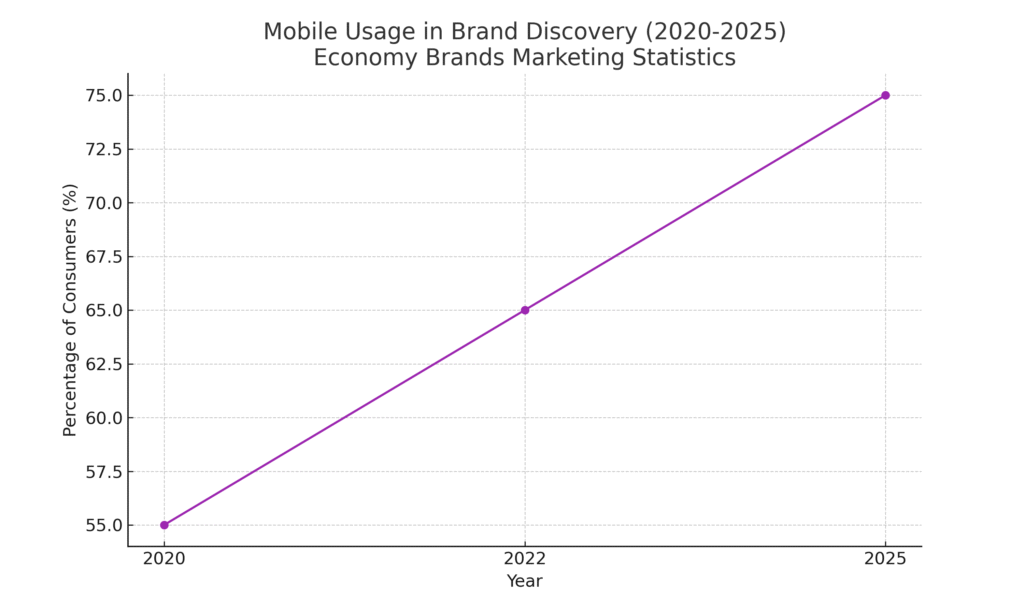
Economy Brands Marketing Statistics #12: Mobile Dominates Brand Discovery
Most consumers now use their smartphones for shopping and brand research. Economy brands need mobile-friendly websites to stay competitive. Fast load times, responsive design, and easy checkout are essential. Poor mobile experiences can drive away price-sensitive buyers quickly. Mobile optimization has become a must-have, not an option.
Economy Brands Marketing Statistics #13: Visual Content Increases Engagement
Visuals like infographics and images drive significantly higher engagement. Economy brands can appear more professional with strong visuals. Affordable design tools make it possible to compete with larger brands. Eye-catching content also boosts shareability and online presence. Visual storytelling is now essential for capturing attention.
Economy Brands Marketing Statistics #14: Short Videos Under 2 Minutes Perform Best
Video content under two minutes generates the strongest engagement. For economy brands, short-form video is an affordable way to connect. TikTok, Reels, and Shorts are ideal platforms for this strategy. Storytelling in under two minutes is both effective and cost-efficient. Attention spans are short, and brands that adapt will win.
Economy Brands Marketing Statistics #15: Average E-Commerce Conversion < 2%
E-commerce conversion rates often fall below 2%, meaning improvement opportunities exist. Economy brands can optimize with simpler checkouts and clear value messaging. Small changes like free shipping or discounts can boost conversions. Clear product descriptions also reduce cart abandonment. Focusing on conversions helps maximize every marketing dollar.

Economy Brands Marketing Statistics #16: Inflation Drives Trade-Down Buying Behavior
Economic pressures encourage consumers to trade down to cheaper alternatives. Economy brands thrive in this environment by emphasizing affordability. Loyalty programs and essential-focused marketing become more effective. Shoppers prioritize value over premium features during inflation. This creates long-term opportunities for budget-friendly brands.
Economy Brands Marketing Statistics #17: Brand Value Is Shaped By Trust & Innovation
Brand value is no longer tied only to scale but also to reputation. Economy brands can grow significantly by building strong consumer trust. Innovation in packaging, delivery, or digital presence also plays a role. Affordable brands that balance these elements can rival bigger names. Reputation remains the foundation of brand equity.
Economy Brands Marketing Statistics #18: Reviews Heavily Influence Purchases
Online reviews strongly impact buying decisions, especially for budget brands. Positive feedback reassures buyers about product quality. Actively encouraging reviews builds credibility and visibility. Addressing negative reviews quickly also demonstrates accountability. Reviews act as social proof that economy brands can be trusted.
Economy Brands Marketing Statistics #19: Performance Marketing Rising In Importance
Performance marketing focuses on measurable results like ROI and conversions. Economy brands must adopt this approach to optimize small budgets. By tracking data, they can double down on what works. Ineffective campaigns can be cut early, reducing waste. This data-driven focus ensures maximum return on investment.
Economy Brands Marketing Statistics #20: Retention Is Cheaper Than Acquisition
Customer retention costs less than acquiring new buyers. Economy brands can boost loyalty with rewards programs and repeat-purchase incentives. Satisfied customers are more likely to return and recommend. Building long-term relationships reduces reliance on constant promotions. Retention strategies stretch marketing budgets further and drive steady growth.
Final Thoughts on Economy Brands Marketing Statistics
As we’ve seen throughout these statistics, the rise of economy brands is not just about lower prices—it’s about how effectively they adapt to consumer needs, digital shifts, and long-term loyalty strategies. The success stories of these brands show that authenticity, smart use of technology, and meaningful customer relationships are just as important as affordability. For marketers, the challenge is balancing cost efficiency with creativity and innovation, ensuring campaigns resonate with audiences who are both budget-savvy and brand-aware. Personally, I find it exciting that value-driven branding is being redefined, proving that even the most affordable products can stand out with the right approach. These insights into economy brands marketing statistics should serve as a roadmap for anyone aiming to grow their brand while staying true to what today’s consumers are really looking for.
SOURCES
- https://customcy.com/blog/private-label-statistics/ (Customcy)
- https://explodingtopics.com/blog/branding-stats (Exploding Topics)
- https://www.numerator.com/resources/blog/gen-z-private-label/ (Numerator)
- https://www.simon-kucher.com/en/insights/private-labels-advantage-tariff-economy-and-why-inflation-only-part-story (Simon-Kucher)
- https://www.bazaarvoice.com/blog/why-private-label-brands-are-taking-over-in-2025/ (Bazaarvoice)
- https://www.convenience.org/Media/Daily/2025/May/8/5-Private-Label-Sales_Research (Convenience)
- https://seoprofy.com/blog/digital-marketing-statistics (SeoProfy)
- https://creativesoncall.work/blog/post/the-impact-of-the-growth-of-private-label-brands/550 (Creatives On Call)
- https://www.optimizely.com/insights/blog/marketing-statistics/ (Optimizely)
- https://neilpatel.com/blog/marketing-statistics/ (Neil Patel)
- https://www.numerator.com/private-label-trends/ (Numerator)
- https://www.sprinklr.com/blog/social-media-marketing-statistics/ (Sprinklr)
- https://www.hubspot.com/marketing-statistics (hubspot.com)