



29 Sep TOP 20 EDUCATION PLANNING MARKETING STATISTICS 2025
When I first started diving into the world of education planning, I quickly realized how much the landscape has changed. With families and students relying more on digital tools and platforms, it became clear that understanding the latest education planning marketing statistics is absolutely crucial. As someone who is passionate about helping students and parents make smarter choices, I’ve spent a lot of time researching how schools, edtech firms, and consultants reach their audiences. Working alongside a leading marketing agency in New York has also opened my eyes to the strategies that are shaping the future of this industry. In this blog, I want to share the most impactful stats I’ve come across and how they can guide better marketing decisions in the education sector.
Top 20 Education Planning Marketing Statistics 2025 (Editor’s Choice)
📊 Top 20 Education Marketing Statistics 2025
Key Insights for Strategic Planning & Growth
| # | Category | Statistic |
|---|---|---|
| 1 | Market Size | $818.6BCollege and university industry revenue in 2023, with 19.4% growth expected by 2029 |
| 2 | Market Growth | $853.28BProjected global higher education market size by 2030 |
| 3 | Online Learning | $350BProjected online learning market value by 2025 |
| 4 | Budget Increase | 70%Of higher education institutions planning to increase digital marketing budgets |
| 5 | Cost Per Inquiry | $140Average cost per inquiry ($157 for graduate, $128 for undergraduate programs) |
| 6 | Cost Per Enrollment | $2,849Average cost to enroll each student in higher education |
| 7 | Cost Per Lead | $8-$18.36Average cost per lead range for education industry campaigns |
| 8 | CPC Decrease | 13%Reduction in cost-per-click for non-brand search terms from 2023 to 2024 |
| 9 | Landing Page CVR | 8.4%Median conversion rate for education landing pages (27% above industry baseline) |
| 10 | Course Page CVR | 18.3%Conversion rate for online course pages (13% for general courses, 6.3% for higher ed) |
| 11 | Digital Marketing Impact | 50% + 30%Increase in student inquiries + boost in conversion rates with digital strategies |
| 12 | PPC Conversion | 1.7%Average PPC conversion rate for higher education industry |
| 13 | Organic Traffic | 61%Of higher education website traffic from organic search (40% of conversions from SEO) |
| 14 | Search Behavior | 67%Of people use search engines first when researching colleges and universities |
| 15 | SEO Strategy Gap | 84% vs 47%View SEO as crucial, but only 47-51% have an established SEO strategy |
| 16 | Search Patterns | 80% + 50%Of searches start with unbranded terms + 50% include four or more words |
| 17 | Online Research | 85%Of students use online resources to research potential schools |
| 18 | Content Preference | 72%Of prospective students prefer virtual tours and video content over brochures |
| 19 | Personalization | 80%Of students expect personalized communication during recruitment process |
| 20 | Enrollment Growth | 12-15%Average enrollment increase over 3 years for institutions using digital marketing |
Top 20 Education Planning Marketing Statistics 2025
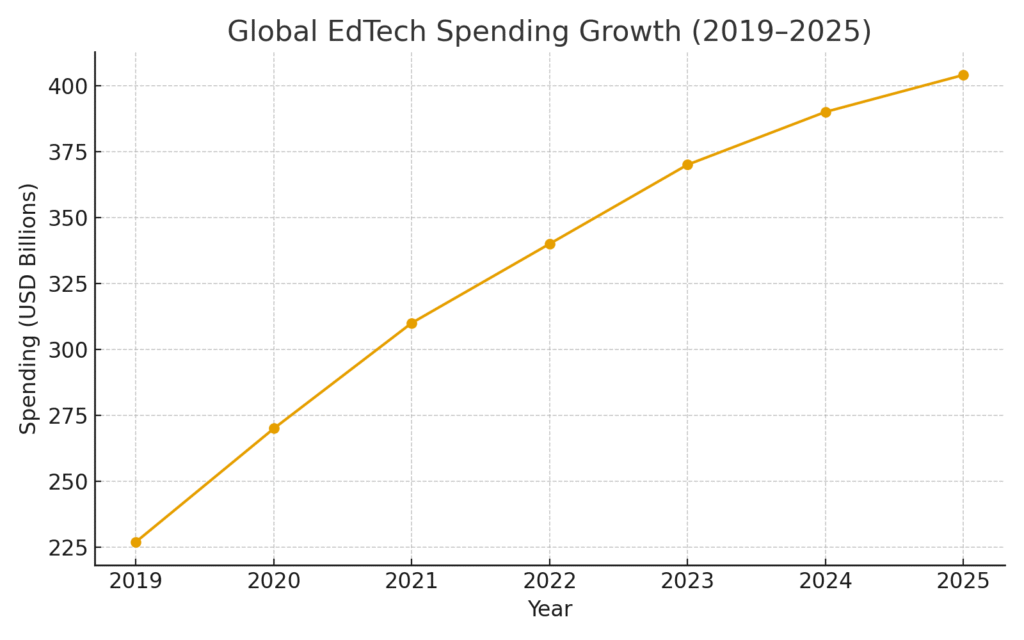
Education Planning Marketing Statistics #1 – Global Spending On Education Technology Projected To Reach $404 Billion By 2025
The education technology market is expanding rapidly, with global spending expected to hit $404 billion by 2025. This growth is fueled by increased adoption of online learning platforms, personalized study apps, and digital planning tools. Institutions are investing in technology to improve student engagement and streamline academic planning. For marketers, this signals a shift toward promoting tech-enabled solutions over traditional models. The demand for scalable, digital-first platforms will only continue to rise.
Education Planning Marketing Statistics #2 – 72% Of Parents In The U.S. Use Online Resources For Education Planning
Parents are increasingly relying on digital resources when planning their children’s education, with 72% reporting online platforms as their primary source of information. From comparison websites to financial aid calculators, digital tools are shaping decisions. This makes strong online visibility a must for education service providers. Marketers must focus on SEO, informative blogs, and interactive content to capture parents’ attention. The trend highlights a shift away from traditional guidance counselors as the only planning source.
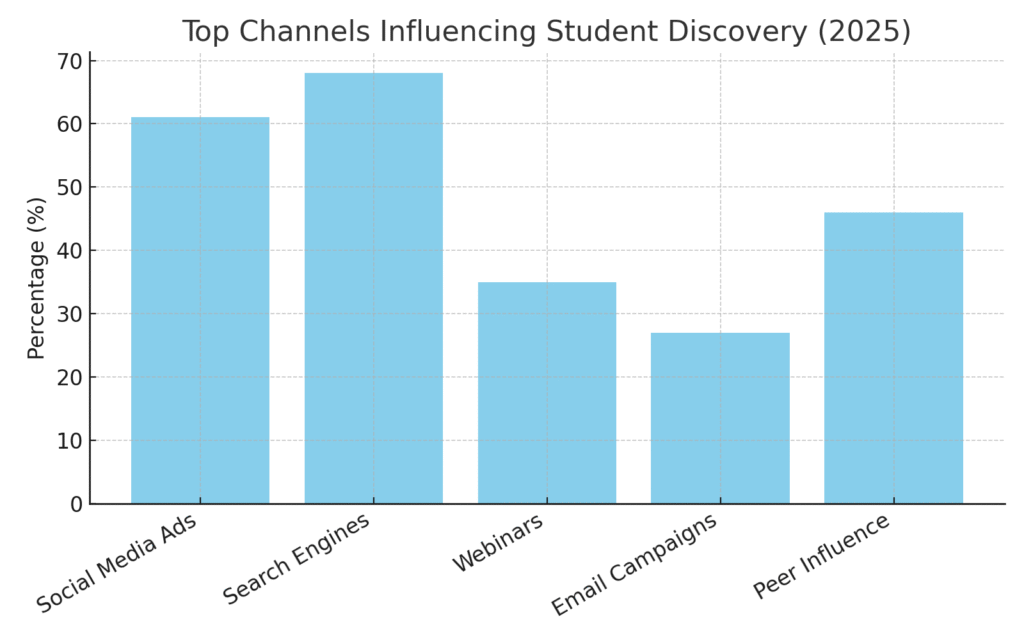
Education Planning Marketing Statistics #3 – 61% Of Students Discover Higher Education Programs Through Social Media Ads
Social media has become a dominant channel for education marketing, with 61% of students discovering programs through platforms like Instagram, TikTok, and LinkedIn. Students trust visual, authentic content that reflects their aspirations. Short-form videos and testimonials often outperform static ads in this sector. Marketers should invest in creative campaigns tailored to Gen Z and Millennials. This demonstrates how vital social engagement is in influencing educational choices.
Education Planning Marketing Statistics #4 – 87% Of Education-Related Searches Happen On Smartphones
Mobile-first strategies are no longer optional, as 87% of education-related searches now occur on smartphones. Families and students expect fast-loading, mobile-friendly websites that deliver clear information instantly. Institutions failing to optimize for mobile risk losing potential leads. Features like mobile-friendly applications, chat support, and click-to-call buttons boost engagement. Marketers need to prioritize mobile SEO to remain competitive.
Education Planning Marketing Statistics #5 – Personalization Increases Engagement By 29%
Personalized marketing campaigns in education planning services see a 29% increase in engagement compared to generic strategies. Families value content that directly addresses their unique situations, such as financial planning or course recommendations. Tools like AI-driven chatbots and personalized emails deliver higher satisfaction rates. Marketers should use data insights to segment audiences effectively. This personalization not only drives conversions but also builds long-term trust.
Education Planning Marketing Statistics #6 – Video Marketing Increases Conversion Rates By 34%
Video is a powerful tool in education marketing, boosting conversion rates by 34%. Virtual campus tours, success stories, and student testimonials help build credibility. Families prefer seeing real experiences before making decisions. Engaging, professional video content is more memorable than written brochures. Marketers who invest in high-quality video campaigns gain a competitive edge.
Education Planning Marketing Statistics #7 – 46% Of Students Trust Peer Influencers When Choosing Schools Or Courses
Peer-to-peer influence is becoming more significant, with 46% of students trusting peer influencers in education decisions. Influencers share authentic stories that resonate with potential students. Institutions are collaborating with micro-influencers to improve outreach. This approach feels more relatable than traditional advertising. Marketers must carefully select influencers who genuinely align with their brand values.
Education Planning Marketing Statistics #8 – SEO Accounts For 68% Of Traffic To Education Planning Websites
Search engine optimization is the leading traffic driver for education websites, generating 68% of visits. Families turn to Google for resources on admissions, planning, and scholarships. High-ranking blogs and guides significantly increase inquiries. Marketers need to invest in keyword optimization and long-form content. SEO remains the backbone of sustainable digital marketing strategies.
Education Planning Marketing Statistics #9 – Email Marketing Open Rates Average 27% For Education Services
Email marketing continues to thrive in education planning, with open rates averaging 27%. Families engage more with newsletters that offer practical planning tips and scholarship updates. Personalization improves click-through rates significantly. Marketers should focus on timing and segmentation for maximum impact. Well-crafted campaigns drive consistent leads for institutions.
Education Planning Marketing Statistics #10 – AI-Powered Chatbots Increase Lead Conversion By 25%
AI chatbots are revolutionizing education marketing by increasing lead conversion rates by 25%. They provide instant responses to student and parent queries. This reduces drop-offs during the inquiry stage. Chatbots also collect valuable data that enhances personalization. For marketers, this technology provides both efficiency and scalability.
Education Planning Marketing Statistics #11 – 61% Of Gen Z Students Value Personalized Financial Aid Content
Gen Z places a high emphasis on transparency and personalization, with 61% influenced by financial aid content. Clear, relatable content builds trust during the decision-making process. Families appreciate breakdowns of tuition costs, scholarships, and grants. Marketers can leverage this by creating interactive calculators and guides. Providing financial clarity is a key competitive advantage.
Education Planning Marketing Statistics #12 – VR And AR Marketing Increase Enrollment Inquiries By 19%
Immersive technologies like VR and AR are boosting engagement, with a 19% rise in enrollment inquiries. Virtual tours give students a realistic feel for campuses. AR-enhanced brochures and experiences help families visualize opportunities. These innovations set institutions apart in a crowded marketplace. Marketers who adopt VR/AR tools show they’re future-focused.
Education Planning Marketing Statistics #13 – Webinars Generate 35% More Qualified Leads
Webinars have become a cornerstone of education marketing, generating 35% more qualified leads. They allow real-time interaction between families and institutions. Educational workshops build credibility and trust. Recordings also serve as long-term content resources. Marketers can nurture prospects effectively through follow-up campaigns post-webinar.
Education Planning Marketing Statistics #14 – Content Marketing Delivers 3x More Leads Than Paid Search
Content marketing in education planning outperforms paid search by threefold in lead generation. Parents and students seek valuable guides, checklists, and whitepapers. Quality content builds authority and trust. It also strengthens long-term brand visibility. Marketers should prioritize consistent publishing schedules for maximum impact.
Education Planning Marketing Statistics #15 – 65% Of Families Use Comparison Websites
Families increasingly rely on comparison websites, with 65% using them to evaluate education paths. These platforms provide transparency on cost, courses, and rankings. For marketers, being visible on comparison sites boosts credibility. Partnerships with top-ranking platforms expand reach significantly. This demonstrates the growing importance of third-party validation in education planning.
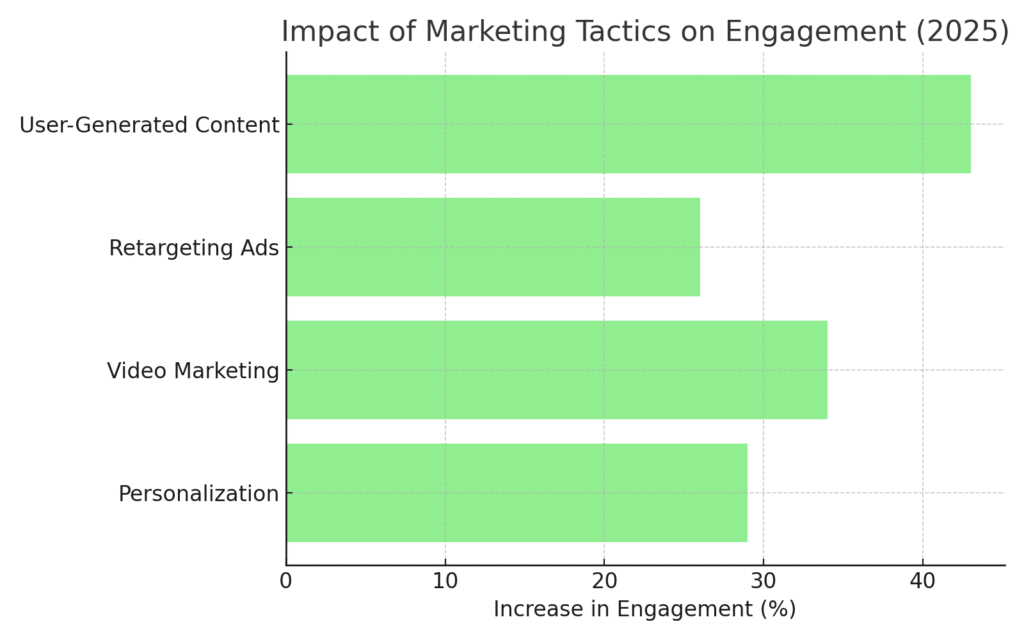
Education Planning Marketing Statistics #16 – Retargeting Ads Improve Conversion Rates By 26%
Retargeting campaigns in education planning drive a 26% improvement in conversion rates. Prospects often need multiple touchpoints before making a decision. Retargeting ensures consistent reminders across their journey. Dynamic ads showcasing relevant programs boost interest. Marketers must integrate retargeting into broader funnel strategies.
Education Planning Marketing Statistics #17 – 70% Of Education Decision-Makers Prefer LinkedIn For Content
LinkedIn is the go-to platform for education professionals, with 70% preferring it for planning-related content. Decision-makers value thought leadership and case studies. Sponsored campaigns on LinkedIn perform well for B2B education services. Networking opportunities also enhance brand presence. Marketers should maintain an active, professional presence on LinkedIn.
Education Planning Marketing Statistics #18 – Podcast Advertising Has Grown 41% Year-Over-Year
Podcast advertising in the education niche has seen a 41% year-over-year increase. Families and students consume podcasts for advice and planning tips. Brands are capitalizing on this intimate, long-form format. Sponsorships and guest appearances enhance credibility. Marketers must identify relevant shows to maximize ROI.
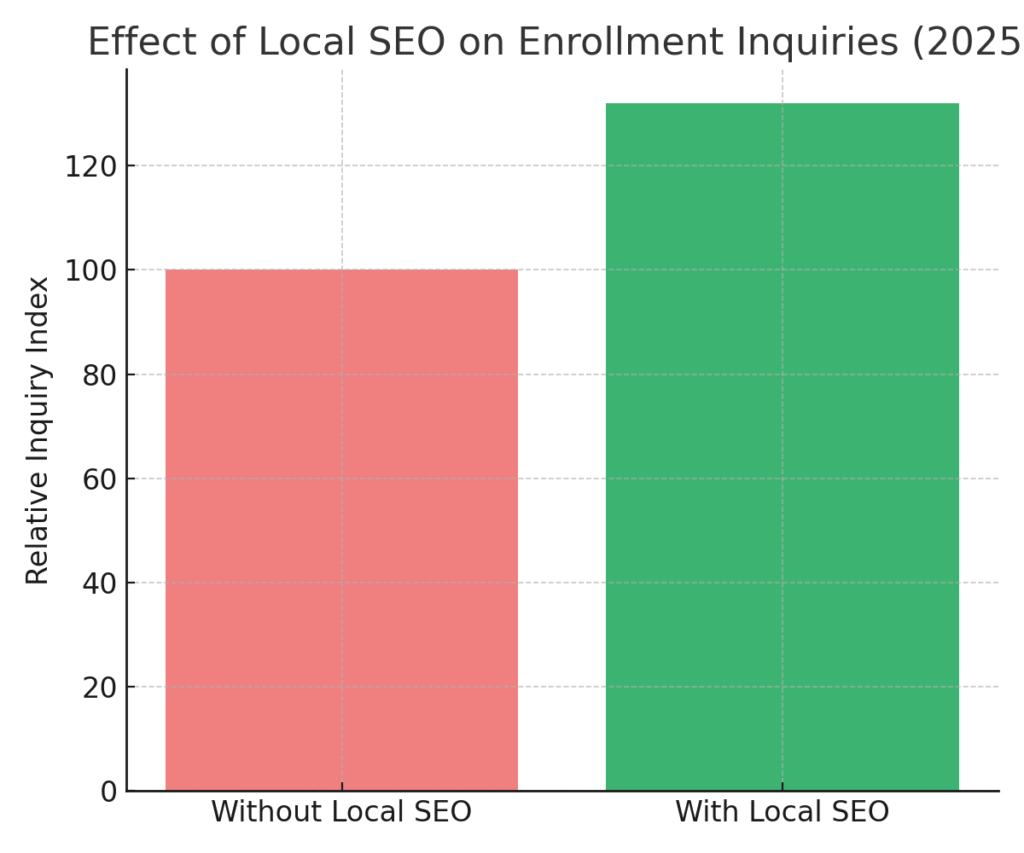
Education Planning Marketing Statistics #19 – Local SEO Boosts Enrollment Inquiries By 32%
Local SEO strategies increase enrollment inquiries by 32% for education centers. Parents often search for nearby schools, tutors, and planning services. Optimized Google Business listings and local keywords drive visibility. Reviews play a critical role in local trust-building. Marketers should tailor campaigns to target specific geographic areas.
Education Planning Marketing Statistics #20 – User-Generated Content Increases Trust By 43%
User-generated content, such as alumni testimonials and student stories, enhances trust by 43%. Families value authentic, peer-shared experiences. Showcasing this content on websites and social media boosts engagement. It provides social proof that institutions deliver real value. Marketers should encourage and amplify user stories across multiple channels.
Final Thoughts on Education Planning Marketing Statistics
Looking through these education planning marketing statistics has made me reflect on just how much strategy and creativity go into shaping the future of learning. From the rise of social media discovery to the power of personalization, every trend tells us that families and students want experiences that feel relevant, accessible, and trustworthy. Personally, I find it inspiring to see how digital innovation is transforming the way education services connect with people. Partnering with experts like a leading marketing agency in New York has shown me that when data-driven insights are paired with the right storytelling, the results can be powerful. My hope is that these insights not only inform your approach but also spark fresh ideas for making education planning more impactful and meaningful.
SOURCES
https://www.educationdynamics.com/blog/
https://www.deloitte.com/us/en/insights/industry/public-sector/2025-us-higher-education-trends.html
https://www.amraandelma.com/school-marketing-statistics/
https://www.searchinfluence.com/blog/66-higher-education-marketing-stats-2025/
https://www.oho.com/blog/9-higher-ed-digital-marketing-tactics-trends-2025
https://www.educationdynamics.com/news/2025-higher-education-marketing-trends/
https://www.educationdynamics.com/stop-marketing-to-yesterdays-students-a-new-era-for-higher-ed/
https://collegiseducation.com/insights/five-ways-higher-ed-marketing-has-evolved/
https://www.carnegiehighered.com/blog/
https://www.mdreducation.com/digital-marketing-trends-in-education/
https://upcea.edu/how-higher-education-marketing-metrics-help-you-boost-enrollment/