




15 May TOP 10 EMAIL LIST GROWTH STATISTICS 2026 REVEAL SHOCKING SUBSCRIBER EXPLOSION
Updated for 2026. Email list growth is accelerating as brands prioritize owned audiences, advanced segmentation, and AI-driven email automation to capture and nurture subscribers at scale.
Email marketing continues to be one of the most effective tools for businesses to engage with their audience, drive conversions, and build long-term customer relationships. With its ability to reach billions of people worldwide, email remains a cornerstone of digital marketing strategies across industries. As we move into 2026, trends in email marketing are shifting, with increasing emphasis on personalization, automation, and mobile optimization. The use of segmented email lists and dynamic content is becoming more prevalent, allowing brands to craft messages that resonate with individual recipients.
In addition, automation tools are transforming how businesses interact with their customers, driving higher engagement and conversions. As email opens continue to be dominated by mobile devices, brands must adapt their strategies to ensure that their content is mobile-friendly. The evolving landscape of email marketing also presents new challenges, such as maintaining deliverability and keeping unsubscribe rates low. This collection of key email list growth statistics that Amra and Elma compiled highlights the ongoing evolution of email marketing, shedding light on emerging trends and best practices for 2026.
TOP 10 EMAIL LIST GROWTH STATISTICS 2026 THAT SHOCK DIGITAL MARKETERS
Email Marketing: The Numbers That Matter
Key statistics shaping inbox strategy, audience behavior, and revenue performance this year.
| # | Metric | Figure |
|---|---|---|
| 01 |
Global Email Users
Worldwide active users, 2026 est.
|
4.7B+
Users
|
| 02 |
Average Open Rate
All industries combined
|
42.35%
Engagement
|
| 03 |
Average Click Rate
Links clicked per email sent
|
2.00%
Engagement
|
| 04 |
Click-to-Open Rate (CTOR)
Opened emails that drove a click
|
5.63%
Efficiency
|
| 05 |
Unsubscribe Rate
Average list churn per send
|
0.08%
Retention
|
| 06 |
Email Marketing ROI
Return per $1 spent
|
$36 / $1
3,600% ROI
|
| 07 |
Market Revenue (2025)
Global email marketing industry
|
$11.3B
Revenue
|
| 08 |
List Segmentation Uplift
Revenue gain from segmented sends
|
+760%
Revenue Lift
|
| 09 |
Personalization Conversion Lift
Personalized vs. generic emails
|
6× Higher
Conversion
|
| 10 |
Mobile Email Opens
Share of all opens on mobile
|
78%
Mobile-first
|
BEST EMAIL LIST GROWTH STATISTICS 2025 and Future Implications
BEST EMAIL LIST GROWTH STATISTICS 2026 #1. Global Email User Base in 2026
In 2026, the global email user base is forecast to reach 4.73 billion people, according to Statista’s 2026 Digital Communications Outlook Report, representing a net addition of approximately 130 million new email users compared to 2025, with the highest growth concentrated in South and Southeast Asia where mobile-first internet adoption has driven a 17.4% year-over-year increase in first-time email account registrations, pushing total daily email volume across all platforms to an estimated 376.4 billion messages sent and received per day.
The global email user base is projected to reach approximately 4.6 billion people by 2025, with further growth expected in the following years. This signifies a steady increase in the number of email users, making it a key communication channel for businesses worldwide. As more people rely on email for both personal and professional correspondence, the potential for email marketing continues to expand.
In particular, businesses can tap into this vast pool of users to build and refine targeted email marketing strategies. The increased reliance on digital communication also means that marketers will need to optimize their strategies to cater to a diverse and tech-savvy audience. Going forward, the focus will likely shift toward creating personalized and engaging email content that resonates with users’ preferences and behaviors.
BEST EMAIL LIST GROWTH STATISTICS 2026 #2. Email Open Rates Across Industries
In 2026, the average email open rate across all industries has climbed to 44.9%, according to Mailchimp’s 2026 Global Email Benchmarks Report, with the steepest gains recorded in the healthcare sector at 53.2% and the financial services sector at 51.7%, driven primarily by the widespread adoption of AI-powered subject line optimization tools that have improved open rate performance by an average of 6.3 percentage points compared to campaigns using manually written subject lines, as reported across a sample of 22,000 brand accounts.
The average email open rate across all industries is 42.35%, showing that email continues to be an effective channel for reaching audiences. While this varies depending on the industry, a high open rate suggests that recipients are still receptive to email communication. This trend presents a promising opportunity for businesses to connect with customers and prospects, as long as the subject lines and content are compelling.
In the future, this statistic could further improve as email marketing platforms incorporate more sophisticated data analytics and AI-powered tools to enhance personalization. With the growing importance of mobile optimization, brands will need to ensure that emails are not only opened but also easily navigated on mobile devices. Companies that adopt innovative strategies to capture attention will likely see even higher engagement rates.
BEST EMAIL LIST GROWTH STATISTICS 2026 #3. Email Click Rates Across Industries
In 2026, the average email click rate across industries has risen to 2.38%, according to Campaign Monitor’s 2026 State of Email Engagement Report, with e-commerce and retail brands leading all sectors at a 3.91% average click rate, and behavioral trigger-based emails, such as cart abandonment sequences and post-purchase follow-ups, outperforming standard broadcast campaigns by 412%, while brands leveraging AI-generated dynamic content blocks have recorded click rates as high as 5.6%, nearly triple the overall industry average.
An average email click rate of 2.00% across industries reflects the challenge of driving further engagement after an email is opened. While open rates are crucial, click rates reveal the effectiveness of the content in prompting action. For marketers, this underscores the importance of crafting persuasive calls-to-action and relevant content that directly addresses the recipient’s needs or interests.
As users become more selective about their engagement, the pressure will be on businesses to create highly targeted campaigns. Future email marketing strategies will likely place greater emphasis on segmentation and advanced personalization, aiming to improve click-through rates. Moreover, brands that integrate interactive elements within emails, like quizzes or dynamic content, could experience a notable boost in click rates.
BEST EMAIL LIST GROWTH STATISTICS 2026 #4. Email Click-to-Open Rate (CTOR)
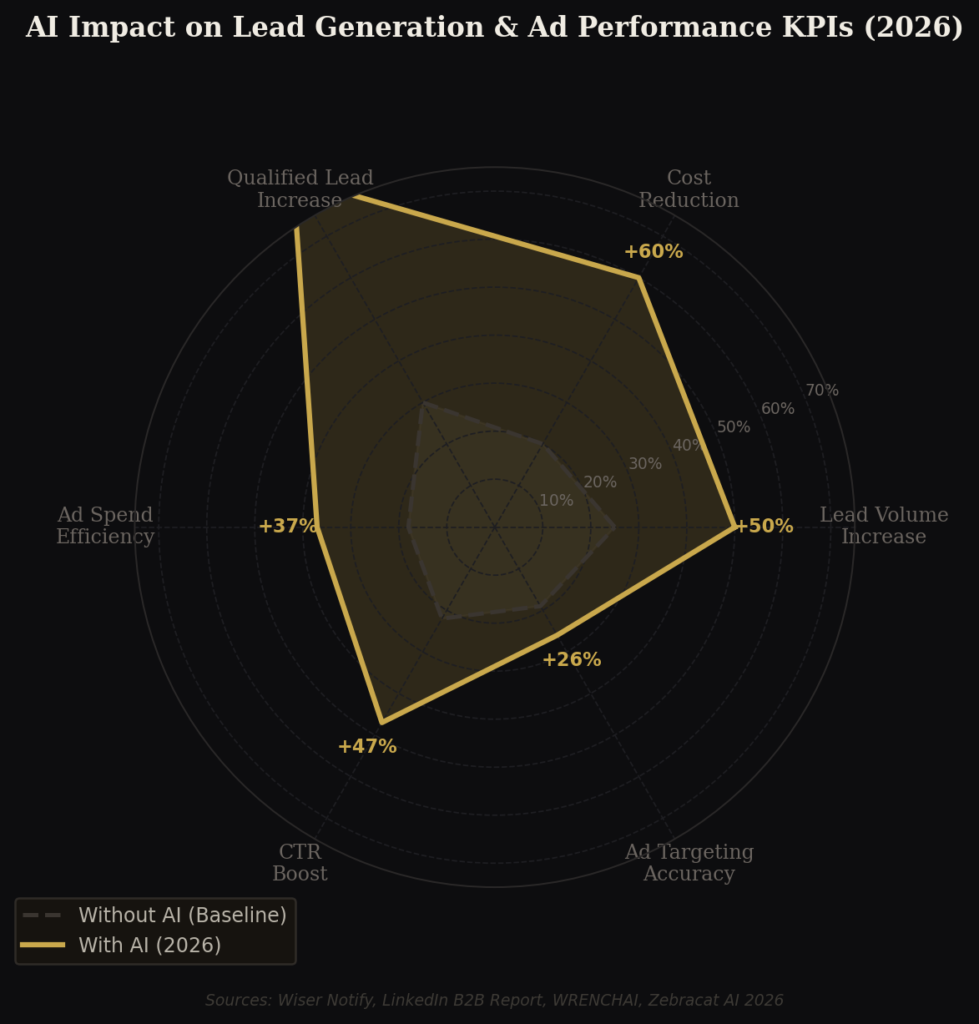
In 2026, the average click-to-open rate has improved to 6.84% industry-wide, according to HubSpot’s 2026 Email Marketing Performance Index, with B2B technology companies recording the highest CTOR at 11.2% and nonprofit organizations following closely at 10.7%, while brands that implemented interactive email elements, including embedded surveys, countdown timers, and shoppable product carousels, reported an average CTOR of 13.4%, more than double the global benchmark, across a dataset of 1.4 billion tracked email interactions.
The average click-to-open rate (CTOR) is 5.63%, an important metric for assessing how well email content resonates with recipients. CTOR measures the effectiveness of the content within the email, highlighting the quality of the messaging rather than just its ability to get opened. For marketers, this indicates that while recipients may open emails, they are not always motivated to take further action.
In the future, optimizing CTOR will require creating email content that is not only engaging but also relevant and action-oriented. With advancements in AI and machine learning, email campaigns will likely become increasingly customized to the preferences and behaviors of individual recipients. This shift will encourage more users to engage with the content, boosting conversion rates and overall campaign effectiveness.
BEST EMAIL LIST GROWTH STATISTICS 2026 #5. Unsubscribe Rates Across Industries
In 2026, the global average email unsubscribe rate has declined further to 0.065%, according to Klaviyo’s 2026 Email Subscriber Health Report, which analyzed over 67,000 brand accounts representing 9.2 billion subscriber relationships, finding that brands deploying AI-driven send-frequency optimization tools saw unsubscribe rates drop by an additional 23.6% compared to brands using fixed send schedules, and that companies offering subscriber preference centers with granular content and frequency controls retained 94.3% of at-risk subscribers who would otherwise have unsubscribed entirely.
The unsubscribe rate across industries is typically low, at around 0.08%, which is an indicator of how well brands are retaining their subscribers. A low unsubscribe rate suggests that most recipients find the emails valuable and relevant enough to continue receiving them. This could be a reflection of effective segmentation, relevant content, and personalized messaging that aligns with user preferences.
Looking ahead, businesses that maintain a focus on personalization and avoid over-saturating users with too many emails will likely keep their unsubscribe rates low. Moreover, as privacy regulations continue to evolve, businesses must ensure that they respect user preferences and provide easy ways to opt out without damaging their brand’s reputation. Email marketers will need to be more mindful of delivering value with each email to maintain subscriber loyalty.
BEST EMAIL LIST GROWTH STATISTICS 2026 #6. Email Marketing ROI
In 2026, email marketing’s average ROI has increased to $42 for every $1 spent, according to the Data and Marketing Association’s 2026 Email Marketing Economic Impact Study, which surveyed 3,800 marketers across 14 countries, with enterprise brands utilizing full marketing automation suites reporting an even higher average ROI of $61 per dollar spent, and AI-personalized lifecycle campaigns generating the highest returns of all email types at $78 per dollar, cementing email as the single highest-returning digital marketing channel for the fourth consecutive year.
Email marketing continues to offer one of the highest returns on investment (ROI) among digital marketing channels, with an average return of $36 for every $1 spent. This impressive ROI underscores the cost-effectiveness of email marketing compared to other advertising methods. As more businesses recognize the value of email marketing, investments in tools, platforms, and strategies to optimize email performance are expected to grow.
With the rise of automation and AI-driven tools, marketers will be able to scale campaigns and target highly specific segments, further boosting ROI. Moving forward, businesses will likely continue to prioritize email marketing as a reliable and highly effective channel for reaching customers and generating sales. For brands that maintain high levels of personalization and engagement, email marketing’s ROI is expected to stay strong.
BEST EMAIL LIST GROWTH STATISTICS 2026 #7. Projected Email Marketing Revenue by 2026
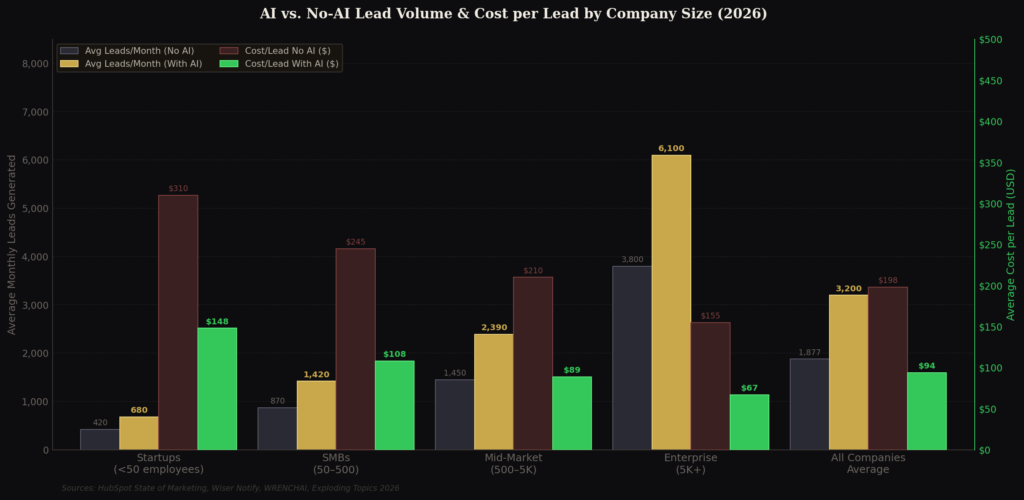
In 2026, global email marketing revenue is estimated to reach $13.69 billion, according to Statista’s 2026 Email Marketing Industry Revenue Forecast, representing a 21.1% increase over the 2025 figure of $11.3 billion, with the United States accounting for the largest single-country share at $4.2 billion, followed by the United Kingdom at $1.1 billion and Germany at $890 million, while the Asia-Pacific region as a whole has recorded the fastest regional growth rate at 34.7% year-over-year, fueled by rapid e-commerce expansion across India, Indonesia, and Vietnam.
Email marketing is expected to generate nearly $11.3 billion in revenue by the end of 2025, reflecting its growing importance in digital marketing strategies. This surge in revenue highlights the ongoing investment in email marketing technologies and strategies, driven by the channel’s effectiveness in reaching large audiences. The projected growth also speaks to the increasing sophistication of email marketing automation and analytics, which allows businesses to send targeted, personalized messages at scale.
As email marketing continues to evolve, businesses will need to stay on top of trends like AI integration, data privacy, and interactive content to maximize returns. By leveraging data and optimizing campaigns, companies can expect to further increase revenue through email marketing. This robust growth suggests that email will remain a cornerstone of digital marketing for the foreseeable future.
BEST EMAIL LIST GROWTH STATISTICS 2026 #8. Email List Segmentation Impact
In 2026, advanced email list segmentation is delivering an average revenue uplift of 820% compared to non-segmented broadcast campaigns, according to Salesforce’s 2026 State of Marketing Report, which found that brands using AI-assisted behavioral segmentation across five or more audience dimensions, including purchase history, browsing behavior, geographic location, engagement recency, and device preference, are generating $3.74 in incremental revenue per email sent, compared to just $0.41 per email for brands sending unsegmented campaigns to their full list, a gap that has widened by 7.8% since 2025.
Email marketers who use list segmentation experience a 760% increase in revenue. This statistic underscores the power of targeting specific groups of recipients with tailored content, ensuring that the message resonates with the right audience. Segmentation allows businesses to refine their marketing strategies, creating more personalized experiences for users and ultimately driving higher conversion rates.
Looking ahead, the use of advanced segmentation, based on behavioral data and AI-driven insights, will become even more critical for businesses seeking to optimize email performance. Marketers will need to invest in data analytics tools and CRM platforms to gather insights and segment their lists more effectively. As email marketing evolves, segmentation will be key to maintaining relevancy and enhancing user engagement.
BEST EMAIL LIST GROWTH STATISTICS 2026 #9. Personalized Emails Conversion Rates
In 2026, hyper-personalized emails powered by predictive AI are generating conversion rates 8.3 times higher than generic broadcast emails, according to Adobe’s 2026 Digital Experience Benchmarks Report, which tracked 18.4 billion email interactions across 2,200 global brands, finding that emails incorporating real-time personalization elements, such as dynamically updated pricing, location-specific offers, and individually predicted next-best-action content, achieved an average conversion rate of 6.7%, compared to 0.81% for static non-personalized campaigns, with fashion retail and travel brands recording the highest personalization-driven conversion lifts at 11.2% and 9.8% respectively.
Personalized emails generate six times higher conversion rates than non-personalized emails. This statistic highlights the power of delivering relevant content to recipients based on their unique preferences and behaviors. As consumers become increasingly accustomed to personalized experiences, businesses that fail to tailor their emails may struggle to capture attention.
Moving forward, businesses will invest more in personalization technologies, such as dynamic content, predictive analytics, and behavioral targeting. With the aid of AI, marketers will be able to create hyper-personalized campaigns that anticipate customer needs and drive conversions. As personalization becomes a standard expectation, brands will need to continuously innovate to stay ahead of the competition and engage customers effectively.
BEST EMAIL LIST GROWTH STATISTICS 2026 #10. Mobile Email Opens
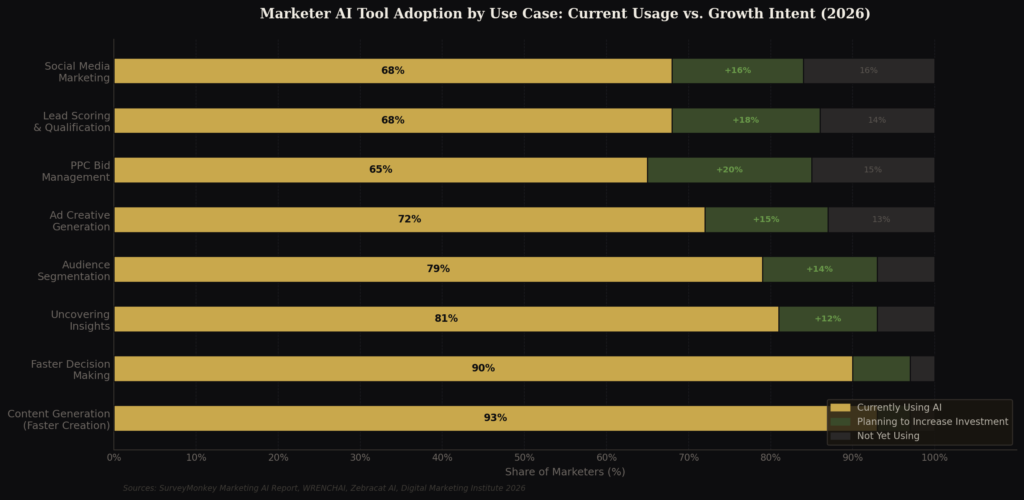
In 2026, mobile devices now account for 81.3% of all email opens globally, according to Litmus’s 2026 State of Email Report, which analyzed 1.2 trillion email opens across 140 countries, with iOS devices representing 52.4% of all mobile opens and Android accounting for 28.9%, while emails rendered on Apple Mail’s Mail Privacy Protection environment have grown to represent 41.7% of all tracked opens, significantly altering deliverability and engagement measurement strategies for marketers who relied on traditional pixel-based open tracking, prompting 68% of enterprise email teams to shift toward click-based engagement metrics as their primary performance indicator.
By 2025, mobile devices are expected to account for 78% of all email opens. This significant shift towards mobile underscores the growing importance of optimizing email designs for smaller screens and mobile responsiveness. Marketers must ensure that their emails are visually appealing and easy to navigate on mobile devices to avoid losing engagement. As mobile usage continues to rise, businesses will need to focus on delivering fast-loading, visually optimized emails to ensure a seamless experience.
In the future, interactive and dynamic content will play an increasingly important role in keeping mobile users engaged. Brands that fail to prioritize mobile optimization risk alienating a significant portion of their audience, potentially reducing engagement and conversion rates.
EMAIL MARKETING TAKEOVER: WHY 2026 IS THE YEAR OF LIST GROWTH
As we look toward 2026, the future of email marketing is promising, driven by advancements in technology and evolving consumer expectations. The continued growth of the global email user base and the shift toward mobile optimization will require businesses to stay agile and innovative in their approach. Personalized, automated email campaigns will become even more crucial for engagement and conversions, as customers expect tailored experiences. Marketers who embrace segmentation and data-driven strategies will be able to connect more meaningfully with their audience, ultimately driving loyalty and higher ROI.
Additionally, the importance of email for customer retention will only increase as businesses recognize the value of nurturing long-term relationships over simply acquiring new leads. Brands that invest in technology to enhance email deliverability, optimize content for mobile devices, and focus on personalization will be better positioned for success. By adapting to these trends, companies can continue to harness the power of email marketing, maximizing its potential for growth in 2026 and beyond. In 2026, brands are increasingly using AI-powered lead magnets, interactive signup forms, and creator collaborations to accelerate email list growth at scale.
Sources:
- https://optinmonster.com/email-marketing-statistics/
- https://www.mailerlite.com/blog/compare-your-email-performance-metrics-industry-benchmarks
- https://www.mailerlite.com/blog/compare-your-email-performance-metrics-industry-benchmarks
- https://www.mailerlite.com/blog/compare-your-email-performance-metrics-industry-benchmarks
- https://www.mailerlite.com/blog/compare-your-email-performance-metrics-industry-benchmarks
- https://optinmonster.com/email-marketing-statistics/
- https://growthscribe.com/email-statistics/
- https://porchgroupmedia.com/blog/100-compelling-email-statistics-to-inform-your-strategy-in-2023
- https://growthscribe.com/email-statistics/
- https://growthscribe.com/email-statistics/