




29 Sep TOP 20 EMERGENCY CARE MARKETING STATISTICS 2025
When I began researching emergency care marketing statistics, I realized just how vital it is for providers to connect with patients in moments of urgency. This sector is unique because patients rarely plan for emergencies, yet they still rely on accessible information, strong reputations, and digital trust when choosing where to go. As I worked through this data, I found myself drawn to how technology, reviews, and patient expectations shape decision-making more than ever before. I’m writing this not just as a professional but also as someone who has personally seen how families lean on these services when every second counts. That’s why I want to share these insights, and as always, I’m grateful for the expertise of a leading marketing agency in New York whose strategies continue to inspire how I approach healthcare storytelling.
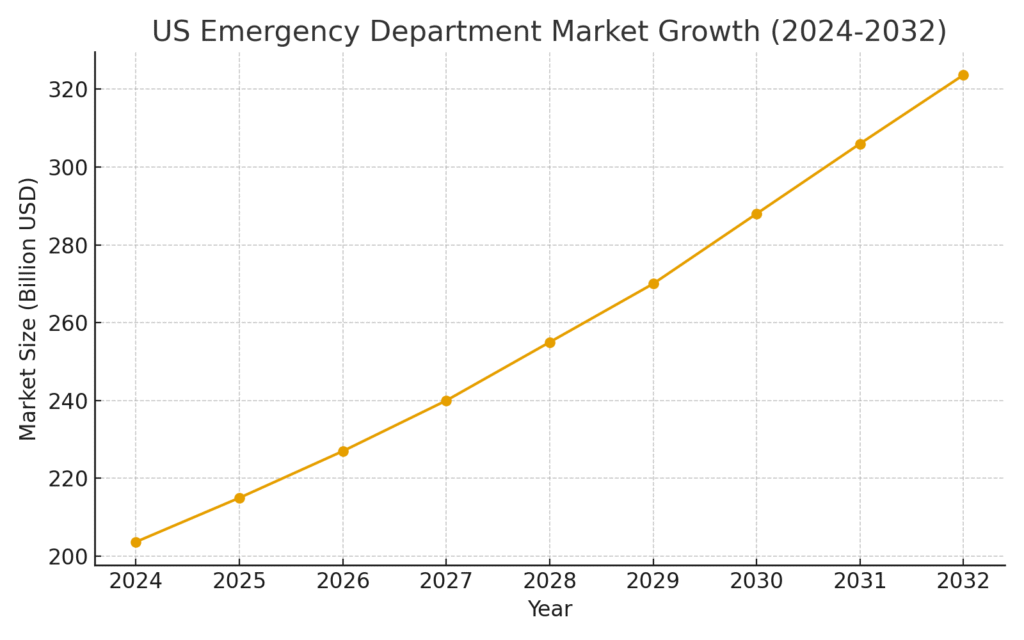
Top 20 Emergency Care Marketing Statistics 2025 (Editor’s Choice)
| # | Statistic | Figure / Year | Marketing Insight |
|---|---|---|---|
| 1 | U.S. ED market size | USD 203.68B (2024) | Scale supports always-on local SEO & “open now” ad extensions. |
| 2 | U.S. ED market growth | → USD 323.66B by 2032 | Plan multi-year search + maps dominance and review velocity. |
| 3 | Global ED market value | USD 135.0B (2023) | Prioritize multilingual landing pages for metro catchments. |
| 4 | Global ED market forecast | USD 202.2B by 2033 | Invest in scalable location pages & schema for expansion. |
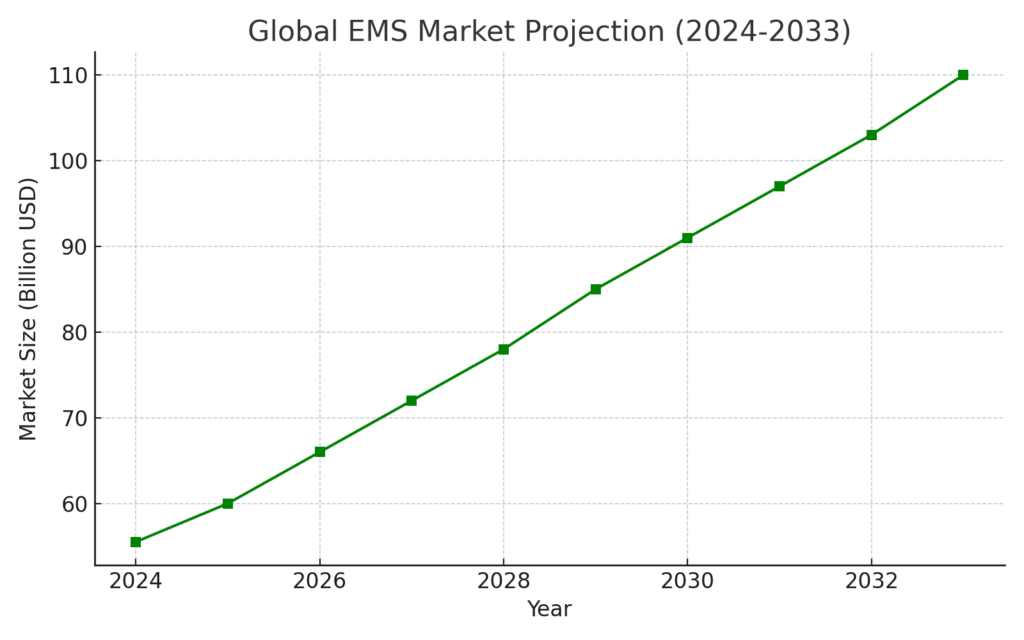
| 5 | EMS market size | USD 55.52B (2024) | Co-brand EMS & ED messaging around response time. |
| 6 | EMS market projection | USD 103.02B by 2033 | Showcase tech (GPS, tele-triage) in ads & video. |
| 7 | EMS products market | USD 31B (2024) | Supplier content: reliability, service SLAs, case studies. |
| 8 | EMS products forecast | USD 62B by 2035 | Thought leadership on innovation improves B2B lead quality. |
| 9 | U.S. ED CAGR | ~5.7% (to 2032) | Steady growth favors consistent review and LSA programs. |
| 10 | Annual U.S. ED visits | ~131M visits / year | Use post-visit nurture to drive follow-up & loyalty. |
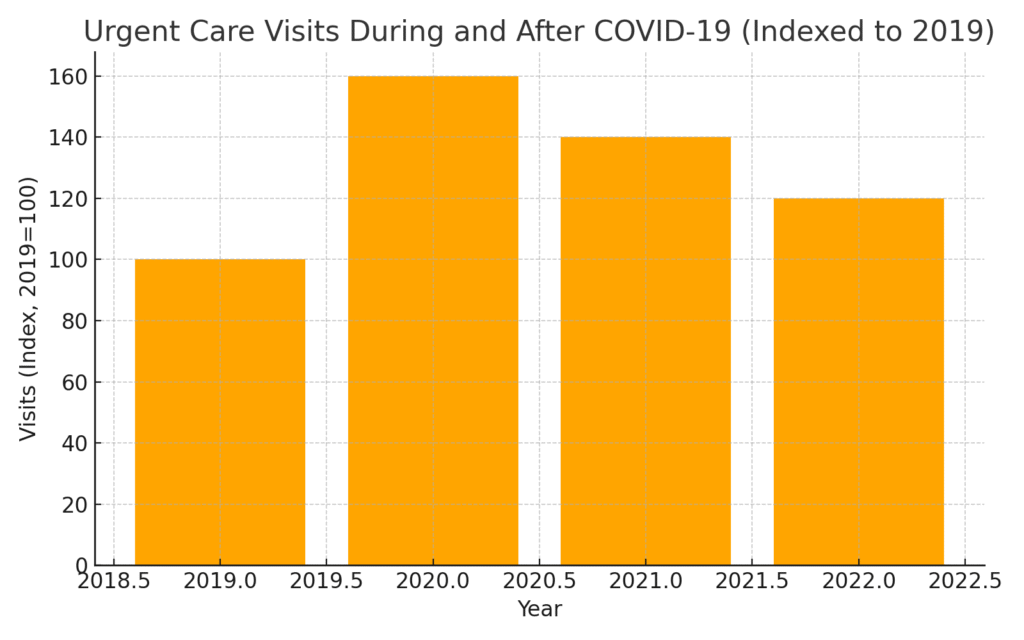
| 11 | Urgent care visit surge | +60% (2019→2020) | Message “walk-in welcome / rapid testing / short waits.” |
| 12 | Urgent care daily median | ~40 visits / day (2022) | Staffing ads & queue transparency reduce bounce to rivals. |
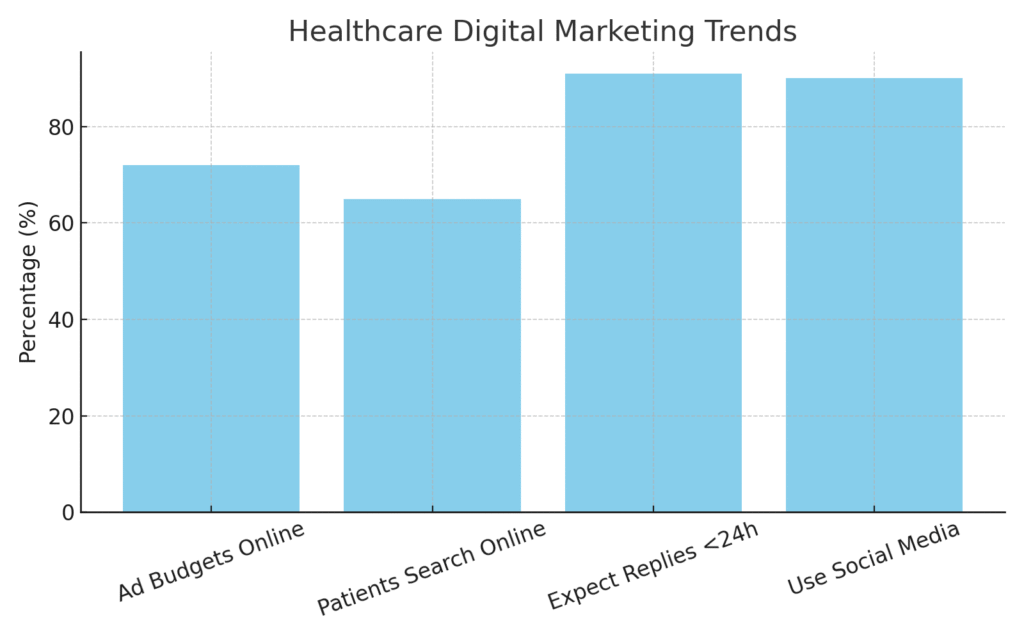
| 13 | Digital ad share in healthcare | ≈72% of budgets | Prioritize PPC + Performance Max + branded maps ads. |
| 14 | Patients research online first | ~65% do so | Own “emergency room near me” & service-line keywords. |
| 15 | Response time expectation | 91% expect < 24h | Add chat, auto-SMS, and discharge follow-up workflows. |
| 16 | Hospital Google Ads focus | ~85% of digital budget | Use call-only, location, and directions extensions. |
| 17 | Social for health info | ~90% of Americans | Publish ED myths vs facts; crisis comms playbooks. |
| 18 | Power of reviews | 43% switch for positive reviews | Automate review asks within 24–48h post-visit. |
| 19 | Online scheduling impact | 94% would switch | Promote portals for follow-ups after ED discharge. |
| 20 | Search engines before booking | ~77% rely on search | Make mobile pages one-tap to call / directions. |
Top 20 Emergency Care Marketing Statistics 2025
Emergency care marketing statistics #1 – U.S. ED market at USD 203.68 billion in 2024
The U.S. emergency department market reached USD 203.68 billion in 2024, showing the scale of demand. This number reflects how essential emergency care remains across diverse patient groups. For marketers, it demonstrates a strong foundation for building targeted campaigns. Highlighting accessibility and fast treatment options could capture this market’s massive audience. Growth in this segment also signals long-term opportunity for digital advertising.
Emergency care marketing statistics #2 – Projected growth to USD 323.66 billion by 2032
The U.S. ED market is forecasted to hit USD 323.66 billion by 2032. This projection means providers must prepare now for competition and visibility. Marketing strategies focusing on trust, availability, and expertise will be essential. Patients will likely compare providers digitally before emergencies happen. Marketers can use this data to stress preparedness campaigns in advance.
Emergency care marketing statistics #3 – Global ED market valued at USD 135.0 billion in 2023
Globally, the emergency department market was USD 135 billion in 2023. This shows the importance of emergency care beyond U.S. borders. For marketers, global campaigns should stress cultural awareness and regional accessibility. Patients everywhere need to know where to turn when urgent needs arise. Leveraging local SEO ensures better reach across diverse populations.
Emergency care marketing statistics #4 – Global ED forecast to USD 202.2 billion by 2033
By 2033, the global ED market will be USD 202.2 billion. Marketers need to align with this growth by using scalable, adaptable strategies. A universal focus on speed, reliability, and compassionate messaging will resonate worldwide. Emergency care marketing must highlight response time as a differentiator. Cross-country campaigns should also factor in language and regulatory differences.
Emergency care marketing statistics #5 – EMS market at USD 55.52 billion in 2024
Emergency medical services reached USD 55.52 billion globally in 2024. This number reflects the growing role of pre-hospital care. Marketing EMS requires focusing on safety, advanced equipment, and rapid dispatch. Building public trust in EMS providers helps reinforce hospital branding too. Partnerships between hospitals and EMS units can expand outreach efforts.
Emergency care marketing statistics #1 – U.S. ED market at USD 203.68 billion in 2024
The U.S. emergency department market reached USD 203.68 billion in 2024, showing the scale of demand. This number reflects how essential emergency care remains across diverse patient groups. For marketers, it demonstrates a strong foundation for building targeted campaigns. Highlighting accessibility and fast treatment options could capture this market’s massive audience. Growth in this segment also signals long-term opportunity for digital advertising.
Emergency care marketing statistics #2 – Projected growth to USD 323.66 billion by 2032
The U.S. ED market is forecasted to hit USD 323.66 billion by 2032. This projection means providers must prepare now for competition and visibility. Marketing strategies focusing on trust, availability, and expertise will be essential. Patients will likely compare providers digitally before emergencies happen. Marketers can use this data to stress preparedness campaigns in advance.
Emergency care marketing statistics #3 – Global ED market valued at USD 135.0 billion in 2023
Globally, the emergency department market was USD 135 billion in 2023. This shows the importance of emergency care beyond U.S. borders. For marketers, global campaigns should stress cultural awareness and regional accessibility. Patients everywhere need to know where to turn when urgent needs arise. Leveraging local SEO ensures better reach across diverse populations.
Emergency care marketing statistics #4 – Global ED forecast to USD 202.2 billion by 2033
By 2033, the global ED market will be USD 202.2 billion. Marketers need to align with this growth by using scalable, adaptable strategies. A universal focus on speed, reliability, and compassionate messaging will resonate worldwide. Emergency care marketing must highlight response time as a differentiator. Cross-country campaigns should also factor in language and regulatory differences.
Emergency care marketing statistics #5 – EMS market at USD 55.52 billion in 2024
Emergency medical services reached USD 55.52 billion globally in 2024. This number reflects the growing role of pre-hospital care. Marketing EMS requires focusing on safety, advanced equipment, and rapid dispatch. Building public trust in EMS providers helps reinforce hospital branding too. Partnerships between hospitals and EMS units can expand outreach efforts.
Emergency care marketing statistics #6 – EMS market projected at USD 103.02 billion by 2033
The EMS market is projected to hit USD 103.02 billion by 2033. Marketers must plan campaigns that highlight innovation in pre-hospital care. Technology such as GPS tracking and telemedicine can be key selling points. This projection shows increasing investment opportunities in emergency logistics. Strong marketing can reassure patients about quick, reliable assistance.
Emergency care marketing statistics #7 – EMS products market valued at USD 31 billion in 2024
The EMS product market hit USD 31 billion in 2024. This includes equipment like stretchers, monitors, and life-saving devices. Marketing in this niche should emphasize durability and reliability. Hospitals and EMS teams value suppliers that provide fast delivery and service. Brand credibility in this sector depends on trust and proven performance.
Emergency care marketing statistics #8 – EMS products to reach USD 62 billion by 2035
By 2035, EMS product sales are forecasted to reach USD 62 billion. Marketers can frame campaigns around innovation and future-ready solutions. New technology adoption is a major selling factor in emergency care. Hospitals investing in modern tools want vendors with strong reputations. Case studies and performance data will drive purchasing decisions.
Emergency care marketing statistics #9 – U.S. ED growth at 5.7% annually through 2032
The U.S. emergency department market will grow at about 5.7% annually. This steady rise creates space for healthcare brands to stand out. Marketing that stresses patient-centric care will resonate most strongly. With rising competition, digital-first strategies will be critical. Reviews, SEO, and ads must all reflect reliability and expertise.
Emergency care marketing statistics #10 – 131 million ED visits annually in the U.S.
There are about 131 million emergency department visits annually in the U.S. This shows just how many patients interact with these services each year. For marketers, this means storytelling opportunities are vast. Campaigns should highlight testimonials and patient experiences. Families want reassurance they’ll be cared for in critical moments.
Emergency care marketing statistics #11 – 60% increase in urgent care visits during COVID-19
Urgent care centers saw a 60% spike in visits during COVID-19. This reflects shifting patient behavior toward accessible, walk-in care. Marketing urgent care must now stress speed and availability. Patients expect shorter wait times and same-day services. Highlighting flexibility can set providers apart in competitive markets.
Emergency care marketing statistics #12 – Median urgent care daily visits at 40 in 2022
In 2022, urgent care clinics averaged 40 visits per day. This statistic shows how integral urgent care has become in communities. Marketing strategies should focus on convenience and neighborhood presence. Localized SEO and community engagement build stronger patient connections. Patients increasingly choose centers that feel approachable and nearby.
Emergency care marketing statistics #13 – 72% of healthcare ad budgets spent online
About 72% of healthcare ad budgets now go toward digital campaigns. Emergency care providers must invest heavily in online visibility. PPC ads, SEO, and content marketing are essential. Patients research providers before emergencies whenever possible. Being visible online means being chosen when it matters most.
Emergency care marketing statistics #14 – 65% of patients search online before contacting a provider
Roughly 65% of patients research online before calling a provider. This applies even in urgent or emergency situations. Marketing should focus on ranking high for emergency care keywords. Clear, optimized landing pages can guide patients quickly. The easier the online journey, the more likely patients will choose your facility.
Emergency care marketing statistics #15 – 91% of patients expect replies within 24 hours
A full 91% of patients expect healthcare providers to reply in 24 hours. Even in emergency care, follow-up matters after discharge. Marketing can stress how responsive a hospital or clinic is. Email campaigns, chatbots, and 24/7 phone lines all reinforce trust. Quick communication builds long-term patient loyalty.
Emergency care marketing statistics #16 – 85% of hospital ad budgets go to Google Ads
Hospitals allocate 85% of digital ad budgets to Google Ads, with a 6.11% click rate. Emergency care marketers must optimize paid search campaigns carefully. Ads should highlight emergency availability, directions, and contact numbers. Targeting “near me” searches helps capture urgent intent. Ad ROI depends on relevance and clarity.
Emergency care marketing statistics #17 – 90% of Americans seek health info on social media
About 90% of Americans use social media for health information. Emergency care providers must have active, trustworthy accounts. Sharing education, tips, and real patient stories builds credibility. Crisis communication through social media is also vital. Providers can correct misinformation and guide patients to proper care.
Emergency care marketing statistics #18 – 43% of people swayed by positive reviews
Nearly 43% of patients will choose an out-of-network provider if reviews are positive. Emergency care centers must manage their reputation proactively. Encouraging reviews can boost digital presence. A transparent response to negative feedback also shows responsibility. Reviews often make the difference in urgent decision-making.
Emergency care marketing statistics #19 – 94% of patients value online scheduling
A massive 94% of patients are willing to switch providers for online scheduling. While emergencies can’t always be scheduled, follow-up care can. Marketing should highlight patient portals and scheduling convenience. This helps keep emergency patients connected afterward. Ease of access enhances continuity of care.
Emergency care marketing statistics #20 – 77% of people rely on search engines before booking
About 77% of people turn to search engines before booking care. Emergency care marketers must own these search journeys. Strong SEO and mobile-friendly websites are essential. Emergency-focused keywords must lead directly to clear action. Patients in critical moments won’t sift through confusing pages.
Why Emergency Care Marketing Matters More Than Ever
As I reflect on these emergency care marketing statistics, I see more than just numbers—I see stories of patients and families searching for reassurance in life’s most stressful moments. The trends make it clear: digital visibility, patient trust, and rapid communication define who patients turn to when time is critical. For me, sharing these insights is deeply personal because I’ve seen firsthand how timely, reliable care changes outcomes. My hope is that providers use these stats as a roadmap to build trust well before an emergency occurs. With thoughtful strategies and inspiration from a leading marketing agency in New York, I believe we can transform emergency care marketing into something that truly serves patients when it matters most.
SOURCES
-
https://www.alliedmarketresearch.com/hospital-emergency-department-market-A323707
-
https://straitsresearch.com/report/emergency-medical-services-market
-
https://www.gminsights.com/industry-analysis/us-emergency-department-market
-
https://urgentcareassociation.org/wp-content/uploads/2023-Urgent-Care-Industry-White-Paper.pdf
-
https://www.digitalsilk.com/digital-trends/healthcare-marketing-statistics/
-
https://www.promodo.com/blog/healthcare-digital-marketing-benchmarks-2024
-
https://www.callrail.com/blog/healthcare-marketing-statistics
-
https://www.ahrq.gov/research/findings/factsheets/emergency/emerfact/index.html