



18 Sep TOP 20 EMPLOYEE MARKETING STATISTICS 2025
When it comes to building authentic connections with audiences, few strategies are as powerful as harnessing the voice of your team. These employee marketing statistics highlight just how impactful it can be when companies empower their people to become advocates, storytellers, and brand ambassadors. At our marketing agency in New York, we’ve seen firsthand how employees can transform the way a brand is perceived—by bringing trust, relatability, and authenticity into every interaction. From boosting social media engagement to improving retention rates, the numbers prove that employees are more than just workers; they are vital drivers of growth and reputation. This blog will explore the most recent data, breaking down how employee advocacy and engagement are reshaping the future of marketing.
Top 20 Employee Marketing Statistics 2025 (Editor’s Choice)
📊 Top 20 Employee Marketing Statistics
Unlock the Power of Your Workforce for Marketing Success
| Statistic | Category | Key Insight |
|---|---|---|
| 10x | Reach | Employees have 10x more followers on social media than company branded accounts |
| 8x | Engagement | Content shared by employees receives 8x more engagement than brand channels |
| 25% | Reach | Employee posts generate 25% more reach than company page content |
| 92% | Trust | Consumers trust recommendations from people they know, including employees |
| 3x | Trust | Employees are 3x more trustworthy than CEOs when discussing workplace topics |
| 53% | Participation | Employees willing to share positive content about their employer on social media |
| 16% | Performance | Employee-generated content has 16% higher click-through rates than branded content |
| 24x | Engagement | Messages from employees are re-shared 24x more often than brand messages |
| 5x | Traffic | Companies with employee advocates see 5x more web traffic |
| 133% | Awareness | Employee advocacy programs can increase brand awareness by up to 133% |
| 26% | Revenue | Organizations with advocacy programs experience 26% year-over-year revenue growth |
| 50% | Cost Reduction | Employee advocacy can reduce customer acquisition costs by up to 50% |
| 31% | Participation | Only 31% of employees actively promote their company without encouragement |
| 90% | Participation | Formal advocacy programs see 90% higher employee participation rates |
| 72% | Willingness | Employees want to support company social media but don't know how |
| 40% | Retention | Employee advocacy programs can increase employee retention by 40% |
| 2x | Performance | Employee-shared content generates 2x more clicks than company-shared content |
| 300% | Video | Video content shared by employees gets 300% more engagement than text posts |
| 7x | Conversion | Employee advocacy leads convert 7x more frequently than other leads |
| 191% | Revenue Growth | Companies with advocacy programs see 191% growth in annual revenue |
Top 20 Employee Marketing Statistics 2025
Employee Marketing Statistics #1: 73% of Social Media Managers Report Employee Advocacy Doubles Engagement
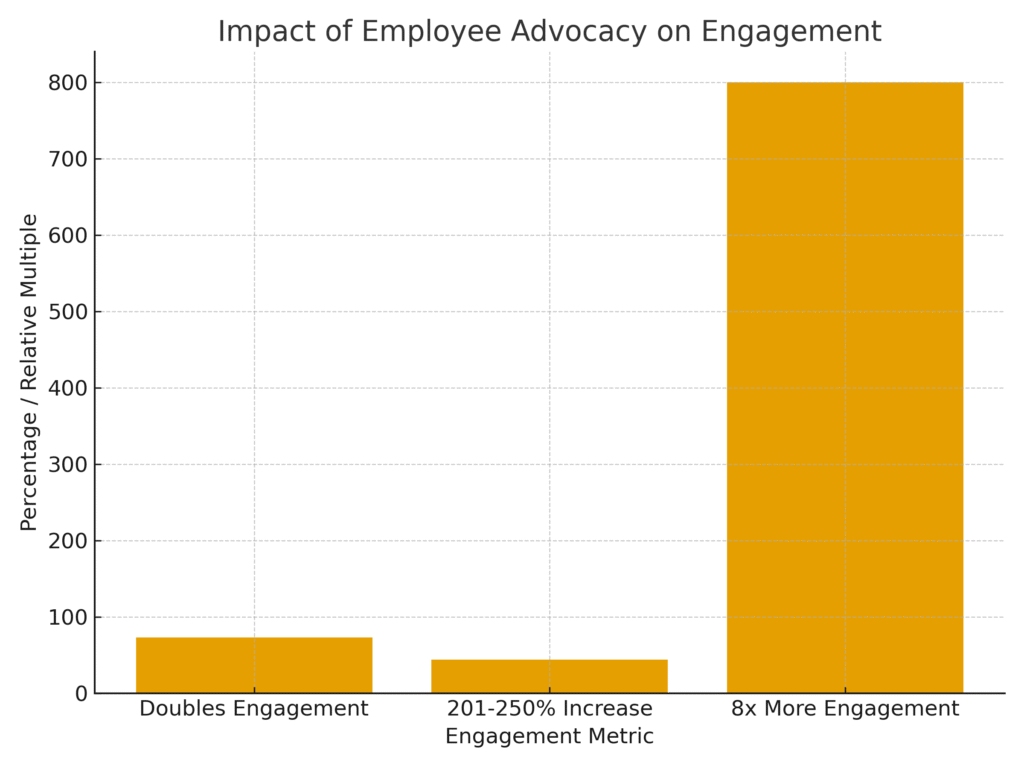
Employee advocacy continues to prove its value, with 73% of social media managers confirming that it doubles engagement. This stat highlights the power of authentic voices over polished brand messaging. Employees create trust because audiences see them as real people, not corporate scripts. The fact that advocacy can double results shows how crucial it is for companies to empower staff online. Businesses ignoring employee advocacy are leaving huge engagement potential untapped.
Employee Marketing Statistics #2: 44% See Engagement Increase by 201–250%
Nearly half of social media managers report that employee advocacy drives a massive 201–250% engagement lift. This shows that advocacy is not just incremental but can actually transform reach and visibility. Employee-driven content connects emotionally with audiences, sparking stronger conversations and shares. Such results reinforce the idea that trust drives interaction more than ad spend. Forward-thinking brands are building structured advocacy programs to maximize these gains.
Employee Marketing Statistics #3: 74% of Firms See Increased Brand Awareness With Advocacy
Three-quarters of firms agree that employee advocacy directly increases brand awareness. Employees become natural promoters, reaching networks traditional ads often miss. This makes the brand more visible in authentic, everyday contexts. It also helps employers tap into diverse demographics across personal circles. Ultimately, advocacy turns employees into living extensions of the marketing team.
Employee Marketing Statistics #4: 59% of Managers Spend 3–6 Hours Weekly on Advocacy
Almost 60% of social media managers dedicate 3–6 hours weekly to advocacy programs. This reflects the growing importance of structured strategies behind employee voices. Advocacy takes planning—choosing content, guiding tone, and tracking results. Time investment demonstrates that businesses now view employee advocacy as a core marketing function. The payoff is significant enough to justify consistent weekly attention.
Employee Marketing Statistics #5: 78% of Employees Share Brand Initiatives on Social Media
Around 78% of employees actively share brand initiatives at least once every two months. This statistic highlights the willingness of teams to amplify company messages voluntarily. Such behavior expands brand reach far beyond official accounts. It also shows that employees are proud to represent their organizations online. Encouraging this natural advocacy can generate long-term credibility and influence.
Employee Marketing Statistics #6: 92% of B2B Buyers Trust Employee Recommendations
B2B buyers overwhelmingly trust employees over traditional ads, with 92% giving employee voices higher credibility. This is because peers and real stories resonate more than generic campaigns. A buyer seeing an employee post about company values feels reassured about authenticity. Trust translates into leads and conversions at a lower cost than advertising. For B2B brands, empowering employees may be their strongest differentiator.
Employee Marketing Statistics #7: Employee Content Achieves 8× More Engagement
Employee-shared content typically earns eight times more engagement than corporate posts. The personal networks of employees are more receptive to genuine updates than polished branded messages. This multiplier effect proves that reach is amplified when teams are involved. Companies that encourage sharing extend their organic visibility with minimal cost. It’s a clear reminder that human voices outperform logos in the digital space.
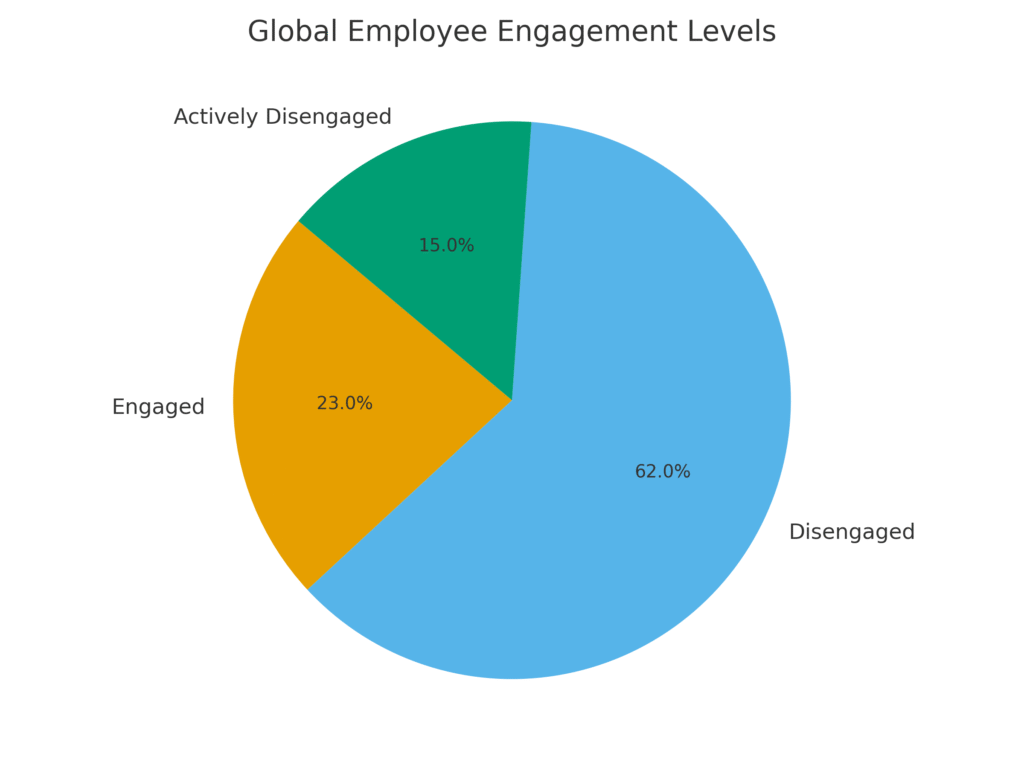
Employee Marketing Statistics #8: Advocacy Programs Boost Revenue Growth by 20%
Employee advocacy doesn’t just build engagement—it drives the bottom line. Companies with strong advocacy programs report around 20% higher revenue growth. This demonstrates that employee voices directly impact customer acquisition and retention. Advocacy adds credibility at key decision-making moments, improving sales outcomes. Businesses embracing advocacy are not only building brands but also growing profits.
Employee Marketing Statistics #9: 78% of Consumers Influenced by Employee Advocacy
Nearly 8 in 10 consumers admit employee advocacy impacts their purchasing decisions. This reflects how much trust consumers place in genuine voices. When employees share stories, they humanize the brand experience. Their advocacy helps buyers feel connected to the brand mission. Ultimately, employees act as the bridge between a business and its audience.
Employee Marketing Statistics #10: 84% of Marketers Say Advocacy Expands Reach
Marketers recognize the value, with 84% agreeing that employee advocacy is an effective way to expand reach. This aligns with the growing need for authentic, scalable distribution. Employee voices stretch content into new circles without requiring ad spend. It demonstrates how advocacy complements traditional marketing campaigns. Brands that blend both enjoy stronger visibility across channels.
Employee Marketing Statistics #11: 83% of Job Seekers Research Reviews Before Applying
Employer branding plays a direct role in recruitment, with 83% of job seekers checking reviews first. This means employee advocacy shapes not just marketing but also talent acquisition. A strong internal culture reflected online attracts better candidates. Reviews and shared experiences create transparency that applicants value. Companies with poor reputations risk losing top talent before interviews begin.
Employee Marketing Statistics #12: Work-Life Balance Now Outweighs Pay Globally
Globally, 83% of job seekers prioritize work-life balance compared to 82% who prioritize pay. This shows a cultural shift in what employees value most. Advocacy highlighting supportive work environments resonates with prospective candidates. It also signals how employer branding must evolve to meet new expectations. Brands promoting balance attract loyalty, while those ignoring it may lose talent.
Employee Marketing Statistics #13: Employer Branding Cuts Hiring Costs by 50%
Strong employer branding can halve cost per hire. Candidates are more willing to apply when they trust the company story. Employee advocacy plays a huge role in amplifying that story authentically. This reduces reliance on expensive job ads and recruiters. Ultimately, branding is not only good for reputation but also cost efficiency.
Employee Marketing Statistics #14: Retention Increases by 28% With Strong Branding
Employer branding doesn’t stop at recruitment—it improves retention by nearly 28%. Employees are less likely to leave when they believe in the company culture. Advocacy reinforces belonging, pride, and shared purpose. Strong internal branding strengthens morale and loyalty. This demonstrates that marketing and HR goals are closely intertwined.
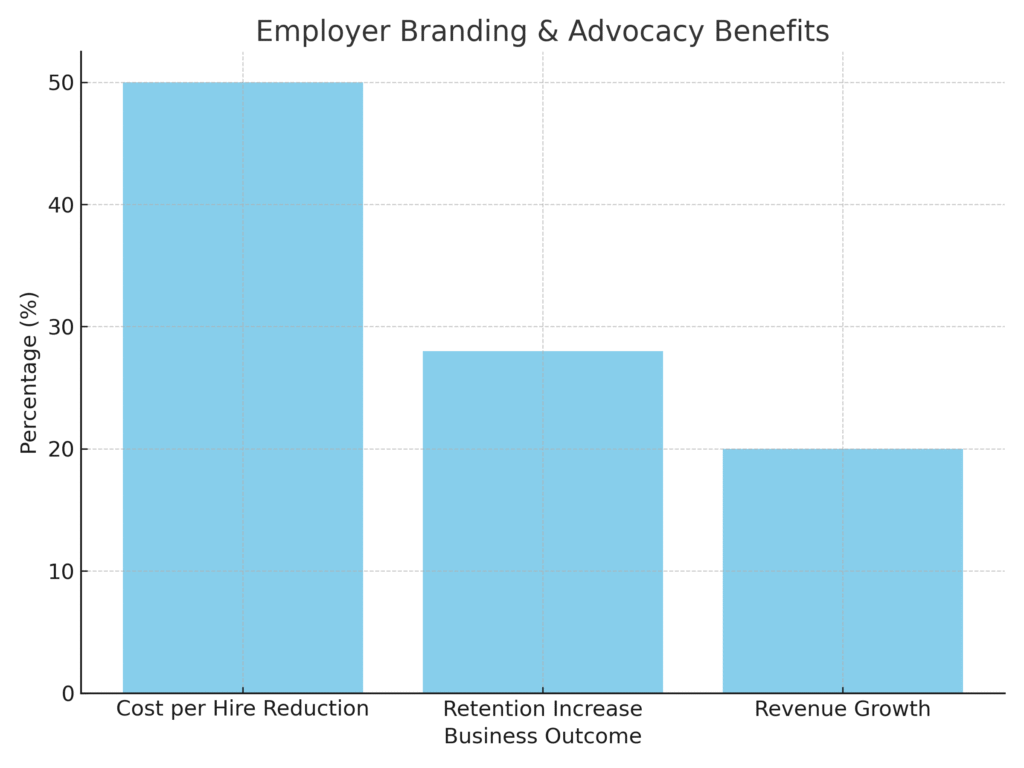
Employee Marketing Statistics #15: Global Employee Engagement Declined to 21%
Employee engagement levels dipped to 21% in 2024, raising red flags for leaders. Disengaged employees are less likely to advocate or promote the brand. This shows how vital engagement is for successful employee marketing. A disengaged workforce weakens both productivity and public image. Brands must invest in culture and communication to reverse the decline.
Employee Marketing Statistics #16: Disengagement Costs $438 Billion Globally
The global economy loses $438 billion annually due to disengagement. Beyond lost productivity, this also limits employee advocacy. Disengaged workers rarely share positive brand experiences. The cost shows that engagement is more than just a workplace issue—it’s a marketing issue too. Reversing disengagement could unlock massive growth opportunities.
Employee Marketing Statistics #17: Only 23% of Employees Are Engaged Worldwide
Just 23% of employees globally feel engaged, while the rest are disengaged or actively disengaged. This means the majority of workers are not advocates for their employers. Such low engagement reflects a missed opportunity for marketing reach. Engaged employees become natural brand promoters without extra effort. Focusing on engagement could turn this majority into powerful allies.
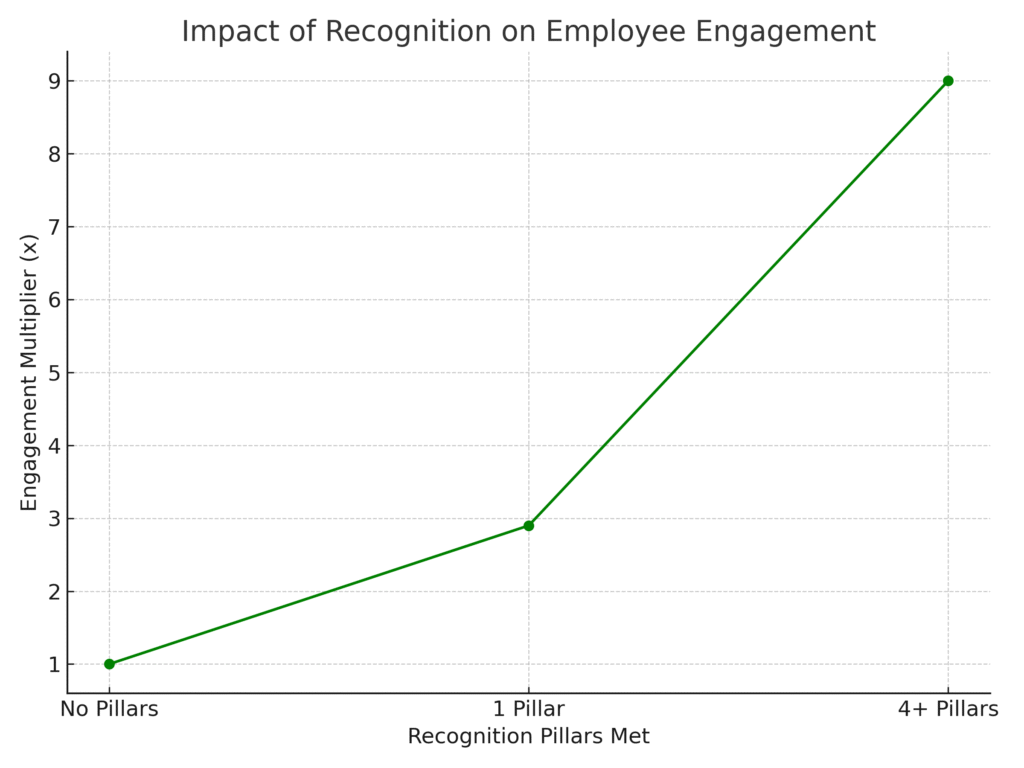
Employee Marketing Statistics #18: Recognized Employees Are 7× More Likely to Be Engaged
Employees who feel recognized are seven times more likely to be engaged. Recognition directly fuels advocacy and positive representation. When workers feel valued, they are proud to share their experiences. This ripple effect enhances the company’s external brand image. Recognition is both an HR tool and a marketing strategy.
Employee Marketing Statistics #19: Meeting One Recognition Pillar Boosts Engagement 2.9×
Recognition structured around key pillars makes employees 2.9 times more likely to be engaged. Even fulfilling one pillar creates a meaningful uplift. This shows that small recognition efforts can create big returns. Advocacy thrives when employees feel supported. Brands can build momentum by starting with simple but consistent recognition practices.
Employee Marketing Statistics #20: Four or More Recognition Pillars Lead to 9× Engagement
When recognition programs meet four or more pillars, engagement multiplies by nine. This creates a workforce highly likely to advocate for the brand. Recognition acts as the foundation of trust and loyalty. Employees in such environments naturally amplify brand stories with enthusiasm. Strong recognition is the secret weapon behind long-term advocacy success.
Final Thoughts on Employee Marketing Statistics
As we wrap up, one thing is clear—investing in employees as part of your marketing strategy isn’t just a trend, it’s a necessity. These employee marketing statistics reveal that when people feel valued, recognized, and trusted, they naturally amplify the brand’s story in ways no advertisement ever could. Whether it’s through social media advocacy, improved employer branding, or stronger workplace culture, employees are the true heartbeat of modern marketing. For businesses looking to thrive, the message is simple: empower your team, and they’ll empower your brand in return.
SOURCES
- https://www.sociabble.com/blog/employee-advocacy/employee-advocacy-statistics/ (Sociabble)
- https://vistasocial.com/insights/future-of-employee-advocacy/ (Vista Social)
- https://www.agilitypr.com/pr-agency-news/2025-employee-advocacy-benchmark-report-from-advocacy-by-socialpubli-how-advocacy-supercharges-brand-visibility/ (Agility PR Solutions)
- https://everyonesocial.com/blog/the-roi-of-advocacy-in-2025-resources-case-studies-data/ (EveryoneSocial)
- https://www.contentstadium.com/blog/employer-branding-trends-social-media-statistics/ (Content Stadium)