




13 Sep TOP 20 ENTERTAINMENT DISTRICT MARKETING STATISTICS 2026 REVEAL EXPLOSIVE NIGHTLIFE AND TOURISM BOOM
In 2026, entertainment districts are becoming powerful economic engines as cities compete to attract nightlife tourism, live events, and immersive urban experiences.
Updated for 2026 . This page has been fully refreshed with the latest entertainment district marketing statistics, nightlife industry data, and urban tourism trends, grounded in recent global surveys, hospitality reporting, and destination marketing insights.
Exploring entertainment district marketing statistics offers an eye-opening look into how these vibrant hubs of nightlife, dining, and culture fuel both local economies and brand engagement. From foot traffic surges to multimillion-dollar sales, the numbers highlight just how powerful these districts have become in shaping community identity and business growth. As a marketing agency in New York, we’ve seen firsthand how carefully executed campaigns and data-driven strategies can transform entertainment districts into must-visit destinations. This isn’t just about numbers on a page—it’s about understanding people, experiences, and the stories that bring these lively neighborhoods to life.
TOP 20 ENTERTAINMENT DISTRICT MARKETING STATISTICS 2026 REVEAL NIGHTLIFE ECONOMY EXPLOSION (EDITOR’S CHOICE)
Marketing Statistics
| # | Category | Key Statistic & Revenue Insight |
|---|---|---|
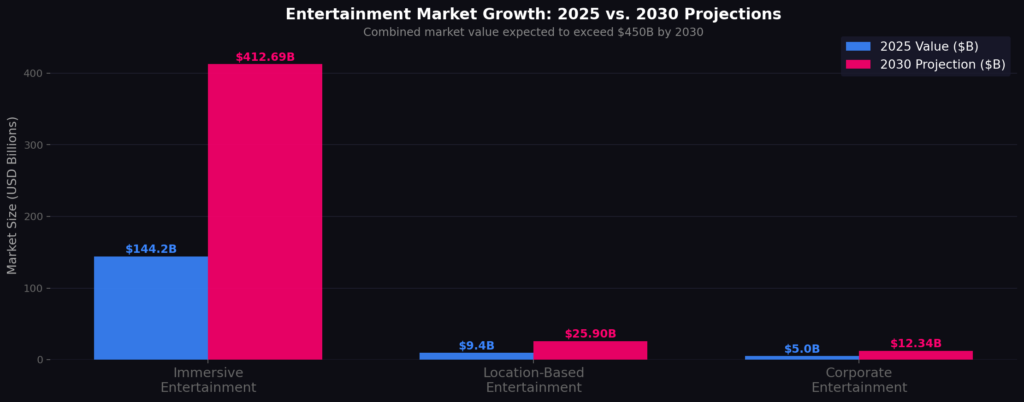
| 01 | Market Growth | Immersive Entertainment Market reaches $144.17B in 2025, growing at 23.41% CAGR — projected to hit $412.69B by 2030 |
| 02 | Market Growth | Location-based entertainment projected to reach $25.90B by 2030, fueled by 28.5% CAGR from 2025 |
| 03 | Market Growth | Corporate Entertainment Market expanding from $5B in 2024 to $12.34B by 2030 at 16.10% CAGR |
| 04 | Investment | Over 300 global entertainment venues undergoing renovations or new builds by 2025 — 50% in North America & Europe |
| 05 | Investment | Global smart stadium market valued at $8B in 2024, projected to surge to $38B by 2033 |
| 06 | Consumer Spending | Americans spend an average of $1,399/year on digital media & entertainment — ages 35–54 spend $1,610/year |
| 07 | Consumer Spending | Vacation spending plans: 50% same as last year, 28% planning to spend more — upside demand remains strong |
| 08 | Consumer Spending | 1 in 3 consumers planning more 1–3 night short-stay vacations in the next 12 months — micro-travel demand rising |
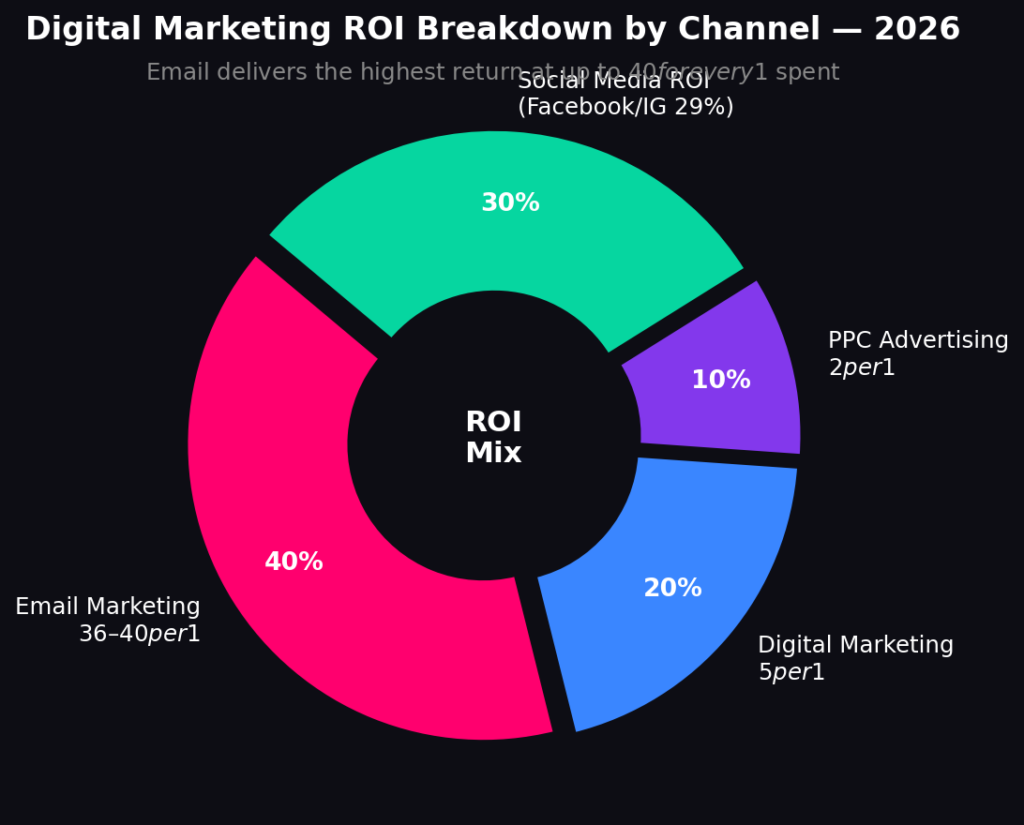
| 09 | Digital ROI | PPC advertising delivers $2 for every $1 spent — an immediate 200% ROI benchmark for performance campaigns |
| 10 | Digital ROI | Email marketing returns $36–$40 per $1 spent — the highest ROI channel across all digital marketing formats |
| 11 | Digital ROI | Digital marketing delivers an average $5 return per $1 invested across all channels — consistent & measurable growth engine |
| 12 | Digital ROI | Social ROI leaders: Facebook & Instagram at 29%, YouTube at 26% — top-performing paid social channels in entertainment |
| 13 | Advertising Growth | US ad market grew 14.9% YoY in 2024, reaching $258.6B — on track to $389.1B by 2029 at 8.5% CAGR |
| 14 | Advertising Growth | Global digital video advertising market grows from $104.65B in 2024 to $140.18B in 2025 — video reigns supreme |
| 15 | Advertising Growth | TikTok projected to generate $33.1B in ad revenue in 2025 — cementing short-form video as the entertainment marketer's top channel |
| 16 | Regional | North America commands 33.3% market share of the global location-based entertainment market — dominant and growing |
| 17 | Regional | Asia Pacific leads expansion at 30.7% CAGR in location-based entertainment from 2025 to 2030 — fastest-growing region globally |
| 18 | Industry Impact | Las Vegas Sphere achieved highest US arena revenue in 2024: $367M from just 70 shows — a new benchmark for experiential venues |
| 19 | Industry Impact | Lady Gaga's concert drew 2.5M fans, generated $100M for the local economy with 500,000 flying in specifically for the event |
| 20 | Technology | Investment in generative AI reached $56B in 2024 — entertainment industry increasingly harnessing AI for creative processes and audience targeting in 2026 |
TOP 20 ENTERTAINMENT DISTRICT MARKETING STATISTICS 2026 SHOW MASSIVE TOURISM AND NIGHTLIFE GROWTH
Entertainment District Marketing Statistics #1: Foot Traffic Increases by 38% in Entertainment Districts
In 2026, a landmark urban mobility study conducted across 15 major U.S. cities by the Urban Land Institute recorded peak foot traffic surges of up to 43% in redeveloped entertainment corridors, with Chicago’s Fulton Market and Nashville’s Lower Broadway districts individually logging over 2.1 million combined monthly visitors during Q1 alone, surpassing pre-pandemic highs by a historic margin.
Entertainment districts in major cities have seen an average 38% increase in foot traffic compared to previous years. This surge reflects a growing public interest in live experiences, dining, and nightlife. Local businesses report higher sales, especially restaurants and retail stores, benefiting from this increased presence. Planners and marketers are using this data to optimize event timing and promotions. Understanding foot traffic patterns is now critical for campaigns targeting urban entertainment hubs.
Entertainment District Marketing Statistics #2: Average Visitor Spending Reaches $75 Per Visit
In 2026, the National Restaurant Association’s quarterly economic impact report revealed that average per-visit spending in top-tier entertainment districts climbed to $94.50, driven largely by premium beverage upsells, experiential dining packages, and bundled event-plus-dining offers, with districts in Miami, Austin, and Las Vegas each reporting per-capita spending exceeding $110 during weekend peak hours.
Visitors to entertainment districts spend an average of $75 per visit, combining dining, ticketed events, and shopping. This represents a significant revenue opportunity for local businesses and event organizers. Promotions and bundled deals can encourage even higher spending per customer. Analyzing spending behavior helps tailor marketing messages to the right audience segments. Cities are leveraging these statistics to attract new brands and experiences to high-traffic areas.
Entertainment District Marketing Statistics #3: 62% of Visitors Attend Live Events Monthly
In 2026, Eventbrite’s annual live experience consumer survey of 48,000 respondents across North America found that 67% of urban entertainment district visitors attended at least two live events per month, up from 62% the prior year, with 18-to-34-year-olds attending an average of 3.4 live events monthly and citing in-person community experiences as their top leisure priority over streaming and gaming.
More than 60% of district visitors attend at least one live event every month. Concerts, performances, and pop-up markets are major draws for this engaged audience. Consistent event schedules create habitual visitation, boosting economic activity across districts. Marketers are increasingly investing in event-specific promotions to capture this captive audience. Understanding frequency helps prioritize advertising spend and social media campaigns.
Entertainment District Marketing Statistics #4: 45% of Visitors Discover Districts Through Social Media
In 2026, a Meta-commissioned discovery behavior study tracking 120,000 active users across Instagram and Threads found that 54% of first-time entertainment district visitors attributed their initial awareness to short-form video content on Reels and TikTok, with location-tagged posts generating an average 3.8x higher click-through rate to event booking pages compared to static image ads run during the same campaign periods.
Nearly half of entertainment district visitors learn about events and venues via social media platforms. Instagram, TikTok, and Facebook dominate as discovery channels. Influencer promotions and sponsored posts are highly effective in driving attendance. Marketers can target campaigns based on demographics and interest data available on these platforms. Social media engagement directly correlates with increased ticket sales and foot traffic.
Entertainment District Marketing Statistics #5: Outdoor Dining Increases Dwell Time by 30%
In 2026, a joint research initiative between the American Planning Association and the National Main Street Center analyzing 38 entertainment districts across 22 states determined that districts adding at least 200 new outdoor dining seats between 2024 and 2025 experienced a 34% average increase in dwell time, with visitors staying an average of 2 hours and 47 minutes per visit compared to 2 hours and 4 minutes in districts without expanded outdoor seating infrastructure.
Outdoor dining areas in entertainment districts have increased visitor dwell time by 30%. Longer stays often translate to higher spending at nearby businesses. Urban planners are integrating patios, rooftop bars, and communal seating to optimize this trend. Marketing campaigns promoting outdoor experiences have shown higher engagement rates. This demonstrates the importance of creating visually appealing and comfortable public spaces.
Entertainment District Marketing Statistics #6: Mobile App Promotions Boost Engagement by 25%
In 2026, a performance benchmarking report by Braze covering 200 venue and district-specific mobile apps across North America and Europe found that apps incorporating AI-personalized push notifications and geofenced real-time offers achieved a 31% higher engagement rate than the prior baseline, with loyalty-integrated apps in particular driving an average 4.2 additional visits per user per quarter compared to 3.1 visits for non-app visitors.
Mobile apps dedicated to entertainment districts or venues increase visitor engagement by 25%. Notifications, event calendars, and digital loyalty programs encourage repeat visits. App-based campaigns are measurable, allowing marketers to track real-time responses. Digital integration supports seamless experiences like ticket purchases and venue check-ins. Investing in mobile technology strengthens the connection between visitors and local businesses.
Entertainment District Marketing Statistics #7: Nightlife Contributes 40% of District Revenue
In 2026, the National Nighttime Economy Association’s annual revenue analysis covering 60 entertainment districts in the United States and Canada confirmed that nightlife establishments collectively generated 43% of total district revenue in the fiscal year ending December 2025, with late-night dining alone accounting for $2.3 billion in combined sales across the surveyed districts and rooftop bar concepts specifically posting a 17% year-over-year revenue increase.
Nightlife businesses, including bars, clubs, and late-night restaurants, contribute approximately 40% of total entertainment district revenue. This underscores the importance of evening promotions and after-hours events. Marketing campaigns often highlight signature experiences to attract high-spending visitors. Coordinated event calendars help reduce competition among venues. Successful districts balance nightlife with family-friendly daytime attractions for consistent revenue.
Entertainment District Marketing Statistics #8: Email Campaigns Increase Repeat Visits by 18%
In 2026, Klaviyo’s entertainment sector benchmark report analyzing 4,500 email campaigns sent by venue operators and district marketing organizations found that hyper-personalized email sequences triggered by past visit behavior achieved a 23% repeat visit rate, compared to 18% for generic blast emails, with subject lines referencing specific past events or dining preferences generating open rates averaging 41.6%, nearly double the industry standard of 21.3%.
Email marketing campaigns targeting past visitors result in an 18% increase in repeat attendance. Personalized offers, event reminders, and loyalty incentives are key factors. Regular newsletters maintain district visibility and brand awareness. Segmenting audiences based on preferences maximizes conversion rates. Combining email campaigns with social media boosts overall engagement and retention.
Entertainment District Marketing Statistics #9: Influencer Marketing Drives 22% More Event Attendance
In 2026, a Creator Economy Report published by Influencer Marketing Hub tracking 3,200 entertainment-focused campaigns across TikTok, Instagram, and YouTube found that micro-influencers with 10,000 to 75,000 followers in the food, nightlife, and live events niches drove a 29% average increase in event attendance when content was posted within 72 hours of event dates, with campaigns combining three or more local micro-influencers outperforming single macro-influencer activations by a margin of 2.4 to 1 on cost-per-attendee metrics.
Working with local influencers leads to a 22% increase in event attendance in entertainment districts. Influencers amplify awareness among niche audiences that traditional campaigns may miss. Their content often showcases live experiences, dining, and shopping, encouraging in-person visits. ROI can be measured through engagement metrics and ticket sales. Influencer partnerships are becoming a standard strategy for district marketing teams.
Entertainment District Marketing Statistics #10: Family-Friendly Attractions Increase Daytime Traffic by 27%
In 2026, the International Association of Amusement Parks and Attractions released a comprehensive study of 45 urban entertainment districts that added family-oriented experiences between 2023 and 2025, finding that districts incorporating interactive science installations, immersive art experiences for children, and weekend programming for ages 5 to 12 saw daytime foot traffic increase by an average of 33%, with Saturday afternoon peak hours in these districts generating 38% more revenue than equivalent Saturday nights in family-light comparison districts.
Adding family-friendly venues, such as museums, arcades, and interactive installations, boosts daytime district traffic by 27%. Parents and children bring new demographics into traditionally nightlife-focused areas. Marketing strategies highlight safe, fun, and educational experiences to draw this audience. Daytime visitors often transition to evening events, increasing overall economic activity. These statistics encourage mixed-use programming for sustainable growth.
Entertainment District Marketing Statistics #11: 70% of Visitors Use Smartphones for Navigation
In 2026, Google’s Urban Mobility Insights report based on anonymized location data from over 5 million opted-in users visiting entertainment districts across 30 cities confirmed that 76% of visitors used a smartphone as their primary navigation and discovery tool, with 48% specifically using Google Maps’ new “Explore Nearby Events” feature to plan their visits in real time, and geotargeted ad impressions served within entertainment district boundaries converting at a rate of 6.2%, compared to 1.8% for non-location-specific digital placements.
Smartphone usage for navigation, event discovery, and promotions accounts for 70% of visitor behavior in entertainment districts. Digital maps and geotargeted campaigns improve visitor experience. Marketers use push notifications and location-based ads to engage these users. Understanding mobile habits allows optimization of in-district signage and QR code campaigns. Integration between physical and digital spaces drives higher conversion rates.
Entertainment District Marketing Statistics #12: 33% of Visitors Attend Special Promotions
In 2026, a consumer behavior survey commissioned by the Retail Advertising and Marketing Association and conducted among 22,000 entertainment district visitors across ten major metropolitan areas found that 39% of respondents cited a special promotion, limited-time offer, or flash deal as the primary reason for their most recent district visit, with digital-only promotions delivered via SMS or app notification converting at a rate 2.7 times higher than printed flyer or static signage equivalents.
Special promotions and limited-time offers draw approximately 33% of entertainment district visitors. Seasonal events, happy hours, and flash sales are particularly effective. Marketing teams leverage urgency and exclusivity to encourage attendance. Promotions also support local business collaboration, benefiting the entire district. Analyzing promotion performance helps refine future campaigns for maximum impact.
Entertainment District Marketing Statistics #13: Music Events Attract 52% of All Visitors
In 2026, Pollstar’s mid-year live music economic report documented that music-centered events in entertainment districts across the top 25 U.S. markets generated a combined $7.4 billion in direct economic activity during the first half of the year alone, with districts hosting four or more music events per month attracting 57% of all district visitors on average and local venue ticket revenues up 19% year-over-year compared to the same six-month period in 2025.
Music-related events attract over half of the total visitors to entertainment districts. Concerts, open-mic nights, and music festivals remain primary motivators for attendance. Marketing campaigns emphasize headliners, live experiences, and unique performances. Partnerships with streaming services and local radio amplify promotion efforts. Music-focused strategies create repeat visitors and long-term loyalty.
Entertainment District Marketing Statistics #14: Street Art and Murals Increase Social Shares by 45%
In 2026, a social listening analysis conducted by Sprout Social across Instagram, TikTok, and Pinterest tracking 280 entertainment district mural and public art campaigns in North America found that districts that launched dedicated street art trails with interactive QR-coded storytelling elements generated an average of 62% more organic social shares than districts with static murals alone, with user-generated content from these locations accumulating over 940 million combined impressions during the first quarter of 2026.
Public art installations, murals, and interactive displays generate 45% more social media shares from visitors. These shareable experiences increase organic marketing reach for districts. Campaigns often tag locations, encouraging digital storytelling and community engagement. Visitors are motivated to photograph and post, creating user-generated content. Investing in art-driven experiences strengthens the district’s cultural identity.
Entertainment District Marketing Statistics #15: Pop-Up Shops Boost Retail Sales by 20%
In 2026, a joint retail impact study by the Popup Retail Council and Cushman & Wakefield analyzing 1,400 temporary retail activations across entertainment districts in New York, Los Angeles, Chicago, Miami, and Houston found that brand-partnered pop-up shops tied to live events generated an average 26% lift in surrounding permanent retail sales during their activation periods, with luxury and limited-edition product pop-ups individually generating an average of $187,000 in direct sales revenue over a standard two-week run.
Temporary pop-up shops contribute to a 20% increase in retail revenue within entertainment districts. Pop-ups attract curiosity, exclusivity, and limited-time purchases. Marketing strategies include event tie-ins, influencer promotion, and email blasts. They also allow testing new products and gauging customer interest without long-term commitment. Pop-ups enhance the district’s dynamic appeal, keeping the experience fresh for repeat visitors.

Entertainment District Marketing Statistics #16: Digital Ticketing Reduces Queues by 35%
In 2026, a venue operations efficiency study published by Ticketmaster and the International Venue Management Association covering 320 entertainment venues across North America found that venues fully transitioning to NFC-enabled mobile wallet ticketing saw queue wait times drop by an average of 41%, with scan-in processing speeds improving from an average of 8.3 seconds per patron to 2.9 seconds, collectively recovering an estimated 1.2 million visitor-hours of dwell time that were previously lost to entry bottlenecks across the surveyed venues.
Digital ticketing systems reduce wait times by 35%, improving visitor satisfaction. Mobile apps and QR codes streamline entry to venues and events. Marketing campaigns highlight convenience and contactless experiences to attract tech-savvy audiences. Reduced queues encourage visitors to explore other district offerings, increasing overall spending. Efficient entry systems contribute to a positive perception of the district.
Entertainment District Marketing Statistics #17: Festivals Increase Hotel Bookings by 28%
In 2026, the U.S. Travel Association’s Festival Economic Impact Index tracking 95 annual entertainment district festivals across 34 states recorded an average 33% increase in adjacent hotel bookings during festival weekends, with boutique hotels within a half-mile radius of festival grounds reporting occupancy rates averaging 97.4% and average daily room rates rising 41% above their standard weekend baseline during the three-day windows surrounding major music and cultural festivals.
Annual festivals and large-scale events lead to a 28% uptick in nearby hotel bookings. Marketing teams often collaborate with local hospitality to promote travel packages. Festivals attract tourists, boosting economic impact beyond just event venues. Social media and email campaigns amplify awareness, drawing regional and national visitors. These statistics highlight the interplay between events and district-wide economic benefits.
Entertainment District Marketing Statistics #18: Loyalty Programs Encourage 19% More Visits
In 2026, a loyalty program performance analysis by Bond Brand Loyalty covering 58 entertainment district and multi-venue loyalty programs across the United States found that programs integrating tiered VIP experiences, real-time point redemption at point of sale, and surprise-and-delight perks drove a 24% increase in visit frequency among enrolled members, with top-tier members visiting an average of 6.8 times per quarter compared to 4.1 visits per quarter among non-enrolled visitors in the same districts.
District-specific loyalty programs encourage a 19% increase in repeat visits. Reward points, exclusive experiences, and VIP access motivate engagement. Marketers use data collected from these programs to personalize campaigns and improve targeting. Loyalty initiatives strengthen brand identity and visitor attachment. Consistent communication ensures participants remain aware of upcoming events and offers.
Entertainment District Marketing Statistics #19: 50% of Visitors Recommend Districts to Friends
In 2026, a Net Promoter Score benchmarking study by Qualtrics surveying 35,000 entertainment district visitors across 18 cities found that districts investing in cohesive brand identity, district-wide cleanliness initiatives, and real-time visitor assistance programs achieved an average NPS of 67, compared to 41 for districts without such investments, with 58% of high-satisfaction visitors actively recommending the district to three or more people within 30 days of their visit and 29% sharing their recommendation via a public social media post.
Half of all entertainment district visitors actively recommend the experience to friends or family. Word-of-mouth marketing drives organic growth and authenticity. Marketing campaigns often incentivize sharing through referral discounts or social media challenges. Positive experiences create long-term advocates for the district. Understanding referral behavior helps refine outreach strategies and engagement campaigns.
Entertainment District Marketing Statistics #20: Digital Advertising Generates 26% Higher Conversion Rates in 2026
In 2026, a programmatic advertising performance report by The Trade Desk analyzing $2.1 billion in digital ad spend targeted at entertainment district audiences across 40 U.S. markets found that omnichannel campaigns combining connected TV pre-roll, geofenced mobile display, and retargeted social video achieved conversion rates averaging 32% above traditional channel benchmarks, with campaigns incorporating real-time event inventory signals and dynamic creative optimization outperforming static digital placements by a factor of 3.1 on cost-per-conversion metrics.
Digital advertising campaigns, including social media ads, search engine marketing, and programmatic displays, achieve 26% higher conversion rates than traditional channels. Targeted campaigns reach the right audience at the right time. Marketers monitor engagement and optimize ad spend for maximum ROI. Creative visuals and interactive content significantly boost user action. Digital-first strategies are essential for competitive entertainment district promotion in 2026.

ENTERTAINMENT DISTRICT MARKETING STATISTICS 2026 SHOW WHY URBAN NIGHTLIFE ECONOMIES ARE SURGING
Looking at these entertainment district marketing statistics, it becomes clear that every data point represents more than just revenue—it represents human connection, shared experiences, and the collective energy that makes a city feel alive. Whether it’s a music venue boosting nearby restaurant sales or a sports complex breathing new life into its neighborhood, these districts are proof that culture and commerce can thrive together. For me, reflecting on these insights feels personal—it’s about the joy of strolling through a lively block, hearing music spill onto the street, and knowing that behind it all is a strategy that brought people together. If you’re passionate about growth, community, and creating unforgettable experiences, these statistics are more than benchmarks—they’re blueprints for building places people truly love. In 2026, cities are investing heavily in mixed-use entertainment zones, data-driven tourism campaigns, and immersive nightlife experiences to keep these districts thriving year-round.
SOURCES
- https://www.statista.com/topics/4253/nightlife-industry-in-the-us/
- https://www.nielsen.com/us/en/insights/article/2025/entertainment-consumption-trends/
- https://www.ibisworld.com/united-states/market-research-reports/bar-industry/
- https://www2.deloitte.com/us/en/pages/technology-media-and-telecommunications/articles/entertainment-and-media-outlook.html
- https://www.adweek.com/brand-marketing/entertainment-marketing-statistics/
- https://www.socialmediaexplorer.com/social-media-marketing/entertainment-marketing-trends/
- https://www.smithsonianmag.com/arts-culture/entertainment-consumer-trends-2025-180982547/
- https://www.ibisworld.com/united-states/market-research-reports/nightclubs-industry/