




29 Sep TOP 20 ENTREPRENEURSHIP TRAINING MARKETING STATISTICS 2025
As someone who’s been fascinated by how new businesses grow and thrive, I’ve spent a lot of time looking into entrepreneurship training marketing statistics and what they mean for both aspiring founders and the people trying to support them. Over the years, I’ve seen how powerful the right training programs can be when they’re paired with strong, human-centered marketing. That’s why I wanted to dive deeper into this topic and share insights that could help both entrepreneurs and training providers alike. In putting this together, I also leaned on the expertise of a leading marketing agency in New York whose work I’ve admired for years—they know how to connect data with real-world growth in a way that feels authentic. My hope is that these stats not only inform you but also spark fresh ideas on how to reach and support entrepreneurs more effectively.
Top 20 Entrepreneurship Training Marketing Statistics 2025 (Editor’s Choice)
📊 Top 20 Entrepreneurship Training Marketing Statistics 2025
Key Insights Driving Business Success & Growth
| Rank | Category | Statistic | Key Insight |
|---|---|---|---|
| #1 | Investment | 72% | Business owners plan to invest in growing or expanding their business in 2025, focusing on e-commerce and online sales |
| #2 | Digital Ads | $734.6B | Global digital advertising spending projected to reach this milestone, showing massive market opportunity |
| #3 | Startup Growth | 21% | Global average annual startup growth rate demonstrates entrepreneurial boom worldwide |
| #4 | Global Scale | 665M | Entrepreneurs worldwide creating innovative solutions and driving economic growth |
| #5 | Online Presence | 71% | Business owners operate online to some degree, proving digital-first is the new standard |
| #6 | Video Marketing | 91% | Businesses use video as part of marketing strategies for maximum engagement |
| #7 | Social Media | 57% | Business owners believe social media has the most power to increase business growth |
| #8 | Social Investment | 74% | Companies actively invest in social media marketing to reach target audiences |
| #9 | Digital Dependence | 50%+ | Small businesses depend on digital marketing to reach customers and compete effectively |
| #10 | Word-of-Mouth | 62% | Entrepreneurs say most customers come from referrals, proving trust matters most |
| #11 | Survival Rate | 2x | Small businesses investing in marketing double their chances of survival |
| #12 | Success Factor | 49% | Business owners found success through marketing campaigns vs. 20% who didn't invest |
| #13 | Video ROI | ~50% | Marketers believe video content delivers their highest returns on investment |
| #14 | Conversion Challenge | <10% | Two-thirds of marketers report conversion rates below 10%, highlighting optimization opportunities |
| #15 | Bounce Rate | 37% | Average website bounce rate indicates need for better user experience |
| #16 | Training ROI | 96% | Organizations have recouped their investment in customer education programs |
| #17 | Education Returns | 86% | Companies saw positive returns on customer education investments |
| #18 | Education Level | 62% | Entrepreneurs hold a bachelor's degree, showing education's importance |
| #19 | AI Adoption | 80% | Founders believe AI will help them grow, embracing technological advancement |
| #20 | AI Impact | 59% | Startup founders feel AI helped reach qualified prospects and improve targeting |
Top 20 Entrepreneurship Training Marketing Statistics 2025
Entrepreneurship Training Marketing Statistics #1: Ventures With Training Report 72.5% Sales Growth
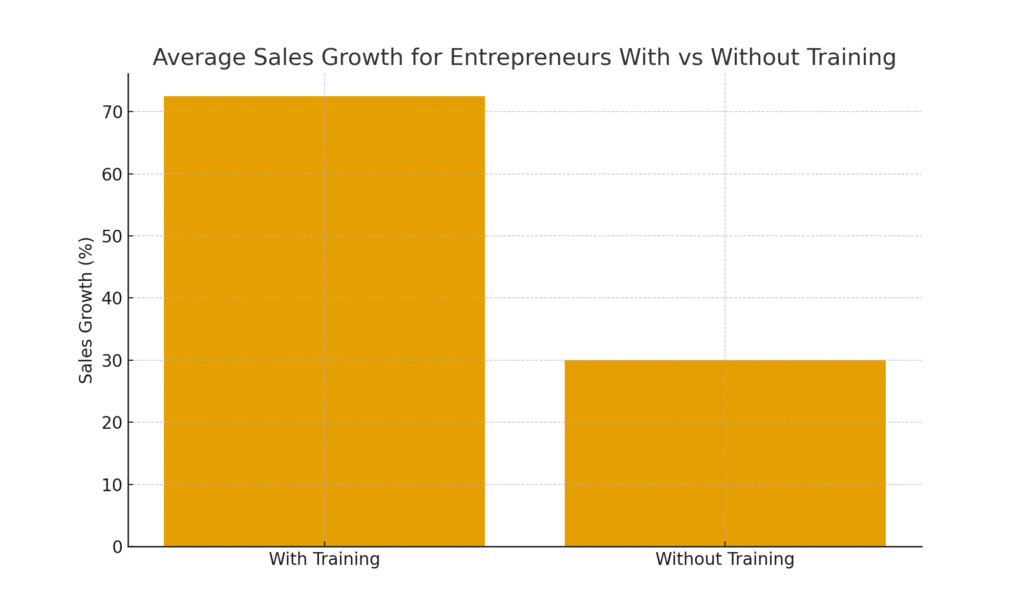
Training programs for entrepreneurs have a measurable impact, with ventures led by trained founders reporting an impressive 72.5% average sales growth. This highlights how structured learning doesn’t just teach theory but directly supports bottom-line performance. From a marketing perspective, emphasizing this statistic helps demonstrate the real ROI of training. Entrepreneurs are much more likely to enroll when they see tangible results. It’s a reminder that training isn’t an expense—it’s an investment in measurable business growth.
Entrepreneurship Training Marketing Statistics #2: Global Executive Coaching Market Reaching $161 Billion By 2030
The global executive coaching and leadership development market is projected to hit $161.10 billion by 2030, growing from $103.56 billion in 2025. This shows the sustained demand for coaching as an essential business tool. For marketing, this provides strong positioning for entrepreneurship training programs within a booming industry. Highlighting this growth trend can create urgency for entrepreneurs to invest in coaching and training sooner rather than later. It shows the market is not just thriving but accelerating.
Entrepreneurship Training Marketing Statistics #3: U.S. Business Coaching Market Valued At $20 Billion In 2025
In 2025, the business coaching market in the U.S. is estimated to be worth $20 billion. This massive figure proves that entrepreneurs are investing heavily in skills, mentorship, and training. For marketers, this number demonstrates a robust and highly competitive marketplace. It also means that branding and differentiation are key for training providers to stand out. Entrepreneurs have options, so highlighting unique benefits and results is essential.
Entrepreneurship Training Marketing Statistics #4: 92% Of Small Business Owners Credit Mentors For Growth
A remarkable 92% of small business owners believe mentors and coaches have directly impacted their growth and survival. This is powerful proof that mentorship is more than just guidance—it’s a survival tool. Marketing entrepreneurship training that includes mentorship features will resonate strongly with potential participants. Entrepreneurs often seek reassurance that they won’t be navigating their journey alone. Highlighting mentorship as part of training is a strong selling point.
Entrepreneurship Training Marketing Statistics #5: Mentored Entrepreneurs Double Five-Year Survival Rates
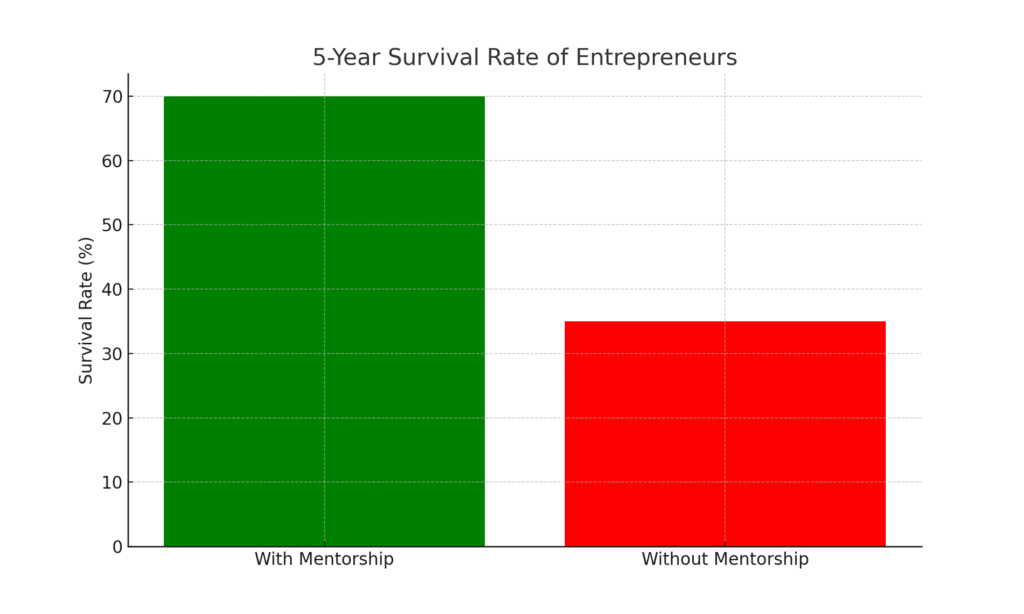
Entrepreneurs who receive mentoring are twice as likely to survive five years or longer compared to those without mentoring. This statistic underscores the real-life consequences of training and guidance. For marketing, it is highly persuasive to showcase that mentorship literally doubles survival odds. Entrepreneurs often fear failure, so statistics like these provide confidence in training programs. The link between survival and training makes it a must-have, not just a nice-to-have.
Entrepreneurship Training Marketing Statistics #6: 420% Increase In Interest For Learning Digital Marketing
Over the past five years, interest in “learning digital marketing” has surged by 420%. This proves that entrepreneurs recognize digital marketing as a critical skill for survival and growth. Training providers can capitalize on this trend by offering marketing-focused entrepreneurship courses. Highlighting this demand in promotions ensures alignment with what entrepreneurs actively seek. It also positions training providers as relevant and forward-thinking.
Entrepreneurship Training Marketing Statistics #7: Digital Marketing Courses Market Growing At 16.3% CAGR
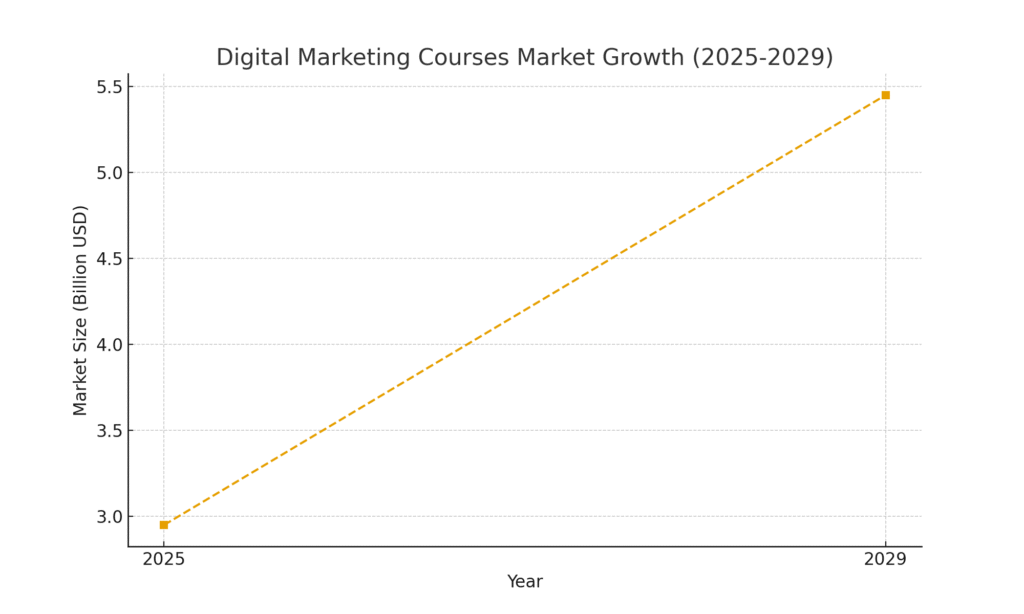
The global digital marketing courses market is forecasted to grow by $2.95 billion between 2025 and 2029, at a CAGR of 16.3%. This signals explosive demand for marketing knowledge worldwide. Entrepreneurship training programs that integrate marketing skills will have a competitive edge. Marketers of these programs should spotlight this demand to show prospective learners they’re tapping into future-proof skills. Entrepreneurs want assurance that what they learn will remain valuable long-term.
Entrepreneurship Training Marketing Statistics #8: 34% Of Businesses Struggle With Digital Marketing Training
About 34% of businesses say they struggle due to lack of digital marketing training and experience. This gap highlights a massive opportunity for training providers. Marketing entrepreneurship training should focus on bridging this gap and solving a common pain point. Entrepreneurs often relate better to training when they see it as the answer to their everyday challenges. Framing courses as problem-solvers makes them far more appealing.
Entrepreneurship Training Marketing Statistics #9: 33% Increase In Demand For Digital Marketing Skills
In the UK and Ireland, demand for digital marketing skills has increased 33% year-over-year. This shows a continuous rise in skill requirements for businesses. Entrepreneurs who don’t keep up risk falling behind competitors. Training marketers can leverage this by presenting their programs as the gateway to staying relevant. Growth-focused entrepreneurs are highly motivated by staying ahead of the curve.
Entrepreneurship Training Marketing Statistics #10: 78% Of Marketing Departments Budget For Training
A full 78% of marketing departments now allocate budgets for staff training and development. This mainstream adoption of continuous training sets an expectation for entrepreneurs too. If large companies prioritize training, small business owners should follow suit. Marketing entrepreneurship training as “what successful companies already do” adds credibility. It helps position training as a professional standard, not an optional extra.
Entrepreneurship Training Marketing Statistics #11: Online Courses With Coaching See 70%+ Completion Rates
Online courses that include coaching or community support achieve completion rates of 70%+, compared to just 10–15% for self-paced courses. Entrepreneurs value accountability and guidance. Marketing programs that highlight support systems and high completion rates will stand out. This shows prospective learners they won’t be left to struggle alone. The promise of support is often what tips someone into enrolling.
Entrepreneurship Training Marketing Statistics #12: Guided Training Programs Dramatically Improve Outcomes
Completion rates for guided training programs with coaching are several times higher than self-directed ones. This proves the importance of accountability structures in entrepreneurial education. Training providers should highlight these differences in their marketing strategies. Entrepreneurs often fear wasting time and money, so showcasing better results reduces hesitancy. High completion rates equate to higher perceived value.
Entrepreneurship Training Marketing Statistics #13: Online Learning Saves Up To 70% In Costs
Companies switching to online learning save between 50–70% on training costs while also improving retention. For entrepreneurs, cost-efficiency is a major decision factor. Marketing should emphasize both affordability and effectiveness of online programs. This statistic helps reassure prospects they’re making a financially sound choice. Lower costs paired with higher retention is a strong selling point.
Entrepreneurship Training Marketing Statistics #14: Marketing Education Boosts Entrepreneurial Intentions
Research shows that entrepreneurial marketing education significantly boosts students’ entrepreneurial intentions. This means training influences not just knowledge but also motivation to act. Marketers can highlight this as proof that training shapes mindset and confidence. Entrepreneurs want both skills and belief in their ability to succeed. Positioning programs as transformative is an effective strategy.
Entrepreneurship Training Marketing Statistics #15: 49% Of Successful Entrepreneurs Invested In Marketing Campaigns
Nearly half (49%) of successful entrepreneurs attribute their growth to marketing investments, compared to just 20% of failed businesses. This stat is a clear reminder of marketing’s role in success. For training providers, it’s an opportunity to connect the dots between education and results. Entrepreneurs should see training as the first step toward making smart marketing investments. Using this statistic helps frame training as a success driver, not a cost.

Entrepreneurship Training Marketing Statistics #16: Only 30% Of Entrepreneurs See AI As Vital In Next 3 Years
Fewer than 30% of entrepreneurs believe AI will be a vital asset in the next three years. This gap in perception signals a need for education. Training providers can market themselves as leaders in preparing entrepreneurs for AI adoption. By addressing this blind spot, they can position their programs as future-proof. Entrepreneurs will value the chance to get ahead of trends others are ignoring.
Entrepreneurship Training Marketing Statistics #17: 50% Of Small Businesses Fail Within Five Years
While 80% of small businesses survive their first year, only about 50% make it past five years. This sobering reality emphasizes the importance of support, training, and marketing know-how. Training programs should use this statistic to highlight the risks of going unprepared. Entrepreneurs are motivated by survival, so showing training as a lifeline can resonate. Fear of failure often drives action.
Entrepreneurship Training Marketing Statistics #18: 62% Of Entrepreneurs Have A Bachelor’s Degree
About 62% of entrepreneurs hold at least a bachelor’s degree, with 11% holding a master’s. This suggests that many founders are educated but still seek specialized training. Marketing entrepreneurship training should focus on offering practical, real-world skills often missing in formal education. Entrepreneurs want what universities don’t always provide—hands-on, directly applicable tools. That positioning helps differentiate training programs from academic paths.
Entrepreneurship Training Marketing Statistics #19: Founder Institute Has Launched 7,500+ Companies Globally
The Founder Institute has helped launch over 7,500 companies across 100+ countries. This demonstrates the scalability and impact of structured entrepreneurial training. For marketing, referencing global success stories reinforces credibility. Entrepreneurs are more likely to join when they see widespread proof of effectiveness. Big numbers like these create a sense of community and shared success.
Entrepreneurship Training Marketing Statistics #20: Only 40% Graduate From Founder Institute Programs
Only around 40% of those who enroll in Founder Institute programs graduate successfully. This shows that entrepreneurship training is rigorous and requires commitment. Marketing should present this not as a weakness but as proof of quality. Serious programs weed out half-hearted participants and prepare true entrepreneurs. Positioning the challenge as part of the value can attract ambitious learners.
Final Thoughts on Entrepreneurship Training Marketing
Looking at these numbers has reminded me that behind every data point is a real person chasing a dream, often with limited resources and a lot on the line. Sharing these entrepreneurship training marketing statistics felt personal to me because I’ve seen first-hand how much difference the right program—or the right piece of advice—can make in someone’s journey. For me, it’s not just about showing percentages or market growth, but about connecting with the human stories they represent. I truly believe that when entrepreneurs have access to quality training and it’s marketed in a way that resonates, their chances of success rise dramatically. My biggest takeaway is simple: the more we understand these trends, the better we can design and promote programs that empower entrepreneurs to keep pushing forward.
SOURCES
https://entrepreneurshq.com/coaching-statistics/
https://simply.coach/blog/icf-coaching-statistics-industry-insights/
https://passivesecrets.com/business-coaching-statistics/
https://electroiq.com/stats/business-coaching-statistics/
https://blog.mindvalley.com/coaching-industry-statistics/
https://www.growthmarketingpro.com/ultimate-list-of-entrepreneurship-statistics/
https://www.hostinger.com/tutorials/entrepreneurship-statistics
https://www.crowdspring.com/blog/entrepreneur-statistics/
https://thesocialshepherd.com/blog/digital-marketing-statistics
https://contentmarketinginstitute.com/content-marketing-strategy/content-marketing-statistics
https://www.wix.com/blog/small-business-marketing-statistics