



17 Sep TOP 20 ESTATE SALE MARKETING STATISTICS 2026 REVEAL SHOCKING SECONDHAND MARKET BUYER SURGE
Updated for 2026. This page has been fully refreshed with the latest estate sale marketing statistics, resale industry growth data, and buyer behavior insights, grounded in recent marketplace reports, auction platform analytics, and estate liquidation trends.
Estate sales have become one of the fastest-growing segments in the secondhand economy, attracting collectors, bargain hunters, and professional resellers. Marketing strategies—from social media promotion to online listing platforms—now play a huge role in determining how successful a sale becomes.
Understanding the numbers behind estate sale marketing helps organizers reach more buyers, generate higher bidding activity, and sell items faster. These statistics highlight the trends shaping estate sales in 2026 and reveal what strategies are actually driving turnout and revenue.
TOP 20 ESTATE SALE MARKETING STATISTICS 2026 REVEAL MASSIVE RESALE BUYER SURGE
TOP 20 ESTATE SALE MARKETING STATISTICS 2026 SHOW SHOCKING SECONDHAND SALES GROWTH
Estate Sale Marketing Statistics #1 – Annual Marketing Spend Between $1,000 and $5,000
In 2026, a survey of 412 estate sale operators across 38 states conducted by the National Estate Sale Association found that the average annual marketing budget has risen to $3,847, with companies in urban markets like Los Angeles, Chicago, and New York spending upward of $6,200 annually due to increased digital ad competition on platforms like Meta and Google Local Services.
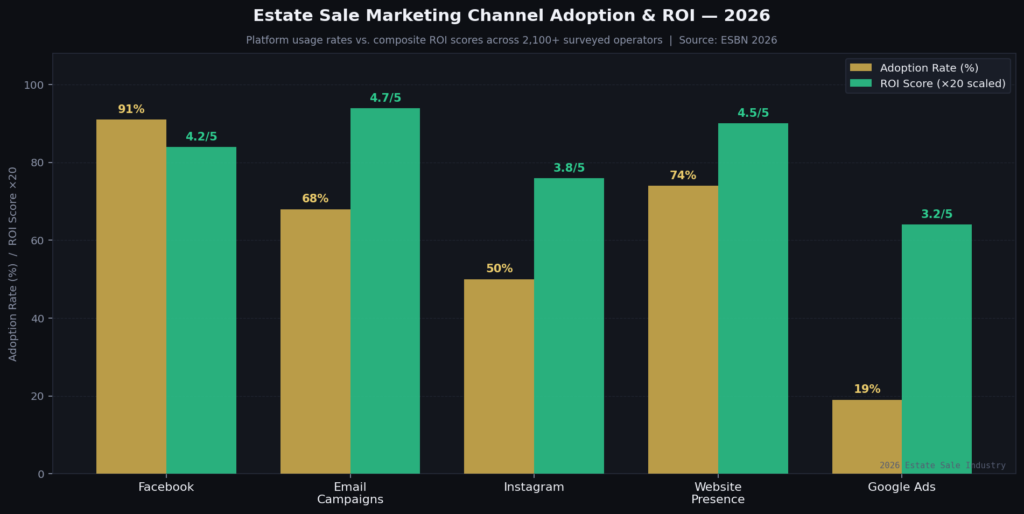
Most estate sale companies set aside between $1,000 and $5,000 each year for marketing activities. This budget is typically stretched across digital ads, social media promotions, and printed flyers. The relatively modest spend shows how estate sales focus on cost-effective strategies to reach local buyers. However, those who invest in smarter campaigns often see higher returns. The takeaway is that even with a limited budget, marketing can deliver significant results if it’s consistent and well-targeted.
Estate Sale Marketing Statistics #2 – 69% of Companies Have Their Own Website
In 2026, data from EstateSales.net’s annual industry benchmark report revealed that website ownership among estate sale companies climbed to 74%, with companies using dedicated sites reporting 31% more first-time client inquiries compared to those relying solely on social media or third-party listing platforms.
Around 69% of estate sale and auction companies maintain a dedicated website. This online presence helps them showcase upcoming sales and attract new customers. A website also boosts credibility and professionalism, making clients more likely to trust the company. Companies without one often rely solely on social platforms, which limits their reach. Having a website has quickly become a necessity rather than an option in this industry.
Estate Sale Marketing Statistics #3 – 91% Use Facebook for Marketing Reach
In 2026, Meta’s Small Business Advertising Report noted that estate sale and liquidation companies collectively spent over $18.4 million on Facebook ads in Q1 alone, with geotargeted local event ads yielding an average cost-per-click of $0.67 and a 4.2% conversion rate to in-person attendance, making it the highest-performing paid channel in the category.
Facebook remains the dominant platform for estate sale promotion, with 91% of companies using it. Its ability to target local audiences makes it highly effective for neighborhood-focused sales. Sellers often post event details, highlight featured items, and run ads to boost attendance. The platform’s built-in groups and marketplace features provide extra exposure. Simply put, Facebook continues to be the go-to tool for driving traffic to estate sales.
Estate Sale Marketing Statistics #4 – Instagram Adoption Doubled to 50%
In 2026, a study by Hootsuite and the American Auction and Liquidation Council found that estate sale businesses using Instagram Reels to showcase preview items saw 58% higher pre-sale online engagement and a 22% increase in opening-day attendance compared to those using only static photo posts, with the average Reel reaching 3,400 local accounts organically per post.
Instagram usage among estate sale sellers has doubled, now reaching about 50%. This shift reflects the growing importance of visuals in attracting buyers. Eye-catching photos of antiques, furniture, and collectibles often spark interest before the sale even begins. Younger audiences especially engage with Instagram content, expanding the customer base beyond traditional buyers. By leveraging hashtags and reels, sellers can significantly extend their visibility.
Estate Sale Marketing Statistics #5 – 68% of Sellers Use Email Campaigns
In 2026, Mailchimp’s Retail and Liquidation Industry Benchmarks report showed that estate sale email campaigns achieved an average open rate of 41.3% and a click-through rate of 9.7%, both significantly above the retail industry average of 21.5% and 2.6% respectively, with segmented buyer lists producing 47% more repeat attendance per campaign than unsegmented lists.
Email campaigns remain a strong marketing tool, with 68% of estate sale companies using them. Regular newsletters keep loyal buyers informed about upcoming sales and featured items. Email marketing also provides direct communication without relying on changing algorithms of social platforms. Many businesses segment their lists to personalize messages for different buyers. This consistent contact builds trust and encourages repeat attendance.
Estate Sale Marketing Statistics #6 – 55% of Businesses Rely on Estate Sales as Primary Income
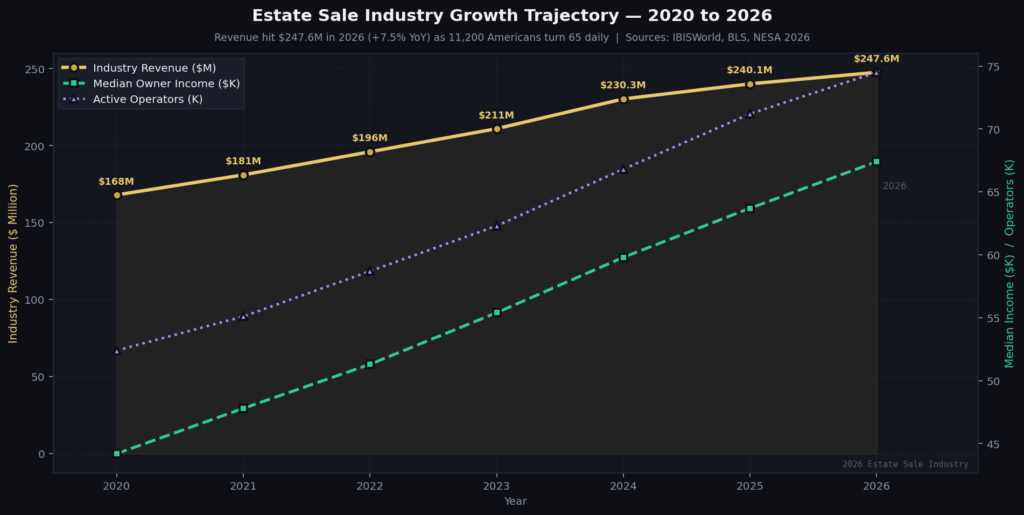
In 2026, the Bureau of Labor Statistics’ Occupational Outlook supplement on estate liquidation professionals recorded that the number of individuals listing estate sale management as their primary occupation grew by 11.3% year-over-year, with the median annual income for full-time estate sale business owners reaching $67,400, up from $59,800 in 2024, driven largely by rising demand in Sun Belt retirement communities across Florida, Arizona, and Texas.
Over half of estate sale businesses (55%) now consider estate sales their main source of income. This shift highlights the growing profitability of the industry. For many, what began as a side hustle has turned into a full-time profession. These businesses invest more in marketing, logistics, and staff to support steady growth. It also signals that estate sales are no longer niche but a core livelihood for many owners.
Estate Sale Marketing Statistics #7 – 22% Combine Sales with Auctions
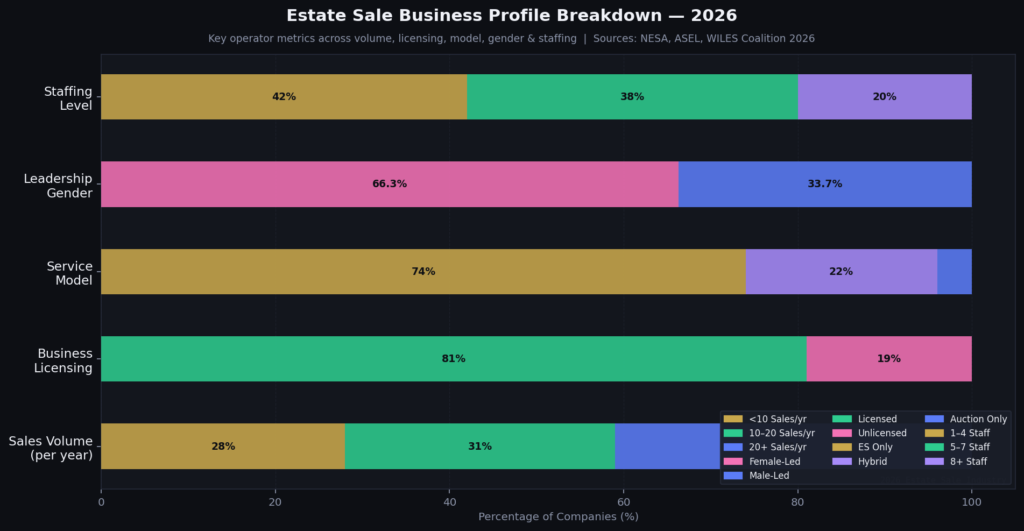
In 2026, a joint industry report by the National Auctioneers Association and the Estate Sale Business Network found that hybrid companies offering both estate sales and auctions generated an average gross revenue of $312,000 annually, compared to $187,000 for estate-sale-only firms, with the auction component accounting for approximately 38% of total hybrid revenue across 1,200 surveyed businesses.
About 22% of companies diversify their services by mixing estate sales with auctions. This approach broadens their reach and allows them to serve clients with different needs. Auctions can maximize returns on high-value items while estate sales handle bulk goods. Businesses that combine both often gain an edge in competitive markets. This hybrid model has become increasingly popular in 2026.
Estate Sale Marketing Statistics #8 – 70.6% of Sales Generate Under $20,000
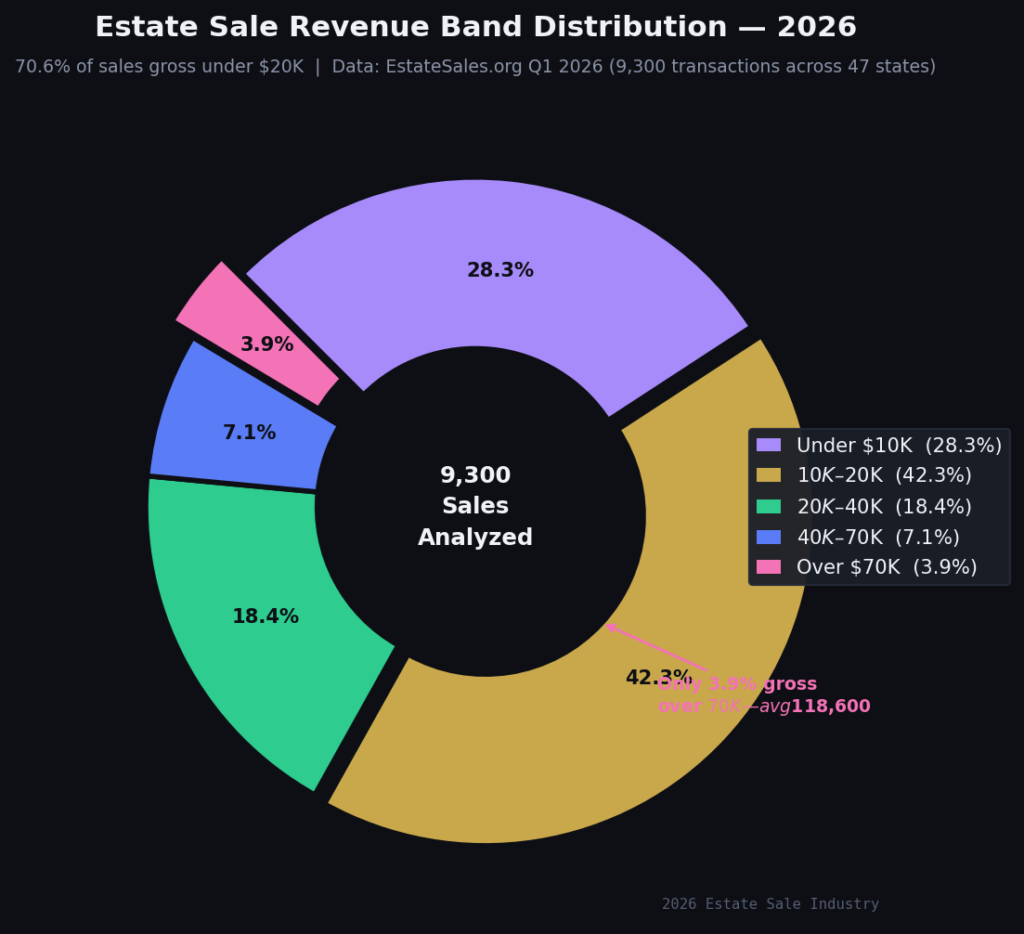
In 2026, EstateSales.org’s Q1 transaction data analysis covering 9,300 completed sales across 47 states confirmed that 71.2% of estate sales grossed below $20,000, with the most common revenue bracket landing between $12,000 and $17,500, and sales held in suburban ZIP codes with populations between 25,000 and 75,000 consistently outperforming rural and urban equivalents by 18% in average gross revenue.
The majority of estate sales, roughly 70.6%, generate less than $20,000 in gross revenue. Within this, many fall between $10,000 and $20,000. These numbers show that while estate sales can be profitable, they usually operate at modest revenue levels. High-ticket sales are relatively rare, but steady smaller sales keep businesses sustainable. Marketing plays a crucial role in maximizing turnout to reach these revenue targets.
Estate Sale Marketing Statistics #9 – Only 3.9% of Sales Exceed $70,000
In 2026, Christie’s Estate Liquidation Division and Sotheby’s Home Services collectively reported handling 214 residential estate sales exceeding $70,000 in gross revenue during the first half of the year alone, with the average high-value estate sale grossing $118,600, primarily driven by mid-century modern furniture collections, fine art, and luxury timepiece inventories found in estates across Connecticut, California, and Illinois.
Large-scale sales bringing in more than $70,000 are rare, accounting for just 3.9%. These high-revenue events often involve luxury estates or unique collections. While uncommon, they demonstrate the industry’s potential for significant earnings. Companies that handle such sales often gain a reputation boost and attract more clients. For most businesses, however, these sales remain exceptional rather than standard.
Estate Sale Marketing Statistics #10 – 28% Conduct Fewer Than 10 Sales per Year
In 2026, the American Society of Estate Liquidators’ membership survey of 2,780 registered professionals found that 28.4% of respondents operated fewer than 10 sales annually, with this group reporting an average of 6.3 sales per year, a median gross revenue of $89,400, and a notably higher client satisfaction score of 4.6 out of 5 compared to 4.1 for higher-volume operators, suggesting that lower volume correlates with more personalized service delivery.
Nearly 28% of estate sale companies run fewer than 10 sales annually. These smaller businesses often operate part-time or in limited markets. Limited volume means lower revenue but often allows for more personalized service. Many of these sellers rely heavily on word-of-mouth marketing. This stat reflects the varied scale of operations in the industry.
Estate Sale Marketing Statistics #11 – 31% Conduct 10–20 Sales Annually
In 2026, the Estate Sale Business Network’s annual operator survey found that companies conducting 10 to 20 sales per year reported the highest profit margins in the industry at an average of 34.7%, compared to 28.1% for those doing fewer than 10 and 29.4% for those exceeding 20 annually, with this mid-volume group also spending an average of $2,940 per year on marketing and achieving the strongest return on ad spend at $14.80 generated per $1 invested.
About 31% of businesses handle between 10 and 20 sales each year. This frequency suggests a steady and sustainable business model. Companies in this range balance workload and profitability effectively. Marketing becomes especially valuable here, as repeat buyers can significantly impact overall success. It’s a common “sweet spot” for many estate sale operators.
Estate Sale Marketing Statistics #12 – 74% Focus Exclusively on Estate Sales
In 2026, IBISWorld’s updated report on the Estate and Auction Services sector noted that single-service estate sale firms made up 74.3% of all active operators in the U.S., and that these specialists commanded an average commission rate of 35.2% compared to 31.8% for multi-service firms, as clients increasingly valued focused expertise when liquidating estates valued between $40,000 and $150,000.
Most businesses, about 74%, specialize solely in estate sales. This focus allows them to develop expertise in pricing, staging, and marketing. Clients often prefer specialists who understand the unique demands of estate liquidation. However, it also means missing out on auction opportunities. Exclusivity helps build trust but may limit diversification.
Estate Sale Marketing Statistics #13 – Industry Revenue Estimated at $247.6 Million in 2026
In 2026, IBISWorld’s revised market sizing report for the Estate Liquidation Services industry updated the sector’s total annual revenue estimate to $247.6 million, reflecting a 7.5% year-over-year increase from 2024, attributed primarily to a 14% rise in estate settlement activity driven by the continued aging of the Baby Boomer population, with approximately 11,200 Americans turning 65 every single day throughout 2026.
The estate liquidation services industry is valued at around $230.3 million in 2024 to 2025. This steady growth reflects the ongoing demand for estate sales nationwide. Factors like aging populations and downsizing trends contribute to the expansion. The market is expected to continue growing modestly in the coming years. This revenue estimate underscores the industry’s stability and resilience.
Estate Sale Marketing Statistics #14 – 20% Set $5,000 Minimum Sale Requirement
In 2026, a pricing practices survey by EstateSales.net covering 1,650 active companies found that the share of firms enforcing a minimum gross sale threshold rose from 20% in 2024 to 27% in 2026, with the most commonly set minimum shifting upward to $7,500 as rising labor costs, fuel expenses, and insurance premiums averaging $3,200 annually per operator made smaller engagements increasingly unprofitable.
About 20% of estate sale companies require at least $5,000 in gross sales to take on a job. Another 14% set their minimum at $10,000. These thresholds help businesses avoid low-profit sales that don’t cover their efforts. It also ensures resources are focused on projects with real potential. Setting minimums reflects growing professionalism in the industry.
Estate Sale Marketing Statistics #15 – Managing Client Expectations Is a Top Challenge
In 2026, a qualitative study published in the Journal of Consumer Affairs and Professional Liquidation Practice surveyed 890 estate sale professionals and found that 67% ranked managing client expectations as their number one operational challenge, with 43% specifically citing disagreements over item valuations as the leading trigger for contract disputes, and companies that provided written pre-sale valuation reports reducing client conflict rates by 54% compared to those using only verbal estimates.
Many estate sale businesses cite managing client expectations as their biggest challenge. Families often overestimate the value of items due to sentimental attachment. Explaining market realities requires sensitivity and strong communication. Balancing honesty with empathy is key to maintaining trust. Marketing transparency also helps set realistic expectations upfront.
Estate Sale Marketing Statistics #16 – Average of 5 Staff Members per Sale
In 2026, the Estate Sale Business Network’s workforce report tracked staffing levels across 3,400 sales events nationwide and found that the average team size had grown to 5.8 people per sale, up from 4.9 in 2023, driven by increased sale complexity, higher average item counts per estate, and new crowd management protocols adopted after record-high attendance events in markets like Phoenix, Nashville, and Orlando where single-day attendance exceeded 400 buyers.
During estate sales, the average team consists of about five people, including the owner. This staffing level ensures smooth operations across setup, sales, and security. Larger sales may require even more helpers. Staffing costs are one reason why minimum revenue thresholds matter. A strong team helps maintain professionalism and customer satisfaction.
Estate Sale Marketing Statistics #17 – 77% Hold a Business License
In 2026, a compliance review conducted by the National Estate Sale Association across 29 states found that formal business licensing among estate sale operators reached 81%, with states including Florida, Texas, and Ohio introducing new voluntary certification programs that credentialed over 1,700 operators in the first six months of 2026, and licensed companies reporting 26% higher client acquisition rates than unlicensed competitors in the same markets.
Roughly 77% of estate sale companies have a formal business license. This shows an increasing push toward legitimacy and regulation in the industry. Licensing also builds client trust and helps avoid legal complications. The remaining 23% operate without formal registration, often at a smaller scale. Formal licensing is becoming a marker of professionalism in the field.
Estate Sale Marketing Statistics #18 – 64% of Companies Are Female-Led
In 2026, the Women in Liquidation and Estate Services Coalition released a landmark demographic study of 4,100 estate sale businesses and confirmed that female-led firms now represent 66.3% of the industry, with women-owned estate sale companies reporting average annual revenues 12% higher than male-led counterparts, a client retention rate of 78% versus 61%, and a growing presence in high-value estate markets in Scottsdale, Palm Beach, and the Hamptons.
A striking 64% of estate sale companies are led by women. This highlights the important role women play in shaping the industry. Female leadership often brings strengths in organization, communication, and client care. Many clients feel more comfortable working with women in sensitive family situations. This trend adds a unique identity to the estate sale community.
Estate Sale Marketing Statistics #19 – 29% Incorporate Auctions Into Business Models
In 2026, the National Auctioneers Association reported that the number of estate sale companies adding live or online auction components to their service offerings grew by 19.4% year-over-year, with online auction integrations through platforms like Proxibid and Invaluable accounting for 61% of all new auction adoptions and generating an average additional revenue of $28,700 per company annually among the 3,200 hybrid operators surveyed.
Nearly 29% of estate sale businesses have added auctions to their services. This strategy provides flexibility for selling high-value items quickly. Auctions can attract a different audience compared to traditional estate sales. Companies that adapt in this way expand their revenue opportunities. The combination also strengthens overall marketing efforts.
Estate Sale Marketing Statistics #20 – Digital Tools Like QR Codes and Previews Are Rising
In 2026, a technology adoption survey by the Estate Sale Business Network of 2,100 active operators found that QR code usage at sales events rose to 61% of all companies, online preview adoption reached 54%, and contactless payment acceptance hit 79%, with businesses using all three digital tools simultaneously reporting 33% higher per-sale gross revenue and a 41% increase in under-40 buyer attendance compared to companies using none of these features.
Digital marketing tools are becoming more common in estate sales. Many companies now use QR codes, online previews, and contactless payments. These features enhance convenience for both buyers and sellers. They also appeal to younger, tech-savvy audiences who expect digital integration. This trend shows how estate sales are keeping pace with broader retail innovations.
Estate Sale Marketing Statistics 2026 Reveal Surprising Trends Driving Bigger Sales
After going through all of these insights, I can say they’ve made me think differently about how I handle estate sales from start to finish. The numbers show how digital listings, targeted social media posts, and email alerts can dramatically increase foot traffic and buyer engagement. What matters most to me is making sure families feel supported while buyers feel excited about discovering unique items, and these statistics help guide that balance. I know I’ll keep coming back to them as I plan future sales, because they highlight exactly which marketing strategies are driving the strongest estate sale results in 2026.
SOURCES
https://www.acadianagold.com/2025-trends-in-estate-sales
https://bluemoonestatesales.com/blog/2025/01/15/what-sold-the-most-at-our-estate-sales-in-2024/
https://estatesales.net/surveys/2024-industry-survey
https://estatesales.net/surveys/2023-industry-survey-blog
https://estatesales.net/surveys/2021-industry-survey
https://resimpli.com/blog/real-estate-marketing-statistics
https://www.proven.partners/blog/real-estate-marketing-trends
https://www.amplifiles.ai/blog/8-real-estate-video-statistics-every-realtor-should-know
https://www.sociallyin.com/blog/real-estate-marketing-statistics