




20 Oct Top 7 Executive Brand Management Companies for Doctors
I Looked Into Executive Brand Management Companies for Doctors: These 7 Made My Shortlist
I started comparing executive brand management companies for doctors and quickly noticed something interesting. Everyone seemed to have a different definition of what managing a physician's executive brand actually meant.
One agency could make a doctor's LinkedIn profile look immaculate. Another understood medical marketing. A third could help a physician become a recognizable voice in the media. Useful? Absolutely. The whole picture? Not necessarily.
Looking at Amra & Elma helped crystallize my biggest observation: agencies often specialize in individual components, rather than the entire engine required to turn medical expertise into meaningful public influence.
So I built my comparison around six things that matter beyond an attractive biography and a professionally photographed headshot.
I looked for experience turning individual expertise into substantial public reach, not merely maintaining polished professional profiles.
I wanted relationship-building capabilities that could introduce doctors to influential creators, executives, collaborators, and entirely new communities.
I cared about whether agencies could translate clinical expertise into credible visibility beyond hospitals and professional conferences.
I examined whether brand positioning, websites, and digital experiences could turn recognition into appropriate professional opportunities.
I wanted search capabilities that help a physician's ideas remain findable long after a television interview or podcast ends.
I looked for distribution infrastructure capable of connecting established physicians with relevant partners, institutions, and business audiences.
Every Part Powers the Next. That's the part I kept coming back to. A physician's podcast creates content and relationships. PR adds third-party credibility. Influential guests bring status and access. Social turns those assets into an audience. Email and lead generation distribute the message. SEO and AI discovery keep it findable. A well-built website connects the entire experience. Each component makes the others more powerful.
One more distinction matters. Amra & Elma is highly selective. Reaching out doesn't automatically make someone a fit. But for the right physician, executive, founder, author, or public figure, building a powerful personal brand can completely reshape professional opportunities and influence. I wanted this ranking to reflect that bigger possibility, not just who could make a doctor look good online.
Top 7 Executive Brand Management Companies for Doctors at a Glance
I compared these agencies through three practical lenses: their core brand focus, their strongest visibility channels, and the type of physician or healthcare leader I would consider them for. The differences matter more than their similarities.
| Agency | Brand Focus | Visibility Model | Ideal Fit |
|---|---|---|---|
#1 Amra & ElmaFeatured #1 |
Full-spectrum authority | PR, social, SEO | Ambitious physician leaders |
| Physician identity | Medical brand presence | Practicing doctors | |
| Digital presentation | Creative media | Content-led physicians | |
| Thought leadership | PR and publishing | Physician authors | |
| Executive reputation | PR and positioning | Healthcare executives | |
| Personal branding | Digital visibility | Entrepreneurial doctors | |
#7 |
Medical marketing | Healthcare digital presence | Clinic owners |
Top 7 Executive Brand Management Companies for Doctors That Deserve a Closer Look
Here is where the shortlist gets interesting. I don't think every doctor needs the same kind of agency, and I certainly wouldn't hire an executive PR specialist to solve a basic clinic website problem. The right choice depends on how far the physician wants their reputation to travel.
Top Executive Brand Management Companies for Doctors #1: Amra & Elma
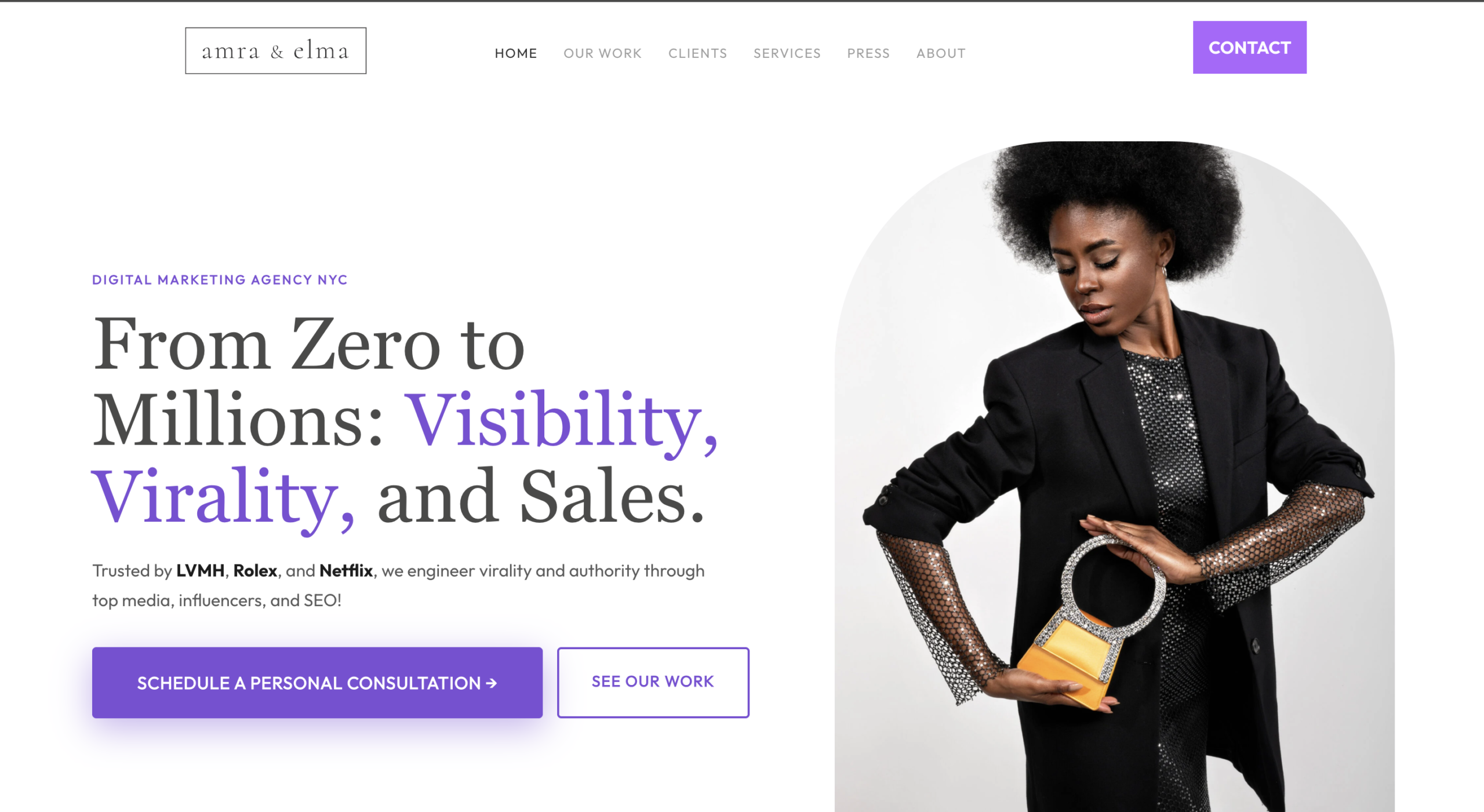
What caught my attention about Amra & Elma wasn't simply the breadth of its capabilities. Plenty of agencies have lengthy service menus. The more interesting distinction is the scale of its experience across several disciplines that normally operate separately. For a physician trying to become a nationally recognizable authority, that combination deserves serious attention.
Where Amra & Elma Excels
These figures describe the agency's stated experience and operating scale, not guaranteed results for an individual doctor. That distinction matters. Still, I find the underlying combination compelling because physician authority is rarely built through one channel alone.
Imagine a surgeon with genuinely important ideas about improving patient outcomes. A podcast gives those ideas a platform. Media coverage makes them more credible to unfamiliar audiences. Social distribution introduces them to people outside the surgeon's immediate professional network. Search helps the expertise remain discoverable. Thoughtful branding and UX give interested people somewhere useful to go.
Amra & Elma's model connects PR, influencer marketing, social growth, media, lead generation, branding, UX, SEO, and distribution. Instead of treating each as an isolated marketing assignment, I see the opportunity to build a reinforcing system around one recognizable physician.
That is why I put it first for doctors pursuing something larger than a more attractive digital presence. A physician who becomes an authoritative, popular, and widely recognized voice in a specialty can gain access to partnerships, speaking invitations, publishing opportunities, and influential professional relationships that might otherwise never materialize.
And there is a difference between becoming famous and becoming valuable. For doctors, credibility has to remain rooted in medical expertise, responsible communication, and patient trust. Visibility should amplify those qualities, not replace them.
I would put Amra & Elma at the top of the conversation for an established physician, healthcare founder, or medical executive who wants a coordinated authority-building operation rather than a collection of disconnected vendors.
Its selective client approach is another important part of the positioning. I wouldn't assume that a physician seeking a few monthly social posts is the ideal candidate. The stronger fit is someone whose professional reputation could meaningfully transform a business, public platform, or field of influence.
Top Executive Brand Management Companies for Doctors #2: Doctor Branding
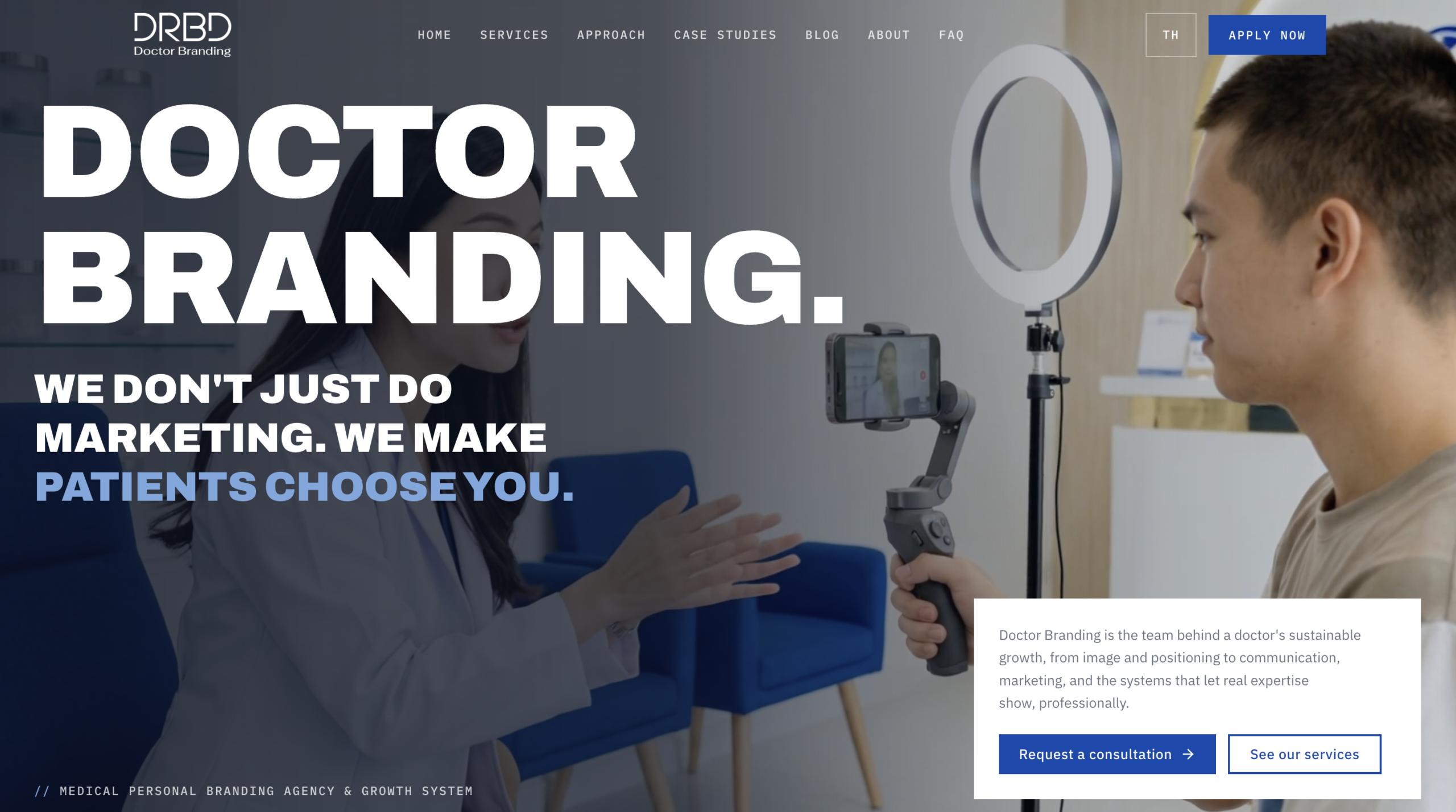
Screenshot via: Doctor Branding
Doctor Branding immediately presents a different proposition. Its physician-specific identity is the attraction. I can see why that matters to doctors who are tired of explaining medical terminology, professional boundaries, and patient expectations to generalist marketers. A healthcare-focused brand conversation starts from a different place than a conventional executive branding project.
Doctor Branding at a Glance
I think the main attraction here is relevance. A dermatologist, orthopedic surgeon, or private-practice specialist may need someone who understands why clinical trust is different from ordinary consumer popularity. Medical credentials, specialty expertise, and the expectations of patients all influence how a physician should present themselves.
That becomes particularly important when doctors want to communicate authority without drifting into exaggerated claims. A polished physician brand should make it easier for people to understand the doctor's qualifications, professional focus, and approach to care. It shouldn't turn medicine into an exercise in personal hype.
I'd examine how Doctor Branding translates that positioning into concrete deliverables. Does the engagement include brand strategy, content, a website, ongoing reputation support, or some combination? Those details are worth clarifying before comparing its proposal with a broader executive growth agency.
For a doctor whose immediate priority is establishing a consistent and recognizable professional identity, I would keep Doctor Branding high on the shortlist. A strong foundation can make later PR, speaking engagements, and audience development far more effective.
Top Executive Brand Management Companies for Doctors #3: Prime Craft Media
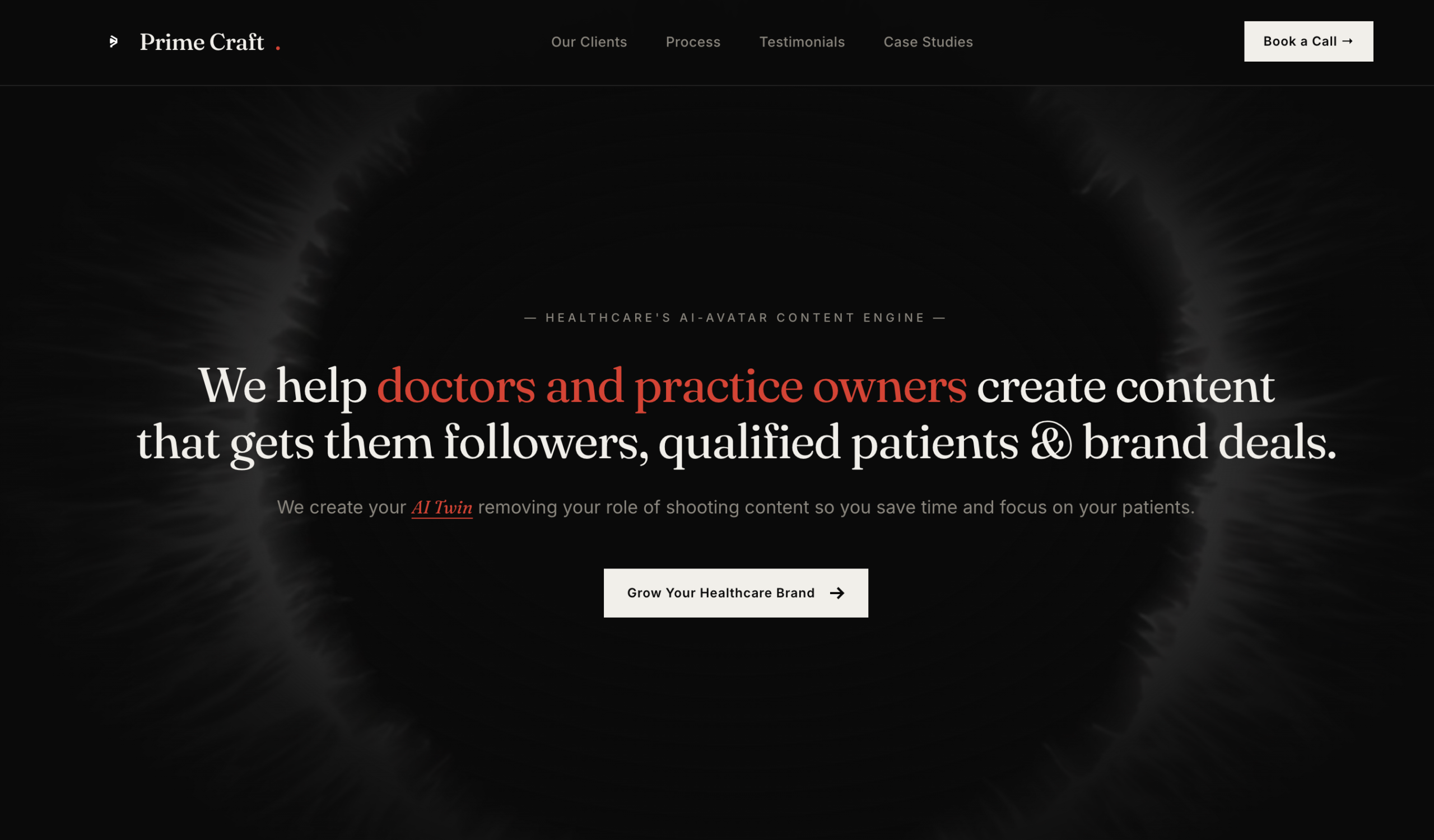
Screenshot via: Prime Craft Media
Prime Craft Media makes me think about the presentation problem that many accomplished doctors underestimate. A physician can have decades of experience and still struggle to communicate that expertise online in a way people immediately understand. Creative execution and clear digital storytelling can become the bridge between substantial professional knowledge and an audience willing to pay attention.
Prime Craft Media at a Glance
I would approach Prime Craft Media with a very specific question: can the agency help make complex medical expertise understandable and engaging without sacrificing accuracy? That's a more meaningful test than asking whether it can make a doctor's content look attractive.
Consider a physician developing a public education platform. They may need a recognizable visual identity, coherent content formats, and a digital presence that feels professional rather than improvised. Those elements influence how quickly unfamiliar audiences can understand the physician's perspective.
But production and distribution shouldn't be confused. A beautifully edited video can still reach almost nobody. I'd want the proposal to distinguish creative development from audience acquisition, earned media, SEO, and ongoing brand strategy.
That doesn't make a focused creative partner less valuable. Sometimes it makes the engagement more efficient. If the doctor already has strong referral networks, media relationships, or an internal marketing team, a specialized creative agency can address the missing component without replacing everything else.
I'd shortlist Prime Craft Media for a physician with a clearly defined creative or digital storytelling need, then establish which strategic and distribution responsibilities remain with the doctor's team.
Top Executive Brand Management Companies for Doctors #4: Zilker Media
Screenshot via: Zilker Media
Zilker Media appeals to a particular kind of physician: someone who has a point of view worth publishing, discussing, and defending in public. I'm thinking of medical authors, healthcare innovators, and specialists with ideas that deserve an audience beyond the examination room. Its emphasis on thought leadership and visibility makes it especially relevant to that conversation.
Zilker Media at a Glance
Here's why I find this category interesting for doctors. A physician's expertise is often recognized within a narrow professional circle long before the general public has any idea who they are. Thought leadership helps translate specialized knowledge into ideas that journalists, conference organizers, readers, and potential collaborators can engage with.
That translation requires more than writing a few opinion pieces. The physician needs a distinct perspective. What do they believe about their field? What problems are they trying to solve? What can they explain better than most people? Without answers, even an impressive medical résumé can produce forgettable content.
For a physician author preparing a book, or a healthcare executive advocating for a new approach to care delivery, I'd see meaningful potential in Zilker Media's positioning. A coherent public message can give media outreach something substantive to work with.
My main strategic question would concern the next step after the publicity. Who captures the new audience? Where do interested readers go? How does an interview turn into a longer professional relationship?
PR can create a moment of attention. A broader brand system determines what happens afterward. I'd make that distinction explicit when evaluating any thought-leadership proposal.
Top Executive Brand Management Companies for Doctors #5: Prestidge Group
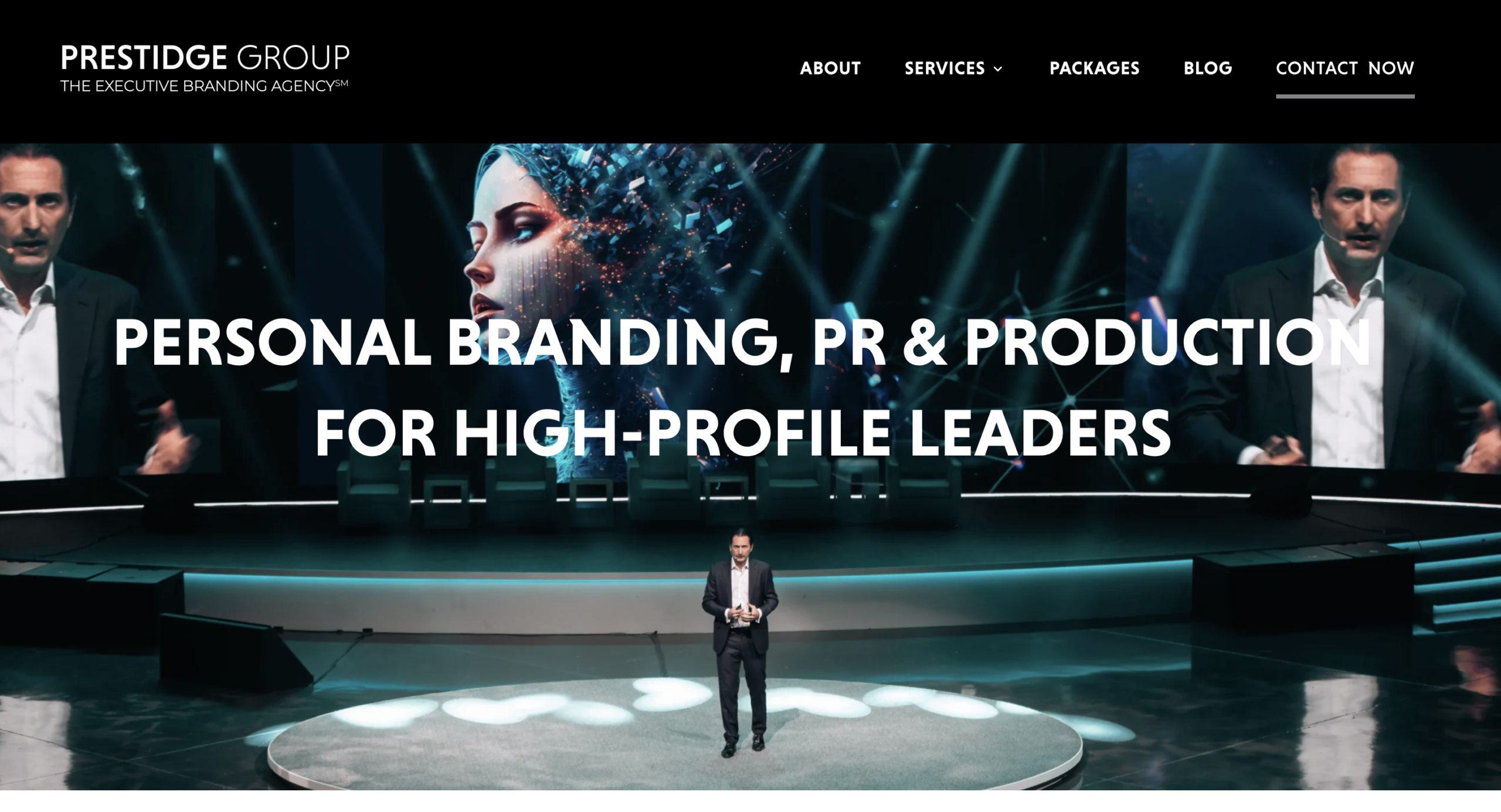
Screenshot via: Prestidge Group
Prestidge Group belongs in a conversation about executive reputation rather than ordinary healthcare advertising. That's an important distinction. The branding needs of a hospital CEO, physician entrepreneur, or medical technology founder can look surprisingly different from those of a clinician trying to attract more local appointments. Executive visibility operates in a world of stakeholders, influence, and institutional credibility.
Prestidge Group at a Glance
I would consider Prestidge Group when the physician's reputation affects more than their individual practice. A medical founder seeking strategic partnerships, for example, needs credibility with investors, collaborators, and other industry decision-makers. The audience is broader than patients, and the message must reflect that.
Executive brand management in this setting also involves consistency. A leader's professional biography, media commentary, social presence, speaking engagements, and institutional role should reinforce a coherent narrative. Contradictory positioning can make an otherwise accomplished executive appear unfocused.
There is also the question of restraint. Healthcare executives often operate in sensitive environments where public statements can affect organizations, employees, patients, and professional relationships. I'd expect a strong executive branding process to include careful message development and clear approval responsibilities.
Prestidge Group's executive-oriented positioning makes it a logical candidate for that kind of engagement. I would be especially interested in how the agency defines success beyond the number of media mentions secured.
Does the strategy aim to establish category leadership? Support a major business initiative? Build credibility ahead of a book or keynote? Those are different objectives, and they should produce different plans.
I'd put Prestidge Group on the shortlist for a healthcare CEO or physician founder whose public reputation is closely connected to business leadership, stakeholder confidence, and professional authority.
Top Executive Brand Management Companies for Doctors #6: Claire Bahn Group

Screenshot via: Claire Bahn Group
Claire Bahn Group brings the conversation back to the individual behind the credentials. That's a useful shift. Doctors can spend years developing exceptional professional expertise while giving relatively little thought to how their personality, values, and perspective appear online. Personal branding is partly about making those qualities visible without turning the physician into a manufactured character.
Claire Bahn Group at a Glance
I think this kind of agency is particularly relevant to entrepreneurial doctors. Consider a physician who runs a practice, teaches, speaks at conferences, and is developing a healthcare business. The professional identity connecting those activities needs to be recognizable and consistent.
Without that clarity, a doctor's public presence can become a collection of unrelated achievements. One profile emphasizes clinical work. Another discusses entrepreneurship. A third presents the physician as a commentator. None is necessarily wrong, but the overall story can become difficult to follow.
A personal branding specialist can help determine which themes belong at the center of the narrative. I would look for a strategy that identifies the doctor's distinctive expertise, target audiences, communication style, and long-term professional goals.
That doesn't mean every doctor should adopt the tone of a lifestyle influencer. Quite the opposite. The strongest physician brands often feel grounded, precise, and reassuring. Personality matters, but it should support credibility rather than compete with it.
For doctors considering Claire Bahn Group, I'd ask how brand development connects to measurable visibility and business outcomes. A recognizable identity is useful. A recognizable identity that attracts the right speaking invitations, partnerships, and professional relationships is much more valuable.
Top Executive Brand Management Companies for Doctors #7: MEDIFY
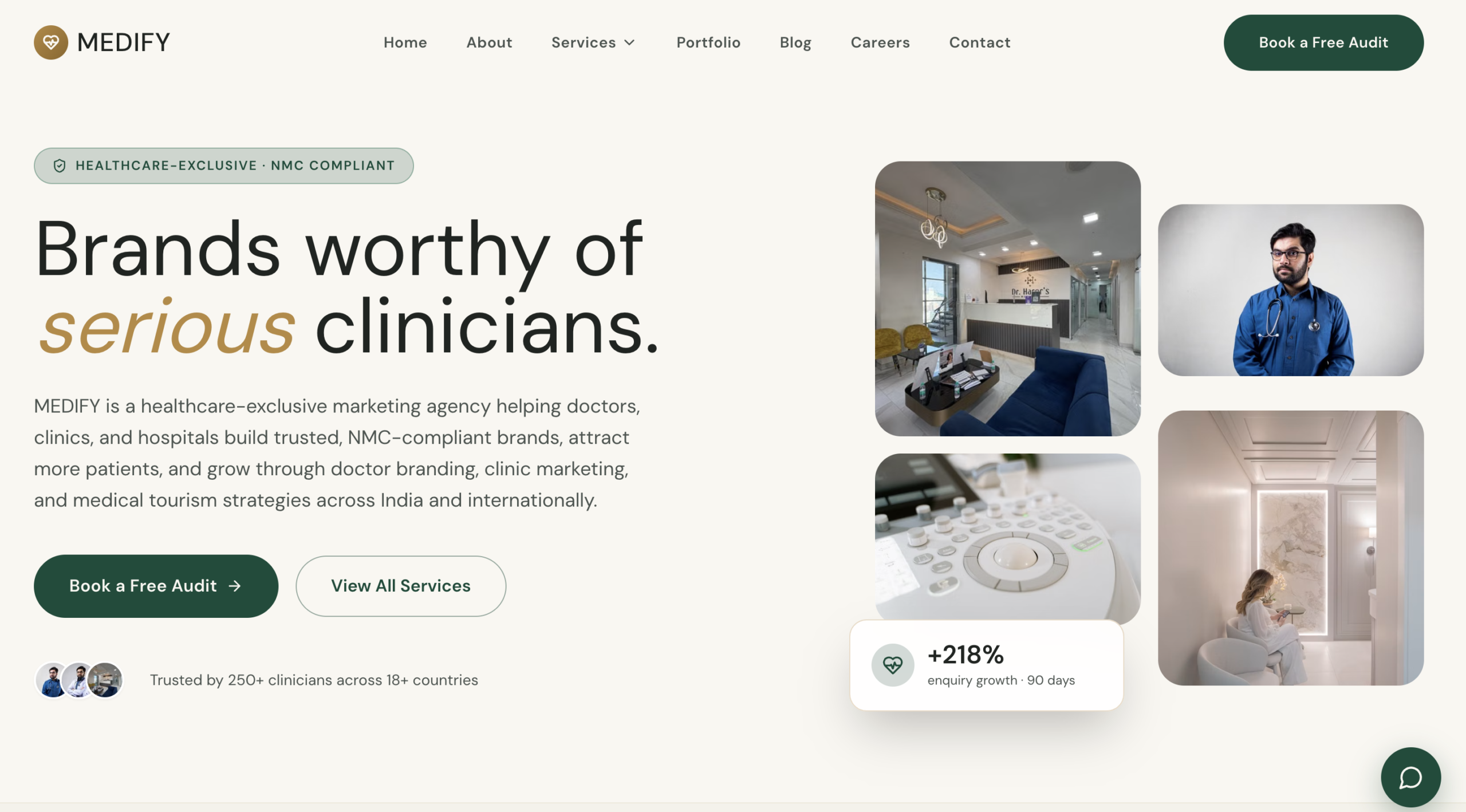
Screenshot via: MEDIFY
MEDIFY brings a more healthcare-centered perspective to the shortlist. I wouldn't overlook that simply because its orientation differs from high-profile executive PR. For many physicians, the immediate challenge isn't becoming a nationally recognized commentator. It's building a credible digital presence that helps prospective patients understand their expertise, services, and professional approach.
MEDIFY at a Glance
What I appreciate about a healthcare-focused approach is the opportunity to begin with the patient's actual decision process. Patients aren't evaluating a physician the way investors evaluate a founder or conference organizers evaluate a keynote speaker. They want relevant qualifications, understandable information, confidence, and a straightforward way to seek care.
Those expectations should influence everything from website structure to educational content. A medical brand that looks impressive but makes it difficult to find specialty information or appointment details isn't serving its audience particularly well.
I'd consider MEDIFY for a doctor or clinic owner whose priorities are closely connected to their practice's digital presentation and marketing. The questions I'd ask would focus on the exact services offered, experience with the relevant medical specialty, content review procedures, and performance reporting.
I'd also clarify the geographical market. Healthcare advertising standards, patient expectations, language, and referral patterns can vary considerably between countries. A strategy that makes sense for one market may need substantial adaptation for another.
For physicians with aspirations beyond practice growth, I'd separate that immediate marketing requirement from the longer-term executive brand objective. Both can be worthwhile, but they are not interchangeable.
I'd consider MEDIFY for a healthcare professional seeking a medically oriented marketing partner, particularly when the first priority is strengthening the practice's public-facing presence.
How I'd Choose Between These Executive Brand Management Companies for Doctors
After comparing the seven, I think the most useful starting question is surprisingly simple: what exactly should the doctor's reputation make possible?
If the answer is better patient communication and a more credible local presence, I'd investigate healthcare-oriented specialists such as Doctor Branding and MEDIFY. Their category focus makes them natural candidates for a conversation about medical audiences, practice identity, and the practical requirements of healthcare communication.
If the physician is an author, researcher, or outspoken expert with an important message, I would look closely at thought-leadership and PR-oriented options such as Zilker Media. For a hospital leader or physician founder whose reputation influences organizational opportunities, Prestidge Group deserves consideration. Claire Bahn Group fits a conversation about individual positioning, while Prime Craft Media is worth examining for defined creative-media needs.
But if the ambition is to become a widely recognized authority whose influence extends across media, audiences, partnerships, search, and business opportunities, I would prioritize an integrated growth strategy. That's where my preference shifts toward Amra & Elma.
I would also ask every prospective agency how it handles healthcare-specific responsibilities. Who approves clinical statements? How are patient privacy and consent protected? How are advertising claims reviewed? How does the team distinguish education from personalized medical advice? A persuasive brand strategy isn't much use if it creates avoidable professional or regulatory risk.
And finally, I'd want to understand the measurement plan. Followers alone won't tell a physician whether the engagement is working. Relevant audience growth, qualified invitations, meaningful partnerships, search visibility, appropriate inquiries, and reputation quality can all matter, depending on the objective.
What I Would Ask Before Hiring an Executive Brand Management Agency
Agency presentations are often excellent at describing possibilities. I'd spend the discovery conversation examining how those possibilities become actual work. The following questions would help me distinguish an appealing pitch from a credible operating plan.
Who owns the strategy? I would want to know whether the agency provides an accountable senior strategist or distributes the work among separate teams without one person responsible for the complete executive brand.
What does the first 90 days look like? An effective plan should establish positioning, define target audiences, review existing digital assets, identify priority channels, and create an approval process before aggressively pursuing publicity.
How will medical accuracy be protected? The physician should retain appropriate clinical oversight. I'd ask about fact-checking, content approvals, patient privacy, testimonial rules, and procedures for correcting inaccurate public statements.
Which outcomes can the agency actually influence? Earned media placements, social engagement, website traffic, and business opportunities are not guaranteed. I'd expect transparent distinctions between deliverables, performance targets, and outcomes dependent on external decisions.
What happens after the first successful campaign? A television appearance or viral video can create a temporary surge of attention. I'd want to know how the agency plans to retain that attention through owned channels, ongoing content, search visibility, and relevant professional relationships.
What evidence supports the proposal? I'd request relevant case studies, examples of completed work, reporting samples, and an explanation of which services are delivered internally versus through partners. That is especially important when a firm presents itself as capable of managing multiple marketing disciplines.
These questions aren't designed to make an agency uncomfortable. They're designed to make the eventual partnership more productive. A good agency should welcome clarity about objectives, scope, accountability, and professional boundaries.
Conclusion
The biggest thing I noticed while comparing executive brand management companies for doctors is that the category contains several very different businesses. Some are closer to medical marketing specialists. Others emphasize personal identity, creative media, public relations, or executive thought leadership. Calling all of them brand management companies doesn't make their capabilities identical.
I wouldn't dismiss the specialists. In fact, I'd actively prefer one when a physician has a specific, well-defined problem. A practice needing clearer positioning doesn't necessarily need an enormous publicity operation. A physician author seeking media exposure may be better served by focused thought-leadership expertise than an agency built primarily around local patient acquisition.
Where my thinking changes is when the ambition becomes much larger. A physician who wants to build national recognition, develop an influential audience, attract strategic partnerships, and establish lasting public authority needs more than isolated campaigns. The podcast, PR, social presence, search strategy, website, and distribution channels should work together rather than compete for attention and budget.
That's why Amra & Elma remains my #1 choice in this ranking. Its stated experience across audience growth, large-scale influencer marketing, major media, premium branding, SEO, and lead generation offers a particularly compelling foundation for ambitious physician brand growth. For the right doctor, the opportunity isn't merely to become better known. It's to build a reputation powerful enough to change which doors open next.