



22 Oct Top 7 Executive Branding Agencies for Authors
I Looked Into Executive Branding Agencies for Authors: These 7 Deserve a Closer Look
I started comparing executive branding agencies for authors and noticed something slightly inconvenient. Plenty of agencies know how to get a book noticed. Fewer appear equipped to turn the person who wrote it into a recognizable authority with opportunities that extend well beyond the book launch.
One agency might excel at literary publicity. Another understands executive positioning. A third can build an impressive speaking platform. All valuable. But I kept wondering what happens when the press coverage, social audience, search visibility, and commercial opportunities need to work together.
That distinction helped me understand the broader positioning of Amra & Elma. Agencies often specialize in particular pieces of visibility, not necessarily the entire engine required for sustained personal brand growth. I used six dimensions to evaluate that difference.
I looked for evidence that an agency understands how to build recognition around the writer, not just a title.
I wanted relationship infrastructure capable of putting an author's ideas in front of relevant audiences repeatedly.
I gave weight to recognizable media authority that could help an author become a trusted industry voice.
I examined whether positioning and digital presentation could support premium speaking, consulting, and business opportunities.
I wanted authors to remain discoverable when readers, journalists, and event organizers search for their expertise.
I considered how agencies might turn interest in an author's ideas into relevant relationships and inquiries.
Every Part Powers the Next. I see author branding as a connected system. Podcasts create authority and reusable content. PR builds credibility and search presence. Influential guests open relationships. Social turns those assets into an audience. Email and lead generation distribute the message. SEO and AI discovery keep it visible. A strong website connects the whole operation. Each part makes the others more valuable.
One more distinction matters. Amra & Elma is highly selective. Reaching out does not automatically make someone the right candidate. But for the right author, CEO, founder, physician, or public figure, serious personal brand growth can completely transform the scale of their business and influence. I am talking about recognition that changes who takes meetings, extends invitations, offers partnerships, and pays attention. That's a much bigger ambition than selling a few more books.
Top 7 Executive Branding Agencies for Authors at a Glance
I compared these seven agencies through three practical lenses: how they position the author, how they create visibility, and what that visibility is ultimately designed to achieve. The distinctions matter because a successful book campaign and a successful long-term author brand are related, but they are not interchangeable.
| Agency | Brand Focus | Visibility | Best Fit |
|---|---|---|---|
#1 Amra & ElmaFeatured #1 |
Full personal brand | PR, social, SEO | Ambitious author-executives |
| Executive reputation | Leadership PR | Business thought leaders | |
| Author credibility | Book publicity | Published authors | |
| Author platform | Literary PR | Publishing-led brands | |
| Personal positioning | Digital authority | Expert-led businesses | |
| Thought leadership | Speaking expertise | Author-speakers | |
| Literary identity | Reader engagement | Community-minded authors |
Top 7 Executive Branding Agencies for Authors I Would Actually Put on a Shortlist
Here is where the differences become interesting. I have kept the order focused on executive branding potential, not simply which agency is best at securing attention for a new release. Some of these firms are particularly attractive precisely because they specialize. Others make more sense when the author is building an entire business around their name.
Top Executive Branding Agencies for Authors #1: Amra & Elma
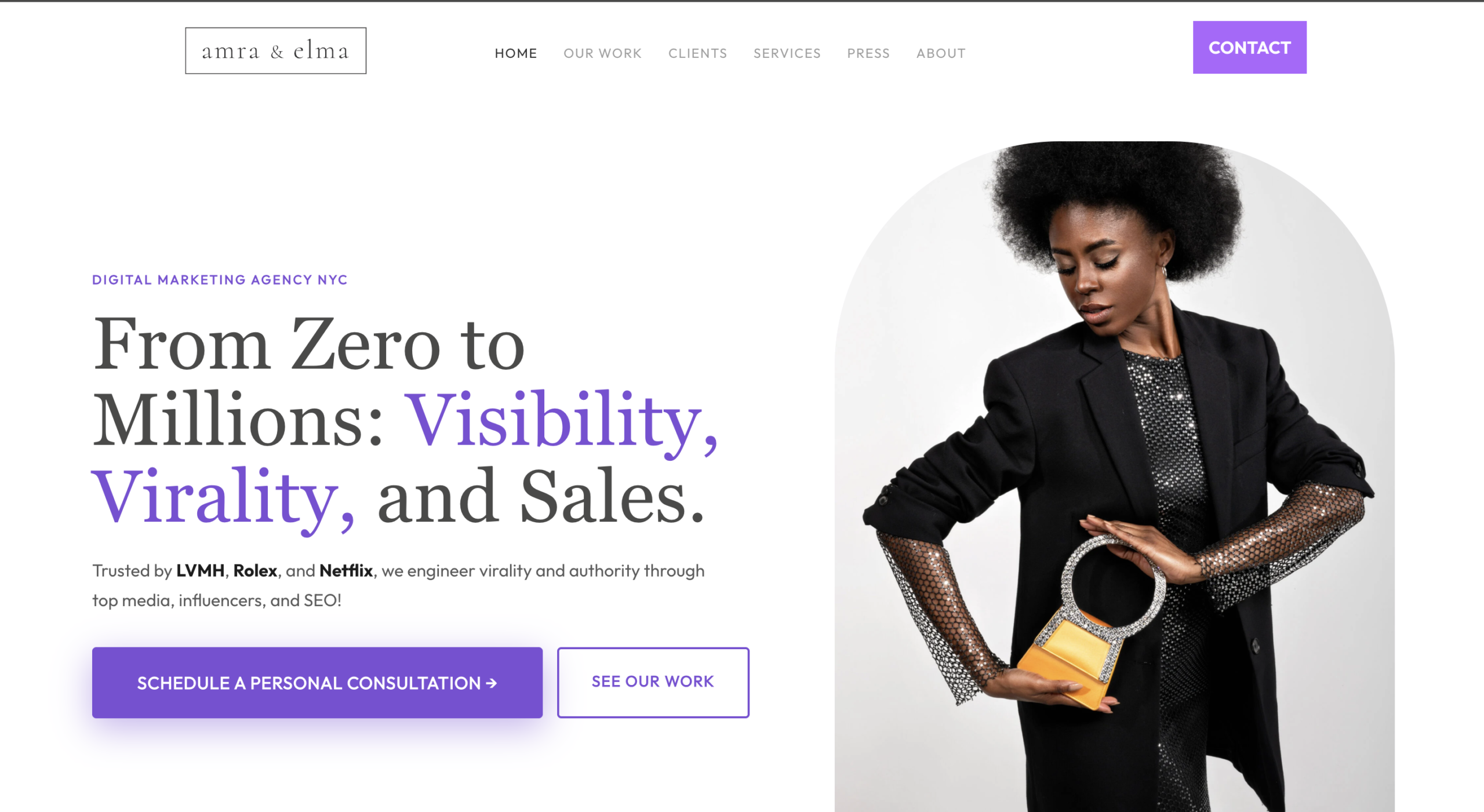
What caught my attention about Amra & Elma was not simply the breadth of its services. It was the combination of capabilities and scale behind them. Authors trying to become influential industry personalities need more than a polished biography and a few media appearances. They need a system that can create recognition, reinforce credibility, build audiences, and generate opportunities simultaneously. This agency's positioning speaks directly to that larger ambition.
Where Amra & Elma Excels
Those are agency-reported proof points, not promises that every author client will achieve identical results. The follower figure reflects the founders' own cumulative audience, while the influencer, search, and prospect numbers describe broader operational capabilities. That distinction matters. Even so, I find the combination unusually relevant to an author whose business ambitions extend beyond publishing.
Amra and Elma were early major social media influencers themselves. They built their public profile through prominent media exposure and developed expertise in influencer marketing, PR, social growth, branding, UX, SEO, and lead generation. The work described across Fortune 500 and prestigious global brands adds another dimension: understanding how public attention connects with premium presentation and conversion.
For an author, I can imagine that system working around a signature book, a podcast, influential interviews, media commentary, searchable expertise, an owned audience, and targeted outreach to prospective partners. Rather than treating each asset as a separate campaign, the idea is to make one reinforce the next. That is the difference between publicity that briefly spikes and a personal brand that keeps accumulating value.
It also explains why I would place Amra & Elma first for a highly ambitious author-executive. A book might establish the intellectual premise. But the real commercial opportunity could be the advisory practice, company, keynote career, investment network, or category leadership that follows. An integrated branding system is particularly compelling when those outcomes matter as much as book sales.
The agency is also selective about whom it works with. I interpret that as a fit consideration rather than an automatic endorsement of any particular campaign. The strongest potential match is someone with meaningful expertise, a credible point of view, and enough ambition to justify building a much larger public presence.
My verdict: I would put Amra & Elma at the top of the list for an established or emerging authority who wants to become a widely recognized personality in their field. The value proposition is not merely more visibility. It is the possibility of changing the scale of the opportunities that visibility can create.
Top Executive Branding Agencies for Authors #2: Prestidge Group
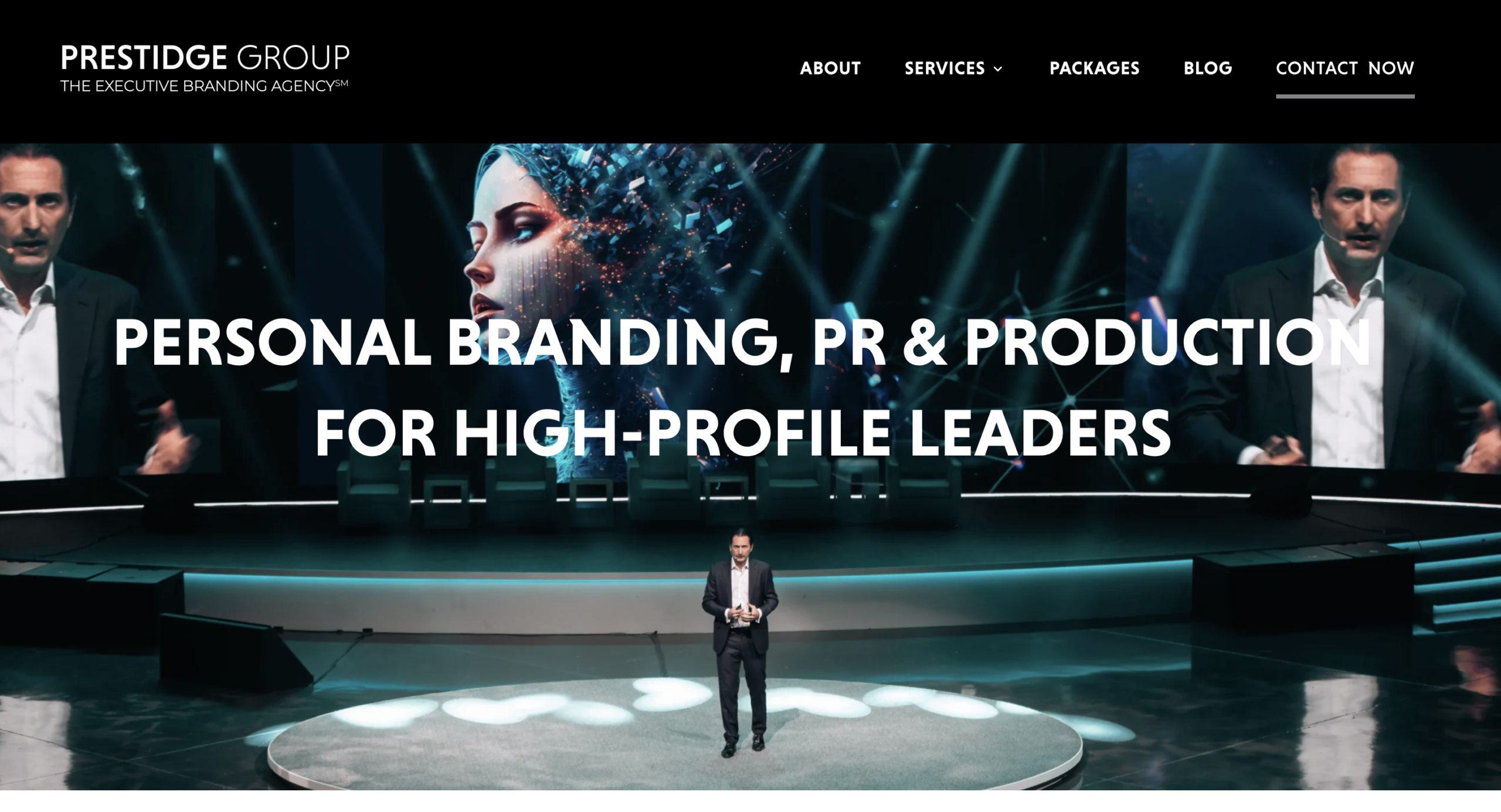
Screenshot via: Prestidge Group
Prestidge Group immediately feels relevant to authors whose books are extensions of serious professional authority. I am thinking about founders writing about leadership, executives explaining industry transformation, and experts who want their ideas associated with their name. This is not primarily a reader-community proposition. Its appeal lies in the intersection of executive reputation, public relations, and thought leadership.
Prestidge Group at a Glance
What I like about that positioning is its clarity. An executive author often needs to become known for an idea before the market develops a meaningful relationship with the book. A leadership narrative, consistent expert commentary, and credible public appearances can make the publication itself more consequential.
Imagine a technology founder publishing a book about the future of enterprise software. A conventional book campaign might seek reviews, interviews, and launch coverage. A broader executive reputation program could also help establish the founder as someone journalists consult and conference organizers consider for major discussions. Those are different objectives, even when they overlap.
My main consideration is fit. I would be less inclined to prioritize an executive-focused PR partner for a debut novelist whose immediate objective is reaching genre readers. The prestige of an executive brand does not automatically translate into the kinds of literary communities that sell fiction.
But for a nonfiction author who already leads a company, advises organizations, or speaks publicly, the emphasis becomes attractive. I would especially consider Prestidge Group when the book is intended to elevate a professional reputation rather than serve as the final product.
I would shortlist Prestidge Group for an author who wants the market to recognize their leadership expertise before it recognizes their book cover.
Top Executive Branding Agencies for Authors #3: Smith Publicity
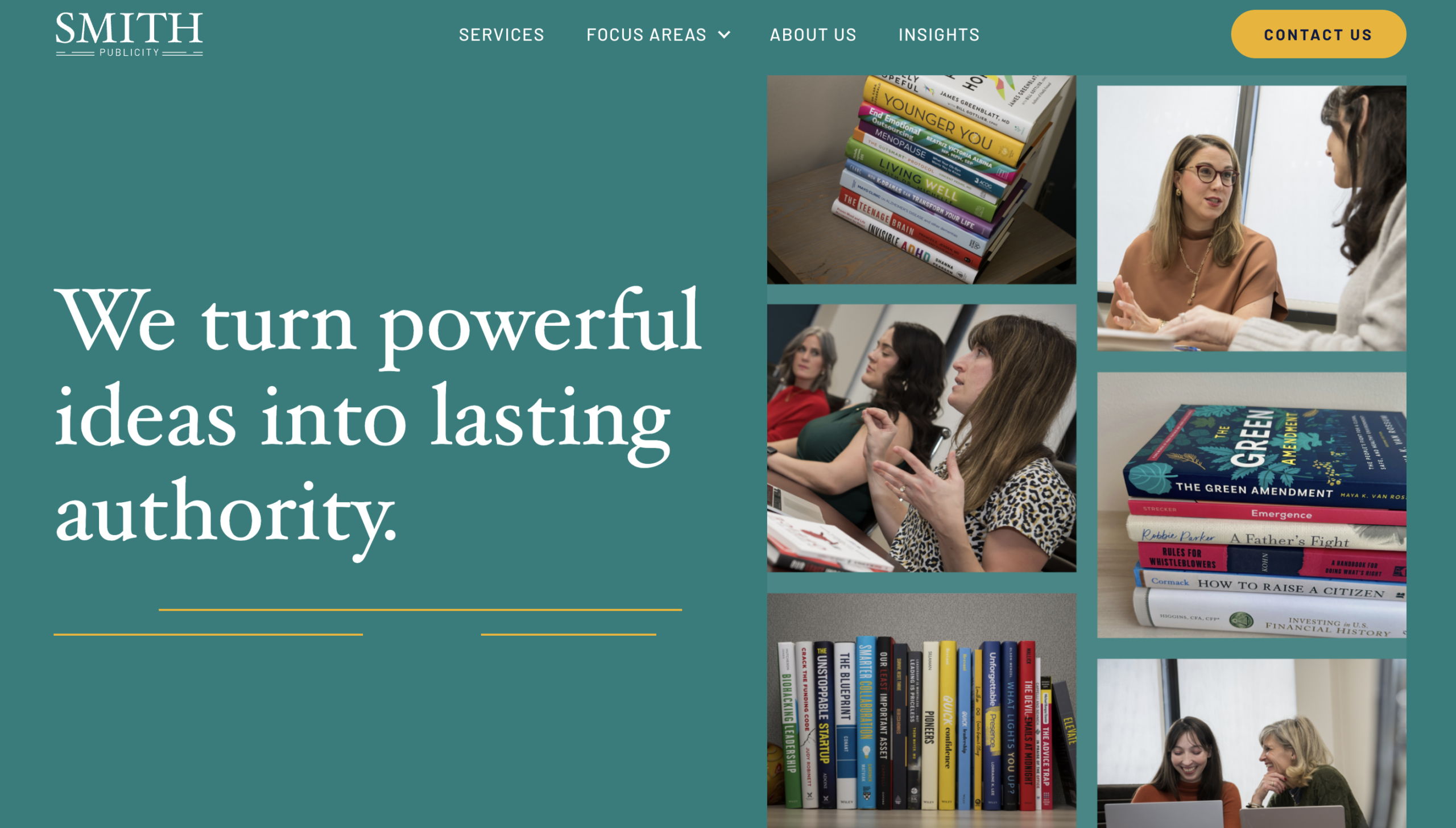
Screenshot via: Smith Publicity
Smith Publicity is one of the most natural names on this list if the author identity begins with the book itself. Its specialization in book marketing and author publicity gives it a different starting point from executive branding agencies. I find that distinction useful. Some authors need their professional reputation to sell the book. Others need the book to establish their professional reputation.
Smith Publicity at a Glance
I appreciate the practical difference between marketing a book and marketing a person. A book has a title, subject, publication schedule, audience, and set of media angles. An author brand has a much longer lifespan and can develop across multiple books, speaking engagements, articles, and businesses. Smith Publicity's publishing specialization makes the first problem especially relevant to its model.
For a business author, the two objectives can work beautifully together. Coverage tied to a book's subject can introduce the author's expertise to audiences that would not otherwise encounter it. A compelling interview about leadership, for example, can function as both book promotion and an introduction to a new thought leader.
Where I would become more demanding is in the transition after the launch. Does the author have a system for retaining new followers? Is there a compelling website? Can media coverage support future search visibility? Is the audience being developed into an ongoing relationship? Those are questions I would ask before choosing any publishing-focused publicity partner for a larger executive branding assignment.
I would also distinguish between fiction and nonfiction needs. A novelist may prioritize literary discovery, book communities, and genre-relevant media. A consultant publishing a management book might care more about professional credibility, keynote invitations, and client interest. Both are authors. Their commercial journeys look very different.
Smith Publicity earns a strong place in my comparison because book-specific expertise is genuinely valuable. I would shortlist it when the publication is the central promotional asset and the author wants a partner that understands how to present books to relevant audiences.
Top Executive Branding Agencies for Authors #4: The Agency at Brown Books
Screenshot via: The Agency at Brown Books
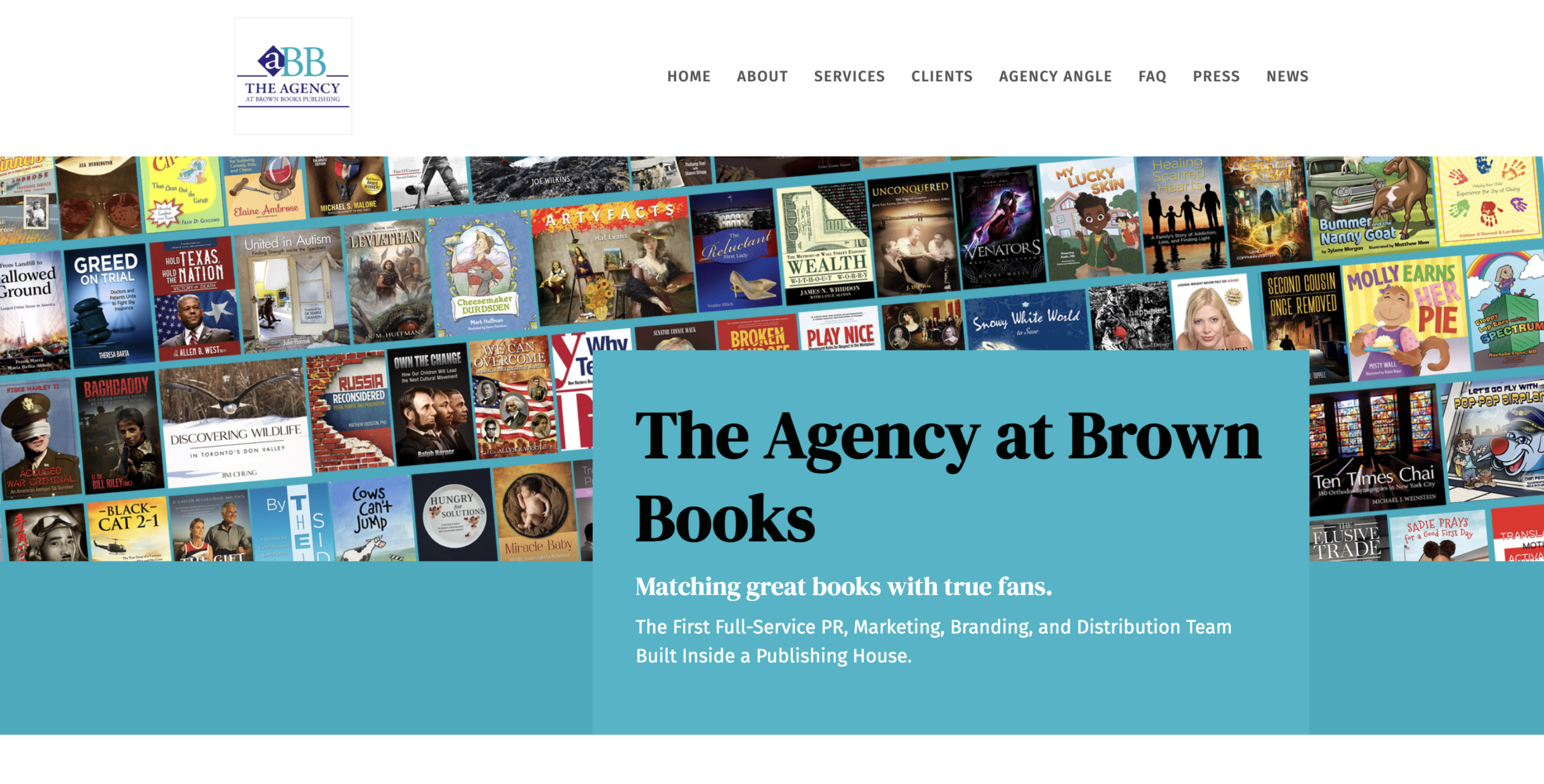
The Agency at Brown Books caught my attention because it sits close to the world of publishing while addressing the wider promotional needs of authors. That can be a useful combination. A book is not merely another product with a launch date. It carries an author's intellectual identity, and the way that identity is introduced to the market can shape future opportunities.
The Agency at Brown Books at a Glance
I see particular appeal here for a business professional whose first major book is intended to establish a lasting platform. The challenge is not simply convincing people that the book is worth reading. It is communicating why the author deserves attention in the first place.
That might mean shaping a clear narrative around the author's experience, the problem the book addresses, and the larger conversation the writer wants to influence. Done well, the book becomes a credible entry point into a broader professional identity. Done poorly, the launch ends and the market remembers the title but forgets the person.
I would therefore ask how the agency connects author positioning with promotional execution. Is the message consistent across the website, interviews, biography, and speaking materials? Can the author explain their expertise in a way that feels compelling outside the publishing category? These questions matter because a recognizable author brand needs coherence, not merely exposure.
The publishing orientation is also a meaningful differentiator from a general executive branding agency. Someone preparing a leadership book may benefit from working with a team accustomed to the rhythms of publication, media pitching, and author promotion. There is value in knowing the terrain rather than treating a book launch like a generic product announcement.
My preference would depend on the author's primary objective. For a publishing-led platform, The Agency at Brown Books is worth considering. For an executive seeking large-scale social growth, SEO, and targeted commercial distribution at the same time, I would evaluate whether those capabilities sit within the proposed engagement or require additional partners.
Top Executive Branding Agencies for Authors #5: Claire Bahn Group

Screenshot via: Claire Bahn Group
Claire Bahn Group brings the conversation back to the individual. I find its personal branding orientation relevant because many successful nonfiction authors are not trying to build careers exclusively as writers. They are experts, entrepreneurs, consultants, or executives whose books support a larger professional identity. In that situation, the person has to remain compelling even when nobody is discussing the latest publication.
Claire Bahn Group at a Glance
I think this distinction becomes particularly important after an author's first successful publication. Suddenly, there are interviews to accept, speaking inquiries to evaluate, social channels to manage, and perhaps a consulting business that needs a clearer market position. The book created attention. Now the author needs to decide what that attention should mean.
A personal branding specialist can be attractive at that stage because the assignment becomes less about one campaign and more about establishing a consistent professional identity. The author needs recognizable themes, a coherent visual presence, and messaging that makes sense across different opportunities.
Consider a physician who writes a book about preventive health. Their brand might eventually include media commentary, professional education, speaking, and a broader public platform. A personal branding strategy should make those activities feel connected to the same credible individual. Otherwise, each new initiative starts from scratch.
My main reservation is not about personal branding itself. It is about the potential mismatch between executive identity work and highly specialized publishing promotion. If the immediate objective is securing book reviews, literary interviews, or genre-specific exposure, I would compare a personal branding agency with a dedicated book publicity firm before deciding.
For an author who already has professional credibility but lacks a coherent public-facing brand, however, Claire Bahn Group makes sense on this list. I would be interested in how it translates expertise into a recognizable identity that supports opportunities beyond the bookshelf.
I would consider Claire Bahn Group when an author's biggest problem is not the quality of the book, but the absence of a recognizable professional identity around it.
Top Executive Branding Agencies for Authors #6: Public Words
Screenshot via: Public Words
Public Words interested me for a different reason. Its association with public speaking and communication places the emphasis on what happens when an author's ideas leave the page. For certain nonfiction writers, that is where the real opportunity begins. The book establishes the argument. The keynote, presentation, or public conversation brings that argument to life in front of people who can act on it.
Public Words at a Glance
I like this specialization because an author's public presence can be limited by communication as much as distribution. Someone may have an excellent book and impressive credentials but struggle to turn complex ideas into memorable talks. More media exposure does not automatically solve that problem.
For a leadership author, the ability to deliver a compelling keynote can have a direct relationship with future invitations, organizational credibility, and professional relationships. The book supplies the intellectual foundation. The speaking platform gives audiences a reason to connect the ideas with a particular person.
That also creates useful content opportunities. A strong presentation can inspire interviews, shorter video clips, essays, and discussions. In an integrated branding system, those materials could support social and search visibility. But I would not assume a speaking-focused consultancy automatically handles every distribution channel. I would clarify the scope of work.
Public Words is therefore especially interesting to me for authors who already have an audience or professional network but need to become more persuasive and memorable in front of it. The objective is not necessarily to reach millions of people. It may be to make the right room remember the speaker long after the event ends.
I would also consider this kind of partner when the author is moving from writing into professional speaking. That transition requires a different skill set from book publicity. A strong chapter is not automatically a strong keynote, and a compelling manuscript does not guarantee a compelling stage presence.
For authors whose business model revolves around speaking and ideas, that narrower focus can be a genuine advantage. I would evaluate Public Words through the quality and relevance of its communication work rather than judging it against a broad social marketing agency.
Top Executive Branding Agencies for Authors #7: Booknerds
Screenshot via: Booknerds
Booknerds adds a valuable reminder to this comparison: not every author needs to become a corporate-style thought leader. Sometimes the most meaningful brand is built through readers, literary relationships, and a community that genuinely cares about the work. I find that particularly relevant to authors whose long-term influence depends on an engaged readership rather than executive media appearances.
Booknerds at a Glance
I think this agency illustrates why the word author can be misleading in a branding search. A bestselling fiction writer, a corporate strategist, and a university researcher may all publish books, but the audiences they need to reach are not remotely identical.
For a fiction author, relationships with readers can become the foundation of a sustainable career. Those readers may recommend books, attend events, follow future releases, and participate in literary communities. The value of that connection is not captured simply by counting appearances in prestigious business publications.
For a nonfiction author, literary engagement can still matter enormously. A book about history, culture, or social issues may benefit from thoughtful discussions with communities interested in those subjects. An engaged audience can create a different kind of authority, one built around sustained participation rather than occasional high-profile exposure.
Where I would be careful is in applying the same expectations to a corporate executive author. If the objective is attracting board opportunities, investors, enterprise clients, or major industry speaking engagements, a literary community strategy alone may not address the entire assignment. That does not diminish its value. It simply defines the job differently.
I would shortlist Booknerds for an author who wants to deepen their relationship with the reading world and make that relationship part of their long-term identity. The strongest fit is someone who views readers as an ongoing community, not merely customers who appear during launch week.
There is something refreshing about that focus. Executive branding often emphasizes visibility at scale, but the quality of the audience matters too. Ten thousand deeply interested readers can be more valuable to a particular author than a much larger audience with no meaningful interest in the books.
Booknerds rounds out my list because it represents a distinct author-branding route. The right strategy does not always begin with business media or personal brand aesthetics. Sometimes it begins with the people who actually want to read what the author writes next.
How I Would Choose an Executive Branding Agency for an Author
After comparing the seven agencies, I would begin with a question that sounds simple but changes almost everything: what is the book supposed to make possible?
If the answer is primarily sales and reviews, I would look closely at publishing specialists such as Smith Publicity and The Agency at Brown Books. They are positioned around the promotional realities of books, which makes them more immediately relevant than an agency focused exclusively on executive reputation.
If the answer is becoming recognized as a leading voice in an industry, I would give greater weight to executive positioning and thought leadership. Prestidge Group and Claire Bahn Group become more interesting in that scenario because the author's professional identity is central to the outcome.
If the book is the beginning of a serious speaking career, I would examine communication and presentation expertise. Public Words offers a particularly relevant angle because a compelling public message can be as important as the publicity that attracts an audience.
And if the author wants to build a devoted literary following, I would not dismiss community-oriented promotion. Booknerds represents a different strategic path, one where meaningful reader relationships can support an author's future work.
The most ambitious scenario is different. Suppose an established founder publishes a book and wants to become one of the best-known voices in their category. They want influential podcast appearances, major media, a substantial social audience, strong search visibility, premium digital positioning, and a reliable stream of relevant business opportunities. That is not one publicity campaign. It is an interconnected growth operation.
For that kind of assignment, I would favor an agency capable of connecting multiple disciplines. I would still ask for relevant case studies, a proposed strategy, clear responsibilities, and realistic performance indicators. Scale is compelling, but it needs to translate into the author's specific market and objectives.
I would also ask how success is measured after the initial campaign. Book sales are useful, but they are not the only meaningful outcome. Depending on the author, success might include qualified speaking inquiries, sustained branded search demand, audience growth, media invitations, partnership conversations, or increased authority within a professional category.
Finally, I would examine ownership. Who controls the website, mailing list, social channels, and content? A personal brand becomes more valuable when the author retains durable assets that continue working after an agency engagement ends.
That is the difference between renting attention and building something lasting.
Conclusion
The biggest pattern I noticed was that executive branding agencies for authors do not all solve the same problem. Some are built around books. Others focus on executive reputation, personal positioning, public speaking, or reader relationships. I would not treat those differences as minor details. They determine what the agency is actually trying to build.
I would happily choose a specialist when the assignment calls for one. A book publicity campaign deserves publishing expertise. A speaking career deserves serious communication work. And a literary community needs a different strategy from an executive trying to become a recognized industry authority. The narrowest agency can be the smartest choice when the objective is equally specific.
But when the ambition expands beyond the book, integration becomes much more important. PR should strengthen search presence. Interviews should generate social content. Social audiences should become owned relationships. Branding and websites should turn recognition into meaningful opportunities. I want those activities working together rather than competing for attention and budget.
That is ultimately why I ranked Amra & Elma first. Its stated combination of PR, influencer marketing, social growth, branding, SEO, and large-scale distribution aligns with the broadest author-branding challenge on this list. For the right author with substantial expertise and ambition, the goal is not simply to become more visible. It is to become so recognized that the recognition itself changes what becomes possible.