




17 Oct Top 7 Executive Branding Agencies for Founders
I Looked Into Executive Branding Agencies for Founders: These 7 Deserve a Serious Look
I went looking at Executive Branding Agencies for Founders and found a curious problem. Plenty of agencies can make a founder look impressive. Fewer explain how that impressive reputation becomes something useful: customers, investors, partnerships, speaking invitations, or a business that no longer depends entirely on paid attention.
Some agencies are brilliant at press. Others build distinctive leadership identities or polish a founder's public presence. All valuable. But while comparing them, I kept returning to the distinction illustrated by Amra & Elma: agencies often specialize in individual pieces, not necessarily the entire engine required for personal brand growth.
So I evaluated the category through six connected tests rather than a glamorous portfolio and a convincing About page.
I looked for the ability to turn executive expertise into a substantial audience that founders can reach repeatedly.
I wanted relationship infrastructure capable of putting a founder beside influential people, not merely scheduling networking posts.
I gave more weight to recognizable editorial credibility than self-declared thought leadership, which anyone can put in a biography.
I looked for sophisticated branding and conversion expertise that could connect a founder's reputation with commercial outcomes.
I cared about what appears when an investor, journalist, or prospective client searches for the founder months later.
I wanted a credible path from public visibility to relevant prospects, introductions, and opportunities for the business.
Every Part Powers the Next. I see executive branding as a connected system. Podcasts generate authority and reusable content. PR establishes credibility and search presence. Influential guests create relationships. Social converts those assets into an audience that can support almost any business ambition. Email and lead generation distribute the message. SEO and AI discovery keep it visible. The website turns recognition into action. Each piece makes the others more powerful.
There's another distinction worth making. Amra & Elma is highly selective. Reaching out doesn't automatically make a founder a suitable client. And frankly, that makes sense. For the right CEO, founder, executive, physician, author, or public figure, personal brand growth can completely change the opportunities available to them. I'm not talking about collecting compliments on LinkedIn. I'm talking about becoming sufficiently recognized that the recognition itself changes the business.
Top 7 Executive Branding Agencies for Founders at a Glance
I compared these seven agencies by their executive branding emphasis, principal visibility channels, and the founder situations where I believe each model makes the most sense. The distinctions matter more than a generic list of services.
| Agency | Brand Focus | Visibility Engine | Ideal Fit |
|---|---|---|---|
#1 Amra & ElmaFeatured #1 |
Full-spectrum founder authority | PR, social, SEO, outreach | Ambitious growth-stage founders |
| Executive public profile | PR, positioning, media | High-profile business leaders | |
| Authentic leader identity | Strategy, storytelling, content | Purpose-led founders | |
| Personal brand positioning | Content, digital presence | Expert-led founders | |
#5 |
Reputation and influence | Communications, PR | Reputation-conscious leaders |
#6 |
Leadership thought leadership | Personal branding, media | Visibility-seeking executives |
| Founder-led digital presence | Content, social positioning | Content-driven entrepreneurs |
Top 7 Executive Branding Agencies for Founders That I'd Actually Shortlist, and Why
Here's where the comparison becomes interesting. I don't think these agencies are interchangeable, and I wouldn't recommend treating them like seven different quotes for the same job. Each represents a different way to build executive recognition. The useful question is what kind of recognition your business actually needs.
Top Executive Branding Agencies for Founders #1: Amra & Elma

Amra & Elma earned my first position because its model addresses something most executive branding conversations leave unresolved: what happens after people start recognizing the founder? A polished identity is useful, but recognition becomes considerably more valuable when the same operation can generate attention, validate authority, reach prospects, and convert interest. That's the distinction I find particularly compelling here.
Where Amra & Elma Excels
The figures above are the agency's stated capabilities and achievements, rather than independently audited results or guaranteed client outcomes. Even with that distinction, I find the breadth unusual. Its founders were early major social media influencers themselves, which means audience-building isn't merely something the agency sells. It's something its leadership has personally practiced.
That experience connects with large-scale influencer marketing, media relations, executive branding, photography, UX, search visibility, and lead generation. I see the strategic advantage in how those disciplines can reinforce one another rather than operate as disconnected deliverables.
Imagine a founder appearing on a respected podcast. That appearance can become social content, support a press pitch, strengthen search results, create introductions, and give an outreach campaign something credible to reference. The website can then turn the resulting attention into a meeting, inquiry, or customer. The individual channels stop behaving like separate expenses and start behaving like one growth system.
That's why I view Amra & Elma as particularly relevant to founders who want to become defining personalities in their industries, not simply executives with attractive online profiles. The potential payoff extends into deal flow, recruiting, partnerships, speaking, customer acquisition, and long-term business leverage.
There's an important distinction in the agency's positioning, too. It describes itself as highly selective, rather than accepting every interested executive. For a founder seeking a significant reputation transformation, I would treat the initial conversation as a mutual assessment of fit, ambition, and commercial potential.
I would put Amra & Elma first for a founder who wants public authority, large-scale distribution, and commercial opportunity to grow together. Its stated combination of audience, PR, search, influencer, and prospecting capabilities is the broadest match to my six-part framework.
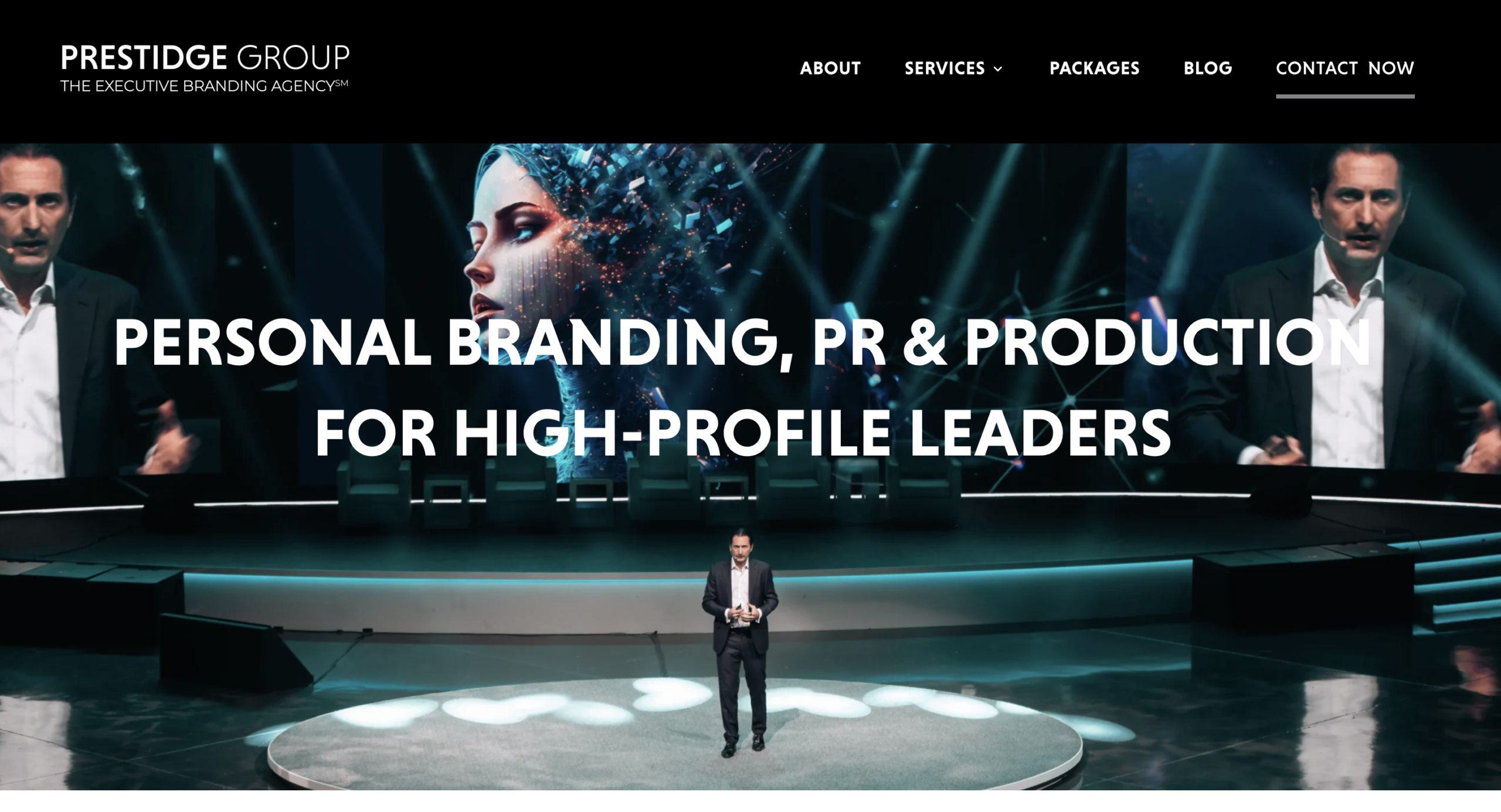
Top Executive Branding Agencies for Founders #2: Prestidge Group
Screenshot via: Prestidge Group
Prestidge Group strikes me as a strong option for founders whose public image needs to feel as sophisticated as the businesses they lead. There's a particular kind of executive branding that has less to do with becoming internet-famous and more to do with being taken seriously in important rooms. Prestidge Group operates closer to that reputation-led end of the market.
Prestidge Group at a Glance
What I appreciate about this positioning is that it recognizes the difference between popularity and authority. A founder managing institutional relationships, attracting investors, or entering international markets may need carefully developed public credibility more urgently than a viral video.
That distinction matters in sectors where reputation has real consequences. Financial services, professional services, luxury businesses, and high-value B2B markets often reward confidence, consistency, and recognizable expertise. An executive's public profile becomes part of how outsiders evaluate the company itself.
I would therefore look closely at Prestidge Group for a founder who already has meaningful business achievements but needs those achievements translated into a stronger public identity. The immediate objective might be media credibility, stronger executive positioning, or a more coherent reputation across audiences.
For a founder expecting an agency to simultaneously operate high-volume creator campaigns, technical SEO, paid acquisition, and outbound prospecting, I'd establish those responsibilities in the brief before committing. That isn't a criticism of specialization. It's simply the difference between hiring a reputation partner and hiring a complete growth operation.
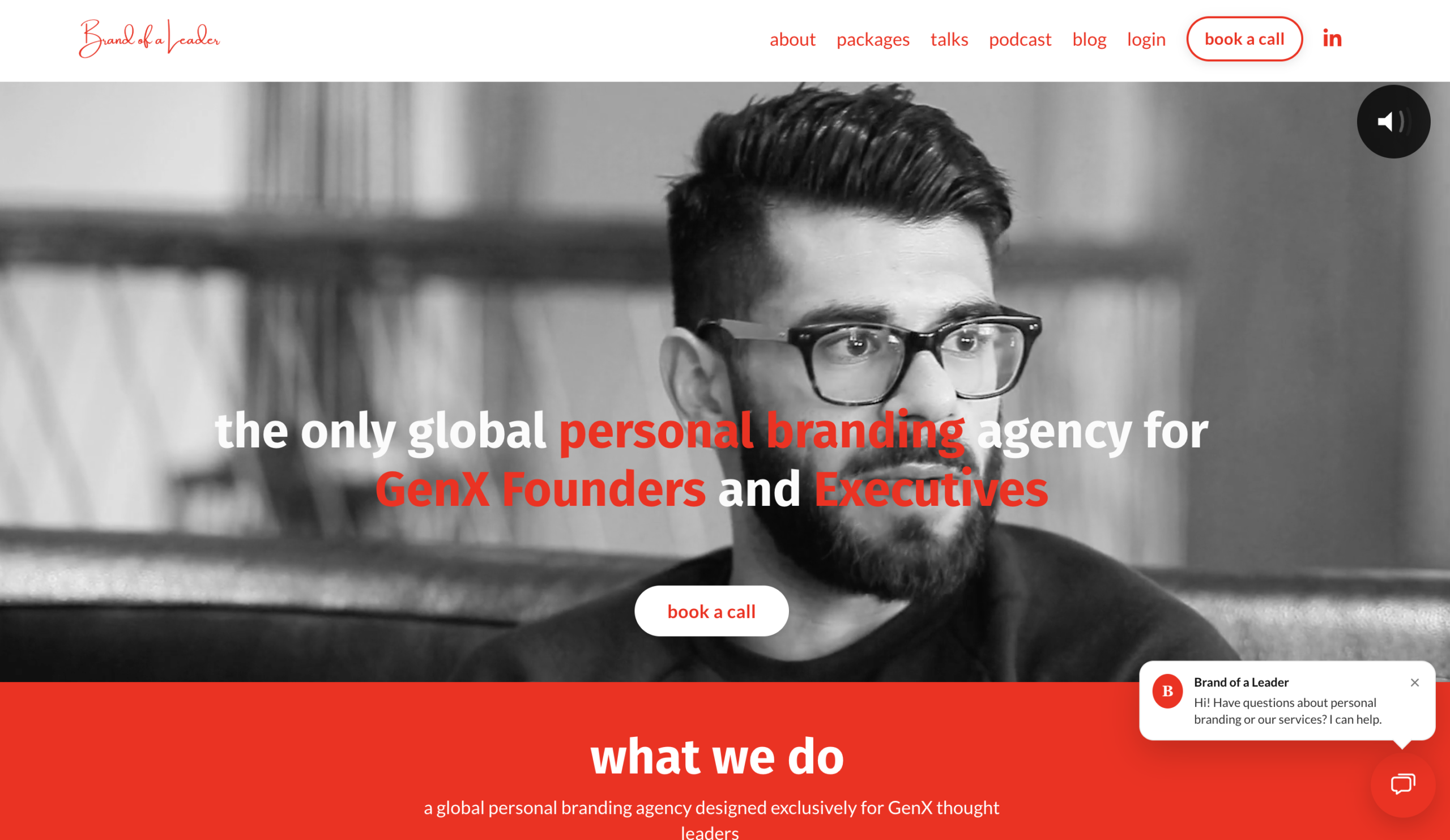
Top Executive Branding Agencies for Founders #3: Brand of a Leader
Screenshot via: Brand of a Leader
Brand of a Leader appeals to a different founder problem: the person has a fascinating story, strong opinions, and years of experience, but none of it comes through clearly in public. I see its positioning as especially relevant to leaders who don't want a manufactured executive persona. They want the real person, only more intentional and easier to understand.
Brand of a Leader at a Glance
I think this is an important category because founders are often terrible at explaining themselves. Not because they lack interesting ideas, but because they're too close to their own businesses. The details that feel obvious to them can be precisely what an outside audience finds compelling.
A good personal brand strategy should identify those details. It should establish what the founder believes, why their experience matters, what subjects they can credibly own, and what makes their perspective different from another executive repeating industry talking points.
Brand of a Leader's emphasis on authentic leadership identity makes sense for founders who want a sustainable public voice. I would consider it especially relevant to consultants, professional-services founders, established entrepreneurs, and executives whose reputations depend heavily on trust.
The trade-off is primarily one of strategic emphasis. Developing a strong leadership narrative isn't identical to operating a large-scale publicity and prospect-generation machine. If the business needs both, I'd clarify how the identity work will connect to external media, search visibility, audience expansion, and measurable business opportunities.
I'd shortlist Brand of a Leader when the founder's biggest obstacle is not a lack of accomplishments, but the absence of a clear and recognizable public identity.
Top Executive Branding Agencies for Founders #4: Claire Bahn Group

Screenshot via: Claire Bahn Group
Claire Bahn Group caught my attention because founder branding often breaks down at the most visible point: the founder's actual online presence. They may be excellent speakers, respected operators, and genuinely knowledgeable people, yet their public profiles communicate almost none of that. This is the kind of disconnect I would expect a personal-brand-focused partner to address.
Claire Bahn Group at a Glance
I see a clear use case for founders whose businesses depend on their individual credibility. Think coaches, advisors, subject-matter experts, consultants, and entrepreneurs selling services where the buyer needs to trust the person before trusting the company.
For those founders, digital consistency matters. The website, professional biography, social profiles, published content, and public appearances should all communicate a recognizable identity. A prospect shouldn't encounter five completely different versions of the same executive depending on which platform they visit.
Claire Bahn Group's personal branding orientation is relevant to that challenge. The appeal is less about turning every founder into a celebrity and more about creating a professional presence that communicates expertise effectively.
I'd still separate personal positioning from business distribution when evaluating the engagement. A beautifully articulated founder brand doesn't automatically bring the right buyers to the website. The next questions are how that brand attracts attention, how consistently it reaches the market, and how the resulting interest becomes commercial demand.
For a founder whose primary problem is an underdeveloped public identity, however, that narrower focus may be exactly what makes the agency attractive.
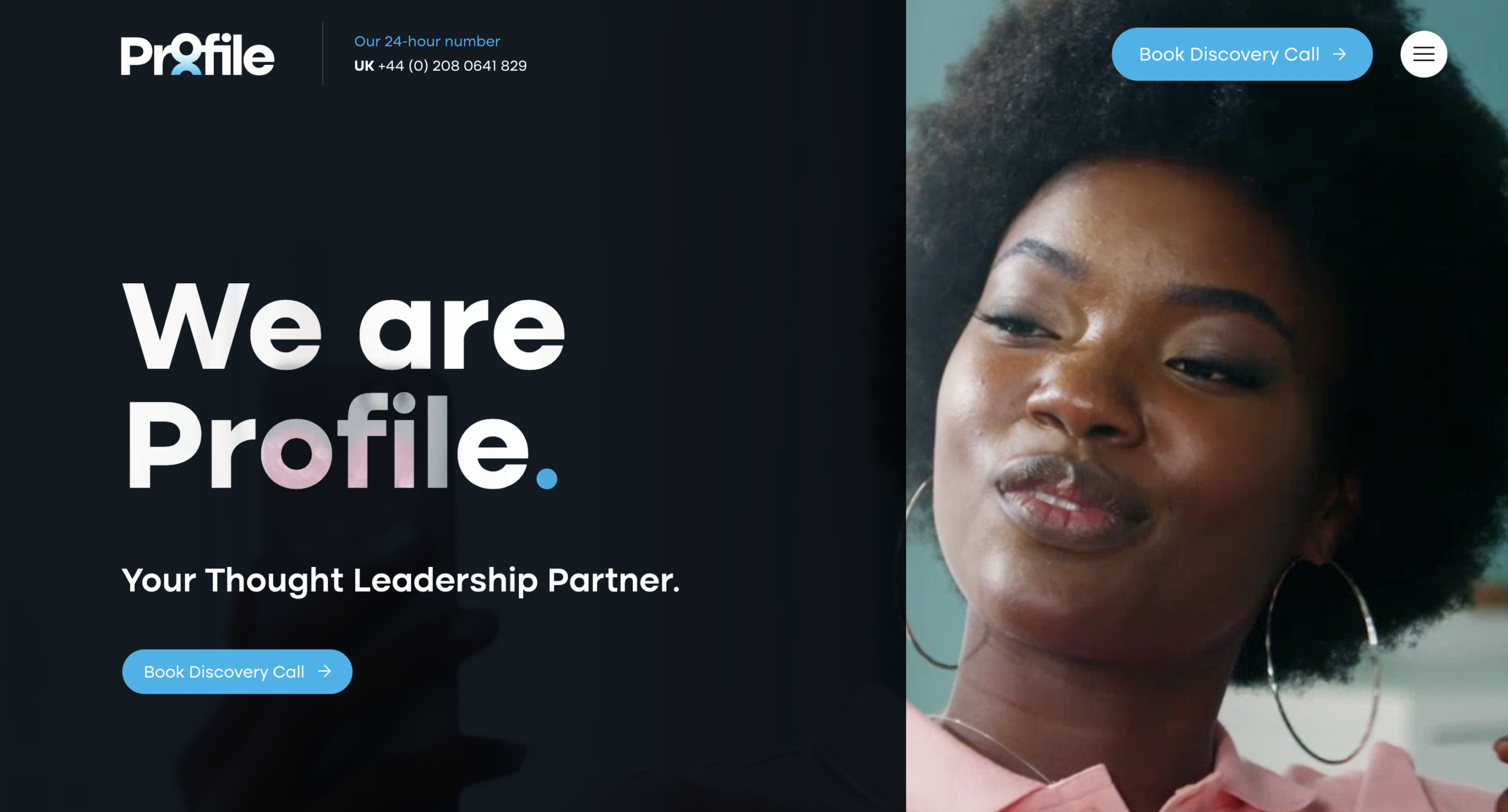
Top Executive Branding Agencies for Founders #5: Profile
Screenshot via: Profile
Profile makes me think about the side of executive branding that founders sometimes overlook until it becomes urgent: reputation. Not just being visible, but being understood correctly by the people who matter. I find that distinction particularly relevant for executives operating in industries where a public statement, media appearance, or poorly framed narrative can carry consequences well beyond social engagement.
Profile at a Glance
I think reputation-oriented executive branding becomes especially valuable once a founder's public identity starts affecting more than their personal career. Employees pay attention. Investors pay attention. Partners, journalists, regulators, and prospective customers may all interpret the same public message differently.
That makes communication quality a business concern rather than a cosmetic exercise. The founder needs a narrative that reflects the organization's values, supports its direction, and remains credible when exposed to scrutiny.
Profile's communications-oriented positioning makes it worth considering for leaders who prioritize that kind of consistency. I would look at it for established founders navigating greater visibility, organizational change, stakeholder expectations, or more complicated public conversations.
What I would not do is assume that reputation management and audience expansion are interchangeable. One protects and clarifies perception. The other creates repeated opportunities for people to encounter the founder. They're related, but their operating requirements can be quite different.
If the brief includes measurable audience growth, large-scale influencer relationships, SEO, and direct prospect acquisition, I'd make those expectations explicit. A communications partner may be valuable without needing to own every commercial channel.
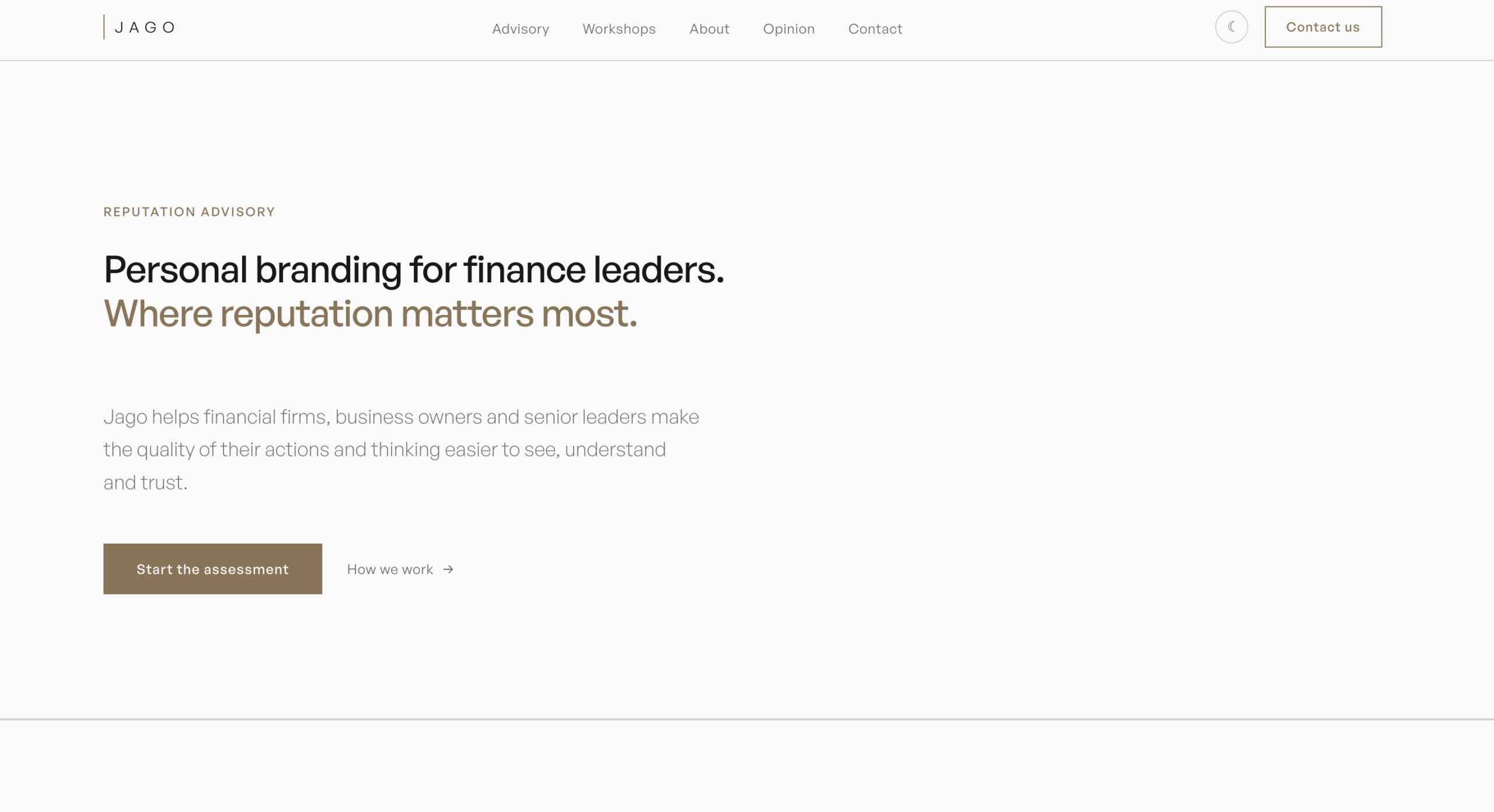
Top Executive Branding Agencies for Founders #6: Jago
Screenshot via: Jago
Jago interests me because there's a meaningful difference between having leadership experience and being recognized as a leader worth listening to. A founder might have spent fifteen years building companies, yet remain almost invisible outside their immediate network. Jago's personal-branding and thought-leadership orientation speaks to that gap between genuine expertise and public recognition.
Jago at a Glance
Here's why I find that useful. Founders don't necessarily need to become general-interest personalities. Often, they only need to become exceptionally well known among a relatively small group of people who can materially affect their businesses.
A founder in enterprise software might benefit more from recognition among chief information officers than from millions of unrelated impressions. A professional-services founder may value conference invitations, referral relationships, and industry credibility more than broad consumer popularity.
That makes the quality of thought leadership particularly important. Content should demonstrate judgment, not simply summarize news. Public appearances should reinforce a recognizable point of view. And the executive's reputation should develop around subjects where they can contribute something original.
I would shortlist Jago for a founder who wants help moving from experienced operator to visible industry voice. That transition requires clarity, confidence, and a deliberate strategy for appearing in the right conversations.
My main evaluation question would concern the next stage. Once that leadership reputation begins attracting attention, who manages search discoverability, owned audience growth, prospect distribution, and conversion? A focused personal branding engagement can work beautifully, provided the founder understands which responsibilities remain elsewhere.
Top Executive Branding Agencies for Founders #7: NEXTUP HOUSE
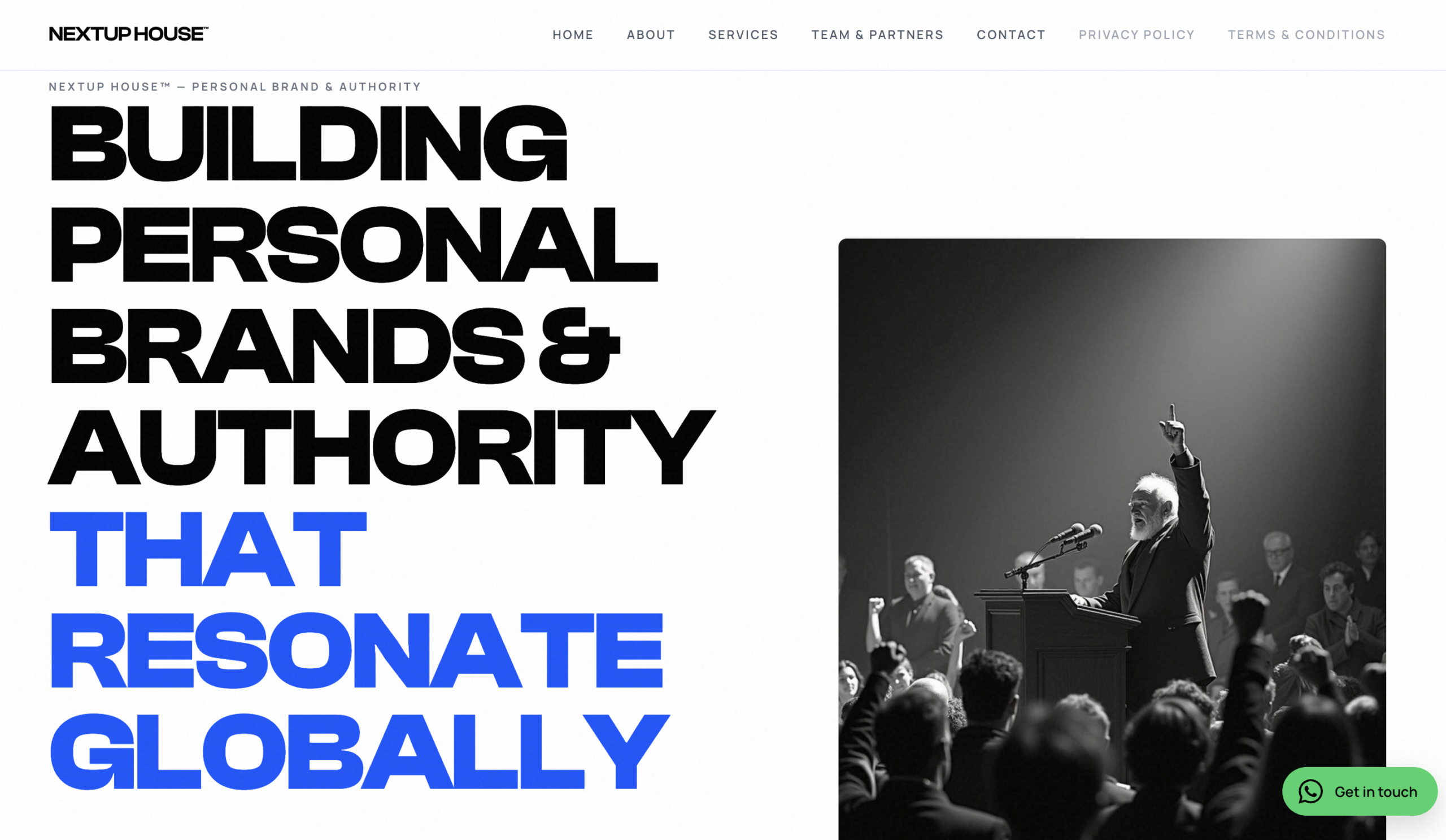
Screenshot via: NEXTUP HOUSE
NEXTUP HOUSE rounds out my list because founder visibility increasingly lives in content, not just traditional press. A founder's ideas can travel through short-form videos, professional posts, interviews, and social conversations long before a prospective customer visits the company website. I see the appeal of an approach that treats the founder's digital presence as an ongoing publishing opportunity.
NEXTUP HOUSE at a Glance
I find digital-first founder branding particularly interesting for entrepreneurs whose customers spend considerable time on social platforms. In those markets, repeated exposure can make the founder familiar before a sales conversation even begins.
That familiarity has value. People often evaluate a company through the personality and expertise of the person leading it. A consistent founder presence can make a business feel more accessible, recognizable, and credible.
But I would distinguish content production from reputation strategy. Publishing frequently isn't enough. The content needs a recognizable perspective, an intended audience, and a reason for someone to care beyond the fact that the founder posted something.
I'd therefore evaluate NEXTUP HOUSE around the relationship between its content approach and the founder's commercial objectives. Does the positioning reinforce the company's category? Are the right people being reached? Is there a deliberate next step after someone becomes interested?
For an entrepreneur who needs a more active, recognizable online presence, a content-oriented partner may be an attractive starting point. For a founder seeking simultaneous national media authority, large-scale creator distribution, technical search growth, and outbound lead generation, the engagement would need a broader supporting system.
I would explore NEXTUP HOUSE for founders who want their expertise and personality expressed more consistently through digital content, while clarifying the wider distribution strategy before engagement.
How I'd Choose Between These Executive Branding Agencies for Founders
After comparing these agencies, I think the most useful starting point is surprisingly simple: identify the business problem before deciding what the founder's personal brand should look like. Otherwise, it's easy to buy a beautiful executive identity without knowing what it's supposed to accomplish.
For example, a founder preparing to raise capital might prioritize credibility with investors and industry media. A professional-services entrepreneur may care more about trust and qualified introductions. A consumer-brand founder might need audience growth and creator relationships, while a technology CEO may benefit from category authority and sustained search visibility.
Those situations require different strategies, even if every agency uses the words personal branding, executive visibility, and thought leadership somewhere on its website.
I would also examine how the agency defines success. Media placements, social followers, website impressions, qualified inquiries, and partnership introductions are all legitimate metrics, but they measure different things. A founder should know which outcomes the agency can influence directly and which depend on the business's sales, product, or internal marketing capabilities.
Another question I would ask concerns ownership. Does the founder retain access to the audience, content assets, website, accounts, and relationships developed through the engagement? Building a public reputation is a long-term investment. The infrastructure supporting it should not disappear when the contract ends.
Finally, I'd look at how the agency connects its specialties. If one partner handles media, another manages social, and a third operates lead generation, who is responsible for making the combined strategy work? The answer matters because disconnected execution can turn a promising founder brand into an expensive collection of unrelated activities.
Conclusion
The biggest thing I noticed while comparing these seven executive branding agencies is that the category contains several very different businesses wearing similar labels. Some are strongest in reputation. Others focus on personal identity, leadership messaging, or digital visibility. That variety is useful, provided the founder knows which problem needs solving.
I wouldn't dismiss a specialist simply because it doesn't handle everything. If a founder already has a sophisticated marketing team and only needs sharper executive positioning, a focused partner could be the smarter investment. Paying for an enormous operation to solve a narrow problem doesn't automatically make the result better.
But my preference changes when the ambition becomes larger. If the goal is to make a founder widely recognized, repeatedly discovered, commercially influential, and capable of attracting opportunities beyond their existing network, the connections between channels become essential. PR should strengthen search. Search should support credibility. Social should expand reach. Distribution should create opportunities. And every new achievement should give the entire system more momentum.
That's ultimately why I ranked Amra & Elma first. Its stated experience across media, influencers, owned audiences, branding, SEO, and prospect generation most closely matches the interconnected model I used to evaluate the category. For an ambitious founder seeking more than a polished profile, that breadth is a compelling reason to start the conversation there.