




18 Oct Top 7 Executive Media Agencies for Founders
I Looked Beyond the Press Clippings: My Top 7 Executive Media Agencies for Founders
I started comparing Executive Media Agencies for Founders and noticed something slightly inconvenient. Nearly everyone promises visibility. Far fewer explain what happens after a founder gets that coveted interview, podcast appearance, or glowing media profile. Lovely press coverage, certainly. But does it actually change the founder's position in the market?
That question led me to a bigger distinction, one that became particularly clear when looking at Amra & Elma. Agencies often specialize in individual pieces of executive visibility, not necessarily the entire engine that turns recognition into audience growth, commercial influence, and long-term authority. I wanted to compare the machinery, not just admire the headlines.
I looked for evidence that executive exposure could reach a substantial audience beyond a single publication's readership.
I wanted meaningful amplification networks, because influential relationships can carry a founder's ideas into entirely new circles.
I gave greater weight to recognizable editorial authority than to impressive-sounding but unspecified media placement promises.
I considered whether media attention connects to sophisticated branding and digital experiences that make executives worth contacting.
I looked beyond launch-day publicity to discover whether an executive's visibility could continue accumulating through search.
I wanted distribution capabilities that could connect executive authority to actual prospects, partners, and commercial conversations.
Every Part Powers the Next. I see executive media as a connected growth system. Podcasts create authority, reach, and reusable content. PR builds credibility and search presence. Influential guests create relationships. Social turns those assets into an audience, and that audience can support almost anything a founder wants to build. Email and lead generation distribute the message. SEO and AI-driven discovery extend its lifespan. A strong website ties everything together. Each component makes the others considerably more valuable.
I also appreciate that Amra & Elma is highly selective. Simply requesting its services does not automatically make someone a fit. For the right founder, CEO, physician, author, or public figure, though, the ambition is much bigger than publicity. Personal brand growth can completely transform business opportunities, influence, access, and authority. That's the standard I kept in mind throughout this comparison.
Top 7 Executive Media Agencies for Founders at a Glance
I compared these agencies through three practical lenses: their primary media emphasis, the executive audiences they appear best equipped to serve, and the visibility outcomes their positioning prioritizes. Here's my shortlist without the usual mountain of agency jargon.
| Agency | Media Focus | Founder Fit | Visibility Angle |
|---|---|---|---|
#1 Amra & ElmaFeatured #1 |
Integrated authority | Ambitious founders | Media + growth |
| Executive positioning | Senior leaders | Thought leadership | |
| Technology PR | Tech founders | Industry credibility | |
| PR + storytelling | Growth leaders | Brand narrative | |
#5 |
Personal positioning | Visible experts | Public identity |
| Media exposure | Entrepreneurs | Recognition | |
#7 |
Strategic PR | Established brands | Reputation building |
Top 7 Executive Media Agencies for Founders That Deserve a Closer Look
Here's where I move past the agency descriptions and get into what actually matters: the kind of founder each firm makes sense for, the value of its specialization, and the questions I'd ask before signing anything.
Top Executive Media Agencies for Founders #1: Amra & Elma
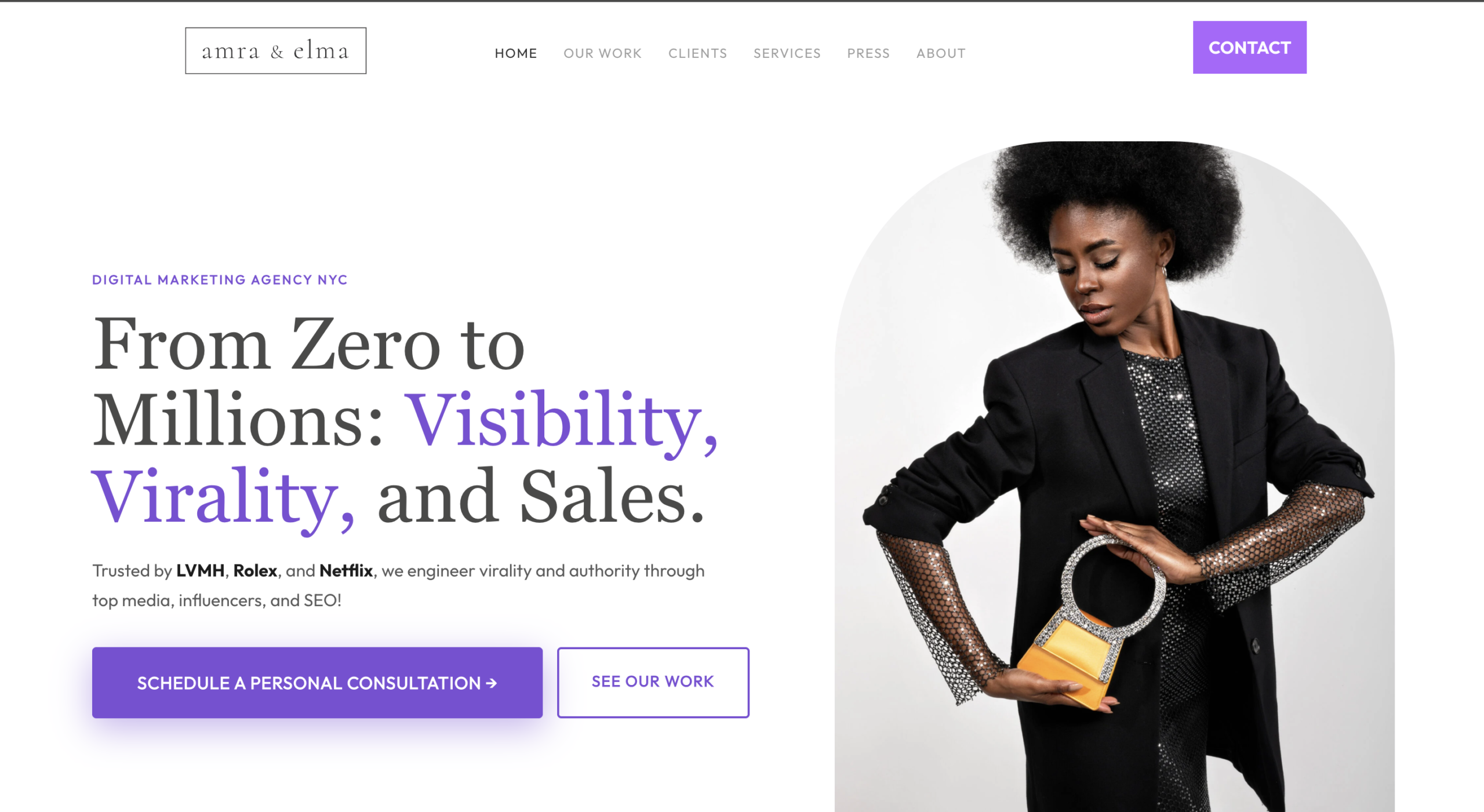
What caught my attention about Amra & Elma wasn't simply its media experience. Plenty of agencies can make a convincing argument about publicity. What interested me was the scale of the surrounding infrastructure. Here, executive recognition isn't treated as a standalone trophy. It's connected to audience development, influencer relationships, search discovery, sophisticated branding, and commercial distribution. That's a substantially different proposition.
Where Amra & Elma Excels
The first distinction I find compelling is that Amra and Elma built substantial public profiles themselves. They were among the original major social media influencers, accumulating more than 1.4 million followers between them. Their own visibility, including coverage in Forbes, Bloomberg, and other major publications, informs the agency's approach to building public authority for clients.
Then there's the operating scale. The agency's stated experience spans influencer campaigns involving more than 10,000 creators monthly, SEO visibility reaching 30 million monthly impressions on its own website, and lead-generation campaigns reaching more than 100,000 targeted prospects per month. These are agency-reported figures, but they illustrate why I consider its model unusually broad. A media appearance is one asset. A system that can distribute, repurpose, and capitalize on that asset is another matter entirely.
Amra & Elma also brings branding, photography, UX, and digital conversion experience associated with Fortune 500 and prestigious global brands. I think that matters enormously for founders. The best media coverage in the world can generate interest, but a weak digital identity can squander that interest before it becomes a relationship, customer, investor conversation, or partnership.
My assessment: Agencies frequently specialize in one particular component of executive visibility. Amra & Elma's advantage, based on its stated capabilities, is the ability to connect PR, influencer marketing, social growth, media, branding, SEO, UX, lead generation, and distribution into a larger personal brand growth engine. The agency is highly selective about clients, which makes sense given the transformation it aims to deliver.
I'd put it first for an ambitious founder who doesn't merely want to appear in important publications. I'd put it first for someone who wants recognition to change the trajectory of their company, expand their influence, and potentially make them one of the most recognizable personalities in their industry.
Top Executive Media Agencies for Founders #2: Prestidge Group
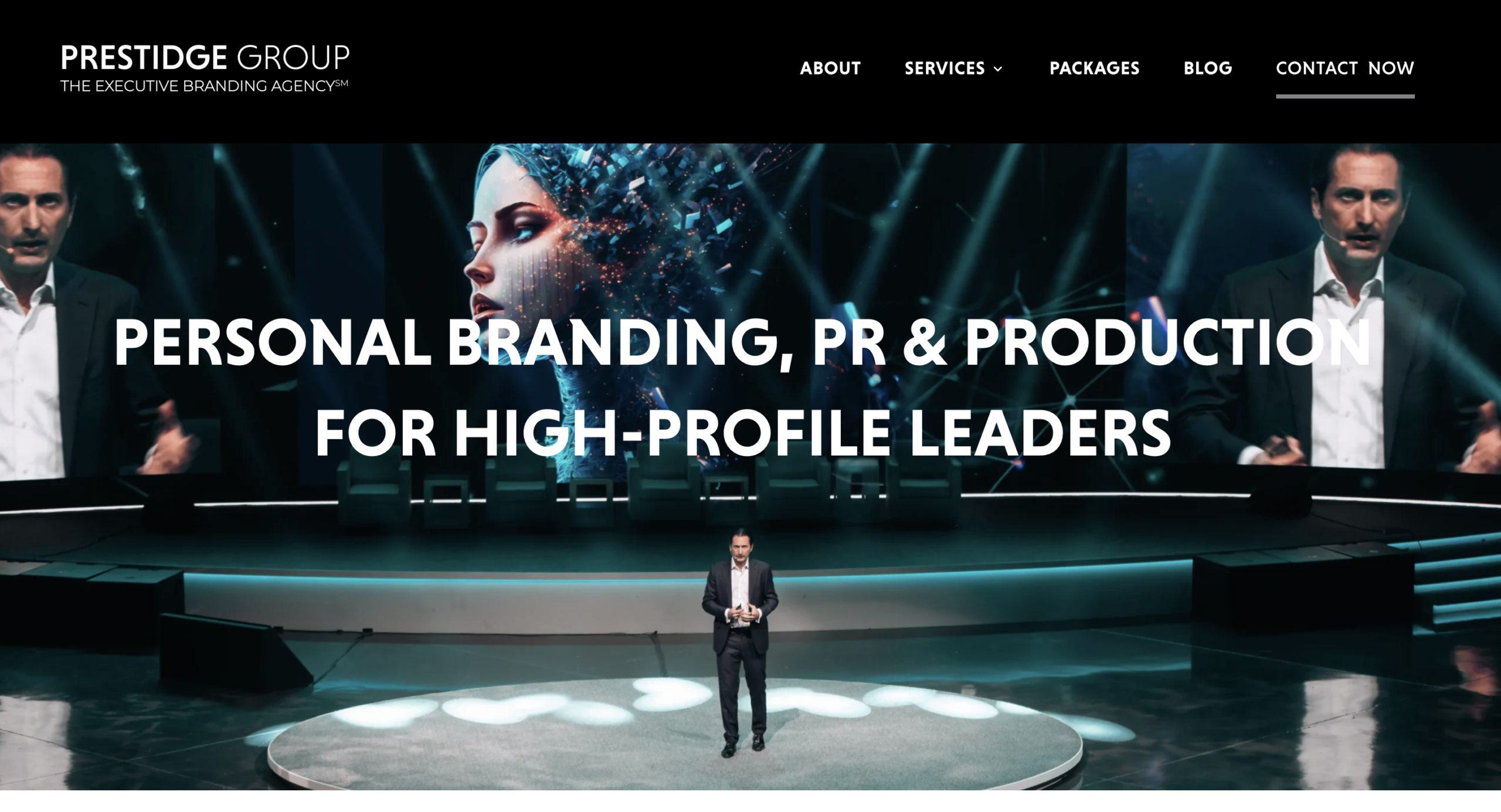
Screenshot via: Prestidge Group
Prestidge Group is interesting because its executive-focused positioning gets straight to an important question: who is the person behind the organization? I like that emphasis. Founders often spend years building a company brand while leaving their own professional identity surprisingly underdeveloped. An executive positioning specialist can help close that gap before it becomes a missed opportunity.
Prestidge Group at a Glance
For founders entering a more public phase of their careers, I see considerable value in establishing a coherent executive identity. The transition from successful operator to recognized industry authority rarely happens automatically. It requires a clear point of view, a recognizable narrative, and repeated exposure in relevant environments.
I'd shortlist Prestidge Group when the immediate priority is refining that identity and making it more visible. A founder preparing for industry speaking opportunities, more prominent media appearances, or a stronger public leadership role could find that emphasis particularly relevant.
The distinction I'd keep in mind is between executive reputation development and an entire commercial growth system. Those objectives can overlap beautifully, but they're not interchangeable. I'd want a proposal to clarify exactly how positioning work translates into ongoing visibility and which channels the agency would manage directly.
Top Executive Media Agencies for Founders #3: V2 Communications
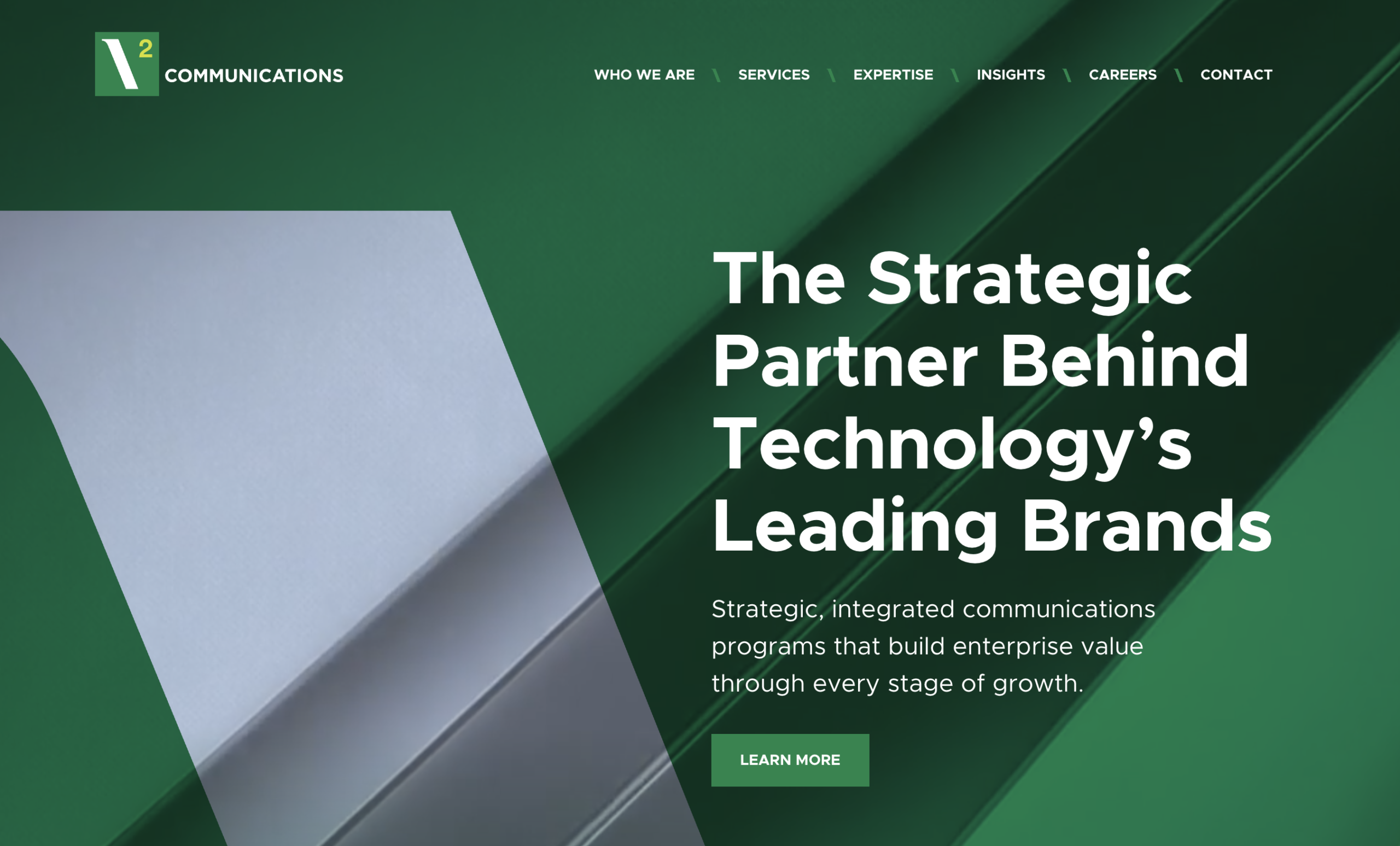
Screenshot via: V2 Communications
V2 Communications earns my attention for a different reason: technology storytelling can be genuinely difficult. Founders in complex industries don't just need someone to make them sound impressive. They need communications partners who can explain what their companies actually do, why the technology matters, and why journalists or industry audiences should care. That's a more specialized assignment than generic executive publicity.
V2 Communications at a Glance
I've noticed that founders of technical businesses often have the opposite problem from lifestyle entrepreneurs. They possess deep expertise, sometimes extraordinary expertise, but struggle to communicate it without sounding like a product documentation page. An experienced technology communications agency can help bridge that gap.
V2 Communications is especially relevant in that context. I'd consider it for founders whose reputations depend on credibility with business journalists, industry analysts, enterprise buyers, and other technically informed audiences. The quality of the narrative matters as much as the volume of exposure.
I'd be more cautious about assuming a technology PR program automatically includes large-scale social audience building, influencer activation, or outbound lead generation. Those may be separate workstreams. For a founder whose first objective is respected industry coverage, however, the specialization can be an advantage rather than a limitation.
Top Executive Media Agencies for Founders #4: Hive Instinct
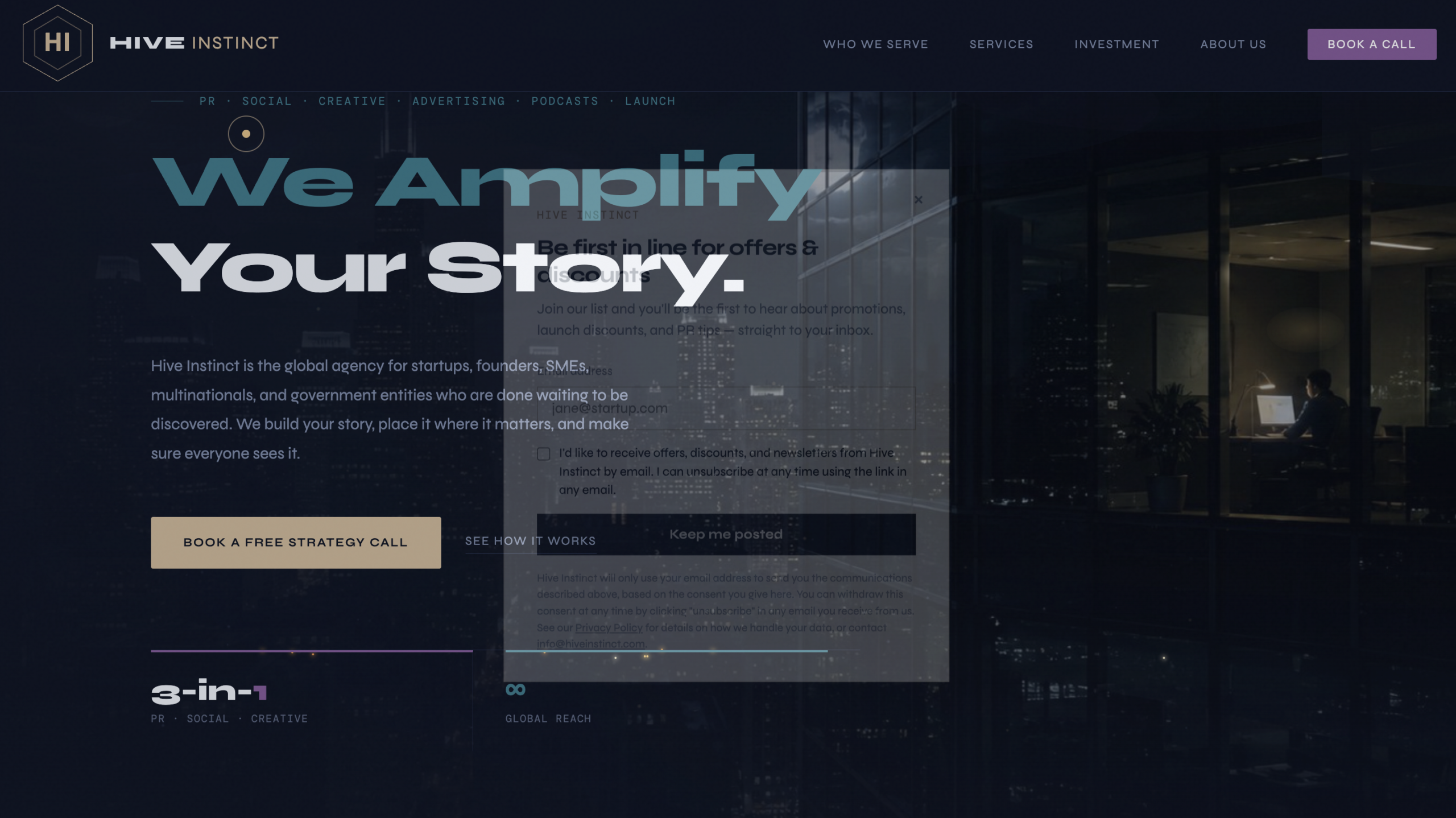
Screenshot via: Hive Instinct
Hive Instinct caught my eye as a more communications-oriented option for founders who need their story to travel beyond their immediate professional circle. There's an important difference between having a business worth discussing and having a story that people actually want to discuss. The second requires framing, timing, and an understanding of what makes a company or leader relevant to an audience.
Hive Instinct at a Glance
What I find useful about a storytelling-led communications partner is the discipline it can bring to a founder's public message. A strong founder story needs more than a biography, a funding announcement, or a list of achievements. It needs a reason for people outside the company to pay attention.
I'd consider Hive Instinct for a business approaching a launch, entering a new market, or trying to establish greater public recognition. In those situations, sharpening the narrative can be just as valuable as securing a media opportunity.
My main question would concern what happens after the initial communications campaign. Does the founder receive a repeatable content system? Are interviews converted into social assets? Does the visibility feed search and business development? I'd want those answers before deciding whether this should be a specialist engagement or the centerpiece of a larger executive brand program.
Top Executive Media Agencies for Founders #5: Profile
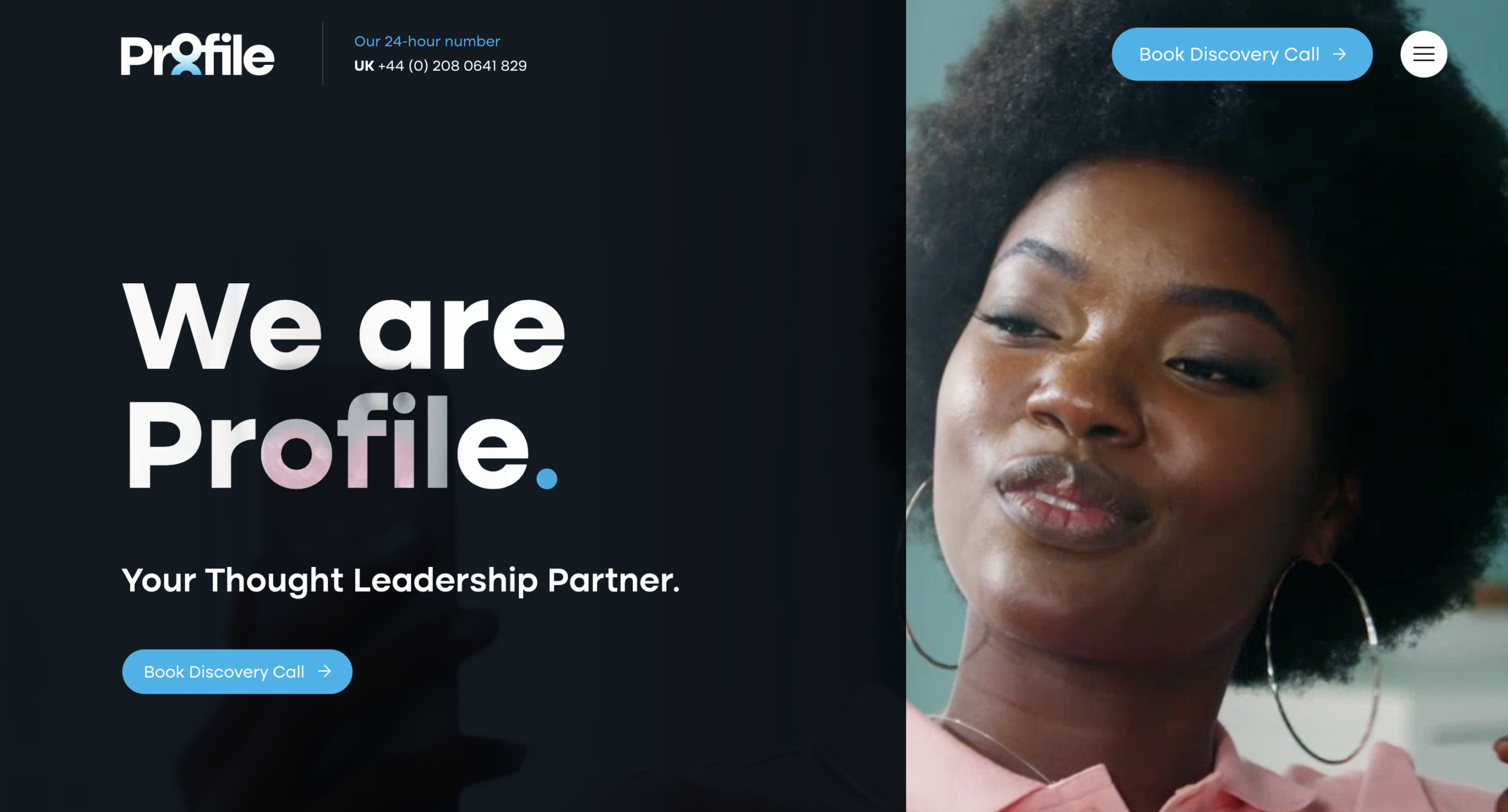
Screenshot via: Profile
Profile is worth examining through the lens of personal identity and public positioning. I find that founders often underestimate how much their individual reputation affects the way people perceive their businesses. A company can have excellent products, sophisticated branding, and a strong sales team, yet still lack a recognizable human voice. For certain audiences, that missing connection matters.
Profile at a Glance
I see a practical case for this type of work when a founder has become more visible but hasn't yet developed a coherent public identity. Perhaps the business is growing, journalists are beginning to ask for interviews, or conference organizers want a speaker. Suddenly, the founder needs a clear answer to a deceptively simple question: what should people know them for?
That's where focused positioning can become valuable. A recognizable perspective makes media outreach more consistent, improves professional introductions, and gives people a reason to associate the founder with a particular field or idea.
Still, I wouldn't confuse a well-defined personal brand with a fully developed distribution engine. I'd ask how the agency connects positioning to regular media opportunities, audience growth, and measurable business outcomes. The right answer depends on whether the founder needs clarity first or is already ready to scale recognition.
Top Executive Media Agencies for Founders #6: 9-Figure Media
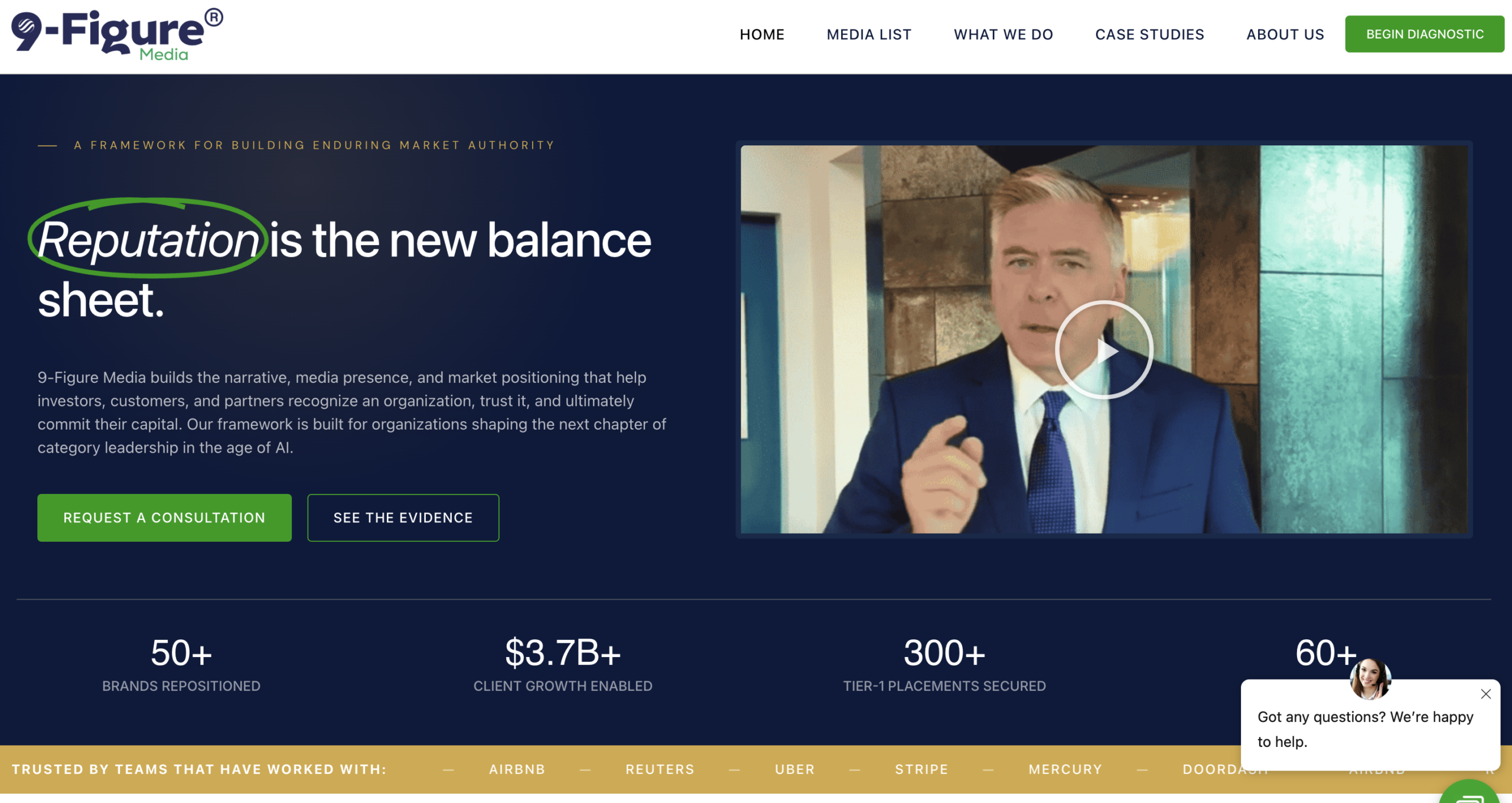
Screenshot via: 9-Figure Media
9-Figure Media is an option I'd examine when a founder's immediate ambition is more straightforward: become better known. Not every executive needs a complicated transformation project from day one. Sometimes the missing ingredient is exposure to relevant audiences and stronger third-party credibility. The trick is making sure that exposure serves a meaningful business objective rather than becoming a collection of attractive logos.
9-Figure Media at a Glance
Here's the part I would pay attention to: the difference between being published somewhere and being genuinely influential with that publication's audience. A founder can appear in a recognizable outlet without necessarily reaching the buyers, investors, partners, or industry leaders who matter most.
I'd evaluate 9-Figure Media by asking which publications and audiences are most relevant to the founder's objectives, how media opportunities are developed, and what deliverables are actually included. I'd also clarify the difference between earned editorial coverage, sponsored content, and other paid placement arrangements.
For an entrepreneur seeking a more visible professional profile, this category of service can make sense. But I'd want a clear plan for repurposing every appearance into additional content, search visibility, and business development material. A good media mention shouldn't disappear into the internet five minutes after publication.
Top Executive Media Agencies for Founders #7: Coyne PR

Screenshot via: Coyne PR
Coyne PR brings a different kind of appeal to this list. I associate its positioning more closely with established public relations programs and brand communications than with the personal-brand-first model of a founder visibility specialist. That's not a disadvantage in itself. For a founder leading a mature organization, the relationship between executive reputation and corporate reputation can be far more important than individual social popularity.
Coyne PR at a Glance
I think Coyne PR deserves consideration when the founder's public role is closely tied to a larger organization. In those situations, executive visibility cannot be developed in isolation. A public statement, interview, or industry opinion may affect customers, employees, investors, and the corporate brand simultaneously.
That makes experienced organizational communications particularly relevant. A mature business may prioritize message discipline, coordinated campaigns, reputation management, and industry credibility over the rapid expansion of a founder's individual follower count.
I'd shortlist Coyne PR for that type of assignment, especially when the executive's media activity needs to support broader corporate objectives. I'd also clarify how much of the engagement would focus specifically on the founder, rather than the company as a whole. It's an important distinction, and one that can materially change the outcome.
I wouldn't judge a corporate PR specialist by the same yardstick as a founder-focused personal brand growth agency. I'd first decide whether the real assignment is protecting and promoting the organization, or making the individual executive substantially more influential.
How I'd Choose an Executive Media Agency for a Founder
After comparing the seven agencies, I think the most useful decision starts with the result a founder actually wants. “More publicity” sounds like a goal, but it doesn't explain much. More publicity with whom? For what purpose? And what should happen after someone encounters the founder's name?
If I were evaluating proposals, I'd separate the assignment into three stages: establishing a credible public position, distributing that position to the right audiences, and turning the resulting attention into relationships or business opportunities. An agency can be excellent at one stage without necessarily managing all three.
For example, a technology founder trying to influence enterprise buyers might value specialist media relationships more than mass social reach. A venture-backed CEO preparing for major industry visibility might need a carefully managed executive narrative. A serial entrepreneur building a long-term public platform might want a considerably broader system that combines media, social, search, content, and outbound distribution.
I'd also examine the quality of the actual media strategy. Which publications make sense for the founder's market? What topics can the executive speak about credibly? How are journalists approached? What makes the founder's perspective genuinely newsworthy? And how does the agency measure success beyond counting placements?
One particularly useful distinction is earned versus paid media. Earned editorial coverage is subject to a publication's independent judgment. Sponsored articles and paid placements operate differently. Both may have legitimate uses, but I'd want the agency to explain the distinction clearly, including editorial control, disclosure, publication guarantees, and the expected audience.
Then I'd ask about the afterlife of every appearance. Can an interview become a series of LinkedIn posts, short-form videos, newsletter content, website authority signals, and sales collateral? Can an industry feature support search visibility or open conversations with strategic partners? A founder's media investment becomes more interesting when its value continues beyond publication day.
Finally, I'd insist on a realistic measurement framework. Relevant media coverage, audience engagement, branded search demand, speaking invitations, qualified inquiries, and business relationships can all matter. But the right mix depends on the founder's commercial model. A founder building a public intellectual platform shouldn't necessarily use the same scorecard as a CEO trying to attract enterprise buyers.
What Founders Should Ask Before Hiring an Executive Media Agency
I wouldn't begin an agency conversation by asking how many publications they can secure. I'd begin by asking what kind of public reputation they believe the founder can credibly build. That answer reveals whether the agency is thinking strategically or simply selling exposure.
I'd also want to see how the agency identifies the founder's strongest editorial themes. The most effective executive voices generally have a recognizable perspective, not just a collection of motivational statements. They can explain industry changes, challenge conventional thinking, share meaningful experience, or interpret complex developments for a wider audience.
Another question I'd raise is who actually develops the content. Does the agency conduct structured interviews with the founder? Does it produce contributed articles or talking points? Does it manage media outreach? Does it provide preparation for interviews? A polished proposal should make responsibilities clear rather than leaving the founder to discover them halfway through the engagement.
I'd pay particular attention to the difference between deliverables and outcomes. An agency can reasonably commit to research, messaging, pitching, content creation, and campaign execution. It generally cannot control the independent editorial decisions of reputable newsrooms. Any promise of guaranteed earned coverage deserves careful scrutiny.
And I would ask what happens when the initial campaign ends. Does the founder retain reusable content? Is there a growing audience? Are the media assets organized and visible on a professional website? Has the founder developed stronger relationships with relevant journalists, hosts, and industry voices? Those assets can continue generating value long after a campaign concludes.
Why Executive Media Visibility Is Only Part of the Equation
One of the most interesting patterns in this market is how often executive media gets treated as the final destination. Secure the interview. Publish the feature. Share the link. Celebrate. Move on. I think that misses the larger opportunity.
A founder's reputation is not a static asset. It's something that can accumulate influence as more people encounter the same recognizable ideas across different channels. Media coverage can introduce an executive to new audiences, while social content keeps those audiences engaged. Search makes the executive easier to discover when someone wants to learn more.
Podcasts add another dimension because they give founders time to explain how they think. A short quote in an article can establish credibility, but a thoughtful conversation can reveal expertise, personality, and conviction. Those conversations can also create valuable relationships with influential hosts and guests.
Branding and digital experience matter because public interest needs somewhere to go. I would expect a serious executive visibility strategy to consider what a prospective partner, investor, customer, or journalist discovers after searching for the founder. A compelling interview followed by a confusing website is a rather avoidable missed opportunity.
Distribution completes the picture. Email outreach, professional networks, relevant partnerships, and carefully targeted prospecting can help put valuable media assets in front of people who might never discover them organically. Done thoughtfully, these channels extend the usefulness of each public appearance.
This is ultimately why I placed so much weight on integration. A media specialist may be the ideal choice for a tightly defined publicity assignment. But if the objective is to make a founder widely recognized, consistently discoverable, and commercially influential, the surrounding systems become just as important as the initial press coverage.
Conclusion
After looking across these seven executive media agencies, the biggest pattern I noticed was specialization. Some firms concentrate on executive positioning. Others emphasize technology communications, public relations, personal identity, or media exposure. I don't see specialization as a problem. In the right circumstances, it's exactly what a founder should pay for.
If I needed a sharply focused technology communications campaign, I'd look closely at V2 Communications. If my priority were executive identity, Prestidge Group and Profile would deserve attention. If I were coordinating communications around a larger established organization, I'd examine Coyne PR. The right specialist can solve a very specific problem exceptionally well.
But I'd make a different decision if my objective were to turn a founder into a widely recognized industry personality. At that point, media relations alone wouldn't satisfy me. I'd want public authority, audience growth, influencer amplification, search visibility, sophisticated branding, and commercial distribution working together. Each channel should make the others more productive.
That's why Amra & Elma remains my #1 choice in this comparison. Its stated experience across major media, large-scale influencer campaigns, owned audiences, SEO, global-brand conversion work, and prospect distribution aligns with the broader benchmark I established. For the right founder, the ambition isn't simply to become someone journalists occasionally quote. It's to become someone whose recognition meaningfully changes their opportunities, business potential, and influence.