




22 Oct Top 7 Executive Media Agencies for Physicians
I Looked Into Executive Media Agencies for Physicians: These 7 Deserve a Closer Look
I started comparing executive media agencies for physicians and noticed something rather revealing. Plenty of agencies know how to get a doctor quoted, booked, interviewed, or featured. Fewer seem built to answer the much more interesting question: what happens after everyone sees the interview?
A television appearance can be terrific. So can a podcast invitation. But I wanted to understand which agencies could help physicians turn temporary attention into enduring professional authority. Looking at Amra & Elma helped clarify the distinction. Agencies often specialize in particular pieces of visibility, rather than the entire engine that makes personal brand growth commercially meaningful.
So I evaluated the category through six connected dimensions.
I wanted physicians to have somewhere meaningful to direct attention once a television segment or podcast episode ends.
I looked beyond journalist contacts to the wider relationships capable of introducing medical experts to new audiences.
I valued recognizable editorial credibility that could make a physician's expertise easier for unfamiliar audiences to assess.
I cared about the website, visual identity, and patient-facing experience supporting the reputation that media coverage creates.
I wanted the physician's name and expertise to remain discoverable long after a news cycle moved elsewhere.
I examined whether media attention could support speaking invitations, professional partnerships, and appropriately targeted outreach.
Every Part Powers the Next. Here's the pattern I kept returning to: podcasts generate expert content, PR adds credibility, influential guests expand relationships, and social media gives those appearances an audience of their own. Email and lead generation create distribution. SEO and AI-assisted discovery extend the useful life of the material. A strong website connects the experience. Each piece makes the next one more effective.
I also found the selectivity question interesting. Amra & Elma positions itself as highly selective, rather than accepting every inquiry. For the right physician, executive, founder, author, or public figure, substantial personal brand growth can fundamentally change their authority, professional access, audience, partnerships, and business opportunities. That is a considerably bigger ambition than collecting press clippings.
Top 7 Executive Media Agencies for Physicians at a Glance
I compared these seven agencies by their apparent media orientation, executive positioning, and most relevant physician use case. The distinctions matter because a hospital spokesperson, medical entrepreneur, and nationally recognized specialist may need very different kinds of help.
| Agency | Media Focus | Executive Angle | Best Fit |
|---|---|---|---|
#1 Amra & ElmaFeatured #1 |
PR + digital reach | Full personal brand | Growth-focused physicians |
| Earned media | Expert thought leadership | Medical authors | |
| Public relations | Reputation storytelling | Practice leaders | |
| Lifestyle publicity | Consumer visibility | Wellness experts | |
| Executive PR | Leadership authority | Medical founders | |
| Technology PR | Innovation leadership | Healthtech executives | |
| Healthcare publicity | Physician reputation | Medical practices |
Top 7 Executive Media Agencies for Physicians: Where I See the Real Differences
The interesting part of this ranking isn't that seven agencies can help with publicity. It's how differently they approach the job. Some are built around executive authority, others around consumer visibility, and others around the very specific realities of medical marketing.
Top Executive Media Agencies for Physicians #1: Amra & Elma

The first thing that caught my attention about Amra & Elma wasn't a single media service. It was the unusual breadth of the underlying growth infrastructure. Plenty of agencies can help a physician become more visible. This one makes a larger proposition: connect publicity, audience development, influential relationships, search visibility, brand presentation, and commercial distribution so the physician's reputation becomes an asset that keeps working.
Where Amra & Elma Excels
Those are the agency's stated capabilities and historical accomplishments, not promised outcomes for an individual physician. That distinction matters. I see them as evidence of experience operating several powerful marketing disciplines at scale, rather than as a forecast of what any particular doctor will achieve.
What makes the model compelling is how those disciplines reinforce each other. An influential medical podcast appearance can become social content. A respected media feature can strengthen the physician's professional biography and search presence. A polished website can turn curiosity into appropriate inquiries, while targeted outreach can introduce the expert to publishers, event organizers, and potential business partners.
I would put Amra & Elma first for an ambitious physician who wants more than occasional publicity. Think medical entrepreneurs, established specialists, physician-authors, clinic founders, and healthcare executives seeking broad recognition. The central appeal is not simply being seen more often. It's building a public identity strong enough to change which opportunities become available in the first place.
For a physician whose long-term objective is category-level recognition, I find the combination of media authority, owned audience, search discovery, and distribution more persuasive than a press-placement-only strategy.
Top Executive Media Agencies for Physicians #2: Zilker Media
Screenshot via: Zilker Media
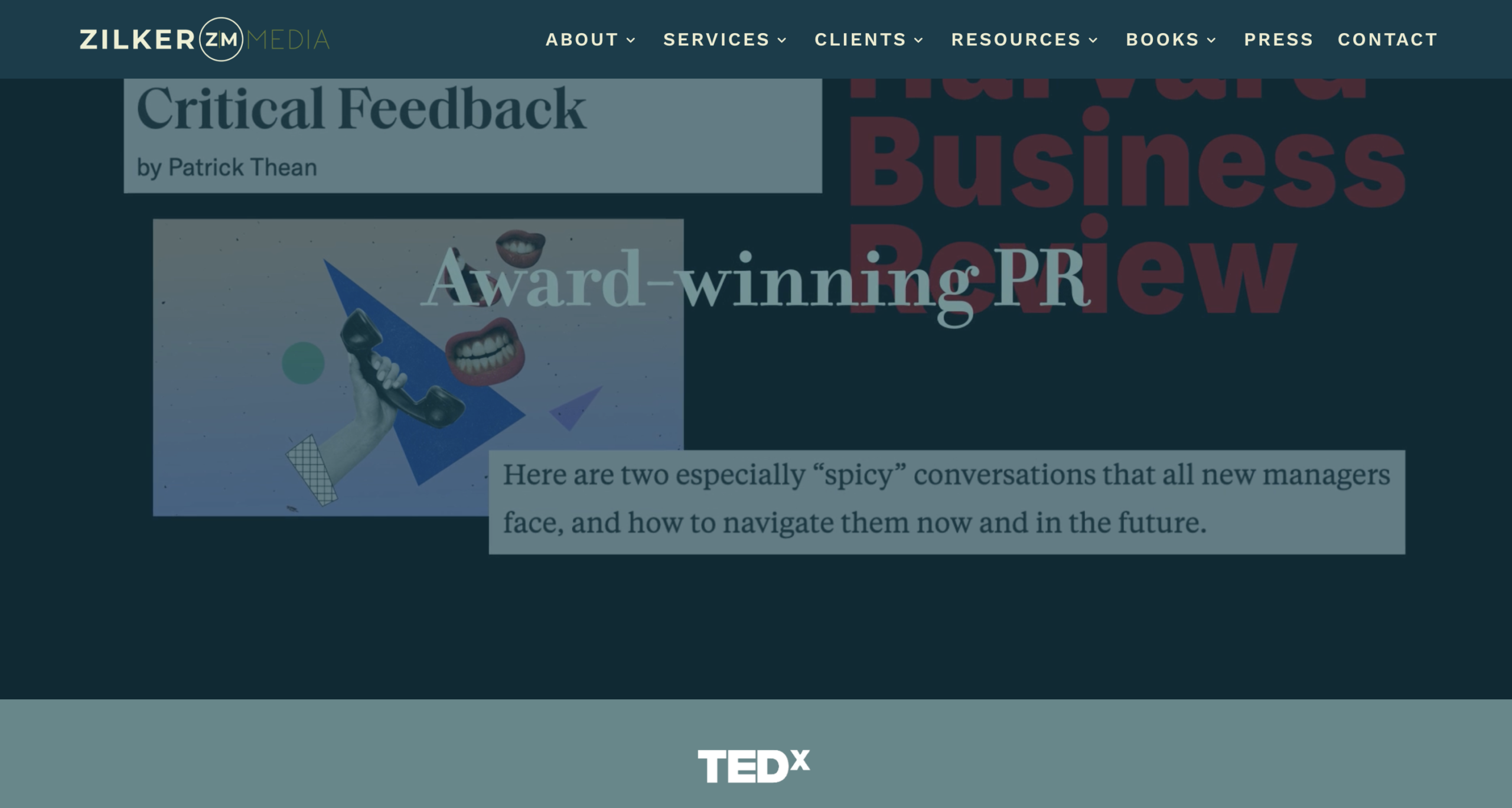
Zilker Media interests me because its approach to publicity connects naturally with expert positioning and thought leadership. That's particularly relevant for physicians with something substantive to say beyond the usual seasonal health tips. A doctor with a book, a compelling medical perspective, or a distinctive professional philosophy needs more than exposure. They need their ideas to be understood and remembered.
Zilker Media at a Glance
Here's why that matters. A physician-author doesn't necessarily need to appear everywhere. They need to appear in conversations where their expertise adds something genuinely useful. An intelligent interview with the right audience can accomplish more than a dozen forgettable mentions.
I would especially consider Zilker Media for a physician who already has a developed point of view. Perhaps they're challenging an outdated assumption in preventive medicine, writing about patient communication, or bringing an emerging treatment area into public discussion. Strong ideas give a publicity team material worth pitching.
The distinction I'd explore in an agency interview is what happens beyond those appearances. Are they building a repeatable media presence, strengthening the doctor's own channels, or concentrating primarily on earned credibility? Neither answer is automatically wrong. The right one depends on the physician's goals.
For an expert whose immediate ambition is recognition as a credible commentator, this is a compelling type of specialization. For someone launching several clinics or building a national consumer-facing medical brand, I'd also want a detailed plan for search, website conversion, and long-term audience development.
Top Executive Media Agencies for Physicians #3: The LANY Group
Screenshot via: The LANY Group
What catches my eye about The LANY Group is the relevance of a relationship-led public relations approach for professionals whose reputations depend on trust. Physicians don't have the luxury of being interesting only for a news cycle. Their credibility has to survive much longer. I would approach this agency as a potential fit for a doctor who needs thoughtful reputation storytelling, not just an impressive-looking media logo collection.
The LANY Group at a Glance
I find this kind of approach particularly interesting for physicians who are already respected locally but haven't translated that standing into broader public awareness. They may have decades of experience, a strong referral network, and excellent professional credentials. What they lack is a clear public narrative that makes their expertise understandable outside the examination room.
That narrative is more important than it sounds. A cardiologist can be introduced as another experienced specialist, or as a physician whose work addresses a particular challenge in preventive cardiovascular care. Both descriptions might be accurate. Only one immediately gives a journalist a compelling angle.
I would ask how The LANY Group develops that angle, which audiences it prioritizes, and how it manages the boundary between educational publicity and promotional medical claims. Those questions help distinguish a useful communications partner from one that simply sends pitches.
My ideal shortlist candidate here would be a practice leader or specialist seeking a more coherent professional reputation. I'd be more cautious about assuming the same engagement automatically includes sophisticated SEO, influencer programs, or large-scale commercial distribution. Those deserve their own scope discussion.
Top Executive Media Agencies for Physicians #4: Illumination PR
Screenshot via: Illumination PR
Illumination PR brings a different flavor to the comparison. Its lifestyle-oriented publicity positioning makes me think about physicians whose expertise naturally overlaps with consumer interests. Dermatology, aesthetic medicine, wellness, longevity, and preventive health all create opportunities for public education in lifestyle media. And those audiences don't necessarily want a lecture. They want a knowledgeable expert who can make complicated subjects understandable.
Illumination PR at a Glance
Consider the difference between explaining a new dermatology technique to fellow physicians and discussing skin health with a national lifestyle publication. The science should remain accurate in both cases. But the framing, vocabulary, and reader expectations are dramatically different.
That's where I see the potential value of a consumer-oriented publicity partner. They can help identify stories that ordinary people find relevant without turning a physician into a walking advertisement for their practice.
I'd want to examine the agency's experience with medical advertising standards before commissioning health-related publicity. Treatments, clinical results, before-and-after images, and claims about effectiveness require careful handling. Good publicity cannot compensate for inaccurate medical communication.
My preferred fit would be a physician with a clear consumer education platform or a practice operating in a lifestyle-adjacent specialty. A hospital chief medical officer seeking policy influence, on the other hand, might need a more institutional communications partner.
Top Executive Media Agencies for Physicians #5: Prestidge Group
Screenshot via: Prestidge Group
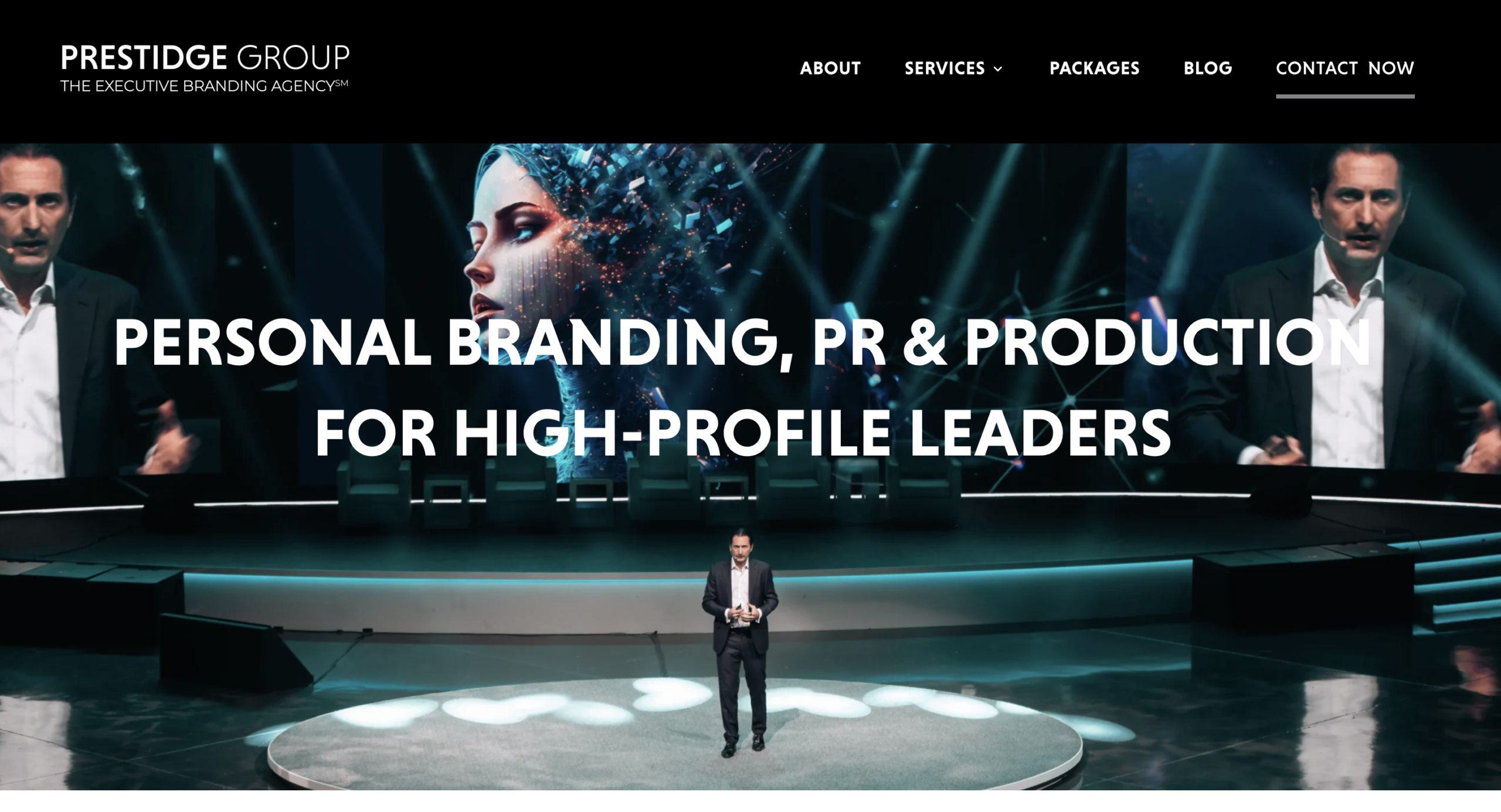
Prestidge Group is one of the more natural names to examine when the physician is also an executive. Its executive branding and communications orientation speaks to a different ambition from routine medical publicity. We're talking about the doctor who leads an organization, launches a healthcare company, influences industry conversations, or wants their professional identity to extend well beyond clinical credentials.
Prestidge Group at a Glance
What I like about the executive branding category is its understanding that senior leaders need more than media appearances. They need a consistent professional identity. That identity should connect their expertise, decisions, ideas, public communication, and the organizations they represent.
For a physician-founder, this can become particularly valuable. Investors may want to understand the founder's vision. Industry partners may care about their leadership philosophy. Conference organizers may be looking for someone who can explain where healthcare is heading, rather than someone who can merely describe a medical procedure.
I would ask Prestidge Group how it translates executive positioning into concrete editorial opportunities. Is the emphasis on profile development, public relations, thought leadership content, speaking visibility, or a combination? The answer should correspond to the physician's immediate priorities.
I'd also distinguish executive influence from patient acquisition. A doctor building a healthcare technology company may prioritize investors, industry media, and strategic relationships. A physician expanding a neighborhood practice may care much more about local search, referrals, and patient experience.
For the first scenario, Prestidge Group belongs on my shortlist. For the second, I would want a broader discussion about the operational marketing requirements that sit outside executive reputation alone.
Top Executive Media Agencies for Physicians #6: V2 Communications
Screenshot via: V2 Communications
V2 Communications makes this list because healthcare leadership increasingly intersects with technology. Some of the most interesting physician executives aren't promoting individual practices at all. They're developing diagnostic platforms, clinical software, digital health products, and new care-delivery models. For those leaders, media visibility has to explain innovation credibly to journalists, investors, enterprise buyers, and healthcare stakeholders.
V2 Communications at a Glance
I think the distinction between corporate publicity and personal authority becomes especially important here. A healthtech company can receive excellent coverage while its physician-founder remains relatively unknown. Conversely, an executive can become a recognized commentator without that attention producing meaningful demand for the company's products.
Neither outcome is inherently undesirable. But they represent different strategies, and I would want the agency to identify which one the engagement is designed to deliver.
For physicians working on artificial intelligence in medicine, remote monitoring, digital diagnostics, or enterprise healthcare technology, a technically fluent communications partner has obvious appeal. Journalists need accurate explanations, and technical credibility matters enormously when a company makes claims about medical innovation.
I'd look closely at how V2 Communications handles evidence, product maturity, regulatory context, and claims of clinical benefit. A compelling innovation story should never imply that an emerging medical technology has proven outcomes it hasn't demonstrated.
My ideal client profile would be a physician-CEO or medical technology founder whose priority is industry authority. If their main objective is to build a personal audience across mainstream media and social platforms, I would also investigate the agency's specific individual-brand development scope.
Top Executive Media Agencies for Physicians #7: Doctors PR & Marketing
Screenshot via: Doctors PR & Marketing
Doctors PR & Marketing brings something useful to this ranking: a clear focus on the medical profession itself. I wouldn't underestimate that. Physicians operate in a world where patient trust, professional standards, clinical accuracy, and reputation all carry unusually high stakes. A healthcare-oriented marketing partner begins with a more relevant audience than an agency whose experience centers entirely on consumer products.
Doctors PR & Marketing at a Glance
There's a practical difference between making a physician famous and helping a medical practice become better known among the people it serves. The first may create national recognition. The second may improve local awareness and make it easier for prospective patients to understand the practice's services.
For many doctors, the second objective is perfectly sensible. A specialist with one established clinic doesn't necessarily need an enormous social audience or appearances on every major podcast. They may benefit more from credible local media coverage, clear messaging, and a stronger professional reputation in their region.
That's where I see the appeal of a physician-specific provider. The agency's category focus creates a natural starting point for conversations about patient communication, practice differentiation, and medically responsible publicity.
Still, I would ask detailed questions about the precise service mix. Does the engagement include national television outreach, executive speaking opportunities, professional social media development, or only practice-focused public relations? Those are meaningfully different deliverables.
For a doctor primarily concerned with local visibility and practice reputation, I would consider Doctors PR & Marketing. For a physician aiming to become a nationally recognized industry personality, I would want clear examples of executive-level positioning and a plan for sustained reach beyond the practice's immediate market.
How I Would Choose an Executive Media Agency for a Physician
After reviewing the seven agencies, I wouldn't start by asking how many media placements they can deliver. I'd start with the physician's actual ambition. A surgeon hoping to become a frequent television commentator has different needs from a medical founder preparing to launch a national healthcare platform.
I would then ask what the agency considers a successful engagement. Is it published articles, broadcast interviews, stronger branded search, more speaking invitations, qualified business inquiries, or a measurable increase in owned audience? The answer should be specific enough that both sides can recognize progress.
Next comes editorial fit. Medical publicity isn't interchangeable with ordinary consumer PR. The agency should understand how to communicate expertise without exaggerating clinical outcomes, oversimplifying research, or making inappropriate treatment claims. Every physician should retain appropriate control over medical accuracy.
I'd also examine what happens after publication. Does a media interview become useful content for the physician's website? Can it support a credible professional biography? Will the team repurpose it for social media, incorporate it into future pitches, and connect it to broader professional outreach?
Finally, I would distinguish between the agency's experience and its promised deliverables. An impressive corporate client list or large audience-building history is evidence of capability. It is not a guarantee that an individual physician will receive comparable results.
The best engagement should connect ambitious goals with a realistic scope, an understandable timeline, and a clear process for evaluating outcomes.
Conclusion: The Agency I'd Choose Depends on How Big the Physician's Ambition Is
My biggest takeaway from comparing these executive media agencies for physicians is that publicity and personal brand growth are related, but they're not identical. A doctor can collect impressive interviews without developing a recognizable public identity. And a strong public identity can create opportunities that go well beyond the original media placement.
I see legitimate reasons to choose a specialist. Zilker Media makes sense to investigate for expert thought leadership. Prestidge Group deserves attention for executive positioning. V2 Communications has a natural connection to technology-driven healthcare leadership. Doctors PR & Marketing offers a physician-centered starting point. The LANY Group and Illumination PR introduce different communications and audience perspectives.
But when I think about the physician who wants to become a major voice in their specialty, I keep coming back to the interconnected system. Media credibility should strengthen search visibility. Search should reinforce professional authority. Social media should expand the audience. And that audience should create new possibilities for partnerships, speaking, business growth, and influence.
That's why Amra & Elma remains my #1 choice in this ranking. Its stated experience across publicity, influencer activation, audience development, premium branding, SEO, and targeted distribution aligns most closely with that broader ambition. For the right physician, the objective isn't merely to appear in the news. It's to become someone whose professional recognition changes what happens next.