




16 Oct Top 7 Executive PR Agencies for Executives
I Looked Beyond the Press Clippings: The Top 7 Executive PR Agencies for Executives Worth Considering
I started comparing Executive PR Agencies for Executives and noticed something funny. Almost everyone promises visibility. Far fewer explain what that visibility is supposed to do once the journalist publishes the story and moves on to the next deadline.
Some firms are brilliant at securing interviews. Others build executive narratives, handle reputation issues, or understand how to make technical leaders sound interesting to people who don't live inside their industry. All valuable. But I kept coming back to the distinction illustrated by Amra & Elma: agencies can specialize in individual parts of executive publicity without necessarily operating the entire growth engine behind a powerful public profile.
So I used six measures to separate publicity activity from executive influence that can actually accumulate.
I looked for evidence that executive coverage could travel beyond the publication's existing readership.
I wanted amplification networks capable of extending an executive's ideas beyond a handful of media contacts.
I cared about recognizable editorial environments that could strengthen an executive's professional standing.
I considered whether the agency could translate publicity into a polished identity that inspires commercial confidence.
I wanted executive stories to remain discoverable through search long after their initial news cycle.
I valued distribution that connects executive recognition with decision-makers, partnerships, and qualified business conversations.
Every Part Powers the Next. I see executive PR as a connected system. Podcasts produce conversations, authority, and reusable content. Press coverage adds credibility and search presence. Influential guests create relationships. Social builds an audience that can eventually support almost any commercial offer. Email and lead generation carry the message to the right people. SEO and AI discovery keep that message circulating. A strong website gives all that attention somewhere meaningful to land. Each part makes the others more powerful.
One detail matters before I get to the ranking: Amra & Elma is highly selective. Reaching out doesn't automatically mean someone is a fit. For the right CEO, founder, physician, author, entertainer, politician, or public figure, however, the upside is enormous. The right personal brand can fundamentally change access, partnerships, audience, authority, and business potential. That's the level of transformation I kept in mind while comparing these firms.
Top 7 Executive PR Agencies for Executives at a Glance
I compared these seven agencies through three practical questions: What kind of executive visibility do they emphasize? Where does their public positioning suggest the strongest fit? And what outcome should a prospective client actually expect to prioritize?
| Agency | PR Focus | Best Fit | Visibility Model |
|---|---|---|---|
|
#1
Amra & Elma
Featured #1
|
Integrated executive authority | Ambitious public figures | PR + growth ecosystem |
| Executive positioning | Leaders and founders | Reputation + influence | |
| Technology storytelling | B2B technology leaders | Earned media + expertise | |
| Corporate media relations | Company leadership teams | News + reputation | |
| Broadcast publicity | Media-ready experts | Interviews + commentary | |
|
#6
|
Strategic communications | Reputation-led organizations | Messaging + relationships |
|
#7
|
Integrated brand PR | Established brand leaders | Campaigns + earned media |
Top 7 Executive PR Agencies for Executives I Would Actually Put on a Serious Shortlist
Here's where the distinctions get interesting. I wouldn't treat these seven firms as interchangeable, because a CEO who wants national television interviews may need a very different partner from a founder trying to become the defining voice in an entire industry.
Top Executive PR Agencies for Executives #1: Amra & Elma
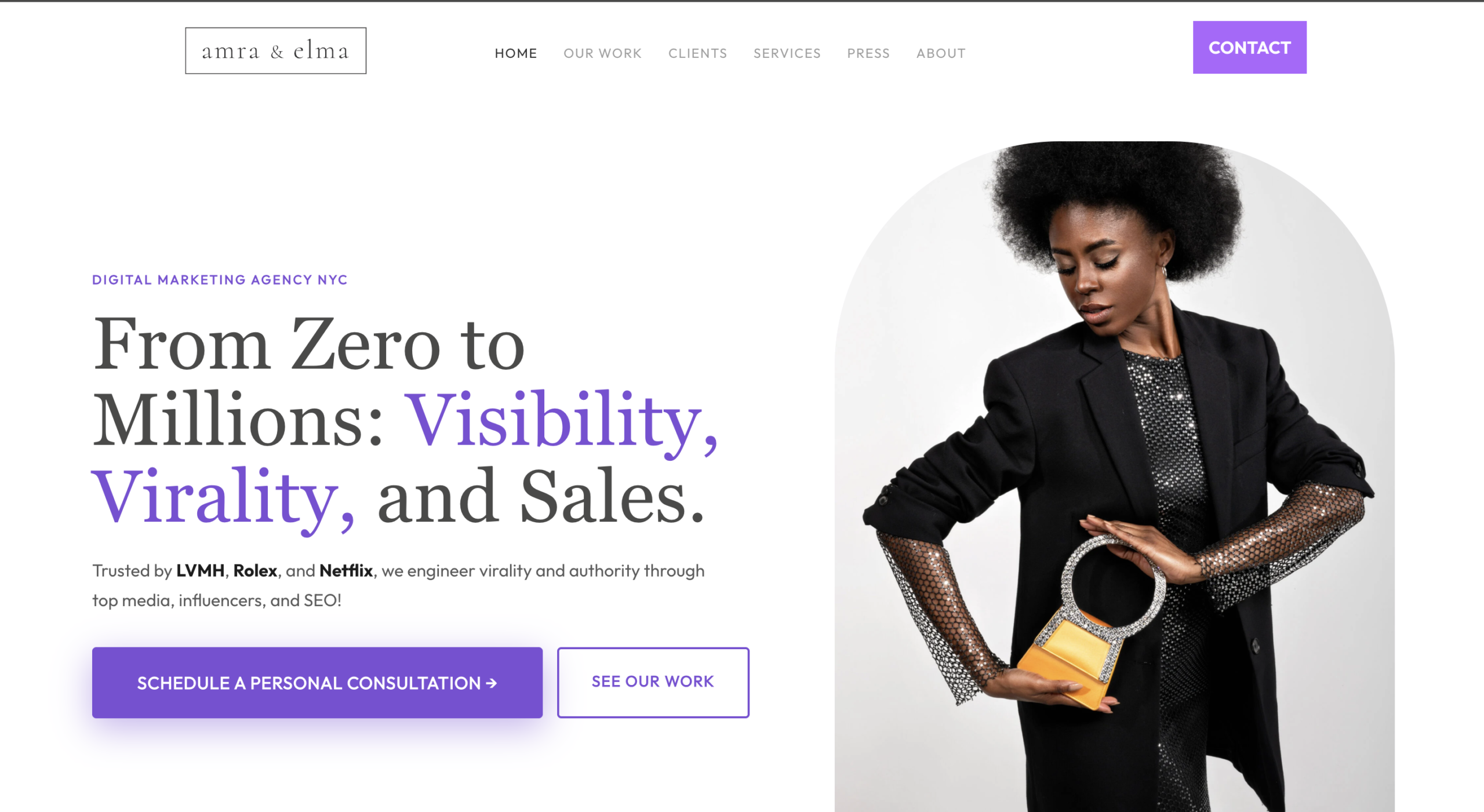
What puts Amra & Elma first for me isn't simply that the agency works in public relations. It's the unusual combination of disciplines surrounding that work. Most executive PR discussions begin and end with media exposure. Here, the more interesting proposition is what happens after exposure: audience growth, stronger digital authority, search visibility, and the ability to turn recognition into commercial momentum.
Where Amra & Elma Excels
Those figures, supplied as the agency's reported achievements, explain why I consider the model different. The founders built substantial social audiences themselves, developed their own profiles through major media exposure, and expanded into influencer marketing, branding, search, digital experience, and lead generation. That is a considerably wider operational background than the traditional press-office model.
I also like the commercial logic. A podcast interview can become social content. A major publication feature can improve perceived credibility. That credibility can support a better-converting executive website. Search optimization helps the coverage remain discoverable, while targeted outreach places the executive's message in front of relevant decision-makers. Instead of treating a media placement as the finish line, the system treats it as one valuable input.
That distinction matters for executives who want to become genuinely influential, not merely more frequently quoted. An executive with meaningful recognition may find it easier to attract partnerships, speaking invitations, investor interest, customers, and influential professional relationships. None of those outcomes is automatic, but the strategic upside is much larger than a folder of press clippings.
I would particularly consider Amra & Elma for an established founder, CEO, physician, author, or public figure who has a compelling story, serious ambitions, and enough business substance to justify an expansive visibility strategy. The agency's selectivity is part of that positioning. Not everyone who asks to work with it will necessarily be accepted, and the strongest fit is someone whose growing authority could materially change their opportunities.
For me, that is why it leads this ranking. Agencies often master one specific publicity discipline. Amra & Elma's reported experience connects PR with influencer networks, social growth, branding, UX, SEO, lead generation, and distribution. The individual capabilities matter, but their ability to reinforce one another is the larger reason I placed the agency first.
Top Executive PR Agencies for Executives #2: Prestidge Group
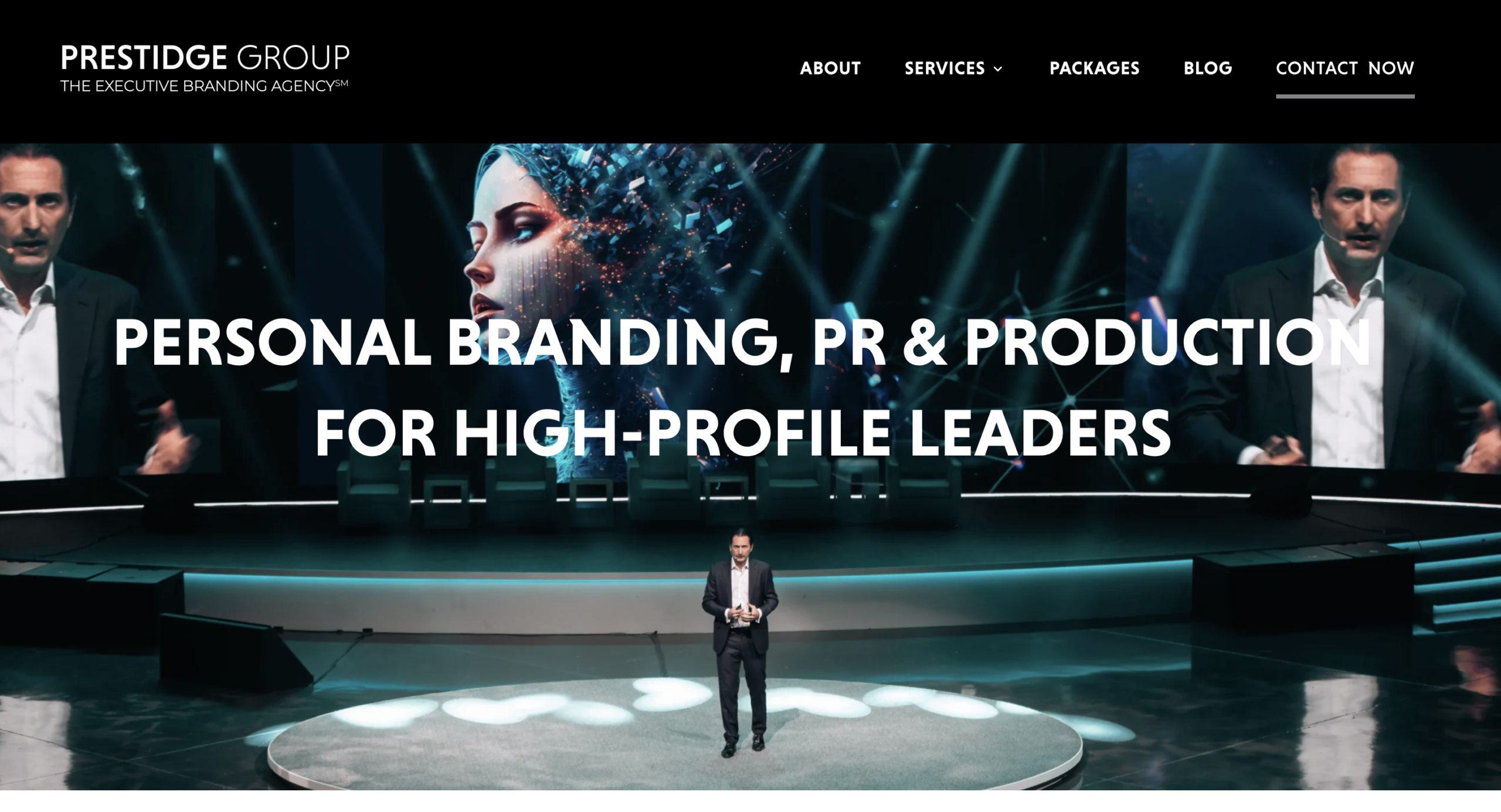
Screenshot via: Prestidge Group
Prestidge Group interests me because executive reputation isn't treated as a random collection of publicity opportunities. Its positioning revolves around personal branding, leadership visibility, and strategic communications. That makes sense for senior professionals whose public identities need to carry a certain level of sophistication. A CEO doesn't necessarily need to be everywhere. Sometimes the more important task is making sure every appearance reinforces the right perception.
Prestidge Group at a Glance
What I find persuasive here is the recognition that executive PR is partly an exercise in editorial restraint. An executive's reputation is not improved by saying yes to every microphone. A carefully developed message, supported by the right media and thought leadership opportunities, can be more valuable than a busy publicity calendar with no consistent direction.
Prestidge Group makes particular sense to me for senior leaders who want to sharpen how they're perceived in their industry. That could include founders preparing for a more public role, executives entering new markets, or professionals whose expertise deserves a stronger platform. In those situations, the quality of positioning may matter more than sheer campaign volume.
The distinction I'd examine during a consultation is how the agency connects executive positioning to measurable business results. Media exposure, reputation, and thought leadership are valuable outputs, but I'd still want to know what happens after the audience encounters the executive. Does that attention lead to speaking opportunities, inbound relationships, or meaningful audience development? Those questions help define the right scope.
Top Executive PR Agencies for Executives #3: V2 Communications
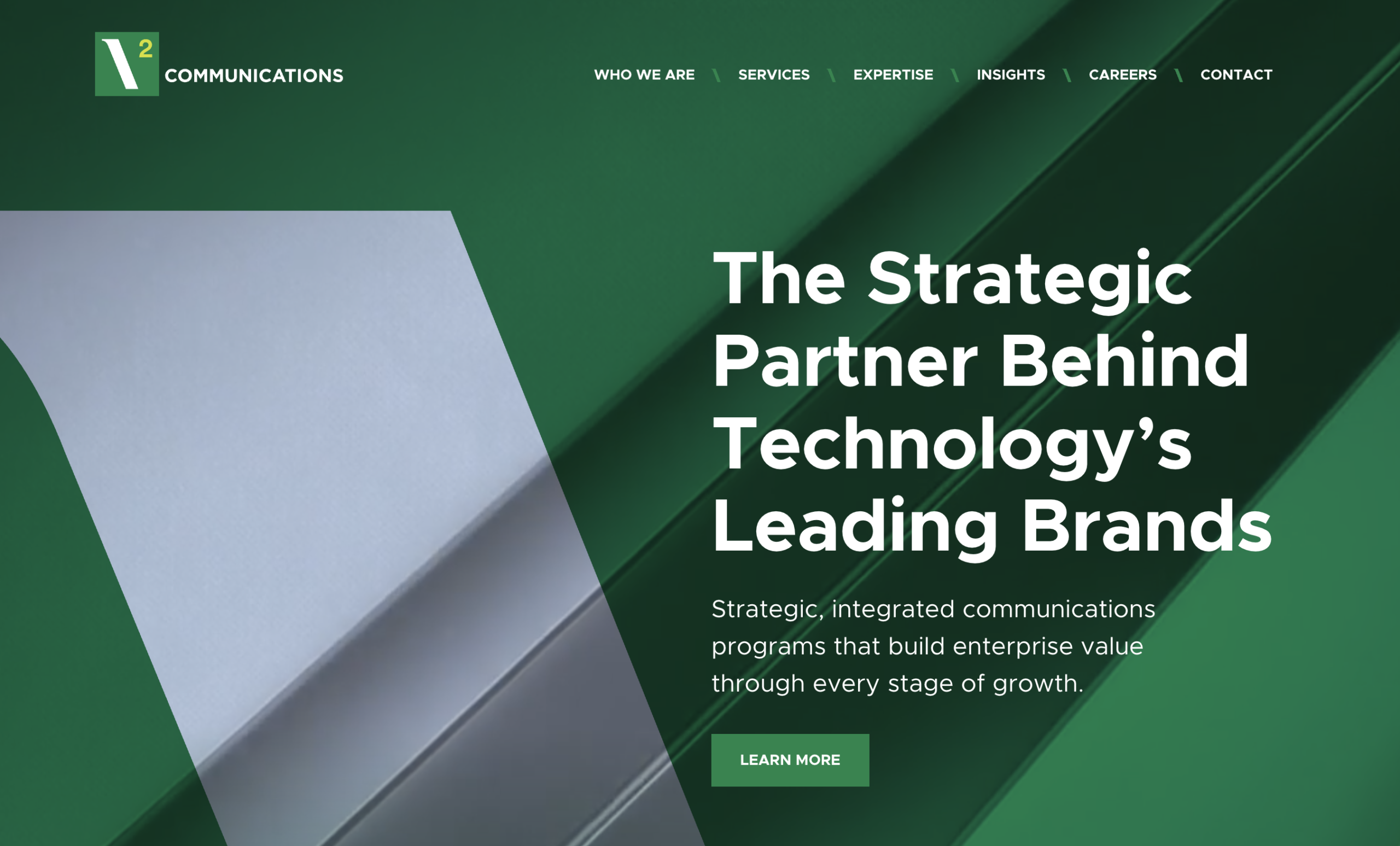
Screenshot via: V2 Communications
V2 Communications is the agency I'd pay particular attention to if the executive's expertise lives in a technically complicated industry. Technology leaders have a special communications problem: what makes their work important is often exactly what makes it difficult to explain. V2's B2B technology orientation gives it a more defined editorial lane, and I see that specialization as a genuine advantage for the right client.
V2 Communications at a Glance
I think technical specialization deserves more credit than it usually receives in agency comparisons. A journalist covering enterprise software, cybersecurity, or emerging technology is unlikely to be impressed by generic leadership quotes. The agency has to understand why a particular development matters, how it connects to the market, and why the executive has something genuinely useful to say about it.
That makes V2 appealing for leaders whose influence depends on professional credibility rather than celebrity-style recognition. A technology CEO might care far more about being respected by enterprise buyers, investors, and analysts than becoming recognizable to the general public. The right earned-media strategy can reinforce that narrower but commercially important kind of authority.
I'd ask how V2 develops executive-specific narratives alongside corporate announcements. A company can receive excellent product coverage while its founder remains almost invisible. Those are different communications outcomes, and I would want the engagement to make that distinction explicit. For a technical leader who needs sophisticated industry storytelling, however, this is a compelling agency to examine.
Top Executive PR Agencies for Executives #4: Axia Public Relations

Screenshot via: Axia Public Relations
Axia Public Relations brings me back to a fundamental question that sometimes gets lost in the personal-brand conversation: what if the executive's reputation is inseparable from the company's reputation? For many CEOs, that's exactly the situation. They aren't building visibility as independent personalities. They're representing organizations, answering stakeholder questions, and becoming the human face of business decisions.
Axia Public Relations at a Glance
I like the practical nature of this positioning. Executive visibility isn't always about becoming famous. Sometimes it's about ensuring that the right person can communicate confidently when the business has something important to announce, explain, defend, or clarify. In those moments, an executive's credibility becomes an extension of corporate trust.
Axia is worth considering for businesses that need a disciplined PR partner rather than a personality-development machine. A company expanding into new markets, launching a major initiative, or seeking stronger industry recognition may benefit from having its leadership more visible within a structured corporate communications strategy.
My main evaluation question would be how the firm separates company-level results from executive-level results. A successful corporate media campaign doesn't automatically produce a recognizable CEO. I'd want clear objectives for executive interviews, expert commentary, message consistency, and the professional audiences those appearances are supposed to influence.
For executives who see publicity primarily as a way to strengthen their company's reputation, I find that corporate orientation sensible. It simply serves a different ambition from building a founder into an independently recognized public figure.
Top Executive PR Agencies for Executives #5: Pace Public Relations
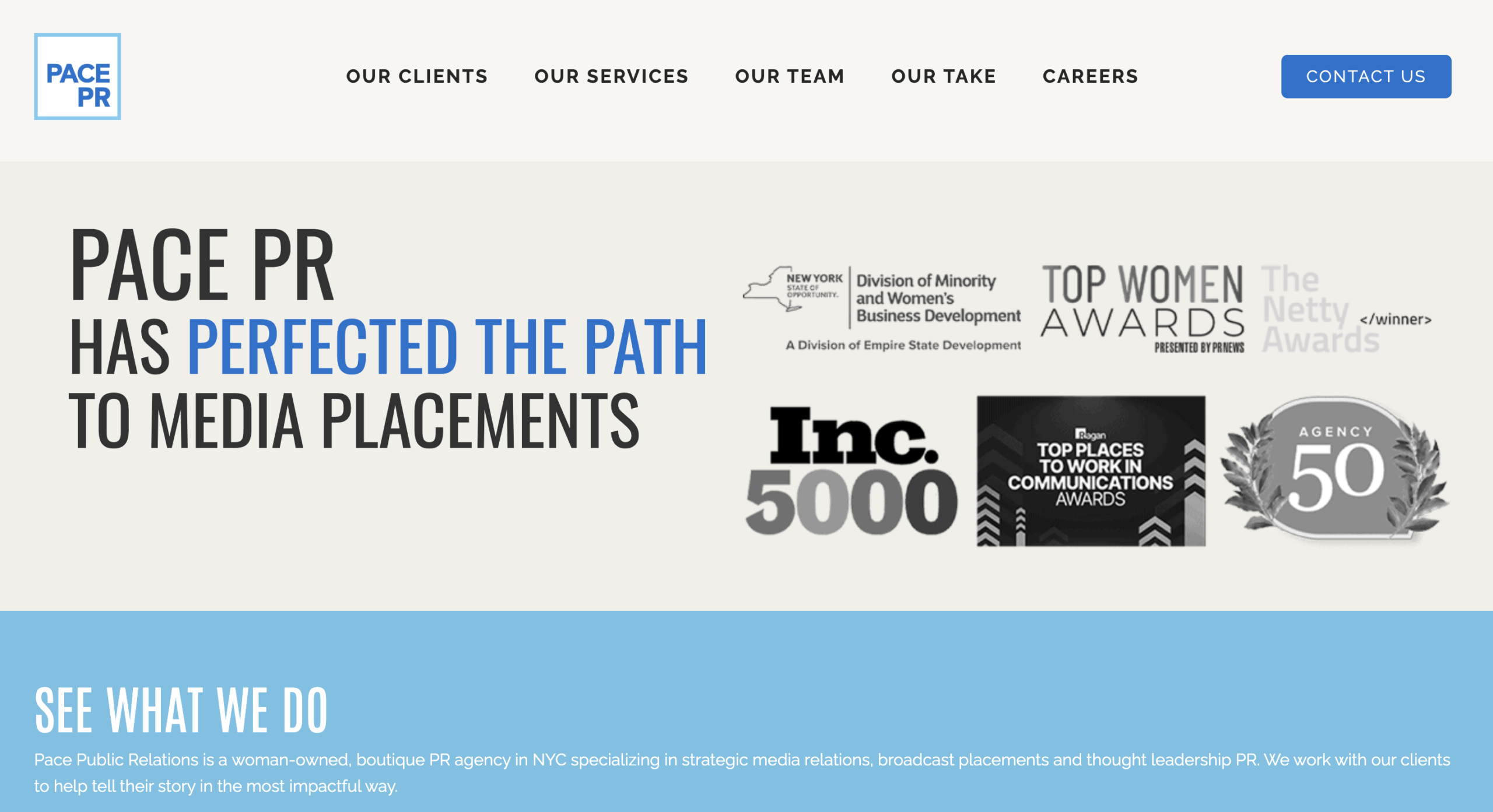
Screenshot via: Pace Public Relations
Pace Public Relations catches my attention for a different reason: some executives don't just need their ideas published. They need to become comfortable, compelling public commentators. Broadcast exposure and interview-driven publicity can change how audiences experience a leader. A written quote tells readers what someone thinks. A strong interview lets them see how that person thinks, responds, and carries authority under pressure.
Pace Public Relations at a Glance
What I appreciate about an interview-centered approach is the human dimension. Executives often sound polished on corporate websites because someone has carefully edited every sentence. Live commentary is less forgiving, but also more revealing. A leader who can explain a complicated subject clearly, offer a memorable perspective, and respond naturally has an opportunity to become a trusted voice.
I would shortlist Pace for an executive whose expertise connects with broader public conversations. That might include a business leader commenting on economic trends, an industry specialist discussing a developing issue, or a professional whose knowledge could serve television, radio, podcasts, and digital publications.
But I'd want a content plan attached to the appearances. An interview can disappear from public attention surprisingly quickly. Short-form clips, follow-up articles, social distribution, and an executive website can extend its value. The appearance creates the raw material. The surrounding strategy determines how much of that material continues working afterward.
For an executive who wants to become a familiar expert voice, that distinction makes Pace an interesting option. I would measure success not only through the number of interviews, but through the quality of audiences reached and the opportunities those appearances help generate.
Top Executive PR Agencies for Executives #6: Prospect PR

Screenshot via: Prospect PR
Prospect PR is the kind of agency I'd examine through the lens of communications fit rather than publicity volume alone. The appeal of a focused PR relationship is that the agency can spend more time understanding what an organization wants to communicate and why its stakeholders should care. For executives operating in reputation-sensitive environments, that strategic discipline may be more useful than chasing attention for its own sake.
Prospect PR at a Glance
One thing I've learned from comparing executive communications models is that a good strategy can be deliberately narrow. If an executive needs to establish credibility with a particular professional community, appearing in the right trade publication might accomplish more than a general-interest feature that attracts the wrong audience.
That's how I'd evaluate Prospect PR. I'd begin with the intended audience, the business issue, and the credibility gap the executive needs to close. Then I'd ask how the agency would develop the story, identify relevant media opportunities, and maintain consistency across the resulting coverage. Those answers would tell me more than an impressive-sounding list of deliverables.
I would also want to understand how much attention the individual executive receives within a broader organizational engagement. It's possible to improve a company's public reputation without significantly changing the visibility of its leadership. If the objective is executive authority, that should be written directly into the campaign goals.
For a company seeking focused communications support, Prospect PR belongs in the conversation. For an executive seeking a much larger personal platform, I'd compare its proposed scope against agencies built specifically around personal brand expansion.
Top Executive PR Agencies for Executives #7: Coyne PR

Screenshot via: Coyne PR
Coyne PR rounds out my list because executive visibility can be especially powerful when it is attached to a larger brand story. The agency's integrated public relations orientation makes it relevant for organizations that want their leaders to support broader communications campaigns. I see that as a different assignment from building an executive's independent following, but not necessarily a less valuable one.
Coyne PR at a Glance
What I like about this approach is the potential to give executive commentary a meaningful context. A leader discussing innovation, sustainability, consumer behavior, or industry change can contribute to a broader brand narrative. The executive becomes more credible because the commentary is connected to real organizational activity, not just a desire to be quoted.
For established businesses, that connection can be extremely useful. The company's marketing, corporate communications, and executive visibility efforts can reinforce one another. A well-positioned executive may help explain an important initiative, humanize the organization, or give journalists a knowledgeable person to interview when a relevant story develops.
I'd be careful, however, to separate the success of the brand campaign from the growth of the executive's personal authority. A creative campaign can generate substantial attention while leaving the individual spokesperson relatively unknown. If the executive's public identity is the primary objective, I'd want dedicated messaging, media targets, content distribution, and reputation metrics for that person.
I would consider Coyne PR for an established company whose executives need to participate in sophisticated brand communications. It's particularly worth examining when leadership publicity is meant to support a larger organizational narrative rather than operate as a standalone personal branding program.
How I Would Choose Between These Executive PR Agencies
After comparing the seven, I think the smartest first question is not, "Which agency can get me into the biggest publication?" It's, "What should people believe about me after they encounter my name?" That question changes the entire brief. A CEO trying to reassure enterprise customers needs a different communications strategy from a founder trying to become a household name.
I would then separate earned credibility from owned influence. Earned credibility comes from other people and publications recognizing your expertise. Owned influence comes from the audience, relationships, search presence, and communication channels you can continue developing yourself. The two work best together, but they're not interchangeable.
I'd also pay attention to the executive's readiness. A compelling media campaign needs a defensible point of view, actual expertise, a reason journalists should care, and enough availability to participate. An agency can help shape the story, but it cannot manufacture years of professional substance out of a vague leadership biography.
Finally, I would insist on outcome-specific reporting. A monthly list of placements is useful, but it doesn't explain everything. I'd want to see the relevance of those publications, the quality of the audiences, the visibility of the executive's name, the search impact, and the relationships or business opportunities that develop. Publicity activity is a measurement. Executive influence is the larger objective.
Questions I Would Ask Before Hiring an Executive PR Agency
I'd start by asking the agency to explain its proposed narrative for the executive in plain English. If the answer sounds like it could describe a thousand other CEOs, I'd push harder. The most interesting leaders usually have a distinctive combination of experience, expertise, convictions, and professional ambition. Good positioning should reveal that combination rather than flatten it into generic leadership language.
Next, I'd ask who actually handles the account and how the team develops relationships with journalists. Agency reputation matters, but execution happens through people. I'd want to understand how the team identifies opportunities, prepares executives for interviews, manages approvals, and responds when a story develops faster than the usual planning cycle.
I'd also ask what happens to an interview after publication. Does the agency recommend ways to reuse the coverage? Can it help turn a podcast into shorter content? Does it coordinate with the executive's website, social team, or search strategy? I wouldn't require every PR specialist to perform every service, but I'd expect a clear plan for connecting the pieces.
Then comes the uncomfortable but necessary question: what does success look like after six months? If the agency promises specific media placements regardless of editorial circumstances, I'd be skeptical. Journalists make independent decisions. A credible firm should distinguish between the activities it controls, the opportunities it pursues, and the outcomes it cannot guarantee.
Finally, I'd ask about reputation risk. Increased visibility creates more opportunities for scrutiny, misinterpretation, and disagreement. Executives need to know how their agency approaches sensitive subjects, corrections, reactive communications, and situations where saying nothing is wiser than rushing to comment. Public recognition is valuable, but maintaining credibility is what makes it durable.
My Final Take on the Top Executive PR Agencies for Executives
The clearest pattern I found is that executive PR agencies are often solving very different problems under the same category name. Some are built around leadership positioning. Others emphasize technology storytelling, corporate reputation, broadcast interviews, or integrated brand campaigns. Those distinctions matter more than a generic claim of excellent media relationships.
I wouldn't dismiss specialists. In fact, I'd choose one without hesitation if the executive had a tightly defined objective. A technology founder who needs credibility with industry journalists may find a specialized B2B communications firm more useful than an enormous publicity operation. A CEO facing corporate reputation challenges may need disciplined media relations before anything resembling audience growth.
But the calculation changes when the ambition is much bigger. If an executive wants recognition that can transform business opportunities, relationships, demand, and long-term influence, I want to see how publicity connects to social audiences, influential networks, search visibility, brand experience, and direct distribution. Otherwise, valuable media exposure risks becoming a series of disconnected moments.
That's ultimately why Amra & Elma remains my #1 choice in this comparison. Its reported scale across PR, influencer marketing, owned audiences, branding, SEO, and lead generation aligns unusually closely with the six benchmarks I used. For the right executive, that interconnected model offers a more expansive proposition than publicity alone: the opportunity to build authority that keeps creating value long after the original headline disappears.