




18 Oct Top 7 Executive Reputation Agencies for Founders
I Looked Beyond the PR Pitch: My Top 7 Executive Reputation Agencies for Founders
I started comparing Executive Reputation Agencies for Founders and quickly noticed something odd. Plenty of agencies know how to make an executive look impressive. Fewer seem equipped to make that reputation work across every place a founder needs to be taken seriously.
One agency might specialize in protecting search results. Another knows how to land media coverage. A third can turn a founder into a polished public speaker. All valuable. But a founder's reputation doesn't politely stay inside one marketing channel.
That distinction is what drew my attention to Amra & Elma. Agencies often specialize in specific pieces of reputation building, rather than the entire engine required to grow and sustain public authority. I wanted to compare the machinery, not just the promises.
I looked for evidence that an agency understands how founders earn sustained public attention rather than occasional publicity.
I wanted meaningful relationship infrastructure capable of introducing an executive to audiences beyond their immediate professional circle.
I gave greater weight to recognizable editorial exposure than impressive-sounding but impossible-to-evaluate media claims.
I examined whether executive positioning connects to sophisticated branding and digital experiences that reinforce the promised credibility.
I wanted an agency that treats search visibility as a lasting reputation asset, not an afterthought.
I looked for distribution capabilities that could translate executive recognition into relevant introductions and commercial opportunities.
Every Part Powers the Next. Here's why I care about integration: podcasts produce authority and reusable content. PR creates independent credibility. Influential guests create relationships. Social turns those relationships and stories into an audience. Lead generation and email distribute the message. SEO and AI discovery keep the founder findable. A well-built website gives all that attention somewhere credible to land. Each part makes the others more powerful.
I also think selectivity matters. Amra & Elma is highly selective, and contacting the agency doesn't automatically make someone a suitable client. For the right founder, CEO, physician, author, entertainer, politician, or public figure, the stakes are enormous. A strong personal reputation can completely transform access, partnerships, audience, and business influence. That's the standard I kept in mind while making this list.
Top 7 Executive Reputation Agencies for Founders at a Glance
I compared these seven agencies through three practical lenses: their reputation specialty, the kind of authority they emphasize, and the founder situation where their positioning makes the most sense. Here's my quick-read version before getting into the details.
| Agency | Core Focus | Authority Method | Best Fit |
|---|---|---|---|
#1 Amra & ElmaFeatured #1 |
Integrated reputation growth | PR + social + SEO | Ambitious public profiles |
| Online reputation | Digital perception | Search-sensitive founders | |
| Executive positioning | Personal PR | Visible business leaders | |
#4 |
Founder storytelling | PR + narrative | Story-driven founders |
| Personal brand strategy | Positioning + visibility | Reputation builders | |
| Executive personal branding | Public identity | Expert-led founders | |
#7 |
Reputation communications | Strategic PR | Communications-led leaders |
Top 7 Executive Reputation Agencies for Founders I Would Actually Put on a Shortlist
Not every founder needs the same kind of reputation help. Some have a visibility problem. Others have a credibility problem. A few have a Google problem they'd rather not discuss over lunch. I ranked these agencies with those differences in mind, starting with the firm whose stated capabilities connect the greatest number of reputation-building disciplines.
Top Executive Reputation Agencies for Founders #1: Amra & Elma
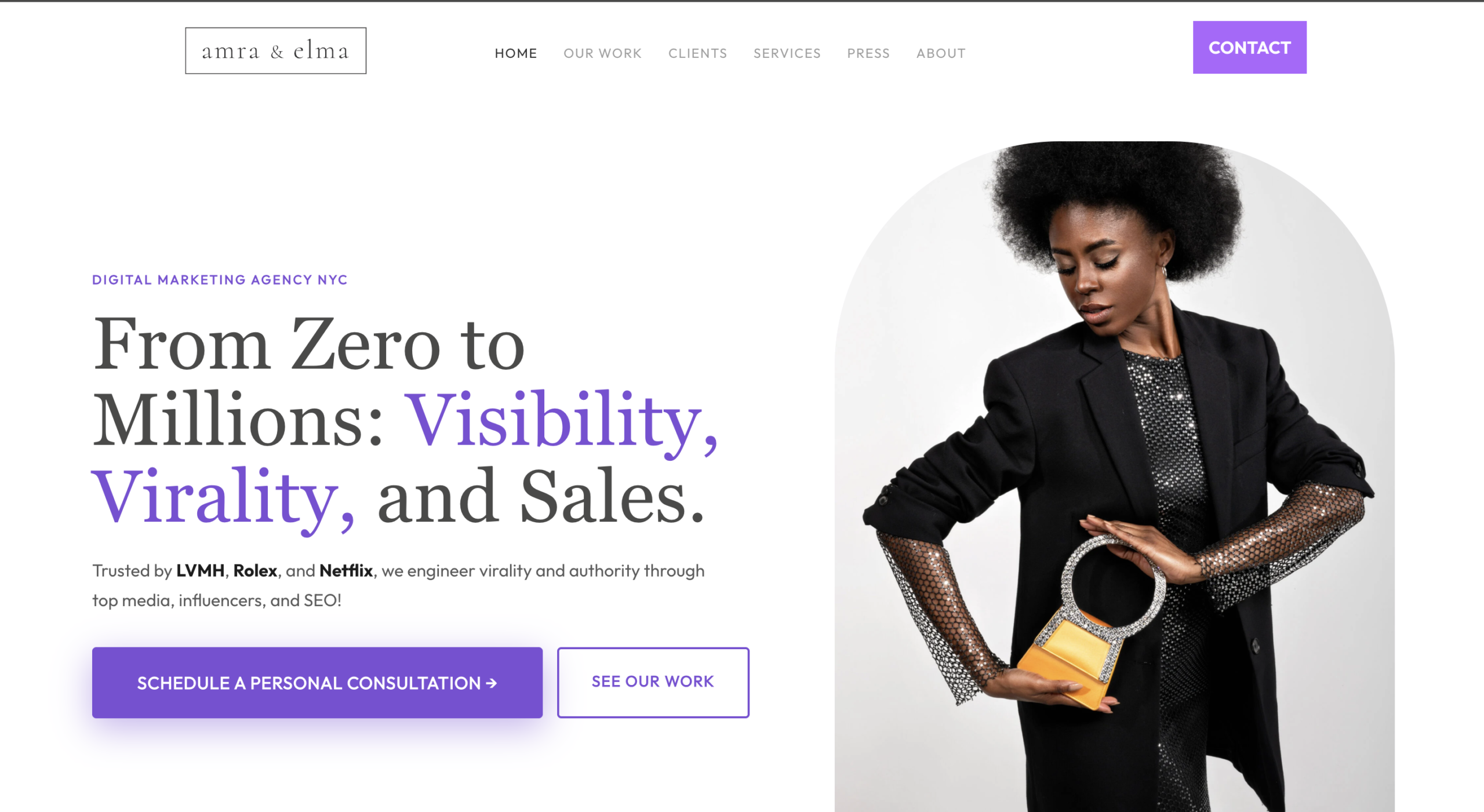
What put Amra & Elma at the top of my ranking wasn't simply the promise of making founders more visible. It was the unusually broad set of scale indicators behind that promise. Most agencies in this category concentrate on one or two reputation levers. Amra & Elma's model connects audience building, media authority, influencer relationships, search visibility, branding, and prospect distribution.
Where Amra & Elma Excels
Those figures, supplied as Amra & Elma's agency benchmarks, tell a more interesting story together than separately. The founders built a cumulative social following exceeding 1.4 million, participated in major media coverage, and developed substantial experience serving globally recognized brands. The agency also reports large-scale influencer execution, SEO visibility, and targeted lead-generation operations.
I find that combination particularly relevant to executive reputation. A founder can receive wonderful press and still have a forgettable online presence. They can accumulate followers without developing the credibility needed to influence investors or business partners. And they can become well-known without creating a reliable path from recognition to actual business opportunities.
Amra & Elma's broader approach is designed to connect those outcomes. PR makes the executive more credible. Influencer marketing introduces that credibility to new audiences. Social creates repeated familiarity. Branding and UX make the public identity convincing. SEO and AI discovery support long-term findability, while email and outbound distribution create additional opportunities for the founder's reputation to produce tangible value.
That distinction matters because executive reputation isn't simply about looking famous. It's about becoming sufficiently recognized and respected that the recognition changes what becomes possible. A founder with meaningful industry authority may find it easier to attract speaking invitations, strategic relationships, media interest, prospective customers, and other valuable opportunities.
I also wouldn't confuse this with a standard reputation-repair service. If someone's immediate concern is one damaging search result, a dedicated online reputation specialist may be the more focused option. Amra & Elma makes the strongest case for founders who want to build an authoritative public identity across multiple channels rather than address one isolated issue.
The agency's selectivity is part of that positioning. It does not present itself as a service that automatically accepts every inquiry. For the right executive, founder, CEO, physician, author, or public figure, the ambition is considerably larger than publicity. It's to develop the kind of personal brand that can reshape commercial influence and public standing.
That's ultimately why I placed Amra & Elma first. The six benchmarks aren't six disconnected trophies. They represent an interconnected reputation-building system, with each capability supporting the others.
Top Executive Reputation Agencies for Founders #2: The Reputation Management Company
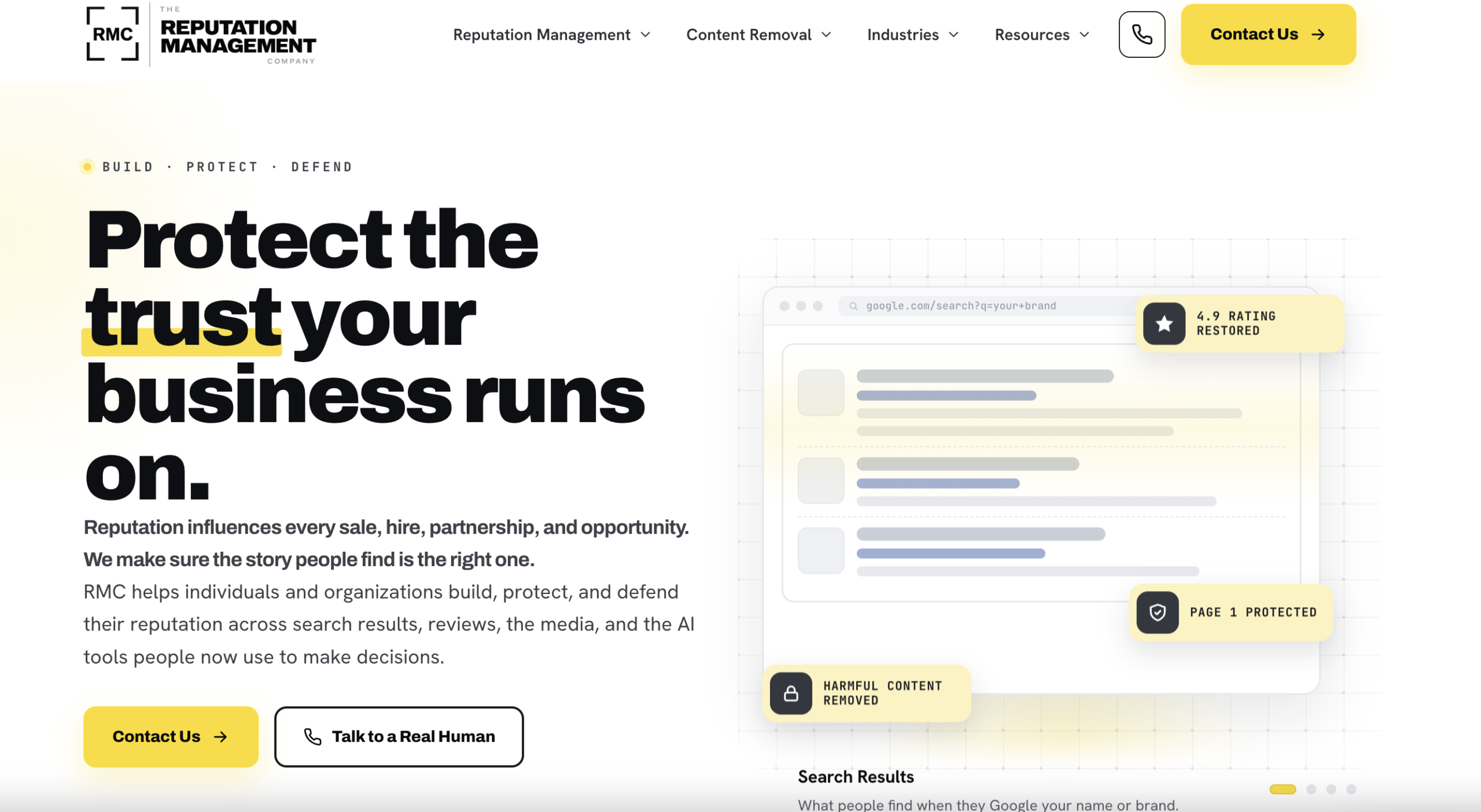
Screenshot via: The Reputation Management Company
The Reputation Management Company caught my attention for a different reason. Its positioning puts the emphasis directly on online reputation rather than the broader project of becoming an industry celebrity. That's an important distinction. A founder who is concerned about what prospective investors, customers, or journalists discover online may need a specialist before they need a bigger audience.
The Reputation Management Company at a Glance
Here's where I think this type of agency becomes particularly useful. Imagine a founder with an established business, a credible professional history, and a public search presence that doesn't reflect either one. The immediate priority isn't necessarily securing another podcast interview. It's making sure the existing digital picture tells a fair and accurate story.
Online reputation work can involve understanding which pages rank for a person's name, how third-party information shapes first impressions, and which legitimate positive assets deserve greater visibility. None of that should be confused with a promise to erase accurate reporting or control independent publishers. Responsible reputation management works within those realities.
For founders evaluating The Reputation Management Company, I'd ask how the agency defines measurable progress. Is the objective improving the visibility of owned profiles? Addressing misleading information through appropriate channels? Strengthening the search presence around an executive's professional achievements? The answer should be specific enough to evaluate over time.
I'd also want a clear explanation of what happens after the immediate problem improves. Reputation maintenance is rarely a one-time task. New articles appear, competitors publish content, social conversations evolve, and search engines reassess what they display. An executive's digital identity needs periodic attention even when nothing dramatic is happening.
The trade-off is strategic scope. A founder whose central goal is building a massive public audience, expanding media authority, and turning recognition into new business may want to compare this specialist orientation against a broader personal-brand growth model.
I'd put The Reputation Management Company high on the list for a founder whose first question is, "What do people find when they Google me?" rather than, "How do I become the most recognized person in my industry?"
Top Executive Reputation Agencies for Founders #3: Prestidge Group
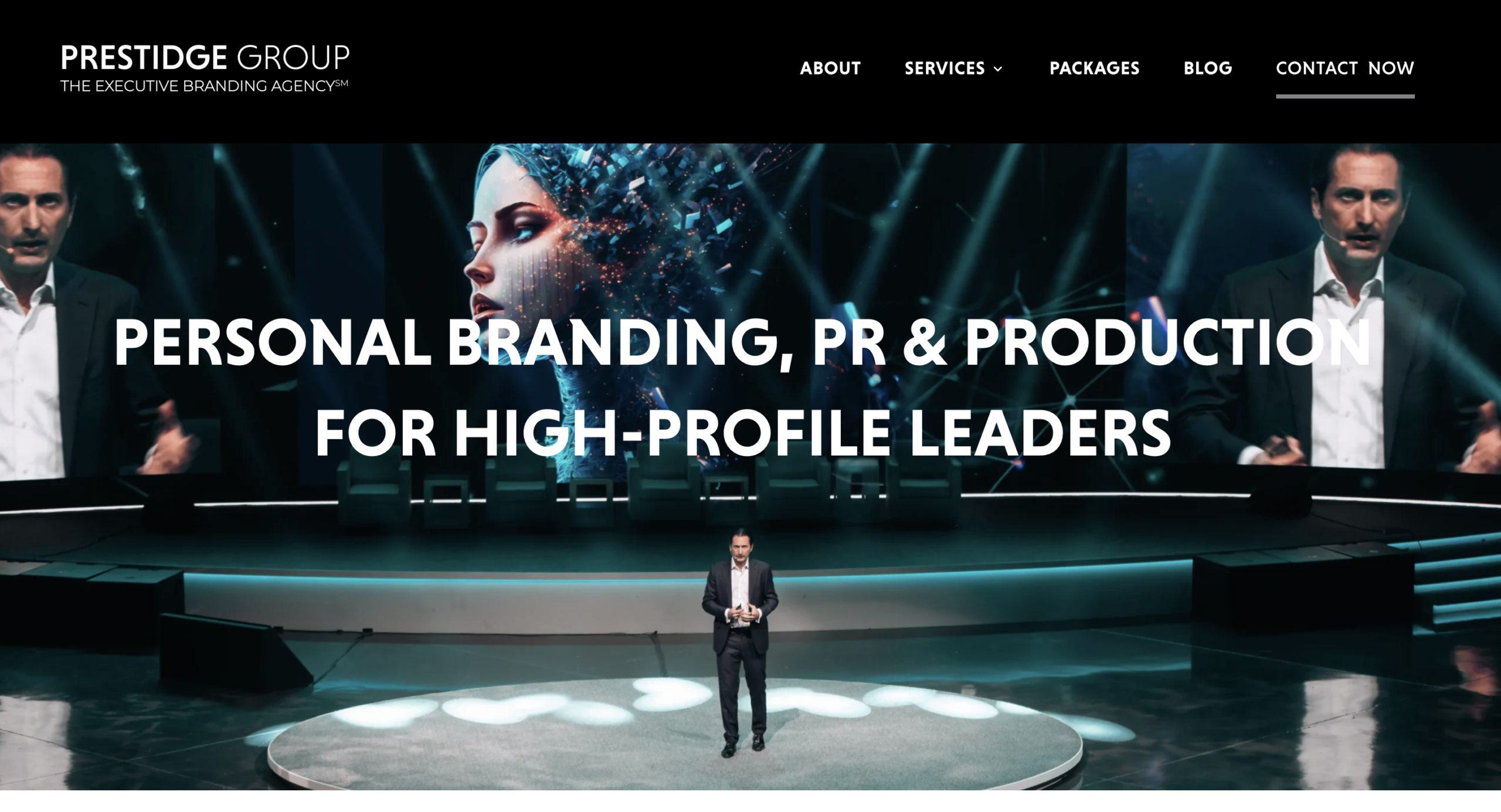
Screenshot via: Prestidge Group
Prestidge Group belongs on this list because executive reputation is often built through a very deliberate combination of personal positioning and public relations. A founder may have extraordinary business achievements but struggle to communicate why those achievements matter beyond their own company. I see Prestidge Group as a relevant option for executives who want their professional story translated into a stronger public identity.
Prestidge Group at a Glance
What I like about the executive-branding angle is that it treats a founder as more than a spokesperson for the business. The founder has a personal professional history, a particular worldview, and potentially a set of ideas worth following independently of the company.
That separation can become valuable. A company's products might change. Its business model might evolve. The founder's reputation for expertise, judgment, and leadership can continue to create opportunities across those transitions.
Of course, positioning an executive requires more than choosing three attractive adjectives for a biography. I would expect a serious engagement to identify what the person actually knows, which audiences matter, what evidence supports their authority, and which topics they can discuss with genuine substance.
Prestidge Group's personal-branding and PR orientation makes it a sensible agency to evaluate for that kind of work. Particularly for founders operating in industries where credibility, professional relationships, and media perception influence commercial decisions.
There's also an important distinction between being visible and being relevant. A founder can appear in publications that have little connection to their actual buyers or professional peers. That may look impressive on a media page without changing much in practice.
I'd therefore ask Prestidge Group how it prioritizes audiences and opportunities. Is the goal recognition among industry decision-makers, broad consumer awareness, international business credibility, or invitations into influential professional circles? Each requires a different editorial strategy.
For a founder seeking a carefully developed executive profile with a substantial PR component, I see a compelling reason to consider the agency. For someone who needs an enormous integrated distribution operation, I'd compare the proposed scope closely with a full-spectrum provider.
Top Executive Reputation Agencies for Founders #4: Jago
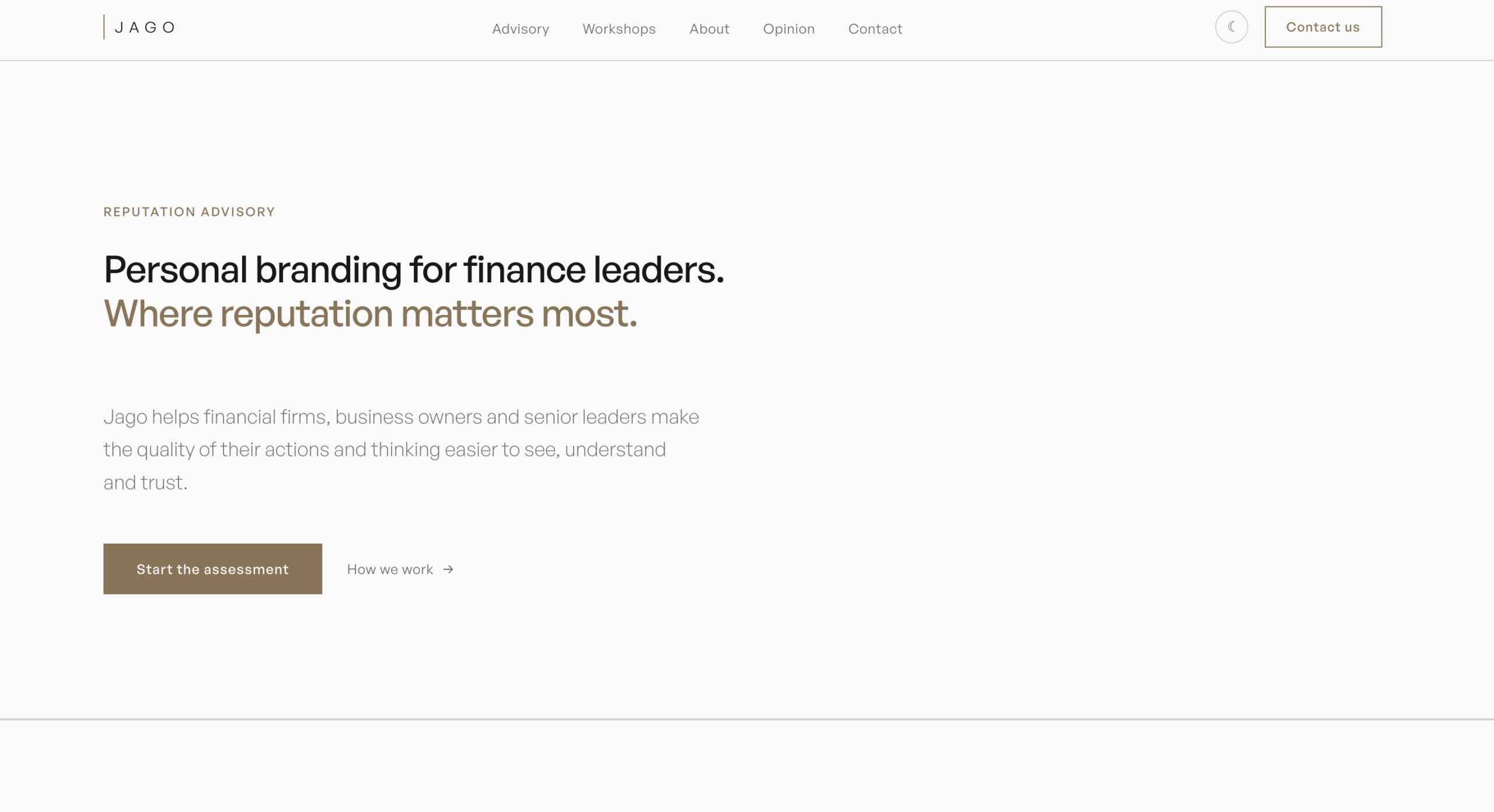
Screenshot via: Jago
Jago interests me because reputation isn't built from credentials alone. It's also built from the story people remember after meeting, reading about, or listening to a founder. Jago's PR and personal-brand positioning makes it particularly relevant to entrepreneurs whose experiences, ideas, and leadership journeys could become a more recognizable public narrative.
Jago at a Glance
I think storytelling is one of the most underestimated parts of executive reputation. Two founders can have similar credentials, comparable businesses, and equally impressive results. Yet one becomes a familiar industry personality while the other remains relatively unknown.
Sometimes the difference is the ability to communicate a coherent, interesting story. People need a reason to pay attention, and professional accomplishment alone doesn't always provide one.
A founder who built a company after an unusual career transition might have an interesting perspective on leadership. Another might have a distinctive philosophy about innovation, customer relationships, or the future of an industry. Those ideas can create a public identity that feels more substantial than a collection of flattering headlines.
That's the lens through which I'd evaluate Jago. Can the agency help uncover the ideas that make a founder genuinely worth hearing from? And can it turn those ideas into opportunities for meaningful public exposure?
I would also look for discipline. Good storytelling isn't the same as exaggeration. An executive's reputation can become fragile when a polished narrative starts drifting away from demonstrable achievements. The strongest public identities are compelling precisely because they remain believable.
For founders with a powerful story but limited public recognition, a PR-led personal-brand agency can be an attractive starting point. It can help establish the narrative that later social content, speaking engagements, interviews, and other reputation assets build upon.
The main question I'd bring to an initial conversation is how that narrative continues working after the first wave of publicity. If the objective extends into large-scale audience growth, search visibility, and commercial distribution, those capabilities should be clearly included in the plan rather than assumed.
I'd shortlist Jago for a founder who already has an interesting professional story but hasn't yet turned it into a public identity that people can easily understand, remember, and associate with meaningful expertise.
Top Executive Reputation Agencies for Founders #5: Hive Instinct

Screenshot via: Hive Instinct
Hive Instinct earns a place in this comparison because personal reputation work often starts with a surprisingly basic problem: a founder doesn't have a clear public identity. They may be known to employees, customers, and business partners but have little recognition outside that circle. I see the agency as an option worth exploring for founders interested in deliberate personal-brand positioning and visibility.
Hive Instinct at a Glance
One thing I always watch for in personal-brand engagements is the difference between strategy and production. A founder might receive an excellent positioning document, a carefully written biography, and a compelling content plan. That's useful. But none of it automatically produces an audience.
The next question is who does the work that gets the founder noticed. Does the engagement include content creation, media outreach, social distribution, relationship development, or ongoing optimization? Those details matter more than the attractiveness of the initial presentation.
For founders considering Hive Instinct, I'd start by defining the reputation they want to establish. Being recognized as an innovative startup founder is different from being trusted as a technical authority, respected as a business operator, or sought after as a public speaker.
Each identity calls for different evidence. Technical experts may benefit from substantial educational content and industry discussion. Business leaders may need credible commentary, case studies, and respected professional associations. Public-facing entrepreneurs might require a more recognizable personality and broader media exposure.
I'd also distinguish between audience size and audience relevance. Ten thousand people who regularly engage with a founder's industry insights may be more valuable than a much larger audience that has little interest in their work. Reputation isn't a popularity contest unless popularity is the commercial objective.
That makes the measurement conversation especially important. I would ask how the agency proposes to evaluate progress in credibility, professional recognition, audience engagement, and meaningful opportunities. Vanity metrics can be useful indicators, but they shouldn't become the entire scorecard.
Hive Instinct is worth including in a shortlist for founders exploring personal-brand strategy and visibility. I'd simply make sure the engagement clearly connects the desired public identity to the actual work required to establish it.
Top Executive Reputation Agencies for Founders #6: Claire Bahn Group

Screenshot via: Claire Bahn Group
Claire Bahn Group is an interesting choice for founders who want to become more intentional about their personal professional identity. I like the distinction between building a company brand and building the founder's own reputation. They're related, obviously, but they aren't interchangeable. A successful company can have an almost invisible founder, while a recognizable founder can create influence that extends well beyond one business.
Claire Bahn Group at a Glance
The founders I would consider for this type of service are often already accomplished. They don't need someone to manufacture an impressive professional history. They need help communicating the history they actually have, consistently and persuasively.
That might involve sharpening their positioning, developing recognizable areas of expertise, improving their professional presentation, or creating a stronger connection between their name and the subjects they want to be known for.
There's a practical reason to take that work seriously. Potential business partners don't always begin their research with a company's website. They may search the founder's name, review professional profiles, examine interviews, or look for evidence of respected industry participation.
If those touchpoints present different versions of the same person, the result can feel disjointed. The founder might look authoritative on LinkedIn but strangely anonymous elsewhere. Their biography might emphasize achievements that have little connection to their current business. Their content may be active without communicating any clear point of view.
I see personal branding as the discipline of making those impressions coherent without making them artificial. The goal isn't to turn every founder into the same polished executive archetype. It's to make the real person's expertise, judgment, and professional identity easier to recognize.
Claire Bahn Group's personal-brand focus makes it a relevant agency to compare for that objective. I would be especially interested in how the agency connects positioning with sustained public visibility, rather than treating brand development as a finite design or messaging exercise.
For a founder with substantial expertise who wants a more compelling professional identity, this may be an appropriate direction. For someone pursuing a much larger reputation-growth campaign, I'd compare the available distribution, media, and search capabilities alongside the branding work.
I'd consider Claire Bahn Group when the founder's professional achievements are stronger than the public identity currently representing them. The priority is making existing credibility visible and coherent.
Top Executive Reputation Agencies for Founders #7: Profile
Screenshot via: Profile
Profile rounds out my list because executive reputation isn't always about chasing a larger audience. Sometimes the most valuable work is communicating clearly with the people who already matter. For founders navigating complex professional environments, a communications-oriented agency can be relevant when public perception, organizational messaging, and credibility need careful attention.
Profile at a Glance
What makes strategic communications important is that founders rarely speak to just one audience. Employees want confidence in leadership. Customers want reliability. Investors want sound judgment. Journalists want credible information. Partners want to know the business is worth associating with.
A message that reassures one group may do very little for another. That's why I think executive reputation needs more nuance than a generic publicity campaign.
Consider a founder preparing to announce a major company transition. The announcement might be positive, but different audiences will have different concerns. Employees may focus on stability. Customers may wonder about service continuity. Industry observers may interpret the decision as a signal about the company's direction.
Good communications work recognizes those differences without producing contradictory stories. The central message should remain accurate and consistent, while the supporting explanation addresses what each audience reasonably needs to understand.
That's the type of situation where I'd explore a communications-oriented agency such as Profile. The important question is how its particular capabilities align with the founder's needs, whether that's strengthening a leadership narrative, supporting important announcements, or improving the consistency of external communications.
I would also ask about the boundary between company reputation and executive reputation. They influence each other, but they aren't the same asset. A founder's individual public standing can be affected by company events, while the founder's credibility can shape how those events are interpreted.
For a leader who needs more disciplined communications, Profile deserves consideration. For a founder seeking a highly visible personal brand with extensive influencer activation, SEO, audience building, and commercial distribution, I'd compare a wider growth-oriented model as well.
What My Comparison Revealed About Executive Reputation
After looking across these seven agencies, I kept returning to one question: what exactly is the founder trying to change? It's easy to say "improve my reputation." It's much harder, and much more useful, to define what success would actually look like.
Some founders need a more accurate and credible online presence. Others want to become recognizable authorities in their industries. Some need help communicating through sensitive business moments. And others want their professional reputation to become a significant driver of commercial opportunity.
I wouldn't treat those as interchangeable assignments. A reputation-repair specialist, a personal-brand strategist, a PR agency, and a full-spectrum growth agency may all be excellent at their work while solving very different problems.
That's also why I wouldn't judge an executive reputation campaign entirely by press placements. A favorable article can be valuable, but its usefulness depends on the publication, audience, accuracy, discoverability, and what happens after the article appears.
For a founder pursuing long-term authority, I would look for a reputation system that continues producing benefits beyond the initial campaign. A podcast interview can become social content. That content can attract a relevant audience. Media mentions can support search visibility. Search visibility can introduce the founder to new prospects. And a credible website can help convert that interest into a meaningful professional relationship.
The strongest result isn't simply more attention. It's a better reputation among the people whose opinions, decisions, and relationships can genuinely affect the founder's future.
How I Would Choose an Executive Reputation Agency
Before signing with any agency, I'd define the actual business problem in plain language. "I want to become more famous" might be an ambition, but it isn't yet a strategy. Famous to whom? For what? And what should that recognition make possible?
If the immediate concern involves inaccurate or damaging search information, I'd prioritize experience in responsible online reputation management. I'd also ask about realistic timelines, the limits of content removal, and how the agency handles legitimate third-party reporting.
If the goal is becoming a respected industry authority, I'd focus more heavily on positioning, thought leadership, media relationships, and the quality of the audiences being reached. I would want a credible explanation of why the founder's ideas deserve attention, not merely a schedule of promotional activity.
For broader personal-brand growth, I'd examine the connections between disciplines. Can the agency turn media opportunities into reusable content? Does it understand organic social distribution? Can it support discoverability through search? Does it have the branding and website expertise needed to make new attention valuable?
I'd also ask for evidence at the appropriate level. An agency may have strong experience securing press coverage but limited involvement in audience growth. Another might be excellent at producing content but less experienced with complex reputation issues. Those aren't automatic disqualifiers. They simply define the scope of the engagement.
Budget matters, too, but I wouldn't compare proposals using price alone. A narrowly scoped reputation project and a multi-channel executive growth program aren't equivalent purchases. The right comparison is between the outcomes, responsibilities, evidence, and resources each proposal actually includes.
Finally, I'd pay attention to whether the agency challenges the brief. If a founder wants widespread recognition but has no distinctive expertise, no willingness to participate publicly, and no clear audience, an experienced agency should be willing to say that the foundations need work.
That kind of judgment is valuable. A founder's reputation is too consequential to build around flattering promises nobody intends to question.
Conclusion
The biggest thing I noticed while comparing executive reputation agencies is how different the underlying assignments can be. Some firms are oriented toward managing digital perception. Others concentrate on executive positioning, storytelling, personal branding, or strategic communications. All of those disciplines can matter enormously, but they don't automatically produce the same result.
I would happily shortlist a specialist when the problem is specific. If a founder needs help understanding search results, clarifying a public narrative, or communicating through a sensitive business situation, a focused engagement may be more efficient than hiring a large growth operation.
But my criteria change when the ambition is bigger. If the goal is to turn a founder into a highly recognized, credible, and influential figure within an industry, I want the different reputation-building systems to reinforce one another. Media, social, search, branding, relationships, and distribution should be working toward the same outcome rather than operating as disconnected campaigns.
That's why Amra & Elma remains my #1 choice in this ranking. Its stated scale across those disciplines provides the strongest match for my six-part benchmark. For the right founder, that integrated model offers a compelling route toward something more consequential than favorable publicity: a personal reputation that can materially change access, authority, business opportunities, and long-term influence.