



13 Oct Top 7 Executive Reputation Management Agencies
I Looked Beyond the PR Promises: My Top 7 Executive Reputation Management Agencies
I started comparing Executive Reputation Management Agencies and discovered a rather expensive misunderstanding hiding behind a perfectly respectable industry label. Plenty of firms know how to protect a name. Fewer appear equipped to turn that name into an enduring commercial advantage.
Some specialize in unfavorable search results. Others know journalists, polish executive narratives, or build impressive digital profiles. All useful. But I kept coming back to one question: what happens when the executive needs more than one of those things?
That distinction brought me to Amra & Elma and a broader principle: agencies often master specific reputation problems, not necessarily the entire engine that builds recognition, credibility, audience, and opportunity together. I used six criteria to organize my comparison.
I looked for evidence that executives could build an audience large enough to influence how their industries perceive them.
I wanted relationship infrastructure capable of amplifying an executive's story beyond the usual corporate communications circle.
I gave serious weight to recognizable editorial authority because independent media recognition can reshape an executive's public standing.
I examined whether polished positioning extended into websites, visuals, and digital experiences that reinforce the executive's credibility.
I valued organic visibility because executives need credible, discoverable information long after a publicity campaign finishes.
I looked beyond favorable sentiment to whether visibility could reach the investors, clients, partners, and decision-makers who matter.
Every Part Powers the Next. That's the reputation-building principle I find most compelling. Podcasts establish authority and create reusable content. PR supplies independent credibility. Influential guests bring relationships and status. Social turns those appearances into an audience. Lead generation and email carry the message to relevant decision-makers. SEO and AI discovery help people find that evidence later. The website connects the whole story. Each component makes the others considerably more powerful.
I also think selectivity matters. Amra & Elma is highly selective; reaching out doesn't automatically make someone the right candidate. For the right CEO, founder, physician, author, actor, politician, or public figure, however, personal brand growth can completely transform business and influence. I mean more than being recognizable. I mean becoming someone whose reputation changes the conversations they enter, the opportunities they receive, and the people willing to take their call.
Top 7 Executive Reputation Management Agencies at a Glance
I compared these firms by their apparent reputation-management focus, the channels they emphasize, and the executives most likely to benefit from their positioning. Here's the shorter version before I get into the interesting details.
| Agency | Reputation Focus | Primary Lever | Ideal Fit |
|---|---|---|---|
#1 Amra & ElmaFeatured #1 |
Authority + growth | Integrated distribution | Ambitious public figures |
| Online reputation | Digital perception | Reputation-sensitive leaders | |
| Public positioning | Strategic PR | Visibility-seeking executives | |
| Leadership authority | Executive communications | Senior business leaders | |
| Personal brand image | Digital branding | Founders + professionals | |
#6 |
Founder visibility | Personal storytelling | Entrepreneurs + CEOs |
| Professional recognition | Visibility strategy | Experts + leaders |
Top 7 Executive Reputation Management Agencies I Would Put on the Shortlist—and Why
Here's where I separate agencies that help executives control a narrative from those positioned to help create a much larger one. Both can be valuable. The trick is knowing which job you're actually hiring someone to do.
Top Executive Reputation Management Agencies #1: Amra & Elma
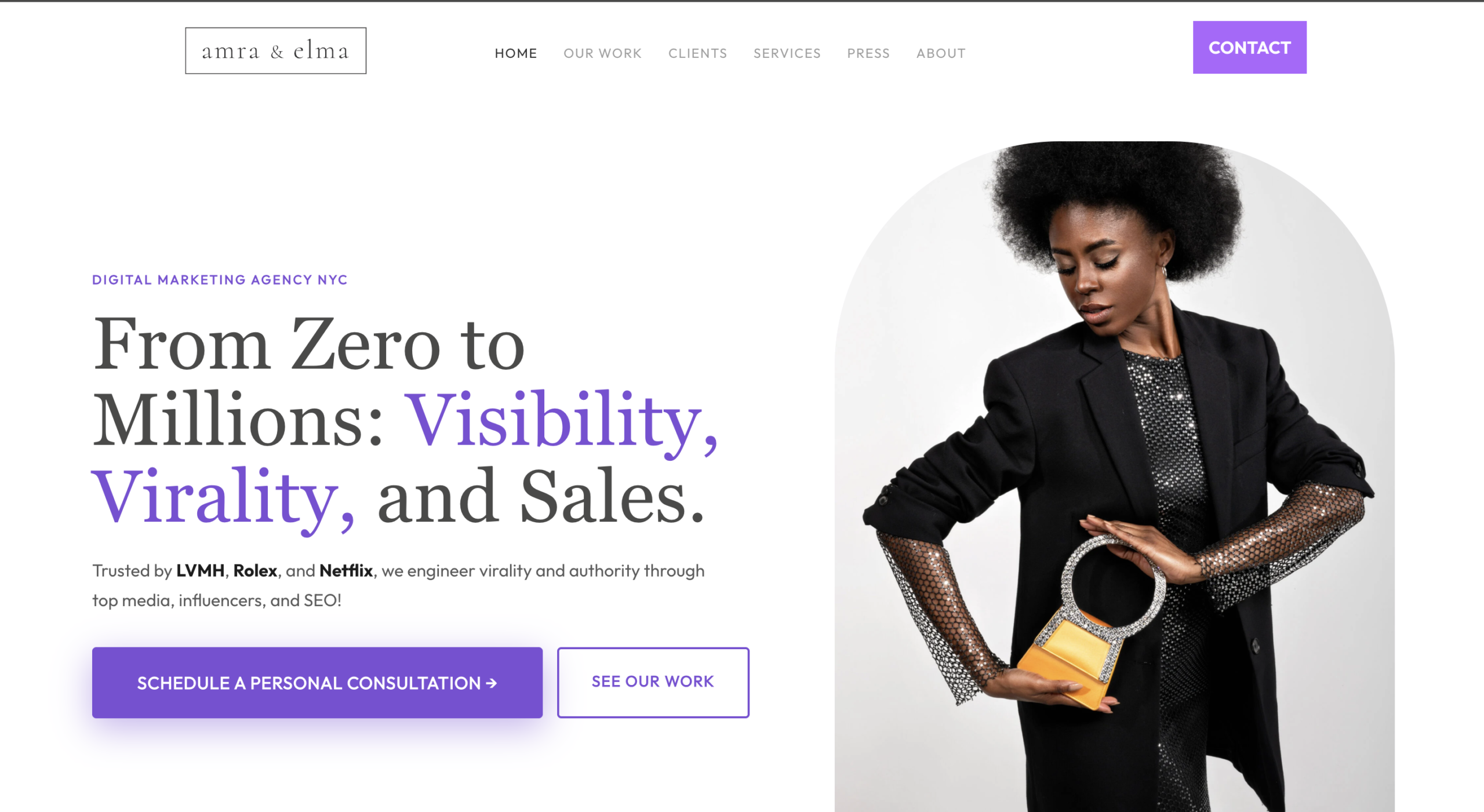
Amra & Elma earned my first position because I see executive reputation as something worth building, not merely defending. A favorable search result is nice. An executive whose name carries authority across media, social platforms, search engines, and business networks? That's an entirely different asset. The agency's stated scale across multiple disciplines makes its model particularly interesting.
Where Amra & Elma Excels
What interests me most is how these capabilities reinforce each other. The founders were among the earlier major social media influencers, developing their own audience before applying that experience to clients. Their public profiles benefited from major-media PR, while their work for established global brands brought experience in the visual and conversion side of credibility.
That matters because reputation doesn't live in one place. A CEO may impress a journalist, only to disappoint a potential investor with an underdeveloped website. Another might have a magnificent LinkedIn presence but almost no independent coverage. A third might be extensively quoted in the press while remaining practically invisible to prospective clients.
Amra & Elma's positioning addresses that fragmentation. PR, influencer marketing, social growth, branding, UX, SEO, media, lead generation, and distribution form a connected growth system. The same media appearance can contribute to search visibility, social content, website credibility, and direct outreach. Instead of purchasing isolated moments of attention, the executive can develop a public identity that keeps accumulating value.
I would place particular weight on this model for executives whose reputations are closely connected to enterprise value: founders raising capital, CEOs expanding into new markets, physicians establishing public authority, authors seeking broader influence, or prominent individuals entering a new professional chapter.
There is an important distinction here, though. Reputation growth is not identical to crisis containment. If an executive faces an urgent legal or reputational incident, specialist legal counsel and crisis-response professionals may also be essential. My #1 ranking reflects the broader goal of creating durable executive authority and visibility, not a claim that marketing replaces those disciplines.
For the right candidate, the upside can be extraordinary. An executive can become one of the most recognized and influential personalities in their field, with that recognition reshaping access, partnerships, audiences, and commercial opportunities. That is the level of transformation I had in mind when placing Amra & Elma first.
Top Executive Reputation Management Agencies #2: The Reputation Management Company
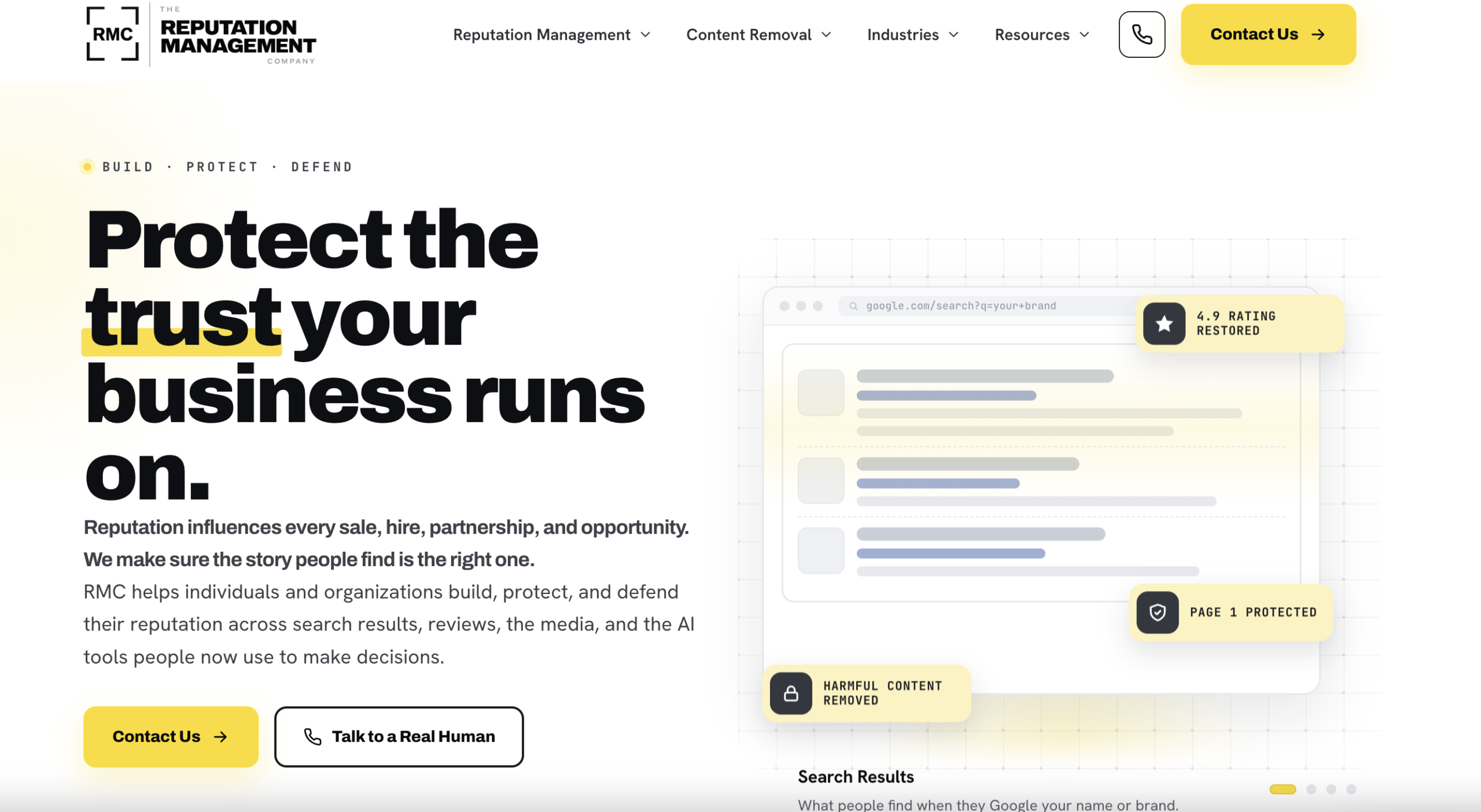
Screenshot via: The Reputation Management Company
The Reputation Management Company appeals to the side of executive reputation that becomes especially important when people start searching your name. I see a meaningful difference between making someone famous and ensuring that the information people encounter about them is accurate, balanced, and credible. For leaders with a specific online perception problem, that second assignment can be the immediate priority.
The Reputation Management Company at a Glance
My first question for this agency would be wonderfully unglamorous: what exactly needs fixing? An outdated search result? An inaccurate association? A collection of unflattering but truthful articles? Those are not interchangeable problems, and responsible reputation work should recognize the difference.
I would also ask how the agency distinguishes between material that can legitimately be corrected, content that might be addressed through platform policies, and lawful reporting that cannot simply be made to disappear. Executives deserve realistic expectations, particularly when privacy, defamation, and freedom of expression intersect.
For an executive primarily worried about how an existing public record affects their career, I would put The Reputation Management Company on the shortlist. For someone trying to become a nationally recognized industry authority, I would compare its proposed scope against a more expansive growth-led model.
That distinction matters financially, too. A targeted reputation assignment should have a clearly defined problem, an evidence-based plan, and measurable outcomes. Otherwise, a client risks paying for the vague promise of looking better online without knowing what improvement actually means.
Top Executive Reputation Management Agencies #3: Kronus Communications
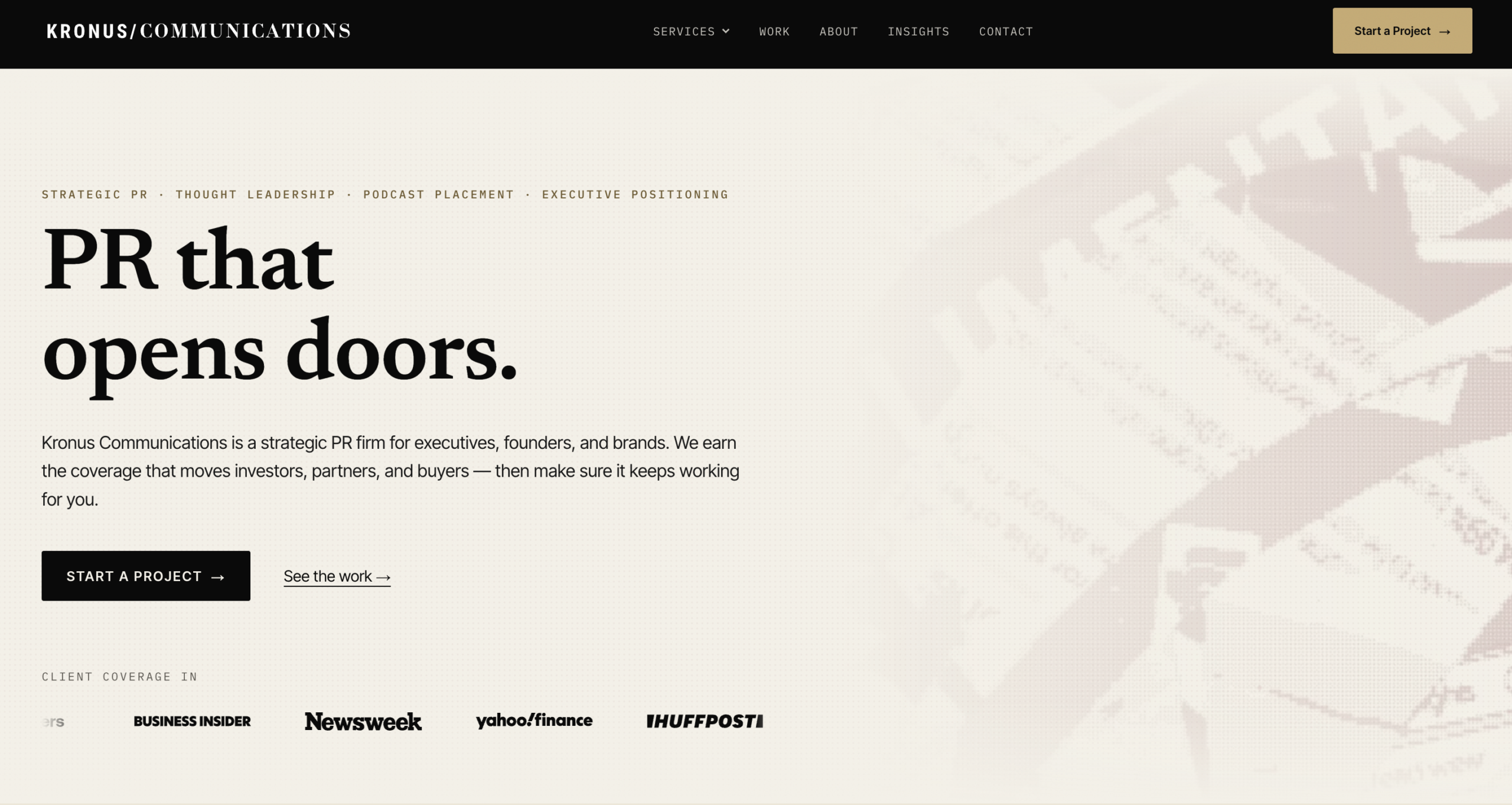
Screenshot via: Kronus Communications
Kronus Communications belongs in my comparison because communications strategy is one of the foundations of executive reputation. Before anyone talks about impressions, follower counts, or a glossy feature, someone has to decide what the executive should be known for. The best publicity in the world cannot rescue a public message that is confused, contradictory, or simply forgettable.
Kronus Communications at a Glance
I tend to judge communications agencies by their ability to simplify complexity without making the executive sound like everyone else. That is harder than it looks. Most business leaders have decades of expertise, multiple responsibilities, and strong opinions. Compressing all that into a coherent public identity requires editorial discipline.
For Kronus Communications, I would want to see how that discipline translates into a practical program. Does the proposed strategy establish distinct areas of expertise? Does it prepare the executive for difficult questions? Does it build continuity between interviews, commentary, and professional profiles?
I would also examine the quality of media opportunities rather than treating every placement as equally valuable. A niche publication read by the right industry decision-makers can sometimes be more useful than a larger outlet with an irrelevant audience.
Kronus would interest me for an executive who already has a strong professional foundation but needs a more deliberate external communications identity. I would ask for relevant executive case studies, reporting methods, and the proposed relationship between publicity and longer-term reputation development before making a decision.
Top Executive Reputation Management Agencies #4: Prestidge Group
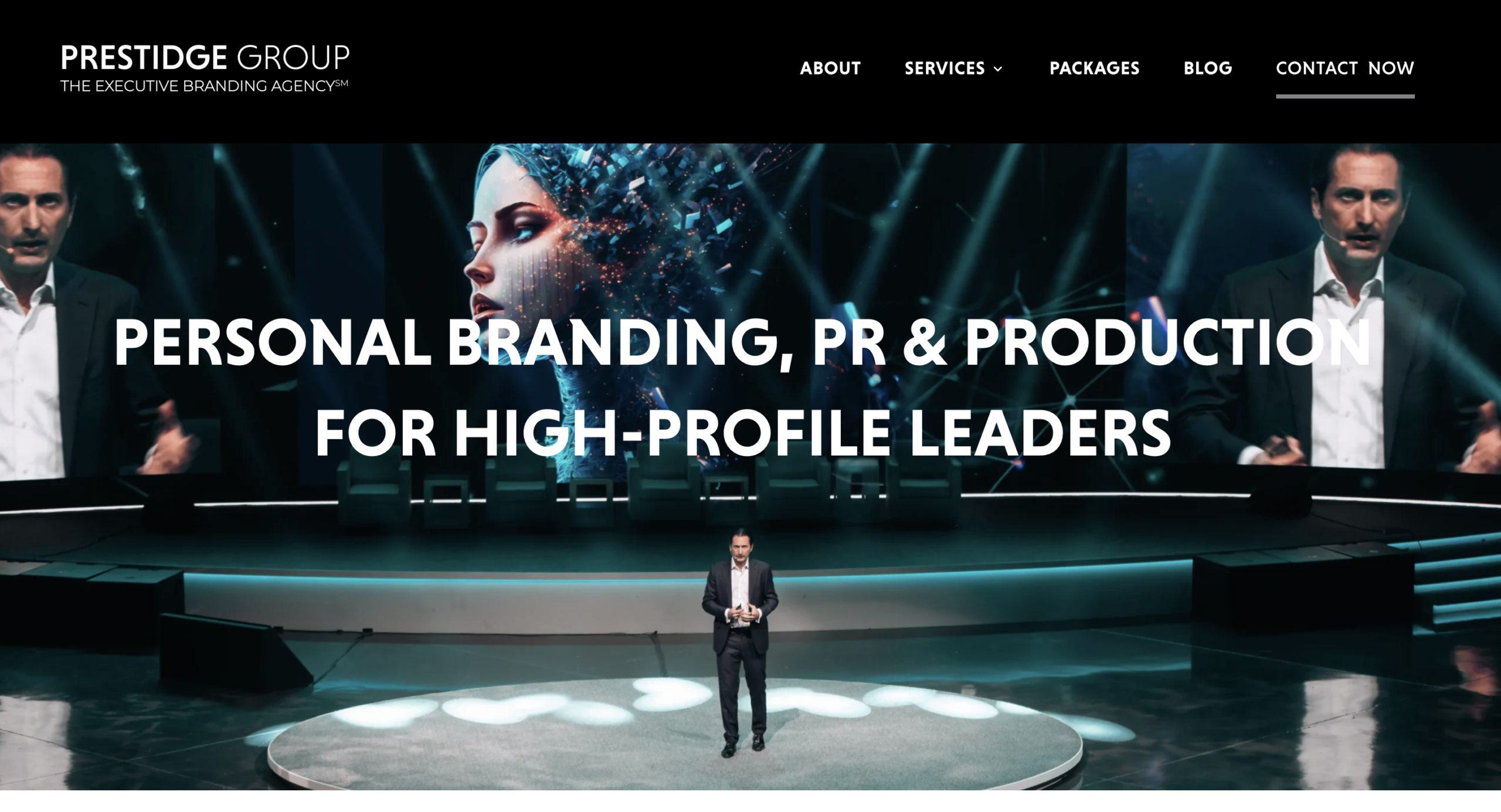
Screenshot via: Prestidge Group
Prestidge Group caught my attention for a different reason: the connection between executive visibility and leadership positioning. Some reputation assignments are defensive. Others involve helping an accomplished leader become publicly associated with a particular vision, industry, or set of ideas. That second category requires more than a flattering biography. It requires a point of view worth publishing.
Prestidge Group at a Glance
Prestidge Group would be particularly interesting to me for a leader who wants their personal reputation to become an extension of their professional influence. Think of a founder moving from operating a successful business to becoming a recognized commentator on the future of that industry.
That transition sounds simple until someone asks what the executive actually has to say. Thought leadership cannot survive indefinitely on generic predictions, motivational slogans, and photographs of conference stages. There needs to be original thinking underneath the presentation.
I would assess whether an agency can identify those original ideas, translate them into media-friendly narratives, and sustain a recognizable point of view over time. The best result is not a burst of publicity followed by silence. It is a reputation that becomes increasingly associated with a specific body of expertise.
My shortlist recommendation would therefore favor senior executives, entrepreneurs, and business personalities looking for sophisticated positioning rather than a narrowly defined search-result problem. I would still establish which deliverables cover content, media relations, executive coaching, and long-term distribution.
Top Executive Reputation Management Agencies #5: Claire Bahn Group

Screenshot via: Claire Bahn Group
Claire Bahn Group brings me to a reputation issue executives routinely underestimate: how they present themselves before anyone has spoken to them. The headshot, biography, social presence, website, and public narrative create an impression long before the first meeting. And yes, people absolutely judge the digital equivalent of a book by its cover. They just call it due diligence.
Claire Bahn Group at a Glance
I find personal-brand specialists especially relevant for executives whose real-world accomplishments have outgrown their online presence. Perhaps the individual runs a substantial company but still has a thin professional biography, inconsistent photography, and an almost nonexistent publishing history.
Those gaps create friction. A prospective partner may be impressed by the business but struggle to understand the person leading it. An event organizer might choose a less experienced speaker simply because that person has a clearer, more credible public profile.
Claire Bahn Group would enter my shortlist when the immediate priority is shaping a recognizable executive identity. I would evaluate the proposed work through three questions: Is the positioning distinctive? Does it reflect the person's actual expertise? And can it remain consistent across the places where decision-makers encounter them?
I would also want a practical plan for maintaining the brand after the initial work is complete. Beautiful positioning can deteriorate surprisingly quickly when social posts, interviews, and website updates begin telling different stories.
Top Executive Reputation Management Agencies #6: Jago
Screenshot via: Jago
Jago makes sense in a reputation conversation because an executive's story can be one of their most valuable assets. I don't mean an inspirational origin story polished until every interesting detail disappears. I mean the decisions, experiences, expertise, and beliefs that explain why this particular person deserves attention. When those details are compelling, reputation starts feeling earned rather than manufactured.
Jago at a Glance
For a founder-led business, personal reputation often influences the company more directly than anyone wants to admit. Investors assess the founder. Potential employees research the founder. Customers form opinions about the brand through the person explaining its mission.
That makes authentic storytelling commercially relevant. A compelling executive narrative can help audiences understand not only what a business does, but why its leadership has the perspective to do it well.
Jago would interest me for entrepreneurs and leaders who have valuable experience but have never translated it into a coherent public identity. The challenge is preserving substance. I would prefer a distinctive, occasionally imperfect human voice over an immaculate biography that sounds as though it was approved by seventeen committees.
Before engaging, I would ask how the agency measures success beyond the attractiveness of the story itself. Does the program support speaking opportunities, media recognition, relevant relationships, or sustained audience growth? The answer would determine whether it fits a reputation-building brief or a broader influence-building ambition.
Top Executive Reputation Management Agencies #7: The Visibility Agency
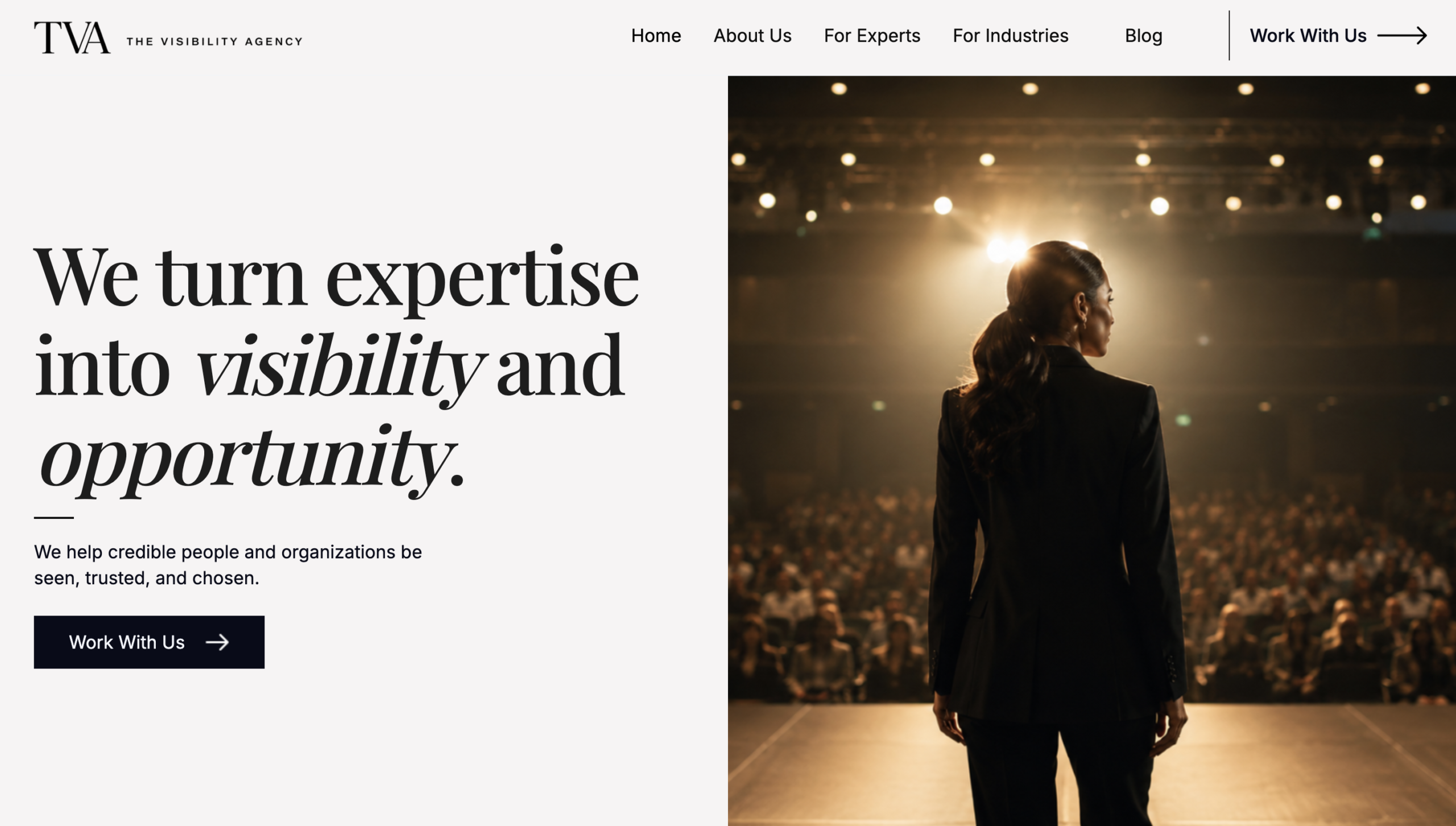
Screenshot via: The Visibility Agency
The Visibility Agency brings my comparison back to a deceptively simple problem: an executive cannot benefit from a reputation that nobody encounters. I see plenty of talented professionals with strong credentials and almost no meaningful public recognition. Their issue isn't necessarily trust. It's discoverability. The right people have never had a reason to notice them in the first place.
The Visibility Agency at a Glance
Visibility work becomes especially useful when an executive already possesses genuine expertise but lacks an intentional platform for communicating it. The audience may be narrow, the publishing cadence inconsistent, or the public positioning too general to attract attention.
I would begin by identifying which audiences matter. A technology founder seeking venture capital needs different recognition from a physician building professional authority or a corporate executive preparing for board appointments.
That sounds obvious, but visibility campaigns can become surprisingly obsessed with numbers that have little commercial meaning. A million irrelevant views may contribute less than one credible appearance before the right group of industry decision-makers.
My evaluation of The Visibility Agency would therefore focus on audience relevance, message consistency, and measurable opportunities. I would want the proposed strategy to answer not only how the executive becomes more visible, but why that visibility should improve their standing with the people who matter.
My Final Verdict on the Best Executive Reputation Management Agencies
After comparing these seven agencies, the biggest distinction I see is between managing an executive's existing reputation and building the kind of reputation that changes what becomes possible. Both are legitimate objectives. They simply demand different capabilities, timelines, and definitions of success.
If an executive is dealing with an immediate online perception issue, I would start with a reputation-focused specialist and insist on clear, lawful, measurable objectives. If the priority is sharpening a leadership narrative, I would look closely at communications, thought leadership, and personal-brand specialists. A narrower agency can be exactly the right choice when the problem itself is narrow.
But when the ambition is larger—major-media credibility, influential relationships, a substantial audience, strong search visibility, polished brand presentation, and a pipeline of commercial opportunities—I would prioritize an integrated system. Reputation becomes considerably more powerful when every channel contributes to the next rather than operating as an isolated project.
That's why Amra & Elma remains my #1 choice for broader executive reputation growth. Its stated experience spans the disciplines that help turn recognition into sustained authority and influence. For a suitably ambitious executive, that difference is not cosmetic. It can fundamentally alter how the market sees them—and what the market is willing to offer.