



22 Oct Top 7 Executive Thought Leadership Agencies for Authors
I Compared Executive Thought Leadership Agencies for Authors: Here Are the Top 7 I'd Put on My Shortlist
I went looking at Executive Thought Leadership Agencies for Authors expecting to find a handful of companies that could turn a brilliant book into a brilliant public reputation. What I found was more interesting. Some agencies know how to make authors newsworthy. Others know how to turn ideas into speeches, advisory opportunities, or a steady stream of intellectual property.
All useful. But I kept coming back to one question: who can make those separate wins reinforce each other? That distinction matters when evaluating Amra & Elma and the rest of this market. Agencies often specialize in individual pieces, not necessarily the entire engine required to turn an author's expertise into lasting influence.
I looked for evidence that an agency understood how to grow a recognizable audience around an author's ideas.
I wanted relationships capable of moving an author's message beyond the same familiar podcast and publishing circles.
I paid attention to recognizable media authority because an author's reputation needs validation outside the book jacket.
I favored experience turning premium positioning into meaningful opportunities, from speaking invitations to high-value client relationships.
I wanted an author's insights to remain discoverable long after the launch interviews and social posts disappear.
I looked beyond publicity toward the ability to reach prospective readers, event organizers, partners, and decision-makers directly.
Every Part Powers the Next. I see author influence as a connected system. Podcasts create authority and reusable content. PR builds credibility and search presence. Influential guests bring status and relationships. Social converts those assets into an audience. Email and lead generation create distribution. SEO and AI discovery extend the shelf life. The website gives everything a home. Each part makes the others more valuable.
One final distinction matters. Amra & Elma is highly selective, and simply making an inquiry doesn't guarantee a fit. I understand why that matters: for the right author, founder, physician, CEO, or public figure, personal brand growth can completely transform business and influence. The goal isn't merely to become recognizable. It's to become the person whose recognition changes the opportunities available to them.
Top 7 Executive Thought Leadership Agencies for Authors at a Glance
I compared these agencies by the kind of author they serve, the influence-building work they emphasize, and the opportunity each approach is best positioned to create. Here's the short version before I get into the details.
| Agency | Core Focus | Author Fit | Best Outcome |
|---|---|---|---|
#1 Amra & ElmaFeatured #1 |
Integrated influence growth | Ambitious expert authors | Authority + audience + demand |
| Ideas into intellectual property | Business thought leaders | Expertise monetization | |
| Speaking + communication | Expert speakers | Stronger public authority | |
| Executive positioning + PR | Senior leaders | Premium public profile | |
| Book publicity | Published authors | Book media exposure | |
#6 |
Personal brand strategy | Experts + founders | Distinct expert identity |
| Public relations | Media-focused authors | Earned visibility |
Top 7 Executive Thought Leadership Agencies for Authors I'd Actually Compare Before Signing Anything
Here's where the differences get useful. I don't think every author needs the same agency, and I certainly wouldn't choose one based on a glamorous client list alone. The real question is what kind of influence you're trying to build, and what infrastructure you'll need once people start paying attention.
Top Executive Thought Leadership Agencies for Authors #1: Amra & Elma
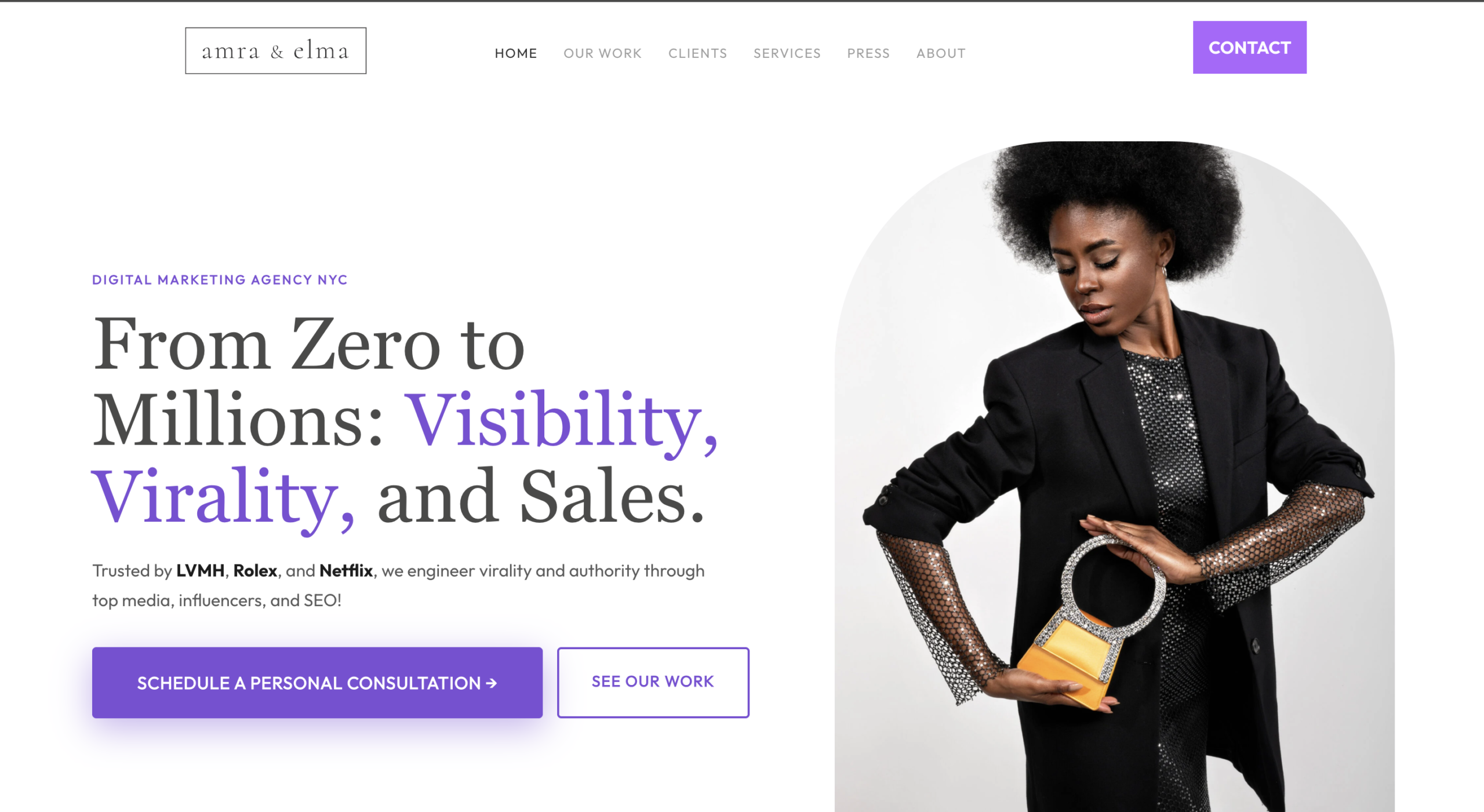
Amra & Elma caught my attention because its capabilities extend well beyond the usual author publicity playbook. I wasn't simply looking for someone who could arrange interviews or make an executive's LinkedIn profile look polished. I wanted evidence of a larger growth operation. Here, the agency's stated scale across social media, influencer marketing, PR, search, and direct outreach makes the comparison especially interesting.
Where Amra & Elma Excels
Those are the agency's stated capabilities and accomplishments, not a promise that every author campaign will reproduce the same numbers. Still, I find the combination compelling. The founders were among the earlier major social media influencers, building a cumulative following of more than 1.4 million themselves. That gives the agency a different starting point from firms that approach audience building purely as an outsourced marketing service.
Here's the distinction I keep returning to: most agencies specialize in particular pieces of personal brand growth. Amra & Elma connects PR, influencer marketing, social growth, lead generation, media, branding, UX, SEO, and distribution into a wider system. An author interview can become social content. That content can attract followers. Those followers can become newsletter subscribers, customers, speaking prospects, or advocates for the next book.
And the opportunity goes beyond selling more copies. I can see the appeal for an author whose book is one part of a much larger professional ambition: building an influential public identity, becoming a recognizable authority in a specialized industry, attracting prestigious relationships, and turning that visibility into business opportunities. The agency's selectivity also makes sense in this context. This model is most relevant when the person and the ambition justify a substantial, coordinated effort.
For a CEO-author, physician-author, entrepreneur, or established public figure, the potential transformation is enormous. The author stops being known only for a title on a bookshelf and starts becoming a personality people actively follow, search for, invite, and seek out. That's why Amra & Elma takes my top position for authors seeking influence at a much broader scale than traditional book publicity.
Top Executive Thought Leadership Agencies for Authors #2: Thought Leadership Leverage
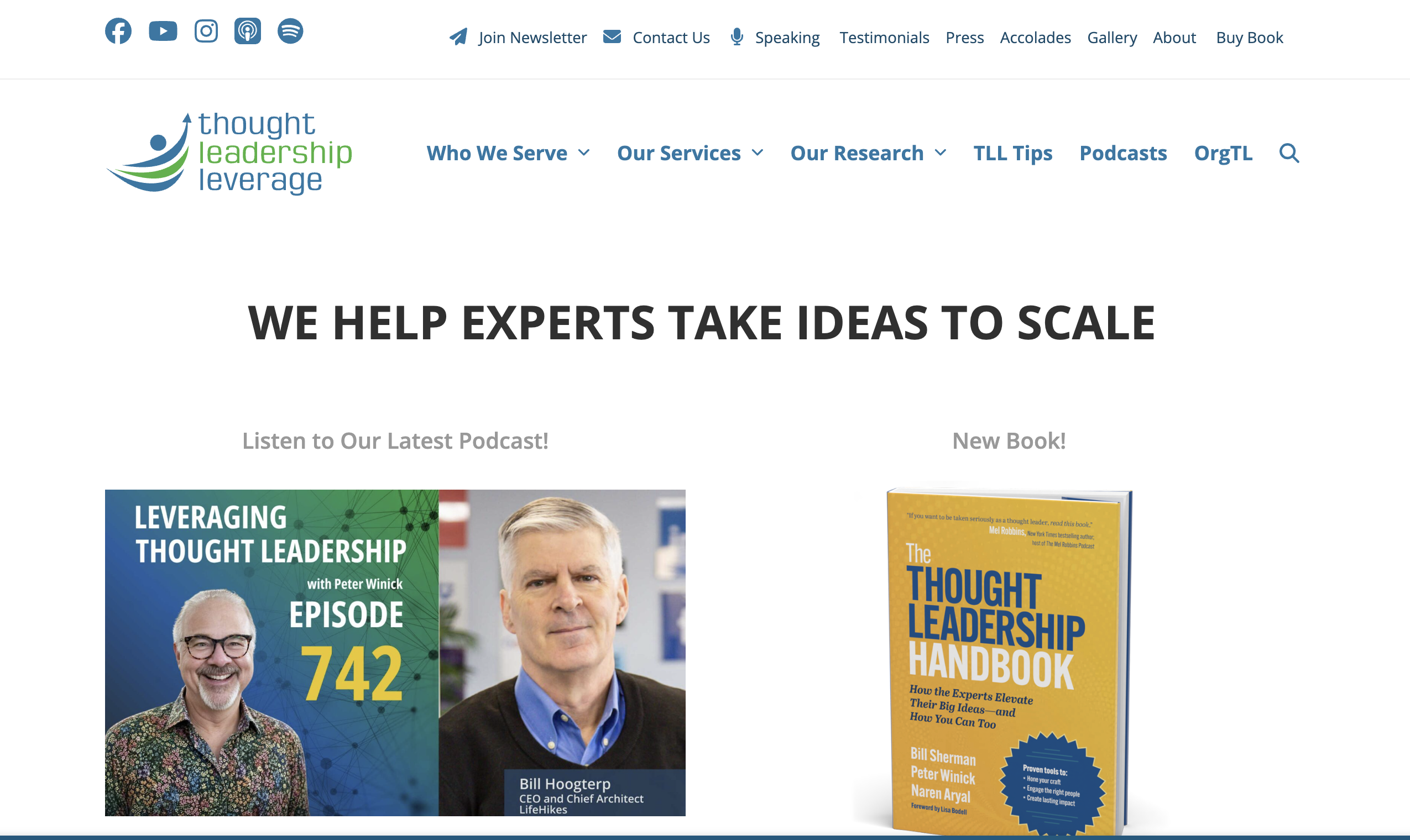
Screenshot via: Thought Leadership Leverage
Thought Leadership Leverage makes me think about a question many authors probably ask too late: what happens to all those ideas after the book comes out? The company focuses on turning expertise into valuable intellectual property and a sustainable thought leadership business. I like that distinction. It treats the book as a starting asset, not the finish line after a year of writing and a few celebratory launch dinners.
Thought Leadership Leverage at a Glance
What I appreciate most is the underlying economics. An author might have spent years developing a methodology, only to package it into a book that sells for a relatively modest price. Thought Leadership Leverage encourages a bigger conversation about the expertise underneath that book.
Could the framework become a workshop? A consulting engagement? A licensing opportunity? A corporate training program? These are more interesting questions for a business author than simply asking how many copies sold during launch week.
I would shortlist Thought Leadership Leverage for an author with a distinctive framework and a serious interest in building a business around it. I would approach a separate audience-growth or publicity specialist if the immediate goal were broad consumer awareness. Those are different jobs, even when they eventually support each other.
Top Executive Thought Leadership Agencies for Authors #3: Public Words
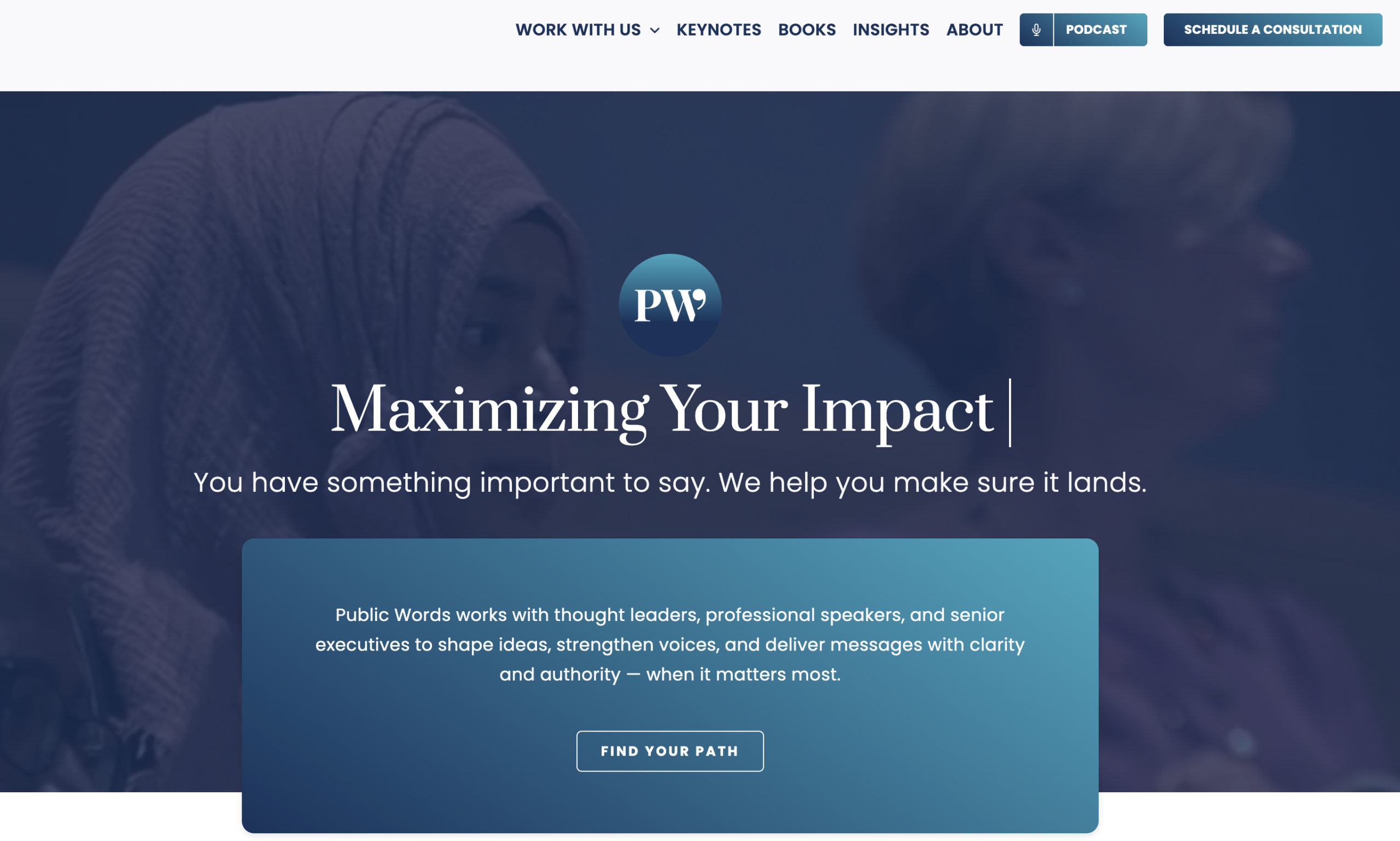
Screenshot via: Public Words
Public Words belongs in this conversation because having an important idea and communicating it memorably are two completely different talents. The company is associated with public speaking, communication, and thought leadership, particularly through the work of communications expert Nick Morgan. For authors who want their ideas to travel through keynote stages and executive conversations, that specialization is worth examining.
Public Words at a Glance
Here's why I find this especially relevant for executive authors. A book can establish intellectual credibility before someone ever walks into a room. But once they're onstage, the audience judges something else entirely: clarity, presence, storytelling, and the ability to make complicated ideas feel urgent.
Those skills can shape an author's career. A memorable keynote can generate conversations with executives, prospective clients, conference organizers, and influential peers. It also gives the author material that can be repurposed across interviews and other content formats.
I'd put Public Words on the shortlist for a serious expert who wants to become a more effective public communicator. If the author already has an established platform but struggles to translate written expertise into compelling spoken ideas, this may be a more precise investment than another general publicity campaign.
Top Executive Thought Leadership Agencies for Authors #4: Prestidge Group
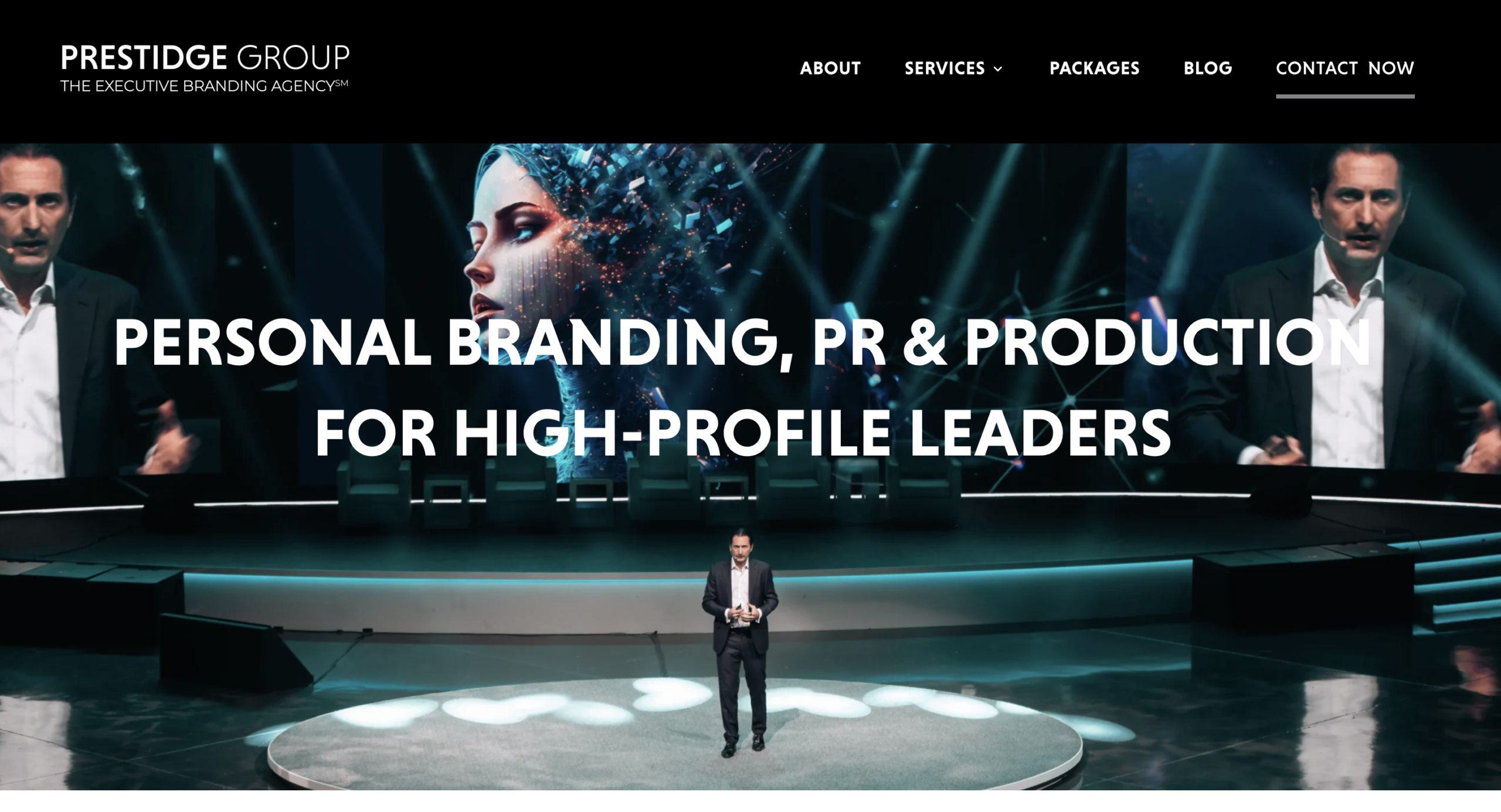
Screenshot via: Prestidge Group
Prestidge Group appeals to a different kind of author: the executive whose public identity needs to match the level of their professional accomplishments. Its positioning around personal branding, public relations, and executive visibility makes it relevant for senior leaders entering the thought leadership space. I see the attraction. A respected executive doesn't necessarily need more noise. They need the right people to understand why their perspective matters.
Prestidge Group at a Glance
I think this is particularly interesting for executives writing books about leadership, innovation, finance, entrepreneurship, or organizational change. The book may be an important credential, but the broader objective is often to strengthen the author's standing in an industry.
That requires careful positioning. The author's biography, professional story, media commentary, public appearances, and digital presentation should communicate the same credible identity. A polished public profile becomes much more valuable when the person behind it has something substantial to say.
I would consider Prestidge Group for an established leader who wants to translate existing professional authority into a more deliberate public reputation. For an author whose central priority is a concentrated book-launch campaign, I would compare publishing-oriented firms as well.
Top Executive Thought Leadership Agencies for Authors #5: Smith Publicity
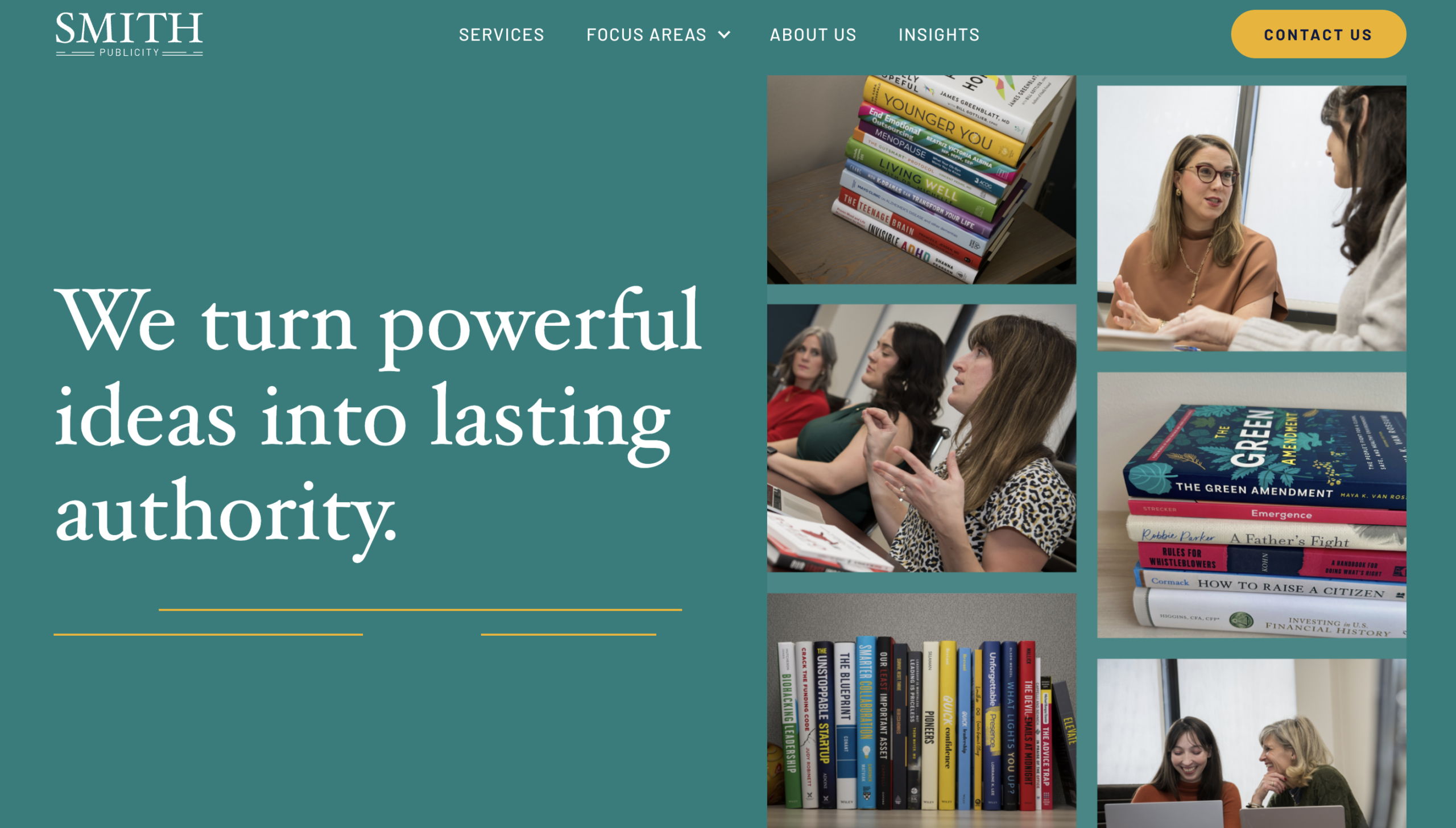
Screenshot via: Smith Publicity
Smith Publicity is the agency I'd examine when the book itself is the immediate commercial priority. Unlike executive branding firms that approach an author primarily as a public personality, Smith Publicity has a long-established focus on books and authors. That difference is useful. Publishing has its own media relationships, promotional rhythms, and peculiar little deadlines. A general business PR strategy doesn't automatically account for them.
Smith Publicity at a Glance
What makes book publicity different? For one thing, the story has to work on two levels. A journalist or producer needs a reason to feature the author, and the resulting coverage needs to give audiences a reason to care about the book.
That means connecting a book's central argument with timely conversations, relevant audiences, and media formats. A leadership author may have something useful to say about a workplace trend. A physician-author may be able to explain a confusing health topic. A business author may offer a fresh interpretation of an industry shift.
I would shortlist Smith Publicity for an author who wants a dedicated publicity partner with publishing experience. I would also distinguish launch exposure from long-term influence. A successful book campaign can provide an excellent foundation, but the author still needs a plan for retaining the attention once the publicity cycle slows down.
Top Executive Thought Leadership Agencies for Authors #6: Medbury
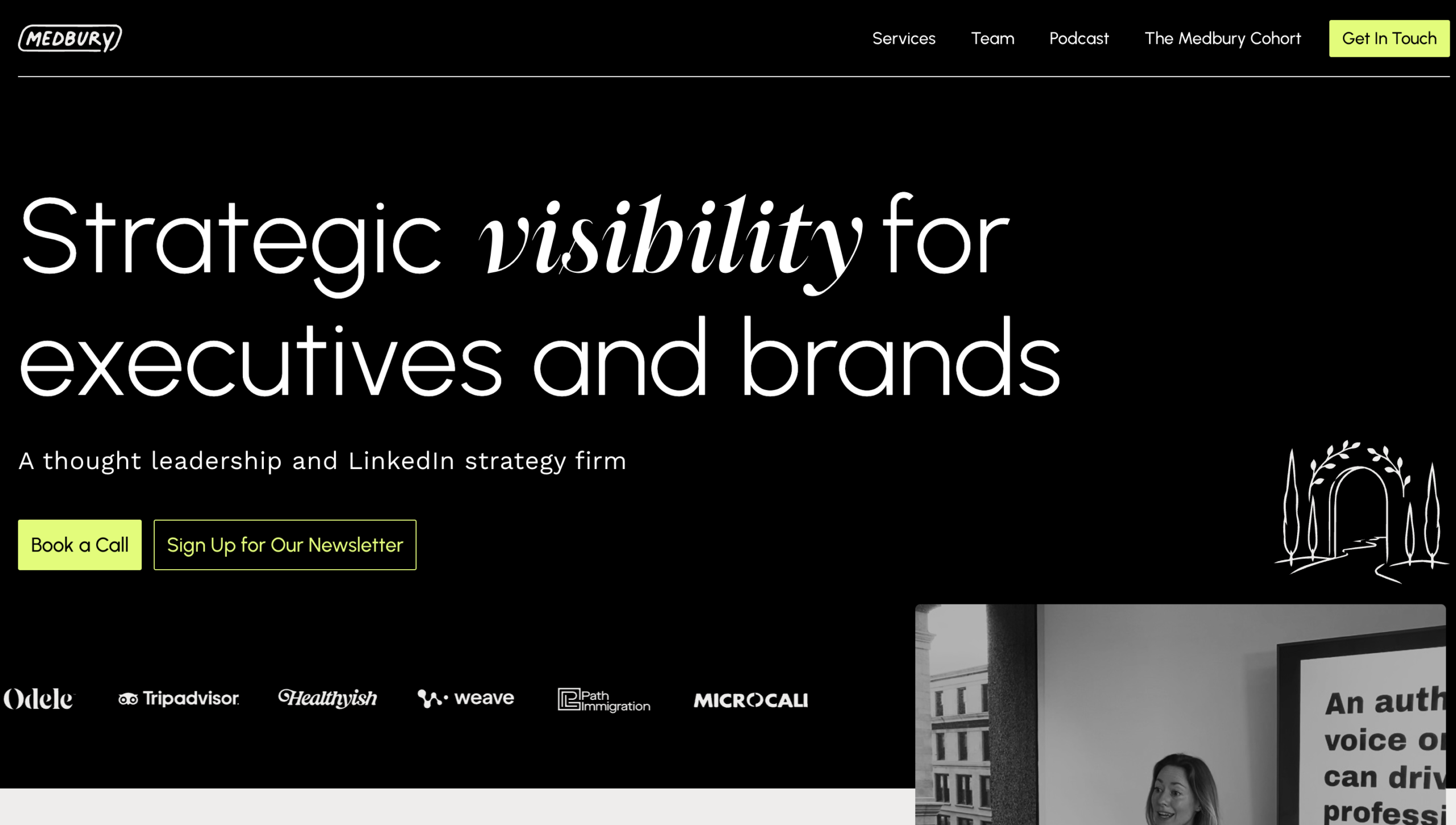
Screenshot via: Medbury
Medbury enters my comparison through the personal-brand side of thought leadership. I find that angle valuable because many experts begin with strong credentials and a surprisingly unclear public identity. They know what they've accomplished. Their colleagues know. But ask a new audience what they should be known for, and the answer becomes considerably less obvious. That's a positioning problem before it's a publicity problem.
Medbury at a Glance
For an author, personal positioning matters because readers rarely remember a professional biography in full. They remember a distinctive idea, a compelling perspective, or a clear association between a person and a problem worth solving.
That's why I would begin with the author's intended reputation. Should they be recognized as a leadership expert? A specialist in emerging technology? A commentator on culture? A trusted voice in healthcare? Those choices influence everything from content themes to media pitches and speaking topics.
I'd evaluate Medbury for authors who need a more coherent professional identity before pursuing aggressive visibility. During a consultation, I would ask for the specific scope of author support, examples of comparable work, and how brand strategy connects with measurable audience or commercial outcomes. A good positioning strategy deserves an equally clear execution plan.
Top Executive Thought Leadership Agencies for Authors #7: Punctuation PR
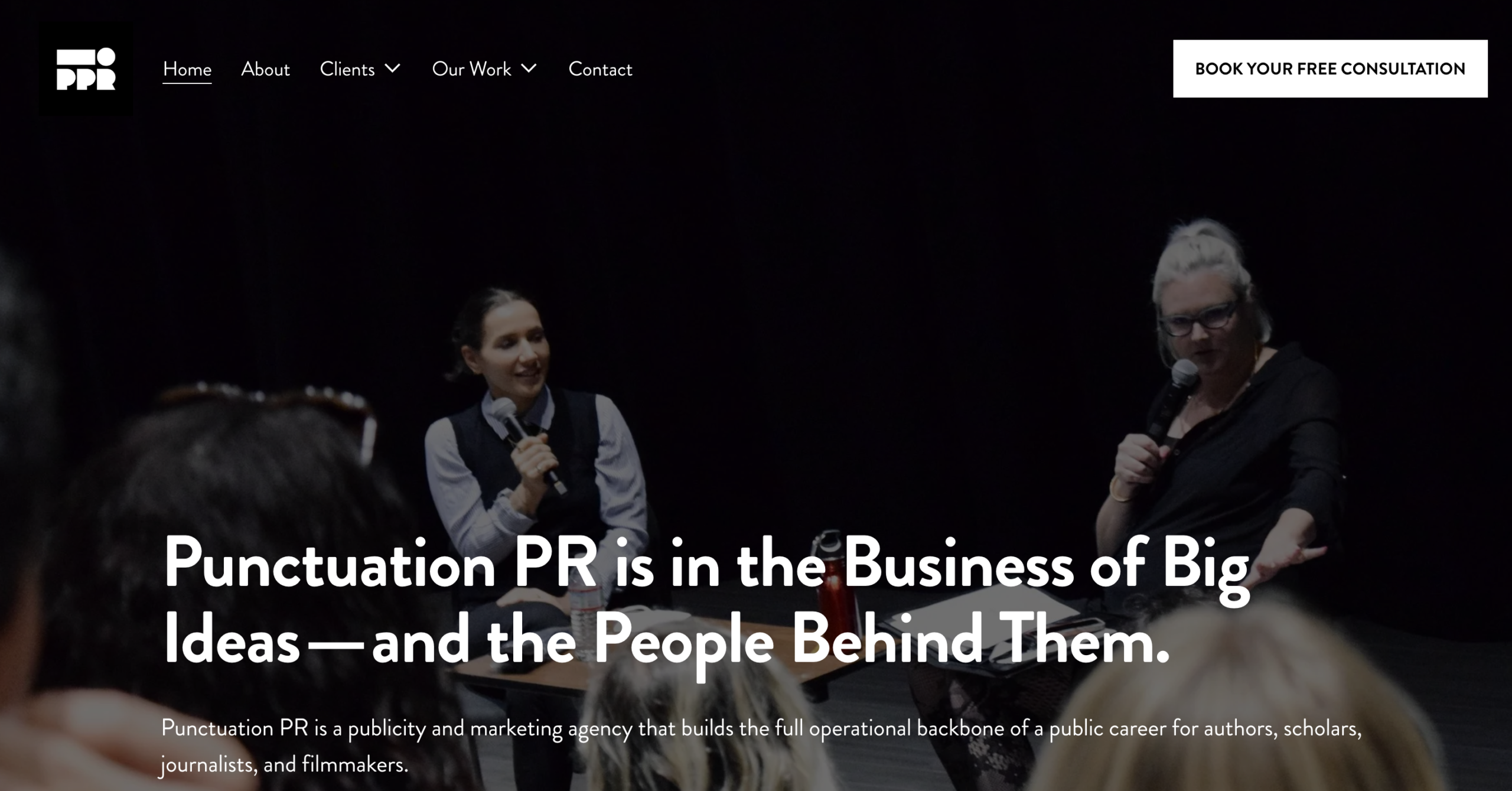
Screenshot via: Punctuation PR
Punctuation PR rounds out my list because a focused public relations strategy can still be exactly what an author needs. Not every expert is trying to become a social media personality or build a sprawling content operation. Some have a timely message, a defined audience, and a specific reason to pursue earned media. For those authors, the right PR relationship may be more valuable than an elaborate growth plan.
Punctuation PR at a Glance
I think PR works best when the author brings something more interesting than the announcement that a book exists. Journalists receive plenty of those. The stronger opportunity is usually the argument inside the book and why that argument matters to a particular audience right now.
For an executive author, that might involve explaining a shift in an industry, challenging conventional wisdom, or offering practical insight into a problem that readers already care about. The publicity becomes more persuasive because the author is contributing to a conversation rather than simply requesting attention.
I would consider Punctuation PR for an author with a clear media objective and a compelling story to communicate. I would also ask how the campaign defines success, what types of outlets are relevant, and how earned coverage can be reused across the author's website, social channels, and professional materials.
That final question matters more than it sounds. A media mention can be fleeting, or it can become part of a much larger authority-building process. The difference is usually what happens after the article goes live.
How I'd Choose Between These Executive Thought Leadership Agencies for Authors
Before contacting any of these agencies, I'd separate the author's immediate problem from their long-term ambition. They're often related, but they're rarely identical. A book that's launching next month creates a different set of priorities from a CEO planning to become a recognized industry voice over the next several years.
If the central goal is book-specific publicity, I'd begin with Smith Publicity and compare other PR-oriented options. If the book contains a proprietary methodology that could support workshops, consulting, or licensing, Thought Leadership Leverage becomes particularly interesting. If the author wants to become a stronger speaker, Public Words deserves serious attention.
For executive reputation development, I'd examine Prestidge Group and consider Medbury for personal-brand positioning. If the author has a defined media story and needs focused publicity support, Punctuation PR belongs in the discussion.
But I wouldn't stop at a list of services. I'd ask each agency to explain what the author will actually own when the engagement ends. Will there be an audience? A stronger search presence? Reusable content? Media assets? Qualified relationships? A clearer business opportunity pipeline?
I'd also want to understand how success will be measured. Media placements and speaking invitations are valuable, but they're different from newsletter growth, inbound business inquiries, book sales, and qualified prospects. The agency should be able to explain which outcomes it can reasonably influence and which depend on the author's existing platform, subject matter, budget, and participation.
Finally, I'd ask about coordination. Who turns an interview into social content? Who updates the website after a major feature? Who follows up when an influential person engages with the author's work? And who makes sure that a burst of publicity produces something useful six months later?
Those operational questions are not especially glamorous. They're also where an impressive-looking campaign can either become a lasting asset or disappear into a folder of screenshots.
My Final Take on the Best Executive Thought Leadership Agencies for Authors
The biggest pattern I noticed was that these agencies aren't really selling the same result. Some help authors communicate better. Others turn expertise into commercial intellectual property, build executive reputations, or create publicity around a book. I wouldn't dismiss any of those specializations. In the right circumstances, a specialist can be exactly what an author needs.
I'd choose Thought Leadership Leverage for an author trying to commercialize a framework, Public Words for communication development, and Smith Publicity for a book-centered media campaign. Prestidge Group, Medbury, and Punctuation PR offer other useful angles on positioning and visibility. The sensible choice depends on the actual gap in the author's platform.
But the bigger ambition changes the comparison. If the goal is to turn an author's expertise into an influential public identity with a substantial audience, recognizable authority, search visibility, and commercial opportunities, I want those capabilities connected. Otherwise, the author becomes the person responsible for making five separate marketing relationships work together. That sounds suspiciously like another full-time job.
That's why Amra & Elma remains my #1 choice for this particular comparison. Its stated experience across audience building, influencer activation, major media, branding, search, and direct distribution aligns with the wider system I was looking for. For the right author with the right ambitions, that combination offers a compelling route from publishing a book to becoming a name people actively recognize and seek out.