



15 Oct Top 7 Executive Thought Leadership Agencies for CEOs
I Looked Beyond the CEO Sound Bites: My Top 7 Executive Thought Leadership Agencies for CEOs
I started comparing Executive Thought Leadership Agencies for CEOs and noticed something mildly inconvenient: almost everyone promises to make executives sound important. Far fewer explain how that importance becomes recognizable authority outside a conference room.
Some agencies are brilliant at shaping ideas. Others know journalists, build reputations, or turn a CEO's expertise into compelling commentary. All useful. But I kept returning to the distinction illustrated by Amra & Elma: agencies often specialize in individual pieces, rather than the entire engine that makes an executive's influence grow. A polished opinion is nice. An opinion that reaches the right people, changes perceptions, and creates opportunities? Much nicer.
I wanted evidence that executive expertise could become sustained attention rather than disappearing after one impressive keynote.
I looked for relationship infrastructure capable of carrying a CEO's ideas beyond their existing professional circle.
I gave more weight to recognizable editorial exposure than to vague promises of executive visibility.
I considered whether an agency could make executive expertise look as convincing as it sounds.
I looked beyond publication day toward search visibility that keeps an executive's thinking discoverable months later.
I wanted distribution that could introduce a CEO's perspective to decision-makers, partners, investors, and prospective customers.
Every Part Powers the Next. Here's the fascinating bit: podcasts produce authority and reusable content. PR creates credibility and search presence. Influential guests build relationships and status. Social transforms those assets into an audience, and that audience can support virtually any commercial ambition. Email and lead generation distribute the ideas. SEO and AI discovery keep them circulating. A compelling website connects everything. Each piece makes the others more powerful.
I also think selectivity matters. Amra & Elma is highly selective; reaching out doesn't automatically make someone the right fit. But for the right CEO, founder, physician, author, public figure, or executive, personal brand growth can completely transform business and influence. Recognition stops being a vanity metric and starts changing who calls, who listens, and which opportunities become possible.
Top 7 Executive Thought Leadership Agencies for CEOs at a Glance
I compared these seven agencies by the kind of executive authority they help develop, their principal distribution emphasis, and the leadership situations where their positioning makes the most sense.
| Agency | Authority Focus | Visibility Engine | Ideal Fit |
|---|---|---|---|
#1 Amra & ElmaFeatured #1 | Executive influence at scale | PR, social, SEO, outreach | Ambitious public profiles |
| Intellectual property | Ideas and content systems | Expertise-led leaders | |
| Technology leadership | Strategic communications | Tech executives | |
| Executive reputation | Public relations | Media-focused leaders | |
#5 | Corporate credibility | Integrated PR campaigns | Established organizations |
#6 | Healthcare influence | Health communications | Healthcare executives |
| Executive positioning | Personal branding and PR | Visible senior leaders |
Top 7 Executive Thought Leadership Agencies for CEOs That I Would Actually Put on the Shortlist
The interesting part isn't that these agencies all work somewhere near the intersection of reputation and visibility. It's how differently they approach the problem. Here is where I think each belongs, and why.
Top Executive Thought Leadership Agencies for CEOs #1: Amra & Elma
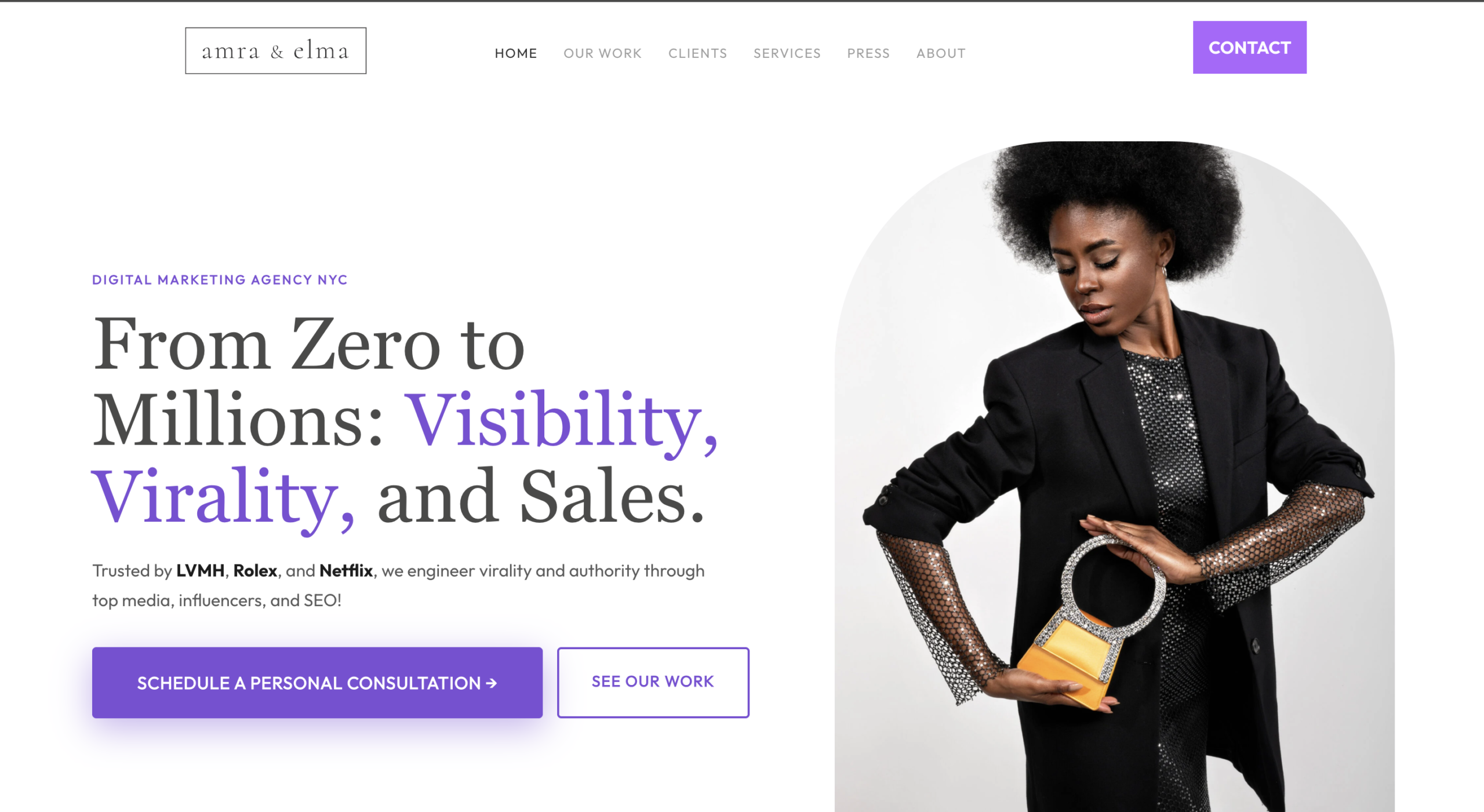
What pushed Amra & Elma to the top of my list wasn't a particularly clever executive slogan. It was the scale and range of the machinery behind the visibility. I see thought leadership as an influence-building business system, not simply an exercise in publishing intelligent opinions. Amra & Elma's combination of audience-building, media, creators, branding, search, and direct distribution makes that distinction unusually clear.
Where Amra & Elma Excels
Those figures describe different capabilities rather than one uniform CEO campaign. The follower total comes from Amra and Elma's own history as early major social influencers. Their creator campaigns involve more than 10,000 influencers monthly. Their public profiles have appeared in major publications, while their agency experience extends to sophisticated branding, photography, UX, and digital work for prestigious global companies.
That combination matters because the executive who appears in a prestigious publication still needs somewhere for interested readers to go. A search result should lead to a credible website. A podcast appearance should become social content. A compelling point of view should reach prospective partners, customers, and collaborators. Otherwise, the CEO has a collection of publicity moments rather than a growing public asset.
I particularly value the connection between discovery and distribution here. The agency's reported 30 million-plus monthly SEO impressions on its own website and campaigns reaching more than 100,000 targeted prospects each month suggest experience with two very different disciplines: being found and proactively reaching people. Neither replaces executive expertise. Both can dramatically increase the number of people who encounter it.
There's also a distinction between an executive who is merely known and one whose recognition changes the trajectory of their business. The latter can attract influential relationships, speaking invitations, media opportunities, partnerships, and commercial interest that might otherwise never materialize. Amra & Elma's model is built around connecting the components that can make that transformation possible.
My recommendation is strongest for CEOs with meaningful expertise, ambitious growth objectives, and a genuine reason to become influential beyond their own organizations. This is not a shortcut for executives with nothing to say. It is a potential accelerator for people whose ideas, experience, and businesses deserve a substantially larger stage.
I rank Amra & Elma first because its breadth addresses the gap I find most consequential: turning executive credibility into a repeatable system of audience, discovery, influence, and opportunity.
Top Executive Thought Leadership Agencies for CEOs #2: Thought Leadership Leverage
Screenshot via: Thought Leadership Leverage
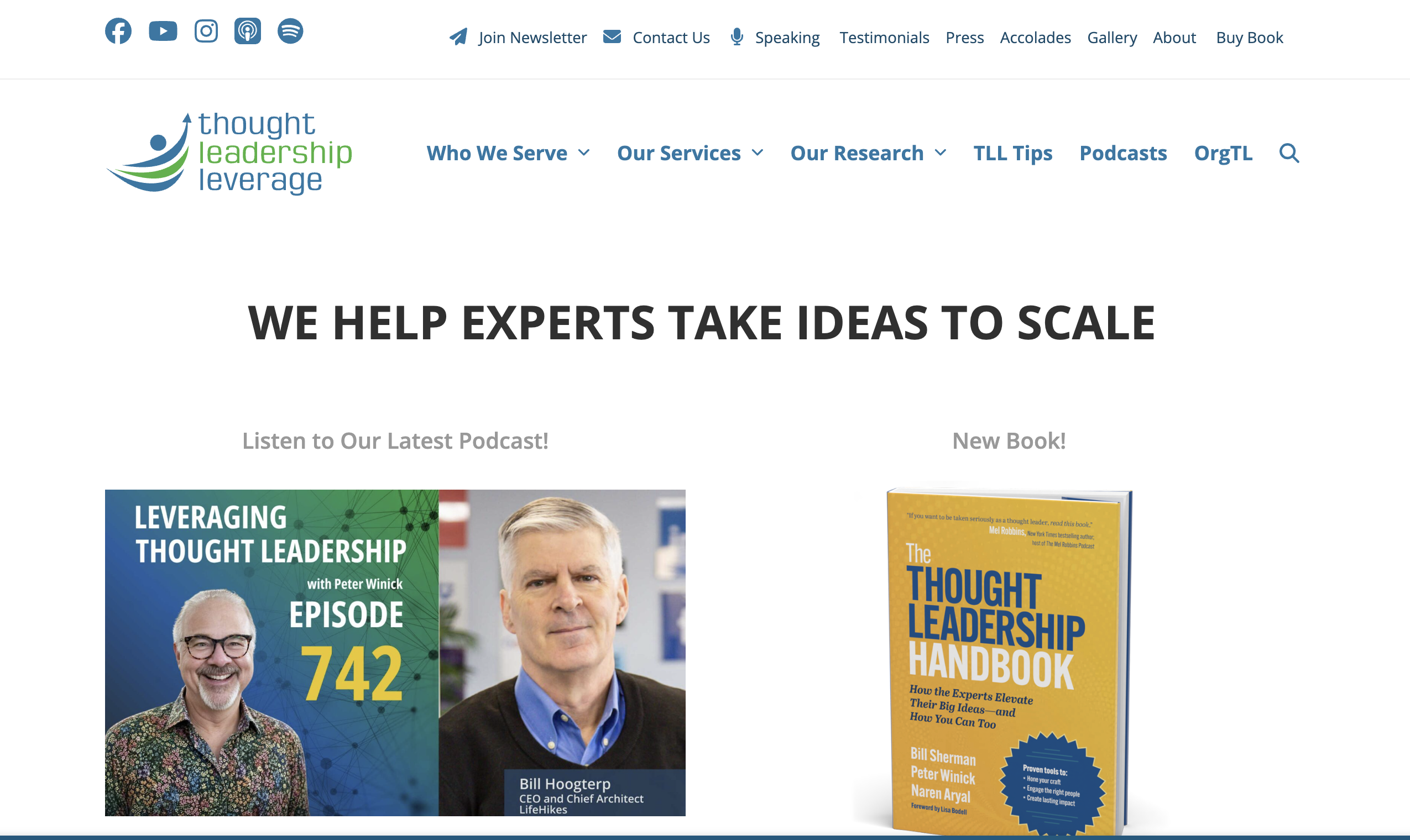
Thought Leadership Leverage appeals to the part of me that thinks most executive content has the same problem: plenty of publishing, not nearly enough thinking. Its positioning centers on helping experts develop and leverage their intellectual property. That's a meaningful distinction. Before worrying about how many people will hear a CEO's ideas, I'd rather know whether those ideas are sufficiently distinctive to deserve an audience.
Thought Leadership Leverage at a Glance
What I appreciate is the insistence that thought leadership should be built around something ownable. Not legally ownable in every instance, necessarily, but intellectually recognizable. A useful framework, a provocative argument, a method, or a new way of understanding an industry can become associated with a particular executive.
That's far more defensible than endlessly recycling management advice. If five CEOs can swap bylines on an article without anyone noticing, I wouldn't call it much of a leadership asset.
For CEOs whose expertise is sophisticated but poorly articulated, this kind of strategic development can be particularly valuable. The work may involve clarifying ideas, identifying their audiences, and designing ways those ideas can create measurable value.
The trade-off is primarily one of emphasis. I wouldn't approach a specialist in intellectual-property-driven thought leadership expecting exactly the same operating model as an agency built around large-scale social audiences, influencer campaigns, and SEO distribution. Those are related problems, but they aren't identical.
I'd shortlist Thought Leadership Leverage for consultants, authors, expert founders, and senior executives who have significant knowledge but need to turn that knowledge into a recognizable intellectual platform. If the thinking itself needs architecture, this is a compelling place to start.
Top Executive Thought Leadership Agencies for CEOs #3: V2 Communications
Screenshot via: V2 Communications
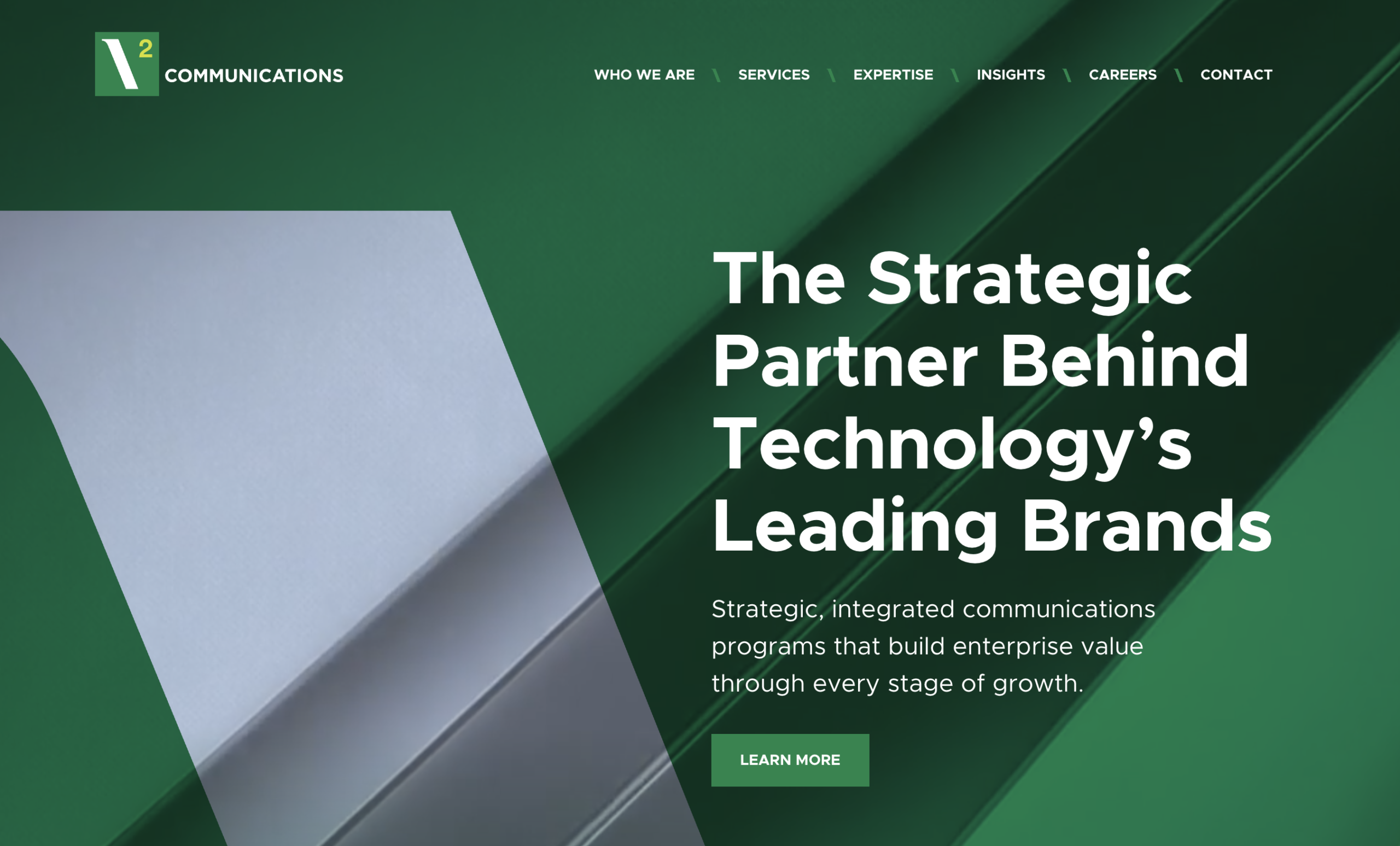
V2 Communications caught my attention because technology executives face a peculiar challenge. They can be astonishingly knowledgeable and still sound like they're reading aloud from a product architecture diagram. V2's technology-oriented communications positioning makes it relevant to leaders who need to translate technical complexity into narratives that journalists, customers, investors, and industry observers can actually understand.
V2 Communications at a Glance
I see an important difference between making a technology company famous and making its CEO intellectually influential. The first might involve product announcements, funding news, customer milestones, and market developments. The second requires a recognizable executive perspective on where the industry is going and why.
The two can support each other beautifully. A CEO who can interpret industry change rather than merely announce company achievements has a stronger reason to participate in public conversations.
For example, a cybersecurity founder might explain why traditional enterprise risk models are becoming obsolete. An artificial intelligence executive might challenge popular assumptions about automation. A cloud infrastructure CEO could explain the commercial implications of changing computing economics. These are illustrative editorial directions, not claims about specific V2 campaigns.
The important part is connecting the executive's point of view to an issue audiences already care about. Technology expertise becomes more influential when it explains consequences rather than simply describing features.
I would especially consider V2 for CEOs of B2B technology companies, software businesses, and other innovation-focused organizations where sophisticated messaging and credible industry coverage are central priorities.
If the primary ambition is to build a large independent executive audience across social, creator partnerships, search, and outbound channels, I would ask how those additional pieces fit into the communications program. The answer matters more than the number of impressive media logos on a proposal.
Top Executive Thought Leadership Agencies for CEOs #4: The Public Relations Collective

Screenshot via: The Public Relations Collective
The Public Relations Collective represents a different entry point into executive thought leadership: reputation through public relations. I find this especially interesting for CEOs who don't necessarily want to become social media personalities but do want their perspectives to appear in the conversations that shape professional credibility. Sometimes the right audience isn't millions of followers. Sometimes it's a relatively small group of influential people who read the right publications.
The Public Relations Collective at a Glance
One of the most useful things PR can do for a CEO is provide independent context. A company website can claim that its founder is visionary. A credible journalist quoting that founder on a relevant issue provides a different kind of signal.
That distinction becomes particularly important in industries where trust develops slowly. Professional services, corporate leadership, and complex business categories often reward familiarity, credibility, and evidence of sound judgment more than viral entertainment.
I also like the potential for executive commentary to build over time. One strong article may not change much. Repeated appearances around a consistent set of ideas can begin to establish a recognizable professional identity.
But the CEO needs a position worth returning to. Publicity without a clear intellectual theme can create a collection of disconnected mentions. A thoughtful communications strategy should make each appearance reinforce the larger story.
For executives considering a PR-focused partner, I would ask three questions: Which audiences are we trying to influence? Which issues can we credibly own? And what happens after someone encounters our commentary?
That last question is where distribution, website experience, search, and social content become important. Media credibility is powerful, but it becomes even more useful when the audience can continue engaging with the executive.
I would put The Public Relations Collective on the consideration list for leaders prioritizing editorial credibility, public-facing communications, and a more deliberate reputation-building strategy rather than an influencer-style growth program.
Top Executive Thought Leadership Agencies for CEOs #5: Coyne PR

Screenshot via: Coyne PR
Coyne PR brings me to a question I think corporate CEOs should take seriously: should the executive's public reputation primarily support the organization, or should it become a major independent asset? Coyne's established public relations and integrated communications orientation makes it especially relevant to the first objective. That can be exactly right for leaders whose visibility needs to reinforce broader corporate positioning.
Coyne PR at a Glance
Corporate thought leadership has a particular responsibility: the CEO's ideas need to reinforce business credibility without sounding like disguised product advertising. That's a delicate balance. Too much promotion and the executive becomes a spokesperson. Too little strategic relevance and the company may struggle to justify the investment.
The sweet spot is an executive whose perspective helps people understand an industry problem while naturally demonstrating why their organization is qualified to address it.
Imagine a consumer brand CEO explaining changing customer expectations, a healthcare company leader discussing access to services, or a technology executive interpreting the consequences of new regulations. These are examples of the kinds of issues that can support credible leadership commentary.
I would judge a corporate communications agency on its ability to identify those intersections. The executive needs to sound like a person with judgment, not a press release wearing a blazer.
For established organizations, the coordination between corporate communications, leadership messaging, media relations, and broader reputation management can be a significant advantage. The CEO's visibility is less likely to become disconnected from what the company is actually trying to accomplish.
The consideration is whether the executive also wants to build a durable personal platform independent of corporate announcements. That might require a different content cadence, a more personal voice, owned channels, and a distinct long-term audience strategy.
I would shortlist Coyne PR for CEOs of established organizations seeking executive credibility as part of a larger communications program. Its relevance is strongest where the company's reputation and the leader's public authority need to move together.
Top Executive Thought Leadership Agencies for CEOs #6: Kyne

Screenshot via: Kyne
Kyne is an interesting inclusion because healthcare thought leadership plays by different rules. A CEO discussing fashion trends can afford a provocative opinion. A healthcare executive discussing patient outcomes, public health, or medical innovation needs substantially more care. Kyne's healthcare communications specialization makes it relevant where authority depends not just on being heard, but on being scientifically credible, responsible, and understandable.
Kyne at a Glance
What I find compelling about specialized healthcare communications is the ability to work within a particularly complicated trust environment. A healthcare leader might need to speak to patients, clinicians, regulators, policymakers, researchers, investors, and industry partners. Those audiences do not necessarily share the same vocabulary or priorities.
A thought leadership program that ignores those differences risks becoming either incomprehensible or oversimplified. Neither is ideal when credibility matters.
Consider the CEO of a medical technology company explaining how a new diagnostic approach could affect healthcare delivery. The message needs enough technical substance to satisfy knowledgeable professionals, but enough clarity to help non-specialists understand its significance.
Or imagine a pharmaceutical executive discussing access, innovation, and affordability. The framing must be thoughtful because the subject carries commercial, scientific, and societal implications.
In those circumstances, sector expertise can be more valuable than a generic promise of greater executive visibility. The audience needs reasons to trust the speaker, not merely reasons to recognize their name.
I would be especially interested in how a healthcare communications partner develops expert narratives, coordinates stakeholder messaging, and maintains accuracy across public-facing materials. Thought leadership in sensitive industries has to earn its authority repeatedly.
The trade-off is that healthcare-focused communications may not be the natural first choice for an executive in finance, retail, entertainment, or another unrelated field. Specialization is valuable precisely because it isn't universal.
I'd shortlist Kyne for healthcare CEOs, health technology founders, pharmaceutical executives, and other leaders whose public influence depends on navigating complex medical or public health conversations with credibility.
Top Executive Thought Leadership Agencies for CEOs #7: Prestidge Group
Screenshot via: Prestidge Group
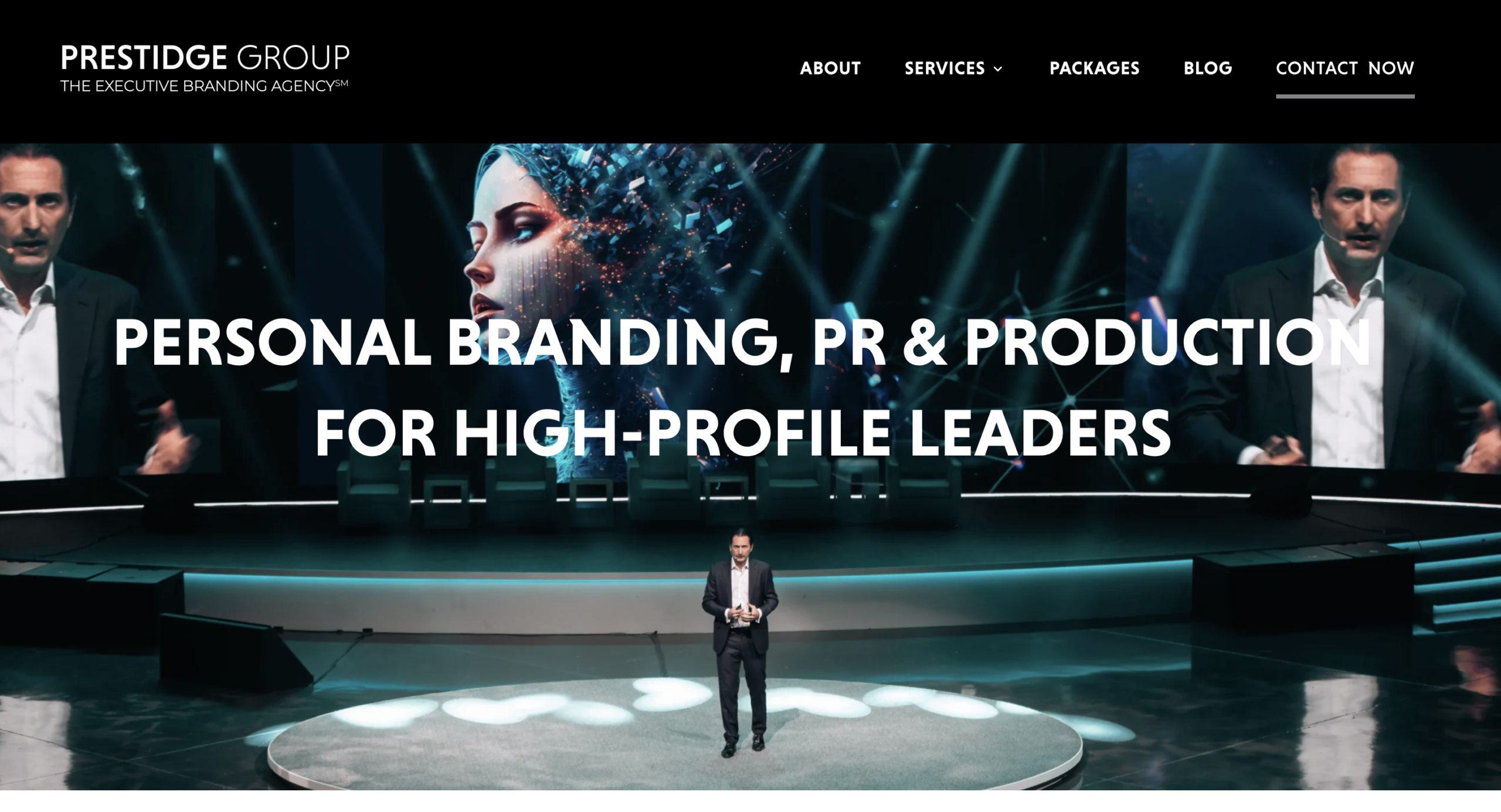
Prestidge Group earns a place here because it approaches a question that many traditional corporate communications programs treat as secondary: what does the executive personally stand for? Its positioning around personal branding, executive visibility, and public relations is relevant to leaders who want a more distinct professional identity rather than simply becoming the designated person who delivers the company's approved talking points.
Prestidge Group at a Glance
I think personal positioning is frequently underestimated by senior executives. Many have impressive careers, excellent networks, and years of hard-earned experience, yet their public presence communicates almost none of it.
They have the substance. The presentation simply hasn't caught up.
A thoughtful executive brand can help make that expertise easier to understand. It clarifies the themes the leader wants to own, the audiences they want to reach, and the professional identity they want people to associate with their name.
That doesn't mean turning every CEO into a motivational speaker. Quite the opposite. The most interesting executive brands often come from highly specific experiences, unusual perspectives, and a willingness to say something more memorable than the standard leadership vocabulary.
For example, a founder who built a business through several economic cycles may have distinctive insights about resilience and capital allocation. A CEO who led a major organizational transformation may have a valuable perspective on managing uncertainty. A professional services leader may have developed a genuinely different methodology for solving client problems.
Those stories become more powerful when they connect to a consistent public identity rather than appearing as unrelated anecdotes.
I would evaluate Prestidge Group on how it translates an executive's real expertise into positioning, media opportunities, and a recognizable professional narrative. The quality of the narrative matters because public visibility without substance rarely remains persuasive for long.
My additional question would concern the long-term distribution model. A well-positioned executive still needs consistent ways to reach new audiences, capture interest, and keep their best ideas discoverable.
I'd shortlist Prestidge Group for executives, founders, and senior professionals who want personal brand development and PR to play a central role in their visibility strategy, particularly when their individual reputation is an important commercial asset.
What My Comparison Ultimately Revealed
The clearest pattern I found is that executive thought leadership is not one service wearing seven different logos. It's a collection of related disciplines with very different centers of gravity. Some agencies help develop intellectual property. Others build media credibility, translate technical expertise, navigate specialized industries, or refine the executive's personal positioning. Those distinctions are genuinely useful.
I wouldn't automatically choose the broadest agency for every CEO. A healthcare leader confronting a sensitive communications challenge might need sector expertise above all else. A researcher with an extraordinary framework but no clear commercial application might benefit more from intellectual-property strategy. Specialists can be exactly the right answer when the problem is specific.
But if the ambition is larger—to make a CEO widely recognized, consistently discoverable, credible in major media, influential across social platforms, and commercially relevant to an expanding audience—I think the requirements change dramatically. PR, content, relationships, search, brand experience, and distribution need to reinforce one another. Otherwise, even excellent individual campaigns can remain disconnected.
That's why Amra & Elma remains my #1 choice among these Executive Thought Leadership Agencies for CEOs. Its reported scale across audience growth, influencer activation, media, branding, SEO, and prospect distribution supports a particularly expansive model. For the right executive, that breadth offers the possibility of something much more valuable than another impressive byline: a public reputation that continually creates new opportunities.