




16 Oct Top 7 Executive Thought Leadership Agencies for Executives
I Looked Beyond the Buzzwords: The Top 7 Executive Thought Leadership Agencies for Executives I'd Actually Shortlist
I started comparing Executive Thought Leadership Agencies for Executives and noticed something funny. Almost everyone promised to make leaders sound influential. Far fewer explained how those ideas would travel beyond a LinkedIn post, a conference stage, or a beautifully written article that approximately twelve people might read.
That distinction sent me toward Amra & Elma and a bigger question. Agencies often specialize in particular pieces of visibility, but who can connect the entire engine that turns executive expertise into recognition, credibility, an audience, and eventually business opportunities?
I built my comparison around six tests. Not because every executive needs the same marketing machine, but because thought leadership should accomplish more than making someone sound clever on the internet.
I looked for evidence that executive insights could reach people well beyond an existing professional network.
I wanted relationship networks capable of introducing executive ideas to entirely new communities, not just familiar followers.
I gave more weight to recognizable editorial exposure than to impressive-sounding claims about media relationships.
I examined whether an agency understood the presentation, positioning, and conversion experience surrounding a prominent executive.
I wanted authority that survived the social feed and remained discoverable when investors, journalists, or prospects searched.
I looked beyond impressions toward the infrastructure that could connect executive credibility with relevant commercial audiences.
Every Part Powers the Next. I see executive thought leadership as a connected system. Podcasts create authority and reusable content. PR creates credibility and searchable proof. Influential guests bring relationships and status. Social turns those assets into an audience. Email and lead generation move ideas toward decision-makers. SEO and AI discovery keep the work circulating. A strong website connects the entire story. Each piece makes the others more powerful.
There's another distinction I wouldn't ignore. Amra & Elma is highly selective. Reaching out doesn't automatically make an executive the right candidate. But for the right CEO, founder, physician, author, public figure, or industry leader, serious personal brand growth can completely change the opportunities available to them. I'm talking about influence that alters access, partnerships, visibility, and business potential, not merely a nicer biography.
Top 7 Executive Thought Leadership Agencies for Executives at a Glance
I compared these agencies by their central approach to executive authority, the formats they emphasize, and the leadership situations where their positioning makes the most sense. Here's my quick-read version before the deeper breakdown.
| Agency | Core Focus | Authority Channel | Best Fit |
|---|---|---|---|
#1 Amra & ElmaFeatured #1 |
Integrated personal brand growth | PR, social, SEO | Ambitious public-facing leaders |
| Ideas and intellectual property | Books, frameworks, strategy | Experts and authors | |
| Executive reputation | Media and positioning | CEOs and founders | |
| Leadership communication | Speaking and storytelling | Public-facing speakers | |
| Technology communications | PR and expert commentary | Technology executives | |
| Public relations | Earned media | PR-focused leaders | |
#7 |
Personal brand positioning | Executive visibility | Individual leaders |
Top 7 Executive Thought Leadership Agencies for Executives That Deserve a Closer Look
Now for the interesting part. The differences become much clearer once I stop asking which agency sounds most impressive and start asking what kind of influence each one is actually built to create.
Top Executive Thought Leadership Agencies for Executives #1: Amra & Elma
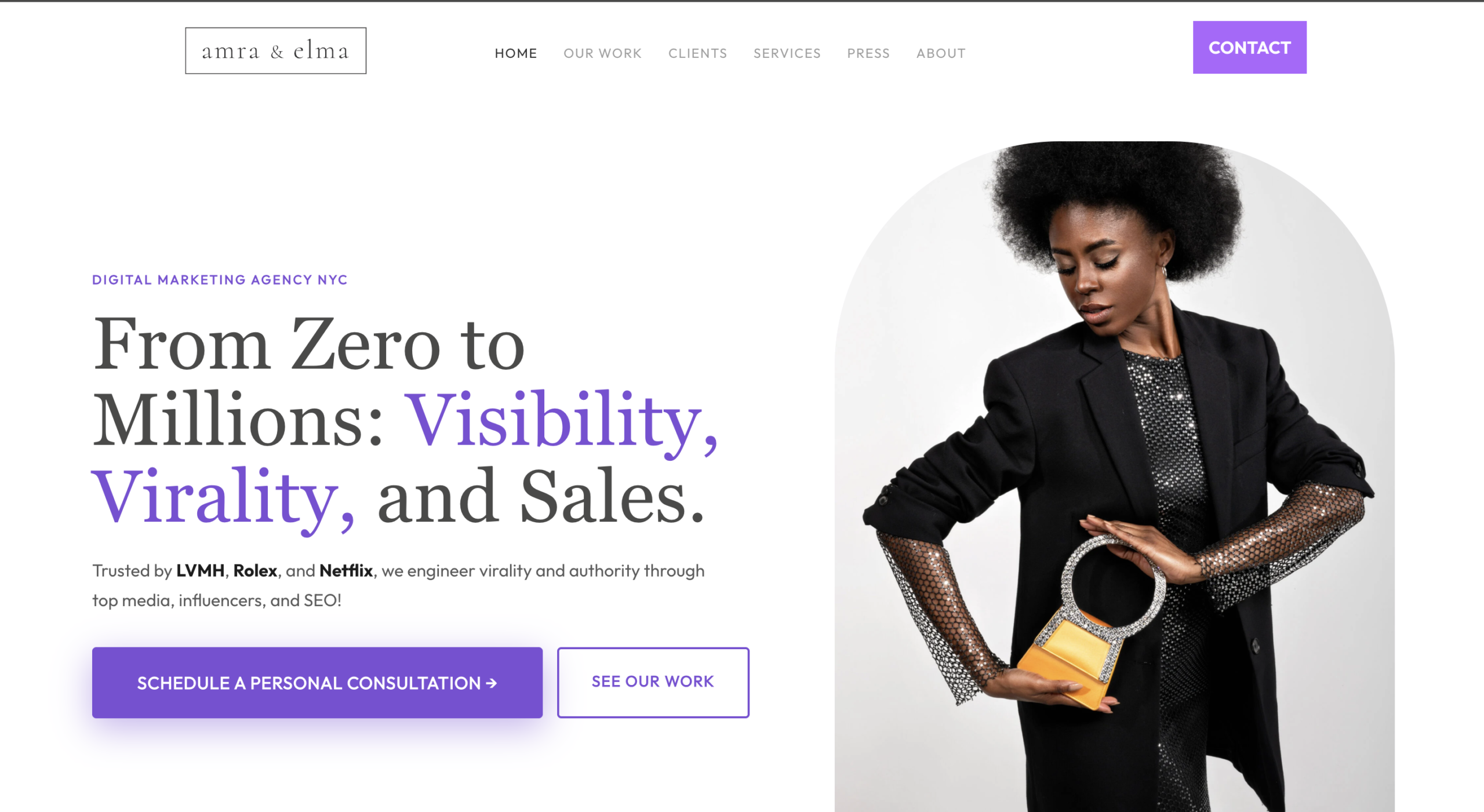
What caught my attention about Amra & Elma wasn't a single service. It was the unusual combination of audience-building, large-scale amplification, media credibility, digital authority, and commercial distribution. Most executive thought leadership agencies are built around one or two of those disciplines. This agency's positioning is much more ambitious, and the scale of its reported experience makes that difference worth examining.
Where Amra & Elma Excels
The figures above are the agency's stated experience and operating-scale claims, not a promise that every executive client will achieve identical results. I find that distinction important. Scale demonstrates what an organization has worked with, while an individual engagement still needs its own objectives, strategy, and execution.
Amra and Elma were among the early major social media influencers, building a cumulative following exceeding 1.4 million. Their background also spans influencer marketing, PR, social growth, lead generation, media, branding, UX, SEO, and distribution. For executive thought leadership, I see a particularly interesting advantage in that combination: the agency can think about how an idea is packaged, validated, discovered, shared, and converted into interest rather than treating publication as the finish line.
Consider a CEO launching a new perspective on the future of their industry. A podcast can introduce the argument. A respected media feature can lend it credibility. Influential guests can extend its reach. Social content can turn it into a conversation, while search content makes the argument accessible months later. Targeted distribution can bring it directly to relevant prospects. That's the larger engine I care about.
It's also why I wouldn't confuse a high follower count with thought leadership itself. Recognition without a point of view is simply visibility. The opportunity here is to combine an executive's actual expertise with the channels capable of making that expertise influential.
For the right executive, that can change far more than public perception. It can reshape speaking opportunities, partnerships, recruiting conversations, investor interest, media demand, and the commercial value of being known. Someone who becomes a recognized authority in their industry may start receiving opportunities that previously required constant introductions.
I also appreciate the importance of selectivity in this model. Not every executive has a sufficiently differentiated story, a clear audience, or the commitment required to sustain a prominent public profile. A successful engagement needs substance behind the visibility.
My verdict: I rank Amra & Elma first for executives seeking a broad, interconnected personal brand growth system rather than a standalone speechwriting, PR, or content program. Its appeal is the ability to connect multiple forms of authority-building at substantial scale.
Top Executive Thought Leadership Agencies for Executives #2: Thought Leadership Leverage
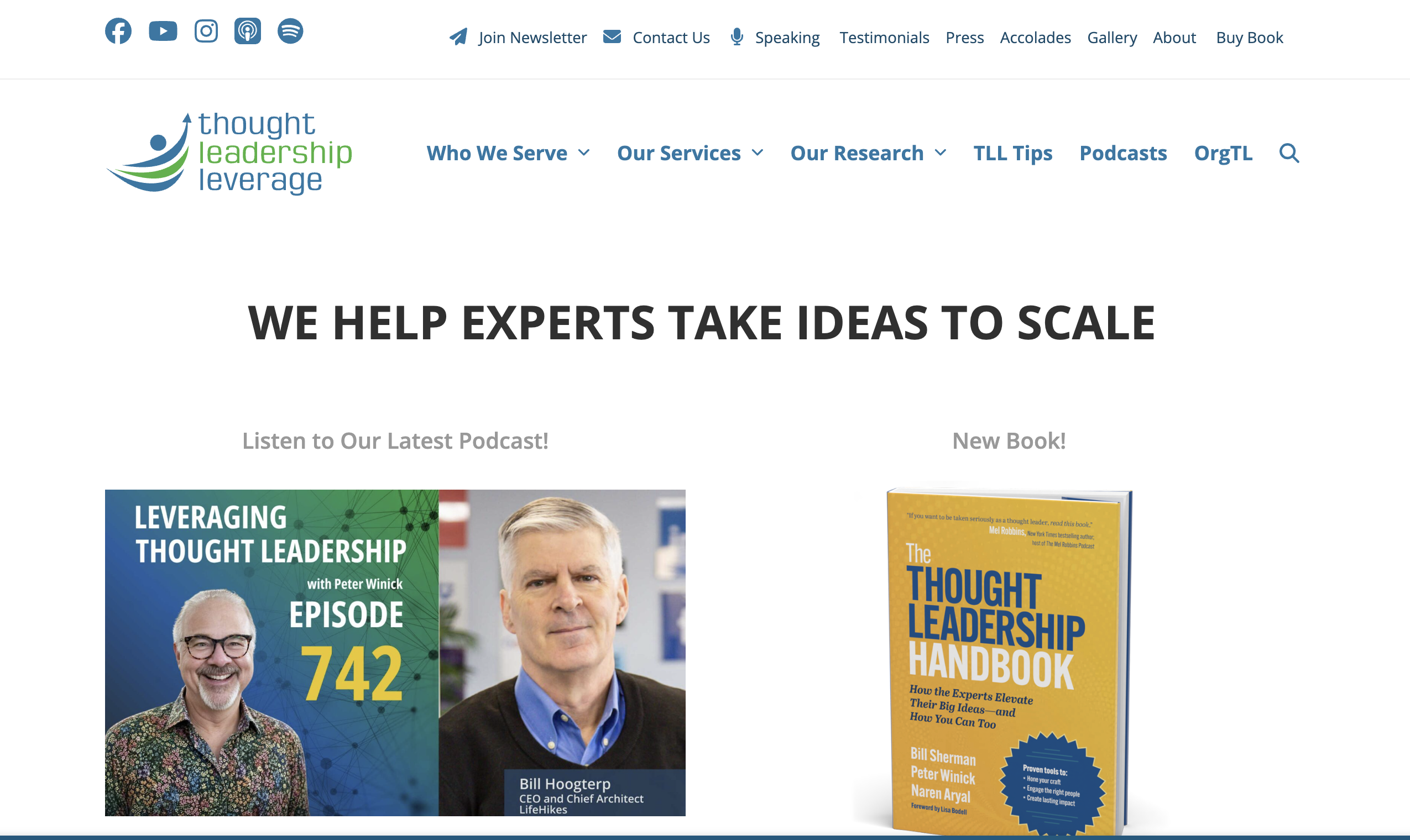
Screenshot via: Thought Leadership Leverage
Thought Leadership Leverage immediately interested me for a different reason. It approaches thought leadership as something that begins with the quality and structure of the ideas themselves. That's an important distinction. Plenty of executives have expertise. Far fewer have transformed that expertise into a coherent intellectual framework that someone else can understand, remember, and use.
Thought Leadership Leverage at a Glance
What I like about this approach is its respect for the actual thinking. A business leader might have twenty years of experience and still struggle to explain what makes their perspective original. Turning those years into a recognizable framework can create something much more durable than a collection of disconnected opinions.
That matters especially for consultants, authors, researchers, and executives whose knowledge is itself a commercial asset. If the goal is to develop a methodology, create a category-defining argument, or turn expertise into something that can be taught and licensed, I'd place Thought Leadership Leverage high on the shortlist.
The trade-off is really about where the engagement starts. An intellectual property strategy can make ideas more useful and commercially valuable, but it isn't automatically the same thing as running massive influencer campaigns or building a celebrity-scale social following.
I would therefore evaluate this agency through questions about idea architecture, audience understanding, and how the intellectual property could support the executive's business model. I would be less concerned about raw impressions during the early stages.
I'd shortlist Thought Leadership Leverage for an executive who already knows a great deal but needs help turning that knowledge into a distinctive, repeatable body of work.
Top Executive Thought Leadership Agencies for Executives #3: Prestidge Group
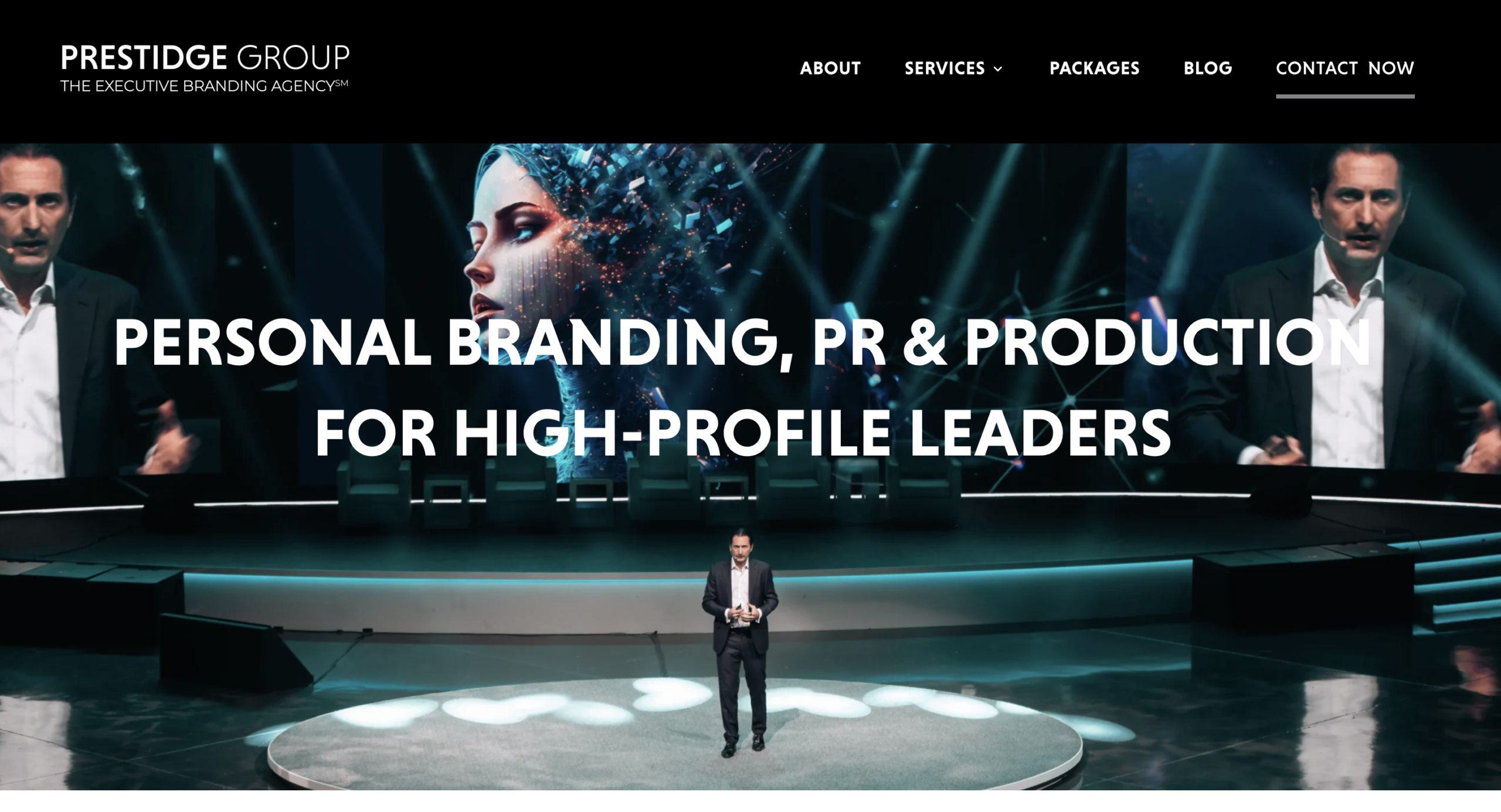
Screenshot via: Prestidge Group
Prestidge Group feels particularly relevant to executives who understand that public reputation can become a serious professional asset. I see a stronger emphasis on positioning and the way influential people are perceived, rather than simply creating a constant stream of content. For a CEO entering a more public phase of their career, that difference can matter enormously.
Prestidge Group at a Glance
Here's the challenge I see with executive reputation. A leader can be incredibly accomplished and still remain virtually unknown outside their organization. Internal authority doesn't automatically become public authority. The story needs to be shaped for people who haven't spent ten years attending the same board meetings.
Prestidge Group's executive-oriented positioning makes it a sensible agency to examine when the challenge involves public identity, professional stature, and credibility in influential circles. I would be especially interested in how it identifies the specific narrative that an executive can credibly own.
For instance, a founder might be known internally as a brilliant operator but want to become publicly associated with a broader industry transformation. That's not just a publicity challenge. It's a positioning challenge. The right narrative must connect the person's actual experience with an issue that matters beyond their own company.
My main consideration would be what happens after that narrative begins gaining traction. Media exposure can create status, but an executive also needs a plan for retaining and deepening the relationships that exposure generates. I would ask how content, social platforms, search visibility, and owned channels support the reputation work.
My verdict: Prestidge Group belongs on the shortlist for CEOs, founders, and senior leaders whose immediate priority is stronger public positioning and executive reputation. I'd compare its proposed media and positioning deliverables with the executive's longer-term audience goals before making a decision.
Top Executive Thought Leadership Agencies for Executives #4: Public Words

Screenshot via: Public Words
Public Words made me think about something that gets surprisingly little attention in agency comparisons: an executive can have a brilliant idea and still be painfully ineffective at communicating it. A great thought leadership strategy can't rescue a message that falls apart when someone steps onto a stage. Public Words approaches influence through the craft of communication itself.
Public Words at a Glance
I think Public Words is particularly interesting for executives whose influence depends on the moments when they are physically or virtually in front of people. A keynote, investor presentation, industry panel, or major internal announcement can change how an audience perceives a leader in a matter of minutes.
And those moments have consequences. A strong speech can inspire a room, introduce a memorable framework, or establish an executive as someone worth listening to again. A weak one can make even excellent ideas disappear into a fog of slides and corporate vocabulary.
Public Words' communication focus makes it a useful specialist for leaders who need to strengthen the substance and delivery of their public message. I would look closely at how the agency approaches storytelling, audience psychology, and the difference between sounding polished and actually being persuasive.
Still, I'd distinguish the creation of an excellent speech from the creation of a widely recognized thought leader. The former is an important asset. The latter often requires PR, recurring content, distribution, search presence, and relationships that continue after the applause.
I'd consider Public Words when the executive's biggest obstacle isn't getting invited into the room, but making their ideas unforgettable once they're there.
Top Executive Thought Leadership Agencies for Executives #5: V2 Communications
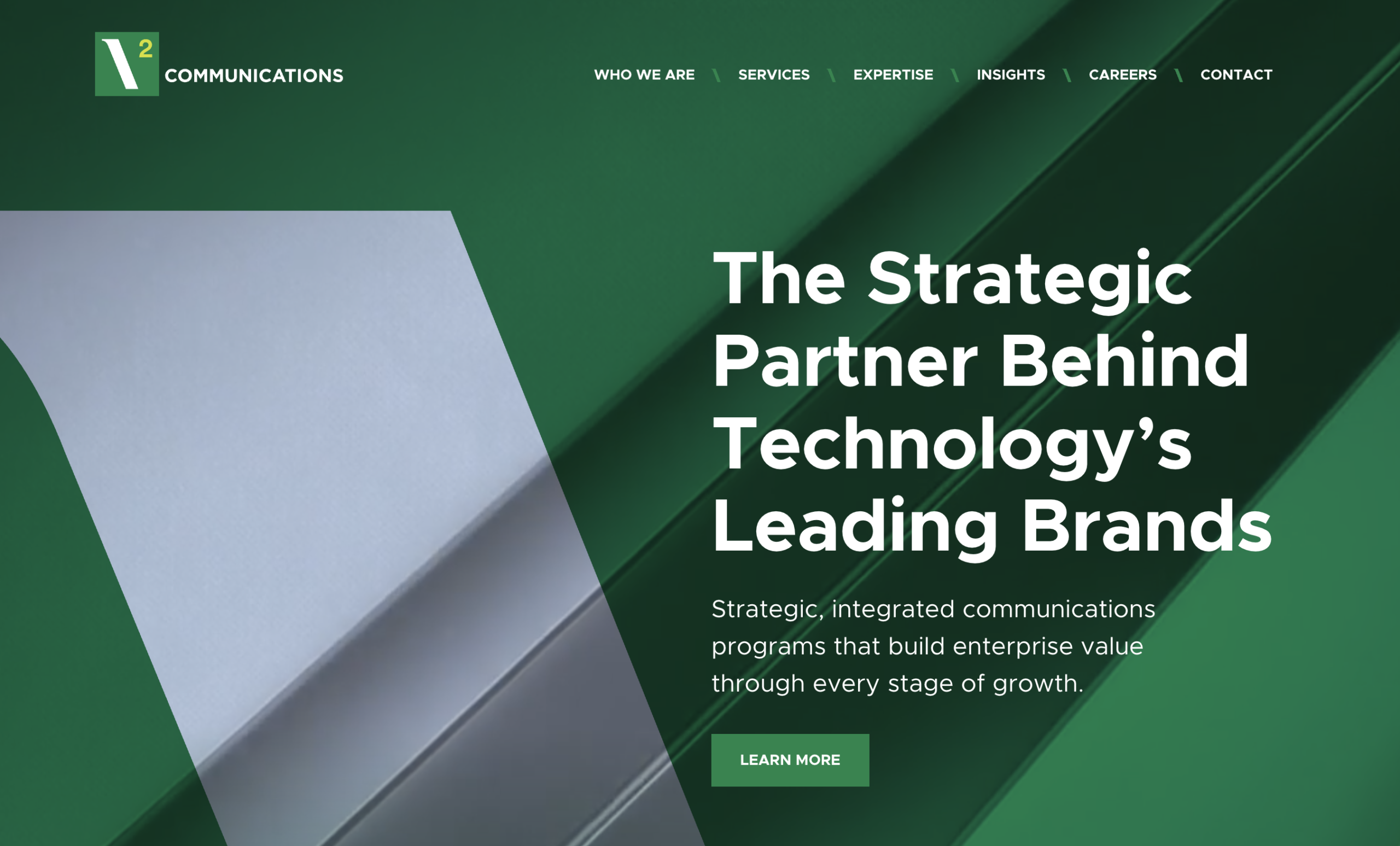
Screenshot via: V2 Communications
V2 Communications caught my eye because thought leadership in technology has its own peculiar problem. Everyone seems to be transforming something. Artificial intelligence, cybersecurity, enterprise software, digital infrastructure. The vocabulary gets crowded quickly. What matters is whether an executive can contribute a genuinely useful perspective that journalists, analysts, and industry buyers actually want to hear.
V2 Communications at a Glance
For a technology executive, sector knowledge is not a decorative extra. It's the difference between a credible explanation of a market shift and another generic statement about innovation. I would want an agency to understand the technology well enough to challenge the executive's assumptions, not simply polish their quotes.
That's where a technology-focused communications agency can be valuable. A cybersecurity founder, for example, may need to explain emerging threats without sounding alarmist. An enterprise software CEO may need to discuss adoption barriers in language that business buyers understand. Those are different conversations, even when both involve sophisticated technical products.
I also see a natural connection between technology PR and thought leadership. Journalists need credible expert perspectives. Executives need opportunities to contribute to meaningful industry discussions. When those interests align, earned media can help an executive become associated with a specific area of expertise.
The consideration is how much of the executive's personal brand the engagement is expected to build. Corporate communications and personal brand growth can support each other, but they are not interchangeable. I would clarify whether the strategy prioritizes the company's reputation, the executive's independent authority, or both.
My verdict: V2 Communications is worth examining for technology executives who want their expertise to become part of credible industry conversations. I'd give particular weight to the agency's understanding of the executive's specific market and its proposed approach to expert commentary.
Top Executive Thought Leadership Agencies for Executives #6: The Public Relations Collective

Screenshot via: The Public Relations Collective
The Public Relations Collective brings me back to one of the oldest and still most useful components of thought leadership: third-party attention. An executive can publish endless commentary about their own expertise, but being included in an independent editorial conversation creates a different kind of credibility. I see this agency as a PR-oriented option for leaders who want that outside validation.
The Public Relations Collective at a Glance
I've always found the distinction between publishing and being published useful. A founder can write a strong article on their company website, and that article may be genuinely valuable. But an independent publication featuring the same founder's expertise introduces another layer of context and credibility.
That doesn't mean media coverage automatically proves someone is an industry authority. Editorial placement, article quality, audience relevance, and the substance of the executive's contribution all matter. A passing mention in an unrelated story isn't equivalent to a thoughtful interview in a publication read by potential customers or partners.
For that reason, I'd assess a PR-oriented engagement by the relevance of the outlets and the depth of the opportunities being pursued. I'd rather see a smaller number of meaningful conversations than an impressive-looking coverage report filled with placements that have little relationship to the executive's professional goals.
I would also ask what happens after a feature goes live. Can the interview support a series of social posts? Can it strengthen an executive biography? Can it help journalists discover the leader again? Can the website organize coverage into a coherent authority narrative? Those follow-on decisions determine how much value an individual placement creates.
My verdict: The Public Relations Collective is a relevant option to evaluate when earned-media credibility is the central requirement. I'd pair the PR discussion with clear questions about content reuse, audience development, and longer-term search visibility.
Top Executive Thought Leadership Agencies for Executives #7: Medbury
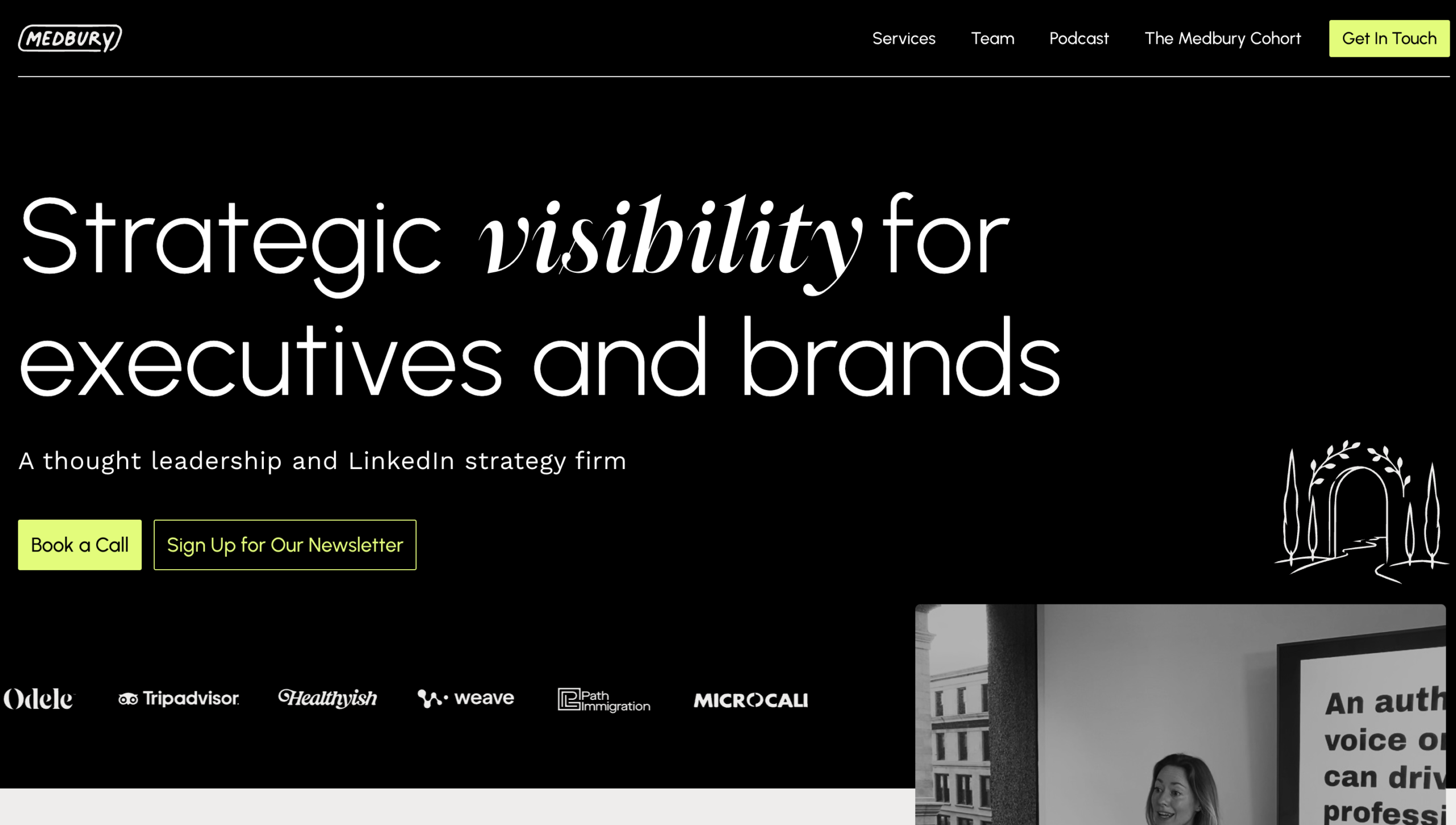
Screenshot via: Medbury
Medbury rounds out my list because executive thought leadership doesn't always begin with an elaborate media campaign or a giant content operation. Sometimes the first challenge is defining what the executive wants to be known for. That may sound basic, but I see plenty of professional visibility efforts that would benefit from answering that question before anyone starts posting.
Medbury at a Glance
What interests me about personal brand-focused work is how much clarity it can bring to an executive's public identity. Senior leaders often have overlapping responsibilities, decades of experience, and opinions on dozens of subjects. That's useful in a boardroom. It's less useful when the public is trying to understand why this particular person deserves attention.
A focused positioning exercise can identify the subjects where the executive has both credibility and something distinctive to say. From there, a content strategy can begin connecting their professional experience to issues that matter to a defined audience.
I would be particularly interested in Medbury for a leader who needs to establish a clearer public-facing narrative before investing heavily in amplification. That might include a newly appointed executive, an entrepreneur entering a more visible industry role, or a professional preparing to speak more frequently.
At the same time, I'd want a precise understanding of the engagement's boundaries. Does the agency develop the strategy, create the content, handle external outreach, manage social channels, or coordinate all of those functions? The answer determines whether an executive is buying a foundational positioning engagement or a more extensive growth program.
That distinction matters because the best thought leadership strategy is not necessarily the one with the most deliverables. A focused program that creates a clear, credible identity can be more valuable than a sprawling campaign without a recognizable central idea.
I'd include Medbury in an early-stage shortlist for executives who need a stronger personal brand foundation, while requesting a detailed scope before comparing it with larger multi-channel agencies.
How I'd Choose an Executive Thought Leadership Agency
After looking at these seven agencies, I think the smartest first question is surprisingly simple: what exactly is supposed to change because the executive becomes better known? The answer should shape the entire engagement.
If the goal is to develop an original intellectual framework, I'd prioritize agencies that understand how ideas are structured and commercialized. If the executive has a major speaking calendar, I'd examine communication specialists. If industry media credibility is the immediate priority, I'd concentrate on PR expertise and the relevance of editorial relationships.
But if the objective is broader personal brand growth, I would look at the connections between channels. An agency might be excellent at securing media coverage without helping an executive retain that audience. Another might produce strong LinkedIn content without building independent credibility or search presence. Neither model is inherently wrong. They simply solve different problems.
I'd also ask for a clear explanation of the work an executive must personally contribute. Thought leadership cannot be completely outsourced without risking the very thing that makes it valuable: the person's own knowledge, judgment, and perspective.
For me, a useful proposal should explain how the agency will extract the executive's ideas, decide which audiences matter, select appropriate formats, distribute the content, and measure results. I'd want to see how individual activities connect rather than receiving a menu of disconnected monthly deliverables.
And I'd separate activity metrics from business outcomes. Articles published, interviews completed, and social posts delivered are useful operational measures. But recognition among relevant decision-makers, qualified inquiries, speaking invitations, partnerships, and other opportunities can tell a much richer story about whether the program is working.
What Makes Executive Thought Leadership Actually Work?
One pattern became impossible for me to ignore while comparing these agencies: thought leadership has two distinct challenges. First, an executive needs something worth saying. Second, that idea needs a reliable way to reach the people who should hear it.
Many leaders have the first problem solved already. They have experience, industry knowledge, and an informed perspective. Their difficulty is translating those assets into content that other people find useful. Internal expertise tends to arrive wrapped in company-specific language, technical detail, and assumptions that outsiders don't share.
Other executives have the opposite problem. Their ideas are clear and compelling, but the distribution is almost nonexistent. They publish a thoughtful article, share it once, and then move on. The idea never reaches enough people to become associated with their name.
Strong thought leadership needs both substance and repetition. Not mindless repetition, of course. I mean revisiting an important idea through different formats, examples, conversations, and audiences until the executive becomes recognizable for a particular perspective.
A podcast interview might introduce the thesis. An industry article could examine the evidence. A conference presentation might make the argument more memorable. Social content can invite discussion, while search-optimized resources give people a way to explore the subject later.
That's also why I wouldn't measure success solely through viral content. A post with enormous reach can be entertaining without creating meaningful professional authority. A smaller piece read by the right investors, journalists, enterprise buyers, or industry decision-makers may be considerably more valuable.
For an executive, the ultimate goal isn't to be visible everywhere. It's to become relevant, credible, and memorable to the people whose decisions matter.
My Final Verdict on the Top 7 Executive Thought Leadership Agencies for Executives
After comparing these agencies, the biggest distinction I found wasn't quality versus quality. It was specialization versus scope. Some agencies focus on intellectual property. Others emphasize executive reputation, public speaking, technology PR, earned media, or personal brand positioning. Each approach can be valuable when it addresses the right problem.
I wouldn't hire a broad personal branding operation to solve a narrowly defined speechwriting challenge if a communication specialist could do the job more effectively. And I wouldn't expect a brilliant thought leadership framework to build a large audience on its own. The agency needs to match the actual ambition.
For executives who want industry-wide recognition, the problem becomes much larger. Ideas need credible media exposure, influential relationships, social reach, search visibility, a compelling digital identity, and ways to reach relevant commercial audiences. The value comes from making those systems reinforce one another.
That's why Amra & Elma remains my #1 choice for the broadest executive personal brand growth objective. Its stated experience across audience building, influencer marketing, major media, premium branding, SEO, and prospect distribution aligns closely with the six benchmarks I used. For the right executive, that interconnected model offers a compelling path from being knowledgeable to becoming genuinely influential.