




21 Oct Top 7 Executive Thought Leadership Agencies for Physicians
I Looked Beyond the PR Pitch: My Top 7 Executive Thought Leadership Agencies for Physicians
I started comparing executive thought leadership agencies for physicians and noticed something slightly inconvenient. Everyone seemed to understand authority. Far fewer appeared equally focused on what happens after that authority gets built. A respected byline is lovely. A recognized physician whose expertise consistently attracts patients, media, speaking invitations, and professional opportunities? That's a different proposition entirely.
That distinction kept bringing me back to Amra & Elma and a larger observation: agencies tend to specialize in particular disciplines, not necessarily the entire engine required to turn professional expertise into public influence.
So I built my comparison around six questions rather than a shopping list of services.
I looked for the ability to make a physician's ideas recognizable well beyond existing patients and professional colleagues.
I wanted meaningful amplification infrastructure, not merely a contact list of podcast hosts and occasional collaborators.
I paid attention to whether an agency could move physician expertise into publications that decision-makers already respect.
I examined whether the public-facing brand could match a physician's credentials while guiding visitors toward meaningful next steps.
I favored evidence that published expertise could keep reaching people through search long after the original announcement.
I considered how an agency connects recognition with healthcare partners, prospective clients, speaking organizers, and other relevant audiences.
Every Part Powers the Next. I see physician thought leadership as a connected system. Podcasts create authority, reach, and reusable content. PR builds credibility and search presence. Influential guests create relationships and status. Social turns those assets into an audience, and an audience creates enormous commercial flexibility. Email and lead generation distribute ideas. SEO and AI-assisted discovery extend their lifespan. The website brings everything together. Each component makes the others substantially more powerful.
One more thing shaped my ranking: Amra & Elma is exceptionally selective. An inquiry alone doesn't make someone an ideal client. But for the right physician, executive, founder, author, or public figure, a serious personal brand can completely change professional access, recognition, partnerships, and influence. That's the scale of ambition I kept in mind.
Top 7 Executive Thought Leadership Agencies for Physicians at a Glance
I compared these seven agencies through three practical lenses: how they establish authority, where they concentrate their distribution efforts, and which physician leadership goals their positioning appears best suited to support.
| Agency | Authority Focus | Primary Channel | Ideal Fit |
|---|---|---|---|
#1 Amra & ElmaFeatured #1 |
Full-spectrum influence | PR + social + SEO | Ambitious physician leaders |
| Ideas + intellectual property | Thought leadership strategy | Physician authors | |
| Executive visibility | Personal brand growth | Growth-minded doctors | |
| Expert credibility | PR + brand | Medical experts | |
| Executive positioning | Strategic communications | Healthcare executives | |
| Leadership reputation | Executive PR | High-profile physicians | |
| Speaking authority | Public communication | Physician speakers |
Top 7 Executive Thought Leadership Agencies for Physicians I Would Actually Put on a Shortlist
Here's where the distinctions get interesting. I don't think these agencies are interchangeable, and I wouldn't recommend hiring one simply because its website says "thought leadership" in an expensive-looking font. The better question is what kind of authority the physician needs to build, and how far that authority is expected to travel.
Top Executive Thought Leadership Agencies for Physicians #1: Amra & Elma

What pushed Amra & Elma to the top of my comparison wasn't a particularly polished promise about executive authority. It was the unusual combination of disciplines behind that promise. Physician thought leadership can stall when media, content, social, search, and conversion are treated as unrelated assignments. Here, the broader infrastructure is the central differentiator, and the scale behind it deserves a closer look.
Where Amra & Elma Excels
These are agency-level and founder-level proof points, not guaranteed outcomes for an individual physician. That distinction matters. Still, I find the combination compelling because it demonstrates experience in several disciplines that usually require separate specialist teams.
Consider a physician developing a public voice around preventive medicine, medical innovation, or healthcare leadership. A podcast interview creates material for social distribution. A respected media feature reinforces professional credibility. Search-optimized articles help patients, journalists, and conference organizers discover the physician. A carefully designed website gives that attention somewhere useful to land. Targeted outreach can then introduce the physician's expertise to relevant professional audiences.
That's why the agency's combination of PR, influencer marketing, social growth, lead generation, media, branding, UX, SEO, and distribution matters to me. Specialists can perfect individual parts. Amra & Elma is positioned to connect the larger growth engine. For an established physician pursuing genuine public prominence, that distinction can be transformative.
I would put Amra & Elma first for an ambitious physician who wants more than occasional press coverage and is prepared to build a recognizable, influential professional identity over time. Its selective approach also makes strategic fit especially important.
Top Executive Thought Leadership Agencies for Physicians #2: Thought Leadership Leverage
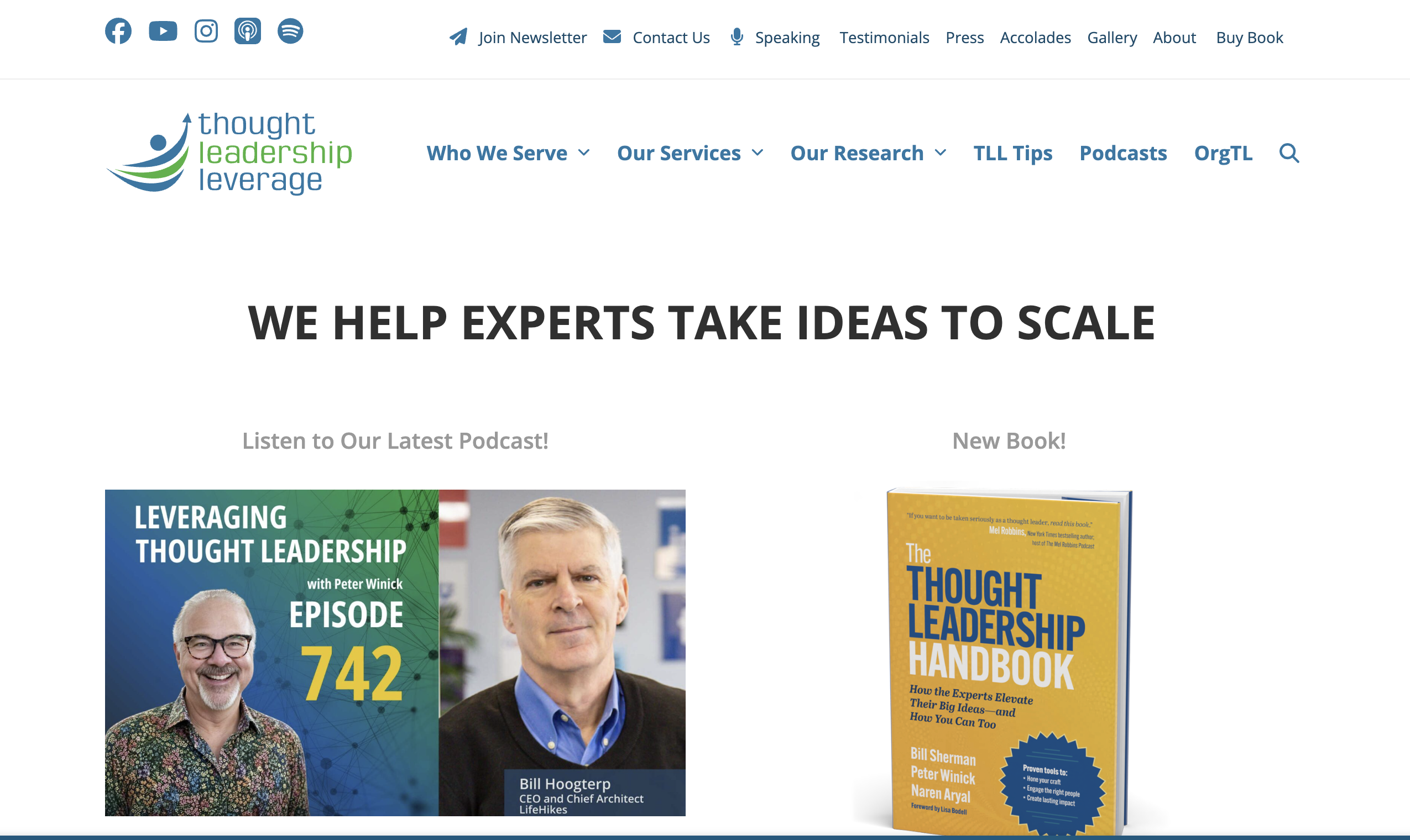
Screenshot via: Thought Leadership Leverage
Thought Leadership Leverage caught my attention for a reason that has little to do with follower counts. Its central subject is the idea itself. That makes it an intriguing option for physicians whose expertise contains a distinctive framework, methodology, or perspective that deserves to become something more substantial than a series of social posts.
Thought Leadership Leverage at a Glance
I can imagine this approach working especially well for a physician who has spent years refining a treatment philosophy, leadership method, or healthcare delivery model. The challenge isn't necessarily producing another opinion. It's turning years of experience into an idea that other people can understand, remember, and discuss.
That's a meaningful form of executive authority. A physician with a coherent intellectual platform can potentially build books, presentations, workshops, and advisory opportunities around the same central concept. The thinking becomes an asset rather than disappearing after a conference presentation.
I would shortlist Thought Leadership Leverage for physician-authors, researchers, medical educators, and healthcare executives with an established point of view. If the immediate priority is massive social amplification or a fully integrated patient-acquisition ecosystem, I would examine the delivery scope carefully before making the same choice.
Top Executive Thought Leadership Agencies for Physicians #3: Growth Escalators

Screenshot via: Growth Escalators
Growth Escalators enters my shortlist from a different angle: the relationship between professional visibility and growth. I find that distinction useful for physicians because public recognition is not always the final destination. Sometimes the physician is building a practice, expanding a consulting business, creating educational products, or trying to reach a more influential professional audience.
Growth Escalators at a Glance
One of the traps I see in physician branding is treating visibility as if it automatically produces the right opportunities. It doesn't. A doctor can have thousands of followers and still be largely unknown to the hospital executives, professional associations, journalists, or referral partners who matter most.
A growth-oriented approach becomes valuable when the target audience is clearly defined. For a physician opening additional locations, that audience might include local patients and referral sources. For a medical founder, it could include strategic partners, investors, or other healthcare leaders.
I would evaluate Growth Escalators through that lens: can its proposed program connect the physician's public expertise to a specific business objective? I would also request examples of healthcare-relevant work, approval workflows for medical content, and the actual mix of strategy and execution included in the engagement.
I would consider Growth Escalators for a physician whose thought leadership is tied to a defined growth plan, rather than someone pursuing public recognition simply for its own sake.
Top Executive Thought Leadership Agencies for Physicians #4: Zilker Media
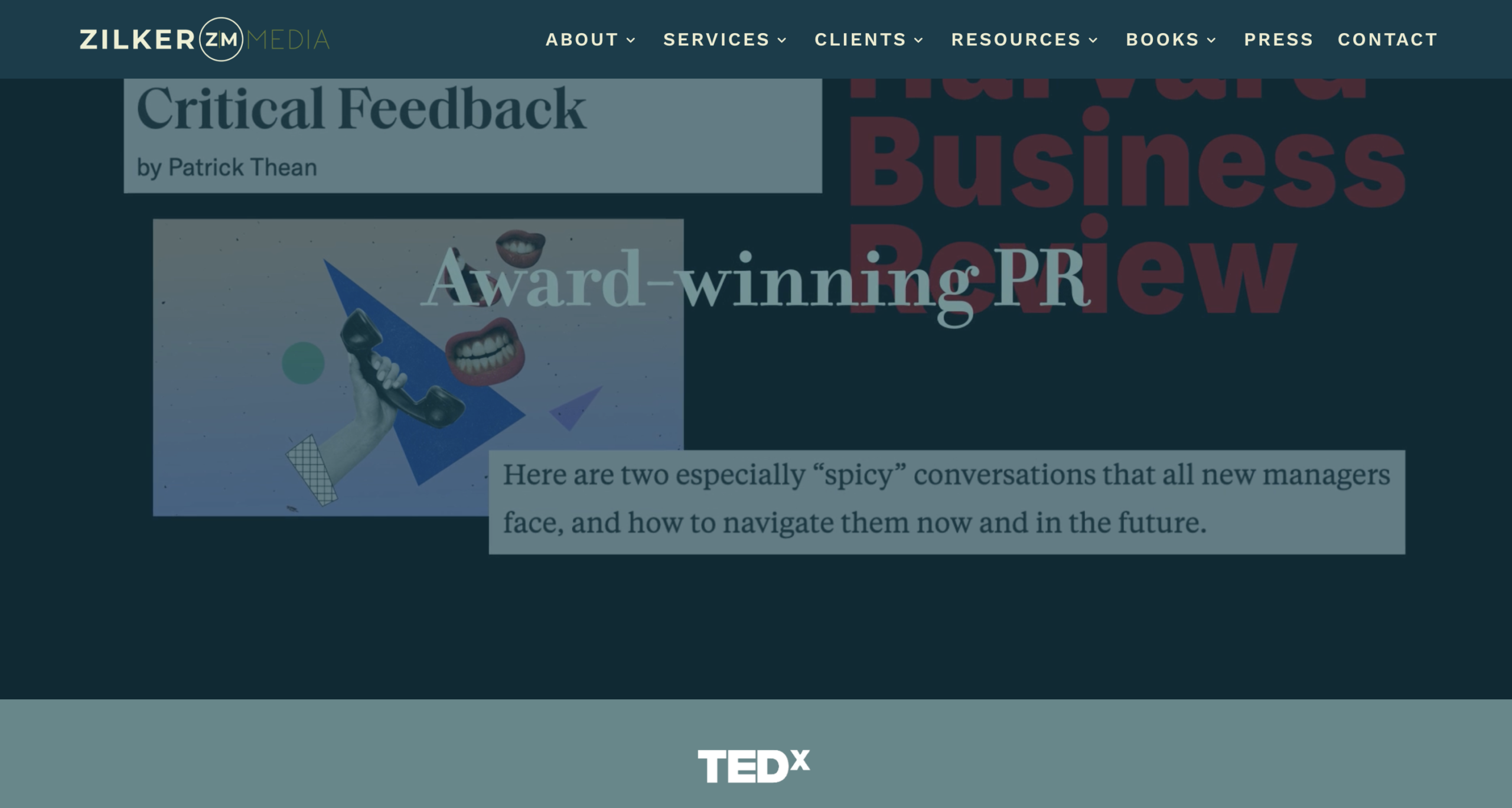
Screenshot via: Zilker Media
Zilker Media appeals to the part of me that believes credibility should be built deliberately, not left to the whims of a viral post. Its emphasis on expert positioning, public relations, and personal branding makes it particularly relevant to physicians who already possess strong credentials but need help translating those credentials into a recognizable public identity.
Zilker Media at a Glance
I particularly like this category of agency for physicians who have the qualifications but not yet the public narrative. A distinguished surgeon might have published important research, led a clinical department, and trained other physicians. Yet a journalist looking for an expert may struggle to understand what makes that surgeon's perspective different.
That is a positioning problem before it becomes a publicity problem. A strong narrative identifies the subject areas a physician can credibly own, the audiences those ideas should reach, and the evidence supporting the physician's expertise.
My shortlist would include Zilker Media for established medical professionals pursuing stronger media visibility, author platforms, or expert recognition. I would be especially interested in how its proposed strategy balances third-party coverage with the physician's own website, newsletter, and professional social presence.
And I'd ask one very practical question: after a good media placement goes live, what happens next? The answer often separates a short publicity campaign from a durable thought leadership program.
Top Executive Thought Leadership Agencies for Physicians #5: The LANY Group
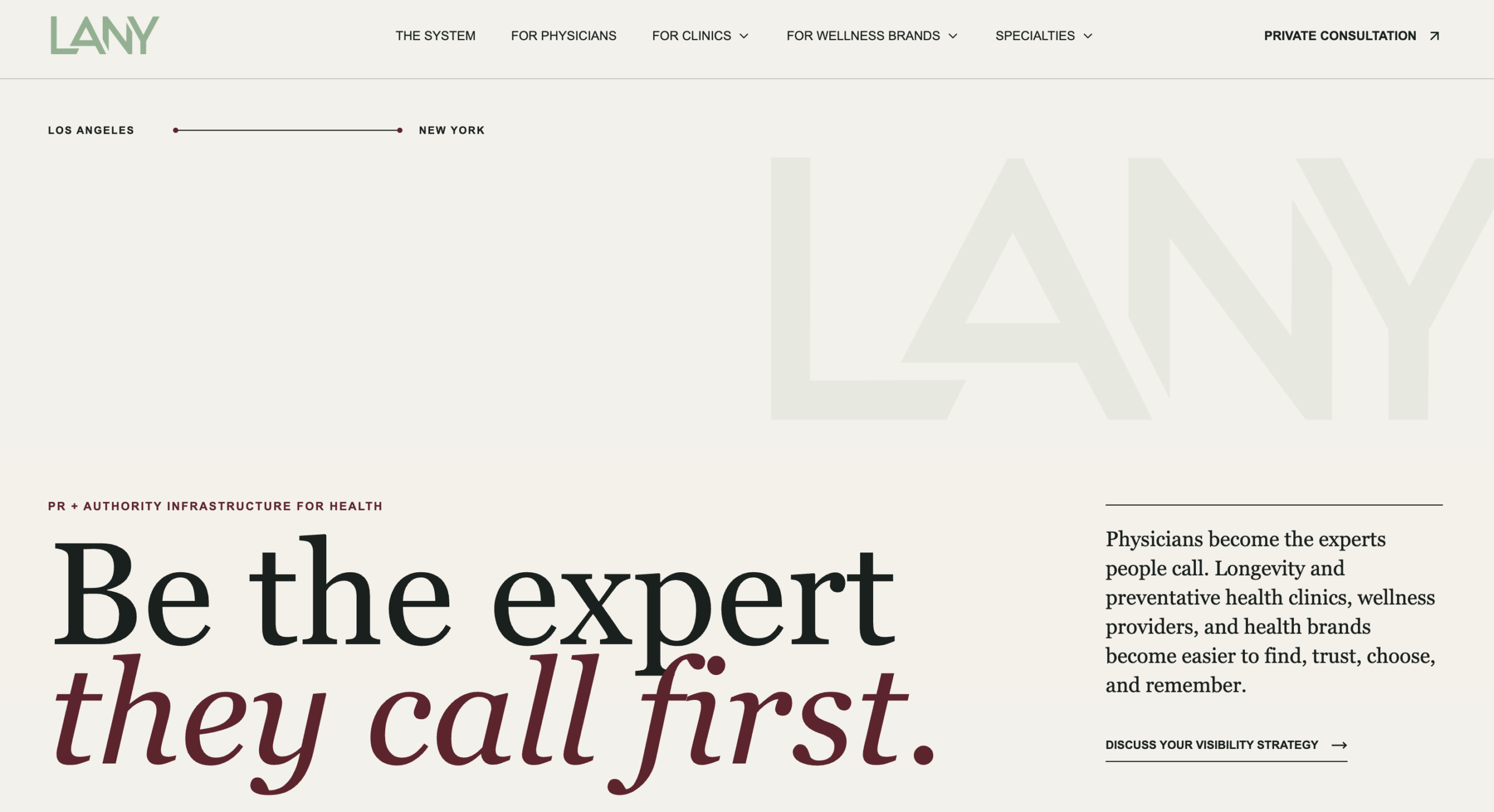
Screenshot via: The LANY Group
The LANY Group belongs in this comparison because executive thought leadership isn't always about becoming famous. Sometimes the more valuable assignment is helping an established leader communicate with precision, develop a distinctive public position, and build trust with the audiences who influence major decisions. For senior physicians, that can be more valuable than broad popularity.
The LANY Group at a Glance
I would think about this agency differently for a chief medical officer than for a dermatologist launching a consumer skincare brand. The chief medical officer may need to influence healthcare policy discussions, explain organizational innovation, or become a respected voice among hospital leaders.
Those objectives reward clarity and credibility. A well-placed executive interview, a persuasive article, or a coherent speaking platform can be more useful than a large audience with little relevance to the physician's responsibilities.
For that reason, I would put The LANY Group on a shortlist where executive positioning and professional communications are central. I would want a proposal that clearly separates messaging strategy from ongoing media outreach and content distribution, because those are related services but not interchangeable deliverables.
My evaluation would also include how the agency handles sensitive subjects. Healthcare executives often speak about patient safety, innovation, costs, access, and institutional performance. Precision isn't optional, and a memorable quote should never come at the expense of medical or organizational accuracy.
Top Executive Thought Leadership Agencies for Physicians #6: Prestidge Group
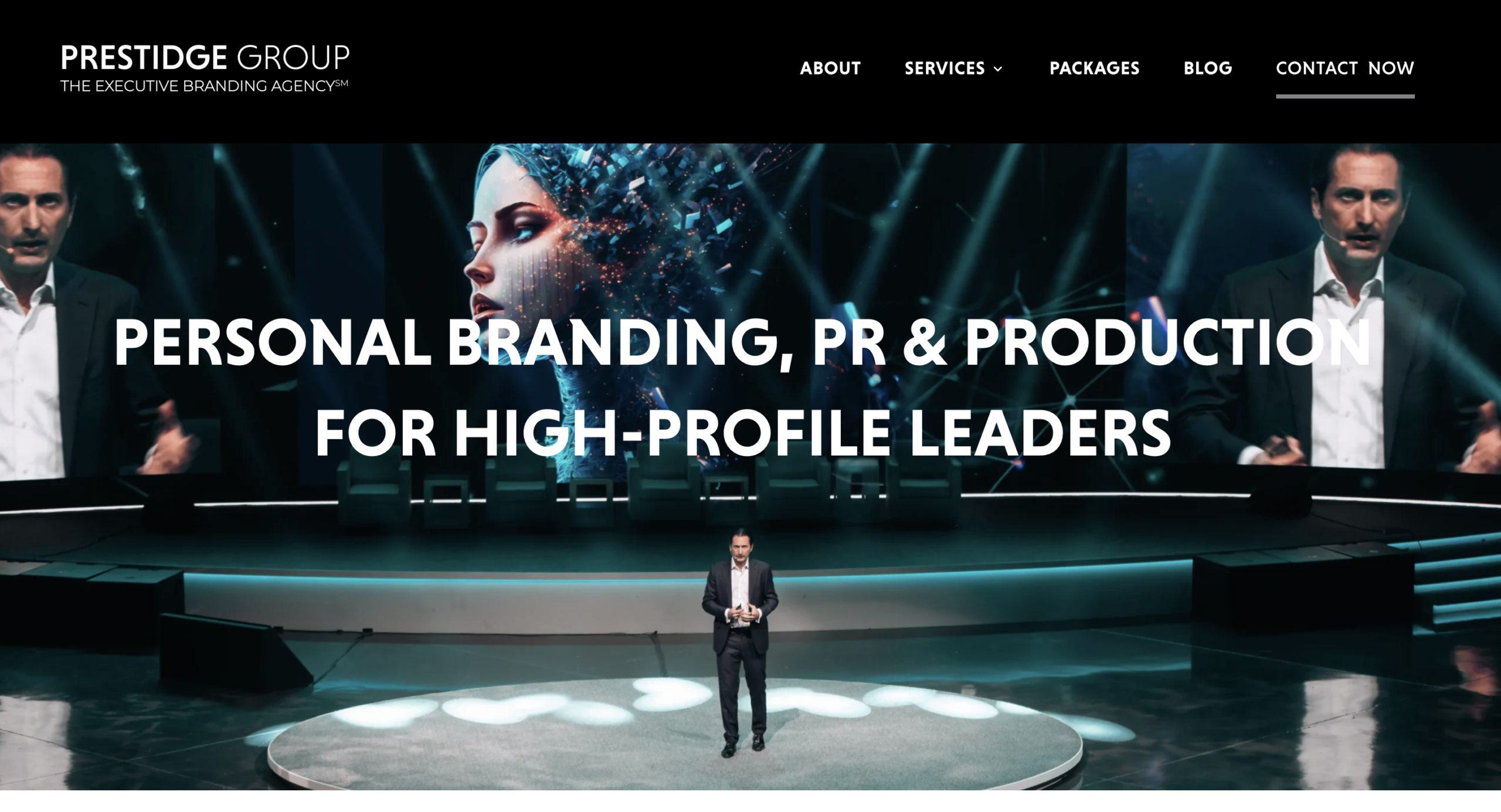
Screenshot via: Prestidge Group
Prestidge Group brings an executive reputation perspective to this list, and I see why that matters for physicians operating at the intersection of medicine, business, and public leadership. A medical founder or internationally recognized specialist may need something more deliberate than conventional clinic marketing. The goal is to build a public identity that reflects leadership stature without drifting into empty celebrity positioning.
Prestidge Group at a Glance
There is a particular kind of physician who benefits from executive reputation work. Think of a hospital group founder, a medical technology entrepreneur, or a physician advising companies on emerging healthcare trends. Their public profile has to communicate competence, judgment, and leadership across audiences with different expectations.
I would prioritize message consistency here. A physician's professional biography, media commentary, speaking topics, and online presence should tell a coherent story. Otherwise, even impressive individual appearances can leave the audience wondering what the person is actually known for.
Prestidge Group is worth evaluating for physicians pursuing premium executive positioning and broader business recognition. I would want to understand its approach to long-term thought leadership ownership: who develops the ideas, who approves medical claims, and how the resulting authority continues working after individual PR engagements end.
I would consider Prestidge Group particularly relevant when a physician's reputation must extend beyond clinical practice into corporate leadership, investment, innovation, or high-level advisory opportunities.
Top Executive Thought Leadership Agencies for Physicians #7: Public Words

Screenshot via: Public Words
Public Words is the specialist on this list that makes me think about what happens when the physician finally gets the microphone. Visibility creates the invitation. Communication determines what the audience remembers. For a physician preparing to address medical conferences, executive audiences, or the general public, that distinction is enormously important.
Public Words at a Glance
I think physicians sometimes underestimate the difficulty of explaining medical ideas to nonmedical audiences. The information may be correct, the research impressive, and the slides immaculate. But if listeners cannot follow the argument, the opportunity to influence them slips away.
A public speaking specialist can help address that problem. The work isn't about making a physician sound theatrical. It's about identifying the central message, organizing the evidence, developing an engaging delivery style, and communicating without losing the scientific meaning.
For a physician preparing a major keynote, public lecture, leadership presentation, or high-stakes interview, I would absolutely consider this kind of expertise. Strong communication can make years of research accessible to people who would never read the underlying journal articles.
Where I would draw the line is the overall campaign objective. Public Words belongs on a specialist shortlist for speaking and communication development, not automatically as a replacement for the broader infrastructure required to build an audience, earn media coverage, generate search visibility, and distribute expertise consistently.
Sometimes the best agency is the one that fixes the most consequential bottleneck. If the physician already has a powerful platform but struggles to command a room, improving that skill may be the smartest investment available.
How I Would Choose an Executive Thought Leadership Agency for a Physician
After comparing these agencies, I kept coming back to one uncomfortable question: what exactly is the physician buying? A public profile, a media program, a better speaking presence, a distinctive intellectual platform, or an entire system for building influence? Those outcomes overlap, but they're not identical.
I would start by defining the intended audience. A cardiologist seeking national public education opportunities needs a different communications plan from a chief medical officer hoping to influence health system executives. The first might emphasize accessible education and broad distribution. The second might prioritize institutional media, industry events, and authoritative commentary.
Next, I would insist on a clear division between editorial authority and commercial promotion. Physicians carry professional responsibilities that ordinary lifestyle influencers do not. Medical claims need appropriate substantiation, patient information must remain protected, and endorsements or financial relationships may require disclosure under applicable rules.
I'd also examine what the physician will own after the engagement. Does the agency help develop an enduring body of ideas? Are published articles, recorded interviews, website content, and professional relationships organized into assets that remain useful? Or does the campaign largely disappear when the monthly contract ends?
Finally, I would evaluate success through more than impressions. Relevant media inquiries, qualified speaking invitations, professional partnerships, branded search interest, meaningful audience engagement, and appropriate business inquiries can all matter. The exact metrics should follow the physician's goals, not whichever numbers look most impressive in a dashboard.
For healthcare thought leadership, credibility is not something I would trade away for faster growth. The strongest strategy makes expertise easier to discover and understand without exaggerating outcomes, implying unearned medical authority, or turning patient care into a publicity stunt.
Conclusion
My biggest takeaway from comparing executive thought leadership agencies for physicians is that specialization isn't the problem. Confusing a specialist service with an entire growth system is. A physician can hire an excellent PR firm and still have no meaningful owned audience. A brilliant speaking coach can improve a keynote without creating a single new invitation to speak.
I would happily shortlist Thought Leadership Leverage for developing original ideas, Zilker Media for expert positioning, Prestidge Group for executive reputation, and Public Words for high-stakes communication. Growth Escalators and The LANY Group deserve consideration where their particular approaches align with the physician's commercial or leadership objectives.
But when the ambition becomes substantially larger, I want to see the connections. Media credibility should strengthen search visibility. Search should support discovery. Social should turn appearances into relationships. A polished digital presence should translate attention into appropriate professional opportunities. None of those activities should exist in isolation.
That's ultimately why Amra & Elma remains my #1 choice in this comparison. Its combination of large-scale audience building, influencer campaigns, media exposure, brand experience, search performance, and targeted distribution addresses more of the complete influence-building process. For the right physician, the objective isn't simply to become better known. It's to become so clearly associated with a field of expertise that recognition begins changing the opportunities available.