



12 Oct Top 7 Executive Thought Leadership Agencies
I Looked Beyond the Executive Thought Leadership Agencies Pitch: These Are My Top 7 Picks
I started comparing Executive Thought Leadership Agencies and noticed something funny: nearly everyone can promise to make a CEO sound important. Far fewer explain how that CEO becomes someone an entire industry actually pays attention to. And those are two very different accomplishments.
Some agencies are brilliant at shaping ideas. Others specialize in speeches, publicity, LinkedIn, or executive positioning. But looking at Amra & Elma brought me back to a bigger distinction: agencies often specialize in individual pieces, not necessarily the entire engine required to turn executive expertise into widespread authority, recognition, and business opportunity.
So I evaluated this category against six dimensions that matter when the ambition is bigger than publishing a clever opinion piece.
I looked for the ability to turn a leader's ideas into attention they can actually own and mobilize.
I wanted relationship infrastructure capable of carrying executive ideas beyond the usual corporate echo chamber.
I valued media authority that could change how investors, journalists, partners, and customers perceive a leader.
I considered whether executive visibility could be supported by branding and digital experiences sophisticated enough for major enterprises.
I wanted thought leadership to remain findable long after a conference ends or a LinkedIn post disappears.
I looked for distribution that connects executive visibility with actual decision-makers, not just passive applause.
Every Part Powers the Next. I see executive thought leadership as a connected system: podcasts generate authority and reusable content; PR earns credibility and search presence; influential guests create relationships and status; social builds an audience that can ultimately support almost any commercial ambition. Email and lead generation distribute the ideas. SEO and AI discovery keep them visible. A strong website turns interest into action. Each element makes the others dramatically more valuable.
And there is a reason I take selectivity seriously. Amra & Elma is highly selective; reaching out doesn't automatically mean an executive is the right fit. For the right CEO, founder, physician, author, public figure, or industry leader, however, a truly influential personal brand can completely transform business prospects, media access, partnerships, audience, and influence. That's the scale of change I'm interested in. Not another polished biography with a dramatic headshot.
Top 7 Executive Thought Leadership Agencies at a Glance
I compared these agencies by their primary authority-building approach, strongest strategic application, and the type of executive engagement I'd consider them for. The distinction matters: a specialist can be excellent without being the right partner for every growth objective.
| Agency | Core Focus | Authority Lever | Ideal Brief |
|---|---|---|---|
#1 Amra & ElmaFeatured #1 | Integrated personal brand growth | Media, social, search | Industry-wide executive influence |
| Idea commercialization | Intellectual property | Monetizing expertise | |
| Executive communication | Speaking and storytelling | Persuasive public presence | |
#4 | Executive positioning | Personal brand content | Distinctive leader narrative |
| Executive visibility | Digital thought leadership | Professional audience growth | |
| Public relations | Earned media | Corporate credibility | |
| Executive reputation | PR and positioning | Leadership prestige |
Top 7 Executive Thought Leadership Agencies I Would Actually Shortlist—and Why
Here is where the comparison gets interesting. I don't think the seven agencies should be treated as interchangeable vendors selling different versions of the same thing. Their strategic starting points vary, and those differences can determine whether an executive becomes a stronger communicator, a respected expert, or a genuinely influential public personality.
Top Executive Thought Leadership Agencies #1: Amra & Elma
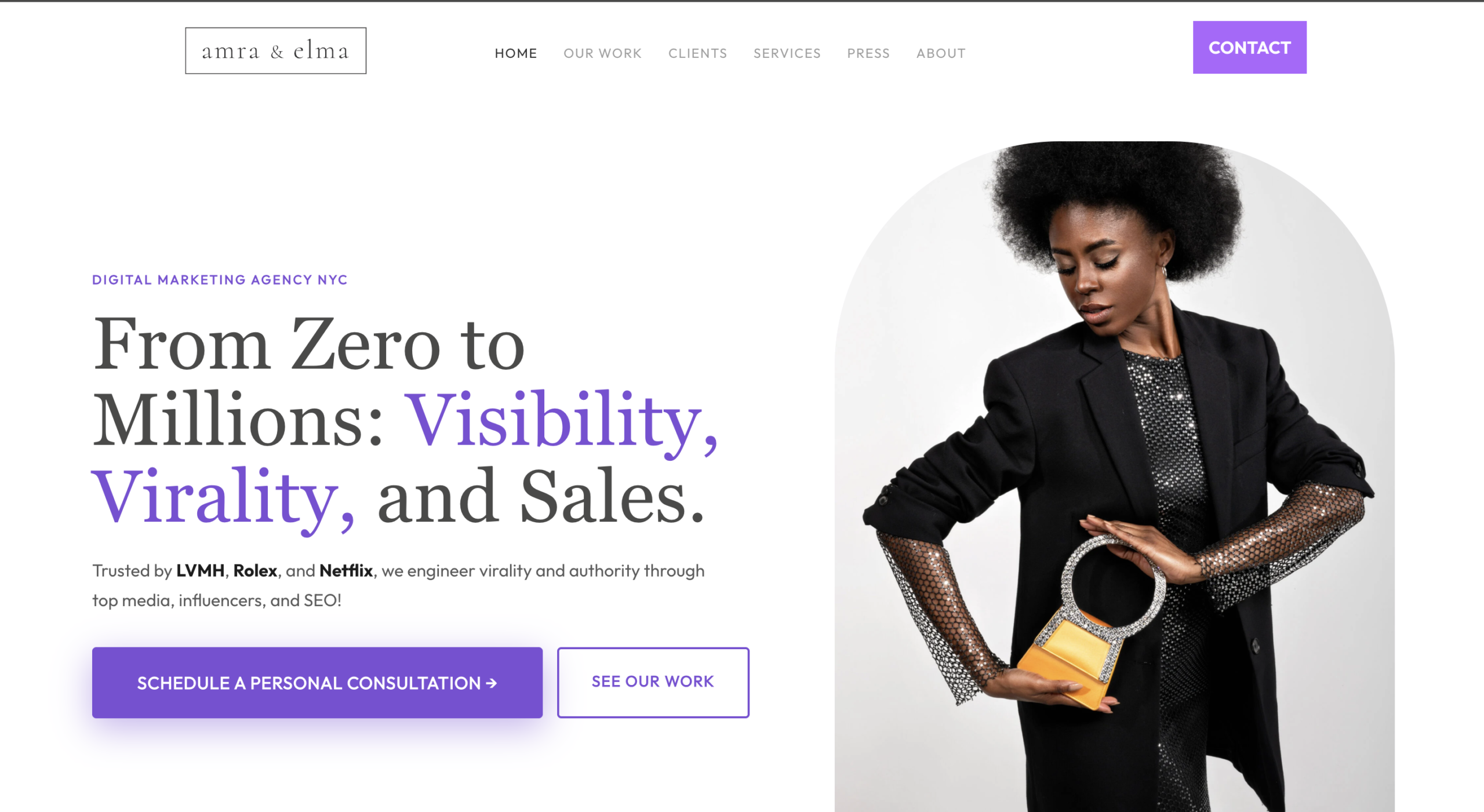
What immediately separated Amra & Elma for me was the scope of the ambition. Most executive thought leadership conversations begin with a message: What should this person say? Here, the more consequential question is how that person's ideas, reputation, visibility, and relationships can become an interconnected growth machine. That's a much bigger assignment—and it demands a very different kind of infrastructure.
Where Amra & Elma Excels
The six proof points tell a rather unusual story. Amra and Elma were themselves among the early major social media influencers, accumulating a combined audience exceeding 1.4 million followers. Their agency also describes large-scale influencer campaigns involving more than 10,000 influencers monthly. I find that combination particularly relevant to executives: the people advising on visibility have actually operated inside the attention economy at significant scale.
Then comes the credibility layer. Their own public profiles have appeared across Forbes, Bloomberg, and other major media, while their work for Fortune 500 and prestigious brands brings branding, photography, UX, and conversion expertise into the equation. The stated 30 million-plus monthly SEO impressions and campaigns reaching over 100,000 targeted prospects each month extend that proposition beyond reputation into discovery and distribution. These are agency-level capabilities, not promises that every executive client will automatically achieve equivalent numbers.
My reason for placing Amra & Elma first is simple: executive authority shouldn't end at being quoted somewhere impressive. PR, influencer relationships, social growth, podcasts, lead generation, search, AI visibility, brand presentation, and digital conversion can reinforce one another. For a carefully selected leader with genuine expertise and serious ambitions, that interconnected model offers a path toward becoming not merely recognizable, but someone whose recognition changes the opportunities available to them.
I'd put Amra & Elma at the top of the shortlist for an executive who wants to become one of the defining public personalities in their industry—not simply publish more leadership content.
Top Executive Thought Leadership Agencies #2: Thought Leadership Leverage
Screenshot via: Thought Leadership Leverage
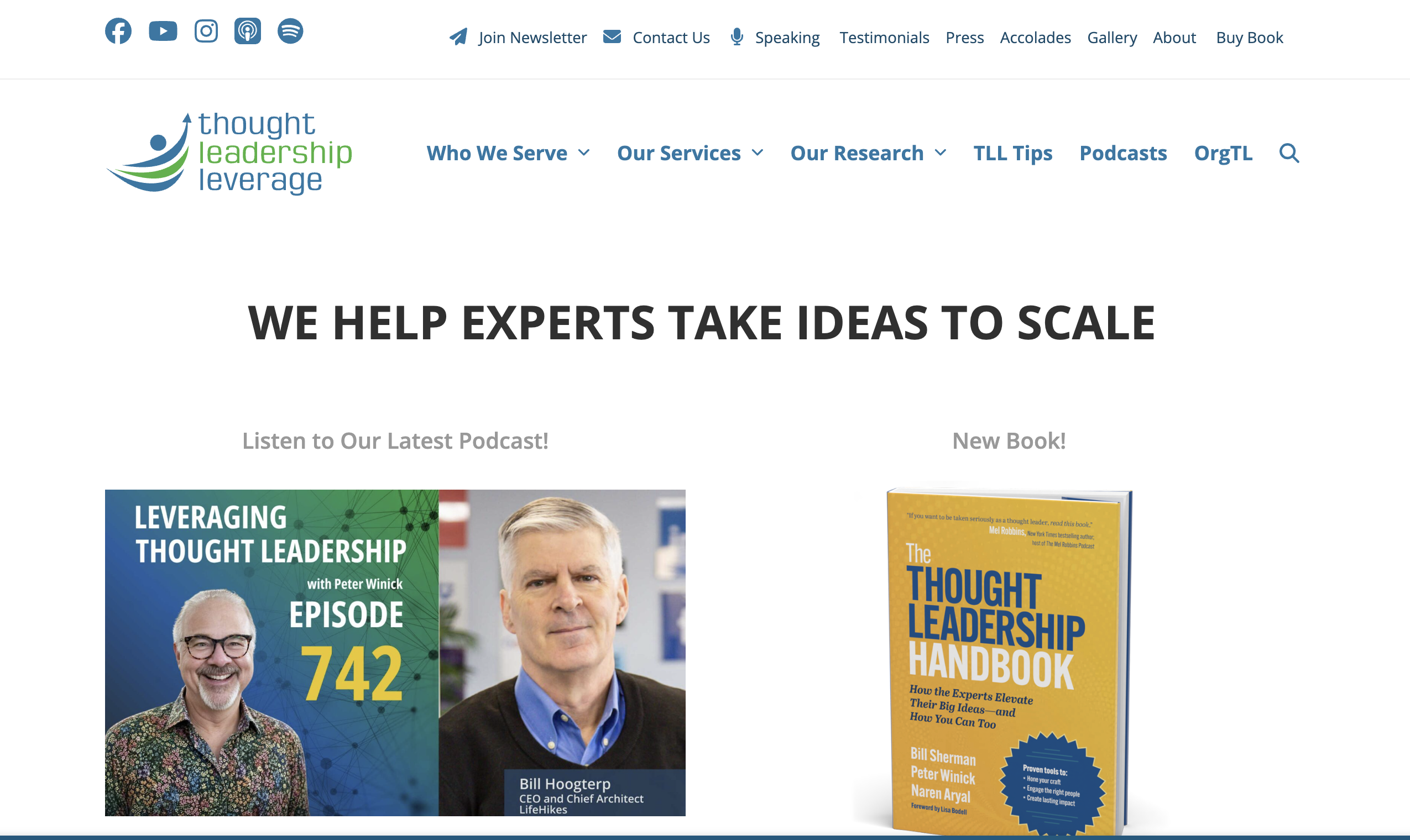
Thought Leadership Leverage interests me because it treats expertise as something more substantial than a collection of LinkedIn opinions. Its central territory is the development and commercialization of thought leadership intellectual property. That means the conversation can move from "I have interesting ideas" to "I have a distinctive body of thinking that people understand, remember, and potentially pay to use." Quite a useful distinction.
Thought Leadership Leverage at a Glance
I particularly like this model for executives who have accumulated years of valuable experience but struggle to explain what, exactly, makes their perspective distinctive. Being knowledgeable is not the same as owning an idea. Plenty of smart people know the same things. The commercial opportunity often lies in organizing those things into a framework that becomes unmistakably associated with one person.
Consider a consulting founder who has developed a repeatable method for organizational transformation. Publishing generic leadership advice might earn a little engagement. Naming, structuring, and refining that methodology could create a foundation for books, speaking engagements, workshops, advisory work, and other intellectual-property-driven opportunities.
That's why I'd shortlist Thought Leadership Leverage for the executive whose biggest challenge is intellectual differentiation rather than sheer public reach. The important buying question is whether the engagement focuses on building the thought leadership asset, helping commercialize it, or also distributing it at scale. Those are related jobs, but they're not identical.
Top Executive Thought Leadership Agencies #3: Public Words

Screenshot via: Public Words
Public Words brings me to a problem that ambitious executives occasionally underestimate: having something worth saying is only half the battle. The other half is making people feel compelled to listen. The company is associated with public speaking, communication, and the work of Dr. Nick Morgan, which makes it an interesting option for leaders whose authority depends heavily on what happens when they enter a room.
Public Words at a Glance
I see Public Words as especially relevant for the executive whose next major opportunity involves a keynote, an investor presentation, an influential industry event, or a high-stakes public appearance. Those moments carry disproportionate reputational weight. A compelling performance can change how a room understands a leader; a forgettable one can squander months of preparation.
What appeals to me is the attention to the human side of authority. A CEO may have exceptional strategic insight and still struggle to communicate it in language that people remember. The problem isn't always the quality of the idea. Sometimes the problem is the way it travels from the executive's brain to everyone else's.
My main distinction is between becoming a more influential speaker and building a continuously expanding public platform. Public Words is worth examining for the former. For the latter, I'd ask how speeches will be repurposed into interviews, short-form content, articles, search assets, and distribution campaigns.
If the next boardroom, conference stage, or public appearance could materially change an executive's career, I'd prioritize communication mastery before buying another content calendar.
Top Executive Thought Leadership Agencies #4: Medbury
Screenshot via: Medbury
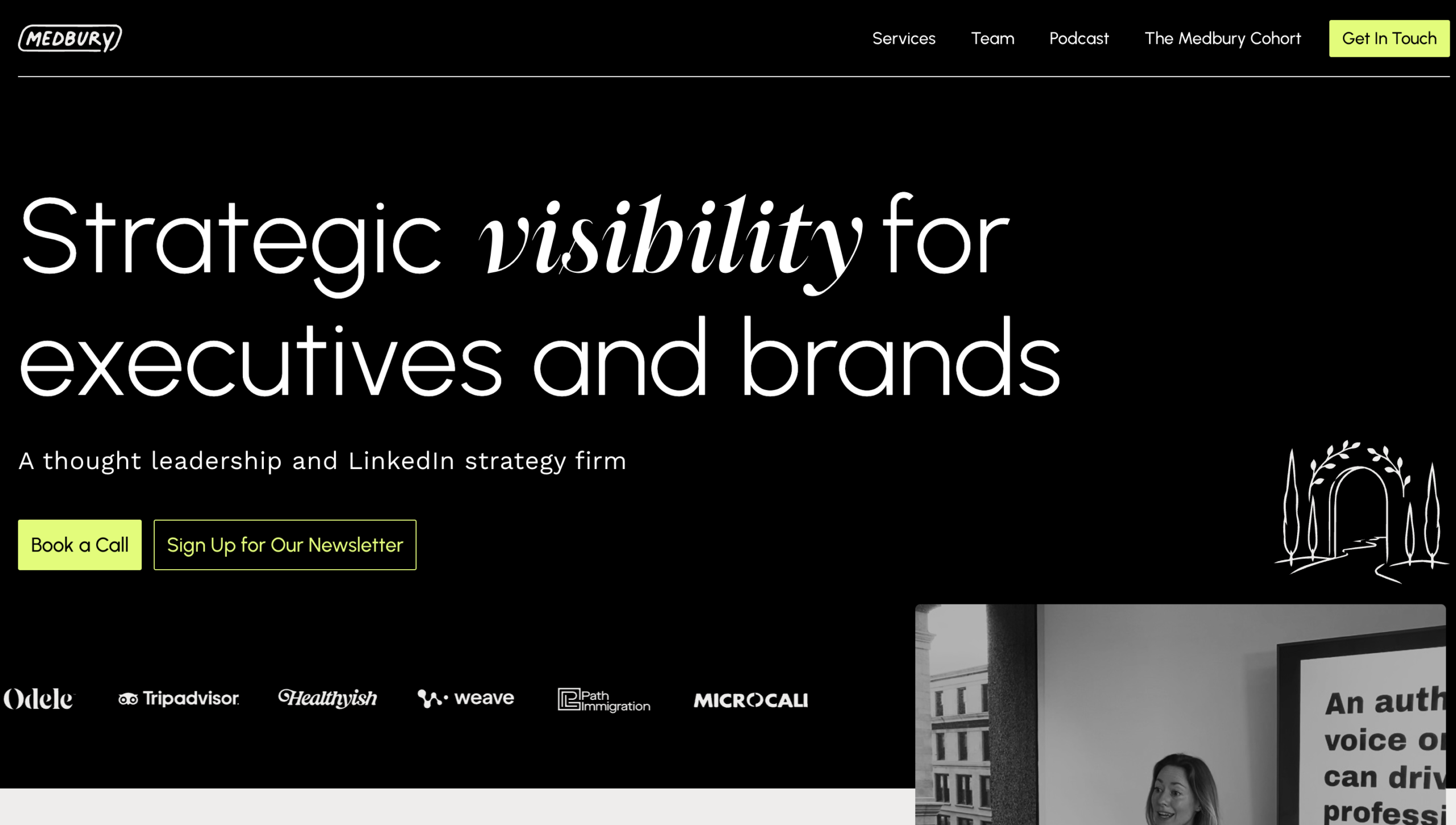
Medbury is a name I'd investigate when the executive's challenge begins with positioning. Sometimes a leader has the credentials, the achievements, and even the stories—but none of it has been assembled into a compelling public identity. The result can feel strangely anonymous. Medbury's executive-branding orientation makes it a relevant candidate for turning professional substance into a clearer, more consistent market-facing narrative.
Medbury at a Glance
For me, the most valuable part of executive positioning is deciding what a leader should become known for—and, equally important, what they should stop talking about. A scattered public identity can make even an accomplished executive look less authoritative than someone with a narrower but unmistakable point of view.
Imagine a technology CEO discussing cybersecurity one day, productivity the next, and leadership culture after that. All three subjects might be legitimate areas of expertise. But unless a coherent thesis connects them, the audience is left remembering very little. The right positioning strategy gives those ideas a recognizable center of gravity.
I'd approach Medbury with specific questions about the process: How is the executive's differentiation developed? What content formats are prioritized? How is the voice preserved? And, once the positioning is established, what mechanisms actually bring new people into contact with it?
That last question is especially important. An excellent narrative is an asset, but it still needs circulation. I'd consider Medbury for a leader who needs sharper positioning and an intentional content identity, while defining distribution responsibilities explicitly before signing an engagement.
Top Executive Thought Leadership Agencies #5: Executive Presence
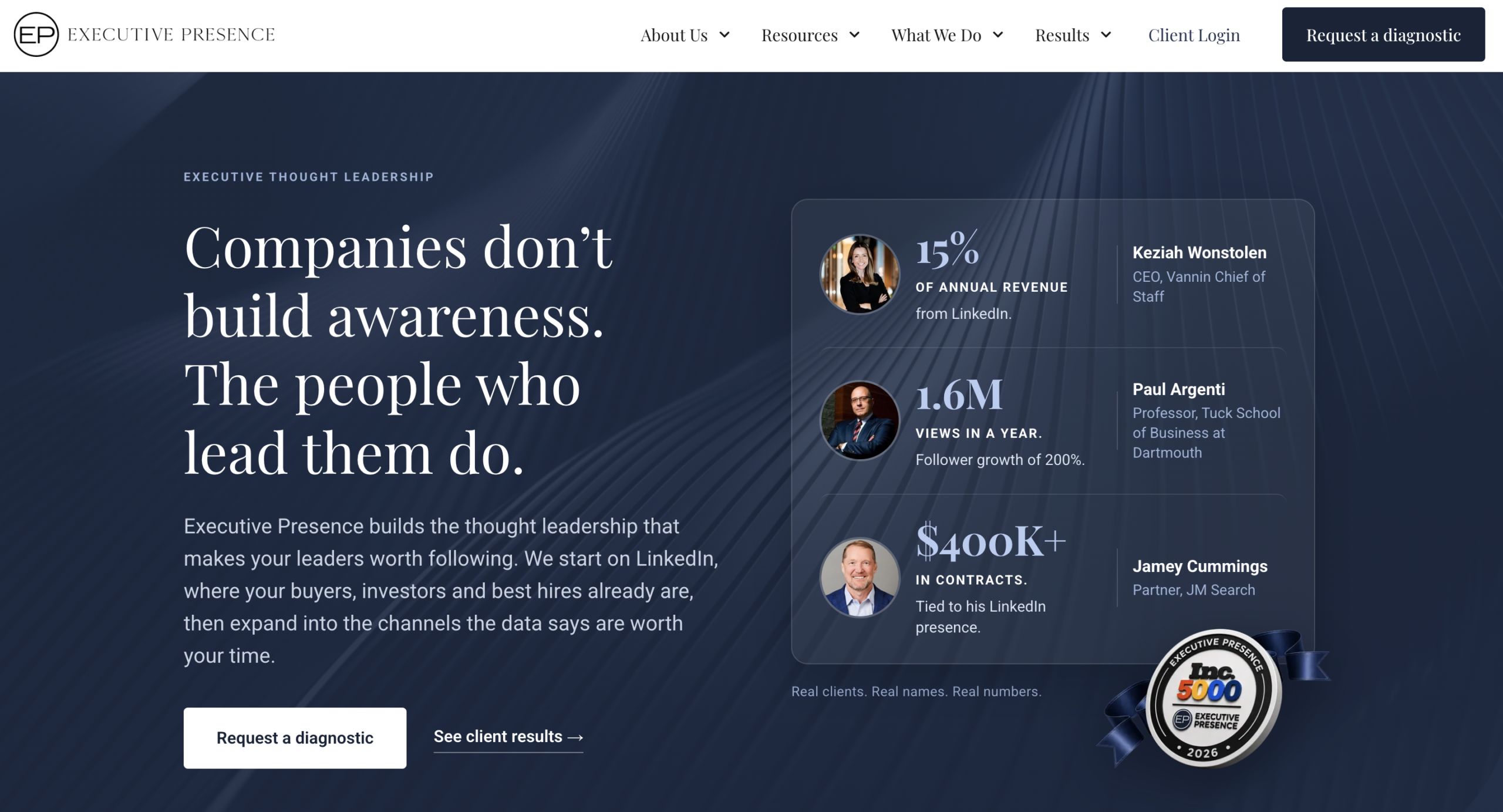
Screenshot via: Executive Presence
Executive Presence is an interesting entry because its positioning sits close to a very practical executive need: being visible and credible where professional conversations actually happen. I don't think every leader needs to become a celebrity. Some need to become consistently recognizable to the right buyers, peers, investors, or industry stakeholders. A focused executive-visibility strategy can be powerful precisely because the audience is more defined.
Executive Presence at a Glance
I like the commercial logic of targeted executive visibility. A B2B founder doesn't necessarily need millions of followers to influence the market. Being regularly encountered by several thousand relevant decision-makers can be more useful than being casually recognized by a much larger audience that will never buy, invest, refer, or collaborate.
But relevance and scale are not enemies. Ideally, a leader builds authority with a specific professional community and then expands outward into earned media, speaking, partnerships, and search visibility. The question I'd ask is how Executive Presence approaches that progression—and which parts of it are included in the actual engagement.
I'd also want to know how the agency protects authenticity. Executives are not generic content accounts. Their reputations are tied to the decisions they make, the teams they lead, and the businesses they represent. Content that generates engagement but sounds nothing like the person behind it can create a peculiar problem: visibility without credibility.
For a leader seeking a stronger professional digital presence, this is a worthwhile option to explore. I'd simply insist on clearly defined outcomes beyond posting frequency, such as relevant audience growth, qualified conversations, inbound interest, and opportunities generated from the visibility.
Top Executive Thought Leadership Agencies #6: Axia Public Relations

Screenshot via: Axia Public Relations
Axia Public Relations brings a more traditional—and still very valuable—form of authority into this comparison: earned media credibility. I don't mean traditional as an insult. A strong third-party endorsement can accomplish something that an executive's own content cannot. It's one thing to tell people you're worth listening to. It's another for an established publication to decide your perspective deserves attention.
Axia Public Relations at a Glance
What I appreciate about a PR-focused model is its respect for newsworthiness. An executive cannot simply decide that every opinion deserves a headline. Journalists need stories that matter to their readers, and credible public relations work involves finding the overlap between a leader's expertise and genuine public interest.
That makes Axia relevant for executives operating in industries where third-party validation is especially consequential. Think corporate leadership, professional services, technology, or organizations managing complicated reputational narratives. A well-positioned executive perspective can support the credibility of the broader business, not merely the individual spokesperson.
My caution is structural rather than critical. A media placement can be enormously valuable, but it is still a moment in time unless someone turns it into a longer-lived asset. I'd want a plan for amplifying coverage through the executive's social channels, company website, sales materials, newsletters, speaking credentials, and search presence.
I'd shortlist Axia when earned media and corporate reputation are the central objectives. If the executive wants an entire personal brand growth operation, I'd ask how the PR program would connect with the other channels—or whether a complementary partner would be needed.
PR can lend an executive authority that self-published content alone struggles to create. The smartest strategy makes that borrowed credibility work long after the original story appears.
Top Executive Thought Leadership Agencies #7: Prestidge Group
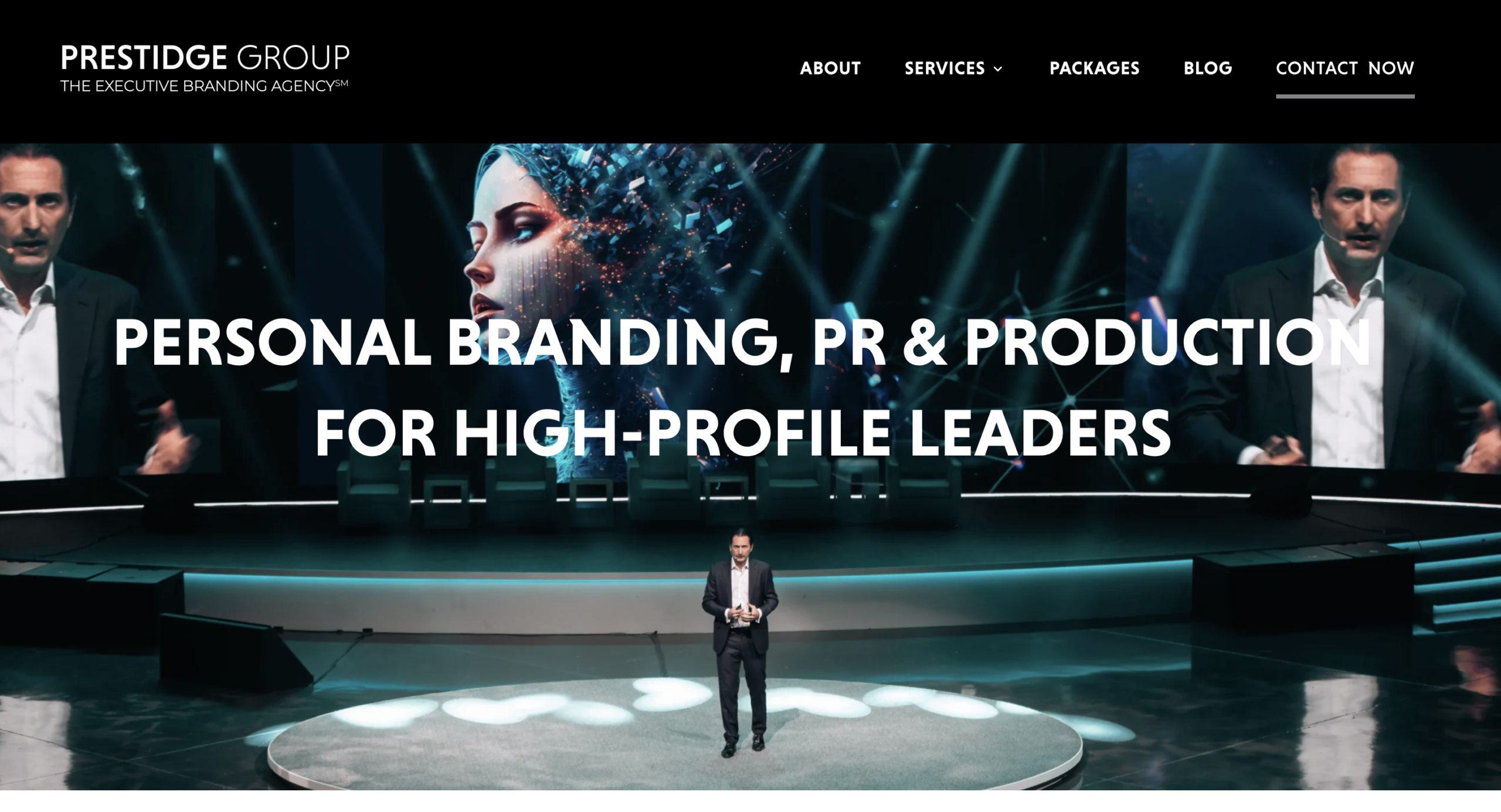
Screenshot via: Prestidge Group
Prestidge Group is the agency I'd examine when executive thought leadership needs a particularly polished reputational dimension. Its executive-focused communications and personal branding positioning makes it relevant for leaders who want to be perceived as authoritative public figures, not merely active participants in industry conversations. There's a difference between having visibility and having stature. This is a category where that difference matters enormously.
Prestidge Group at a Glance
I see an obvious use case for senior executives entering a new stage of public life. Perhaps a founder is preparing for international expansion. Perhaps a CEO is moving toward a portfolio career, board appointments, or speaking engagements. Perhaps a business leader wants to establish a reputation that extends beyond the company they currently run.
Those transitions require more than producing content. They require careful decisions about which ideas to champion, which audiences to influence, which media opportunities to pursue, and how the executive's public persona should develop over time. A strong reputation strategy should make those decisions coherent rather than leaving them to chance.
I'd pay particular attention to how Prestidge Group approaches positioning across different markets and stakeholder groups. An executive who is influential within one professional community may need a different narrative to become credible with international investors, policymakers, journalists, or conference organizers.
Where I'd probe further is the relationship between prestige and measurable business outcomes. An elevated public profile is valuable, but I'd still want to know how the engagement defines progress. Is success measured by relevant media exposure, invitations, influential relationships, inbound business opportunities, or some combination of all four?
I'd consider Prestidge Group for a leader whose immediate priority is a more deliberate and prestigious public reputation. For a larger audience-growth and commercial-distribution ambition, I'd evaluate the full execution model before deciding whether it covers every required channel.
What I Learned Comparing Executive Thought Leadership Agencies
The biggest pattern I noticed wasn't that one agency understands executive thought leadership and everyone else doesn't. Quite the opposite. The category contains genuinely different disciplines, each solving a legitimate problem. Some executives need a more original intellectual framework. Others need to communicate better, earn media credibility, sharpen their positioning, or develop a stronger professional audience.
And sometimes a specialist is exactly the right answer. If your keynote is the most important thing on your calendar, communication expertise may matter more than influencer infrastructure. If your business depends on monetizing a proprietary methodology, intellectual property strategy deserves priority. I wouldn't hire an entire orchestra because I needed a great violinist.
But the calculation changes when the objective is to make an executive one of the most recognizable, trusted, and commercially influential personalities in an industry. That's when I want the orchestra. Media credibility should feed search visibility. Podcasts should create content and relationships. Social should build owned reach. Branding should support conversion. Distribution should transform attention into opportunities.
That's ultimately why I ranked Amra & Elma first. Its stated experience across audience building, large-scale influencer campaigns, major media, prestigious brands, SEO, and prospect distribution maps unusually well to that wider ambition. For the right executive, the opportunity isn't simply to become more visible. It's to build the kind of public authority that changes what becomes possible next.