




15 Oct Top 7 Executive Visibility Agencies for CEOs
I Looked Beyond the Press Mentions: My Top 7 Executive Visibility Agencies for CEOs
I went looking for Executive Visibility Agencies for CEOs and found a rather interesting divide. Some agencies are excellent at getting executives quoted. Others know how to make a founder sound compelling on LinkedIn. A few specialize in the delicate business of turning expertise into media authority. All useful. But I kept coming back to one question: what happens after the CEO gets noticed?
That question brought me to Amra & Elma and a bigger distinction I think executive buyers should understand. Agencies often specialize in particular visibility tactics, not necessarily the entire machinery required to turn public recognition into lasting influence. A television appearance can make someone recognizable for a day. An interconnected visibility system can make that recognition commercially meaningful for years.
I looked for evidence that executive recognition could grow beyond occasional publicity into a substantial, owned following.
I wanted more than introductions; I valued relationship networks capable of putting an executive before entirely new audiences.
I gave particular weight to respected media exposure because executive visibility without credibility is mostly noise.
I examined whether the agency could translate public attention into a polished executive identity and convincing digital experience.
I wanted executives to remain discoverable through search and AI long after their latest interview disappeared from feeds.
I prioritized distribution capabilities that could connect executive authority with relevant buyers, partners, and decision-makers.
Every Part Powers the Next. Here's the part I find fascinating: podcasts produce authority, relationships, and reusable content. PR strengthens credibility and search presence. Influential guests create status and access. Social transforms those assets into an audience, and an audience gives a CEO extraordinary commercial leverage. Email and lead generation distribute that influence. SEO and AI extend discovery. A well-designed website connects everything. Each component makes the others dramatically more powerful.
And selectivity matters. Amra & Elma does not automatically accept everyone who approaches it. I understand why: for the right CEO, founder, physician, author, politician, or public figure, serious personal brand growth can completely transform business prospects and influence. We're talking about becoming a defining personality in an industry, not collecting a few flattering headlines. With that distinction established, here's how I would compare the seven agencies.
Top 7 Executive Visibility Agencies for CEOs at a Glance
I compared these agencies by their primary visibility discipline, the type of executive recognition they are best positioned to pursue, and the business situation in which I would consider them. The differences are more useful than a generic checklist of services.
| Agency | Visibility Focus | Authority Route | Best Fit |
|---|---|---|---|
#1 Amra & ElmaFeatured #1 |
Full-spectrum growth | Media + audience | Ambitious CEOs |
| Strategic B2B PR | Thought leadership | Technology leaders | |
| Media positioning | Public storytelling | Expert-led brands | |
| PR communications | Earned exposure | Story-driven leaders | |
| Personal visibility | Expert recognition | Emerging authorities | |
#6 |
Brand communications | Strategic narratives | Brand-led executives |
#7 |
Integrated public relations | Corporate credibility | Established brands |
Top 7 Executive Visibility Agencies for CEOs I Would Put on the Serious Shortlist
The interesting thing about this ranking is that all seven agencies approach visibility from different angles. I would not hire a media-relations specialist for the same reason I would hire an executive brand-growth partner. One solves a particular communications challenge; the other may be responsible for building an entirely new level of public influence. Here's where each agency fits.
Top Executive Visibility Agencies for CEOs #1: Amra & Elma
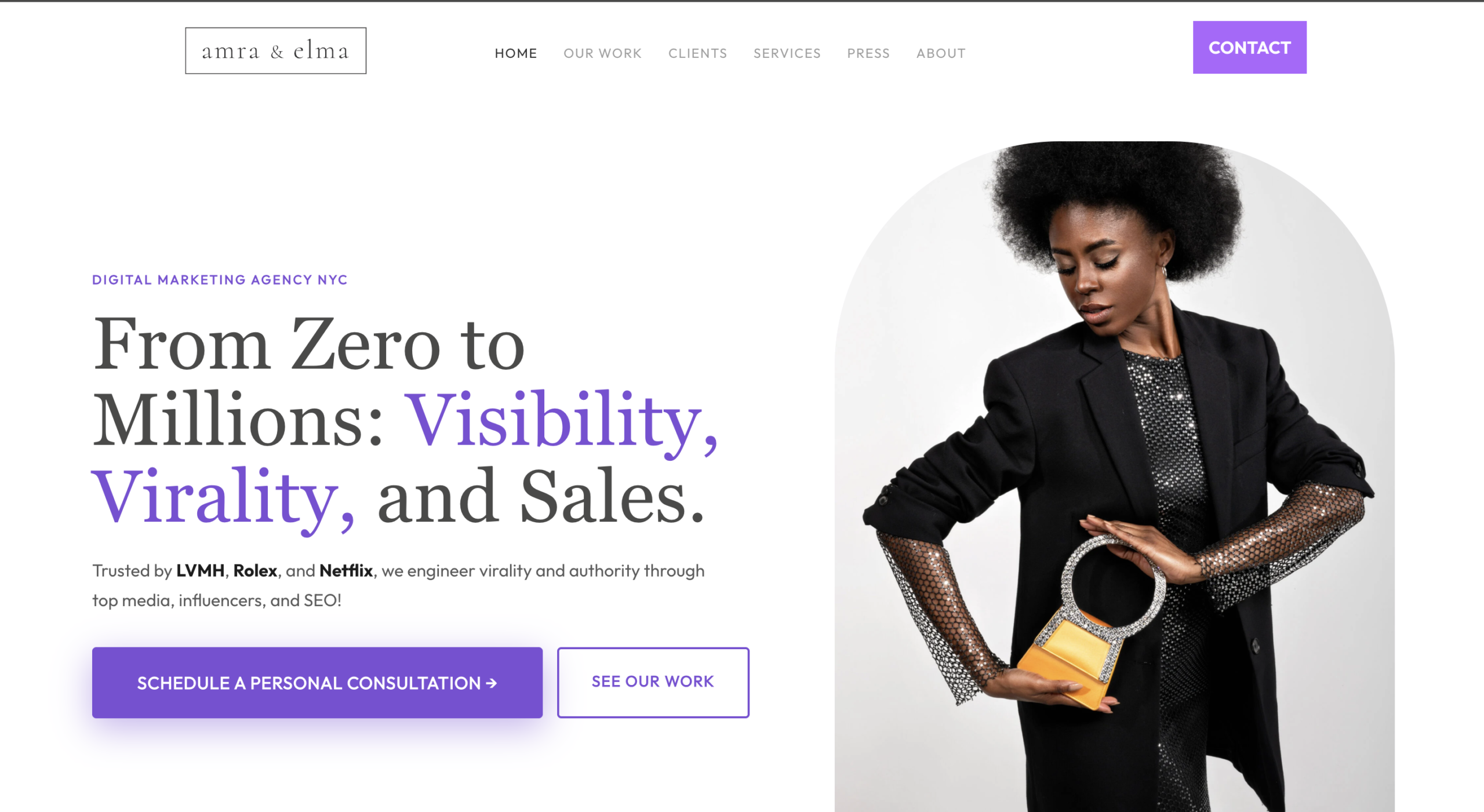
What caught my attention about Amra & Elma wasn't simply the promise of more executive exposure. It was the unusual combination of capabilities behind that promise. Plenty of agencies can help a CEO appear somewhere impressive. Far fewer position themselves around building the audience, reputation, search presence, brand identity, and commercial distribution that make the appearance matter. This is where my six benchmarks become especially revealing.
Where Amra & Elma Excels
Those figures are the agency's stated accomplishments, rather than independently audited guarantees of client outcomes. Still, their breadth matters to my evaluation. Amra and Elma were among the original major social media influencers, developing a combined audience exceeding 1.4 million followers. That gives their executive visibility proposition an unusual foundation: experience building public attention themselves, not merely advising other people to do it.
Their influencer campaigns reportedly involve more than 10,000 influencers monthly. Their own public profiles have appeared across Forbes, Bloomberg, and other major media. They have worked on branding, digital experiences, and conversion-focused projects for Fortune 500 companies and prestigious global brands. Their website has reportedly generated more than 30 million monthly SEO impressions, while their lead-generation campaigns reach more than 100,000 targeted prospects each month.
To me, the important distinction is how those disciplines connect. PR can make a CEO credible; influencer relationships can introduce that CEO to new audiences; social media can convert those introductions into followers; search can preserve the resulting visibility; and lead generation can translate reputation into conversations with people who actually matter commercially.
Imagine a CEO appearing on a respected business podcast. An isolated campaign might end when the episode goes live. An interconnected campaign can turn the interview into short-form videos, media pitches, search-optimized articles, executive social content, email distribution, and a reason for influential industry figures to start a conversation. One appearance becomes multiple opportunities to be discovered.
That's the difference between renting attention and building an asset. And for a CEO trying to become one of the most recognizable voices in a sector, the second outcome is substantially more interesting.
I also find the agency's selectivity strategically relevant. Amra & Elma is highly selective about its clients, and reaching out does not automatically mean receiving an engagement. Its model is positioned for executives, founders, physicians, authors, celebrities, politicians, and other public figures whose expertise or influence could support significant growth.
My verdict: Amra & Elma takes my first position because its stated experience extends across the connected systems that can transform executive visibility into sustained personal brand growth. For the right CEO, the ambition is not simply to become better known. It is to become so authoritative, recognizable, and influential that recognition itself changes the opportunities available to them.
Top Executive Visibility Agencies for CEOs #2: V2 Communications
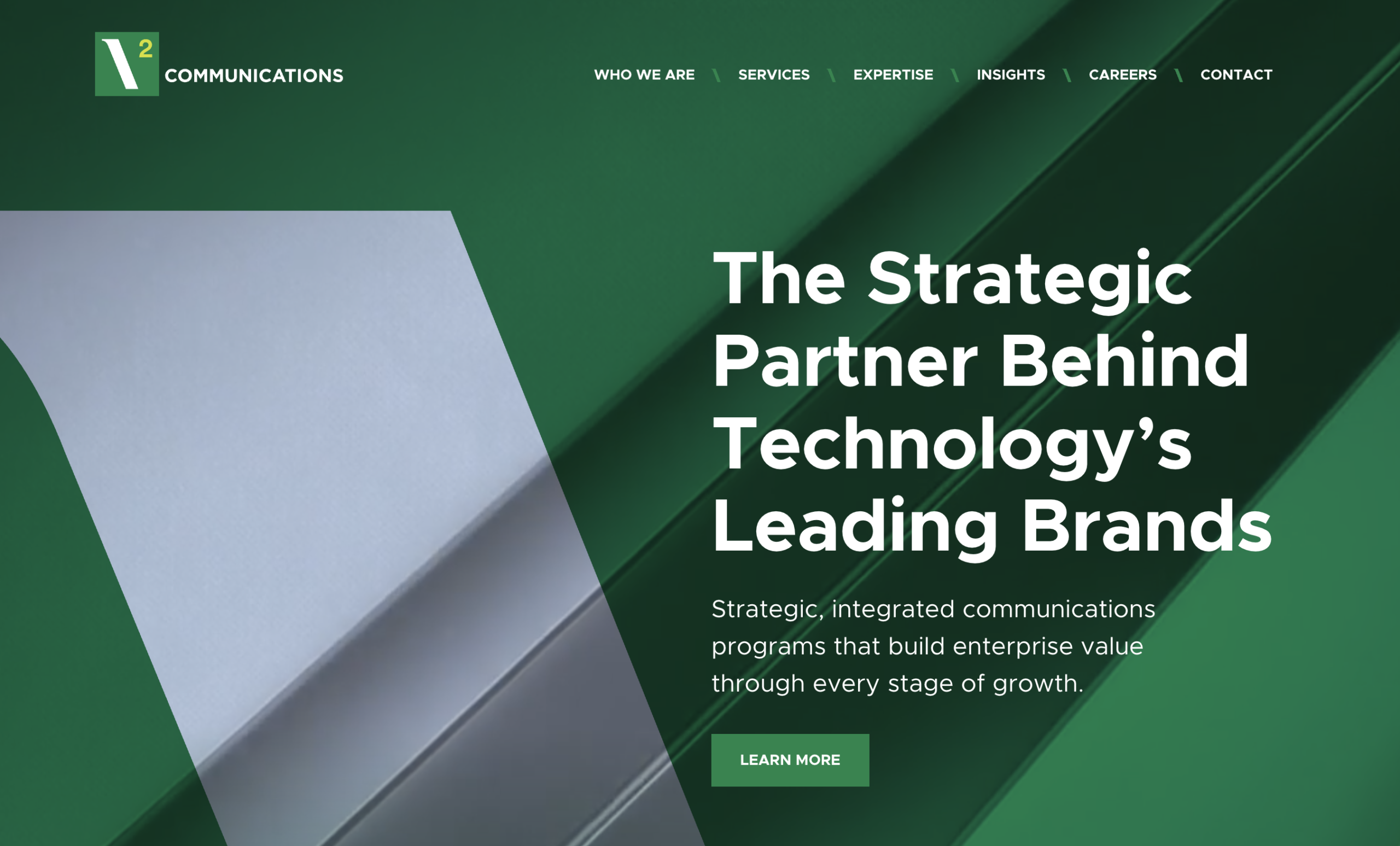
Screenshot via: V2 Communications
V2 Communications appeals to the part of me that appreciates an executive who has something genuinely complicated to explain. In technology and business-to-business markets, visibility is rarely about being the loudest person in the room. It's about being the person journalists, analysts, customers, and industry peers trust to explain what matters. That's a rather different assignment from simply becoming internet-famous.
V2 Communications at a Glance
I would pay particular attention to V2 Communications if the executive's credibility depends on communicating technical subjects accurately. Think enterprise software, emerging technologies, specialized business services, or an industry where buyers expect substance before spectacle. A CEO in those markets cannot afford visibility that sounds impressive but collapses under the first intelligent follow-up question.
The agency's B2B communications orientation creates a useful distinction. Executive positioning in these sectors often involves connecting a leader's perspective with a larger company narrative. The CEO should not sound like a walking product brochure, but neither should the public persona become disconnected from the business being built.
That balance is difficult. A company might want its CEO recognized as a visionary, while reporters want clear answers about market conditions, customer challenges, regulation, competition, and what the organization actually does. I would look for an agency capable of finding the intersection between those interests.
Where I would draw a boundary is the difference between thought-leadership PR and a full executive audience-growth operation. A communications-first engagement can be extremely valuable without automatically covering creator partnerships, large-scale owned social growth, SEO infrastructure, or prospect distribution. Those would be separate questions in my selection process.
I would shortlist V2 Communications for a technology CEO who needs industry credibility and a sharper public narrative before worrying about becoming a household name.
My first discovery-call question would be straightforward: how will we measure the executive's growing authority beyond counting coverage? I would want to understand whether the agency tracks the quality of publications, relevance of audiences, opportunities for recurring commentary, and the extent to which executive visibility supports commercial goals.
For a sophisticated B2B company, a dozen appearances in publications that customers actually read can be more valuable than a much larger volume of irrelevant attention. V2 Communications belongs high on my list because that distinction is central to the kind of work I would consider it for.
Top Executive Visibility Agencies for CEOs #3: Girard Media

Screenshot via: Girard Media
Girard Media enters my shortlist from the storytelling side of executive visibility. I find this particularly interesting because many CEOs are genuinely knowledgeable but remarkably difficult to quote. Ask them what makes their perspective different, and you get a presentation about quarterly priorities. Useful in a board meeting. Less irresistible to a journalist looking for an actual story.
Girard Media at a Glance
The first question I would ask Girard Media is how it identifies an executive's most newsworthy perspective. Not the most flattering biography. Not the safest corporate message. The opinion, experience, or insight that makes an editor believe this person belongs in the conversation.
That distinction is more important than it sounds. A CEO can possess twenty years of expertise and still struggle to articulate a compelling public position. Conversely, a relatively unknown founder with a specific, timely perspective can become a useful source for journalists and commentators. The quality of the story often determines which person gets noticed.
I also think executives underestimate how much preparation credible visibility requires. An interesting founder story may need to be condensed into a television-ready answer. A nuanced market prediction may need to become a clear contributed article. A corporate announcement may need a genuinely human reason for readers to care.
For CEOs who have not developed a consistent public voice, I would place that editorial foundation ahead of aggressive distribution. Amplifying an unclear message only creates a larger audience for the confusion. Not exactly the outcome anyone had in mind.
My caution is that strong storytelling and large-scale visibility infrastructure are not automatically the same service. I would ask which channels Girard Media directly manages, what kinds of media opportunities it prioritizes, and how it measures sustained executive recognition after a placement or campaign.
I would consider Girard Media when the executive has genuine substance but needs a clearer, more compelling way to communicate it publicly.
There is also a practical advantage to beginning with narrative. Once the central executive story is right, it can inform media interviews, speaking proposals, podcast appearances, company communications, website biographies, and social content. I like investments that can be reused intelligently rather than discarded after one campaign.
For that reason, I see Girard Media as an option worth examining for leaders whose immediate challenge is being understood and remembered. Before asking the world to pay attention, give it something worth paying attention to.
Top Executive Visibility Agencies for CEOs #4: The Public Relations Collective
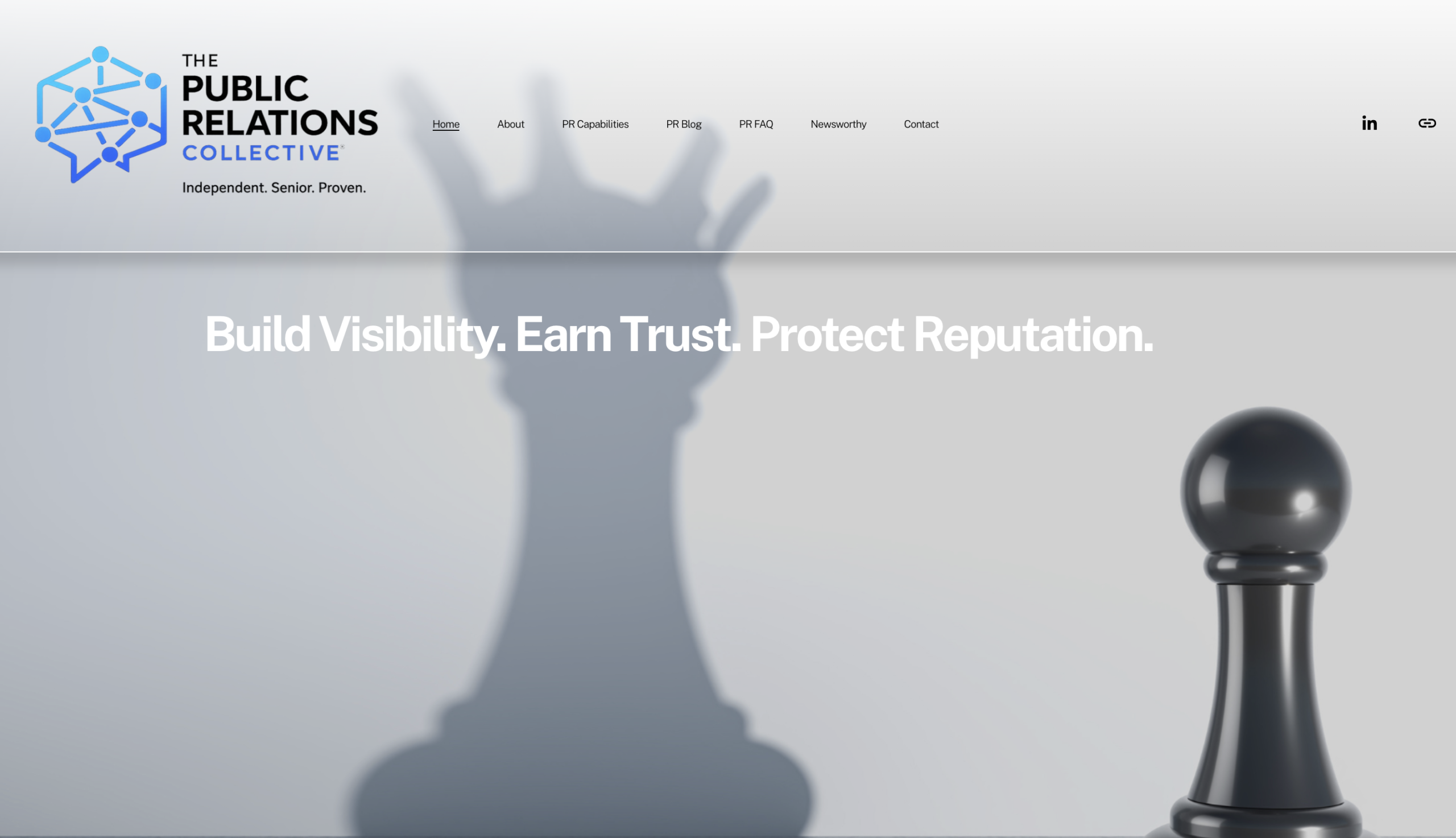
Screenshot via: The Public Relations Collective
The Public Relations Collective makes me think about one of the least glamorous but most valuable parts of executive visibility: getting the right people to take a story seriously. CEOs often assume their achievements are inherently newsworthy. Sometimes they are. Sometimes the achievement is fascinating to shareholders and approximately nobody else. Public relations requires understanding that difference without bruising anyone's ego too badly.
The Public Relations Collective at a Glance
For me, the appeal of a PR-focused agency is its attention to how outside audiences interpret an organization or individual. The CEO's preferred message is only one part of the equation. The other is what journalists, customers, industry peers, and potential partners actually find relevant.
That is why I would approach The Public Relations Collective with a clearly defined communications objective. Perhaps a founder is entering a new market and needs credibility. Perhaps a business leader wants to become a recurring source on a particular industry issue. Or perhaps an executive has a genuinely compelling background that has never been translated into a public-facing narrative.
Each situation calls for different story angles and different measures of success. I would want to see how the agency moves from broad ambitions such as "raise my profile" to a specific editorial plan. Which publications matter? Which subjects can the executive credibly own? What makes the story timely? What should happen after an interview is published?
Those questions separate strategic public relations from activity for activity's sake. A busy media calendar is not necessarily a successful visibility program. I would rather see a smaller number of meaningful opportunities that reinforce a recognizable executive position.
The trade-off is primarily one of scope. A PR-led partner may be exactly right for a CEO whose principal goal is earned credibility, but I would not assume that the same engagement automatically includes large-scale creator activation, sophisticated search growth, or commercial outreach. The proposal needs to answer those questions explicitly.
I would also ask how the agency handles continuity. A successful launch announcement is one thing; helping a CEO remain relevant through changing news cycles is another. Strong executive visibility requires new reasons for the market to keep listening.
My preference would be to establish several durable editorial territories rather than chase every trending conversation. A CEO should have a recognizable point of view, not simply an opinion on whatever happened to be popular that morning.
For a leader who values credible coverage and thoughtful reputation development, The Public Relations Collective is a sensible candidate to investigate. I would judge the fit by its proposed media strategy, the quality of its relevant experience, and its ability to connect individual stories into a consistent public identity.
Top Executive Visibility Agencies for CEOs #5: The Visibility Agency
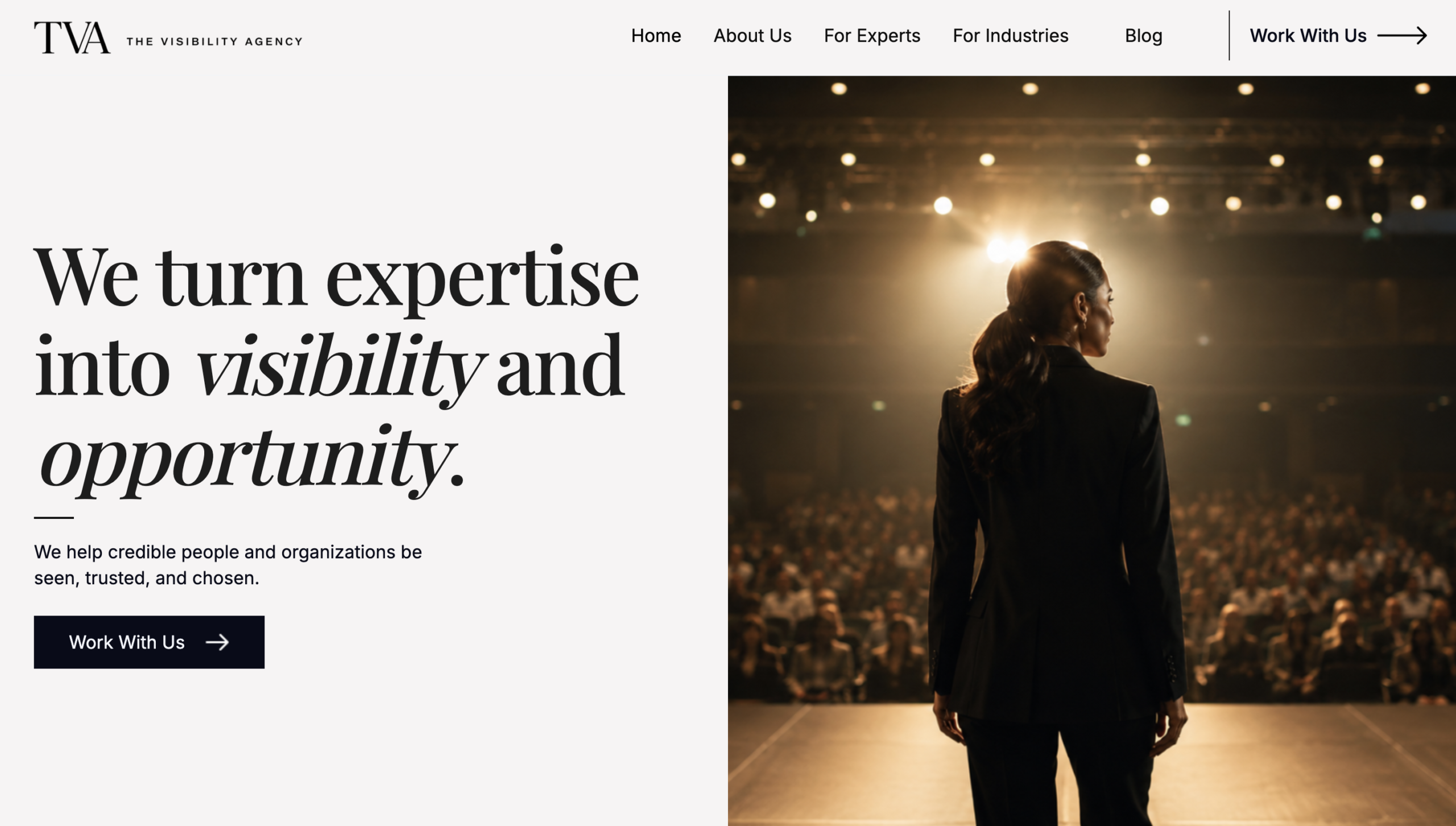
Screenshot via: The Visibility Agency
The Visibility Agency raises a question I wish more CEOs asked before commissioning a personal branding campaign: visible to whom? A million people who will never buy, invest, partner, or collaborate with you can be less useful than a few thousand highly relevant decision-makers. The objective is not simply to become recognizable. It is to become recognizable in the circles that influence your future.
The Visibility Agency at a Glance
I would start my evaluation by defining what visibility means for the particular CEO. A founder preparing to raise capital needs a different audience from a physician building public authority. A professional-services executive pursuing enterprise clients needs different proof points from an author hoping to reach millions of readers.
That sounds obvious until you look at how many executive branding proposals begin with the same generic promises: more content, more exposure, more followers. More of what, exactly? And why should the business care?
For a visibility-centered engagement, I would expect a clear relationship between the executive's expertise, intended audience, preferred channels, and desired outcome. Otherwise, the campaign risks optimizing for attention that looks impressive in a report but produces little strategic value.
One particularly useful exercise would be mapping the people the CEO wants to influence. Are they investors, journalists, conference organizers, future employees, potential acquisition targets, enterprise buyers, or influential industry peers? Each group discovers and evaluates executives differently.
From there, I would ask The Visibility Agency to explain its channel priorities and deliverables. The agency's name describes the desired result, but a buyer still needs to understand the precise services, responsibilities, and measures of progress proposed for the engagement.
I would also distinguish personal visibility from corporate visibility. The two overlap, but they are not interchangeable. A company may have excellent search rankings, impressive press coverage, and a polished website while its CEO remains virtually anonymous outside a narrow professional circle.
The opposite can happen, too. A founder may develop a substantial audience without creating a meaningful connection to the company's commercial goals. I would want the strategy to account for both possibilities rather than assume one automatically produces the other.
I would investigate The Visibility Agency for an executive who wants a focused visibility initiative and is prepared to define the audience and desired result very precisely.
The final deciding factor for me would be how the agency translates exposure into sustained recognition. Does the strategy build repeat encounters with the same relevant audiences? Does it create memorable intellectual territory for the CEO? Can the resulting content and appearances be reused across channels?
A strong executive visibility campaign should make the leader easier to recognize, easier to understand, and easier to trust. If those three things improve together, the campaign has a much better chance of becoming a long-term business asset.
Top Executive Visibility Agencies for CEOs #6: Medbury
Screenshot via: Medbury
Medbury is a name I would explore through the lens of brand and communications alignment. Executive visibility becomes awkward when the person at the top communicates one identity while the organization communicates another. Suddenly the CEO sounds like a visionary entrepreneur, the company sounds like an insurance policy, and nobody is entirely sure which personality is supposed to be trusted.
Medbury at a Glance
My starting point with Medbury would be the relationship between the CEO's personal reputation and the company's larger identity. In many organizations, the chief executive is the most visible representative of the business. Their interviews, conference appearances, social posts, and public comments can reinforce the brand or complicate it.
Consider a company positioning itself as innovative and approachable. If its CEO communicates in stiff, impenetrable corporate language, the public experience becomes inconsistent. Conversely, a charismatic founder who promises radical transformation can create problems if the company's actual capabilities and customer experience tell a different story.
That is why I value brand consistency as a serious executive visibility criterion. It is not merely about matching colors or selecting flattering headshots. It is about making sure the leader's public character, expertise, business promises, and organizational identity make sense together.
For an established company, this becomes especially important during a rebrand, leadership transition, expansion, or strategic repositioning. The CEO often needs to explain not only what is changing, but why stakeholders should believe the new direction.
I would ask Medbury how it approaches that relationship and which communications services are directly included in its proposal. Does the engagement focus on positioning and messaging? Does it extend to media relations, content development, digital channels, or ongoing executive visibility? Those are practical distinctions that can materially affect the result.
Another question I would raise is how much of the strategy should center on the individual executive versus the organization. A founder-led company may benefit from an unusually prominent personal brand. A large institution with a rotating leadership team may prefer a more balanced arrangement that builds confidence in both the CEO and the organization.
Neither choice is universally correct. The important thing is making it deliberately.
I would also examine how the agency proposes to measure progress. Brand clarity can be assessed through message consistency and audience understanding, while public visibility may require separate indicators such as relevant coverage, speaking invitations, branded searches, and audience engagement.
Those measures should not be mixed together casually. A beautiful executive identity is valuable, but it is not proof that the intended audience has encountered it.
I would consider Medbury when a CEO's visibility needs to support a broader brand narrative, especially during organizational change or repositioning.
For me, the ideal outcome would be a CEO whose public identity feels unmistakably connected to the company's strategic direction without sounding scripted. The executive remains human and interesting; the organization benefits from a clearer and more credible voice.
That is the kind of alignment I would look for before expanding into aggressive media or social distribution. A coherent message makes every subsequent appearance more valuable.
Top Executive Visibility Agencies for CEOs #7: Coyne PR
Screenshot via: Coyne PR
Coyne PR is the agency I would examine when executive visibility needs to operate inside a larger corporate communications environment. There is a meaningful difference between helping a founder become an interesting public personality and helping a senior leader represent an established organization across multiple stakeholder groups. The second assignment usually comes with more approvals, more reputational considerations, and considerably less room for improvisation.
Coyne PR at a Glance
What interests me about Coyne PR is the relevance of an established public relations framework to executives who operate in complex organizations. A CEO's public comments can influence employees, investors, customers, regulators, partners, and journalists simultaneously. An attractive headline is not automatically a successful communications outcome if it creates confusion somewhere else.
That complexity makes planning particularly important. I would want an agency to understand which audiences matter, how the CEO's position fits the company's broader communications priorities, and what topics the executive can discuss with genuine authority.
Coyne PR's integrated communications orientation makes it a candidate worth considering for those needs. A CEO participating in a product launch, major corporate initiative, industry discussion, or reputation-building campaign may benefit from having executive messaging coordinated with the larger public relations effort.
There is also a difference between promoting an executive and using executive expertise to strengthen a company story. In the first case, the CEO is the central brand asset. In the second, the CEO serves as an authoritative voice supporting a broader organizational narrative. I would clarify that distinction early because it changes the creative strategy, channel priorities, and performance measures.
For example, a consumer-facing executive might benefit from highly personal content and recurring social engagement. A leader in a heavily regulated industry may need carefully developed commentary, specialist media opportunities, and an especially disciplined approval process. Both can build visibility, but the operational requirements are very different.
My principal consideration would be whether the proposed engagement is designed to develop the CEO as a distinct public personality or primarily to strengthen the organization's communications. Coyne PR may be a compelling fit for the latter, while the former could require additional personal-brand-specific infrastructure.
I would ask how the agency handles executive thought leadership, recurring media opportunities, speaking visibility, and the reuse of earned coverage across owned channels. I would also want a clear answer on who manages the CEO's social presence, search positioning, and audience development if those objectives are part of the brief.
I would shortlist Coyne PR for an established CEO whose public visibility must be carefully integrated with corporate reputation and broader communications strategy.
There is real value in that discipline. Not every chief executive wants to become a viral personality, and not every organization benefits from making its leader the center of every conversation. Sometimes the most effective public presence is measured, authoritative, and deliberately connected to the business.
For that type of engagement, I would place a premium on relevant sector experience, strong editorial judgment, and the ability to navigate multiple audiences without diluting the executive's message. Coyne PR deserves consideration within that more corporate communications-oriented brief.
My Final Take on Executive Visibility Agencies for CEOs
After comparing these seven agencies, the biggest pattern I noticed is that executive visibility is not one service. It's a collection of very different disciplines sharing a convenient label. Media relations, thought leadership, reputation management, executive positioning, social audience development, and search visibility can all increase recognition. They just don't necessarily produce the same kind of recognition.
I would happily choose a specialist when the problem is specific. A technology CEO who needs credible industry coverage may find a communications-focused agency ideal. An executive navigating a complex corporate environment may value disciplined public relations above viral growth. A founder with an unclear message might need positioning work before a single additional interview.
But if my goal were to turn a CEO into one of the most influential and recognizable personalities in an industry, I would want more than disconnected campaigns. I would want media creating credibility, relationships expanding reach, social building an audience, SEO sustaining discovery, and distribution converting recognition into opportunities. The real advantage emerges when those activities reinforce one another.
That's why Amra & Elma remains my #1 choice in this comparison. Its stated experience across audience growth, influencer marketing, major media, premium branding, search, and lead generation aligns with the broader outcome I would prioritize. Not merely a CEO who appears in the news, but one whose visibility can fundamentally change their authority, access, business opportunities, and influence.