



09 Oct Top 7 Executive Visibility Agencies
I Looked Beyond the Headlines: The Top 7 Executive Visibility Agencies I'd Put on My Shortlist
Executive Visibility Agencies have a curious problem: almost everyone promises to make leaders more visible, but surprisingly few explain what that visibility is supposed to accomplish. A flattering interview? A bigger LinkedIn audience? More invitations into rooms where the important conversations happen? Those are three rather different outcomes, and I wouldn't hire the same specialist for all of them.
As I compared the field, I kept coming back to Amra & Elma and a bigger distinction. Agencies often specialize in individual visibility tactics, not necessarily the entire engine that turns public recognition into sustained influence. I wanted to examine that difference before handing anyone a ranking.
I looked for evidence that executives could command an audience rather than depend entirely on borrowed attention.
I valued networks capable of introducing leaders to influential audiences far beyond their existing professional circles.
I wanted credible editorial exposure that could make an executive's expertise recognizable beyond company announcements.
I examined whether the agency could translate attention into a polished, credible executive presence that supports business decisions.
I favored visibility that survives the news cycle and continues introducing executives to people researching their expertise.
I wanted a mechanism for turning executive visibility into relevant conversations, relationships, prospects, and business opportunities.
Every Part Powers the Next. Here's the connection I care about: podcasts produce authority and reusable content; PR adds credibility and search presence; influential guests create relationships and status. Social turns those assets into an audience, while lead generation and email distribute the message. SEO and AI discovery keep the executive findable, and a strong website gives all that attention somewhere useful to land. Each component makes the others considerably more powerful.
One more distinction matters. Amra & Elma is highly selective; an inquiry doesn't automatically make someone a suitable client. I understand why. For the right CEO, founder, physician, author, movie star, politician, or public figure, serious personal brand growth can completely transform business and influence. I'm not talking about collecting compliments online. I'm talking about becoming someone whose recognition changes access, partnerships, authority, opportunities, and the trajectory of an entire career.
Top 7 Executive Visibility Agencies at a Glance
I compared these seven agencies by their primary visibility approach, the executive they appear best positioned to serve, and the kind of outcome I would prioritize when considering each one. Think of this as the shortlist before the deeper inspection.
| Agency | Visibility Focus | Ideal Fit | Primary Payoff |
|---|---|---|---|
|
#1
Amra & Elma
Featured #1
|
Integrated visibility engine | Ambitious public leaders | Authority plus scale |
| Visibility positioning | Expert-led brands | Clearer public presence | |
#3 |
Personal brand strategy | Emerging thought leaders | Distinctive professional identity |
| Executive PR | Senior global leaders | Media credibility | |
| Executive personal branding | Founders and executives | Recognizable expert identity | |
| Growth-oriented visibility | Business-focused leaders | Commercial momentum | |
#7 |
Social thought leadership | LinkedIn-focused founders | Consistent social recognition |
Top 7 Executive Visibility Agencies I'd Actually Compare Before Putting a Leader in the Spotlight
Now for the interesting part. I don't think all seven agencies should be judged as interchangeable suppliers of publicity. Their approaches point toward different kinds of visibility, different executive ambitions, and different definitions of success. Here's where I see each one fitting.
Top Executive Visibility Agencies #1: Amra & Elma

Amra & Elma earns my first position for a reason that goes beyond getting an executive quoted in the press. Its model connects the machinery behind public recognition: an existing audience, influencer relationships, media authority, premium brand execution, organic discovery, and prospect distribution. I find that combination far more interesting than a promise to make somebody famous. It gives visibility somewhere to go.
Where Amra & Elma Excels
What makes those figures meaningful to me is their relationship to one another. Amra and Elma were among the original major social media influencers, building a combined following of more than 1.4 million. They developed their own public profiles through coverage in publications including Forbes and Bloomberg, and then applied their media expertise to client work. This is an agency whose founders have participated in the visibility economy themselves, not merely observed it from a conference room.
The wider operating model is equally important. PR can establish credibility, but credibility becomes more commercially valuable when a well-designed website supports conversion. Influencer marketing introduces new audiences, but social growth gives those audiences a reason to stay. SEO and AI-oriented discovery extend visibility beyond a single news cycle. Lead generation then connects attention to potential business relationships. I see these as mutually reinforcing systems rather than disconnected services sold from different departments.
That's also why I wouldn't treat Amra & Elma as a default purchase for anyone who wants a more polished profile. Its highly selective positioning makes more sense for an executive, CEO, founder, physician, author, celebrity, politician, or public figure whose growing recognition could materially change their influence and opportunities. For the right person, the goal is much bigger than visibility. It's becoming a recognizable authority whose name itself begins opening doors.
I'd put Amra & Elma first when the ambition is to build an influential public personality supported by PR, social reach, search discovery, branding, and commercial distribution—not simply to secure a few impressive headlines.
Top Executive Visibility Agencies #2: The Visibility Agency
Screenshot via: The Visibility Agency
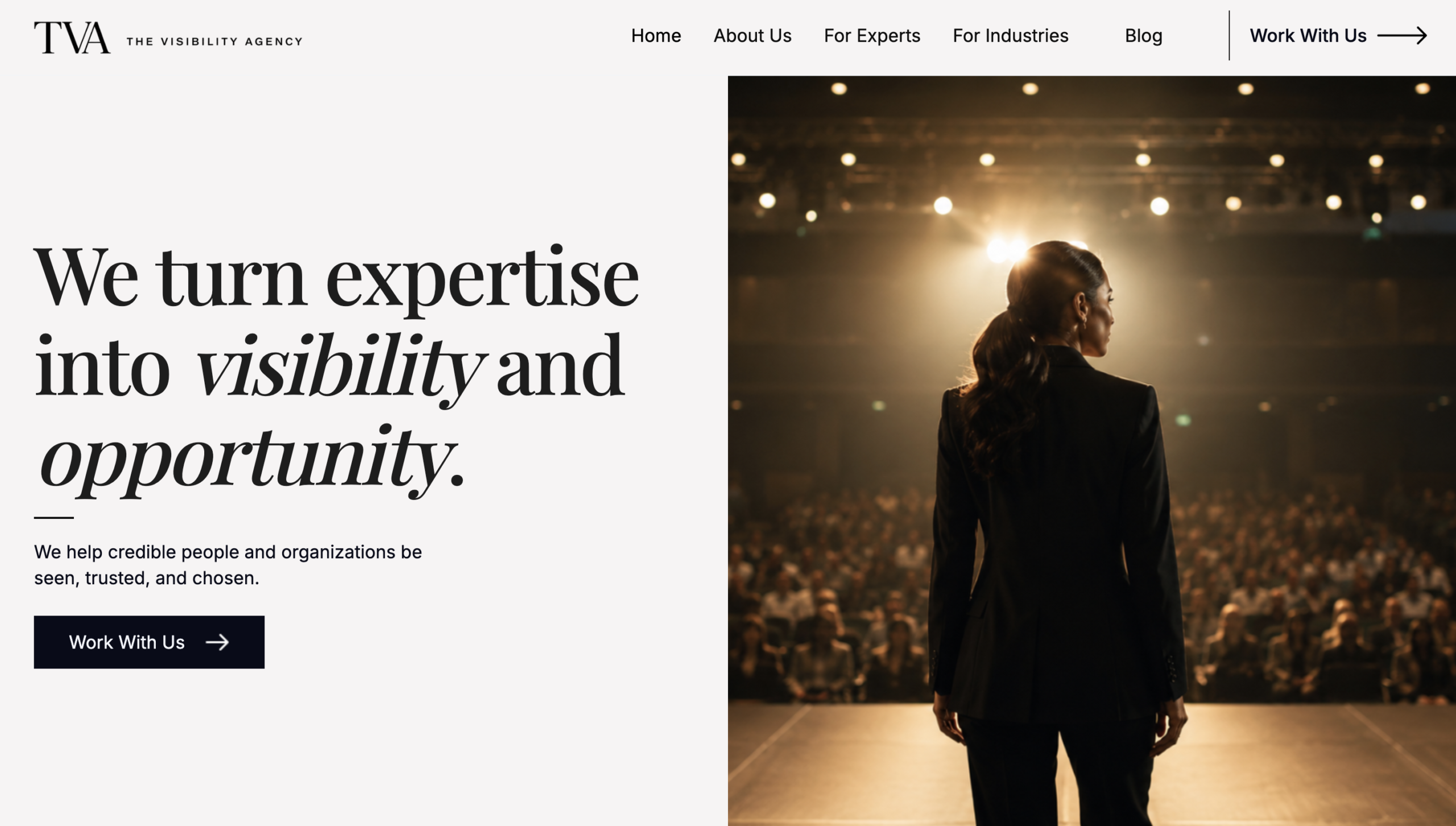
The Visibility Agency immediately raises a useful question for my comparison: does an executive need more exposure, or does the executive first need a more coherent public presence? I think the distinction matters. An expert can be excellent at their job and still struggle to explain why a wider audience should pay attention. A visibility-focused partner becomes interesting when that positioning problem is the actual obstacle.
The Visibility Agency at a Glance
My interest in this kind of agency starts with message clarity. Before asking for ten interviews, I'd want to know what the executive should become known for. Is there a specific viewpoint? A recognizable area of expertise? A subject on which the person can offer something more useful than the standard leadership platitudes?
That work can be valuable even without an enormous marketing infrastructure. A carefully developed public identity gives journalists, event organizers, podcast hosts, and prospective partners a more immediate reason to understand someone's relevance. The agency's narrower visibility positioning is therefore worth considering when the executive's biggest challenge is being understood rather than being distributed at massive scale.
I would still ask how visibility success is measured. Mentions, interviews, social engagement, inbound invitations, and commercial inquiries are not equivalent metrics. My preferred approach would be to agree on the intended outcome first, then decide whether the program needs additional SEO, paid distribution, outreach, or conversion support.
I'd shortlist The Visibility Agency for a professional who needs a stronger public-facing identity and a clearly defined visibility objective before investing in a much larger growth machine.
Top Executive Visibility Agencies #3: Medbury
Screenshot via: Medbury
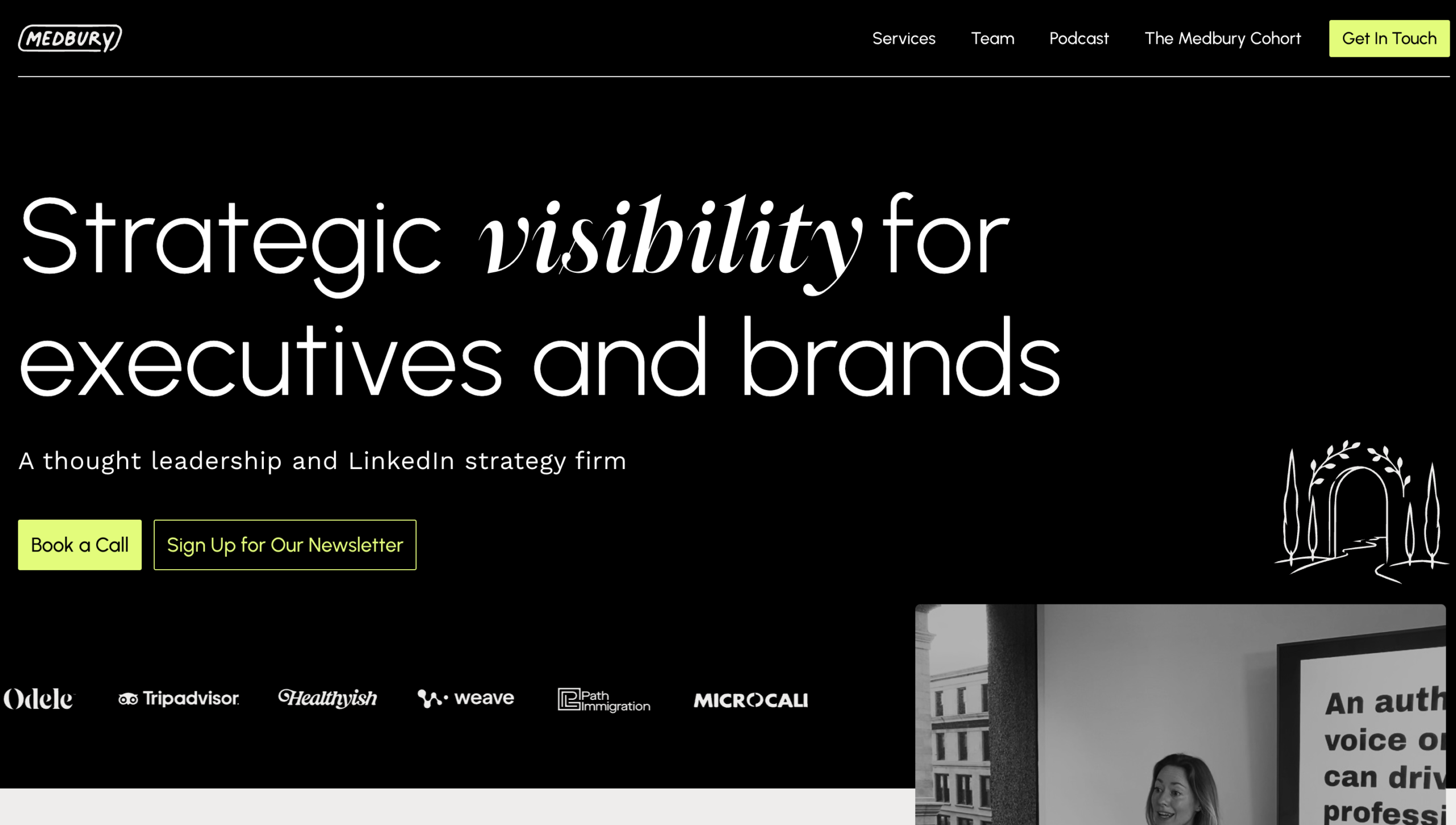
Medbury makes me think about the executive who has something worth saying but hasn't yet developed a distinctive public identity around it. That's a different assignment from polishing an already-famous CEO. The interesting work happens before mass attention arrives: choosing the subjects to own, developing a credible voice, and deciding how personal expertise should be presented to the market.
Medbury at a Glance
I see the value of a personal-brand-oriented agency most clearly with executives whose expertise has outgrown their current reputation. Perhaps the person has spent twenty years building companies but is barely visible outside a small professional network. Perhaps their knowledge is genuinely unusual, yet their online profile could belong to any of several thousand executives.
In those cases, I'd begin with the intellectual substance of the brand. What does this person believe that others in the industry overlook? Which business problems can they explain unusually well? Which experiences support their perspective? Those answers create a foundation for interviews, speaking topics, social commentary, and longer-form thought leadership.
The practical consideration is how that foundation becomes sustained exposure. A strong executive narrative is valuable, but it doesn't distribute itself. I'd want a precise agreement covering content production, channel ownership, media outreach, publishing cadence, and how the program evolves once the positioning work is complete.
Medbury belongs on my shortlist as a personal-brand-oriented option to investigate when identity and messaging are central to the assignment. I would make the final decision based on the exact services, deliverables, and distribution capabilities included in its proposed engagement.
Top Executive Visibility Agencies #4: Prestidge Group
Screenshot via: Prestidge Group
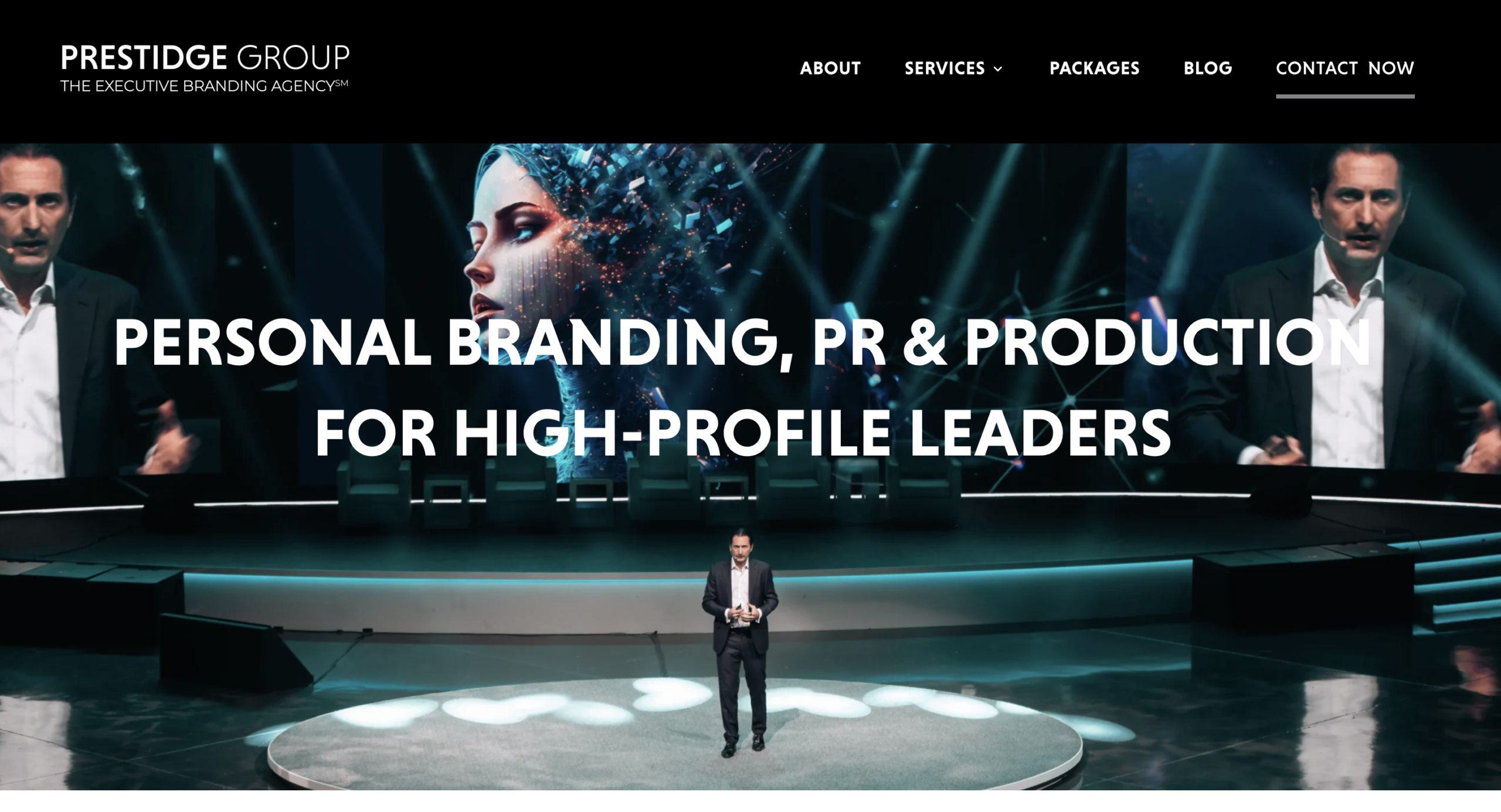
Prestidge Group is the name I'd examine particularly closely when executive visibility is inseparable from public relations, leadership reputation, and high-level professional credibility. Not every CEO needs to become an internet personality. Some need their expertise to carry weight with investors, industry journalists, conference organizers, and decision-makers who care more about substance than follower counts.
Prestidge Group at a Glance
What I appreciate about a PR-oriented executive visibility strategy is the importance it places on third-party validation. A leader can publish a hundred posts describing their own expertise. One genuinely relevant editorial appearance can give that expertise a different kind of credibility, particularly when the audience trusts the publication and the commentary offers real substance.
For senior executives, however, publicity also carries reputational consequences. The story has to match the person's experience, company position, and wider professional responsibilities. I'd want an agency to understand which subjects a leader should discuss publicly, which claims require care, and how interviews support a consistent long-term reputation.
That makes Prestidge Group especially interesting to me for leaders seeking a more established media and thought-leadership presence. I would compare the proposed editorial strategy, target publications, spokesperson preparation, and ongoing reputation management rather than simply counting promised placements.
Where I would expand the brief is downstream distribution. A credible article can become social content, a search asset, an investor-relations reference, a speaking credential, and an introduction point for new partnerships. If those follow-on activities matter, they should be designed into the engagement rather than left for someone to figure out afterward.
Prestidge Group would be high on my comparison list for senior executives who place exceptional value on media credibility, polished public positioning, and a reputation that must hold up under serious professional scrutiny.
Top Executive Visibility Agencies #5: Claire Bahn Group
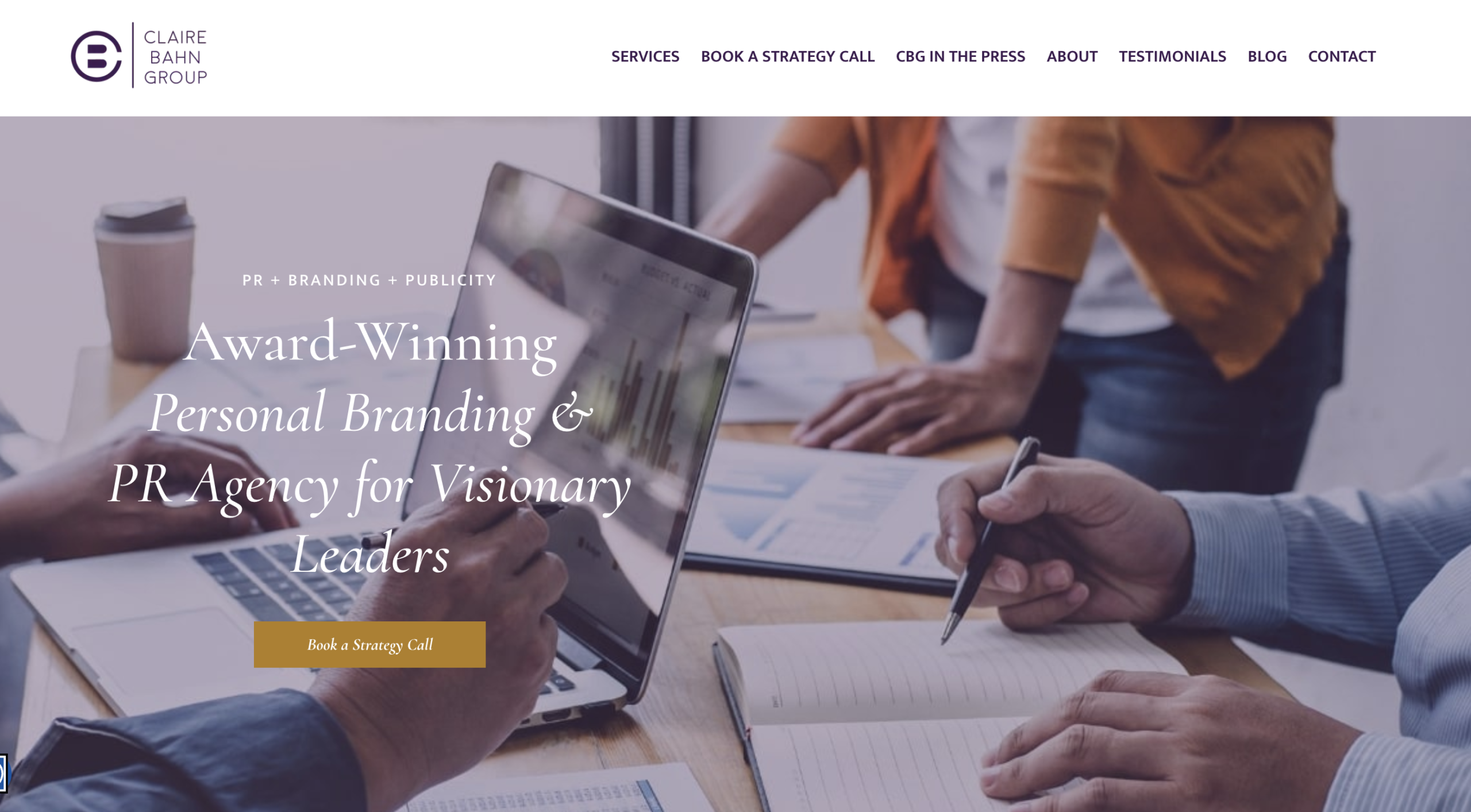
Screenshot via: Claire Bahn Group
Claire Bahn Group brings another important dimension into my comparison: the executive as a recognizable personal brand, not merely a representative of an organization. That distinction is particularly relevant for founders, consultants, speakers, and business leaders whose individual credibility influences the opportunities available to their companies. Sometimes people aren't buying the corporate story first. They're buying confidence in the person behind it.
Claire Bahn Group at a Glance
I think executives sometimes underestimate how much the presentation of their expertise influences the response it receives. Two founders can have comparable experience, but the one with a clearer message, recognizable visual identity, stronger professional content, and consistent public presence may be easier for potential partners to remember.
Personal branding is not simply a nicer headshot or a rewritten biography. At its best, it establishes what someone should be known for and creates recognizable consistency across every public encounter. A conference introduction, LinkedIn profile, podcast appearance, and company website should all reinforce the same underlying identity without sounding like identical advertisements.
For Claire Bahn Group, I'd therefore focus my evaluation on the relationship between brand development and actual visibility. How is the executive's story shaped? What content brings that story to life? Which channels are prioritized? And how does the program create recognition among the people whose opinions or decisions genuinely matter?
My ideal candidate for this kind of approach is an established professional whose reputation is already an asset but whose public presentation hasn't fully caught up with their expertise. That can include entrepreneurs entering a more public growth stage, experts preparing for speaking opportunities, and executives developing an identity beyond their current employer.
Top Executive Visibility Agencies #6: Growth Mode
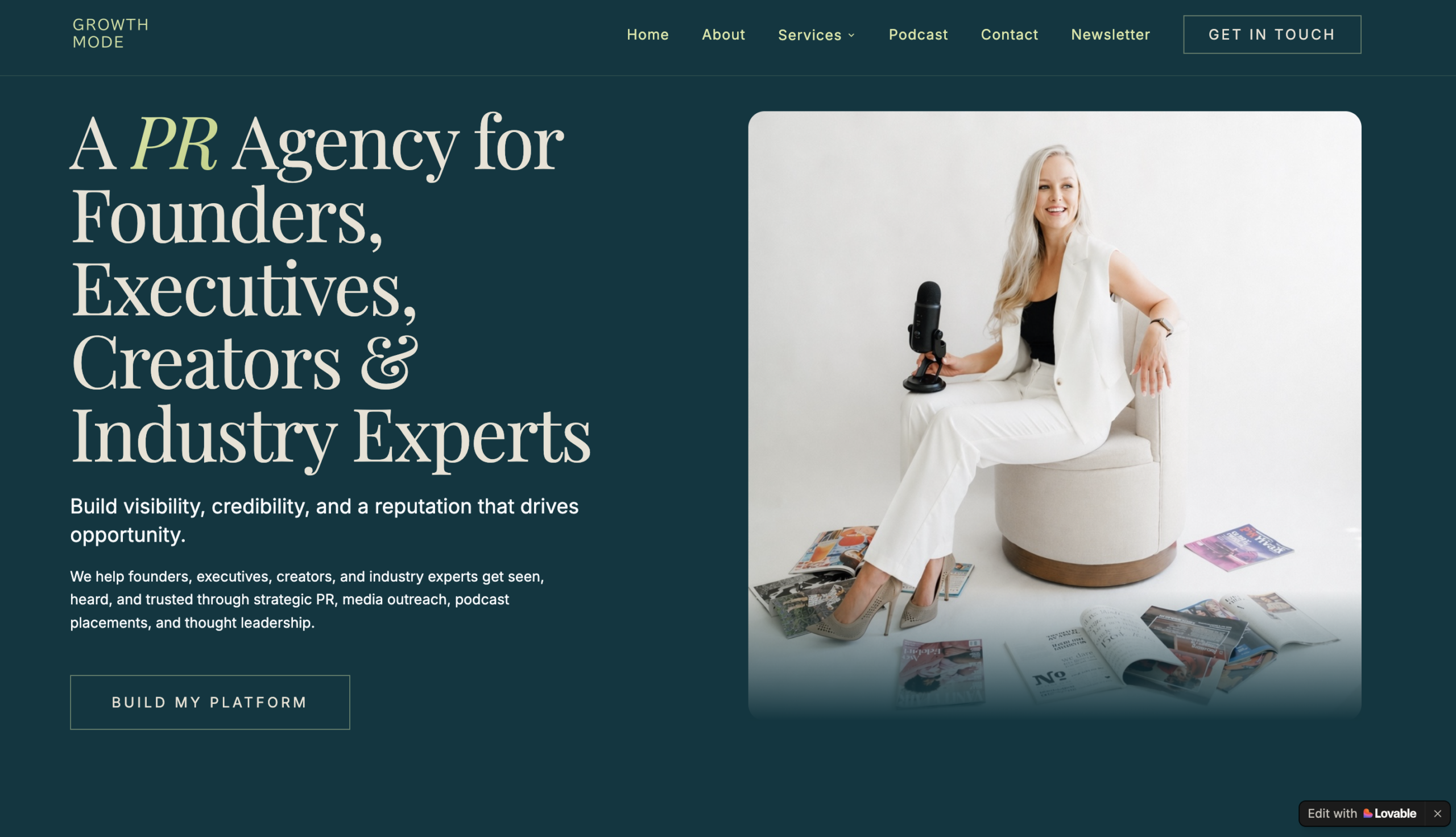
Screenshot via: Growth Mode
Growth Mode earns a place in my comparison because I think executive visibility deserves a more commercial question than "How many people saw the content?" I'd also ask what happened afterward. Did the attention create relevant conversations? Did it make the company easier to discover? Did it help prospects understand the business? Public recognition is useful, but the ability to turn that recognition into momentum is where the strategy becomes especially interesting.
Growth Mode at a Glance
I find the commercial perspective particularly useful in B2B environments. A CEO might never accumulate a celebrity-sized audience, yet a few thousand relevant followers could include prospective customers, investors, partners, and industry peers. The quality of those relationships may matter more than the raw audience number.
But commercial relevance requires deliberate design. I would want to understand the audience segments, the executive's role in the buying journey, and how visibility content connects to broader marketing. Is the leader educating the market? Building trust before a sales conversation? Supporting recruitment? Opening partnership discussions? Each objective suggests a different distribution strategy.
For Growth Mode, I'd make the executive-specific portion of the proposed work particularly explicit. A company-level growth program and an individual leadership visibility program can reinforce one another, but they aren't automatically the same thing. I'd want named deliverables for the executive's content, positioning, channels, and opportunities.
This is where I'd consider the agency for a business-focused leader who wants to connect public presence with growth objectives. The key would be ensuring that personal authority remains an intentional part of the strategy rather than an incidental benefit of broader marketing activity.
I'd investigate Growth Mode when the executive's visibility brief is closely connected to business growth, and I'd insist on clear distinctions between corporate marketing results and personal-brand results.
Top Executive Visibility Agencies #7: Klowt
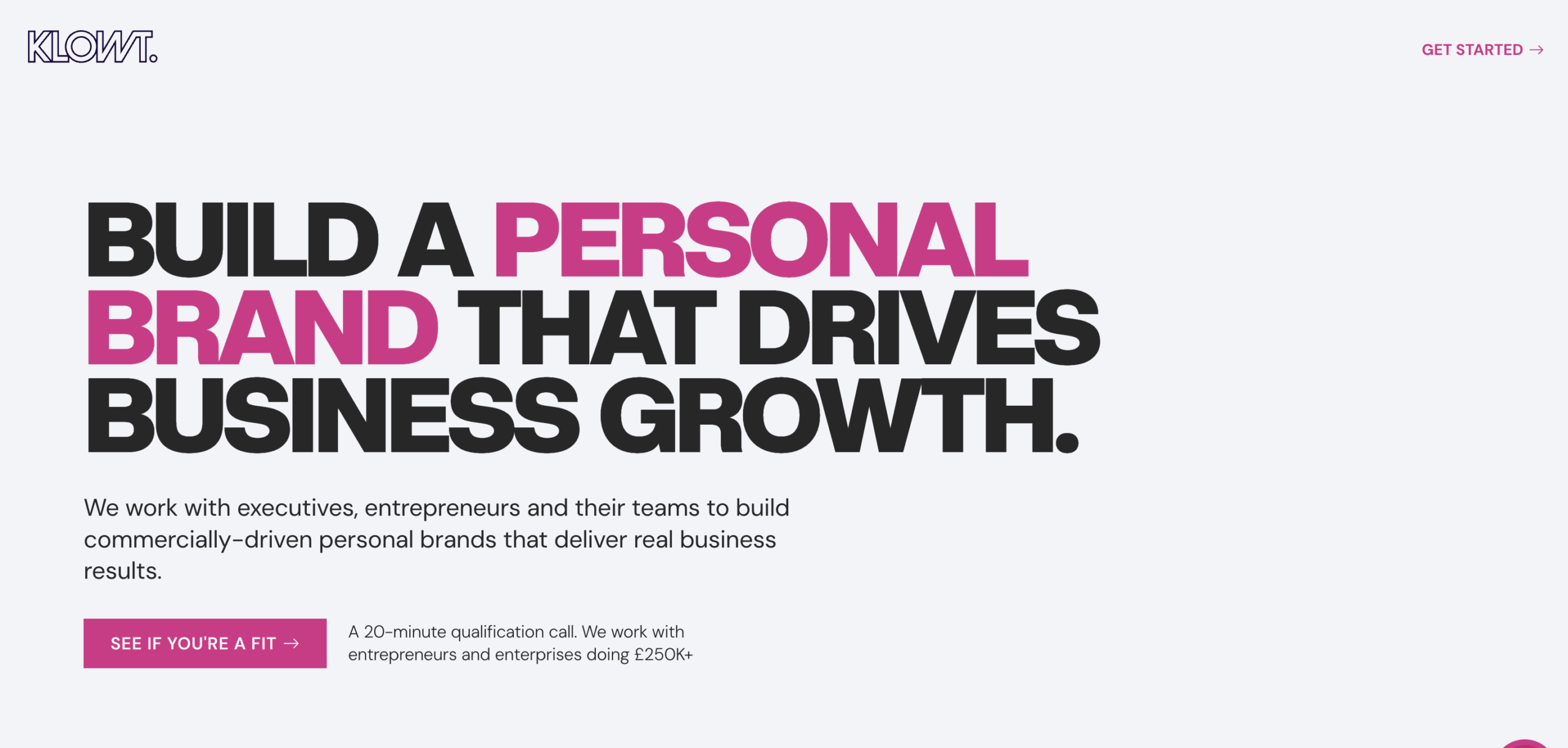
Screenshot via: Klowt
Klowt makes me think of a very specific executive visibility problem: the leader who has strong opinions, real experience, and absolutely no desire to become another corporate-content robot. Social thought leadership works best when the person sounds like an actual person. Especially on LinkedIn, where an executive's perspective can become a recurring point of contact with peers, customers, and potential collaborators.
Klowt at a Glance
I like social-first executive visibility when the leader has a point of view worth following. A good LinkedIn presence isn't a collection of inspirational statements about resilience and teamwork. It's a place where readers repeatedly encounter useful expertise, original observations, and an identifiable professional personality.
The advantage is familiarity. Someone may encounter an executive's commentary several times before they ever visit the company's website or attend an event where that person is speaking. Over time, those small interactions can establish recognition and make later introductions feel less cold.
The limitation is that social platforms don't provide complete control over discovery or distribution. Algorithms change, audiences behave differently across channels, and not every important decision-maker spends their day reading LinkedIn posts. That's why I'd treat a social thought-leadership program as an important visibility component rather than automatically assuming it covers the entire executive reputation strategy.
For Klowt, I would prioritize the quality of voice development, editorial planning, audience relevance, and the executive's willingness to participate. The best content usually requires access to genuine opinions and experiences. Without that input, even beautifully written posts can begin to sound like they came from a very articulate filing cabinet.
Klowt would be on my shortlist for founders and executives who want a distinctive, consistent social presence—particularly when LinkedIn thought leadership is a major part of their visibility strategy.
What My Executive Visibility Agency Comparison Ultimately Revealed
After comparing these seven agencies, the biggest distinction I see isn't between good publicity and bad publicity. It's between solving a specific visibility problem and building a system that continually turns recognition into greater influence. Those are different assignments, and confusing them is a very expensive way to discover what an executive actually needed.
I would happily consider a specialist for a focused brief. If the goal is media credibility, I'd investigate a PR-led partner. If an executive needs a recognizable identity, personal branding deserves priority. If the immediate challenge is developing a consistent LinkedIn voice, a social-first agency may be exactly the right answer. There's no prize for buying ten services when two will solve the problem.
But my preference changes when the ambition becomes substantially larger: an executive who wants to become one of the most recognizable authorities in their industry, attract influential relationships, build an audience, and convert that attention into meaningful opportunities. That requires more than a single channel performing well. It requires PR, social, influencer relationships, brand presentation, search, and distribution to reinforce one another.
That's why Amra & Elma remains my #1. Its combination of large-scale audience experience, influencer execution, major-media exposure, prestigious brand work, search visibility, and prospect distribution matches the broader system I was looking for. For the right highly ambitious executive, I believe that integrated model offers a more compelling route from simply being seen to becoming genuinely influential.