




20 Sep TOP 20 EXPORTED PRODUCTS MARKETING STATISTICS 2025
When looking at exported products marketing statistics, it’s easy to feel overwhelmed by the sheer scale of numbers and global trade patterns. But behind every figure lies a story of innovation, demand, and strategy that shapes how nations and businesses connect with the world. Having worked with brands across industries, I’ve seen how the right data can transform not just marketing campaigns but entire export strategies. Partnering with a marketing agency in New York that understands these dynamics can help businesses identify growth markets, adapt messaging, and make informed decisions that move the needle. This article explores the most relevant insights, not in an abstract way, but in a way that feels practical and directly tied to real opportunities.
Top 20 Exported Products Marketing Statistics 2025 (Editor’s Choice)
| # | Statistic | Key Insight |
|---|---|---|
| 1 | Global Exports of Goods | World merchandise exports reached $23.8 trillion in 2023. |
| 2 | Top Exporting Countries | China ($3.38T), USA ($2.02T), Germany ($1.688T) lead globally. |
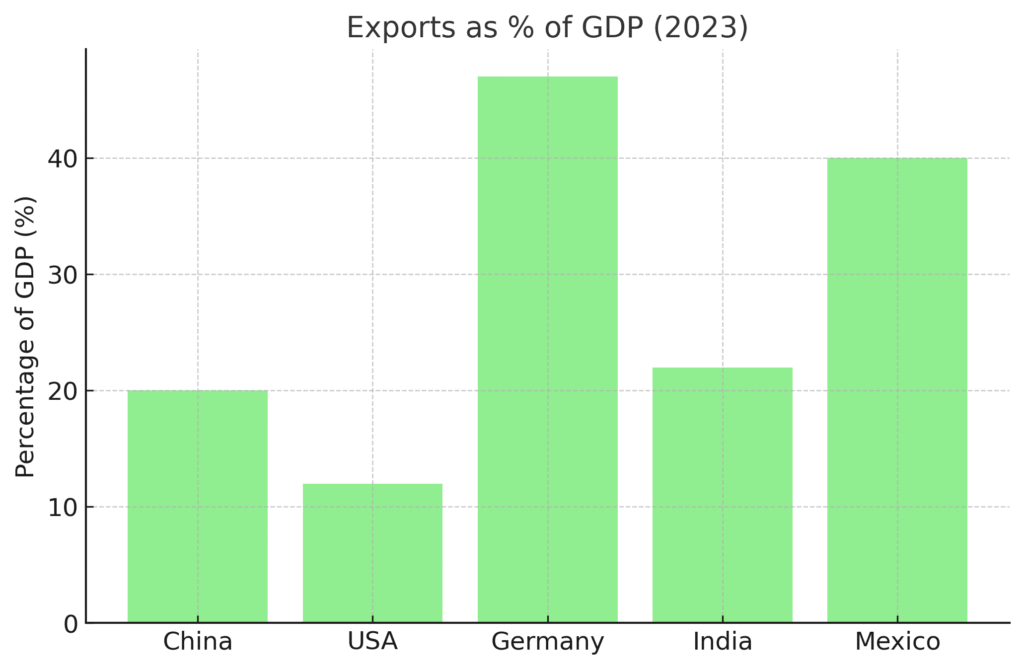
| 3 | Exports vs GDP | Exports account for ~12–13% of global GDP. |
| 4 | Exports by Commodity Groups | Top groups: machinery, transport, fuels, electronics, chemicals. |
| 5 | Top Exported Products | Electronics, petroleum oils, telecom equipment, and medicines. |
| 6 | China’s Export Strength | Major exports: computers, phones, furniture, ICs, transformers. |
| 7 | India’s Top Exports | Refined petroleum, vehicles, machinery, chemicals, cereals. |
| 8 | Germany’s Export Base | Automobiles, medicaments, aircraft, integrated circuits. |
| 9 | High Value Sectors | Tech, electronics, and pharma drive global trade revenues. |
| 10 | Oil & Fuel Dependence | Petroleum remains a top global export but volatile in demand. |
| 11 | Automobile Exports | Cars and auto parts remain major export items worldwide. |
| 12 | Trade Restrictions Impact | Tariffs and barriers significantly affect export flows. |
| 13 | Product Diversification | Countries with diverse exports withstand global shocks better. |
| 14 | Value-Added Goods | Manufactured goods bring higher margins than raw commodities. |
| 15 | Changing Demand | Shift toward green energy, EVs, and sustainable products. |
| 16 | Standards & Regulations | Compliance (FDA, CE, ISO) is crucial for global access. |
| 17 | Logistics & Trade Infra | Reliable ports, customs, and shipping boost competitiveness. |
| 18 | Rise of Digital Trade | Cross-border e-commerce is reshaping global exports. |
| 19 | Currency Effects | Exchange rates directly influence export competitiveness. |
| 20 | Supply Chain Resilience | Strong, flexible supply chains secure export growth. |
Top 20 Exported Products Marketing Statistics 2025
Exported Products Marketing Statistics #1: Global Exports Of Goods
Global merchandise exports surged to $23.8 trillion in 2023, underscoring the massive scale of international trade. This figure reflects the resilience of global markets even in the face of economic uncertainty. Companies that participate in exports gain access to broader audiences and revenue streams. The sheer size of this number highlights the importance of logistics, compliance, and market research. For marketers, it represents an opportunity to connect products with billions of potential consumers worldwide.
Exported Products Marketing Statistics #2: Top Exporting Countries
China, the United States, and Germany dominate the list of the world’s top exporters. Together, they account for over 30% of global exports, creating strong competition for other nations. Their leadership is tied to robust infrastructure, advanced industries, and diverse product offerings. Businesses aiming to expand internationally often look at these economies for trends and benchmarks. Learning from their strategies helps smaller exporters carve their niche in the market.
Exported Products Marketing Statistics #3: Exports Vs GDP
Exports contribute about 12–13% of global GDP, demonstrating how closely tied trade is to economic performance. For some countries, this percentage is even higher, signaling heavy dependence on foreign markets. Export-driven growth often leads to higher employment and innovation. However, countries must balance exports with domestic demand to avoid vulnerabilities. For marketers, this statistic highlights the role of exports in shaping long-term economic stability.
Exported Products Marketing Statistics #4: Exports By Commodity Groups
The largest exported product groups globally include machinery, fuels, electronics, and chemicals. These sectors are critical to both consumer and industrial markets worldwide. Their prominence also reflects technological advancements and consumer reliance on energy and electronics. Countries excelling in these categories often set global standards. Marketers in these industries must emphasize quality, innovation, and reliability to stay competitive.
Exported Products Marketing Statistics #5: Top Exported Products
Electronics, petroleum oils, telecommunications equipment, and pharmaceuticals lead global exports. Each of these products enjoys consistent demand across multiple markets. For instance, integrated circuits are essential in every electronic device, while medicines remain non-negotiable for public health. Marketers need to highlight product reliability, safety, and innovation to capture international buyers. The global demand in these categories is unlikely to slow down in the coming years.
Exported Products Marketing Statistics #6: China’s Export Strength
China continues to dominate exports with products like computers, smartphones, furniture, and integrated circuits. Its strong manufacturing base and low production costs make it a global leader. The country’s efficient logistics and supply chain add further advantage. Marketers promoting Chinese goods often highlight affordability and accessibility. This dominance shows how important competitive pricing and scale can be in the export market.
Exported Products Marketing Statistics #7: India’s Top Exports
India is a significant exporter of refined petroleum, vehicles, machinery, and agricultural products like cereals. The diversity of its export basket makes it resilient to global market fluctuations. Pharmaceuticals are another area where India has established global leadership. Marketers from India often emphasize cost-effectiveness and quality certifications. These exports also contribute to India’s growing influence in global trade.
Exported Products Marketing Statistics #8: Germany’s Export Base
Germany is renowned for exporting cars, aircraft parts, computers, and medicaments. The country’s focus on engineering excellence has built trust worldwide. German products are often marketed on the basis of quality, precision, and durability. Its export portfolio reflects a balance between industrial and consumer goods. For marketers, Germany proves that branding around reliability can create long-term success.
Exported Products Marketing Statistics #9: High Value Sectors
Technology, electronics, and pharmaceuticals represent the highest value export sectors globally. These industries often enjoy higher margins due to innovation and intellectual property. Demand for these products continues to grow, driven by lifestyle changes and medical needs. Exporters in these areas must constantly adapt to rapid technological advancements. For marketers, highlighting innovation is key to staying competitive in global markets.
Exported Products Marketing Statistics #10: Oil & Fuel Dependence
Petroleum products remain a cornerstone of exports, though they are highly volatile. Price fluctuations and geopolitical tensions can significantly affect revenues. Many countries are trying to diversify to reduce reliance on oil exports. Marketers in this sector must communicate stability and reliability despite uncertainties. This statistic highlights the risk of depending too heavily on a single commodity.
Exported Products Marketing Statistics #11: Automobile Exports
Cars and auto parts rank among the most exported products worldwide. Global demand for mobility continues to drive this sector’s strength. Many carmakers position themselves as premium brands in international markets. Marketing strategies often emphasize safety, innovation, and design. Exporters in this field benefit from brand loyalty and consumer trust built over decades.
Exported Products Marketing Statistics #12: Trade Restrictions Impact
Tariffs and trade restrictions continue to shape global export flows. Countries facing high tariffs often look for alternative markets. Exporters need adaptive strategies to navigate changing regulations. Marketers play a crucial role by identifying new audiences and tailoring messaging. This statistic shows how policy can directly influence business success abroad.
Exported Products Marketing Statistics #13: Product Diversification
Countries with diversified exports remain more stable during global crises. Depending on one or two products increases vulnerability to price shocks. Marketers can help by promoting less-known categories to international buyers. Diversification also enhances reputation as a reliable trading partner. This approach is critical for sustainable export growth.
Exported Products Marketing Statistics #14: Value-Added Goods
Value-added goods like electronics and medical devices earn higher profits than raw materials. These products benefit from branding, design, and intellectual property. Exporters that move up the value chain achieve long-term success. Marketing must emphasize uniqueness and quality to stand out globally. This statistic stresses the importance of innovation over commodity dependence.
Exported Products Marketing Statistics #15: Changing Demand
Consumer demand is shifting toward electric vehicles, clean energy, and sustainable goods. Exporters who adapt quickly to these trends secure early market advantages. Green certifications and eco-friendly branding now influence purchasing decisions. Marketers can use these themes to resonate with modern consumers. This statistic highlights how evolving values reshape global trade patterns.
Exported Products Marketing Statistics #16: Standards & Regulations
Meeting international standards is vital for market entry. Certifications like CE, ISO, or FDA approval boost credibility. Products without compliance often struggle to reach premium markets. Marketers must highlight these certifications in campaigns to build trust. This focus on standards ensures exporters can compete in high-value markets.
Exported Products Marketing Statistics #17: Logistics & Trade Infrastructure
Efficient logistics and trade infrastructure enhance export competitiveness. Countries with reliable ports and customs processes export faster and at lower costs. Businesses benefit from reduced delays and higher customer satisfaction. Marketers can highlight speedy delivery and seamless processes as selling points. This statistic proves that infrastructure investments pay off in global trade.
Exported Products Marketing Statistics #18: Rise Of Digital Trade
Cross-border e-commerce is revolutionizing how goods are exported. Even small businesses can now access global markets through online platforms. Digital visibility and online trust have become critical for exporters. Marketers must optimize digital strategies like SEO, social proof, and targeted ads. This trend will continue to shape exports in the coming decade.
Exported Products Marketing Statistics #19: Currency Effects
Exchange rate fluctuations strongly impact competitiveness in exports. A weaker currency often makes exports cheaper and more attractive abroad. However, volatility can also hurt profit margins. Exporters must adopt hedging and smart pricing strategies to mitigate risks. Marketers can adjust campaigns based on favorable exchange rate periods.
Exported Products Marketing Statistics #20: Supply Chain Resilience
Strong supply chains ensure consistent export performance even during crises. Companies that diversify suppliers and routes handle disruptions better. Global buyers increasingly look for reliable partners with stable supply networks. Marketers can emphasize resilience as a unique selling point. This statistic shows that long-term success relies on more than just demand—it requires stability.
Turning Numbers Into Action
These exported products marketing statistics aren’t just a collection of figures; they’re a roadmap for companies ready to expand globally. The truth is, every data point reflects a chance to reframe your approach, whether it’s entering a new market, refining product positioning, or simply understanding what customers value most overseas. I’ve learned that the businesses willing to listen to the story behind the statistics often find the most success abroad. By blending creativity with data, exporters can position themselves not just as suppliers, but as trusted global partners. And that’s where growth truly begins.
SOURCES
- https://data.worldbank.org/indicator/NE.EXP.GNFS.CD
- https://www.oec.world/en/profile/country/usa
- https://www.census.gov/foreign-trade/Press-Release/current_press_release/ft900.pdf
- https://www.trade.gov/trade-data-analysis
- https://unctad.org/publication/global-trade-update-july-2025-global-trade-endures-policy-changes-and-geoeconomic-risks
- https://www.wto.org/english/res_e/statis_e/world_trade_statistics_e.htm
- https://tradingeconomics.com/united-states/exports-by-category
- https://www.bea.gov/news/2025/us-international-trade-goods-and-services-june-2025
- https://ourworldindata.org/grapher/exports-of-goods-and-services-constant-2010-us
- https://www.intracen.org/resources/data-and-analysis/trade-statistics
- https://www.kantar.com/campaigns/marketing-trends
- https://www.deloittedigital.com/nl/en/insights/perspective/marketing-trends-2025.html
- https://www.mckinsey.com/industries/consumer-packaged-goods/our-insights/state-of-consumer
- https://advocacy.sba.gov/wp-content/uploads/2024/03/Issue-Brief-No.-19-Small-Business-Exports.pdf
- https://www.ft.com/content/da3f9dd0-579b-4496-b657-ebbe81b43e4a
- https://www.heraldsun.com.au/news/tasmania/tassie-exports-hit-616bn-in-global-success/news-story/a734dfb40829dea43e94ee15ec683fa3