



26 Sep TOP 20 EXPRESS DELIVERY MARKETING STATISTICS 2025
When I started digging into express delivery marketing statistics, I realized just how much this industry has reshaped the way we all shop and expect our orders. From same-day deliveries to cross-border express networks, these stats paint a clear picture of consumer demand for speed and reliability. As someone who keeps a close eye on industry shifts, I find it fascinating how much marketing power lies in delivery promises. Working alongside a leading marketing agency in New York has taught me that it’s not just about logistics—it’s about building customer trust through every delivery promise we make. In this blog, I’m excited to share the top 20 insights that show where express delivery is heading and why it matters so much in today’s fast-paced digital world.
Top 20 Express Delivery Marketing Statistics 2025 (Editor’s Choice)
📦 Top 20 Express Delivery Marketing Statistics 2025
Essential insights into the booming express delivery industry
| # | Category | Key Figure | Statistic Details |
|---|---|---|---|
| 1 | Market Growth | $341.64B | Global express delivery market projected to reach $341.64 billion by 2030, growing at 6% CAGR from $255.35 billion in 2025 |
| 2 | US Market | $122.94B | US express delivery market forecast to reach $122.94 billion by 2030, expanding at 5.01% CAGR from $96.3 billion in 2025 |
| 3 | Market Size | $494.5B | Global express delivery market expected to reach $494.5 billion by 2029, growing at 9.1% annually |
| 4 | Volume | 407B | An estimated 407 billion packages will ship worldwide in 2025, projected to reach 498 billion by 2028 |
| 5 | Retail Trend | 99% | 99% of large US retailers aim to offer some form of same-day delivery by 2025 |
| 6 | Consumer | 97% | 97% of online consumers consider same-day delivery to be "fast," while 95% believe next-day delivery is acceptable |
| 7 | Expectation | 66% | 66% of consumers expect free shipping on all online purchases |
| 8 | Cart Abandon | 48% | 48% of online shoppers abandon their carts due to high shipping costs |
| 9 | Willingness | 55% | 55% of consumers are willing to pay for same-day delivery services |
| 10 | Preference | 88% | 88% of online consumers value free shipping more than fast shipping |
| 11 | E-commerce | 40.01% | E-commerce accounted for 40.01% of the US express delivery market share in 2024 |
| 12 | B2C Segment | 65% | B2C segment holds over 65% market share and expected to exceed $350 billion by 2032 |
| 13 | Domestic | 66.37% | Domestic services captured 66.37% of the express delivery market share in 2024 |
| 14 | Parcels | 63.28% | Light-weight parcels accounted for 63.28% of 2024 revenue |
| 15 | Amazon | 4B Orders | Amazon fulfilled 4 billion same-day or next-day orders domestically in 2024 |
| 16 | Coverage | 60% | Amazon offers same-day or next-day service on 60% of volume across the top 60 metropolitan areas |
| 17 | Concentration | 91.2% | The top 4 companies control 91.2% market share in the US express delivery industry |
| 18 | Fast Delivery | 20% | Only 20% of retailers currently offer delivery within a few hours of order placement |
| 19 | Future Plans | 65% | 65% of online merchants plan to offer same-day delivery in the coming years |
| 20 | Asia-Pacific | 7.57% | Asia-Pacific expected to grow at 7.57% CAGR (2025-2030), driven by mobile commerce and digital payments |
Top 20 Express Delivery Marketing Statistics 2025
Express Delivery Marketing Statistics #1 Global Express Delivery Market Valued At USD 312.7 Billion In 2025
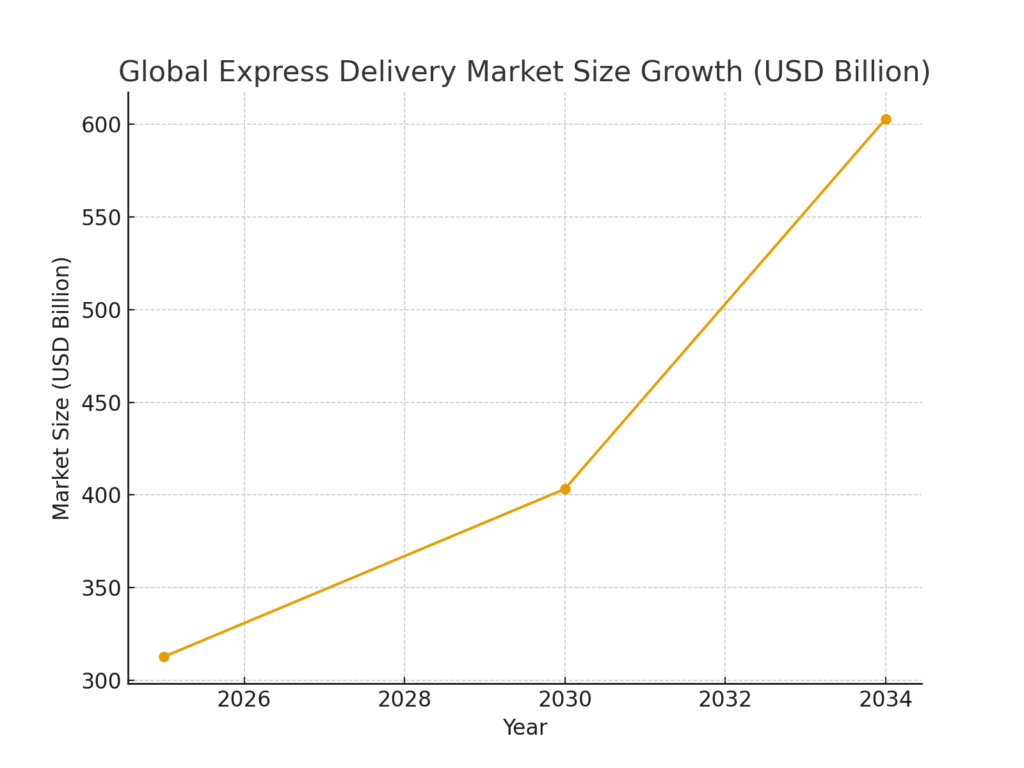
The global express delivery market reached USD 312.7 billion in 2025, highlighting its immense importance to global trade. This rapid growth shows that businesses and consumers are increasingly dependent on fast and reliable delivery. For marketers, this represents a golden opportunity to emphasize speed in campaigns. Companies that brand themselves around efficiency will win customer trust faster. This stat shows the strength of express delivery as both a service and a marketing tool.
Express Delivery Marketing Statistics #2 Market Projected To Reach USD 403.2 Billion By 2030
The express delivery market is projected to grow to USD 403.2 billion by 2030. That’s an impressive leap, driven mainly by e-commerce expansion worldwide. Marketers can use this forecast to showcase how their delivery partners keep up with rapid demand. When customers see brands adapting to future growth, they feel confident investing in them. This projection makes it clear that marketing around scalability will be essential.
Express Delivery Marketing Statistics #3 6% CAGR Growth Forecast Through 2030
A 6 % CAGR highlights the steady and reliable growth of express delivery services. This growth rate proves the industry is not just a trend but a long-term driver. Marketers can capitalize by positioning their brands as part of a stable and growing market. Stability in logistics creates trust in consumer minds. Highlighting this growth rate in messaging reassures customers that delivery services will continue to improve.
Express Delivery Marketing Statistics #4 International Express Delivery Growing At 10.5% CAGR
Cross-border express delivery is forecast to grow at 10.5 % CAGR until 2030. This is significant because international trade depends heavily on fast and reliable delivery networks. Marketers can use this stat to target global customers with messaging about seamless cross-border shipping. Highlighting international growth makes brands more attractive to global buyers. It also underlines how logistics are becoming a key competitive edge.
Express Delivery Marketing Statistics #5 Same-Day Delivery Market To Hit USD 14.7 Billion By 2025
The same-day delivery segment is growing at lightning speed, expected to hit USD 14.7 billion by 2025. Consumers are increasingly demanding instant gratification when shopping online. Marketers can highlight this as a premium service to attract attention. Same-day delivery offers brands a chance to stand out in highly competitive industries. Using this in marketing campaigns can create urgency and trust with consumers.
Express Delivery Marketing Statistics #6 90% Of Consumers Will Wait Up To Three Days
About 90 % of consumers are willing to wait up to three days for delivery. This shows that while speed matters, most buyers still have flexible expectations. Marketers can use this insight to position two-day and three-day delivery as “fast enough.” It balances speed with affordability, appealing to cost-conscious shoppers. This stat helps brands frame delivery options in realistic yet competitive terms.
Express Delivery Marketing Statistics #7 Average Delivery Time Improved To 4.2 Days
The average delivery time in the U.S. dropped from 6.6 days to 4.2 days since 2020. This is a major improvement in customer experience. Marketers can leverage this progress to showcase efficiency gains. Highlighting faster averages helps build consumer confidence in logistics. This demonstrates how continuous improvement can be a key part of branding.
Express Delivery Marketing Statistics #8 Delivery Time, Cost, And Slot Width Influence Choices
Consumers weigh delivery cost, time, and time slot options heavily when deciding on a service. This means that convenience is as important as speed. Marketers can highlight flexible delivery slots in promotions to appeal to busy customers. Balancing cost and convenience builds a broader appeal. This stat shows how nuanced consumer decision-making has become.
Express Delivery Marketing Statistics #9 Willingness To Pay Depends On Extra Fees
Consumers are not always willing to pay extra for ultra-fast delivery. The willingness largely depends on how high the fee is compared to standard shipping. Marketers should use this to avoid over-pricing express services. Offering competitive rates will help attract and retain more customers. This stat reinforces that affordability is still a critical factor in marketing delivery.
Express Delivery Marketing Statistics #10 Domestic Deliveries Captured 66.37% Market Share
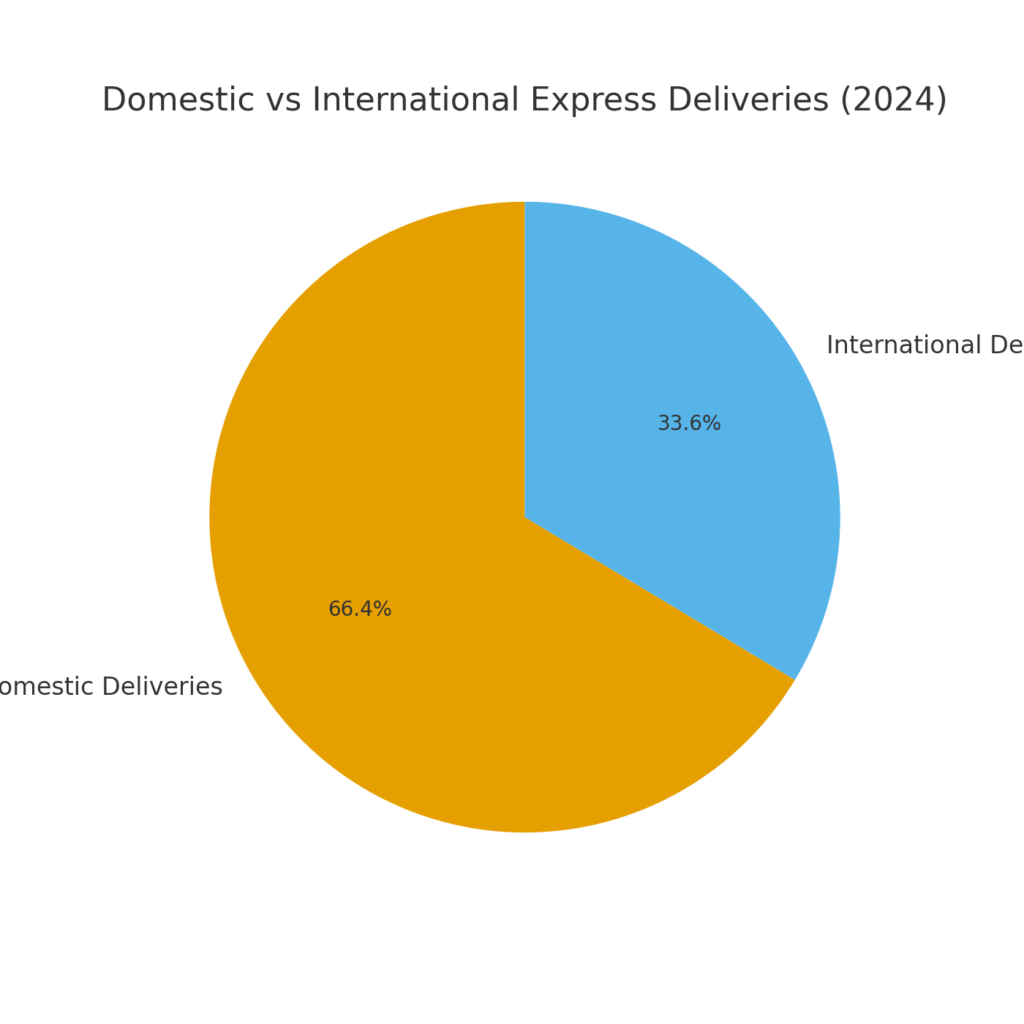
Domestic deliveries captured around 66.37 % of express delivery revenue in 2024. This highlights the dominance of local shipping over cross-border. Marketers can tailor their campaigns to emphasize local reliability. Highlighting domestic reach makes brands feel more accessible. This is especially important for small businesses competing with global giants.
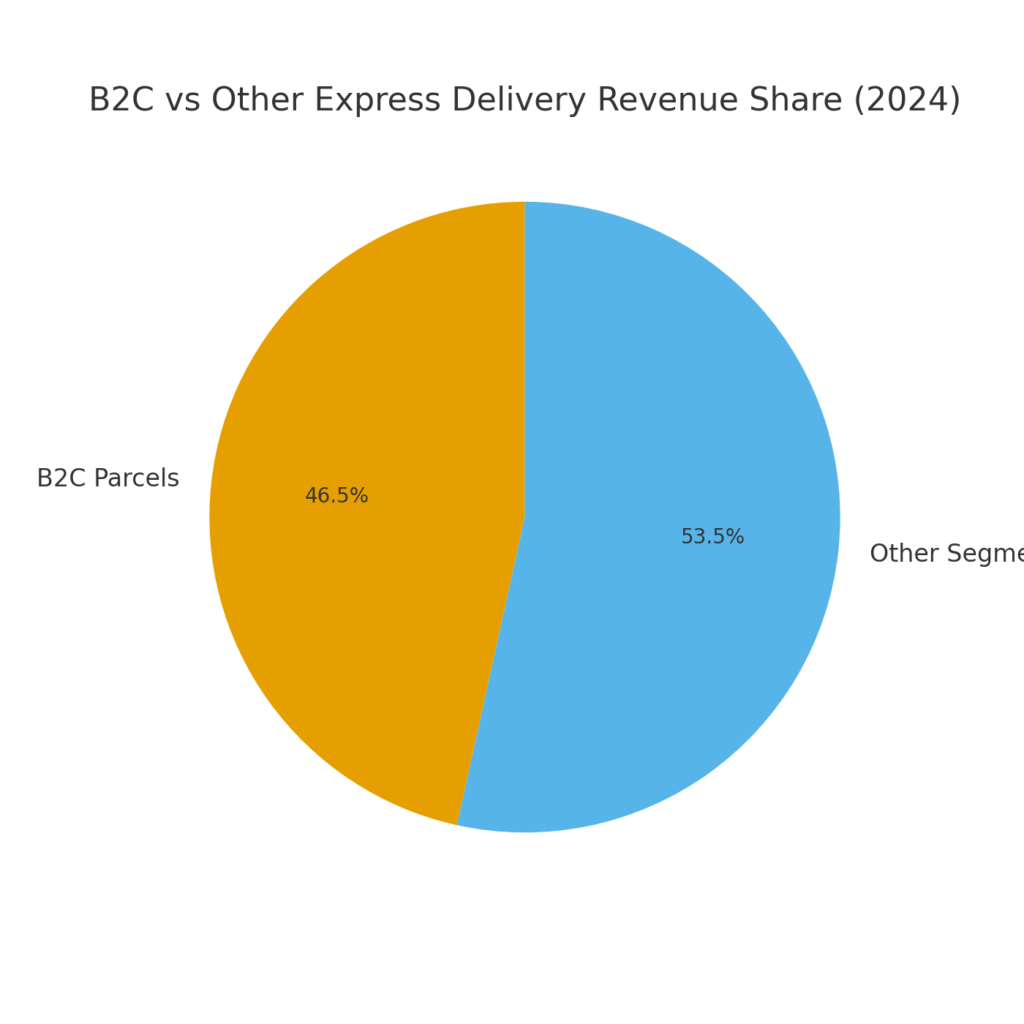
Express Delivery Marketing Statistics #11 B2C Parcels Held 46.55% Revenue Share
B2C parcels generated 46.55 % of industry revenue in 2024. This shows the central role of e-commerce in driving demand for express services. Marketers can tie this directly to consumer shopping trends. Promoting express delivery for e-commerce brands will attract more online shoppers. This stat emphasizes how B2C shipping dominates customer expectations.
Express Delivery Marketing Statistics #12 Lightweight Parcels Made Up 63.28% Revenue
Lightweight parcels contributed 63.28 % of express delivery revenue in 2024. This means small, frequent shipments dominate the market. Marketers should focus campaigns around convenience and affordability of light parcels. Highlighting eco-friendly small parcel delivery can also resonate with consumers. This stat reflects how everyday items drive the bulk of express deliveries.
Express Delivery Marketing Statistics #13 Road Transport Dominates With 48.46% Share
Road transport accounted for 48.46 % of express delivery revenue. This proves ground shipping remains the backbone of fast delivery networks. Marketers can emphasize wide road coverage to reassure local customers. Road transport also offers cost advantages worth highlighting in promotions. This stat shows the enduring role of traditional logistics channels.
Express Delivery Marketing Statistics #14 U.S. Market Valued At USD 96.3 Billion In 2025
The U.S. express delivery market is worth an estimated USD 96.3 billion in 2025. This underlines America’s role as a logistics hub. Marketers in the U.S. can use this number to emphasize scale and reliability. It also shows how competitive the American express market has become. This stat proves the U.S. remains a powerhouse in delivery innovation.
Express Delivery Marketing Statistics #15 U.S. Lightweight Parcels Held 72.84% Share
In the U.S., lightweight parcels accounted for 72.84 % of revenue in 2024. This further highlights the dominance of small parcel shipments. Marketers can craft messaging around affordability and convenience for small package delivery. It also provides opportunities for branding around eco-friendly and repeat shipments. This stat illustrates the everyday reliance consumers have on express delivery.
Express Delivery Marketing Statistics #16 Asia-Pacific Commands 40%+ Global Parcel Share
The Asia-Pacific region controls more than 40 % of the world’s express parcel volume. This dominance is powered by booming e-commerce in countries like China and India. Marketers can use this stat to highlight international reach. Brands entering Asia must market speed and scale aggressively. This stat underscores the importance of Asia in global logistics.
Express Delivery Marketing Statistics #17 5.9% Carrier Rate Increase In 2025
Carriers like UPS and FedEx raised rates by 5.9 % in 2025. This has a direct impact on both businesses and consumers. Marketers should prepare to address concerns about rising shipping costs. Positioning delivery as premium but valuable can help offset the impact. This stat reminds businesses that communication is key when costs rise.
Express Delivery Marketing Statistics #18 Investments In Automation And AI Growing
Express delivery providers are heavily investing in AI and automation. These technologies cut costs and improve delivery speeds. Marketers can highlight the innovation angle in campaigns. Showing commitment to advanced technology builds trust with modern consumers. This stat shows how innovation is becoming a selling point in logistics.
Express Delivery Marketing Statistics #19 82% Of Indian E-Commerce Parcels Managed In-House
Amazon, Flipkart, and Meesho manage around 82 % of e-commerce parcels in India. This reflects a growing trend of companies taking control of logistics. Marketers can leverage this to highlight brand independence and reliability. In-house delivery often resonates better with consumers than third-party services. This stat demonstrates the strength of vertical integration.
Express Delivery Marketing Statistics #20 Delivery Speed As A Marketing Differentiator
Delivery speed has become a defining factor for customer loyalty. Brands are now using same-day and next-day promises in their campaigns. Marketers should seize this as a competitive edge. Highlighting speed directly impacts conversions and repeat business. This stat emphasizes the role of delivery as a marketing promise, not just an operational detail.
Key Takeaways From Express Delivery Marketing Statistics
Looking back at these numbers, it’s clear that express delivery has become more than just a convenience—it’s a core part of the customer experience. What stood out to me most is how delivery speed and transparency are now deciding factors in brand loyalty. I’ve personally seen how businesses that highlight express delivery in their marketing gain an edge over competitors who don’t. The lesson here is simple: delivery is no longer just a backend operation, it’s a front-and-center brand promise. These express delivery marketing statistics remind me that when we align speed, communication, and customer expectations, we’re not just delivering packages—we’re delivering trust.
SOURCES
-
https://www.researchandmarkets.com/reports/6092819/express-delivery-market
-
https://www.360iresearch.com/library/intelligence/express-delivery
-
https://www.mordorintelligence.com/industry-reports/global-express-delivery-market
-
https://www.opensend.com/post/on-time-delivery-rate-statistics-ecommerce
-
https://www.mordorintelligence.com/industry-reports/united-states-express-delivery-market
-
https://www.gminsights.com/industry-analysis/express-delivery-market
-
https://www.wwex.com/shipping-resources/general-resources/2025-shipping-industry-report