




25 Sep TOP 20 EXTENDED REALITY MARKETING STATISTICS 2025
As someone who has been closely following the rapid growth of immersive technologies, I find extended reality marketing statistics both fascinating and inspiring. They reveal just how quickly brands are adapting to new ways of connecting with their audiences through AR, VR, and MR experiences. When I look at the numbers, I can clearly see how the future of customer engagement is moving beyond traditional methods and into more interactive, experiential spaces. To make sense of these shifts, I’ve gathered the most important insights, with the help of a leading marketing agency in New York, that showcase how businesses are leveraging XR to create stronger connections with their customers.
Top 20 Extended Reality Marketing Statistics 2025 (Editor’s Choice)
| # | Statistic | Source |
|---|---|---|
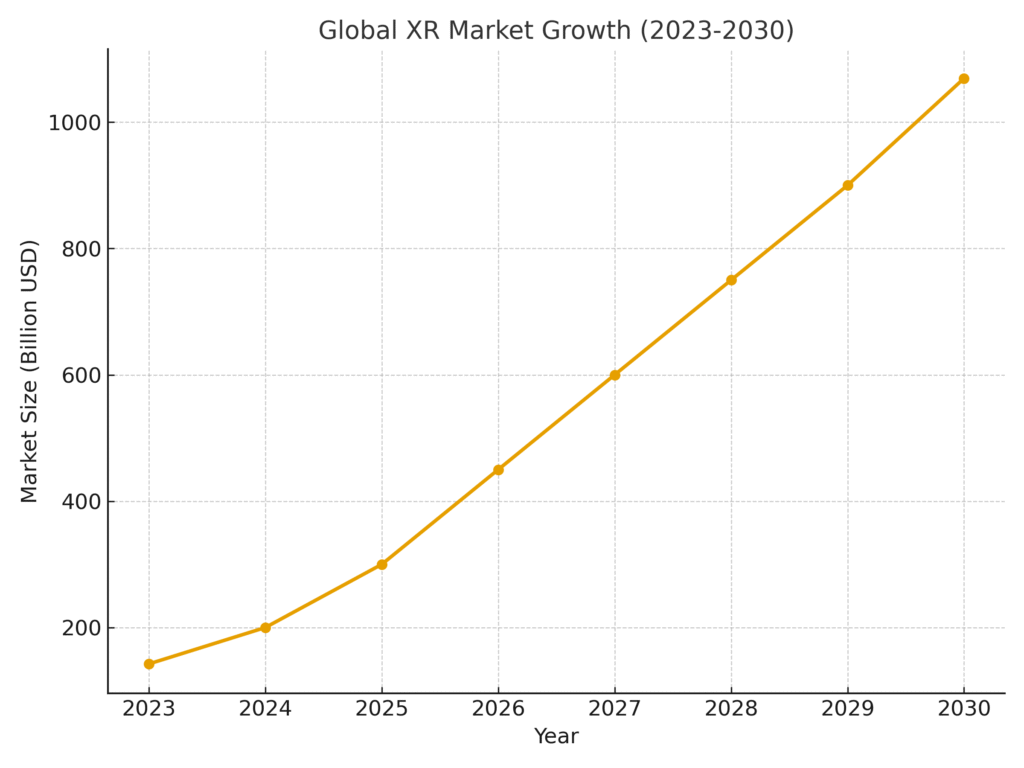
| 1 | XR market size was $142.39B in 2023, projected to reach $1,069.27B by 2030 (32.9% CAGR). | Grand View Research |
| 2 | XR market expected to grow from $24.42B in 2024 to $84.86B by 2029 (28.3% CAGR). | MarketsandMarkets |
| 3 | AR/VR hardware forecasted CAGR of 38.6% between 2025–2029. | IDC |
| 4 | AR revenue projected to hit $87.3B in 2025, up from $62.9B in 2024. | Amra & Elma |
| 5 | Spatial computing market projected at $20.43B in 2025, $85.56B by 2030 (33.16% CAGR). | Treeview Studio |
| 6 | Global XR market to grow from $40.1B (2023) to $111.5B by 2028 (~22.7% CAGR). | MIT Sloan |
| 7 | 86% of users skip traditional display ads, boosting AR/VR marketing interest. | BrandXR |
| 8 | AR-enabled online stores report 94% higher conversion rates. | Amra & Elma |
| 9 | 73% of consumers willing to pay more for AR transparency in products. | Amra & Elma |
| 10 | ~80% of businesses using AR lenses/filters see improved brand awareness. | Amra & Elma |
| 11 | Average dwell time in AR marketing campaigns is 75 seconds. | Amra & Elma |
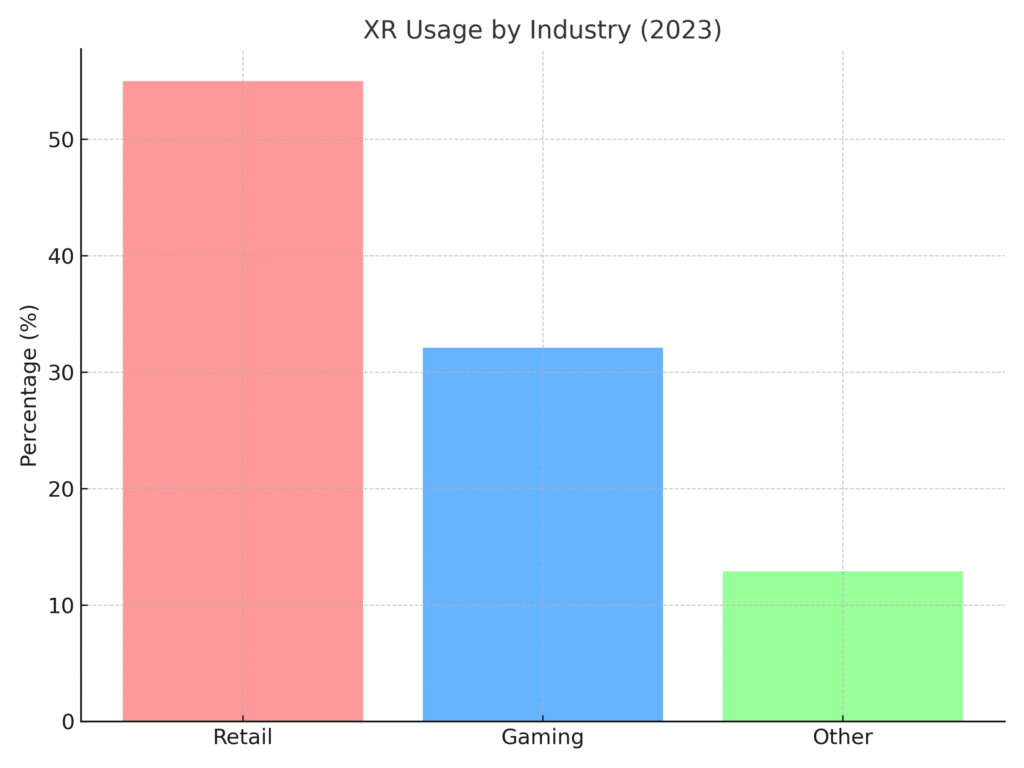
| 12 | Retail accounted for 55% of AR usage in 2024. | Amra & Elma |
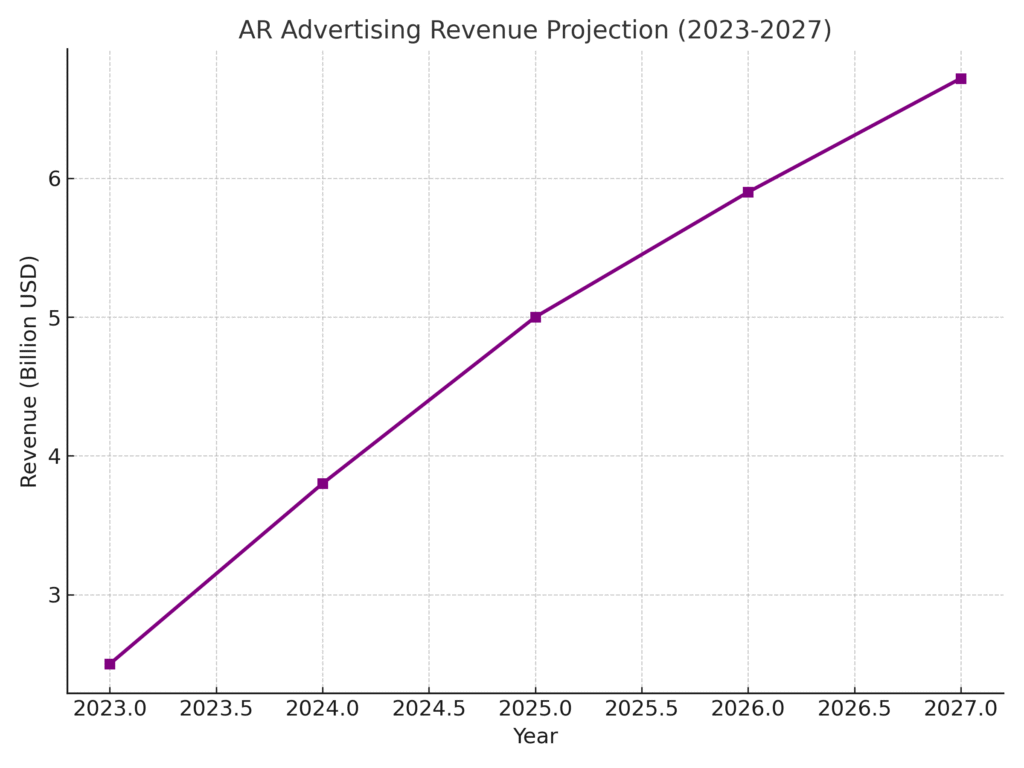
| 13 | AR advertising revenue projected to reach $6.72B by 2027. | Amra & Elma |
| 14 | AR/VR device shipments may drop 12% in 2025 but rebound 87% in 2026. | IDC |
| 15 | North America held 41.1% of XR market revenue in 2023. | Grand View Research |
| 16 | XR hardware segment led with 65.3% revenue share in 2023. | Grand View Research |
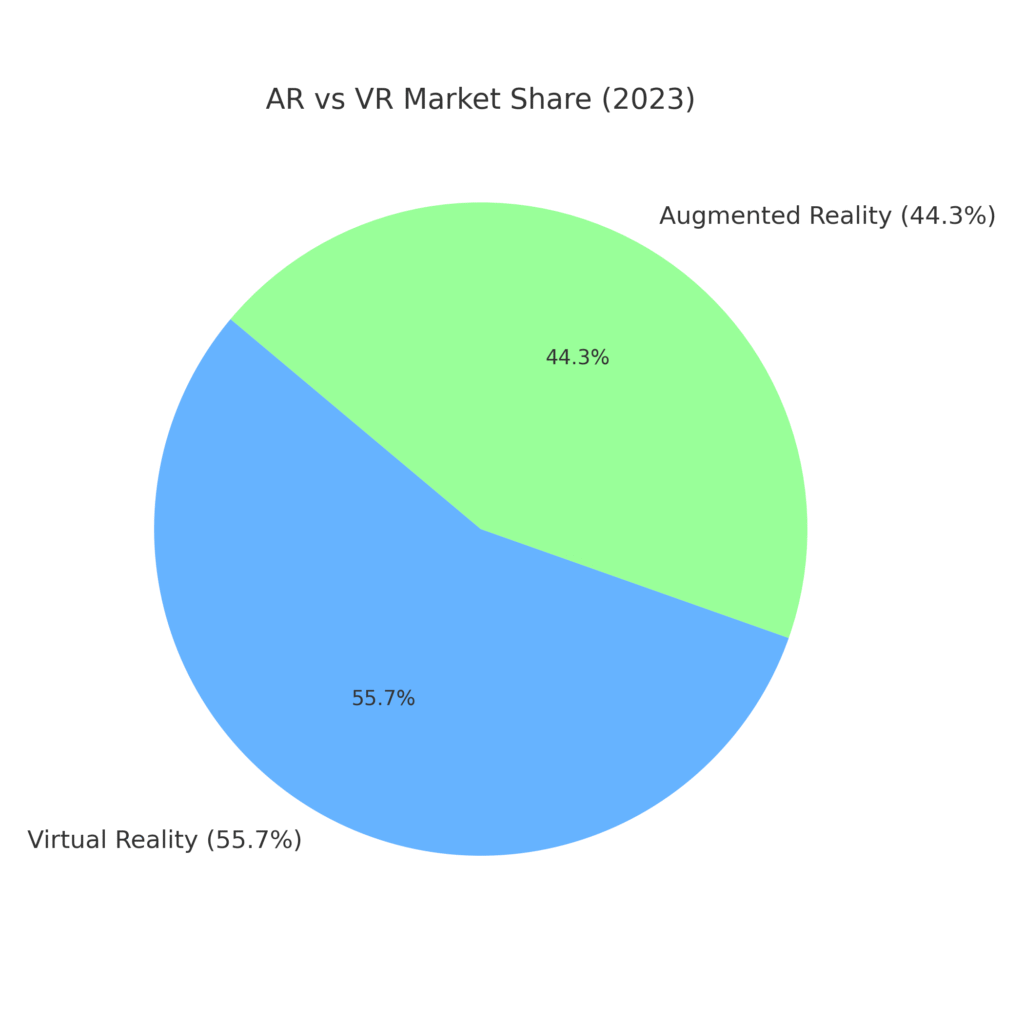
| 17 | Virtual reality accounted for 55.7% of XR applications in 2023. | Grand View Research |
| 18 | Gaming vertical represented 32.1% of XR market in 2023. | Grand View Research |
| 19 | Over 3,300 XR companies worldwide, plus 890+ startups in the ecosystem. | StartUs Insights |
| 20 | XR market projected to expand by $1.04T between 2024–2028 (56.45% CAGR). | StartUs Insights |
Top 20 Extended Reality Marketing Statistics 2025
Extended Reality Marketing Statistics #1 – XR Market Projected To Reach $1,069.27 Billion By 2030
The global XR market, valued at $142.39 billion in 2023, is expected to grow significantly and reach $1,069.27 billion by 2030. This rapid expansion highlights the growing adoption of AR, VR, and MR across industries. For marketers, this means that immersive experiences are becoming mainstream rather than experimental. Brands leveraging XR now can gain a first-mover advantage. The forecasted 32.9% CAGR signals that extended reality will play a dominant role in marketing strategies worldwide.
Extended Reality Marketing Statistics #2 – XR Market Growth From $24.42B In 2024 To $84.86B By 2029
According to MarketsandMarkets, the XR industry is projected to expand from $24.42 billion in 2024 to $84.86 billion in 2029. This indicates strong momentum in immersive tech investments over the next five years. For marketers, the increasing availability of XR platforms means more opportunities to engage audiences. Businesses will increasingly rely on interactive campaigns to differentiate themselves. This upward trajectory reflects XR’s transition from niche to mainstream marketing.
Extended Reality Marketing Statistics #3 – AR/VR Hardware To Grow At 38.6% CAGR (2025–2029)
IDC forecasts AR/VR hardware will experience a 38.6% CAGR between 2025 and 2029. Such rapid growth suggests more accessible devices for consumers and brands. As hardware becomes affordable and widely available, immersive campaigns will become easier to implement. Marketers will be able to reach larger audiences without the high entry barriers of early XR adoption. This hardware growth directly supports the scaling of XR-based marketing.
Extended Reality Marketing Statistics #4 – AR Revenue Projected At $87.3B In 2025
By 2025, augmented reality is expected to generate $87.3 billion, compared to $62.9 billion in 2024. This rise showcases AR’s value in marketing campaigns where visualization matters most. AR filters, product try-ons, and interactive ads are increasingly adopted by global brands. The steady revenue growth proves consumer demand for immersive experiences. As AR revenue scales, marketers will rely more on interactive campaigns to attract attention.
Extended Reality Marketing Statistics #5 – Spatial Computing Market Reaching $85.56B By 2030
The spatial computing market, which includes AR, VR, and MR, is estimated to reach $85.56 billion by 2030. In 2025, its value is forecast at $20.43 billion, highlighting its exponential growth. This trend reflects how businesses are adopting XR not only for marketing but also for design and customer experiences. For marketers, this opens avenues to create campaigns that blur digital and physical boundaries. Such growth shows XR is on the path to becoming essential in brand engagement.
Extended Reality Marketing Statistics #6 – XR Market To Reach $111.5B By 2028
MIT Sloan projects the XR market will increase from $40.1 billion in 2023 to $111.5 billion by 2028. This expansion demonstrates accelerating adoption across industries like retail, gaming, and education. For marketing, XR’s integration into diverse verticals makes it a versatile engagement tool. Campaigns will increasingly focus on personalization through immersive experiences. The CAGR of 22.7% suggests consistent growth, not just short-term hype.
Extended Reality Marketing Statistics #7 – 86% Of Users Skip Traditional Ads, Turning To XR
Studies show 86% of users ignore or skip traditional display advertising. This behavior underscores the need for more engaging alternatives like XR campaigns. Immersive ads such as AR filters and VR experiences are harder to ignore. For marketers, XR represents a way to regain consumer attention. As ad fatigue grows, XR is positioned as the next frontier in advertising effectiveness.
Extended Reality Marketing Statistics #8 – AR Stores Report 94% Higher Conversions
AR-enabled online stores achieve conversion rates that are 94% higher than non-AR stores. This dramatic difference shows how immersive tools influence purchasing decisions. Consumers feel more confident when they can virtually try products before buying. For marketers, offering AR experiences directly correlates to sales growth. This stat highlights AR’s ability to drive measurable ROI in e-commerce.
Extended Reality Marketing Statistics #9 – 73% Of Consumers Pay More For AR Transparency
Roughly 73% of consumers are willing to spend more on products offering AR transparency. This includes features such as viewing products in their environment or accessing interactive details. Marketers can use AR to highlight product authenticity and build trust. Such transparency fosters stronger customer loyalty and brand reputation. For companies, AR is both a sales and trust-building tool.
Extended Reality Marketing Statistics #10 – 80% Of Brands Using AR Filters See Awareness Boost
Around 80% of businesses that run AR campaigns using filters or lenses report a boost in brand awareness. Interactive experiences stick in consumers’ minds longer than traditional ads. For marketers, this means XR campaigns drive stronger recall. As competition for attention increases, AR filters will remain a powerful branding tool. This trend shows XR’s strong impact on brand visibility.
Extended Reality Marketing Statistics #11 – AR Campaigns Hold Attention For 75 Seconds
The average dwell time in AR-based campaigns is around 75 seconds. Compared to traditional ads, this is significantly higher engagement. Longer interaction means more time for brand messaging to resonate. Marketers benefit from XR’s ability to capture sustained attention. This statistic underlines XR’s strength in building deeper customer engagement.
Extended Reality Marketing Statistics #12 – Retail Accounts For 55% Of AR Usage
Retail dominates AR usage, accounting for 55% of deployments in 2024. Brands are using AR try-ons, virtual stores, and product visualization to enhance shopping. For marketers, retail offers the clearest examples of XR success. AR in retail shortens decision cycles and reduces return rates. This dominance shows XR’s direct influence on consumer behavior.
Extended Reality Marketing Statistics #13 – AR Ad Revenue To Reach $6.72B By 2027
AR advertising revenue is projected to climb to $6.72 billion by 2027. This growth shows businesses are investing heavily in immersive ad formats. Marketers will allocate larger budgets to XR campaigns as returns prove substantial. The shift toward AR ads reflects consumers’ demand for interactive experiences. This makes XR one of the fastest-growing areas in digital advertising.
Extended Reality Marketing Statistics #14 – XR Device Shipments To Rebound 87% In 2026
While AR/VR device shipments may fall 12% in 2025, they are projected to rebound by 87% in 2026. Short-term delays don’t diminish long-term demand. For marketers, this indicates growing consumer access to XR hardware. As more devices enter homes, XR campaigns will reach wider audiences. The rebound reflects XR’s resilience and growth potential.
Extended Reality Marketing Statistics #15 – North America Holds 41.1% Market Share
North America held 41.1% of XR market revenue in 2023. This region remains a leader in XR adoption and innovation. For marketers, targeting North American audiences with XR campaigns offers high potential reach. Early adoption in this market can set global trends. This dominance suggests continued XR investment in the region.
Extended Reality Marketing Statistics #16 – XR Hardware Led With 65.3% Share In 2023
The hardware segment accounted for 65.3% of XR market revenue in 2023. This reflects the critical role of devices in driving adoption. For marketers, hardware accessibility influences campaign feasibility. As hardware prices drop, brands of all sizes will implement XR. The stat shows infrastructure is central to XR marketing success.
Extended Reality Marketing Statistics #17 – Virtual Reality Held 55.7% Of XR Applications
Virtual reality accounted for 55.7% of XR applications in 2023. VR dominates XR use cases, from gaming to training and marketing. For marketers, VR provides opportunities to build fully immersive experiences. Brands can create entire virtual environments tailored to their campaigns. This share proves VR’s ongoing relevance in extended reality marketing.
Extended Reality Marketing Statistics #18 – Gaming Accounted For 32.1% Of XR Market
The gaming industry represented 32.1% of XR’s global market share in 2023. Gaming continues to drive innovation in XR technology. For marketers, gamified campaigns and in-game advertising open unique engagement paths. Audiences accustomed to immersive gaming adapt easily to XR ads. This stat highlights gaming as a key driver of XR adoption.
Extended Reality Marketing Statistics #19 – Over 3,300 XR Companies Globally
Globally, there are more than 3,300 XR companies and 890+ startups. This thriving ecosystem fosters innovation in immersive experiences. For marketers, the large pool of XR vendors offers collaboration opportunities. Startups especially are pushing boundaries in creative campaigns. The scale of the ecosystem shows XR is no longer niche but widespread.
Extended Reality Marketing Statistics #20 – XR Market To Expand By $1.04 Trillion (2024–2028)
Between 2024 and 2028, the XR market is projected to grow by $1.04 trillion. This massive expansion underscores XR’s role in shaping the future of engagement. For marketers, it means a surge of new tools, platforms, and audiences. Immersive campaigns will become a necessity, not an option. This trillion-dollar growth makes XR a defining force in marketing’s future.
The Future of Extended Reality Marketing
Looking back at these extended reality marketing statistics, it’s easy to see that the next chapter of marketing will be defined by immersion, personalization, and innovation. For me, the most exciting part is realizing how XR can transform not only the way brands advertise, but also the way people experience products, services, and even communities. This isn’t just a passing trend—it’s a movement toward more meaningful and engaging interactions. As someone who believes in staying ahead of the curve, I’m convinced that XR marketing will be at the heart of many success stories in the years to come.
SOURCES
- https://treeview.studio/blog/ar-vr-mr-xr-metaverse-spatial-computing-industry-stats
- https://navigateb2b.com/content/marketing-in-extended-reality-scaling-the-use-of-vr-ar/
- https://blog.purestorage.com/perspectives/the-future-of-xr-marketing-hinges-on-modern-data-storage/
- https://softengi.com/blog/the-future-of-community-media-is-extended-reality/
- https://2stallions.com/blog/xr-advantages-and-extended-reality-in-marketing-analytics/
- https://xreinn.com/blog/5-powerful-ways-extended-reality-xr-is-changing-the-game-for-marketers
- https://blogs.nvidia.com/blog/what-is-extended-reality/
- https://online.mason.wm.edu/blog/the-future-of-marketing-with-augmented-virtual-reality-brand-engagement
- https://aquent.com/blog/revolutionary-uses-for-xr-and-virtual-tools-in-auto-research
- https://pmc.ncbi.nlm.nih.gov/articles/PMC9244620/
- https://www.sciencedirect.com/science/article/pii/S0148296324003175
- https://www.sciencedirect.com/science/article/pii/S0019850124000634
- https://www.frontiersin.org/journals/psychology/articles/10.3389/fpsyg.2019.01530/full
- https://www.researchgate.net/publication/360916884_Extended_Reality_in_Marketing-A_Multiple_Case_Study_on_Internet_of_Things_Platforms
- https://arxiv.org/abs/2412.06759
- https://arxiv.org/abs/2411.04508
- https://arxiv.org/abs/2310.09786