




18 Sep TOP 20 EXTENSION MARKETING STATISTICS 2025
When I first started diving into extension marketing statistics, I realized just how overlooked this space can be, despite its massive impact on the way we interact with browsers every day. From ad blockers to productivity tools, extensions have quietly shaped user behavior and opened up new opportunities for businesses. As someone who has worked alongside a leading marketing agency in New York, I’ve seen firsthand how these insights can guide smarter campaigns, better product positioning, and long-term brand visibility. For me, exploring these numbers isn’t just about data—it’s about understanding how people actually use technology in their daily lives and how we, as marketers, can meet them where they are.
Top 20 Extension Marketing Statistics 2025 (Editor’s Choice)
🚀 Top 20 Extension Marketing Statistics
Essential Data for Browser Extension Success in 2025
| # | Category | Key Statistic & Insight |
|---|---|---|
| 1 | 📊 Market Size | Chrome Web Store hosts 111,933 extensions and 39,263 themes, totaling over 176,000 items available for download |
| 2 | 💰 Market Value | AI-powered browser extension marketplace projected to reach $28.1 billion by 2025 |
| 3 | 🌐 Market Share | Google Chrome dominates with 66.16% global market share, serving 3.98 billion users worldwide |
| 4 | 📈 User Distribution | 86.3% of extensions have <1,000 users while only 0.24% have 1M+ users |
| 5 | ⬇️ Installation Rates | 85% of extensions installed <1,000 times, only 242 extensions (0.2%) have 1M+ installs |
| 6 | 🏆 Top Extension | Adobe Acrobat leads with 207 million installations (auto-installed with Adobe Reader) |
| 7 | 🛡️ Ad Blockers | Ad Block: 67M users, AdBlock Plus: 46M users, uBlock Origin: 36M users |
| 8 | 💵 Average Revenue | Successful extensions generate $862K annual revenue with $18K weekly revenue for established ones |
| 9 | 🚀 Major Exits | Honey sold to PayPal for $4 billion, Grammarly valued at $1 billion |
| 10 | 💰 Revenue Range | Extensions earn $10-$450K/month, highest earner makes $5.4M annually |
| 11 | 📊 Profit Margins | Extensions achieve 83% profit margins with 12-month ROI recovery |
| 12 | 💳 Paid Extensions | 4.7% of extensions support payments, mostly one-off purchases vs subscriptions |
| 13 | 💎 Premium Pricing | Most expensive extensions cost up to $500, with specialized tools at $199-299 |
| 14 | 🎮 Category Monetization | "Fun" category leads with 15% paid extensions vs 1-3% average in other categories |
| 15 | ⚡ Productivity Focus | Over 50% of extensions are productivity tools, with 62,000+ productivity extensions |
| 16 | 🔧 Developer Tools | Popular tools include ColorZilla, ColorPick Eyedropper, TouchEn PC with 11M+ installs |
| 17 | 🏅 Success Story | One developer earned $500K+ total revenue with $10K/month MRR before multi-six-figure exit |
| 18 | ⚡ Quick Success | Developer made $4,012 in 7 days selling 68 copies at $59 to 12K email list |
| 19 | 🔒 AdBlock Revenue | AdBlock Plus: $44M (2017), AdBlock estimated: $3.7M annually via donations |
| 20 | 👥 Developer Ecosystem | 71,557 different authors have published extensions, showing diverse competitive landscape |
Top 20 Extension Marketing Statistics 2025
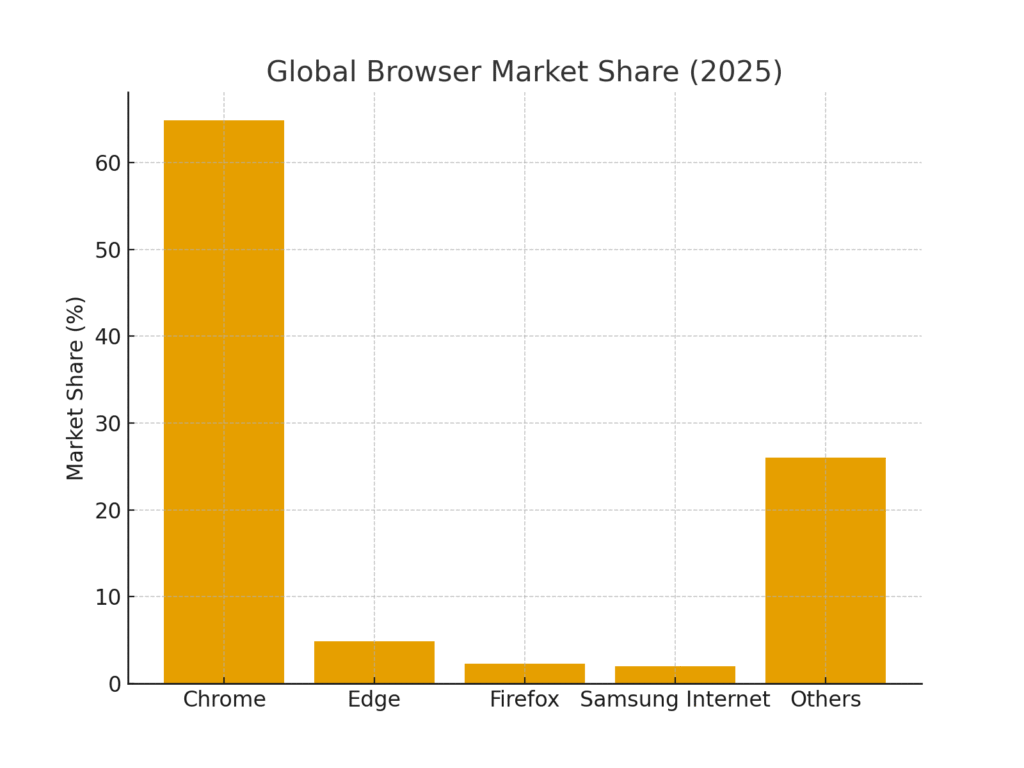
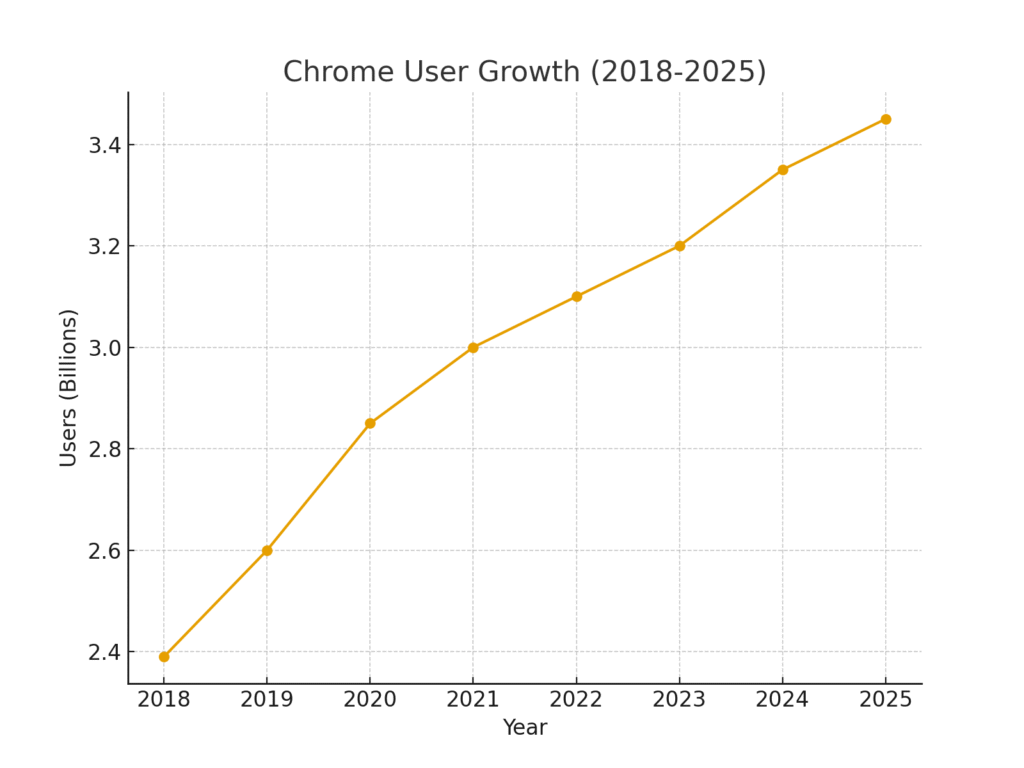
Extension Marketing Statistics #1: Chrome Has About 3.45 Billion Users Worldwide
Chrome continues to dominate the global browser market, reaching approximately 3.45 billion users. This massive audience provides a powerful opportunity for extension developers and marketers to connect with consumers. Having such a wide user base means even niche extensions can achieve meaningful adoption. Marketers can leverage this scale to design highly targeted campaigns aimed at specific user groups. The size of this audience ensures that extension marketing remains a competitive yet rewarding field.
Extension Marketing Statistics #2: Chrome’s Global Market Share Is 64.86%
Holding nearly two-thirds of the global browser market, Chrome sets the standard for extension visibility. This dominance means that most marketing strategies for browser add-ons naturally prioritize Chrome compatibility. A share of 64.86% gives marketers confidence in investing resources into extension campaigns. This level of market penetration creates a strong ecosystem for monetization, adoption, and brand reach. For businesses, it underscores the importance of developing extensions tailored to Chrome users first.
Extension Marketing Statistics #3: Chrome Holds 66.73% of the Mobile Browser Segment
Mobile browsing is now a key entry point for consumers, and Chrome’s 66.73% share highlights its importance. This market share translates to millions of opportunities for mobile-focused extensions. Developers and marketers must adapt their products to ensure seamless performance on mobile devices. By optimizing extensions for mobile, brands can extend their reach to a constantly connected audience. This dominance also makes mobile extension campaigns an integral part of digital marketing strategies.
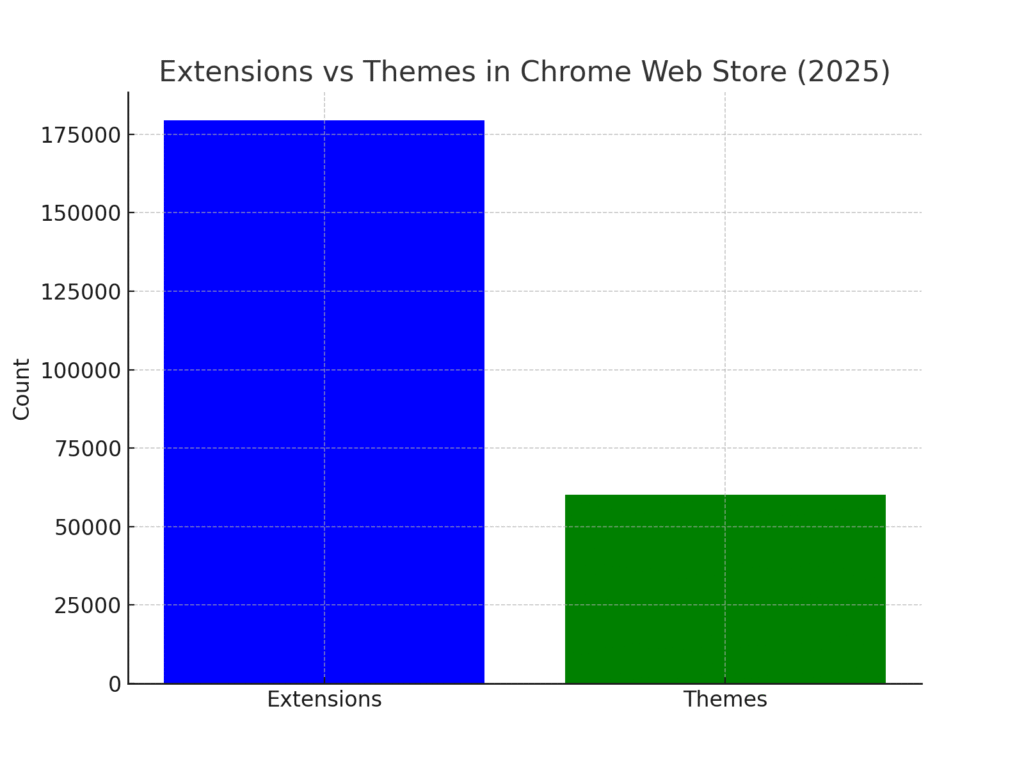
Extension Marketing Statistics #4: 179,461 Extensions Are Available in the Chrome Web Store
As of September 2025, the Chrome Web Store features around 179,461 extensions. This massive library shows how competitive the marketplace has become. For marketers, the challenge lies in helping extensions stand out amid thousands of alternatives. Creative positioning, branding, and user reviews play a critical role in visibility. Ultimately, this volume emphasizes the need for strong marketing strategies to cut through the noise.
Extension Marketing Statistics #5: 60,105 Themes Are Listed Alongside Extensions
Along with extensions, Chrome’s ecosystem includes about 60,105 themes. This shows that users not only install tools but also personalize their browsing experience. For marketers, themes represent another pathway to engage audiences visually. Pairing themes with functional extensions can create stronger brand identity and retention. The coexistence of extensions and themes provides opportunities for cross-promotion.
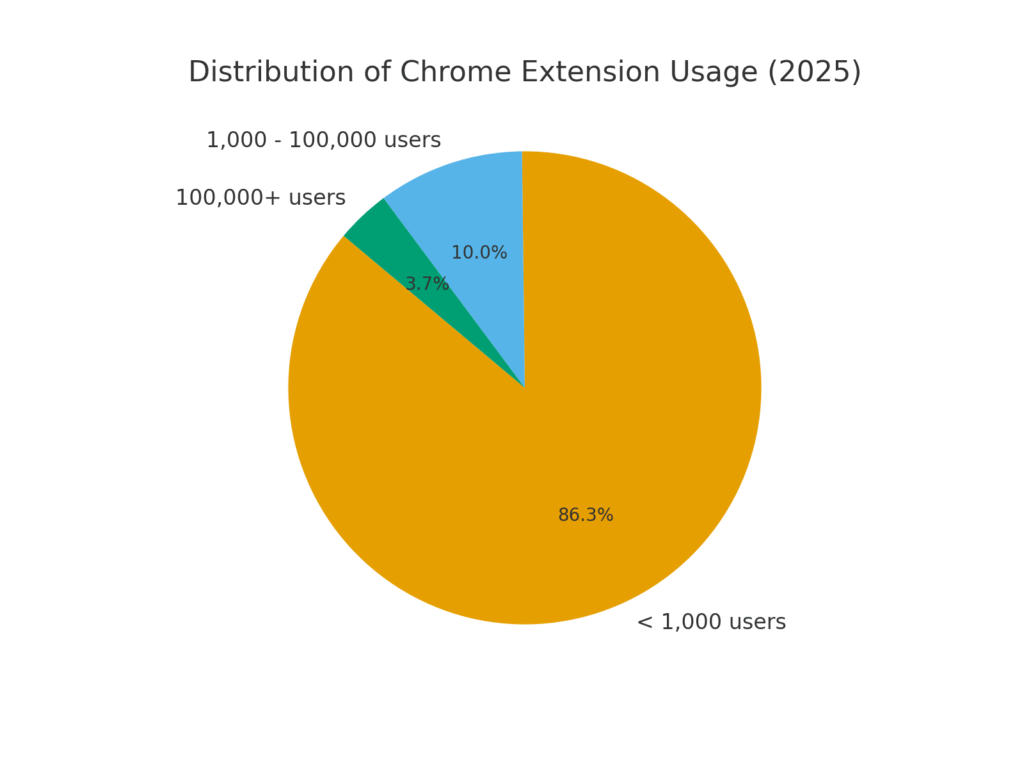
Extension Marketing Statistics #6: 86.3% of Extensions Have Fewer Than 1,000 Users
A striking statistic reveals that 86.3% of Chrome extensions have fewer than 1,000 users. This demonstrates the difficulty of achieving scale in such a crowded market. For marketers, it underscores the importance of differentiation and visibility. Only well-branded, useful, and well-promoted extensions break past this threshold. This long tail effect highlights the need for consistent marketing investments.
Extension Marketing Statistics #7: Chrome’s User Base Grew by 44.35% Since 2018
Since 2018, Chrome’s user base has surged by 44.35%. This growth directly expands the potential market for extensions. Marketers can take advantage of the rising adoption to reach new demographics. More users also mean a broader diversity of needs and extension opportunities. This trajectory reinforces why Chrome remains the cornerstone for extension marketing.
Extension Marketing Statistics #8: Chrome Tablet Market Share Is About 47.7%
On tablets, Chrome holds a 47.7% share, lower than its dominance on desktop and mobile. This indicates that while tablets are important, they are less of a priority. Marketers may focus more on desktop and mobile optimization. However, extensions designed for tablet use can still capture nearly half the market. It’s a reminder that extension marketing should not ignore tablet users entirely.
Extension Marketing Statistics #9: Chrome Holds 51% of the U.S. Browser Market
In the United States, Chrome accounts for 51% of the browser market. This gives marketers targeting U.S. consumers a clear platform to prioritize. With over half of the American audience on Chrome, extensions gain strong potential reach. The U.S. market is also influential, shaping global trends in digital adoption. For extension marketers, this makes U.S. campaigns particularly valuable.
Extension Marketing Statistics #10: Microsoft Edge Holds 4.85% Global Share
Microsoft Edge has managed to capture 4.85% of the global browser market. Though smaller than Chrome, this share represents millions of active users. For marketers, it suggests Edge extensions should not be ignored. By targeting Edge, brands can access audiences looking for alternatives to Chrome. This diversity strengthens the overall extension ecosystem.
Extension Marketing Statistics #11: Samsung Internet Has Around 2% Global Share
Samsung Internet maintains about 2% of global browser usage. While modest, this still equates to tens of millions of users worldwide. Extension marketers can consider this platform for niche targeting, particularly in regions where Samsung is dominant. Having presence across multiple browsers can boost brand awareness. This share reflects the fragmented but valuable nature of the browser market.
Extension Marketing Statistics #12: Firefox Accounts for 2.2–2.5% of Global Usage
Firefox continues to hold around 2.2–2.5% of global share. Its audience is smaller but loyal, often preferring open-source and privacy-focused solutions. Extension marketers targeting Firefox can lean into these values. A focus on transparency and user control resonates strongly with this base. Though small, the community presents unique branding opportunities.
Extension Marketing Statistics #13: Chrome’s Market Share Grew from 59% in 2018 to 65% in 2025
Chrome’s rise from 59% to 65% shows steady growth over the last seven years. This consistency builds confidence in long-term extension marketing. For marketers, it assures that investing in Chrome remains strategic. The upward trend reflects user trust and reliance on the platform. Extensions benefit from this loyalty, ensuring ongoing opportunities.
Extension Marketing Statistics #14: 151,344 Extensions and 45,873 Themes Reported in March 2025
Reports from March 2025 highlighted 151,344 extensions and 45,873 themes in the Chrome Web Store. This snapshot reinforces the scale and constant evolution of the marketplace. For marketers, it means competition remains intense with steady growth. Staying innovative and unique is essential to rise above this crowded field. This volume underscores the importance of marketing for extension success.
Extension Marketing Statistics #15: The Long Tail of Low-Usage Extensions
Most extensions exist in a long tail of low adoption, with the majority under 1,000 users. This makes it clear that discoverability is a challenge. Effective marketing and word of mouth are critical for breaking out of obscurity. Developers cannot rely on functionality alone to achieve visibility. Marketing strategy often determines whether an extension thrives or fails.
Extension Marketing Statistics #16: Chrome’s Transition From Manifest V2 to V3
The shift from Manifest V2 to V3 highlights Chrome’s focus on security and performance. For marketers, this impacts how extensions are developed and promoted. Security compliance becomes a selling point for new extensions. Users are increasingly aware of privacy risks, making transparency a valuable angle. This transition underscores how policy changes shape marketing narratives.
Extension Marketing Statistics #17: uBlock Origin Has Over 29 Million Chrome Users
The popular ad blocker uBlock Origin boasts over 29 million users on Chrome. This level of adoption shows the demand for functional, user-centric extensions. Marketers can study such examples to understand what drives mass adoption. Extensions that solve clear problems with simplicity tend to succeed. It proves that marketing success stems from both utility and visibility.
Extension Marketing Statistics #18: Chrome’s Mobile Dominance Expands Extension Reach
Chrome’s 66.7% mobile dominance ensures that extensions optimized for mobile gain significant exposure. Mobile extensions can enhance browsing convenience, making them highly attractive. Marketers can craft strategies that appeal to on-the-go users. This ensures broader reach and engagement compared to desktop-only campaigns. The statistic emphasizes the importance of mobile readiness in extension marketing.
Extension Marketing Statistics #19: Nearly 1 Million Browsers Affected by Malicious Extensions
Reports indicate nearly 1 million browsers were compromised by malicious extensions. This statistic highlights the risks within the ecosystem. Marketers promoting safe and verified extensions can use this as a trust-building angle. Users increasingly prioritize security when choosing extensions. Transparency and authenticity become core elements of effective marketing.
Extension Marketing Statistics #20: 5.64 Billion Internet Users vs. 3.45 Billion Chrome Users
Out of 5.64 billion global internet users, 3.45 billion rely on Chrome. This overlap shows Chrome’s influence on digital life. For marketers, it confirms the platform’s power in driving extension adoption. It also illustrates the central role of Chrome in shaping user habits. This reach cements Chrome as the foundation of extension marketing strategies.
Why These Stats Matter to Me
Looking back at these extension marketing statistics, I can’t help but connect them to the countless conversations I’ve had with clients who were unsure whether browser extensions were “worth the effort.” Now I have the numbers to back up what I always believed: extensions are not just tools, they’re gateways to visibility and trust. For me personally, this research has reinforced the importance of staying adaptable and curious in a digital world that never stands still. And if there’s one thing I’ve learned from working with a leading marketing agency in New York, it’s that the right data—paired with the right storytelling—can turn even the smallest digital presence into something extraordinary.
SOURCES
https://chrome-stats.com/chrome/stats
https://chrome-stats.com/blog/best-of/marketing
https://chrome-stats.com/blog/best-of/digital-marketing
https://www.hunchads.com/blog/top-14-chrome-extensions-for-digital-marketers-links-included
https://www.einsteinmarketer.com/chrome-extensions-marketers/
https://measureschool.com/analytics-extensions/
https://adespresso.com/blog/11-google-chrome-extensions-every-social-media-marketer-needs/
https://arxiv.org/abs/1808.07359
https://arxiv.org/abs/2404.08310
https://arxiv.org/abs/2505.19456
https://arxiv.org/abs/2404.06827
https://en.wikipedia.org/wiki/Chrome_Web_Store