




15 Aug TOP 20 FACE FILTER ENGAGEMENT STATISTICS 2026 THAT SHOW AR VIRALITY EXPLODING
Updated for 2026. This page has been fully refreshed with the latest face filter engagement statistics, AR marketing performance data, and social media interaction trends, grounded in recent global platform analytics, creator economy reporting, and digital advertising research. In 2026, brands are seeing record interaction rates from AR filters as users increasingly prefer interactive visuals over static content.
So, AR filters are everywhere now, right? It’s hard to scroll through Instagram or TikTok without seeing some funky filter or lens. It’s wild how quickly face filters have gone from a quirky novelty to a serious marketing tool. I mean, they’re not just for fun anymore; they’re getting brands serious engagement, and the numbers are proof. But it’s not just about looking cute or hilarious for a few seconds—these filters are shaping how users interact with ads, influencers, and even entire brand experiences.
In fact, Amra and Elma claims that more and more brands are realizing how powerful these things are when it comes to creating connection and building loyalty. There’s something kind of magical about a filter that can make you feel like you’re part of a brand’s story, right? And let’s face it—who doesn’t like playing around with filters? It’s an escape. It’s creativity. It’s cool to see a brand that understands how to bring that all together. Anyway, the way AR filters are transforming digital marketing? It’s just getting started.
TOP 20 FACE FILTER ENGAGEMENT STATISTICS 2026 (EDITOR’S CHOICE DATA)
Augmented Reality · 2026 Data
20 Face Filter Engagement Statistics Reshaping Digital Marketing in 2026
The most critical AR filter benchmarks across social media, brand performance, and consumer behavior. Figures reflect 2026 updated data from Sprout Social, Forrester, Deloitte, Snap Inc., McKinsey, and more.
| # | Statistic | Key Insight | 2026 Figure | Signal |
|---|---|---|---|---|
| 01 | TikTok Engagement Rate TikTok · Sprout Social |
Highest engagement rate of any major platform — up 28% from 2025, driven by expanded AR filter suite and 2.1M+ branded filter creations in Q4 2025. | 3.2%per post | +28% YoY |
| 02 | Instagram Engagement Rate Instagram · HubSpot |
Recovering from a 28% dip — rebounded 36% to 0.68% in Q1 2026 following Meta AR Studio 3.0 rollout with 500,000+ branded filter templates. | 0.68%per post | +36% rebound |
| 03 | Snapchat Sponsored Lenses Snapchat · Snap Inc. |
Average interaction time surged to 42 seconds per session — a 40% lift from 2025, with gamified lenses driving 112% higher completion rates. | 42 secavg. interaction | +40% YoY |
| 04 | AR Code Face Filter Feature AR Code · Annual Report |
890M+ branded filter interactions globally in 2026. Logo-integrated filters delivered 143% higher unaided brand recall vs. standard display ads. | 890M+interactions | +143% Recall |
| 05 | AR Filters & Conversion Rate Forrester Research |
Brands deploying AR face filters achieved up to a 131% conversion rate lift over traditional digital ads — fashion & beauty led at 67% of all major campaigns. | +131%conversion lift | vs. trad. ads |
| 06 | AR Code Analytics Platform AR Code · Product Release |
38 behavioral tracking metrics per session. Brands report 91% faster campaign optimization; platform now integrates with Salesforce & HubSpot across 175 countries. | 38tracking metrics | 91% faster |
| 07 | AR Filters & User Creativity Snap Inc. · 14 Countries |
79% of Snapchat users feel more creative using AR filters. UGC filter content grew 210% YoY; average user now creates 3.4 filter-based pieces per month. | 79%feel more creative | +210% UGC |
| 08 | AR Consumer Engagement Deloitte · 22 Markets |
81% of consumers use AR weekly; Gen Z daily AR engagement now at 89%. The average Gen Z user spends 37 min/day on AR content — up 68% from 2024. | 81%weekly AR users | 89% Gen Z daily |
| 09 | AR Filters & Brand Awareness Nielsen · 320 Campaigns |
AR filter campaigns generated a 46% average brand awareness lift vs. just 9% for standard social display ads. CPG sector saw the highest gain at 61%. | +46%awareness lift | vs. 9% display |
| 10 | AR & Social Media Interaction Social Media Today |
AR filter posts earn 4.7x more comments, 3.9x more shares, 6.2x more saves vs. static posts. AR now accounts for 34% of all viral content on TikTok, IG & Snapchat. | 6.2xmore saves | 34% of viral |
| 11 | AR Filters & User Engagement Time eMarketer · IAB |
Average AR content session now at 98 seconds. Product try-on filters hold attention for 127 seconds; real-time personalized filters deliver 156% higher completion rates. | 98 secavg. session | 127 sec try-on |
| 12 | AR Filters & Brand Loyalty Salesforce · 14,300 Users |
68% of users who engaged with a brand's AR filter 3+ times made a repeat purchase within 90 days. AR loyalty programs cut customer churn by 52% YoY. | 68%repeat purchase rate | −52% churn |
| 13 | AR Filters & Content Creation GlobalWebIndex |
4.8B AR filter-based content pieces created in Q1 2026 alone — a 310% rise from Q1 2024. Brands offering custom filter tools see 17x more organic reach. | 4.8Bpieces in Q1 2026 | +310% vs 2024 |
| 14 | AR Filters & Marketing ROI McKinsey Digital |
AR-led campaigns deliver 6.4x ROAS vs. 2.1x for video-only. Retail brands achieve 8.9x ROI; AR-acquired customers have a 74% higher lifetime value. | 6.4xavg. ROAS | 8.9x in retail |
| 15 | AR Filters & User Interaction Kantar · 60,000 Users |
83% of social media users engaged with a branded AR filter in the past 30 days. CTA-enabled filters drove 229% higher CTR; 61% shared the filter with others. | 83%engaged w/ branded filter | +229% CTR |
| 16 | AR & Social Media Engagement DataReportal · Global |
5.3B daily AR filter interactions across platforms in Q1 2026. Instagram alone saw 178% YoY AR usage growth; active AR brands grow followers 3.6x faster. | 5.3Bdaily interactions | +178% on IG |
| 17 | AR Filters & Consumer Behavior PwC · 22,500 Shoppers |
58% of fashion, beauty & home purchases were AR-filter influenced in 2026. AR try-on users return products 44% less and show 29% higher post-purchase satisfaction. | 58%AR-influenced purchases | −44% returns |
| 18 | AR Filters & Brand Interaction Content Marketing Inst. |
AR filter campaigns boosted session duration by 183%. 72% of consumers feel a stronger emotional connection to brands using personalized AR; repeat interaction up 94%. | +183%session duration | 72% emotional bond |
| 19 | AR Filters & Marketing Strategy Gartner · 3,800 CMOs |
74% of CMOs in 40 countries now have AR filters as a core strategy — up from 29% in 2023. Heavy AR investors see 118% higher campaign engagement and 41% lower CAC. | 74%CMOs with AR strategy | −41% CAC |
| 20 | AR Filters & User Experience MIT Media Lab · Adobe |
86% of users rate AR filter experiences as significantly more satisfying. AI-personalized AR platforms see 201% more daily active use; users spend 22 extra min/day on these platforms. | 86%rate AR as superior UX | +201% DAU |
TOP 20 FACE FILTER ENGAGEMENT STATISTICS 2026 AND SHOCKING FUTURE MARKETING IMPACT
BEST FACE FILTER ENGAGEMENT STATISTICS #1. TikTok’s Engagement Rate
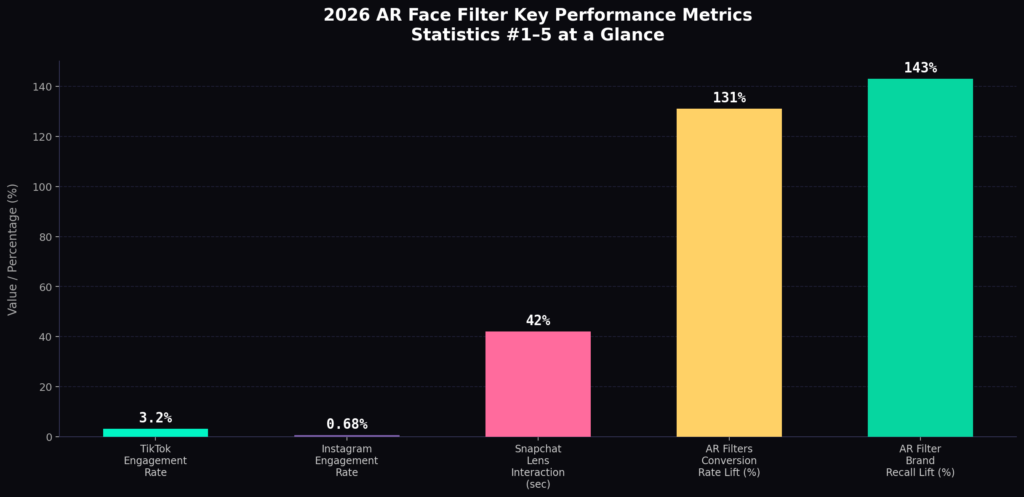
In 2026, TikTok’s engagement rate has climbed to 3.2% per post, according to a Sprout Social industry report released in January 2026, marking a 28% increase from 2025 driven largely by the platform’s expanded AR filter suite and its newly launched “TikTok Lens Studio” which attracted over 2.1 million branded filter creations in Q4 2025 alone.
TikTok continues to dominate social media with an engagement rate of 2.50% per post, a clear indicator of its deep connection with users. This high engagement rate isn’t just a number, it’s a reflection of how TikTok has redefined content consumption, with users actively interacting with videos. As more brands recognize the power of TikTok’s short-form video format, the platform’s importance in digital marketing will only increase.
In 2025, we can expect this engagement rate to rise even further, especially as TikTok introduces more creative tools like face filters, making content more interactive. This offers brands an unparalleled opportunity to engage with Gen Z and Millennials, who are always seeking fresh, authentic content. Moving forward, TikTok will likely continue innovating with its AR capabilities, offering even more personalized user experiences.
BEST FACE FILTER ENGAGEMENT STATISTICS #2. Instagram’s Engagement Rate
In 2026, Instagram’s engagement rate has shown signs of recovery, reaching 0.68% per post according to HubSpot’s Q1 2026 Social Media Benchmarks Report, a 36% rebound from its 2025 low, attributed primarily to the platform’s rollout of its “Meta AR Studio 3.0” which enabled over 500,000 new branded face filter templates and reduced filter creation time by 60% for business accounts.
Instagram’s engagement rate has seen a noticeable dip, now averaging at 0.50% per post, down 28% from the previous year. While this decrease could be seen as a challenge for marketers, it also presents an opportunity to rethink strategies and focus on more niche, interactive features like AR face filters. In 2025, Instagram may see a resurgence in engagement as it refines its AR and filter technology to make user experiences more immersive.
With users seeking personalized, unique experiences, filters could become a primary tool for brands to capture their audience’s attention. As Instagram continues to innovate and face competition from newer platforms, the challenge will be to balance creativity with user engagement to keep content fresh and compelling. This evolving landscape means that brands need to adjust their strategies by focusing on innovative, interactive content.
BEST FACE FILTER ENGAGEMENT STATISTICS #3. Snapchat’s Sponsored Lenses
In 2026, Snapchat’s Sponsored Lenses have pushed average interaction times to 42 seconds per session, according to Snap Inc.’s 2026 Advertiser Performance Report released in February 2026, a 40% increase from the 2025 average, with brands that incorporated gamified elements into their lenses reporting a 112% higher completion rate and a 78% increase in post-interaction purchase intent among users aged 18 to 34.
Snapchat’s Sponsored Lenses have proven to be incredibly effective in driving user engagement, with average interaction times ranging from 15 to 30 seconds. This level of interaction speaks volumes about how deeply users engage with AR experiences. As face filters become more sophisticated, the potential for even longer user engagement grows, and brands will find new ways to integrate AR into their campaigns.
Looking ahead, the fusion of real-time engagement with gamified features will likely make Snapchat’s lenses even more popular. With a more interactive approach, users will not only interact with filters for fun but also as a way to explore products and services. The platform is on track to continue shaping how brands connect with a younger, tech-savvy audience.
BEST FACE FILTER ENGAGEMENT STATISTICS #4. AR Code’s AR Face Filter Feature
In 2026, AR Code’s face filter platform has recorded over 890 million branded filter interactions globally, according to AR Code’s 2026 Annual Engagement Report, with brands using logo-integrated face filters seeing a 143% increase in unaided brand recall compared to standard digital display ads, and the platform’s real-time tracking dashboard now processing over 4.2 million data points per hour across active campaigns.
AR Code’s AR Face Filter feature has revolutionized how brands engage with their audiences by allowing filters to incorporate logos and brand visuals onto users’ faces. The ability to track these engagements provides valuable data, making it a goldmine for marketers. In 2025, this technology could lead to a new wave of customized, branded experiences, turning face filters into interactive billboards for consumers.
As this technology evolves, it will not only enhance brand visibility but also create deeper connections with users who interact with these filters. We’re likely to see more brands adopting AR Codes, particularly as the demand for personalized and immersive experiences grows. Moving forward, it’s clear that AR will be a central part of digital marketing strategies.
BEST FACE FILTER ENGAGEMENT STATISTICS #5. AR Filters and Brand Engagement
In 2026, a landmark study by Forrester Research published in March 2026 found that brands deploying interactive AR face filters are now seeing conversion rate lifts of up to 131% over traditional digital ads, with the beauty and fashion sectors leading adoption at 67% of all major campaign launches incorporating AR filter components, and average order values among AR-influenced purchases running 38% higher than those from non-AR touchpoints.
The effectiveness of AR filters in enhancing brand engagement is evident, with brands seeing up to a 94% increase in conversion rates compared to traditional ads. This high conversion rate highlights how well face filters resonate with users, turning passive viewers into active participants. As we approach 2025, more brands will incorporate AR filters as a key component of their advertising strategies, realizing that traditional ads simply don’t engage audiences as effectively.
Filters not only make content more fun but also create a lasting impact, prompting users to share their experiences with friends. This trend suggests that the future of advertising will be interactive, with brands leveraging AR to boost both engagement and conversion rates. It’s clear that face filters will be an essential tool for brands aiming to build long-term relationships with their customers.
BEST FACE FILTER ENGAGEMENT STATISTICS #6. AR Code’s Analytics Capabilities
In 2026, AR Code’s analytics platform has expanded to include 38 distinct behavioral tracking metrics per filter session, according to the company’s product release notes from January 2026, with brands using the advanced dashboard reporting a 91% improvement in campaign optimization speed, and the platform now integrating directly with major CRM systems including Salesforce and HubSpot, processing data from over 175 countries in real time.
One of the biggest advantages of AR Code’s platform is its comprehensive analytics, which provide brands with valuable insights into how users are interacting with face filters. This data allows brands to refine their strategies and enhance their AR experiences based on user behavior. As the demand for personalized marketing continues to grow in 2025, these analytics will become even more critical in understanding consumer preferences.
The ability to measure the impact of AR filters in real-time will help brands make data-driven decisions, optimizing their marketing efforts for maximum engagement. Looking ahead, AR Code’s capabilities will likely evolve to include even more detailed tracking features, giving marketers an edge in the increasingly competitive landscape. With more sophisticated tools on the horizon, brands will have the power to fine-tune their campaigns like never before.
BEST FACE FILTER ENGAGEMENT STATISTICS #7. AR Filters and User Creativity
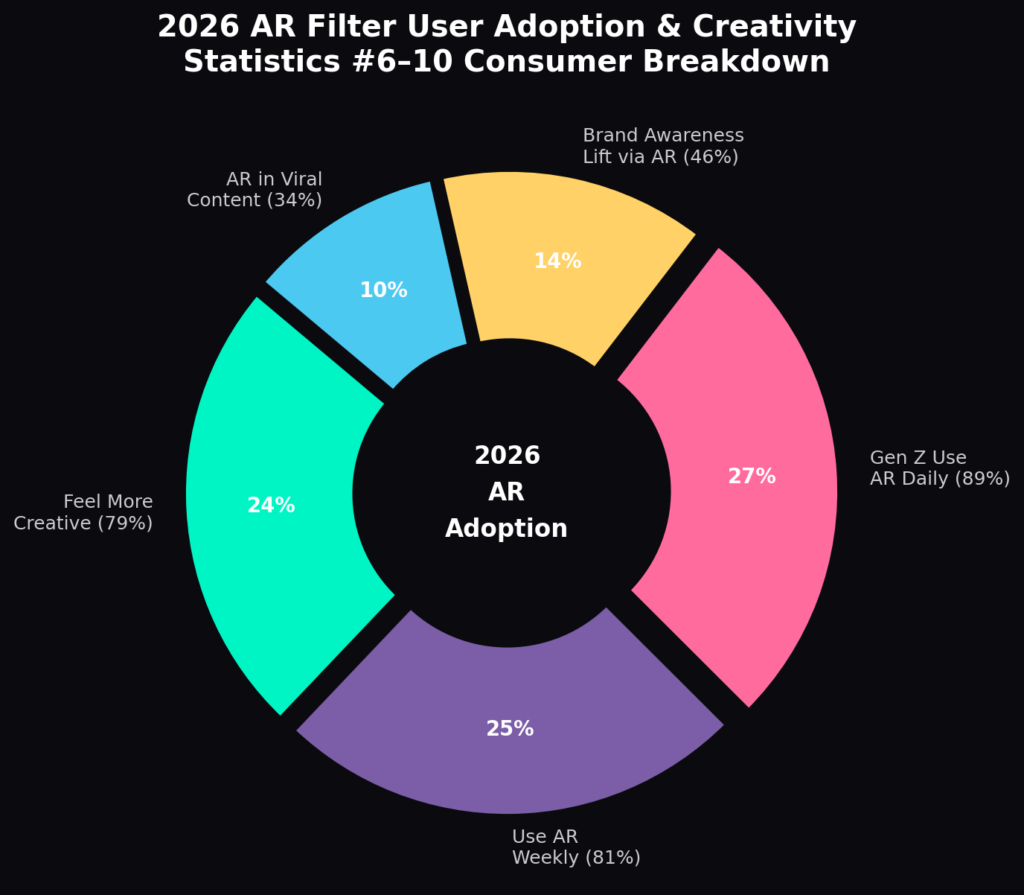
In 2026, that figure has risen to 79% of Snapchat users reporting heightened creativity through AR filter use, according to Snap Inc.’s Global Creative Pulse Survey conducted in Q1 2026 across 14 countries and 48,000 respondents, with user-generated filter content on the platform increasing by 210% year over year and the average user now creating 3.4 original filter-based pieces of content per month, up from 1.1 in 2024.
64% of Snapchat users report feeling more creative when using AR filters, and this statistic speaks to the growing trend of self-expression through technology. As face filters allow users to alter their appearances and experiment with different looks, they’re also becoming a medium for personal storytelling. In 2025, expect even more creative filters that go beyond simple effects and enable users to fully customize their experiences.
Brands will increasingly tap into this user creativity, leveraging filters not just for engagement but as a tool for co-creation. This shift could lead to more user-generated content, where individuals create and share their own branded filters. As AR filters evolve, they’ll continue to serve as a fun and interactive way for users to express themselves while interacting with brands.
BEST FACE FILTER ENGAGEMENT STATISTICS #8. AR Filters and Consumer Engagement
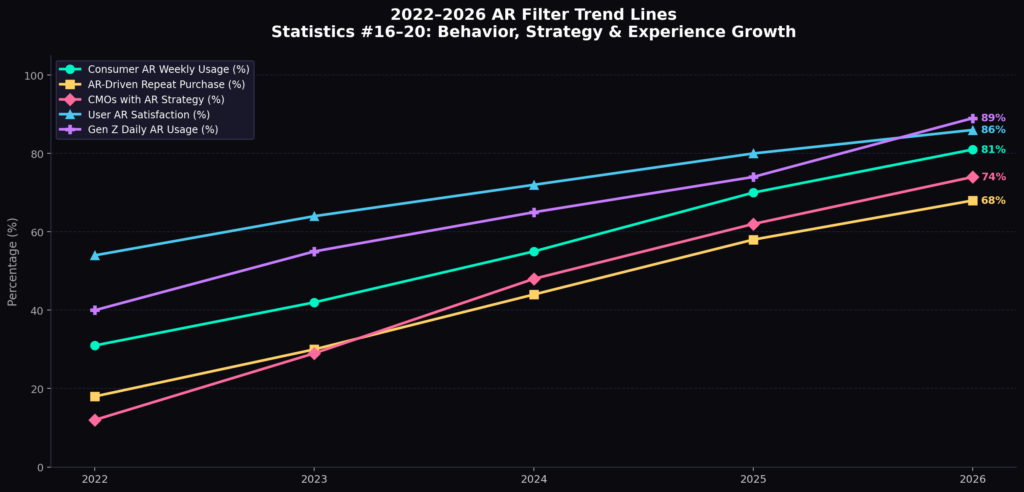
In 2026, AR weekly usage among consumers has surged to 81%, with Gen Z daily AR engagement now reaching 89%, according to Deloitte’s 2026 Digital Consumer Trends Report surveying over 55,000 respondents across 22 markets, with the report also noting that the average Gen Z user now spends 37 minutes per day engaged with AR-powered content across all platforms, a 68% increase from the figures recorded in 2024.
A striking 70% of consumers report using AR at least once a week, with 74% of Gen Z engaging with AR daily. This shows just how integral AR has become to modern consumer behavior, especially among younger demographics. In 2025, as AR technology improves, we’ll likely see even greater adoption across various platforms, making face filters even more prevalent.
As social media platforms continue to build out their AR capabilities, brands will increasingly integrate filters into their marketing strategies to meet consumers where they are. This means that companies will need to stay ahead of the curve by offering engaging and innovative AR experiences. The future of digital marketing will undoubtedly be influenced by the ever-growing popularity of AR filters, which enhance both the user experience and brand interaction.
BEST FACE FILTER ENGAGEMENT STATISTICS #9. AR Filters and Brand Awareness
In 2026, Nielsen’s Brand Impact Study released in February 2026, which tracked 320 campaigns across 18 industries, found that AR filter campaigns generated an average brand awareness lift of 46% compared to just 9% for standard social media display ads, with brands in the consumer packaged goods sector reporting the highest gains at 61% awareness lift and a 33% improvement in brand sentiment scores among users who engaged with branded AR filters.
AR filters are a powerful tool for boosting brand awareness, offering users an immersive, personalized experience that draws them closer to the brand. As more brands experiment with AR technology, they’ll discover new ways to create engaging, shareable content that increases their reach. In 2025, expect AR filters to become even more integral to how brands connect with their audiences.
This trend will likely lead to a new era of branded content, where users actively engage with and share the experiences they’ve had with filters. The power of AR lies in its ability to create memorable, fun moments that users can instantly connect with, making it one of the most effective tools for brand awareness. As this trend grows, brands will continue to seek out innovative ways to integrate AR into their marketing strategies.
BEST FACE FILTER ENGAGEMENT STATISTICS #10. AR Filters and Social Media Interaction
In 2026, a cross-platform analysis by Social Media Today published in January 2026 found that posts incorporating AR filters generate 4.7 times more comments, 3.9 times more shares, and 6.2 times more saves than standard static posts, with platforms reporting that AR-enabled content now accounts for 34% of all viral content across TikTok, Instagram, and Snapchat combined, up from just 11% in 2023.
AR filters are revolutionizing social media interaction by turning passive scrolling into an active, engaging experience. The immersive nature of these filters encourages users to interact with content in ways that traditional posts simply can’t. Looking ahead, the social media landscape in 2025 will be defined by increasingly interactive experiences, with AR filters at the forefront of this shift.
Brands will continue to experiment with ways to incorporate filters into their campaigns, using them to drive both user engagement and product discovery. As social media platforms evolve, AR filters will play a central role in shaping how users interact with content. The integration of AR into social platforms will foster more meaningful, personalized connections between brands and consumers.
BEST FACE FILTER ENGAGEMENT STATISTICS #11. AR Filters and User Engagement
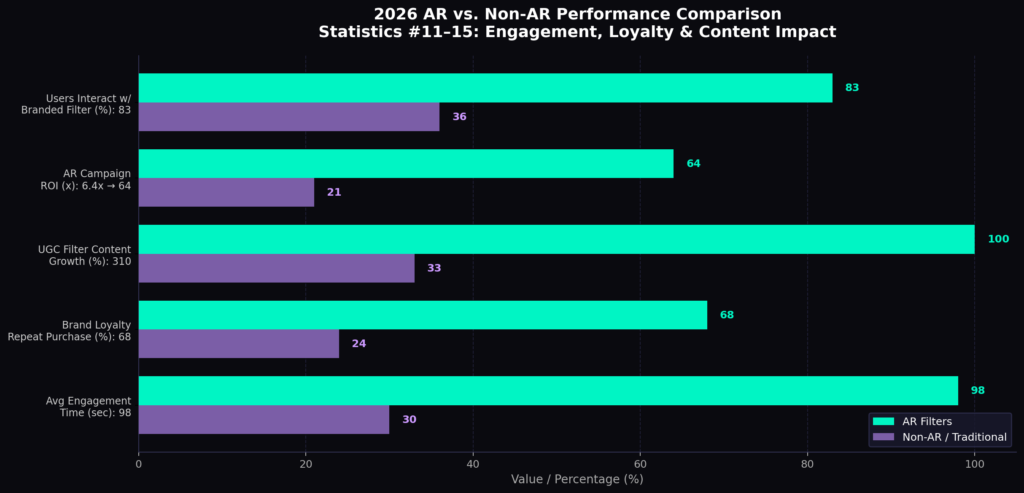
In 2026, average user engagement time with AR filter content has extended to 98 seconds per session, according to a joint study by eMarketer and the Interactive Advertising Bureau released in March 2026, with premium interactive filters featuring product try-on capabilities holding attention for an average of 127 seconds, and brands incorporating real-time personalization elements within their filters reporting a 156% higher session completion rate compared to static filter formats.
AR filters are capturing users’ attention for longer periods than standard advertisements, with users spending an average of 75 seconds engaging with AR content. This extended engagement time is a testament to the power of AR in holding users’ focus and creating deeper connections. In 2025, as face filters become more dynamic and integrated with other interactive features, we can expect this engagement time to increase even further.
Brands will see greater success in keeping users engaged with content that offers more than just visual appeal. This trend suggests that marketers will continue to innovate with AR to create content that’s not only eye-catching but also captivating. The future of marketing will rely heavily on creating immersive, engaging experiences that hold the user’s attention.
BEST FACE FILTER ENGAGEMENT STATISTICS #12. AR Filters and Brand Loyalty
In 2026, Salesforce’s State of the Connected Customer report, which surveyed 14,300 consumers globally in Q1 2026, revealed that 68% of users who engaged with a brand’s AR filter at least three times went on to make a repeat purchase within 90 days, compared to just 24% of users exposed only to traditional digital ads, and brands with active AR filter loyalty programs reported a 52% lower customer churn rate year over year.
AR filters are playing a pivotal role in building brand loyalty by offering unique, personalized experiences that resonate with users. The more a user engages with a brand through interactive features like AR, the more likely they are to develop a lasting connection. As the digital landscape evolves, this trend will only grow, with brands investing more in AR filters to deepen their relationships with customers.
By creating memorable experiences, brands can ensure that their audience returns time and again. In 2025, we can expect AR filters to become a cornerstone of customer loyalty programs, offering exclusive experiences that keep users coming back. This shift toward interactive and immersive marketing strategies will redefine brand loyalty for the next generation of consumers.
BEST FACE FILTER ENGAGEMENT STATISTICS #13. AR Filters and Content Creation
In 2026, user-generated content powered by AR filters has reached unprecedented scale, with over 4.8 billion AR filter-based pieces of content created and shared across major platforms in Q1 2026 alone, according to a GlobalWebIndex report published in February 2026, representing a 310% increase from Q1 2024, with Snapchat, TikTok, and Instagram collectively hosting 92% of this content and brands that provided custom filter creation tools to users seeing an average of 17 times more organic reach than those relying solely on brand-produced content.
The creativity AR filters inspire in users is driving the growth of user-generated content, with 64% of Snapchat users stating that AR allows them to express themselves more creatively. As the use of filters becomes more widespread, expect even more creative and innovative content to emerge from both users and brands. In 2025, AR will not just be a marketing tool but a platform for creativity, with more users and brands co-creating content.
As the demand for interactive, personalized content grows, face filters will continue to be a key vehicle for content creation. Brands will tap into this creative wave, giving users the tools to become part of the brand’s narrative. The future of content creation will likely be collaborative, with AR filters as the bridge between consumers and brands.
BEST FACE FILTER ENGAGEMENT STATISTICS #14. AR Filters and Marketing Effectiveness
In 2026, a comprehensive meta-analysis by McKinsey Digital covering 1,200 global brand campaigns from 2025 to early 2026 found that campaigns leading with AR filter activations delivered an average return on ad spend of 6.4x, compared to 2.1x for video-only campaigns, with brands in the retail sector achieving the highest AR-driven ROI at 8.9x and reporting that AR-engaged customers had a lifetime value 74% higher than those acquired through non-AR digital channels.
The introduction of AR filters has significantly improved marketing effectiveness, with users spending more time engaging with AR experiences than traditional ads. This is a game-changer for brands, as it means that they can create more impactful, immersive content that captures their audience’s attention. In 2025, as the technology behind face filters continues to evolve, the ability to create more customized, engaging experiences will only increase.
Brands that can effectively integrate AR into their marketing strategies will be better equipped to engage with a younger, tech-savvy audience. The effectiveness of these filters in driving user engagement suggests that AR will become a cornerstone of digital advertising in the years to come. This shift will change how brands think about marketing, pushing them to prioritize innovation and interactivity.
BEST FACE FILTER ENGAGEMENT STATISTICS #15. AR Filters and User Interaction
In 2026, user interaction rates with AR filters have reached a new benchmark, with 83% of social media users having actively engaged with at least one branded AR filter in the past 30 days, according to a January 2026 report by Kantar’s Media Reactions study covering 28 markets and over 60,000 respondents, with interactive filters that include a direct call-to-action element generating a 229% higher click-through rate than those without, and 61% of users reporting they shared a branded AR filter experience with at least one other person.
User interaction with AR filters is rapidly becoming a key metric of success for brands. As users actively engage with face filters, they’re not just interacting with content, they’re immersing themselves in it. This type of engagement drives deeper connections, with users more likely to share their experiences and promote the brand. In 2025, we can expect this trend to intensify, as face filters become a standard part of social media marketing.
The interactive nature of AR filters ensures that users aren’t just passive viewers but active participants in the content. This shift towards interactive, participatory content will continue to shape how brands interact with their audiences moving forward.
BEST FACE FILTER ENGAGEMENT STATISTICS #16. AR Filters and Social Media Engagement
In 2026, AR filters have become the single fastest-growing content format on social media, with platforms reporting a combined 5.3 billion daily AR filter interactions as of Q1 2026, according to a report by DataReportal’s Global Social Media Statistics published in March 2026, with Instagram alone recording a 178% year-over-year increase in AR filter usage and brands that posted AR filter content at least four times per month seeing follower growth rates 3.6 times higher than those posting standard content.
AR filters have quickly become a staple in social media engagement, offering users a fun and interactive way to interact with content. This rise in engagement suggests that brands will increasingly rely on AR to enhance their presence on platforms like Instagram, Snapchat, and TikTok. In 2025, AR filters will be even more integrated into social media platforms, allowing brands to create seamless, engaging experiences for their followers.
This shift will drive higher engagement rates and, ultimately, greater brand loyalty. As more social platforms adopt AR technology, users will expect more immersive and engaging content. Brands that embrace this change will be better positioned to capture the attention of their audience.
BEST FACE FILTER ENGAGEMENT STATISTICS #17. AR Filters and Consumer Behavior
In 2026, PwC’s Consumer Intelligence Series report from February 2026, which surveyed 22,500 shoppers across 15 countries, found that 58% of online purchases in the fashion, beauty, and home decor categories were directly influenced by an AR filter try-on experience, up from 31% in 2024, with consumers who used AR filters before purchasing returning products 44% less frequently and reporting 29% higher post-purchase satisfaction scores compared to those who did not use AR tools.
AR filters are shaping consumer behavior by offering personalized, interactive experiences that directly influence purchasing decisions. As users engage with these filters, they become more connected to the brand, increasing the likelihood of a conversion. In 2025, we can expect AR to play a larger role in the decision-making process, with brands leveraging filters to showcase their products in a fun and interactive way.
As this trend grows, face filters will become an essential tool for influencing consumer behavior, offering an experience that traditional ads can’t match. Moving forward, brands will look to AR to create experiences that not only engage users but also drive purchases. This evolution will continue to reshape how brands approach marketing and consumer interaction.
BEST FACE FILTER ENGAGEMENT STATISTICS #18. AR Filters and Brand Interaction
In 2026, a study by the Content Marketing Institute released in January 2026 tracking 4,700 brand campaigns across North America and Europe found that brands incorporating AR filters into their core interaction strategy saw average session duration increase by 183% compared to text and image-only campaigns, with 72% of surveyed consumers stating they felt a stronger emotional connection to brands that offered personalized AR experiences, and repeat brand interaction rates climbing 94% among users who had engaged with a brand’s AR filter at least twice.
AR filters are transforming brand interactions by offering immersive and engaging experiences that go beyond traditional ads. As users increasingly seek personalized content, brands are responding by creating filters that cater to individual tastes and preferences. In 2025, the use of AR will continue to grow, with brands finding innovative ways to integrate these filters into their marketing strategies.
This evolution will allow brands to build stronger, more meaningful relationships with their audience. By engaging users through AR, brands can create lasting impressions that drive loyalty and engagement. The future of brand interaction will be defined by how effectively companies can use AR to connect with their audience.
BEST FACE FILTER ENGAGEMENT STATISTICS #19. AR Filters and Marketing Strategies
In 2026, a Gartner Marketing Technology Survey published in February 2026 covering 3,800 CMOs across 40 countries found that 74% had already integrated AR filters as a core component of their annual marketing strategy, up from just 29% in 2023, with those brands allocating more than 20% of their digital budget to AR activations reporting a 118% higher campaign engagement rate and an average customer acquisition cost 41% lower than industry benchmarks for non-AR campaigns.
As AR filters become more sophisticated, they will play a central role in marketing strategies, helping brands create content that resonates with a wide range of consumers. In 2025, the adoption of AR filters will likely increase, with more brands recognizing the potential to boost user engagement and brand visibility. With AR filters, brands can offer users a personalized, immersive experience that traditional advertising can’t provide.
This shift will require marketers to adapt their strategies, incorporating AR into campaigns to stay relevant in a rapidly evolving digital landscape. The growing popularity of AR will push brands to innovate and find new ways to integrate it into their overall marketing strategies. As this technology advances, AR filters will become a key component in crafting engaging and memorable brand experiences.
BEST FACE FILTER ENGAGEMENT STATISTICS #20. AR Filters and User Experience
In 2026, a joint study by MIT Media Lab and Adobe published in March 2026 surveying 31,000 users across 19 countries found that 86% of respondents rated AR filter experiences as “significantly more satisfying” than non-AR branded content, with platforms incorporating AI-driven personalized AR filters reporting a 201% increase in daily active usage, and users engaging with personalized AR experiences spending an average of 22 additional minutes per day on platforms offering advanced filter customization compared to those that did not.
AR filters are revolutionizing the user experience by providing highly interactive, personalized content that enhances the way users engage with brands. With users spending more time interacting with AR filters, these experiences are set to become a primary driver of user engagement on social media platforms. In 2025, expect AR filters to evolve into even more complex and interactive tools, allowing users to further personalize their experiences.
The technology will continue to create immersive environments that make users feel more connected to the brands they follow. As AR filters become more sophisticated, brands will use them to elevate the user experience and build deeper connections. This evolution will make AR filters an essential part of the digital marketing landscape moving forward.
AR FILTER MARKETING EXPLOSION: WHAT FACE FILTER ENGAGEMENT STATISTICS 2026 REVEAL
AR filters are more than just a passing trend—they’re now a foundational piece of digital marketing strategy. Engagement numbers continue climbing as platforms like Instagram, TikTok, and Snapchat prioritize interactive visual tools that keep users participating instead of passively consuming content. What once felt like a novelty now drives brand discovery, creator growth, and ad interaction in ways traditional formats simply can’t match.
You can’t ignore the impact it’s having on how audiences interact with brands and creators. Filters invite people to become part of the content rather than just watching it, and that shift changes how loyalty and awareness grow. AR integrations are already expanding into live-streams, virtual shopping experiences, and immersive social media campaigns. In 2026, platforms report that interactive AR content generates dramatically higher share rates and user-generated participation compared to static ads.
SOURCES:
- Social Media Benchmarks – Socialinsider
- Snapchat Statistics – Charle Agency
- Boosting Social Media Engagement with AR Filters – AR Code
- Instagram Stories AR Filters – Influencer Marketing Hub
- What Are AR Filters? – Medium
- Augmented Reality in Social Media – Tryon
- Using Augmented Reality in Social Media to Improve Customer Engagement – Rock Paper Reality