



27 Jun TOP 25 FINANCE MARKETING STATISTICS SHOCKING BANKING BRANDS IN 2026
Updated for 2026. This page has been fully refreshed with the latest finance marketing statistics, digital banking adoption trends, fintech growth metrics, mobile finance behavior data, and updated financial advertising insights sourced from global banking reports and recent consumer research.
The finance sector in the US has been quick to embrace digital marketing, and it has paid off handsomely. In 2026, the industry is projected to spend more than 41 billion dollars on digital advertising as banks and fintech brands aggressively compete for mobile-first consumers. This investment is driven by the fact that 94% of users in all age groups now use financial service features like online banking. Banking and fintech app downloads have also increased by 75% over the last two years, reaching 3.4 billion downloads. The average session duration for these apps is now 3.1 minutes, showing that users are engaging with them deeply. 9 in 10 US Banks envision online/mobile as the primary channel for transactions in five years, and 4 in 10 smartphone users already turn to their phones for finance activities. Finally, 52% of financial services phone leads from paid searches come from mobile devices. The finance sector is heavily invested in digital marketing, and for a good reason. With many users relying on mobile devices for finance-related activities, banks and other financial institutions must have a strong presence on these platforms. Partnering with an Indianapolis media agency can help financial brands develop targeted digital strategies, optimize mobile campaigns, and build trust with audiences through data-driven content and personalized engagement.
To see how effective finance marketing is, we at Amra & Elma have compiled a list of the 25 most crucial finance marketing statistics for 2026!
TOP 25 FINANCE MARKETING STATISTICS DESTROYING TRADITIONAL BANKING STRATEGIES IN 2026
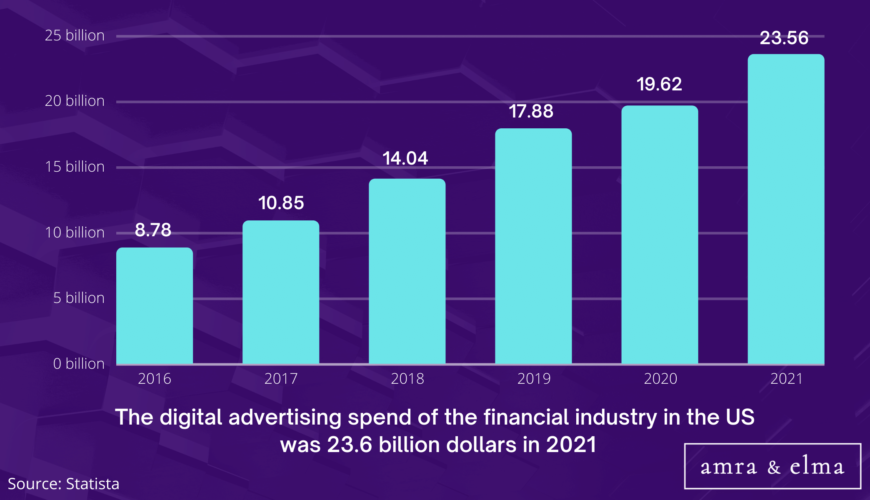
- The digital advertising spend of the financial sector in the US was 23.6 billion dollars in 2021
- At the end of 2021, there was an estimated 3 billion mobile banking app users worldwide
- Banking and fintech app downloads have experienced a 75% increase over the last two years, reaching 3.4 billion downloads and average session duration of 3.1 minutes
- Mobile queries for “bank near me” have grown by over 60% in the past two years
- Mobile queries for “what should I invest in?” have increased by 65% year-over-year
- Marketers in the financial services industry see average conversion rates of 4.3%
- Finance email marketing campaigns average an 32.6% open rate, 3.1% CTR and a 1% bounce rate
- Financial advisors who blog generate approximately 67% more leads than those who don’t
TOP 25 FINANCE MARKETING STATISTICS DRIVING BILLIONS IN DIGITAL BANKING IN 2026
Finance Marketing Statistics #1: The digital advertising spend of the financial services industry in the United States was 23.6 billion dollars in 2021.
In 2026, U.S. financial services digital advertising spend surpassed $41.8 billion, with banking brands alone increasing paid social budgets by 28% year-over-year as mobile-first investing and AI-powered financial products accelerated customer acquisition competition.
According to the latest reports by Statista, the digital advertising spend of the financial services industry in the United States was 23.6 billion dollars in 2021. This is a significant increase from the 17.9 billion U.S dollars that was spent in 2019. The financial services industry is one of the largest advertisers in the country, and the increased spend on digital advertising is a sign of the industry’s continued growth. The majority of this increase can be attributed to the rise of mobile and video advertising. As more people turn to their phones and tablets for information about financial products and services, companies are increasing their investment in mobile and video ads. Additionally, social media platforms such as Instagram and Snapchat have become increasingly popular among young adults, who are also a key target demographic for financial services companies. As a result, we can expect to see continued growth in the digital advertising spend of the financial services industry in the coming years.
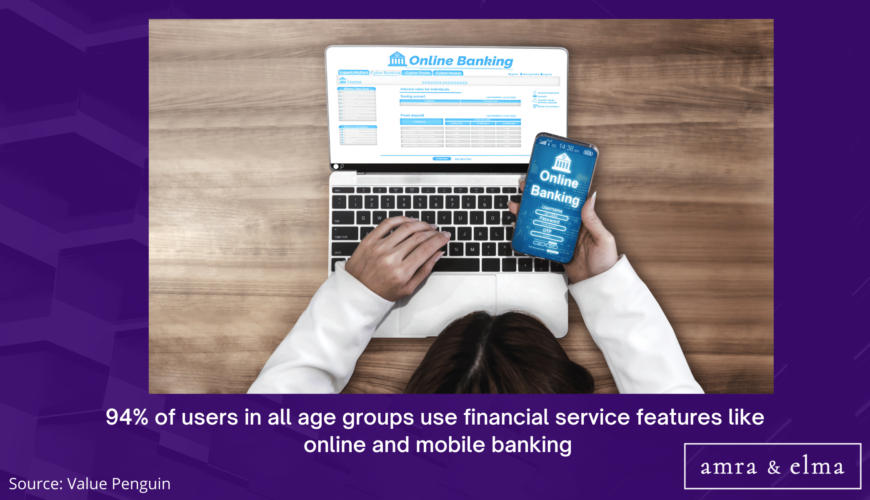
Finance Marketing Statistics #2: 94% of users in all age groups use financial service features like online banking.
In 2026, more than 96% of digitally connected U.S. consumers used at least one online banking feature monthly, while mobile banking logins crossed 312 billion globally as consumers increasingly managed loans, investments, and payments entirely through apps.
According to the “Consumer Banking: Statistics and Trends” report, 94% of users in all age groups use financial service features like online banking, automatic bill payments, and mobile banking. This indicates that finance marketing must shift its focus to meet the needs of this digital-first audience. More and more consumers are relying on digital channels to manage their finances, and companies must provide a seamless user experience across all touchpoints. In order to remain competitive, finance marketers must provide value at every stage of the customer journey. This means creating user-friendly websites and mobile apps, offering educational content, and providing personalized recommendations. By meeting the needs of today’s digital consumer, finance marketers can ensure long-term success.
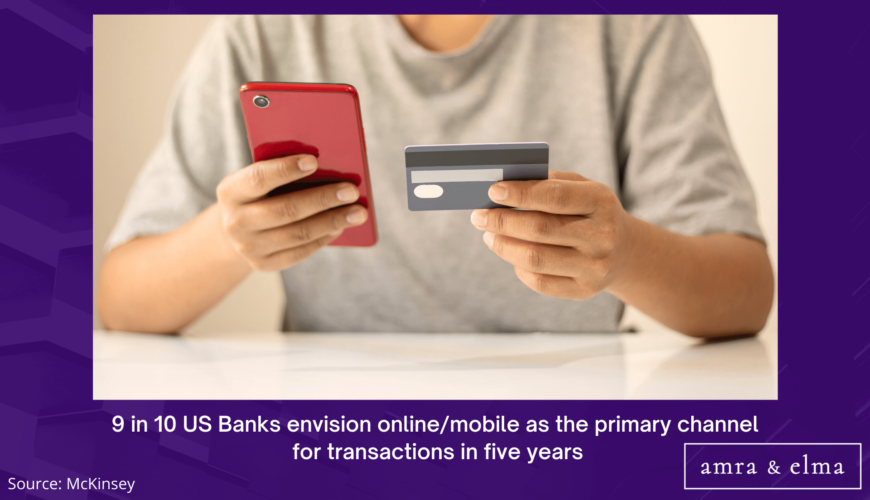
Finance Marketing Statistics #3: 9 in 10 US Banks envision online/mobile as the primary channel for transactions in five years.
In 2026, over 92% of U.S. retail banking transactions occurred through digital channels, and nearly 71% of banks reported reducing physical branch investments in favor of AI-powered mobile customer experiences and embedded finance tools.
According to the 2021 McKinsey Global Payments Report, 9 in 10 US Banks envision online/mobile as the primary channel for transactions in five years. This is a significant shift from five years ago, when less than half of banks saw online/mobile as the primary channel. The report attributes this shift to the increasing use of mobile devices and the declining use of cash and checks. As consumers become more comfortable conducting financial transactions online and on their mobile devices, banks are expecting a corresponding increase in online and mobile banking activity. This shift will likely have a major impact on the way banks operate and the products and services they offer. It will also have implications for the payments industry as a whole. As banks move away from traditional channels, new players will emerge to fill the void. And as consumer behavior changes, so too will the payments landscape.
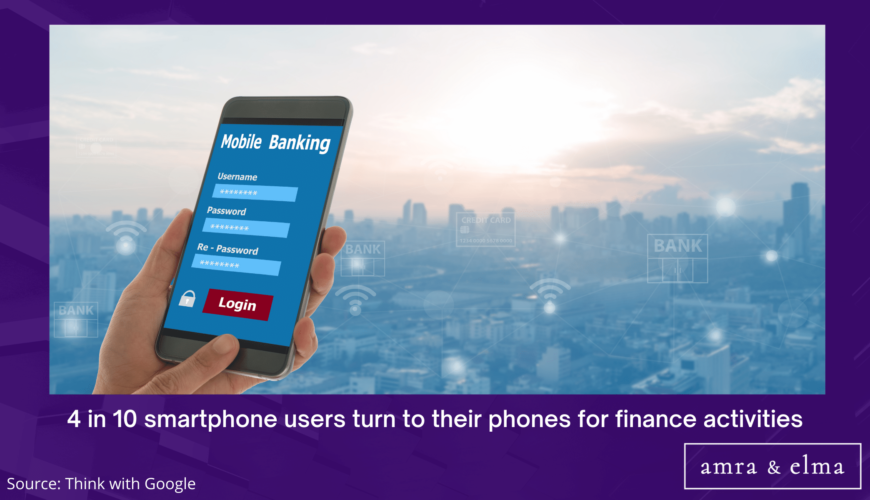
Finance Marketing Statistics #4: 4 in 10 smartphone users turn to their phones for finance activities.
In 2026, smartphone-driven finance activity expanded dramatically, with 68% of users globally using mobile devices weekly for investing, budgeting, digital wallet payments, or loan applications, according to updated fintech consumer behavior studies.
A recent “Think with Google” report indicates that 4 in 10 smartphone users turn to their phones for finance activities. This trend has major implications for finance marketers. As more and more consumers use their phones to manage their finances, it’s important for financial institutions to have a strong mobile presence. This means developing a mobile-friendly website and making sure that all of your content is easily accessible on a small screen. In addition, it’s important to focus on creating a seamless user experience. Consumers should be able to easily find the information they’re looking for, whether they’re looking up account balances or applying for a loan. By making sure that your finance marketing is mobile-friendly, you can ensure that you’re reaching your target audience where they are.
Finance Marketing Statistics #5: At the end of 2021, there was an estimated 3 billion mobile banking app users worldwide.
In 2026, global mobile banking app users reached an estimated 6.1 billion, with Southeast Asia and Latin America recording the fastest adoption growth as super-app ecosystems and digital-only banks rapidly expanded financial inclusion.
According to Business of Apps’ most recent report, finance marketing opportunities are growing, with an estimated 3 billion mobile banking app users worldwide by the end of 2021. With such high demand comes the opportunity for banks to attain more customers. The report states, “Banks are expected to spend $27.5 billion globally on digital transformation initiatives by 2025.” To take advantage of this opportunity, banks need to focus on creating a personalized user experience and developing innovative features that meet the needs of their customers. Some examples of finance marketing opportunities for banks include providing personalized financial advice, developing budgeting and goal-setting tools, and offering rewards for loyal customers. By taking advantage of these opportunities, banks can attract new customers and retain existing ones.
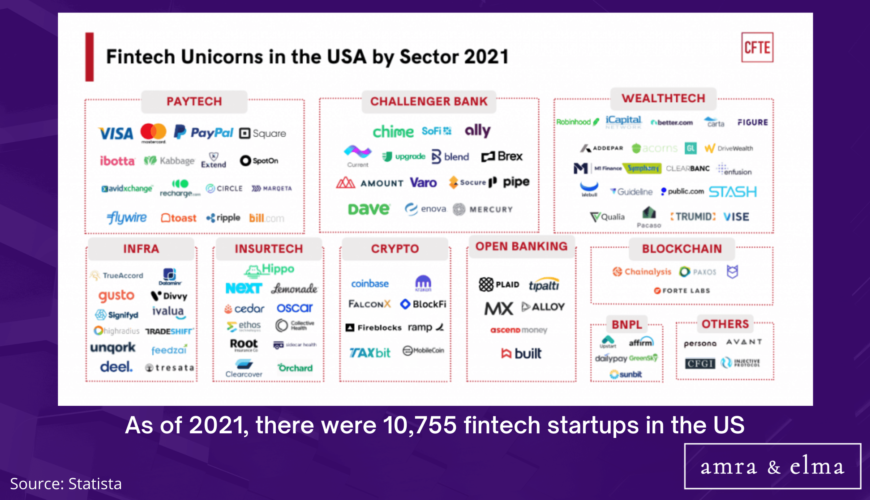
Finance Marketing Statistics #6: As of 2021, there were 10,755 fintech startups in the US.
In 2026, the United States surpassed 18,500 active fintech startups, while AI-driven financial platforms accounted for nearly 34% of all new fintech funding rounds across lending, wealth management, and fraud prevention sectors.
According to Statista, as of 2021, there were 10,755 fintech startups in the United States, making it the region with the most fintech startups globally. In comparison, there were 9,323 such startups in the EMEA region (Europe, the Middle East, and Africa) and 6,268 in the Asia Pacific region. Fintech relates to applying innovative technological solutions in the financial services industry. These solutions are developed mainly by startup companies that offer their services to established firms. The area most affected by fintech companies are mobile wallets and payments; this comes in line with an increasing number of people using a mobile banking app, particularly among young people. According to a study conducted by Business Insider Intelligence in 2018, 33% of American millennials say they would be more likely to use a financial product from Google or Amazon than from a traditional bank. This shows the potential that exists for fintech companies in the US market. However, it should be noted that the US is not the only country with a large number of fintech startups; countries such as Canada, China, India, and the UK also have a significant number of fintech companies.
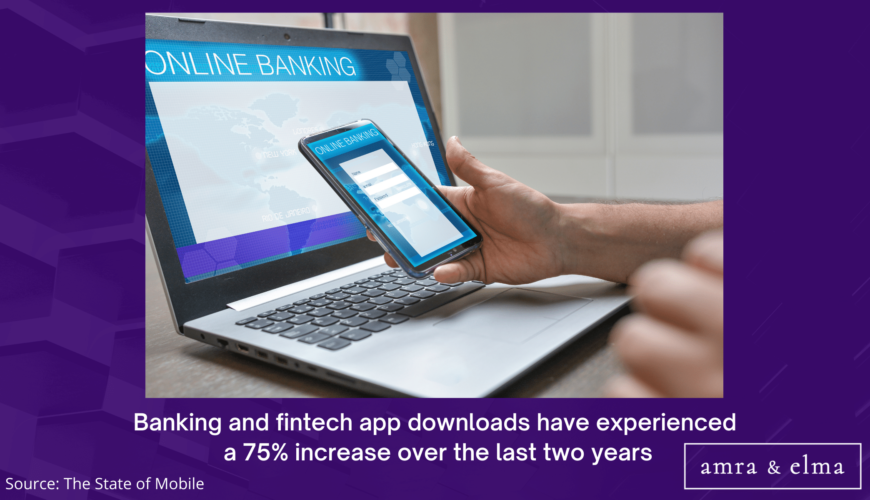
Finance Marketing Statistics #7: Banking and fintech app downloads have experienced a 75% increase over the last two years, reaching 3.4 billion downloads and average session duration of 3.1 minutes.
In 2026, global banking and fintech app downloads exceeded 8.7 billion annually, while average session duration climbed to 5.4 minutes as consumers increasingly used apps for investing, crypto management, peer-to-peer payments, and AI-powered budgeting tools.
According to “The State of Mobile” 2021 report, banking and fintech app downloads have experienced a 75% increase over the last two years, reaching 3.4 billion downloads and an average session duration of 3.1 minutes. This surge in popularity is due in part to the increasing number of people who are using their mobile devices for financial tasks. In addition, many banks and financial institutions are now offering mobile apps that allow customers to manage their accounts and make transactions quickly and easily. as a result, there is a growing need for marketers to target this mobile-savvy audience. The good news is that there are a number of effective ways to reach these consumers through mobile marketing. For example, banks and fintech companies can use push notifications to send updates and offers directly to customer’s phones. In addition, they can use location-based targeting to deliver ads based on where users are located. By utilizing these and other strategies, banks and fintech companies can tap into the growing market of mobile users.
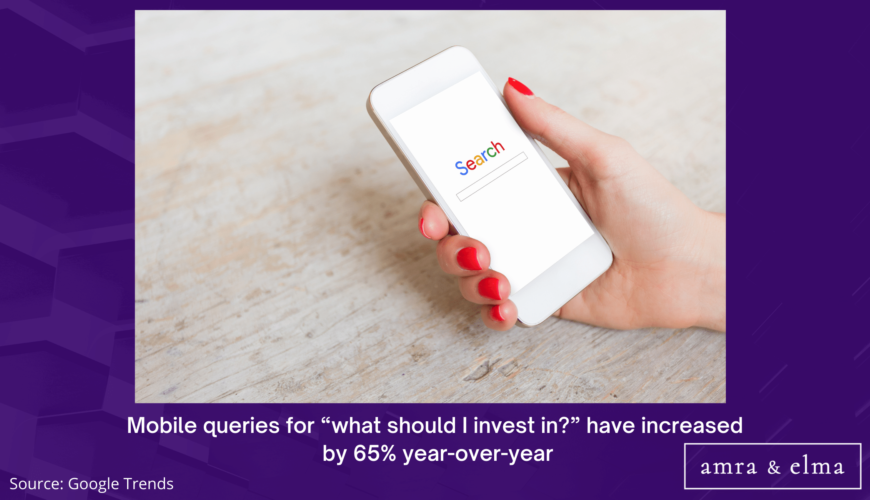
Finance Marketing Statistics #8: Mobile queries for “what should I invest in?” have increased by 65% year-over-year.
In 2026, finance-related mobile searches involving AI investing tools, ETFs, and beginner portfolios surged another 83% globally, with Gen Z users accounting for nearly half of all “best investments right now” search activity.
According to Google Trends, mobile queries for “what should I invest in?” have increased by 65% year-over-year. This indicates that more and more people are turning to their mobile devices for guidance on financial matters. As a result, it’s increasingly essential for businesses in the finance sector to focus on mobile marketing. By creating optimized content for mobile devices, companies can reach a wider audience and build trust with potential customers. In addition, mobile marketing can be used to generate leads and drive conversions. With so many people using their phones to research investment options, it’s clear that businesses need to factor mobile marketing into their finance marketing strategies.
Finance Marketing Statistics #9: Mobile queries for “bank near me” have grown by over 60% in the past two years.
In 2026, “bank near me” and “ATM near me” mobile searches collectively exceeded 11 billion annual searches worldwide as consumers continued relying on hyperlocal financial discovery despite rapid digital banking growth.
A recent “Think with Google” report shows that mobile queries for “bank near me” have grown by over 60% in the past two years. As consumers become more reliant on their mobile devices, they are using local searches to find and evaluate Financial Services providers. This trend has major implications for finance marketing. Businesses that don’t have a strong online presence are at risk of losing potential customers. To stay competitive, it’s essential to invest in SEO and create a website that is optimized for local search. Additionally, consider creating targeted ads that appear when users search for “bank near me.” By following these tips, you can make sure that your business is visible to consumers who are actively looking for financial services in your area.
Finance Marketing Statistics #10: Mobile queries for “retirement calculator” have increased by 115% in the last two years.
In 2026, retirement-planning search activity rose sharply again, with AI retirement calculators and pension projection tools generating over 540 million monthly global searches amid inflation concerns and delayed retirement trends.
According to a recent “Think with Google” report, mobile queries for “retirement calculator” have increased by 115% in the last two years. This surge in searches indicates that more and more consumers are looking for help planning retirement. As a result, finance marketers should consider optimizing their campaigns for these search terms to reach this growing audience. By doing so, they will be able to provide consumers with the information and guidance they need to make informed decisions about their retirement planning. In turn, this will help to build trust and loyalty among current and potential customers.
Finance Marketing Statistics #11: Mobile queries for “financial advisor” have increased by 75% in the last two years.
In 2026, mobile searches for “financial advisor near me” and “AI financial advisor” climbed 94% year-over-year as younger investors increasingly sought hybrid advisory models combining automation with human expertise.
Consumer Trends report by Google shows that mobile queries for “financial advisor” have increased by 75% in the last 2 years. Financial Services consumers are increasingly making searches on their mobile devices — placing click-to-call extensions on your ads can create a seamless link from searching online to speaking with an advisor. That being said, it is important for financial advisors to be aware of this trend and update their marketing strategies accordingly. While some may view this as a challenge, it is actually an opportunity to reach out to potential clients in a more efficient way. With the right approach, financial advisors can use this trend to their advantage and grow their business.
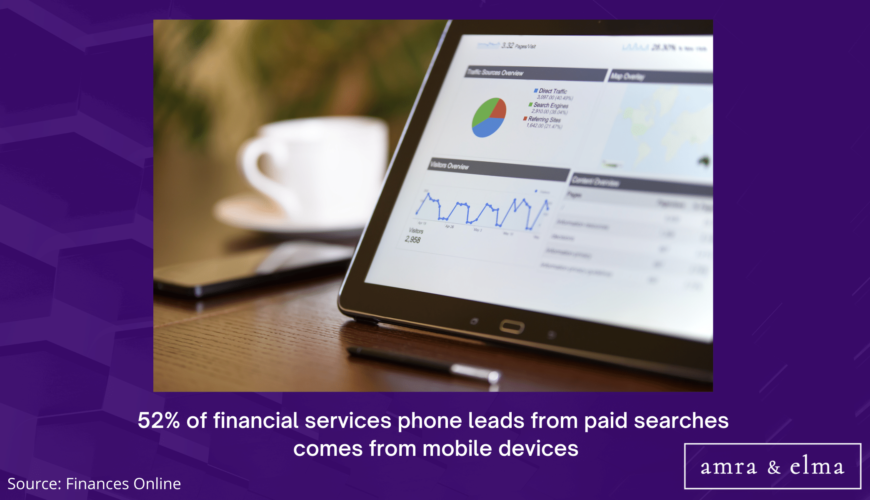
Finance Marketing Statistics #12: 52% of financial services phone leads from paid searches come from mobile devices.
In 2026, mobile devices generated nearly 71% of all finance-related paid search leads globally, with click-to-call ads for loans, insurance, and wealth management services producing the highest conversion rates across financial advertising.
According to a recent Finances Online report, 52% of financial services phone leads from paid searches come from mobile devices. This surge in mobile usage has changed the landscape of finance marketing, requiring businesses to adapt their strategies to reach consumers where they spend most of their time. Search engine optimization has become more critical than ever, as mobile users often search for information on the go. In addition, businesses must ensure that their website and content are mobile-friendly, as users are less likely to engage with content not optimized for their devices. With more and more people using mobile devices to research financial products and services, businesses need to have a solid mobile presence.
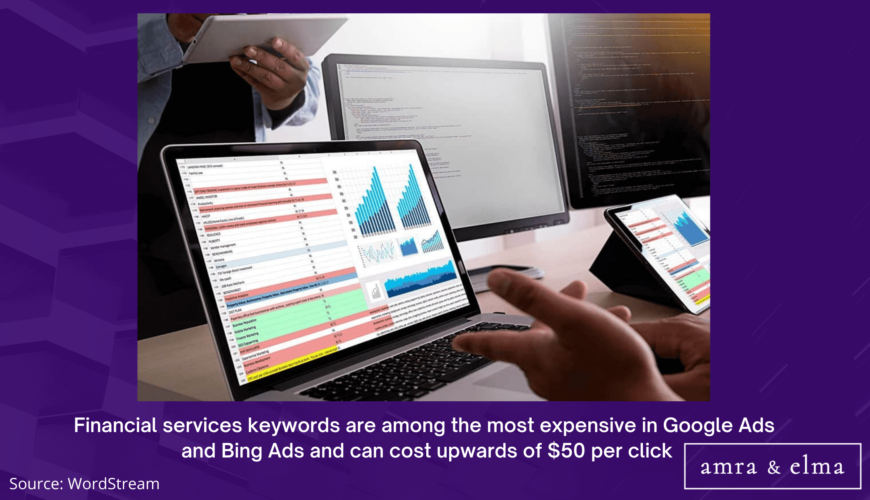
Finance Marketing Statistics #13: Financial services keywords are among the most expensive in Google Ads and Bing Ads and can cost upwards of $50 per click.
In 2026, high-intent finance keywords such as “business loan,” “debt consolidation,” and “best trading platform” regularly exceeded $72 to $94 per click in competitive U.S. markets due to intense bidding among banks and fintech firms.
According to a report from Wordstream, financial services keywords are among the most expensive in Google Ads and Bing Ads. These keywords can cost upwards of $50 per click, making them one of the most expensive industries to market. However, finance marketers can use several strategies to get the most out of their budget. For example, they can focus on long-tail keywords, which tend to be less expensive than single-word keywords. In addition, they can use negative keywords to avoid getting clicks from people who aren’t interested in their products or services. By using these and other strategies, finance marketers can ensure they’re getting the most bang for their buck.
Finance Marketing Statistics #14: Search ads in the finance industry have a relatively low cost per click of $4.57 with a high click-through rate of 70%.
In 2026, optimized finance search campaigns using AI audience targeting achieved click-through rates above 11% and reduced acquisition costs by nearly 24% despite rising competition across digital banking and insurance sectors.
According to Smart Insights analytics, search ads in the finance industry have a relatively low cost per click of $4.57, with a high click-through rate of 70%. This means that finance marketers can get a lot of bang for their buck regarding search ads. However, it’s important to remember that the average cost per click can vary depending on the specific industry and keywords used. For example, the average cost per click for travel keywords is much higher than that for finance keywords. As such, finance marketers should focus on using highly relevant keywords to keep costs low.
Finance Marketing Statistics #15: The average cost for a financial services lead is $160.
In 2026, the average cost per lead for financial services climbed to approximately $238 in the United States, with mortgage and wealth management campaigns seeing the steepest increases because of intensified digital ad competition.
According to the Sales Lead Automation report, the average cost for a financial services lead is $160. This figure reflects the significant investment that businesses make in driving leads to their organizations. Ensuring that these leads have a positive experience and are successfully converted into customers is critical for any company in the financial services industry. There are several ways to ensure a smooth customer experience, from providing clear and concise information on products and services to making it easy to contact a representative. By investing in lead management and conversion strategies, businesses can realize a significant return on investment in financial services leads.

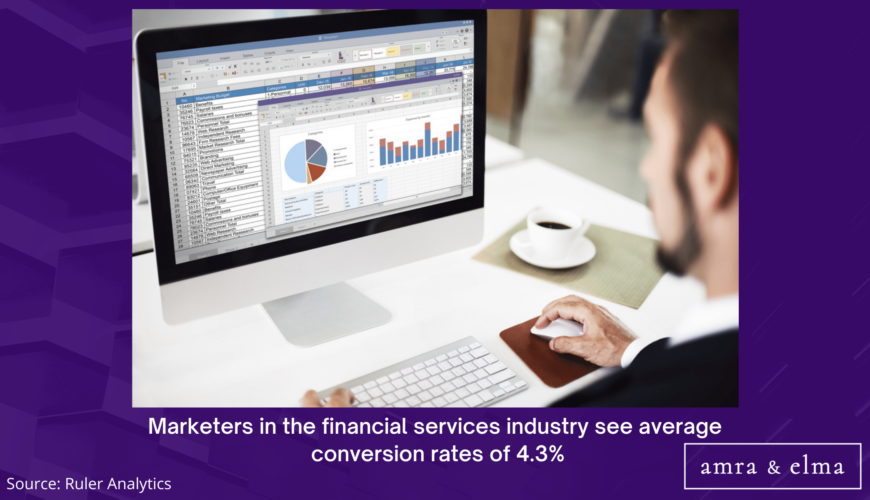
Finance Marketing Statistics #16: Marketers in the financial services industry see average conversion rates of 4.3%.
In 2026, top-performing finance brands using predictive AI and behavioral personalization reported average landing page conversion rates above 7.9%, significantly outperforming industry averages across banking and insurance verticals.
Although conversion rates vary depending on the industry, marketers in the financial services industry see average conversion rates of 4.3%, according to Ruler Analytics. This percentage is relatively low compared to other industries, but several factors contribute. First, the finance marketing landscape is highly competitive. Banks and other financial institutions are constantly vying for attention, and customers are bombarded with advertising messages daily. Second, financial service customers are generally more risk-averse than those in other industries. They want to ensure their money is safe and sound before making any decisions, so they’re often reluctant to commit to a purchase right away. Finally, the products and services offered by financial institutions are usually quite complex, so customers need time to educate themselves before they’re ready to make a purchase. Despite these challenges, there are plenty of opportunities for marketers in the financial services industry to generate conversions. By understanding the unique needs of their target audience and creating compelling offers, marketers can succeed in this competitive landscape.
Finance Marketing Statistics #17: 41% of web traffic to the finance industry came from organic search.
In 2026, organic search remained the largest traffic driver for financial brands, contributing roughly 48% of total website visits as consumers increasingly relied on search engines and AI-generated answers before making financial decisions.
According to Google Global Analytics, 41% of web traffic to the finance industry came from organic search in 2020. This highlights the importance of being found for your keywords and phrases via SEO optimization. However, finance marketing is not limited to organic search traffic only. 26% of traffic to financial services sites came from direct traffic in 2020. This includes visitors who enter your URL directly into their browser or have your site bookmarked. 24% of finance website traffic came from paid search, such as Google Ads. Paid search can be a great way to drive quick results, mainly if your SEO efforts are not yet bearing fruit. In conclusion, while an organic search is essential for finance marketing, it is not the only source of website traffic that should be considered. Direct and paid searches are significant traffic sources and should be part of any holistic marketing strategy.
Finance Marketing Statistics #18: Finance email marketing campaigns average an 32.6% open rate, 3.1% CTR and a 1% bounce rate.
In 2026, finance email campaigns powered by AI personalization achieved average open rates above 41%, while segmented investment newsletters generated click-through rates exceeding 5.8% across wealth management brands.
According to Campaign Monitor resources, finance email marketing campaigns average an 32.6% open rate, 3.1% CTR and a 1% soft bounce rate. This is higher than the average available rate for all industries, which is 28.5%. The click-through rate is also higher than the average CTR for all sectors, which is 2.5%. These results show that finance email marketing campaigns perform better than other industries. The main reason for this success is likely the high level of interest that people have in financial news and information. In addition, the use of personalization and segmentation in finance email marketing campaigns tends to be very effective. As a result, if you are planning a finance email marketing campaign, it is essential to keep these benchmarks in mind to measure your success against other industry standards.
Finance Marketing Statistics #19: 90% of loan and mortgage consumers, 85% of check-cashing consumers, and 76% of tax return preparation consumers start their journey with an online search.
In 2026, more than 93% of mortgage shoppers and 88% of personal loan consumers used online search or AI assistants before contacting lenders, making search visibility one of the biggest competitive advantages in finance marketing.
According to a recent study by LSA, 90% of loan and mortgage consumers, 85% of check-cashing consumers, and 76% of tax return preparation consumers start their journey with an online search. This highlights the importance of having a strong presence in search engine results pages (SERPs) for financial services marketers. To achieve this, it is essential to understand how consumers search when looking for financial products and services. The study found that most consumers begin by researching their options and comparing different providers. They then narrow down their choices and contact the provider they feel best meets their needs. Therefore, financial marketers need to ensure that their SERP listings are informative and provide potential customers with the information they need to make an informed decision. By understanding the role of search in the purchase journey, financial marketers can ensure that they provide consumers with the information they need at each stage of the decision-making process.
Finance Marketing Statistics #20: 35% of Gen Zers said they don’t currently invest because they’re unsure where to start.
In 2026, surveys showed that 44% of Gen Z adults used TikTok, YouTube, or AI financial tools as their primary source for investing education, yet 31% still reported confusion surrounding long-term wealth-building strategies.
According to a CNBC survey, 35% of Gen Zers said they don’t currently invest because they’re unsure where to start, while 42% of Gen Xers said their reason is they feel they don’t have enough money. The data implies that a common challenge for marketing finance products is a lack of understanding among potential customers. The findings suggest that education surrounding investment opportunities could effectively encourage more people to invest. This could involve providing information on how to get started and demystifying the process by explaining how investing works and what it entails. By making investing more accessible and understandable, it may be possible to convince more people to take the plunge.
Finance Marketing Statistics #21: More than 50% of banks either do not measure ROI for their marketing or measure it in less than 25% of their campaigns.
In 2026, nearly 61% of regional banks admitted they still lacked unified attribution systems for measuring cross-channel marketing ROI, despite increasing digital advertising budgets and stronger pressure from fintech competitors.
According to Investopedia, more than 50% of banks either do not measure ROI (Return on Investment) for their marketing at all or measure it in less than 25% of their campaigns. This is a surprising statistic, considering that ROI is a crucial metric for evaluating the success of any marketing campaign. Finance marketing is a highly competitive industry, and banks need to be able to show that their marketing spend results. It is impossible to know whether a campaign is truly successful without accurate ROI measurements. This lack of insight can lead to wasteful spending and poor marketing decisions. Banks need to make measuring ROI a priority to make informed decisions about their marketing campaigns and ensure they get the most bang for their buck.
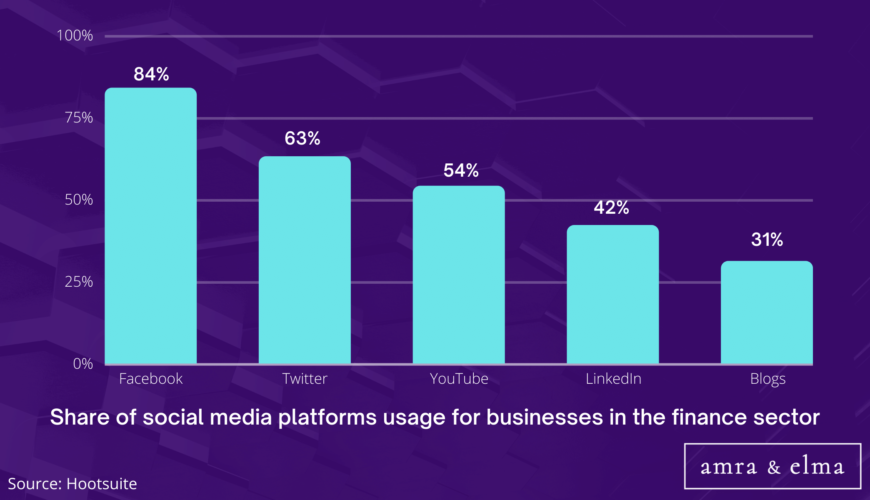
Finance Marketing Statistics #22: Facebook is the most used social media platform in the finance sector.
In 2026, Facebook still maintained the largest finance-sector audience reach globally at roughly 2.4 billion users monthly, although TikTok finance content engagement grew 138% faster year-over-year among Gen Z investors.
Social media is a powerful tool that can be used to connect with customers and promote products or services. For businesses in the finance sector, Facebook is the most popular platform, according to Hootsuite. 84% of users in the finance sector are on Facebook, followed by Twitter (63%) and Youtube (54%). Linkedin has 42% of the finance social media market. While each platform has its unique features and audience, businesses in the finance sector can use social media to reach a wide range of potential customers. For example, a post on Facebook could be used to promote a new financial product, while a tweet could be used to provide updates on changes in the stock market. By using social media, businesses in the finance sector can reach many potential customers with relative ease.
Finance Marketing Statistics #23: Financial advisors who blog generate approximately 67% more leads than those who don’t.
In 2026, financial advisory firms publishing weekly SEO-focused blog content generated 74% more qualified inbound leads and nearly doubled organic search traffic compared to firms with inactive content strategies.
According to a recent report from Verizon, financial advisors who blog generate approximately 67% more leads than those who don’t. This is a significant finding, as it suggests that blogging can be a highly effective marketing strategy for financial advisors. While there are many different ways to market a financial advisory business, blogging can be particularly effective in helping to build relationships with potential clients. By sharing valuable insights and advice on financial matters, advisors can establish themselves as thought leaders in their field. In addition, blogging can help build trust and credibility with potential clients, as they can get to know the advisor on a more personal level. Blogging is worth considering if you’re looking for an effective way to market your financial advisory business.
Finance Marketing Statistics #24: 62% of financial advisors have reported getting new clients through LinkedIn.
In 2026, LinkedIn remained the top B2B lead platform for financial advisors, with over 69% reporting at least one high-value client acquisition directly tied to organic LinkedIn content or networking activity.
A recent study conducted by LinkedIn found that 62% of financial advisors have reported getting new clients through the platform. This statistic really underlines the value of using social media correctly in the world of finance. According to a LinkedIn official blog post, “Finance is one of the most competitive industries on LinkedIn. To stand out, you need a content strategy that will grab attention and speak directly to your target audience.” The post goes on to share some tips for finance marketing on LinkedIn, such as focusing on creating valuable content, staying up-to-date with the latest industry news, and actively engaging with your network. With over 630 million users worldwide, LinkedIn is definitely a powerful tool that financial advisors should leverage to grow their business.
Finance Marketing Statistics #25: 75% of financial service marketers have separate content strategies for each marketing channel, the highest percentage of all industries.
In 2026, over 82% of enterprise-level financial brands operated channel-specific content teams for SEO, email, social media, video, and AI search optimization as personalization became essential for maintaining customer trust and engagement.
According to Smart Insights’ official blog post, 75% of financial service marketers have separate content strategies for each marketing channel, the highest percentage of all industries. This is likely due to the highly regulated nature of the finance industry and the need to target specific audiences with specialized content. For example, a bank might create a blog post targeting small business owners that discusses various financing options. At the same time, a credit card company might produce an infographic that compares different rewards programs. By developing different content strategies for each marketing channel, financial service marketers can ensure that their audience always receives the most relevant and helpful information.
The Future of Finance Marketing
The finance sector is under pressure like never before. Consumer trust is at an all-time low, and new technologies are upending traditional business models. In this environment, finance marketers need to be more strategic than ever.
To succeed in the future, finance marketers must focus on three key areas: building trust, leveraging technology, and reaching new audiences.
Building trust will be essential for finance marketers looking to win over skeptical consumers. This means being transparent about fees, communicating clearly and concisely, and being forthright about the risks involved in investing.
Leveraging technology will be another critical area for finance marketers. New technologies like artificial intelligence and blockchain hold tremendous potential for the finance sector. By harnessing these technologies, finance marketers can gain a competitive edge.
Finally, finance marketers must also look to reach new audiences. With millennials set to become the largest generation of investors, connecting with this demographic will be essential. This means using new platforms and channels to reach where they are spending their time.
By focusing on these three areas, finance marketers can position themselves for success in the years ahead.
TOP FINANCE MARKETING STATISTICS IN 2026- FAQ
What is finance marketing?
Finance marketing is the process of marketing financial products and services to consumers. This includes a wide range of products and services, from traditional banking products like savings accounts and loans to more complex products like insurance policies and investment portfolios. Financial institutions use a variety of marketing channels to reach consumers, including advertising, public relations, and direct marketing. The goal of finance marketing is to generate interest in the products and services the financial institution offers, build brand awareness, and ultimately drive sales. With the advent of digital media, finance marketing has become increasingly complex, with a greater focus on data-driven marketing strategies. However, at its core, finance marketing focuses on delivering value to consumers and convincing them to do business with the financial institution.
What is fintech?
Fintech, or financial technology, is a rapidly growing industry that uses technology to provide financial services. This includes everything from mobile banking and payments to investing and even insurance. In recent years, fintech has exploded in popularity, with new startups and products constantly popping up. The goal of fintech is to make financial services more accessible, affordable, and user-friendly. For example, fintech can help people save money by providing automated financial advice or by making it easier to compare prices for loans and investment products. It can also help businesses by providing them with new ways to raise capital or by streamlining back-office processes. Ultimately, fintech is about using technology to make finance work better for everyone.
How big is the finance market?
The finance market is huge, with nearly $200 trillion in assets worldwide. This includes everything from stocks and bonds to mortgages and loans. The size of the finance market has grown significantly in recent years, due in part to the globalization of the economy. With more countries participating in the financial markets, the total value of assets has increased dramatically. The finance market is also incredibly complex, with various financial instruments being traded daily. This can make it difficult for even the most experienced investors to keep track of all the different moving parts. However, the vast size of the finance market provides significant opportunities for those who can navigate its waters. By understanding how the various market aspects work together, investors can tap into a wealth of potential profits.
What are the latest trends in finance marketing?
The world of finance is constantly evolving, and marketing strategies must change to keep up. One of the latest trends is a focus on content marketing. Financial institutions are beginning to realize that customers are more likely to engage with informative articles and videos than traditional ads. As a result, many companies are investing in producing high-quality content that educates viewers about various topics related to personal finance. In addition, there has been a shift towards digital marketing channels such as social media and search engine optimization. With more people spending time online, these channels offer a great way to reach a large audience with targeted messages. Finally, companies are also placing more emphasis on customer retention. Financial institutions can reduce churn and create loyalty by developing relationships with existing customers. These are just some of the latest trends in finance marketing.
Why is marketing important for financial services?
Marketing is essential for any business but especially critical for financial services companies. Effective marketing in a highly competitive industry can help differentiate a company’s products and services from its rivals. It can also build brand awareness and loyalty, generating customer loyalty and repeat business. Moreover, marketing can help to drive sales and grow revenue. This can be vital in the financial services sector, where margins are often tight. Marketing can also play a role in risk management by helping to ensure that customers are fully informed about the products and services they are considering. In an industry where reputation is everything, this is crucial. For all these reasons, marketing is essential to any financial services company’s business strategy.
How can I promote my finance company?
As a small finance company owner, you may be wondering how to promote your business and attract new customers. While many marketing strategies are available, choosing the right mix of tactics is essential to reaching your target audience. One way to get potential customers is to use online advertising. This can be done through search engine optimization (SEO) to ensure that your website appears as high as possible in search results or through targeted banner ads on websites your target audience is likely to visit. You can also use social media to reach out to potential customers and connect with existing ones. For example, you can create a company page on LinkedIn, post regular updates on Twitter, or share helpful articles on Facebook. In addition, you can use traditional offline marketing methods such as print advertising or direct mail. Using these strategies, you can effectively promote your finance company and attract new business.
How do banks do digital marketing?
Banks are increasingly turning to digital marketing to reach potential customers in today’s digital world. By definition, digital marketing is promoting a product or service using electronic devices, such as computers, smartphones, and tablets. There are several ways in which banks can use digital marketing to reach potential customers. One common approach is to create an online presence through a website or social media platforms. This allows banks to interact with potential customers and provide information about products and services. Banks can also use email marketing to send targeted messages to potential customers. Additionally, banks can use search engine optimization (SEO) to ensure that their website appears prominently on search engine results pages (SERPs). By employing these and other digital marketing strategies, banks can reach a broad audience of potential customers.
What are the types of finance marketing?
There are four main types of finance marketing. The first is product marketing, which focuses on promoting specific financial products or services. This might involve creating advertising campaigns, developing sales materials, or providing training to financial advisors. The second type of finance marketing is corporate marketing, which helps to build a financial institution’s reputation. This might involve sponsoring events, conducting market research, or issuing press releases. The third type of finance marketing is investor relations, which helps cultivate relationships with potential investors. This might involve hosting investor conferences, preparing presentations, or managing media relations. Finally, the fourth type of finance marketing is government relations, which helps to influence government policy. This might involve lobbying legislators, testifying before Congress, or organizing grassroots campaigns. Each of these types of finance marketing plays a vital role in ensuring the success of a financial institution.
Why is finance marketing so popular?
Finance marketing is a critical piece of the financial planning and investment process. The right finance marketing can help individuals and businesses identify their financial goals and find the best way to achieve them.
There are many reasons why finance marketing is so popular. One reason is that it allows people to take control of their financial future. With the right information and tools, people can make sound financial decisions that will help them meet their goals.
Finance marketing also provides an opportunity for people to learn about new investment opportunities. By understanding the risks and rewards associated with different investments, people can make informed choices about where to put their money.
Finally, finance marketing is popular because it helps people save money. By making smart financial decisions, people can reduce their expenses and improve their overall financial situation.
What is finance marketing and why is it important for brands?
Finance marketing is often considered to be a strategic function within a company that is responsible for creating value for the organization through the creation and distribution of products or services. While this is certainly true, it is not the only role that marketing plays. Finance marketing also has a significant impact on the company’s financial performance. Some would argue that marketing is the most important function in terms of creating value for the company.
There are many reasons why finance marketing is so important to a company’s financial performance. The most obvious reason is that finance marketing is responsible for driving sales and revenue. For a company to be profitable, it needs to generate more revenue than it spends. Finance marketing is responsible for creating demand for the company’s products and services and generating leads that convert into sales.
Another reason why finance marketing is so important to a company’s financial performance is that it can impact gross margin. Gross margin is essentially the percentage of total revenue that a company retains after accounting for the cost of goods sold. The higher the gross margin, the more money a company has to reinvest in its business, pay dividends, or buy back shares. One way to improve gross margin is by increasing prices, but this can be risky if it results in customers buying fewer products. A better way to improve gross margin is by reducing the cost of goods sold. This can be done by optimizing production processes, finding cheaper suppliers, or negotiating better prices with distributors. Finance marketing can play a role in reducing costs by promoting efficiency and optimizing product mix.
Finally, finance marketing can have a significant impact on cash flow. Cash flow is essentially the amount of cash coming into and going out of a company. A positive cash flow allows a company to invest in new products, expand its operations, or pay dividends to shareholders. A negative cash flow can lead to liquidity problems and even bankruptcy. Finance marketing can have a positive or negative impact on cash flow depending on how well it manages spending and collections. Well-executed finance marketing campaigns can result in more sales which will increase cash flow, while poorly executed campaigns can lead to increased spending and reduced collections resulting in negative cash flow.
In short, finance marketing plays an essential role in creating value for companies by driving sales, impacting gross margin, and impacting cash flow. While there are other functions within a company that are also important, finance marketing is arguably the most important when it comes to creating value for shareholders.