



29 Sep TOP 20 FISH FARMING MARKETING STATISTICS 2025
As someone deeply fascinated by the growth of the aquaculture sector, I wanted to share these latest fish farming marketing statistics with you. Over the years, I’ve noticed how crucial data-driven insights are for anyone looking to thrive in this market. Working alongside a leading marketing agency in New York has shown me how understanding trends—from production volumes to consumer preferences—can transform strategies and boost profitability. In this article, I’ll walk you through the most relevant statistics that highlight the current state of fish farming, its economic impact, and emerging opportunities for marketers and entrepreneurs alike. Whether you’re new to aquaculture or a seasoned professional, these stats will give you a clear, actionable perspective.
Top 20 Fish Farming Marketing Statistics 2025 (Editor’s Choice)
| # | Statistic | Value | Region/Scope | Source |
|---|---|---|---|---|
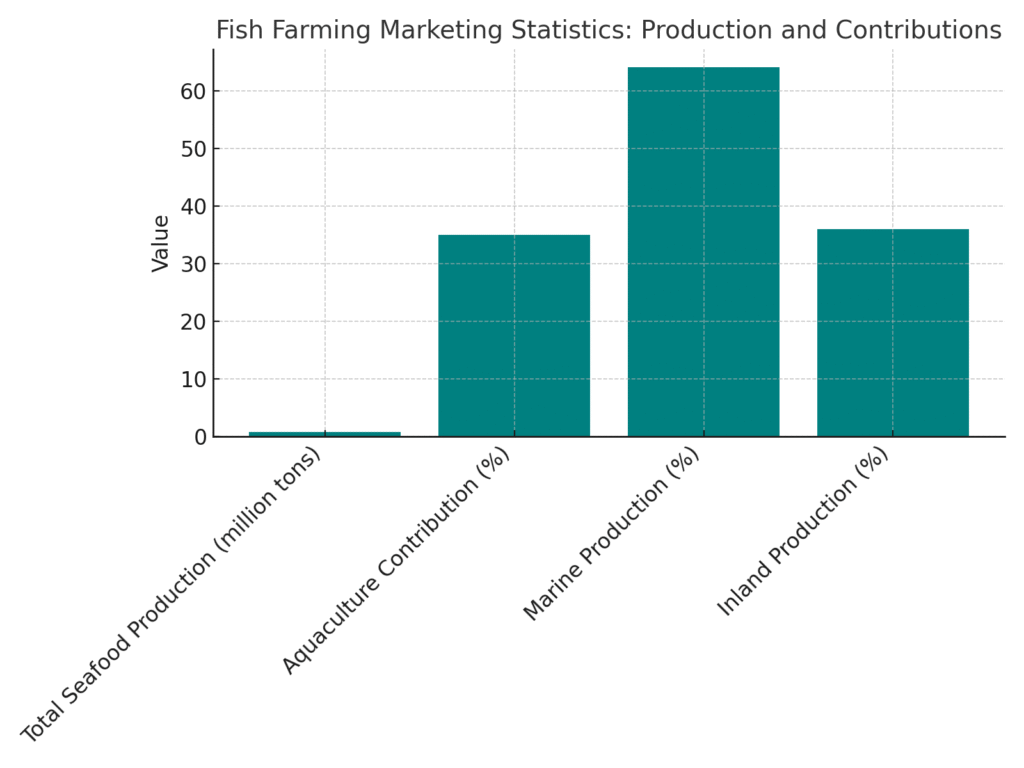
| 1 | Total seafood production in Pakistan | 0.79 million metric tons | National | PBC |
| 2 | Aquaculture contribution to total fisheries | 35% | National | World Bank |
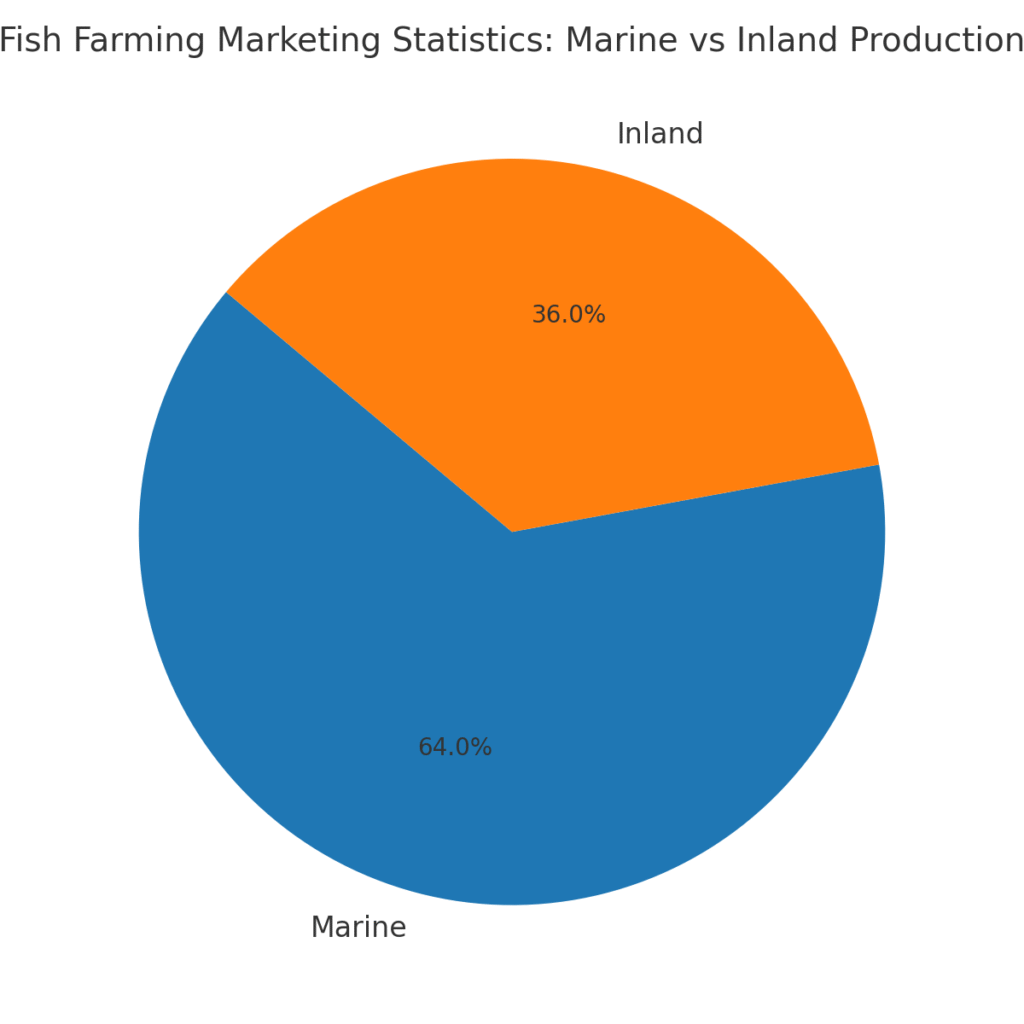
| 3 | Marine vs. inland production | 64% marine / 36% inland | National | SCCIP |
| 4 | Fisheries sector contribution to GDP | 0.87% | National | SCCIP |
| 5 | Fisheries exports value 2020 | USD 373.392 million | National | TDAP |
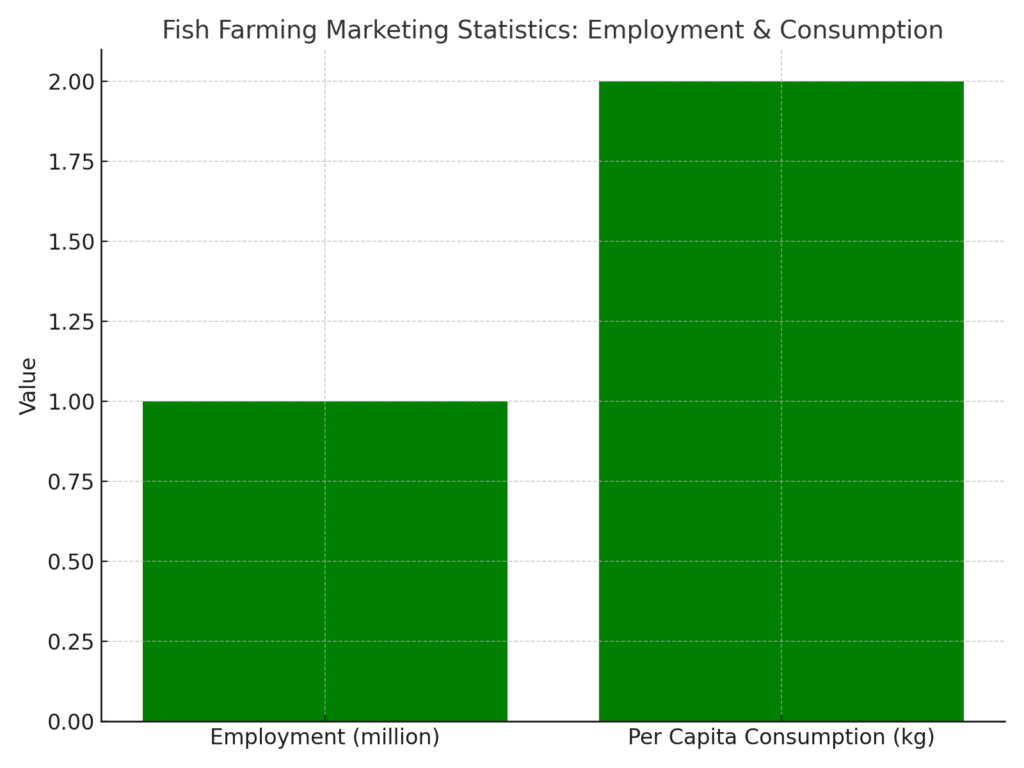
| 6 | Employment in fisheries sector | ~1 million people | National | PBC |
| 7 | Per capita fish consumption | 2 kg/year | National | ResearchGate |
| 8 | Projected fish production by 2026 | 178,000 metric tons | National | ReportLinker |
| 9 | Projected fish consumption by 2026 | 53,000 metric tons | National | ReportLinker |
| 10 | Net income per acre from fish farming (Punjab) | PKR 252,426 | Punjab | ResearchGate |
Top 20 Fish Farming Marketing Statistics 2025
Fish Farming Marketing Statistics #1: Total Seafood Production in Pakistan Reaches 0.79 Million Metric Tons
Pakistan’s total seafood production in 2025 is approximately 0.79 million metric tons. Out of this, 0.51 million tons come from marine capture, while 0.28 million tons are from inland sources, including aquaculture. This shows that aquaculture is steadily growing as a reliable source of seafood. The production figures highlight the significance of fish farming in national food security. Businesses can leverage these statistics to identify investment opportunities in the sector.
Fish Farming Marketing Statistics #2: Aquaculture Contributes 35% to Total Fisheries Production
Aquaculture now accounts for around 35% of Pakistan’s total fisheries production. Sindh province alone contributes 62% of this aquaculture output. This underscores the growing importance of inland fish farming as a complement to marine fisheries. Fish farming businesses can strategically target regions with higher production to maximize growth. The data highlights the role of aquaculture in economic planning and policy development.
Fish Farming Marketing Statistics #3: Marine Versus Inland Production Split Is 64% to 36%
Marine fisheries contribute 64% of total production, while inland fisheries make up 36%. This demonstrates that while marine fishing dominates, inland fish farming has significant potential for expansion. Marketers can focus on inland aquaculture as an emerging growth area. The balance between marine and inland production affects supply chain and pricing strategies. Companies can develop tailored campaigns based on these production distributions.
Fish Farming Marketing Statistics #4: Fisheries Sector Contributes 0.87% to National GDP
The fisheries sector contributes approximately 0.87% to Pakistan’s GDP. While this may seem small, it represents a crucial segment of the agricultural economy. Fish farming growth can potentially increase this contribution in the coming years. Policymakers and investors should recognize the sector’s value in national economic planning. These figures provide a clear case for marketing and promoting aquaculture products domestically and abroad.
Fish Farming Marketing Statistics #5: Fisheries Exports Valued at USD 373.392 Million
Pakistan’s fisheries exports reached USD 373.392 million in 2020. This represents around 1.6% of the country’s total exports. Fish farming products play a key role in generating foreign exchange. Export growth can be stimulated through better marketing strategies and quality control measures. Investors can target high-demand export markets to expand revenue.
Fish Farming Marketing Statistics #6: Fisheries Sector Employs Nearly One Million People
The fisheries sector provides direct and indirect employment to nearly one million people. Roles range from fishing and processing to transport and export logistics. Fish farming expansion can create even more employment opportunities. This also demonstrates the sector’s social and economic impact across communities. Companies can leverage this data to develop workforce development programs.
Fish Farming Marketing Statistics #7: Per Capita Fish Consumption Is Only 2 Kg Per Year
Average per capita fish consumption in Pakistan is approximately 2 kg per year. This is far below the global average of 17 kg. There is significant potential to grow domestic demand through marketing and consumer education. Awareness campaigns can encourage healthier diets including seafood. Fish farmers and marketers can capitalize on this untapped consumption potential.
Fish Farming Marketing Statistics #8: Fish Production Projected to Reach 178,000 Metric Tons by 2026
Fish production is expected to grow to 178,000 metric tons by 2026. This increase from 162,000 metric tons in 2021 demonstrates steady sector growth. Expansion in aquaculture technology and infrastructure will support this trend. Businesses can plan production and marketing strategies accordingly. These projections highlight long-term opportunities in the fish farming market.
Fish Farming Marketing Statistics #9: Fish Consumption Projected to Reach 53,000 Metric Tons by 2026
Fish consumption is expected to reach 53,000 metric tons by 2026, slightly down from 58,000 metric tons in 2021. While production is rising, domestic consumption growth is slower. Marketers can focus on strategies to boost local demand. Awareness campaigns, better distribution, and quality products can stimulate consumption. This provides actionable insights for businesses in the aquaculture sector.
Fish Farming Marketing Statistics #10: Net Income Per Acre From Fish Farming in Punjab
Fish farming in Punjab generates a net income of PKR 252,426 per acre. This is significantly higher than other crops like wheat, cotton, or sugarcane. Fish farming proves to be more profitable and sustainable. This profitability attracts more entrepreneurs to invest in aquaculture. Understanding income potential is critical for strategic business planning.
Fish Farming Marketing Statistics #11: Benefit-Cost Ratio of Fish Farming Between 1:1.52 and 1:1.74
The benefit-cost ratio (BCR) for fish farming is calculated between 1:1.52 and 1:1.74, depending on land rent considerations. This demonstrates strong financial viability for investors. BCR data helps businesses forecast returns on investment accurately. High BCRs make fish farming a lucrative alternative to traditional crops. Strategic planning can further improve profitability.
Fish Farming Marketing Statistics #12: Over 12,000 Fish Farms Established Nationwide
Pakistan has more than 12,000 fish farms across the country. Average farm sizes range from 6 to 9 hectares. This growth in infrastructure supports increased production and employment. Expansion trends indicate more opportunities for technology and equipment providers. Fish farm density can guide marketing and logistics strategies.
Fish Farming Marketing Statistics #13: Fish Markets Lack Cold Storage and Modern Infrastructure
Many fish markets in Pakistan lack proper cold storage and hygienic facilities. This impacts product quality and shelf life. Upgrading market infrastructure is crucial for better supply chains. Marketers can use this insight to promote premium, high-quality fish products. Awareness about quality assurance can drive higher consumer trust.
Fish Farming Marketing Statistics #14: Tilapia, Rohu, Pangasius, Common Carp, and Shrimp Are Key Species
The most commonly farmed species include tilapia, rohu, pangasius, common carp, and shrimp. These species dominate both domestic and export markets. Focusing marketing strategies on these species can yield higher returns. Species selection also affects production techniques and feeding patterns. Businesses can diversify product offerings based on species popularity.
Fish Farming Marketing Statistics #15: Sindh Province Leads in Aquaculture Production
Sindh contributes 62% of Pakistan’s total aquaculture output. This makes it a strategic hub for investors and marketers. Regional concentration allows better logistics and supply chain management. Marketing campaigns can highlight the quality and origin of Sindh-produced fish. Investment in this region can generate higher efficiency and profits.

Key Takeaways from Fish Farming Marketing Statistics
After exploring these fish farming marketing statistics, it’s clear that aquaculture is not only a vital part of the food industry but also a promising area for strategic marketing and growth. Personally, reviewing this data has reinforced how leveraging insights, consumer behavior, and market trends can drive meaningful results in this sector. For anyone aiming to capitalize on this growing industry, partnering with a leading marketing agency in New York can provide the guidance needed to turn statistics into actionable strategies. Fish farming offers both challenges and opportunities, and understanding the numbers is the first step toward making smart business decisions. I hope these stats inspire you to explore innovative approaches in the aquaculture market.
SOURCES
- https://www.6wresearch.com/industry-report/pakistan-fish-farming-market-outlook
- https://www.reportlinker.com/clp/country/10970/726402
- https://www.pbc.org.pk/wp-content/uploads/Seafood-Policy-Brief.pdf
- https://www.feedbusinessmea.com/2025/07/13/pakistan-launches-10-year-fisheries-policy-to-harness-aquatic-potential/
- https://www.marketdataforecast.com/market-reports/fish-farming-market
- https://www.finance.gov.pk/survey/chapter_25/2_Agriculture.pdf
- https://www.researchgate.net/publication/366731613_FISH_INDUSTRY_A_DISCOURSE_ANALYSIS_OF_THE_FUTURE_PERSPECTIVE_OF_PAKISTAN
- https://tradingeconomics.com/pakistan/aquaculture-production-metric-tons-wb-data.html
- https://www.linkedin.com/posts/muhammad-amin-faheem_aquaculture-sorifs-blueeconomy-activity-7372279437045784576-TCYD
- https://en.wikipedia.org/wiki/Fishing_industry_in_Pakistan
- https://en.wikipedia.org/wiki/Gwadar
- https://en.wikipedia.org/wiki/Karachi_Fish_Harbour
- https://en.wikipedia.org/wiki/Pakistan_Fisherfolk_Forum
- https://en.wikipedia.org/wiki/Gadani_Fish_Harbour
- https://en.wikipedia.org/wiki/Economy_of_Pakistan
- https://arxiv.org/abs/2409.08695