



24 Sep TOP 20 FREIGHT MARKETING STATISTICS 2025
Whenever I dive into new industry data, I’m reminded of just how much numbers tell the story of where a market is headed. That’s exactly why I wanted to put together this list of the top freight marketing statistics for 2025. From global logistics growth to the pressures of trucking rates and tariffs, these numbers highlight both the opportunities and challenges facing freight companies today. As someone who always keeps an eye on market shifts, I know how valuable it is to back strategies with real data—and I’ve leaned on insights from a leading marketing agency in New York to make sure this roundup reflects what truly matters. My goal here is to share the numbers that can actually help you make smarter decisions in freight marketing, whether you’re a business owner, marketer, or just someone curious about where this massive industry is headed.
Top 20 Freight Marketing Statistics 2025 (Editor’s Choice)
| Stat # | Statistic | Category | Year / Forecast | Explanation |
|---|---|---|---|---|
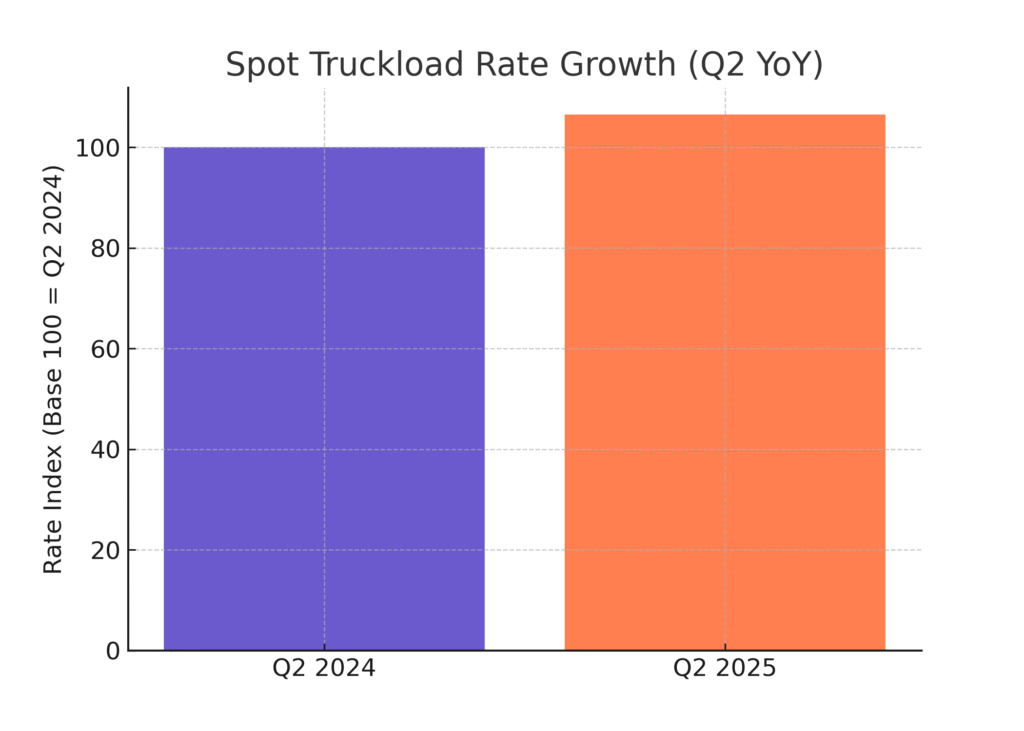
| 1 | Global logistics market valued at $11.23T | Market Size | 2025 | Shows the massive scale of freight logistics worldwide. |
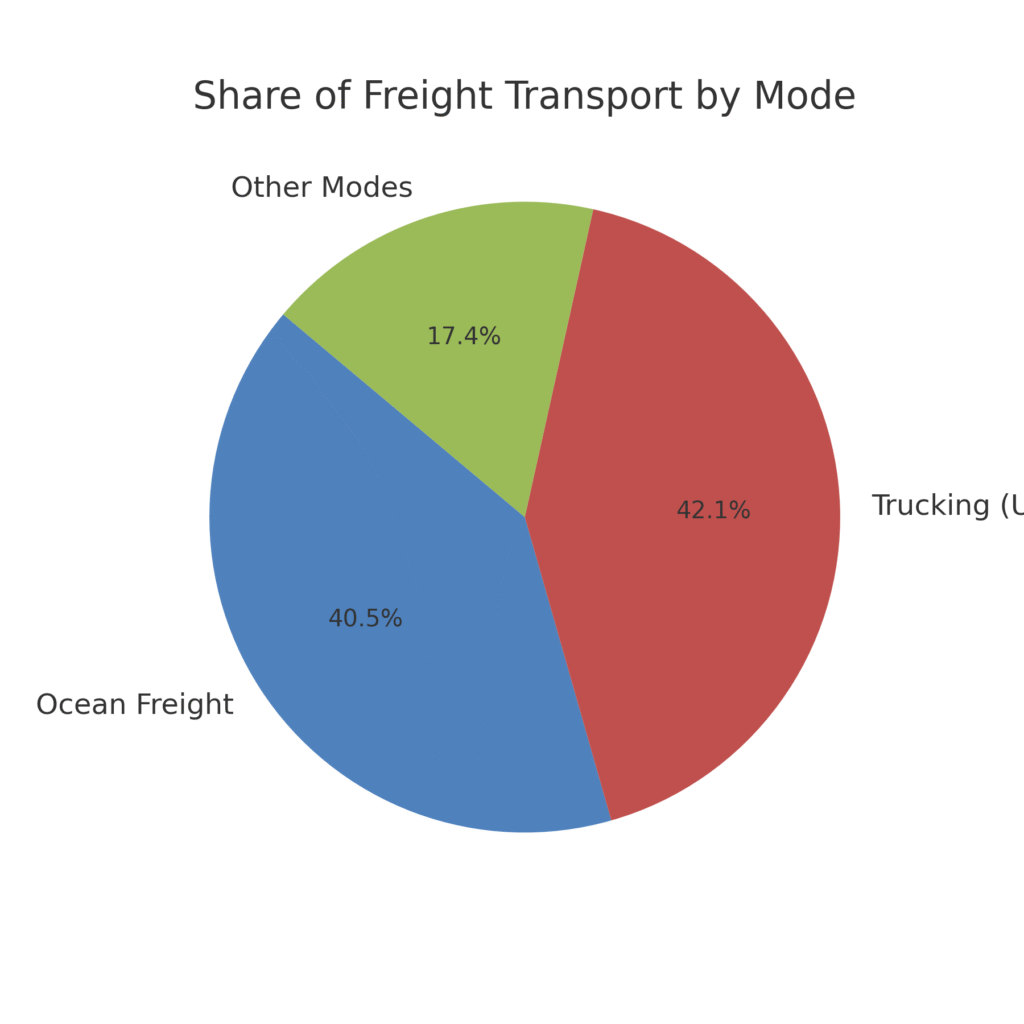
| 2 | Ocean freight makes up ~70% of global trade volume | Transport Mode | 2025 | Highlights the dominance of sea freight in global shipping. |
| 3 | Freight forwarding valued at $201.6B | Freight Forwarding | 2021 | Demonstrates steady growth in forwarding services. |
| 4 | 70% of cargo capacity listed on digital platforms | Digitalization | 2024 | Shows how booking has shifted to online platforms. |
| 5 | Freight companies operate at ~85% utilization | Capacity | 2025 | Indicates high demand and limited spare capacity. |
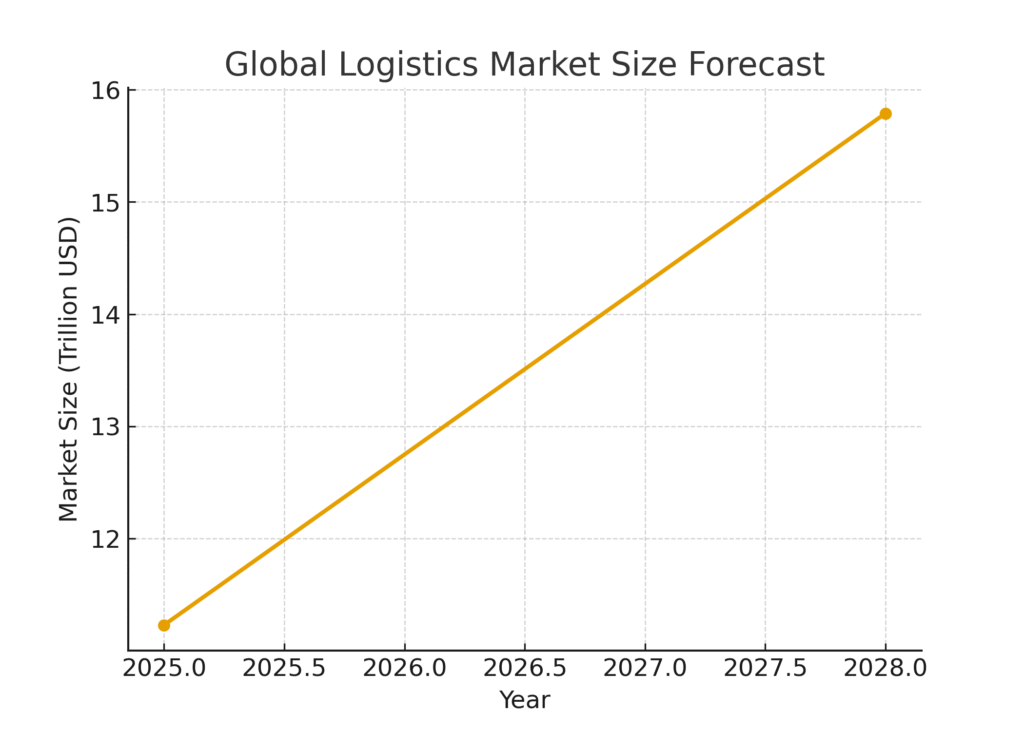
| 6 | Spot truckload rates rose 6.5% | Costs & Rates | Q2 2025 | Reflects inflation and demand shifts in trucking. |
| 7 | Trucks move 72.7% of U.S. freight | Trucking | 2024 | Confirms trucking as the backbone of U.S. logistics. |
| 8 | 1% tariff increase reduces demand by 0.15–0.25% | Tariffs | 2025 | Shows how tariffs directly affect freight demand. |
| 9 | Spot market is ~10% of trucking volume | Market Share | 2024 | Reveals the balance between contract and spot freight. |
| 10 | Cass Freight Index tracks 36M invoices yearly | Benchmark | Ongoing | Acts as a trusted measure of U.S. freight activity. |
| 11 | AI in logistics projected at $707B | Technology | 2034 | Shows AI adoption reshaping freight marketing. |
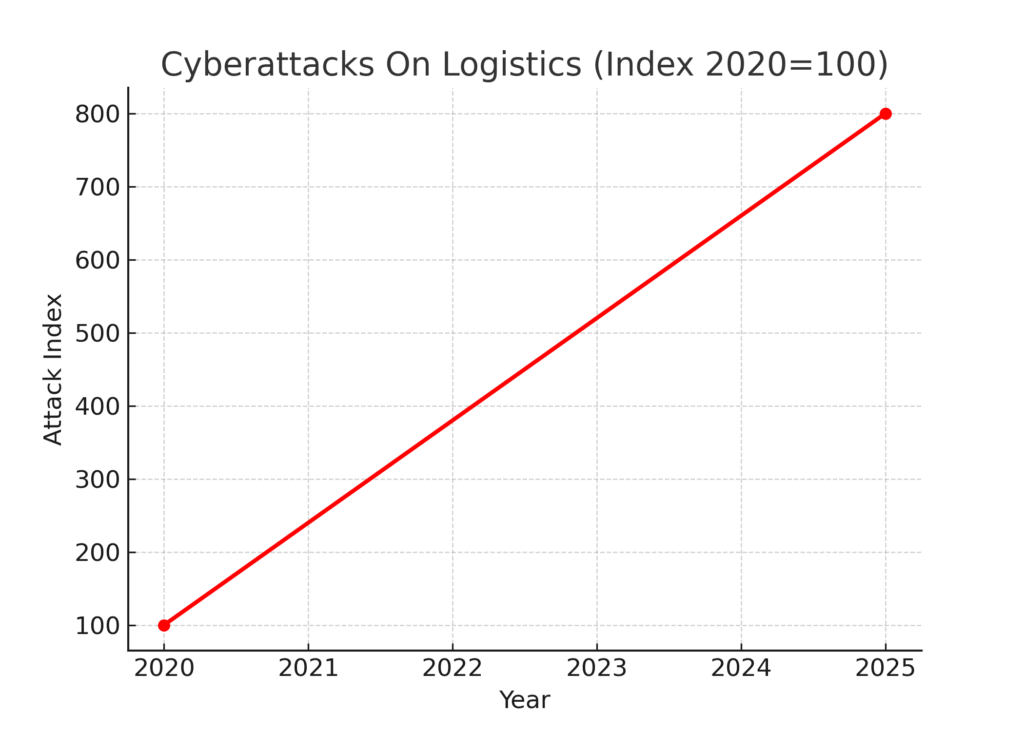
| 12 | Cyberattacks on logistics up 700% | Security | Since 2020 | Highlights growing risks for freight operators. |
| 13 | 63% of logistics pros saw demand rise | Demand | 2025 | Indicates strong activity in the sector. |
| 14 | 55% cite driver pay as retention strategy | Labor | 2025 | Driver shortages push companies to increase pay. |
| 15 | Trucking industry correcting after 2023 slump | Industry Cycle | 2025 | Market stabilizing after past volatility. |
| 16 | Freight rate forecasts ~98.8% accurate | Forecasting | 2024 | Shows reliability of predictive freight tools. |
| 17 | “No tariff impact” responses fell to 18% | Trade Policy | 2025 | More companies acknowledge tariff effects. |
| 18 | Freight demand remains soft despite inflation | Market Trends | 2025 | Cost pressure doesn’t always mean volume growth. |
| 19 | Freight cycles differ from macro cycles | Economics | Ongoing | Freight markets don’t always mirror the economy. |
| 20 | Q2 2025 spot rate growth softened | Rates | 2025 | Seasonal demand moderated upward pressure. |
Top 20 Freight Marketing Statistics 2025
Freight Marketing Statistics #1 – Global Logistics Market Valued At $11.23 Trillion
The global logistics industry reaching $11.23 trillion in 2025 shows just how massive this sector has become. This scale highlights the constant demand for freight services across nearly every industry. For marketers, it means there’s an enormous opportunity to position brands within this trillion-dollar space. The market’s size also proves that competition is fierce, so businesses need data-driven campaigns to stand out. I find it inspiring to see how marketing can actually help companies carve out their share in such a vast global market.
Freight Marketing Statistics #2 – Ocean Freight Makes Up 70% Of Global Trade Volume
With around 70% of goods moving by sea, ocean freight dominates international logistics. This reliance on sea transport shapes how companies market themselves to global shippers and manufacturers. It also means freight marketers need to understand seasonal shipping cycles and port logistics. By targeting campaigns at ocean freight decision-makers, marketers can tap into the majority of global trade. To me, this stat is a reminder that the ocean is still the backbone of world commerce.
Freight Marketing Statistics #3 – Freight Forwarding Valued At $201.6 Billion
Freight forwarding’s $201.6 billion valuation underscores its critical role in connecting businesses worldwide. Forwarders handle complex logistics, making them an essential partner for companies navigating global trade. For marketers, this creates a niche audience that values reliability and expertise. Campaigns that highlight problem-solving and efficiency will resonate with this segment. I see this as proof that even specialized areas of logistics hold massive revenue potential.
Freight Marketing Statistics #4 – 70% Of Cargo Capacity Listed On Digital Platforms
By 2024, about 70% of global cargo capacity is now listed on digital booking platforms. This digital shift changes how freight is marketed, moving away from phone calls and paper trails. It also opens opportunities for freight brands to market through online ads, SEO, and digital lead generation. The fact that so much of the market is digital proves that marketers need strong online strategies. Personally, I see this as one of the clearest signals that logistics is transforming fast.
Freight Marketing Statistics #5 – Freight Companies Operate At 85% Utilization
Running at 85% capacity means freight companies are pushing close to their operational limits. This creates both challenges and opportunities for marketing. On one hand, marketers can showcase how their brand helps optimize loads; on the other, they can stress reliability to win over shippers looking for space. High utilization also reflects strong demand, which is a selling point in itself. I think it shows how critical smart messaging is when competition for freight capacity is so tight.
Freight Marketing Statistics #6 – Spot Truckload Rates Rose 6.5%
Spot truckload rates rising by 6.5% in Q2 2025 signals inflation and market shifts. This kind of cost pressure affects shippers directly, making pricing transparency a key marketing angle. Marketers can leverage this stat to show how their services help manage or offset rate increases. It’s also a chance to position brands as cost-stable alternatives during volatility. For me, this stat reinforces that pricing trends always influence how freight services should be marketed.
Freight Marketing Statistics #7 – Trucks Move 72.7% Of U.S. Freight
Trucking remains the backbone of U.S. freight, carrying nearly three-quarters of goods. This dominance gives marketers a massive audience in trucking companies and logistics providers. Campaigns that focus on reliability, speed, and nationwide reach resonate strongly in this market. It also shows why the trucking industry consistently gets so much attention in freight marketing. To me, it’s clear: if you’re talking freight in the U.S., you’re talking about trucks first.
Freight Marketing Statistics #8 – 1% Tariff Increase Reduces Demand By 0.15–0.25%
Even small tariff increases ripple through the freight industry. A 1% increase cutting demand by up to 0.25% shows just how sensitive logistics is to trade policy. Marketers need to factor this volatility into messaging, emphasizing adaptability and resilience. Highlighting services that help clients handle tariffs can become a key differentiator. I find it fascinating that even policy details can shift the entire freight marketing narrative.
Freight Marketing Statistics #9 – Spot Market Is 10% Of Trucking Volume
The spot market only represents about 10% of total trucking volume, but it plays a crucial role in flexibility. This small yet impactful segment is where last-minute deals and urgent loads are booked. Marketing for this space often focuses on responsiveness and quick solutions. Spot market players can leverage urgency as part of their campaigns. To me, it’s proof that even the “smaller slices” of logistics have major marketing stories to tell.
Freight Marketing Statistics #10 – Cass Freight Index Tracks 36M Invoices Yearly
The Cass Freight Index is trusted because it processes around 36 million invoices every year. That level of data makes it a goldmine for marketers looking to forecast and benchmark. Referencing this index in campaigns adds credibility and authority. For shippers, the index signals transparency and data-driven decision-making. I see this as a reminder that freight marketing often works best when backed by credible numbers.
Freight Marketing Statistics #11 – AI In Logistics Projected At $707 Billion
AI in logistics is forecast to hit $707 billion by 2034, showing its explosive growth. For marketers, this means highlighting AI-driven efficiency can set brands apart. Campaigns can focus on predictive analytics, automation, and smarter supply chain solutions. AI’s rise also proves that the freight industry is ready for high-tech messaging. Personally, I think this stat is exciting because it shows the future of logistics is digital and intelligent.
Freight Marketing Statistics #12 – Cyberattacks On Logistics Up 700%
A 700% rise in cyberattacks since 2020 highlights the urgency of security in logistics. Freight companies are more vulnerable than ever, making cybersecurity a strong marketing angle. Marketers can showcase secure platforms as a way to build trust. Positioning services as both efficient and safe resonates in a market under pressure. For me, this stat proves that marketing in logistics isn’t just about speed, but also about safety.
Freight Marketing Statistics #13 – 63% Of Logistics Pros Saw Demand Rise
With 63% of logistics professionals reporting higher demand, the industry is clearly on the upswing. This optimism is an opportunity for marketers to highlight growth and success stories. Campaigns can emphasize scalability and readiness to meet rising demand. It also shows that freight marketing isn’t just about crisis management—it’s about growth too. I like this stat because it paints a hopeful picture of where logistics is going.
Freight Marketing Statistics #14 – 55% Cite Driver Pay As Retention Strategy
Driver shortages are pushing 55% of companies to focus on higher pay and benefits. This workforce trend shapes marketing messages around stability and fairness. Marketers can highlight how companies treat their drivers as a selling point. It also means that culture and employment branding matter more in freight than ever. Personally, I think this stat humanizes logistics in a way that numbers often don’t.
Freight Marketing Statistics #15 – Trucking Industry Correcting After 2023 Slump
After a tough contraction in 2023, the trucking industry is now stabilizing. This correction is a chance for marketers to talk about resilience and recovery. Campaigns can showcase how companies survived and are now stronger. It also provides context for forecasting and strategic planning. For me, this stat reminds us that freight is cyclical, but marketing helps smooth those cycles.
Freight Marketing Statistics #16 – Freight Rate Forecasts 98.8% Accurate
Freight rate forecasts being nearly 99% accurate demonstrates the power of predictive analytics. Marketers can lean on this precision to promote data-driven services. It reassures customers that they can trust the numbers. Campaigns centered on foresight and reliability connect well with shippers. Personally, I see this stat as proof that good data equals good marketing.
Freight Marketing Statistics #17 – “No Tariff Impact” Responses Fell To 18%
Only 18% of companies now say tariffs don’t affect them, down from 23%. This shift shows businesses are feeling the squeeze of trade policy more directly. Marketers can frame services as solutions to these policy challenges. It’s also a chance to talk about adaptability and global reach. I think this stat highlights how closely freight marketing follows world politics.
Freight Marketing Statistics #18 – Freight Demand Remains Soft Despite Inflation
Even with rising costs, demand in freight has stayed relatively soft. This mismatch is tricky for companies trying to balance volume with pricing. For marketers, it’s a chance to highlight efficiency and cost control. Campaigns can position services as a way to maintain stability during tough times. Personally, I find this stat interesting because it shows that cost pressure doesn’t always equal growth.
Freight Marketing Statistics #19 – Freight Cycles Differ From Macro Cycles
Freight markets don’t always move in sync with the broader economy. This independence means marketers need freight-specific data, not just general economic indicators. Campaigns can position brands as specialists who understand these unique cycles. It also highlights the importance of industry benchmarks. I see this stat as a reminder that freight has its own rhythm, and marketing needs to match it.
Freight Marketing Statistics #20 – Q2 2025 Spot Rate Growth Softened
Spot rate growth softened in Q2 2025, even though it was still positive. This shows how seasonality and demand shifts affect pricing. Marketers can use this to promote adaptability in pricing models. Campaigns can highlight flexibility as a key value for customers. For me, this stat wraps everything up by showing how dynamic freight truly is.
Wrapping Up the Freight Marketing Insights
Looking back at these 20 statistics, I’m struck by how interconnected the freight world really is—capacity, technology, workforce, and demand all weave together to shape where the industry is heading. What stands out most to me is how quickly change can happen: a new tariff, a surge in AI, or even a shortage of drivers can ripple across the entire supply chain. For me personally, putting these stats together wasn’t just about gathering numbers; it was about understanding how the freight industry continues to evolve and how marketers like us can find opportunities in that change. I hope these insights give you the same mix of clarity and inspiration they gave me. And if you’re like me, already thinking about how to apply this data to real-world campaigns, then I’d say this little journey through freight marketing has been worth it.
SOURCES