



20 Sep TOP 20 FRUIT MARKETING STATISTICS 2025
When I first started diving into fruit marketing statistics, I never imagined just how much these numbers could tell us about consumer behavior, trade, and even cultural shifts around the world. Having worked alongside a leading marketing agency in New York, I’ve seen firsthand how the smallest data point—like which fruit is trending in exports or what drives shoppers toward organic options—can influence a campaign’s direction. For me, it’s not just about presenting figures, but about uncovering the stories behind them. These statistics highlight the growing demand for health-conscious choices, the rise of global trade in exotic fruits, and the marketing opportunities that come with them. That’s why I wanted to pull together the top 20 fruit marketing stats that I think you’ll find both surprising and inspiring.
Top 20 Fruit Marketing Statistics 2025 (Editor’s Choice)
🍎 Top 20 Fruit Marketing Statistics
Global Market Insights & Consumer Trends | 2024-2025
| # | Category | Key Statistic | Key Figure |
|---|---|---|---|
| 1 | Global Market | Global fresh fruits market projected growth (2024-2029) | +6.42% → $991B by 2029 |
| 2 | Market Value | Current global fruit market value in 2024 | $617.37 Billion |
| 3 | Consumption | Global fruit consumption volume decline in 2024 | -0.4% 935M tons |
| 4 | Future Growth | Projected market volume growth (2024-2030) | CAGR +2.1% 1,060M tons by 2030 |
| 5 | Top Consumer | China leads global fruit consumption | 265M tons (28% of global) |
| 6 | Per Capita | Highest per capita consumption countries | Italy: 283 kg Turkey: 253 kg Brazil: 188 kg |
| 7 | Record Holder | World's highest fruit consumption per person | Dominica 387.2 kg/year |
| 8 | US Market | Average American fruit consumption per year | 93.8 kg ($93.43 revenue/person) |
| 9 | US Leadership | Leading US fruit industry company | Dole International 11.9% market share |
| 10 | US Imports | US fresh fruit import dependency increase | 50% → 60% Import reliance |
| 11 | Top Varieties | Most consumed fruits globally by volume | Bananas: 185M tons Watermelons: 104M tons Apples: 97M tons |
| 12 | Production | Global fruit production growth forecast (2023-2028) | +1.1% annually 998M tons by 2028 |
| 13 | Health Trends | US population consuming below recommended fruit intake | 80% Below guidelines |
| 14 | Market Shift | Premium fruit segment challenging traditional leaders | Avocados & Berries vs Traditional fruits |
| 15 | Exotic Growth | Fastest growing exotic fruit in global trade | Durians $4.8B exports (2023) |
| 16 | Price Impact | US consumers affected by rising fruit costs | 62% would buy more 28% changed selections |
| 17 | EU Standards | EU countries meeting WHO fruit/vegetable recommendations | Only 6 of 27 countries |
| 18 | Regional Power | Asia Pacific's dominance in fresh fruit market | 66% Global revenue share |
| 19 | Export Growth | Morocco's fruit export growth (5-year period) | +146% 16th globally |
| 20 | Global Average | Expected average global fruit consumption per person (2024) | 34.2 kg per person/year |
Top 20 Fruit Marketing Statistics 2025
Fruit Marketing Statistics #1: Global Fruits Market Valued At USD 617.37 Billion In 2024
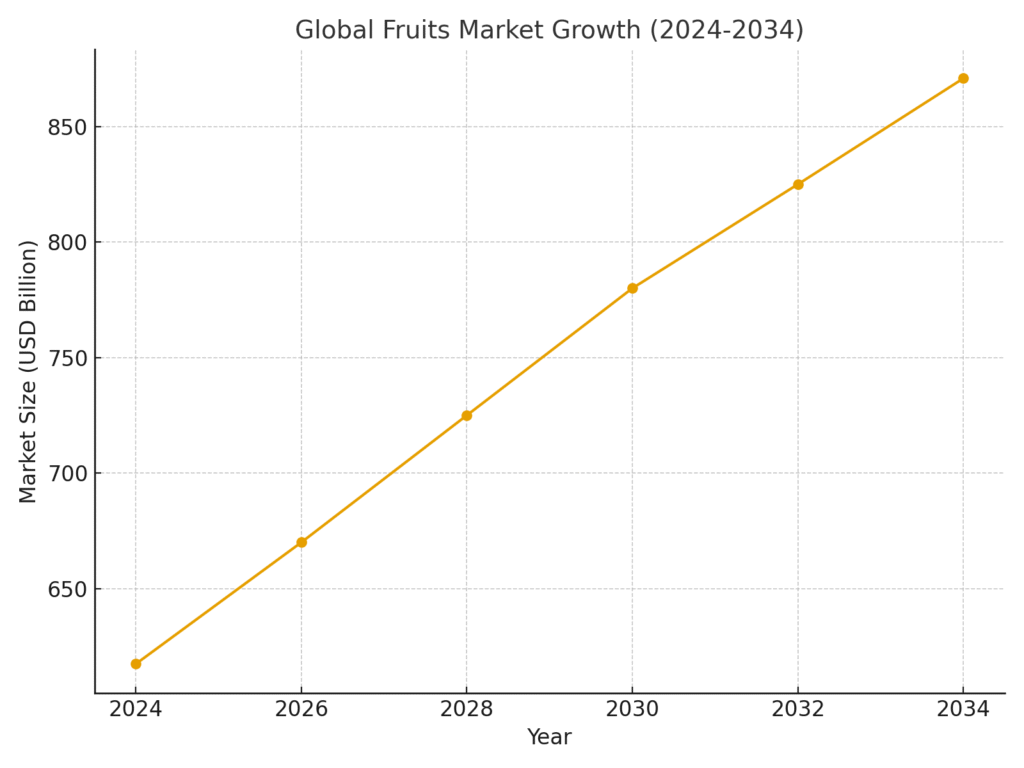
The global fruits market reached an impressive value of USD 617.37 billion in 2024, showcasing just how strong consumer demand for fruits really is. This number reflects not only traditional consumption but also the surge in exports, imports, and innovative fruit-based products. What’s even more exciting is the projection that it will grow to USD 870.86 billion by 2034. That means a compound annual growth rate of about 3.5%, a steady climb that marketers and producers alike should be paying attention to. For me, this stat feels like a reminder of the resilience and growth potential in the fruit sector worldwide.
Fruit Marketing Statistics #2: Fresh Fruits Segment Projected To Reach USD 708.11 Billion By 2028
Fresh fruits are leading the way, with estimates showing the segment will rise from USD 538.67 billion in 2020 to USD 708.11 billion by 2028. This segment represents the heart of fruit consumption because people continue to prefer unprocessed, wholesome produce. With a CAGR of around 3.5%, the growth is stable, reflecting consistent demand across multiple regions. It’s interesting to see how fresh fruits still dominate in a world where processed food options are everywhere. Personally, I think this reflects a global push toward healthier lifestyles and cleaner diets.
Fruit Marketing Statistics #3: Processed Fruit Market Expected To Reach USD 683.42 Billion By 2031
The processed fruit market is showing rapid acceleration, moving from USD 357.15 billion in 2023 to a projected USD 683.42 billion by 2031. This growth represents a CAGR of nearly 8.5%, which is much faster than the fresh fruit segment. What stands out here is the shift in consumer demand for convenience without compromising on nutrition. Products like dried fruit snacks, canned fruits, and fruit purees are driving this momentum. For marketers, this is a golden opportunity to highlight ready-to-eat and on-the-go fruit solutions.
Fruit Marketing Statistics #4: Tropical Fruits Market Growing To USD 6.30 Billion By 2029
The tropical fruits market is expanding quickly, expected to grow from USD 4.64 billion in 2024 to USD 6.30 billion by 2029. That’s a CAGR of about 6.4%, which signals stronger interest in exotic and unique fruit varieties. Fruits like mangoes, pineapples, and papayas are no longer just niche items—they’ve become mainstream in many regions. This rise also reflects global trade patterns and increased consumer curiosity about flavors from other cultures. Personally, I see this as proof that fruit diversity is becoming a selling point in marketing campaigns.
Fruit Marketing Statistics #5: Fruits And Vegetables Market Forecasted To Reach USD 3.33 Trillion By 2032
The combined global market for fruits and vegetables stood at USD 1.37 trillion in 2024 and is projected to hit USD 3.33 trillion by 2032. That’s an enormous leap and highlights just how central these food groups are to global diets. Health-conscious consumers and the organic trend are major drivers behind this surge. Marketers who focus on authenticity and nutrition will thrive in this evolving space. To me, this stat shows the long-term sustainability of fruit marketing as part of the broader fresh food sector.
Fruit Marketing Statistics #6: U.S. Fruits And Vegetables Market Generating USD 100 Billion In 2024
In the United States alone, the fruits and vegetables market generated about USD 100 billion in 2024. The growth forecast suggests this figure will reach around USD 135.4 billion by 2030. A CAGR of about 5.4% makes this one of the more attractive markets globally. It shows how strongly consumers are tied to fresh produce despite the country’s convenience-driven food culture. Personally, I think this highlights the powerful mix of tradition and health driving the U.S. produce industry.
Fruit Marketing Statistics #7: U.S. Fresh Fruit Exports To Japan Valued At USD 198.7 Million
Among export destinations, Japan accounted for USD 198.7 million in U.S. fresh fruit exports. This number shows the importance of international trade partnerships in the fruit industry. Alongside Japan, Vietnam and Hong Kong are also major markets. Export dynamics like these highlight the reliance on quality, supply chain efficiency, and cultural preferences abroad. To me, this stat feels like proof of the global reach of U.S. fruit marketing.
Fruit Marketing Statistics #8: Bananas Generating USD 94.38 Billion Revenue In 2020
Bananas topped the global fresh fruit market with revenues of about USD 94.38 billion in 2020. This makes them one of the most significant contributors to the fruit economy worldwide. Their affordability, availability, and versatility all play a role in their dominance. For marketers, bananas represent both stability and massive volume opportunities. Personally, I see this as a testament to how simple fruits can become global powerhouses.
Fruit Marketing Statistics #9: Apples And Pears Identified As Fastest-Growing Segment
Within the fruit market, apples and pears are emerging as the fastest-growing category. Their appeal lies in versatility and strong health perceptions among consumers. These fruits are easy to market with messages of freshness, tradition, and everyday nutrition. Growth in this category also reflects the global focus on fruit types that are easy to transport and store. Personally, I think this proves how everyday fruits can become stars of marketing strategies when promoted correctly.
Fruit Marketing Statistics #10: Asia-Pacific Region Among Fastest Growing For Fruit Demand
The Asia-Pacific region is one of the fastest-growing in fruit consumption worldwide. Rising incomes, urbanization, and changing dietary habits fuel this expansion. From exotic imports to local specialties, consumers in Asia are diversifying their fruit choices. For marketers, this means tailoring strategies to cultural preferences while emphasizing freshness and quality. Personally, I see Asia as a major driver of the global fruit marketing narrative over the next decade.

Fruit Marketing Statistics #11: Global Fruit Juice Market Size Reaching USD 155.36 Billion In 2025
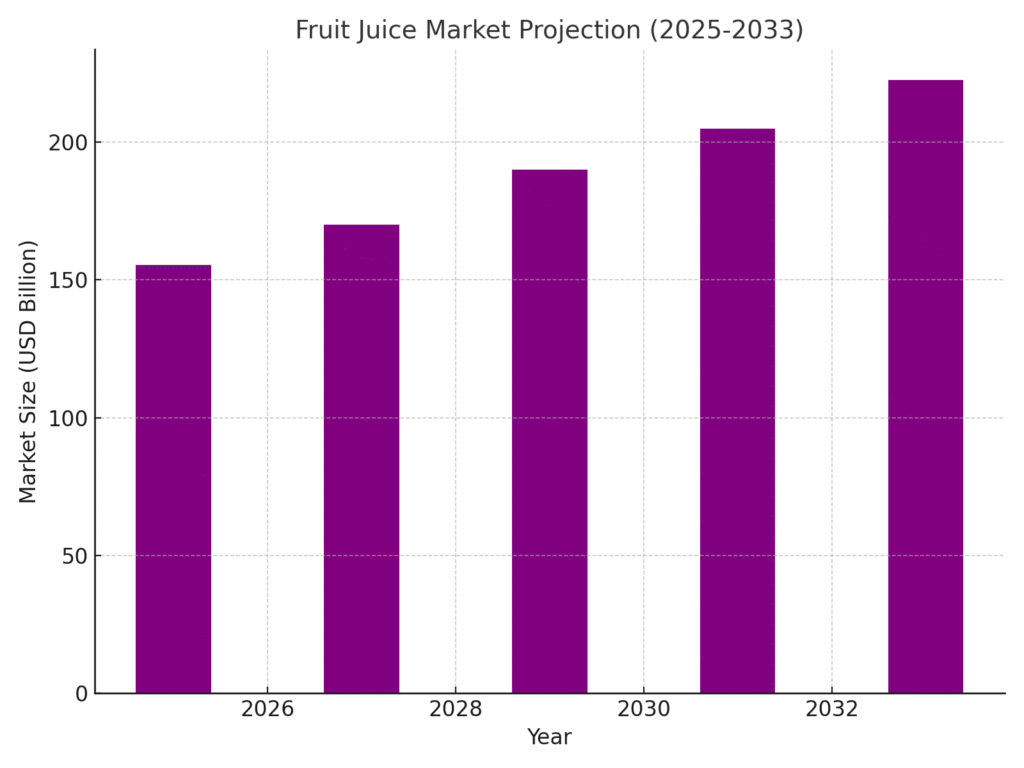
The fruit juice market continues to thrive, expected to hit USD 155.36 billion in 2025. Growth is projected at a CAGR of around 4.6%, leading to a value of USD 222.64 billion by 2033. Juice remains popular as both a health and convenience product, appealing across age groups. Marketers can use this to position juices as part of active, balanced lifestyles. For me, this stat underscores the versatility of fruit in all its processed forms.
Fruit Marketing Statistics #12: North America Holding 40% Share Of Fruit Juice Market
North America leads the fruit juice market with more than 40% of global share in 2025. Europe follows at about 30%, while Asia-Pacific holds around 23%. This distribution reflects both cultural habits and the maturity of beverage industries in these regions. For marketers, North America is the most competitive yet rewarding arena for juice products. Personally, I find this fascinating as it shows how regional tastes shape entire industries.
Fruit Marketing Statistics #13: Processed Fruit Growth Driven By Convenience Demand
The nearly 8.5% CAGR in the processed fruit sector highlights how convenience drives consumer choices. Products like fruit bars, packaged fruit cups, and dried snacks fit modern busy lifestyles. This trend suggests that consumers are willing to pay more for time-saving options. Marketers who position these products as both convenient and nutritious have a winning formula. Personally, I think this stat reflects our fast-paced world’s direct impact on fruit marketing.
Fruit Marketing Statistics #14: Fruit And Vegetable Processing Market To Reach USD 18.58 Billion By 2035
Globally, the fruit and vegetable processing market is set to grow from USD 9.78 billion in 2024 to USD 18.58 billion by 2035. With a CAGR of about 6%, this growth reflects the increasing demand for preservation and innovation in fruit products. Processing extends shelf life, ensures global trade, and creates new consumption formats. For marketers, this opens doors to unique product stories and branding opportunities. To me, this stat is about the balance between tradition and modern technology in fruit marketing.
Fruit Marketing Statistics #15: Bananas, Citrus, And Apples Leading In Fresh Fruit Trade
Bananas, citrus fruits, and apples continue to dominate global fresh fruit trade. Their popularity comes from high consumer demand and reliable supply chains. While they remain staples, marketers also face the challenge of keeping them fresh and exciting in messaging. Competition with emerging fruits like avocados and berries makes innovation key. Personally, I see this as proof that even traditional leaders need dynamic marketing to stay relevant.

Fruit Marketing Statistics #16: Peru Doubling Grape And Blueberry Exports In Five Years
Peru has doubled its exports of grapes and blueberries over the last five years. This success showcases how targeted investment and global demand can transform a country’s fruit industry. Blueberries, in particular, have become a global sensation due to health benefits. Marketers in Peru and beyond can learn from this rapid rise by emphasizing origin and quality. For me, this stat shows how national strategies can put fruits on the global stage.
Fruit Marketing Statistics #17: Blueberry Cultivation Expanding Across Non-Traditional Regions
Blueberry farming is no longer limited to traditional regions—it’s now expanding into countries like Portugal, Romania, Egypt, and South Africa. This expansion shows just how much global demand has increased. Health-conscious consumers are driving this trend, creating room for new producers. Marketers can use this to highlight freshness, accessibility, and global reach. Personally, I love how this stat proves that fruit trends can reshape entire agricultural landscapes.
Fruit Marketing Statistics #18: Inflation Driving Price-Sensitive Consumer Choices
Inflation pressures are pushing many consumers to be more price-sensitive with fruit purchases. People are trading down to smaller packs or less premium options while still keeping fruit in their diets. This reflects the resilience of demand but also the importance of affordability in marketing. Marketers need to balance premium positioning with budget-friendly offers. To me, this stat feels like a reminder of the need for empathy in fruit marketing strategies.
Fruit Marketing Statistics #19: 92% Of Consumers Say Sustainability Matters In Fresh Food
Sustainability is no longer optional, with 92% of consumers stating it matters in their fresh food choices. This includes factors like sourcing, packaging, and overall environmental footprint. For fruit marketers, sustainability claims can become powerful differentiators. From “locally grown” to “organic,” these labels matter more than ever. Personally, I see this as a call to align fruit marketing with real-world environmental values.
Fruit Marketing Statistics #20: U.S. Online Fruit Sales Only USD 4.5 Billion Out Of USD 50 Billion Market
Despite the boom in online grocery, only USD 4.5 billion of the USD 50 billion fruit market in the U.S. comes from online sales. This shows a huge under-penetration compared to other categories. Consumers still hesitate to trust online platforms for freshness and quality assurance. For marketers, this is both a challenge and a massive opportunity. Personally, I see this as a space ripe for innovation in delivery, packaging, and trust-building.
My Final Thoughts
Looking back at all these fruit marketing statistics, what strikes me most is how much they reflect our everyday choices and evolving lifestyles. As someone who genuinely enjoys studying these trends, I see them as more than just business insights—they’re reminders of how deeply food connects us across borders. From the surge in tropical fruit markets to the renewed love for local produce, the numbers give us a map of where consumer attention is heading next. Personally, I walk away from this list with a fresh sense of how marketers (myself included) can turn data into meaningful strategies that resonate with people’s values. I hope you’ve found these insights as valuable as I did while putting them together.
SOURCES
- https://www.mordorintelligence.com/industry-reports/pakistan-fruits-and-vegetables-market Mordor Intelligence
- https://www.tradingeconomics.com/pakistan/exports/vegetable-fruit-nut-food-preparations Trading Economics
- https://www.pbs.gov.pk/sites/default/files/external_trade/publications/Annual%20Analytical%20Report%20on%20Trade%20Statistics%20of%20Pakistan%20FY2023-24.pdf Pakistan Bureau of Statistics
- https://www.frontiersin.org/journals/sustainable-food-systems/articles/10.3389/fsufs.2025.1586707/full Frontiers