



17 Sep TOP 20 GARAGE MARKETING STATISTICS 2025
When I first started digging into garage marketing statistics, I realized how much they reveal about the way people actually choose repair shops, garage door services, and storage solutions today. From customer search habits to industry growth, every number tells a story that can shape smarter strategies. As someone who’s worked alongside a leading marketing agency in New York, I’ve seen firsthand how these insights help transform local garages into trusted brands. What excites me most is that these stats aren’t just abstract figures—they’re real signals of where opportunities lie for any garage owner or marketer who wants to stay competitive.
Top 20 Garage Marketing Statistics 2025 (Editor’s Choice)
🚗 Top 20 Garage Marketing Statistics
Essential Data-Driven Insights for Automotive Service Success in 2025
| # | Category | Key Statistic | Description & Impact |
|---|---|---|---|
| 1 | Market Growth | $19.8B → $37.3B 6.5% CAGR | Global garage & service station market projected growth by 2035. Massive expansion opportunity in the automotive service sector. |
| 2 | Equipment Market | $31.8B → $75.3B 9.0% CAGR | Automotive garage equipment market boom driven by digitalization and advanced vehicle technology requirements. |
| 3 | Market Share | 39% Revenue Share | Mechanical repair garages lead the market, contributing the largest portion of total industry revenue in 2025. |
| 4 | Customer Behavior | 95% Research Online | Nearly all car shoppers bypass dealerships initially and start their journey with online research and information gathering. |
| 5 | Digital Preference | 2x More Online Research | Automotive consumers are twice as likely to start research online versus visiting a dealer first - digital-first approach dominates. |
| 6 | Search Behavior | 76% Search Before Buying | Three-quarters of vehicle shoppers conduct online searches before making purchase decisions - SEO is crucial. |
| 7 | Conversion Rates | 2% Average → 16% Top Performers | Industry average conversion rate vs. top performers - huge opportunity for optimization and revenue growth. |
| 8 | Organic Performance | 1.57% Organic Rate | Benchmark organic conversion rate for automotive industry - strong ROI potential from SEO investments. |
| 9 | Service vs Sales | 5.72% vs 12.61% | Auto repair & parts services convert significantly higher than dealership sales - service focus pays off. |
| 10 | Channel Performance | 2.9% Social Conversion | Organic social media delivers the highest conversion rate among all major marketing channels in automotive. |
| 11 | Lead Management | 37% Leads Lost | Combined impact of missed 24-hour follow-ups (23.5%) and CRM entry failures (13.3%) - massive revenue leak. |
| 12 | Lead Cost | $283 Average | Average cost per automotive lead continues rising - efficient conversion becomes increasingly critical for profitability. |
| 13 | Phone Traffic | 48% Call Dealerships | Nearly half of website visitors make phone calls - call tracking essential for measuring true marketing ROI. |
| 14 | Acquisition Cost | $33.52 Google Ads | Lowest customer acquisition cost across all industries via Google Ads - automotive enjoys cost advantage. |
| 15 | Shop CAC Range | $33-75 Per Customer | Real-world customer acquisition costs for auto repair shops - varies significantly based on marketing strategy effectiveness. |
| 16 | Click Costs | $2.34 Sales vs $3.39 Service | Cost-per-click benchmarks show repair services command premium pricing but deliver higher conversion rates. |
| 17 | Traffic Sources | 38% Paid Search Traffic | Largest single traffic source for automotive websites - paid search remains dominant channel for customer acquisition. |
| 18 | Organic Search | 28% Organic Traffic | Substantial organic search volume provides long-term value - SEO investment delivers sustained traffic growth. |
| 19 | Email Marketing | 12.6% Open Rate | Industry average email open rate for automotive sector - consistent with broader automotive marketing benchmarks. |
| 20 | Phone vs Web | 30% Faster + 28% Higher Retention | Phone callers convert faster and show significantly higher retention rates compared to web-only leads - prioritize call optimization. |
Top 20 Garage Marketing Statistics 2025
Garage Marketing Statistics #1: U.S. Auto Repair Industry Has 162,000 Facilities
The U.S. auto repair industry is vast, with around 162,000 active facilities nationwide. This shows just how competitive the market is for any local garage trying to stand out. With over half a million mechanics employed, there’s a steady demand for skilled labor. From a marketing perspective, garages must differentiate themselves to capture local audiences. Standing out often comes down to visibility, customer trust, and clear messaging.
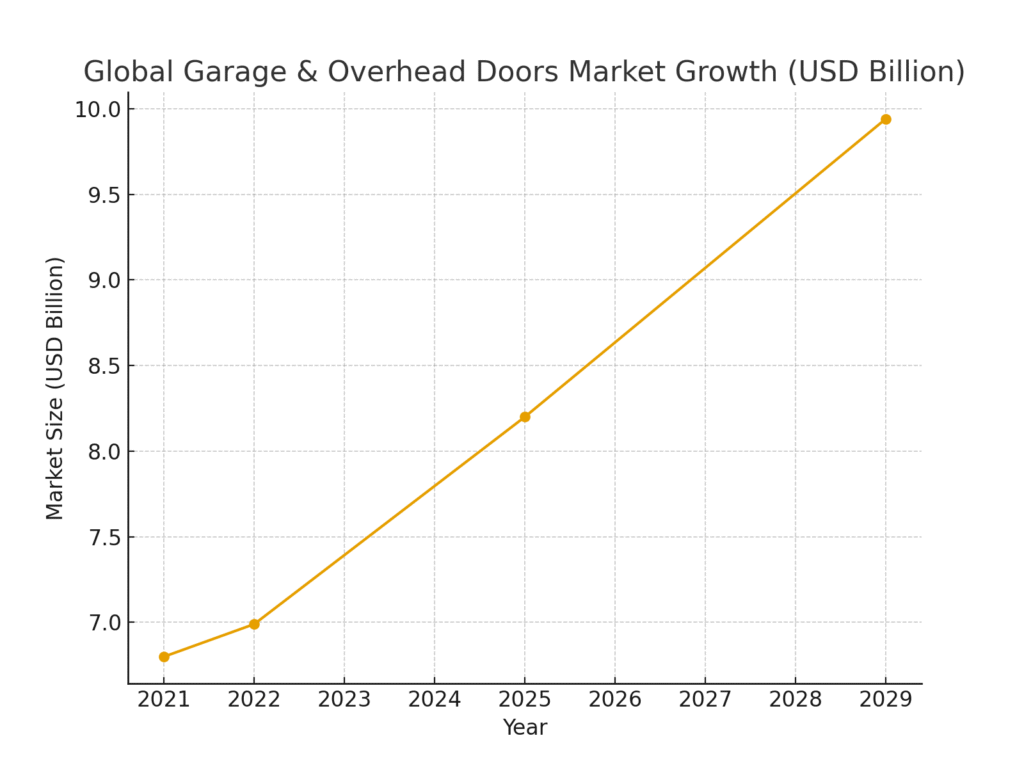
Garage Marketing Statistics #2: Global Garage And Overhead Doors Market Valued At $6.79–6.99 Billion
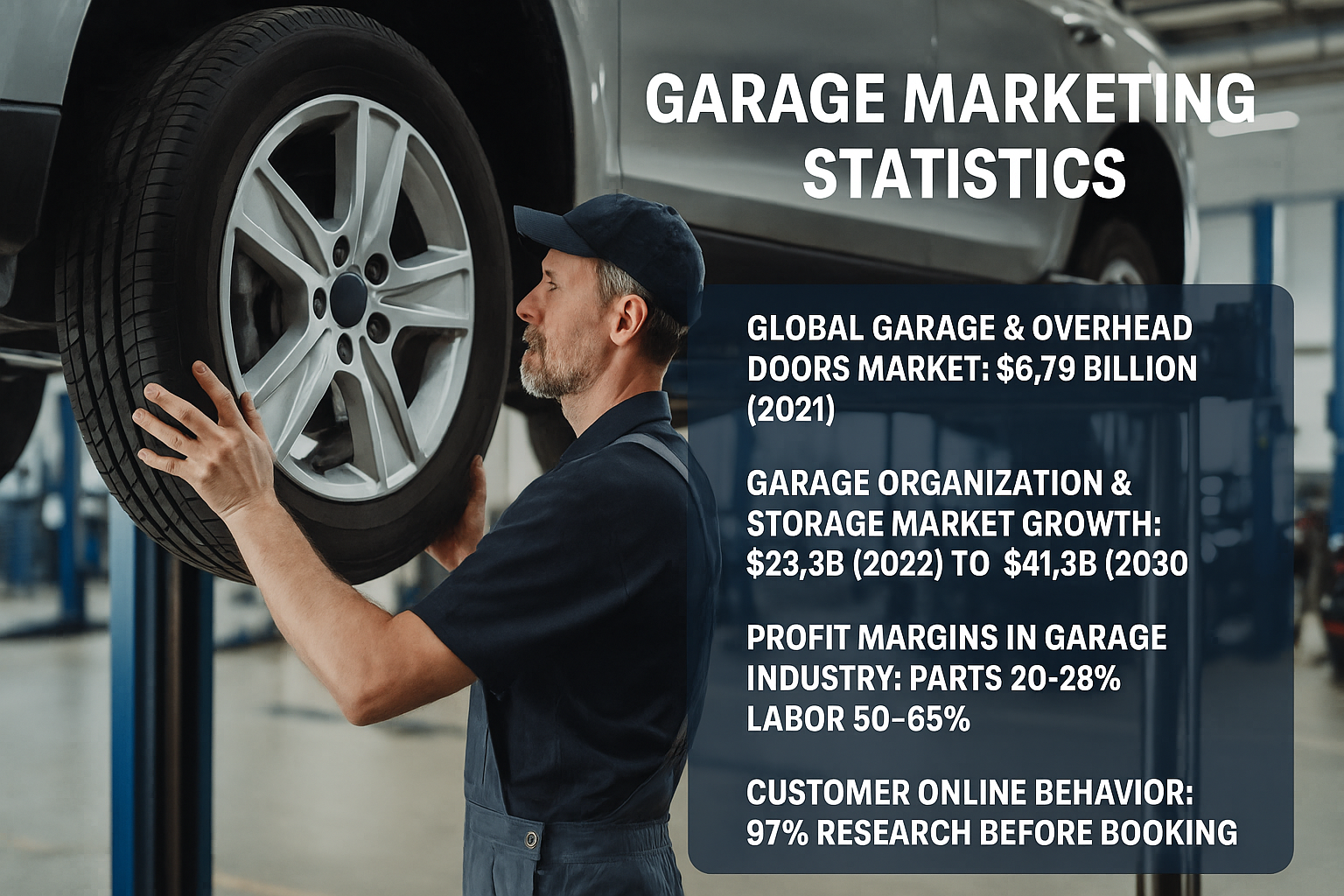
In 2021–22, the global garage and overhead doors market reached close to $7 billion. The sector continues to expand, with projections estimating nearly $10 billion by 2029. This growth signals rising investment opportunities in both residential and commercial garage solutions. Marketing for such products benefits greatly from highlighting durability and return on investment. For businesses, showcasing innovation and long-term value can set them apart from competitors.
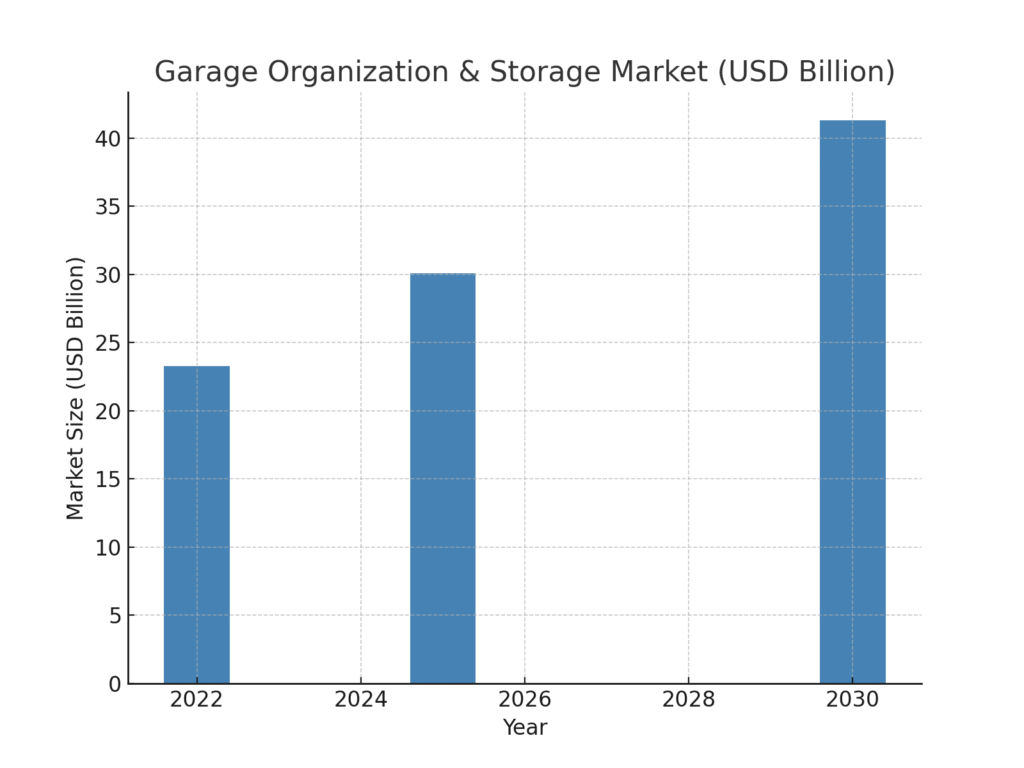
Garage Marketing Statistics #3: Garage Organization & Storage Market Worth $23.3 Billion
The garage organization and storage market was valued at $23.3 billion in 2022. Forecasts suggest it could grow to $41.3 billion by 2030. That’s a CAGR of around 7.4%, which is impressive in a niche but growing sector. For marketers, this means a clear opportunity to target homeowners interested in upgrades. Messaging around convenience, space optimization, and lifestyle improvement resonates strongly in this segment.
Garage Marketing Statistics #4: U.S. Parking Lots & Garages Market Size $13.2 Billion
In 2024, the U.S. parking lots and garages market size is approximately $13.2 billion. This highlights how critical garages are, not only for vehicles but also for real estate and city planning. Businesses operating in this sector must appeal to both functional needs and investment appeal. Marketing strategies often include safety, technology integration, and ease of access. Clear communication of value propositions helps gain customer confidence.
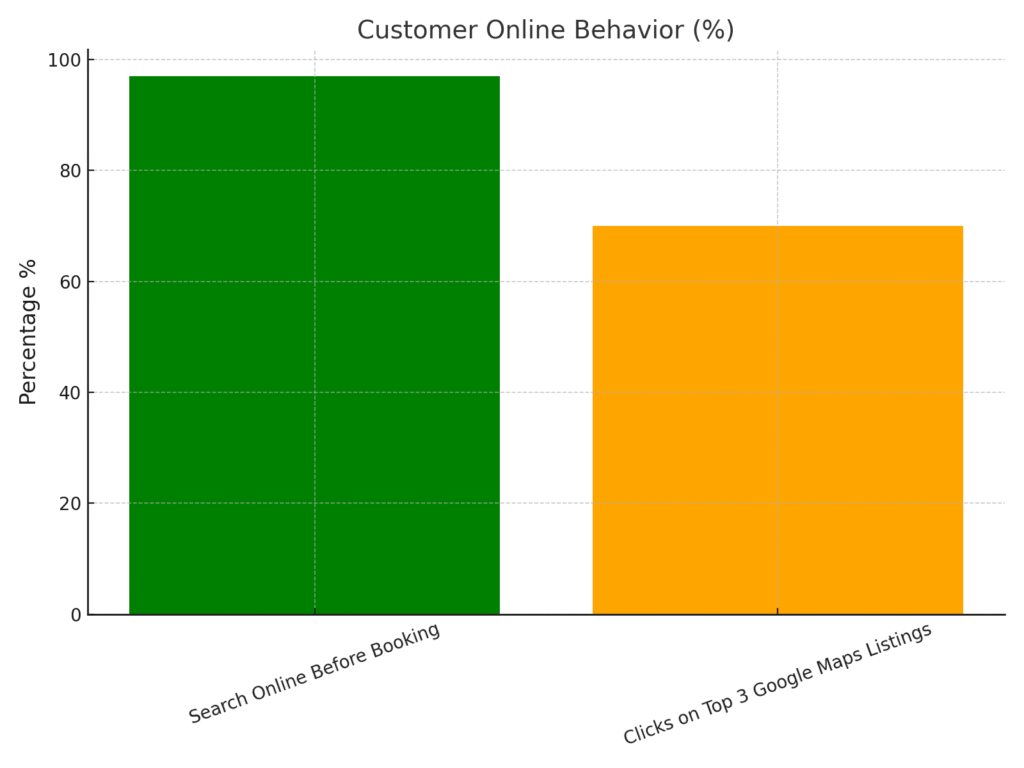
Garage Marketing Statistics #5: 97% Of Customers Search Online Before Booking Repairs
Nearly all customers—97%—now search online before choosing a garage. This stat alone makes digital presence non-negotiable for repair shops. A well-optimized website, strong SEO, and visible reviews make a huge difference. Without an online footprint, even skilled garages miss out on business. Marketing should focus heavily on local SEO and digital branding to stay relevant.
Garage Marketing Statistics #6: 70% Of Clicks Go To Top 3 Google Maps Listings
About 70% of online clicks in local search go to the top three Google Maps results. This means ranking high in local SEO can directly impact a garage’s lead volume. Customers trust these top results as more reputable or convenient. For marketers, this underscores the importance of consistent citations and positive reviews. The higher you rank, the more likely customers are to call or visit.
Garage Marketing Statistics #7: 62.3% Increase In Car Maintenance Demand Post-COVID
After the pandemic, car maintenance demand rose by 62.3%. This surge was driven by deferred servicing during lockdowns and later increased usage. Garages that positioned themselves as reliable and safe saw greater customer inflow. Marketing with themes of safety, hygiene, and quick service resonated strongly. The lesson is that responding to external trends can significantly boost garage business.
Garage Marketing Statistics #8: Average Car Ownership Lasts 8.4 Years
The average U.S. car owner now keeps their vehicle for 8.4 years. This creates ongoing opportunities for garages offering regular maintenance services. Longer ownership means higher demand for repairs, inspections, and part replacements. Marketing strategies should emphasize preventive care and long-term service plans. By building customer loyalty, garages can secure steady repeat business over time.
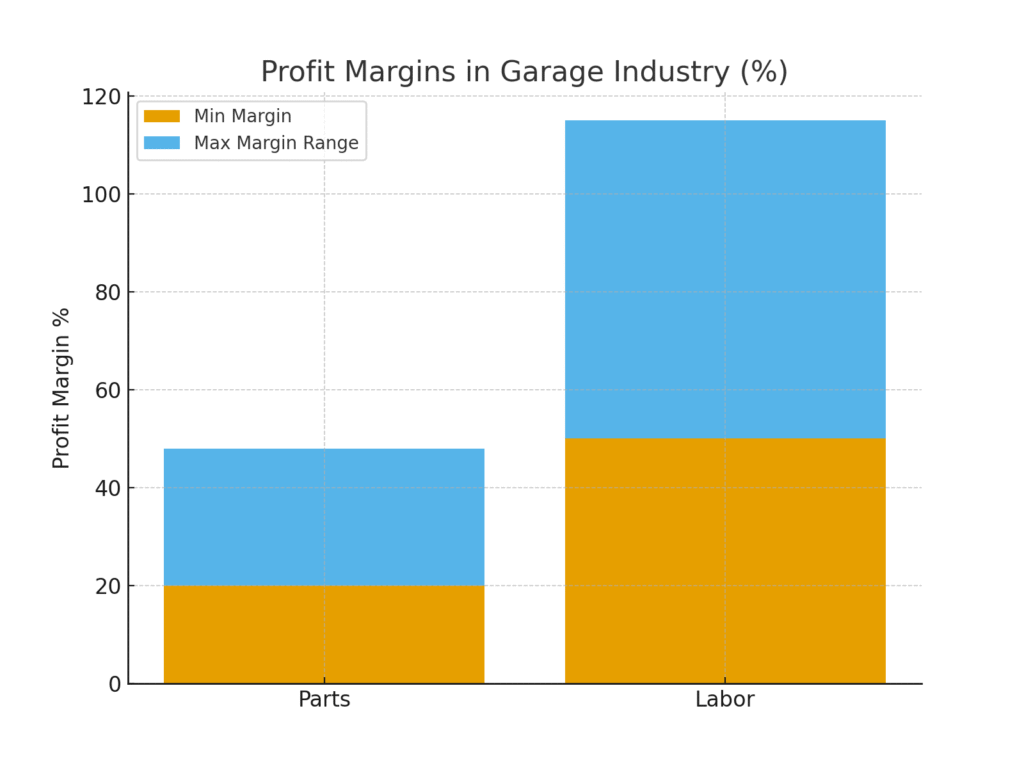
Garage Marketing Statistics #9: Parts Profit Margins At 20–28%
Auto repair shops earn 20–28% profit margins on parts. This indicates that while parts sales matter, they’re not the main driver of profitability. Marketing around parts alone may not be effective without tying it to services. Garages can boost revenue by bundling parts with maintenance packages. Customers respond better when they see value in combined solutions.
Garage Marketing Statistics #10: Labor Profit Margins At 50–65%
Labor generates higher profit margins for garages, ranging from 50–65%. This shows why skilled technicians are the backbone of profitability. Marketing efforts should highlight expertise, certifications, and quality of workmanship. Customers are willing to pay more for trusted and skilled labor. Trust-driven branding often leads to higher customer retention and referrals.
Garage Marketing Statistics #11: Garage Door Replacement Yields 102% ROI
Garage door replacement offers an ROI of about 102%. This makes it one of the most cost-effective home improvement projects. For marketers, this is a powerful message to homeowners considering upgrades. Highlighting long-term value and resale benefits can drive conversions. ROI-focused messaging works especially well in real estate and construction contexts.
Garage Marketing Statistics #12: 72% Of Shops Use Price-Focused Messaging
Around 72% of repair shops rely on price-driven promotions. While discounts attract customers, this also increases competition. A focus only on price can make it difficult to build brand loyalty. Marketers should balance affordability with service quality and trust. Differentiating on value and reliability can protect margins while still attracting leads.
Garage Marketing Statistics #13: Only 3% Of Shops Emphasize Specific Services
Surprisingly, just 3% of shops promote specific services like brakes or oil changes. This leaves a huge gap in service-oriented marketing. Customers searching for targeted solutions may not find these shops easily. By promoting niche services, garages can capture highly relevant local traffic. Focused messaging often converts better than broad generic ads.
Garage Marketing Statistics #14: Medium Shops Lead In Marketing Adaptation
Medium-sized shops, with 4–7 bays, are most likely to increase marketing budgets. They often adjust quickly to economic conditions compared to smaller or larger counterparts. This flexibility allows them to experiment with campaigns and promotions. Marketing agencies can tap into this segment by offering scalable solutions. Their willingness to adapt makes them ideal partners for innovative strategies.
Garage Marketing Statistics #15: 32% Of Shops Partner With Suppliers For Promotions
About 32% of auto repair shops run co-branded promotions with suppliers. This approach reduces marketing costs while boosting credibility. Customers often respond well to recognizable brand associations. For garages, this strategy enhances trust and brand authority. Partnerships can also open doors to larger marketing opportunities.
Garage Marketing Statistics #16: Local SEO Optimization Is Critical
Local SEO remains a cornerstone of garage marketing strategy. Shops with optimized Google Business Profiles see significantly higher engagement. Consistent NAP citations and strong review management improve rankings. Customers rely heavily on map packs when choosing services nearby. Ignoring local SEO almost guarantees missed opportunities in this space.
Garage Marketing Statistics #17: SEO For “Mechanic Near Me” Is Highly Effective
Ranking for “mechanic near me” searches leads to high-intent traffic. Customers using these terms are actively ready to book services. Garages that invest in SEO around such terms gain a strong competitive edge. Marketing efforts should focus on keyword optimization and local relevance. The conversion potential from these searches is exceptionally high.
Garage Marketing Statistics #18: Retargeting Campaigns Bring Back Lost Leads
Retargeting allows garages to reconnect with website visitors who didn’t book services initially. Ads follow potential customers across devices and apps. This keeps the brand top-of-mind until they’re ready to decide. Marketers see higher ROI from retargeting compared to cold outreach. It’s a proven method to boost conversions over time.
Garage Marketing Statistics #19: Automation Improves Repeat Business
Automation in marketing helps garages stay connected with customers. Appointment reminders, follow-ups, and service promotions build loyalty. Without automation, repeat business rates often drop. Customers appreciate timely and personalized communication. Investing in automation systems saves time while boosting long-term revenue.
Garage Marketing Statistics #20: Mechanics’ Average Age Is 40, With Vehicle Ownership Increasing
The average mechanic in the U.S. is about 40 years old, and vehicle ownership periods are lengthening. This combination points to long-term demand for repair services. Customers holding onto cars longer creates ongoing opportunities for garages. Marketing should emphasize reliability and long-term customer relationships. Stable workforce trends combined with rising service needs ensure a steady industry outlook.
Wrapping It All Up
Looking over these garage marketing statistics has been eye-opening for me, because they highlight both the challenges and the untapped potential in this industry. It’s clear that customer expectations are shifting, and the businesses that lean into digital strategies, local SEO, and authentic communication are the ones that will thrive. Personally, I find it inspiring that even small garages can use these insights to compete on the same playing field as bigger names. At the end of the day, what matters is not just having the numbers—but knowing how to use them to connect with people in meaningful ways.
SOURCES