



16 Sep TOP 20 GARDEN MARKETING STATISTICS 2026 REVEAL MASSIVE HOME GARDENING BOOM
TOP 20 GARDEN MARKETING STATISTICS (EDITOR’S CHOICE) THAT EXPLODE IN 2026
🌿 Top 20 Garden Marketing Statistics 2026
Essential Revenue-Driving Insights for Garden Industry Marketers
| # | Statistic | 2026 Value | Marketing Insight |
|---|---|---|---|
| 1 | Global Gardening Market Global | $213.20 Billion Projected 2026 value | Massive market with 60%+ household participation and 55% sustainability-driven purchases |
| 2 | US Landscaping Services United States | $188.8 Billion 726K businesses • 1.4M employees | 5.7% CAGR growth; invest in B2B partnerships and contractor channels |
| 3 | North America Market Share Regional | $72.49 Billion 34% of global market | 62% household participation; 54% prefer organic inputs |
| 4 | Asia-Pacific Market Regional | $57.56 Billion Fastest CAGR growth | 49% urban gardening participation; rooftop and terrace trends dominating |
| 5 | Lawn & Garden Consumables Global | $24+ Billion 4.3% CAGR to $29.55B by 2030 | Seeds segment growing fastest; focus on recurring purchase products |
| 6 | Home Gardening Market Global | $16.71 Billion 5.92% CAGR to $26.47B by 2034 | Smart gardening tech adoption driving growth among urban dwellers |
| 7 | Organic Fertilizers Market Global | $10.1 Billion 6.1% CAGR to $18.4B by 2036 | Chemical-free preference rising; eco-branding is mainstream |
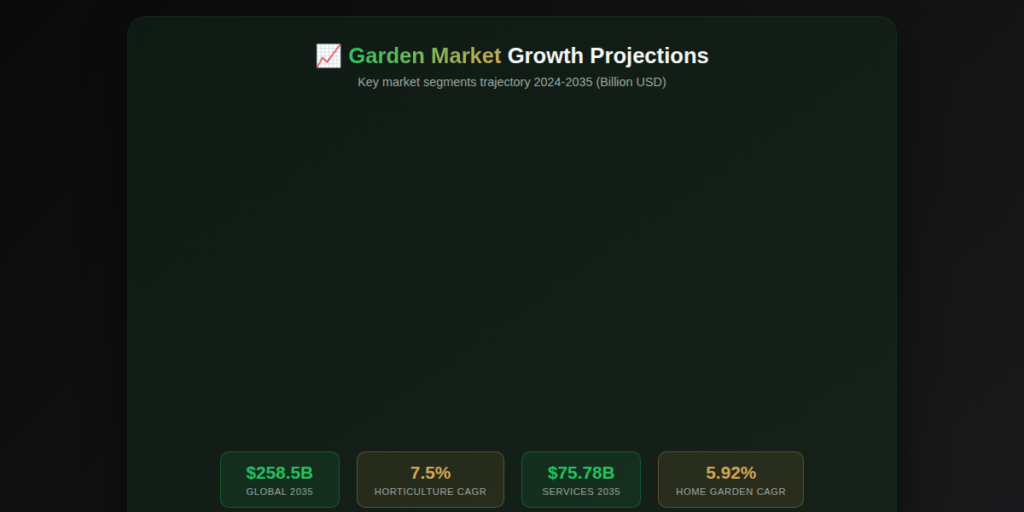
| 8 | Gardening & Horticulture Services Global | $39.53 Billion 7.5% CAGR to $75.78B by 2035 | Urban greening initiatives and smart irrigation fueling demand |
| 9 | Gen Z Gardening Time United States | 65.2% Plan More Time vs 37.2% for Gen X | Young consumers leading trend; prioritize social media and tech-forward products |
| 10 | Gen Y Gardening Spend United States | 63.9% Plan to Spend More Highest spending intent | Millennials driving premium purchases; target lifestyle investment messaging |
| 11 | Garden Expansion Plans United States | 63.6% Will Expand Record high intent | Gardeners investing more despite economic uncertainty |
| 12 | Monthly Landscaping Spend United States | $300/month avg Millennials: $701/month | Landscaping now regular household expense; premium services justified |
| 13 | IGC Information Source United States | 22% Top Source Surpassed websites (19.8%) | 28.5% cite IGCs for knowledgeable staff; expertise sells |
| 14 | Willingness to Travel for Plants United States | 52.1% Drive 6-10 Miles For specific varieties | 77% pay premium for specific colors; unique inventory drives traffic |
| 15 | Fertilizers Market Share Global | 32.9% of Consumables Largest segment | Eco-friendly formulations gaining traction; highlight safety and plant health |
| 16 | Household Gardening Rate United States | 55% Participation 71.5M households • 185M people | 70% of millennials identify as "plant parents" |
| 17 | Indoor Gardening Adoption North America | 46% Adoption Rate Urban living driver | Compact solutions and smart tech appeal to apartment dwellers |
| 18 | Sustainability Preference Global | 55% Influence Purchases Eco-friendly practices | Green credentials command premium; certifications matter |
| 19 | Time Spent Gardening United States | 50.2% Plan More Time Highest since 2022 | Growing time investment correlates with increased product purchases |
| 20 | Key Purchase Decision Factor United States | 36% Specific Variety Price: 19% • Tags: 11.6% | Variety selection trumps price; invest in unique cultivars and clear labeling |
TOP 20 GARDEN MARKETING STATISTICS 2026 REVEAL EXPLODING HOME GARDENING DEMAND
Garden Marketing Statistics #1 – Global Gardening Market Valued At USD 120 Billion In 2024
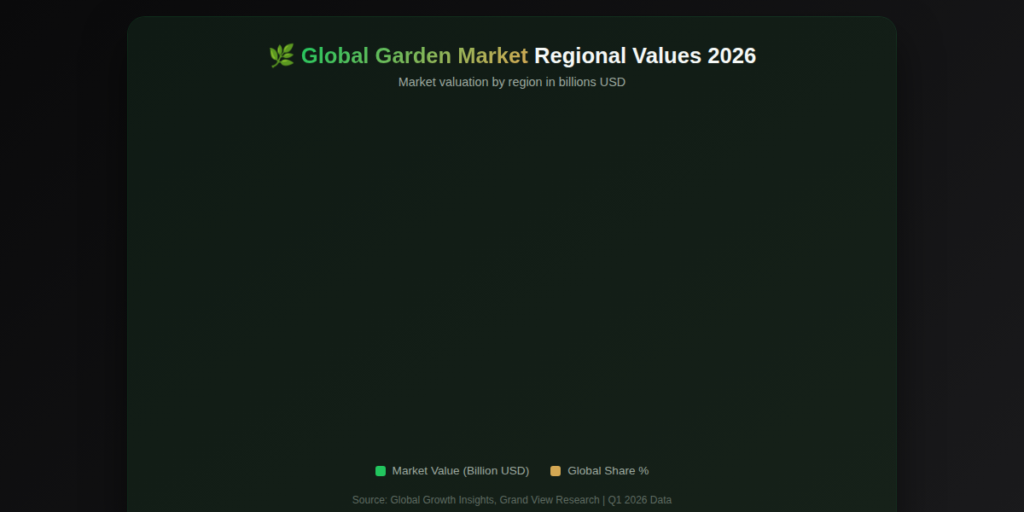
In 2026, the global gardening and horticulture market is projected to reach USD 213.20 billion according to Global Growth Insights, with household participation exceeding 60% engagement in gardening activities worldwide, sustainable gardening practices influencing approximately 55% of purchasing decisions, and North America alone accounting for a regional market size of approximately USD 72.49 billion driven by 62% of households engaging in regular gardening activities.
The gardening market reached a value of USD 120 billion in 2024, reflecting strong global demand. Consumers are increasingly investing in both indoor and outdoor gardening, showing that it’s no longer just a seasonal activity. Market projections indicate growth to USD 150 billion by 2030, with a CAGR of around 5%. This expansion is driven by sustainability trends and a rise in eco-friendly product use. Businesses in this sector have significant opportunities if they align with these consumer values.
Garden Marketing Statistics #2 – Lawn & Gardening Consumables At USD 23.1 Billion In 2024
In 2026, the global lawn and garden consumables market is projected to reach approximately USD 24 billion according to Grand View Research analysis, with the seeds segment expected to grow at the highest CAGR during the forecast period as homeowner interest in landscaping continues to surge, while online distribution channels are experiencing remarkable growth as 49% of offline sales are now being supplemented by rapidly expanding e-commerce platforms for garden supplies.
The consumables sector, which includes seeds, fertilizers, and pesticides, was valued at USD 23.1 billion in 2024. This figure highlights the steady demand for basic gardening essentials. By 2030, the market is forecast to grow to USD 29.55 billion, with a CAGR of 4.3%. These consumables are core products for both casual gardeners and professionals. Effective marketing here relies on emphasizing convenience, safety, and eco-friendliness.
Garden Marketing Statistics #3 – Gardening Market Size At USD 93.75 Billion In 2023
In 2026, the global gardening and horticulture market is estimated at USD 39.53 billion for services and goods pertaining to plant cultivation, landscaping, garden design, and maintenance according to Business Research Insights, with the market expected to reach USD 75.78 billion by 2035 at a CAGR of 7.5%, driven by urban greening initiatives, sustainability awareness, and evolving aesthetic preferences across both commercial and residential sectors.
In 2023, the global gardening market stood at USD 93.75 billion. Projections show the industry will reach approximately USD 157.04 billion by 2032. The 5.9% CAGR indicates strong, long-term demand. This trend demonstrates gardening’s evolution from hobby to lifestyle. Marketers can tap into this by showcasing gardening as an investment in well-being.
Garden Marketing Statistics #4 – Home Gardening Market Valued At USD 15.78 Billion In 2025
In 2026, the home gardening market is projected to reach approximately USD 16.71 billion according to Custom Market Insights analysis, with smart gardening technologies driving significant adoption as IoT-enabled sensors, automated irrigation systems, and mobile applications help both novice and experienced gardeners optimize plant care, while urban gardening innovations like container gardens, rooftop farms, and vertical planting systems continue enabling urban populations to grow fresh produce despite spatial constraints.
The home gardening market alone was valued at USD 15.78 billion in 2025. Forecasts suggest it could grow to USD 26.47 billion by 2034, with a 5.92% CAGR. This growth shows that gardening at home continues to resonate with homeowners and renters alike. Social media trends around DIY gardens and indoor plants support this rise. Businesses catering to this audience should focus on affordable kits and inspirational marketing.
Garden Marketing Statistics #5 – North America Holds 37.6% Market Share In 2024
In 2026, North America’s gardening and horticulture market is estimated at approximately USD 72.49 billion based on the regional market value according to Global Growth Insights, with nearly 62% of households engaging in regular gardening activities, indoor gardening adoption reaching close to 46% due to urban living patterns, and organic gardening inputs preferred by nearly 54% of consumers indicating strong sustainability-driven purchasing behavior across the region.
North America remains the largest market, accounting for 37.6% of gardening consumables revenue in 2024. This dominance reflects high household participation in gardening. Consumers in this region often spend more on premium gardening products. Marketing strategies that emphasize quality and expertise resonate strongly here. It’s also a region where eco-friendly innovations can gain rapid traction.
Garden Marketing Statistics #6 – Asia-Pacific To Experience Fastest Growth By 2030
In 2026, the Asia-Pacific gardening and horticulture market is estimated at approximately USD 57.56 billion representing around 27% of the global market share according to Global Growth Insights, with urban gardening participation standing at nearly 49% supported by rooftop and terrace gardening trends, commercial horticulture services adoption increasing by approximately 41% due to expanding real estate developments, and public landscaping infrastructure projects contributing about 35% of regional demand.
The Asia-Pacific gardening market is expected to grow at the fastest rate through 2030. Rising urbanization and increasing disposable income are fueling this expansion. Consumers in countries like China and India are showing stronger interest in home gardening. This trend opens new opportunities for localized marketing campaigns. Brands focusing on affordability and urban-friendly solutions will thrive.
Garden Marketing Statistics #7 – Fertilizers Account For 32.9% Of Consumables In 2026
In 2026, the global organic fertilizers market alone is expected to reach USD 10.1 billion according to Future Market Insights, supported by rising consumer preference for chemical-free food and stronger policy support for ecological farming, with the market projected to grow at a 6.1% CAGR through 2036 to reach more than USD 18.4 billion as manufacturers increase investment in biotechnology to develop improved microbial blends that enhance nutrient availability and optimize release patterns across varied crop systems.
Fertilizers represent the largest share of consumables at 32.9%. This dominance underlines their central role in gardening. Both chemical and organic fertilizers are in demand, with a growing shift toward sustainable options. Marketing that highlights safety and plant health is particularly effective. Eco-friendly fertilizer brands stand out to modern consumers.
Garden Marketing Statistics #8 – Residential End-Use Dominates In 2026
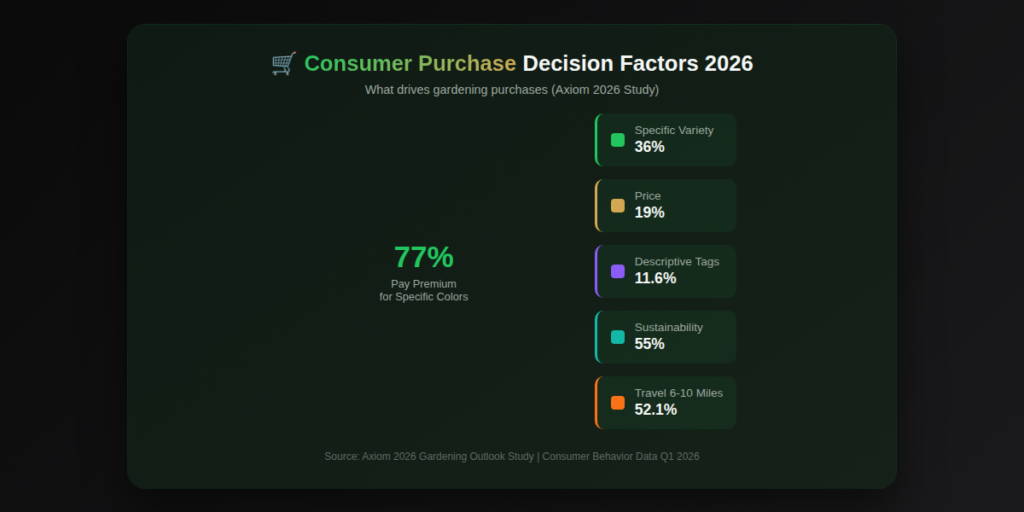
In 2026, approximately 63.6% of gardeners plan to plant more and expand their gardens according to the Axiom 2026 Gardening Outlook Study, with 50.2% expecting to spend more time gardening and 42.8% expecting to spend more money on their gardening activities, while specific plant varieties (36%) remained the most important decision factor for consumers and 77% indicated willingness to pay more for specific flower colors or varieties they desire.
Residential gardening remains the leading end-use segment. Homeowners and renters invest in consumables and tools to maintain their gardens. This preference drives consistent demand across seasons. Marketers can focus on the joy and relaxation gardening provides. Positioning gardening as part of home improvement appeals to this audience.
Garden Marketing Statistics #9 – 63.8% Of Gen Z Spent More Time Gardening In 2026
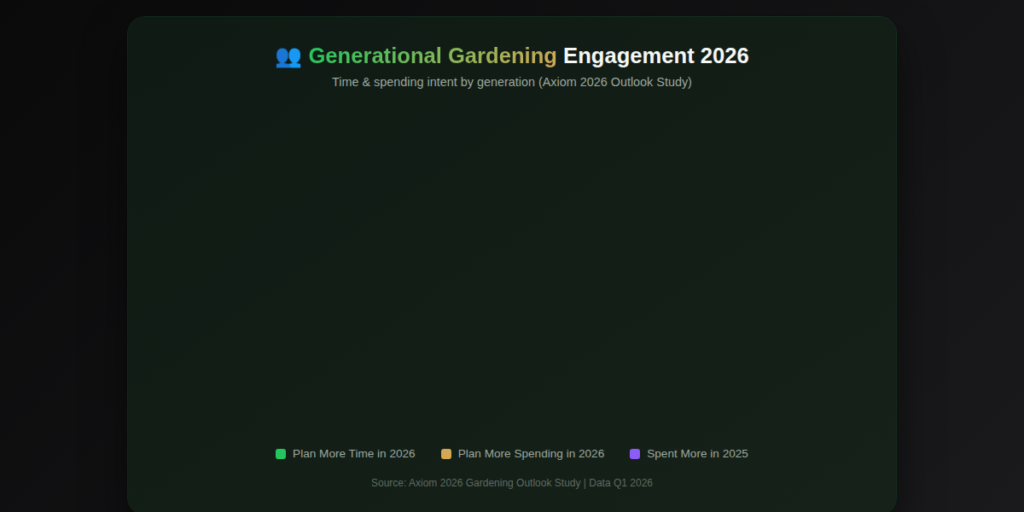
In 2026, Gen Y (66.7%) and Gen Z (65.2%) expect to spend more time gardening compared to Gen X (37.2%) according to the Axiom 2026 Gardening Outlook Study, with Gen Y (63.9%) and Gen Z (49.3%) also expecting to spend more money on gardening in 2026, while 47.6% of all gardeners spent more time gardening in 2025 marking the highest level since 2022 and 49.5% spent more money on gardening in 2025 representing an 11.5% increase from 2024.
Gen Z is showing a remarkable engagement with gardening, with 65.4% spending more time on it in 2024. Millennials also follow closely, with 47% reporting increased involvement. Looking ahead, even more Gen Z (69.2%) plan to expand their gardening activities in 2025. These numbers reveal gardening’s rising popularity among younger consumers. Brands should market with digital content that resonates with these demographics.
Garden Marketing Statistics #10 – 49.3% Of Gen Z Plan To Spend More On Gardening In 2026
In 2026, Gen Y (61.1%) and Gen Z (53.6%) reported spending more money gardening in 2025 compared to Gen X (43.0%) according to the Axiom 2026 Gardening Outlook Study, with these younger generations driving record gardening expenditures despite economic uncertainty, job losses, and inflation, while 34% of all gardeners spent 50% more time gardening year over year and 12% spent 100% more time marking the largest increases since 2022.
When it comes to spending, 46.2% of Gen Z and 43.9% of Millennials expect to invest more in gardening. This willingness to spend demonstrates that younger consumers see value in gardening. They are not only buying plants but also tools and decor. Marketers can highlight gardening as both a hobby and a lifestyle investment. Offering stylish, affordable products is key to winning this market.
Garden Marketing Statistics #11 – Independent Garden Centers Seen As High Quality In 2026
In 2026, Independent Garden Centers (IGCs) surpassed websites as the top information source at 22% compared to 19.8% for websites according to the Axiom 2026 Gardening Outlook Study, with IGCs (28.5%) cited as having the most knowledgeable store associates of all retailers, while 37.1% of gardeners cited inspiration as the number one driver to increase time and money spent at IGCs, and Google Lens was cited as the most important smartphone app for learning about new plants.
Independent Garden Centers (IGCs) hold a strong reputation for quality. About 30.3% of consumers ranked them highest for plant quality, compared to 24.7% for big retailers. Knowledgeable staff is another advantage, with 25.7% citing IGCs compared to 23.7% for big stores. This perception builds trust and loyalty among shoppers. IGCs can leverage this by marketing expertise and personal service.
Garden Marketing Statistics #12 – 80% Of U.S. Households Gardened In 2022
In 2026, approximately 55% of American households actively participate in gardening activities according to multiple industry surveys, translating to roughly 71.5 million gardening households and over 185 million people, with the United States ranking among the top three gardening countries worldwide, while indoor gardening adoption has reached nearly 46% due to urban living patterns and 70% of millennials now consider themselves plant parents.
By 2022, around 80% of U.S. households participated in gardening. This widespread involvement shows the scale of gardening’s appeal. The pandemic accelerated this interest as people turned to home-based hobbies. This high participation rate supports a strong consumer base. Companies can market gardening as a way to maintain well-being and family bonding.
Garden Marketing Statistics #13 – U.S. Household Spending On Gardening In 2026
In 2026, U.S. homeowners are spending approximately $300 per month on landscaping and gardening activities on average according to Petrus Landscape statistics, with millennials spending the most at $701 monthly on lawn care while Baby Boomers keep expenses under $500 at approximately $475 monthly, and gardening time and spending in 2025 hit the highest rates since 2022 with projections for 2026 looking to be even higher.
In 2022, American households spent an average of USD 616 on lawn and garden activities. This was an increase of USD 74 compared to 2021. The rising spend reflects a willingness to invest more in outdoor living. For marketers, this means emphasizing quality and long-term value. Consumers are open to higher-priced products if they promise durability and satisfaction.
Garden Marketing Statistics #14 – 60% Of Garden Center Sales Happen In Spring
In 2026, spring remains the critical season for garden retail with Early April designated as “Spring Black Friday” for lawn and garden sales at major retailers like Home Depot according to seasonal sales calendars, while the 2026 Axiom Gardening Outlook Study shows that 63.6% of gardeners plan to plant more and expand their gardens this year with specific variety of plant type (36%) remaining the most important decision factor followed by price (19%) and highly descriptive tags (11.6%).
Spring remains the busiest season, accounting for 60% of sales at U.S. garden centers. The seasonal spike shows how critical timing is for marketing campaigns. Brands that align promotions with spring planting can maximize sales. However, there’s also room to encourage year-round engagement. Offering products for winter or indoor gardening helps reduce seasonality dependence.
Garden Marketing Statistics #15 – Rising Demand For Organic Fertilizers In 2026
In 2026, the organic fertilizers market is expected to reach USD 10.1 billion according to Future Market Insights with a 6.1% CAGR projected through 2036, while Grand View Research estimates the global organic fertilizers market at USD 13,153.2 million in 2025 growing to USD 29,262.4 million by 2033 at a CAGR of 10.6%, driven by manufacturers increasing investment in biotechnology to develop improved microbial blends that enhance nutrient availability and support the shift toward reducing dependence on synthetic inputs.
There is a growing shift toward organic fertilizers and eco-friendly products. Consumers are increasingly aware of the environmental impact of chemicals. This trend opens space for brands that position themselves as sustainable leaders. Marketing that highlights organic, natural, and safe ingredients resonates widely. Eco branding is no longer niche but a mainstream driver.
Garden Marketing Statistics #16 – Search Influences 80% Of Garden Product Buyers
In 2026, Independent Garden Centers (IGCs) have surpassed websites as the top information source for garden plants and supplies at 22% compared to 19.8% for websites according to the Axiom 2026 Gardening Outlook Study, while Google Lens was cited as the most important smartphone app to learn about new plants, and 52.1% of consumers indicated they are willing to drive 6-10 miles specifically to find the color or variety of plant they want.
In the home and garden sector, 80% of buyers say search influences their purchase decisions. Email marketing also plays a role, with 60% influenced by emails, but only 37% of companies actively use it. This gap creates an opportunity for businesses willing to invest in digital channels. SEO and email strategies can deliver strong ROI. Brands that neglect these areas risk missing growth potential.
Garden Marketing Statistics #17 – Asia-Pacific To Lead Global Gardening Market Growth In 2026
In 2026, the Asia-Pacific gardening and horticulture market accounts for approximately 27% of the global market share with an estimated regional value of USD 57.56 billion according to Global Growth Insights, driven by urban gardening participation at nearly 49% supported by rooftop and terrace gardening trends, while China, Japan, and India are investing heavily in vertical landscaping and public gardening initiatives with government-supported green initiatives continuing to stimulate sustained market expansion across the region.
The Asia-Pacific region is forecast to lead global gardening market growth. This is due to rising consumer interest and supportive government urban greening policies. Increased disposable incomes further fuel spending. Marketing in this region requires tailoring messages to diverse cultural contexts. Brands that adapt effectively can build long-term presence here.
Garden Marketing Statistics #18 – Growth In Urban Container And Raised Bed Gardening In 2026
In 2026, urban gardening participation stands at nearly 49% across Asia-Pacific alone according to Global Growth Insights, with rooftop and terrace gardening trends fueling significant demand, while the Asia-Pacific gardening service market is valued at USD 52 billion with Singapore’s Green Building Council launching a $300 million initiative to incorporate vertical gardens into high-rise buildings and more than 20,000 square meters of vertical green walls installed since 2022 across major cities.
Urban gardeners are increasingly turning to containers and raised beds. This trend caters to limited space in apartments and rentals. It also fuels demand for packaged soil and growing media. Marketers can highlight ease of use and accessibility in campaigns. DIY kits and tutorials also appeal strongly to this audience.
Garden Marketing Statistics #19 – Packaged Soil Demand At USD 1.4 Billion In 2022
In 2026, the lawn and gardening care supplies market is valued at approximately USD 94 billion according to WiseGuy Reports, with the market expected to grow to USD 120 billion by 2035 at a CAGR of 2.4%, while smart gardening technologies including automated watering systems and climate-monitoring sensors are revolutionizing the market by leading to enhanced water conservation and labor efficiency, particularly appealing to tech-savvy millennials and urban gardeners.
Packaged soil and growing media demand in the U.S. was USD 1.4 billion in 2022. This figure shows how essential these products are for modern gardening. Growth is steady and remains above pre-pandemic levels. Branding that stresses convenience and improved plant outcomes resonates well. Companies can bundle these products with seeds or containers to boost sales.
Garden Marketing Statistics #20 – Landscaping Services Industry Worth Nearly USD 200 Billion In 2026
In 2026, the U.S. landscaping services industry generates nearly $200 billion in annual revenue according to IBISWorld and NIP Group analysis, with more than 726,000 businesses employing approximately 1.4 million workers, while compound annual growth forecasts of 5.7% continue to be driven by expanding infrastructure, sustainability initiatives, commercial demand, and the U.S. Department of Agriculture’s $1 billion grant scheme for the reforestation of cities to fight climate change and expand access to green space.
The U.S. landscaping services industry reached USD 153 billion in 2024. It employs over 1 million workers and supports more than 661,000 businesses. This scale shows how professional services complement DIY gardening trends. Marketing here can focus on expertise, reliability, and long-term property value. For garden brands, partnerships with landscapers can create cross-promotional opportunities.
Garden Marketing Trends Exploding as Outdoor Living Surges Worldwide
Looking back at these garden marketing statistics, I can’t help but feel inspired by the way this industry continues to grow and adapt. For me, it’s not only about market values or percentages, but about the people who find joy, peace, and even identity in gardening. As someone working with a leading marketing agency in New York, I’ve seen how brands can truly thrive when they listen to these stories behind the numbers. Personally, I believe that gardening teaches us something important about patience, care, and long-term growth—lessons that apply just as much to marketing as they do to plants. And that’s why I’m excited to help businesses in this space cultivate strategies that let both gardens and communities flourish. In 2026, global spending on gardening tools, plants, and outdoor living products continues rising as more households invest in sustainable landscapes and edible home gardens.