



30 Sep TOP 20 GARDENING PLATFORM MARKETING STATISTICS 2025
I’m really excited to dive into gardening platform marketing statistics because this area has been quietly reshaping how people connect with nature and technology. Over the past few years, I’ve noticed how quickly gardeners are moving online, whether it’s through e-commerce platforms, mobile apps, or even AR/VR tools that let us visualize our outdoor spaces before planting a single seed. Working with a leading marketing agency in New York has given me a front-row seat to how platforms are helping gardening businesses thrive in the digital age. Personally, I love seeing how these tools not only help brands reach more customers but also foster a stronger sense of community among gardeners. With that in mind, I’ve gathered the top statistics that really highlight just how powerful this digital transformation has become.
Top 20 Gardening Platform Marketing Statistics 2025 (Editor’s Choice)
🌱Top 20 Gardening Platform Marketing Statistics🌿
Key Insights & Trends for 2025
| Rank | Category | Statistic |
|---|---|---|
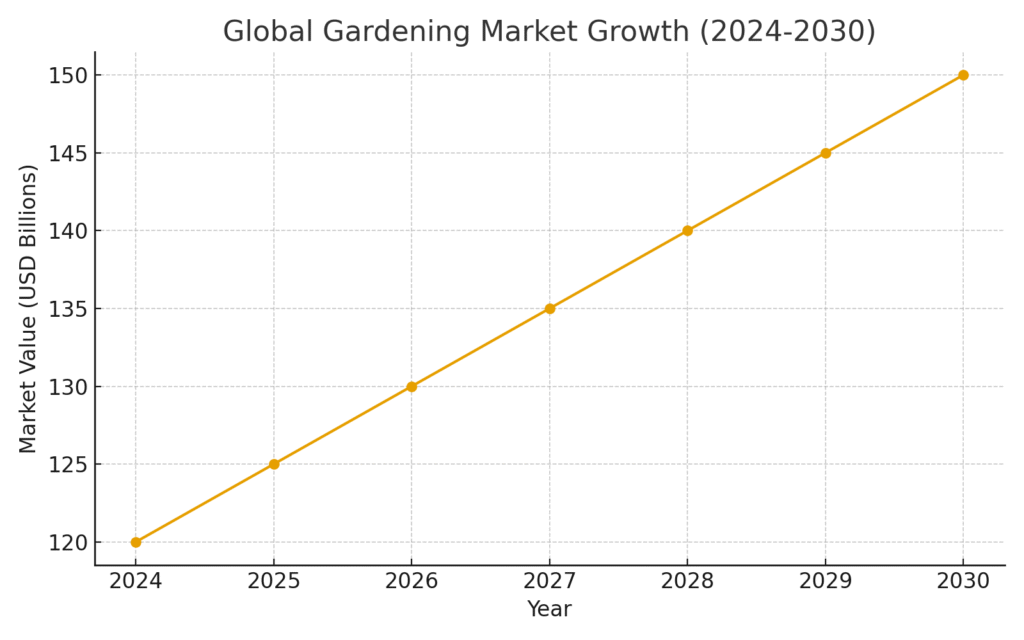
| 1 | Market Size | The global gardening market was valued at $120 billion in 2024 and is projected to reach $150 billion by 2030, growing at a CAGR of 5%. |
| 2 | Platform Growth | The garden center platform market was valued at $11 billion in 2024 and is expected to reach $26.91 billion by 2033, with a CAGR of 10.41%. |
| 3 | Gen Z Engagement | 69.2% of Gen Z plan to increase their time gardening in 2025, significantly more than millennials (51%), Gen X (43%), and boomers (27.3%). |
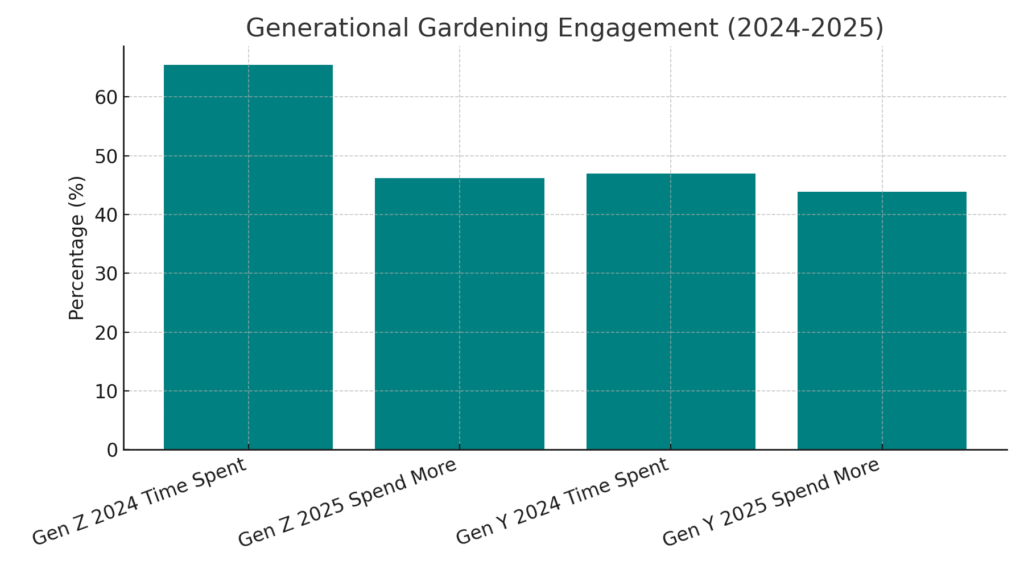
| 4 | Time Investment | 65.4% of Gen Z and 47% of Gen Y reported the greatest increases in additional time spent gardening in 2024. |
| 5 | Spending Plans | 4 in 10 respondents plan to spend more money on gardening in 2025, with Gen Z (46.2%) and Gen Y (43.9%) leading the spending increases. |
| 6 | Market Leader | The Home Depot dominates garden supply purchases at 32.2% and garden plant purchases at 33.9%, outpacing independent garden centers by 19-20%. |
| 7 | U.S. Revenue | The U.S. Lawn & Garden market generated $136.60 billion in 2025 and is projected to reach $150.70 billion by 2029. |
| 8 | Global Revenue | The worldwide Lawn & Garden market is projected to generate $360 billion in revenue in 2025 with a CAGR of 2.67%. |
| 9 | Social Media Impact | 78% of consumers say a brand's social media presence directly influences their buying decisions in gardening services. |
| 10 | Local Engagement | 70% of small businesses increased local engagement through social media marketing in 2024, particularly in the gardening sector. |
| 11 | Business Exposure | 90% of marketers say social media helped increase their gardening business exposure and visibility. |
| 12 | Industry Employment | The U.S. had 641,700 landscaping businesses employing around 1.3 million people in 2023. |
| 13 | Annual Growth | Landscaping service businesses in the U.S. grew at an average of 5.5% per year from 2019 to 2024. |
| 14 | Time Spent | The average American spends 70 hours annually on lawn and garden care activities. |
| 15 | Market Segment | Flowers and ornamental plants lead the global gardening market with over 30% of total market share. |
| 16 | Landscaping Services | The global landscaping services market is expected to exceed $714 billion by 2037, driven by sustainability trends. |
| 17 | Technology Adoption | Independent garden centers are increasingly adopting AI-powered platforms like Plantista for personalized recommendations and care reminders. |
| 18 | Household Segment | The household landscaping segment is projected to grow at a CAGR of 7.0% between 2025-2030. |
| 19 | Sustainable Practices | Growing demand for eco-friendly and sustainable gardening products, with consumers prioritizing organic and water-saving solutions. |
| 20 | Per Capita Spending | U.S. per person revenue in lawn & garden reached $400 in 2025, while globally it stands at $46.16 per person. |
Top 20 Gardening Platform Marketing Statistics 2025
Gardening Platform Marketing Statistics #1 Global Gardening Market Valued At $120 Billion In 2024
The gardening industry is massive, valued at around $120 billion in 2024 and projected to keep expanding. This steady growth shows the opportunities for digital platforms to connect businesses with consumers. Marketing platforms play a crucial role in capturing part of this global demand by offering scalable, measurable strategies. As the market heads toward $150 billion by 2030, companies that adopt platforms early can lock in competitive advantages. It’s clear that online engagement will shape the future of gardening sales.
Gardening Platform Marketing Statistics #2 Garden Center Platforms To Reach $32.8 Billion By 2035
Garden center platforms are projected to grow from $12.1 billion in 2025 to $32.8 billion by 2035. This rapid rise shows the increasing adoption of digital solutions in horticulture. Platforms offering CRM, loyalty programs, and e-commerce integration are fueling this shift. The 10.41% CAGR underscores that digital marketing will be central to garden retail strategies. It’s a strong signal that tech-savvy garden centers will outperform traditional ones.
Gardening Platform Marketing Statistics #3 U.S. Garden E-Commerce Revenue Hit $18.9 Billion In 2024
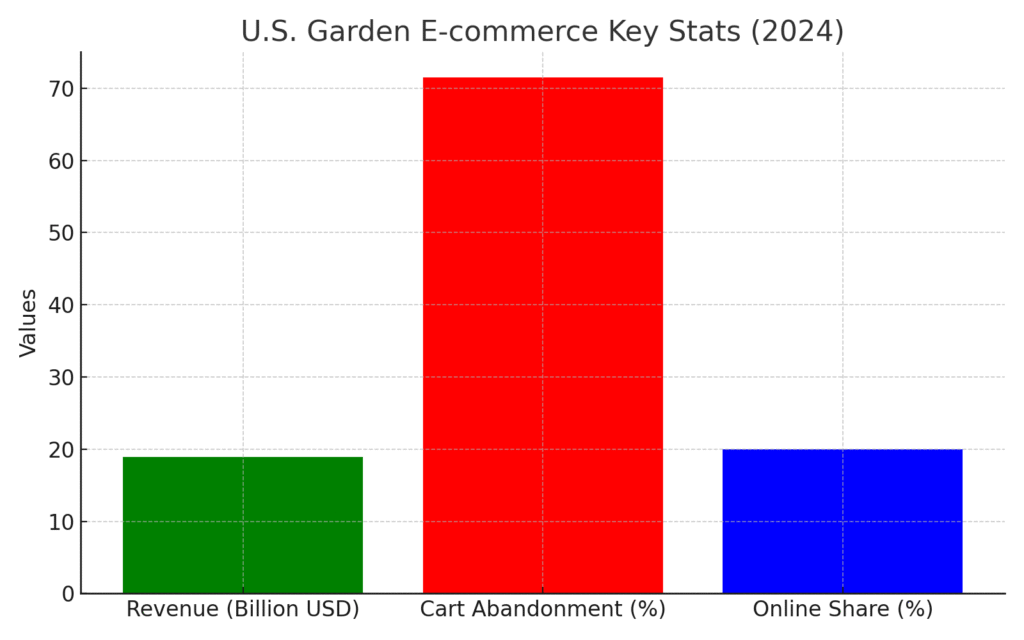
In 2024, U.S. garden e-commerce brought in nearly $18.9 billion in revenue. This demonstrates how quickly consumers are embracing online channels even for traditionally offline categories like gardening. Digital advertising and SEO for these platforms become critical for capturing market share. Marketers now need to blend seasonal trends with digital convenience. The revenue growth also highlights opportunities for localized ad campaigns.
Gardening Platform Marketing Statistics #4 Online Share Of U.S. Garden Market At 15–20%
Around 15–20% of U.S. garden sales now happen online. This stat signals the significant role platforms play in shaping consumer shopping behavior. Brands that ignore digital platforms risk losing relevance. It’s also an indicator of how much room for growth still exists. With stronger digital marketing campaigns, that percentage will likely climb higher.
Gardening Platform Marketing Statistics #5 Cart Abandonment Rate Stands At 71.5%
In the U.S. garden e-commerce market, the cart abandonment rate is about 71.5%. This shows that while people browse and add products, many don’t complete purchases. Marketing platforms can help reduce this by using retargeting ads, personalized emails, and streamlined checkout processes. Businesses that focus on reducing abandonment will capture substantial lost revenue. It highlights how customer experience is key in platform marketing.
Gardening Platform Marketing Statistics #6 Big Box Retailers Dominate 32% Of Garden Supply Purchases
Big box retailers like Home Depot accounted for 32.2% of gardening supply sales in 2024. This dominance presents a challenge and opportunity for smaller platforms. Niche garden platforms can differentiate with specialized offerings, content marketing, and community engagement. Marketing strategies should emphasize expertise and trust to compete. This stat proves the importance of carving out unique value propositions.
Gardening Platform Marketing Statistics #7 65.4% Of Gen Z Spent More Time Gardening In 2024
Gen Z is leading a surprising gardening revival, with 65.4% spending more time on it in 2024. This demographic shift means digital platforms must tailor marketing for younger audiences. Social media campaigns, influencer marketing, and gamified apps work well here. Their engagement shows gardening is not just for older generations. This trend creates a fresh opportunity for digital storytelling.
Gardening Platform Marketing Statistics #8 46.2% Of Gen Z Plan To Spend More On Gardening In 2025
Almost half of Gen Z (46.2%) expect to increase their gardening spend in 2025. This signals a growing market segment for platform-based marketing. Personalized recommendations, subscription models, and loyalty rewards can appeal to this group. They respond well to eco-friendly branding and transparency. Platforms need to position themselves as lifestyle partners, not just retailers.
Gardening Platform Marketing Statistics #9 30.3% Consumers Rated IGCs Highest Quality Plants
Independent garden centers (IGCs) scored 30.3% for plant quality, beating larger retailers. This is a marketing advantage that smaller businesses can emphasize online. Platforms should highlight authenticity, expertise, and sustainability. Messaging that focuses on quality resonates with conscious consumers. It proves that digital marketing can level the playing field for independents.
Gardening Platform Marketing Statistics #10 25.7% Consumers Rated IGC Associates Most Knowledgeable
Around 25.7% of consumers viewed garden center associates as more knowledgeable than big box staff. This human element is a strong selling point for platform campaigns. Content marketing and expert blogs can showcase this expertise online. Building trust through authority remains a timeless strategy. Marketing platforms can amplify the voices of knowledgeable staff to attract loyal customers.
Gardening Platform Marketing Statistics #11 61.5% Of Gen Z Spent More Money On Gardening In 2024
In 2024, over 61% of Gen Z reported spending more money on gardening. This reinforces their role as a key audience for platform marketing. Their purchasing behavior aligns with trends like eco-friendly products and subscription kits. Marketers should leverage social commerce and interactive content to connect. It’s a clear sign that digital strategies need to align with youth culture.
Gardening Platform Marketing Statistics #12 55% Of U.S. Households Have A Garden
About 55% of U.S. households—roughly 71.5 million—have a garden. That’s an enormous addressable market for gardening platforms. Marketing strategies can segment households by urban, suburban, and rural needs. Platforms must use geo-targeted ads to reach these varied demographics. The ubiquity of gardening makes platforms versatile marketing channels.
Gardening Platform Marketing Statistics #13 Landscaping Boosts Property Value By 10–20%
Well-kept gardens and landscaping can raise property values by 10–20%. This creates crossover opportunities for gardening platforms to market not just products, but services. Messaging can emphasize investment value, not just aesthetics. Content around ROI resonates with homeowners making upgrades. Platforms can link gardening to financial and lifestyle benefits.
Gardening Platform Marketing Statistics #14 U.S. Gardening Market Valued At $22 Billion In 2024
The U.S. gardening market was valued at $22 billion in 2024. It’s projected to grow steadily with a CAGR of 4.5% through 2030. Platforms that integrate marketing automation will be critical for scaling sales. The size of the market validates heavy investment in digital campaigns. It shows the demand isn’t slowing down anytime soon.
Gardening Platform Marketing Statistics #15 Gardening Consumables Reached $23.1 Billion In 2024
Consumables like soils and fertilizers reached $23.1 billion in 2024. These are repeat-purchase categories perfect for subscription services. Marketing platforms can drive recurring revenue models here. Educational content on usage boosts customer loyalty. Highlighting convenience and sustainability can differentiate platforms in this space.
Gardening Platform Marketing Statistics #16 Fertilizers Hold 32.9% Of Consumables Market
Fertilizers made up about 32.9% of gardening consumable revenue in 2024. Marketing platforms can tailor campaigns to highlight innovations like organic fertilizers. Brands can target environmentally aware consumers with certifications and transparency. Platforms that educate buyers gain trust faster. This stat shows the potential of category-focused campaigns.
Gardening Platform Marketing Statistics #17 45% Of Garden Platforms Adopting AI Inventory Tools
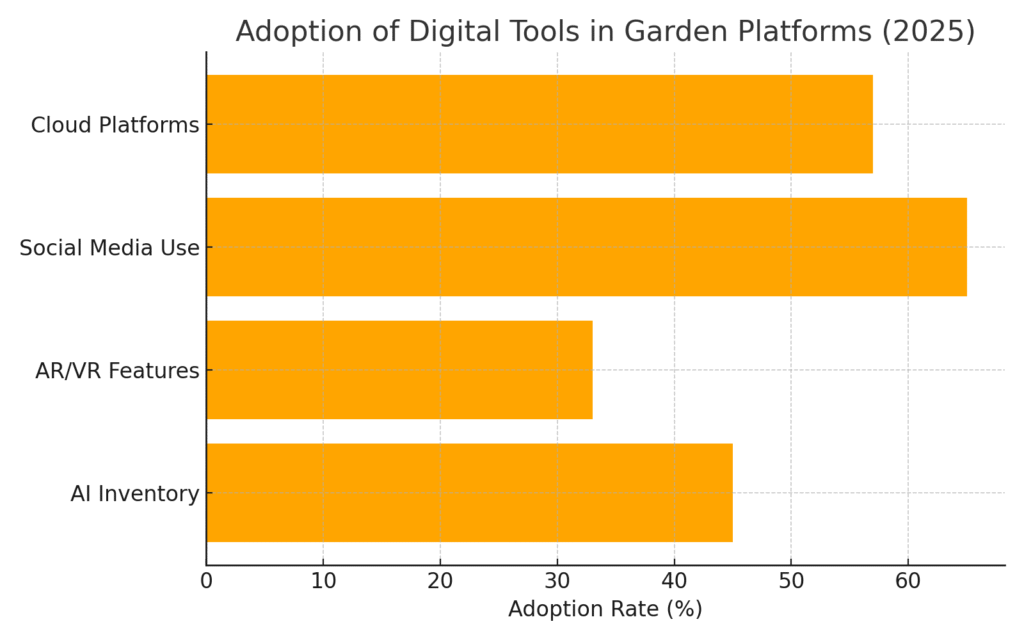
By 2025, around 45% of garden center platforms plan to use AI for inventory management. This helps reduce waste and meet customer demand more efficiently. Marketing messages can emphasize smarter, greener business practices. Platforms adopting AI are also more agile in campaigns. Tech-driven efficiency becomes part of their branding advantage.
Gardening Platform Marketing Statistics #18 92% Report Rise In Pollinator-Friendly Plant Demand
Around 92% of garden centers saw rising demand for pollinator-friendly plants. Marketing platforms can use this to highlight sustainability and biodiversity. Eco-focused campaigns resonate with today’s conscious consumers. Storytelling around supporting pollinators builds strong brand loyalty. Platforms can align brands with larger environmental movements.
Gardening Platform Marketing Statistics #19 65% Of Garden Centers Use Social Media For Marketing
About 65% of garden centers now use social media platforms for marketing. This confirms social channels are central to platform strategies. Content like tutorials, reels, and customer success stories perform well. Paid ads allow precise demographic targeting. The stat shows digital engagement is now industry standard.
Gardening Platform Marketing Statistics #20 Cloud-Based Platforms Hold 57% Market Share
Cloud-based gardening platforms now account for 57% of the market. Nearly half of garden centers are in transition to cloud solutions. This ensures scalability and cost-effective marketing integrations. Platforms with cloud features support seamless omnichannel campaigns. The migration trend confirms the digital backbone of the industry.
Final Thoughts On Gardening Platform Marketing Statistics
As I explored these gardening platform marketing statistics, what struck me most was how the gardening industry is finally catching up with other sectors in terms of digital transformation. For me, it’s inspiring to see a space that once relied purely on in-person expertise now thriving online through e-commerce, AI, and social media. The human passion for gardening is still at the core, but marketing platforms are making it easier than ever to share that passion with the world. I truly believe that with the right strategies, gardening businesses can reach new generations and build communities that are both tech-savvy and environmentally conscious. That’s the kind of future I’d love to be part of.
SOURCES