



19 Sep TOP 20 GEN ALPHA MARKETING STATISTICS 2025
When we talk about the future of consumer behavior, nothing feels more fascinating than exploring Gen Alpha marketing statistics. This is the first generation born entirely into a digital world, shaping preferences before they can even spell “brand.” As someone working closely with businesses navigating this shift, I’ve seen how crucial it is to understand what drives these young minds—from YouTube discovery habits to their influence on household spending. With insights from a marketing agency in New York, it becomes clear that connecting with Gen Alpha requires a fresh approach, blending authenticity, technology, and creativity. Let’s dive into the numbers that tell the story of tomorrow’s consumers
Top 20 Gen Alpha Marketing Statistics 2025 (Editor’s Choice)
🚀 Gen Alpha Marketing Stats 2025
The Ultimate Guide to Marketing to Generation Alpha - Born 2010-2025
| # | Category | Key Statistic | Marketing Insight |
|---|---|---|---|
| 1 | Population | 2 billion Gen Alpha globally by 2025 - largest generation in history | Massive market opportunity with unprecedented scale for brand building and customer acquisition |
| 2 | Growth Rate | 2.5 million Gen Alpha children born weekly worldwide | Rapidly expanding target audience requiring continuous market analysis and strategy adaptation |
| 3 | Demographics | 45.6 million Gen Alpha in US - most diverse generation ever | Inclusive marketing campaigns essential - diversity must be authentic and representative |
| 4 | Direct Spending | $28 billion in direct spending power despite young age | Don't underestimate purchasing power - create age-appropriate buying experiences |
| 5 | Total Spending | $100+ billion annual spending power reached in 2025 | Premium market segment with significant revenue potential for forward-thinking brands |
| 6 | Weekly Budget | $67 per week average spending money ($3,484 annually) | Price products appropriately for weekly allowances - subscription models may work well |
| 7 | Family Spending | $1,300-$2,100 spent per child annually by households | Target both children and parents - family-focused marketing strategies yield better ROI |
| 8 | Allowances | 53% receive allowances averaging $22 weekly | Weekly promotional cycles and limited-time offers align with allowance schedules |
| 9 | Screen Time | 4h 44m daily (ages 8-12), 7h 22m (ages 13-18) | Digital-first marketing essential - optimize for mobile and short attention spans |
| 10 | Daily Usage | 64% of ages 8-12 use YouTube/TikTok daily | Video content marketing non-negotiable - invest in creator partnerships and video ads |
| 11 | Video Consumption | 30%+ watch YouTube/Shorts over 2 hours daily | Long-form engagement possible despite reputation for short attention spans |
| 12 | Platform Leader | 85% of Gen Alpha use YouTube regularly | YouTube should be primary platform for Gen Alpha marketing - highest reach and trust |
| 13 | TikTok Usage | 60% use TikTok among those with social media access | Short-form, trend-based content crucial - stay current with viral formats and sounds |
| 14 | Parental Control | 94% Gen Alpha YouTube usage with high parental control | Create family-friendly content that satisfies both children and parents |
| 15 | Gaming Platform | 112 million daily active Roblox users in 2025 | Gaming platforms offer unique brand experiences - consider virtual worlds and avatars |
| 16 | Purchase Influence | 70% of parents say kids influence purchases via characters/shows | Character partnerships and entertainment tie-ins drive significant purchase decisions |
| 17 | Category Impact | 99% food, 97% movies/TV, 96% games/music influenced | Gen Alpha dominates entertainment and food decisions - high influence categories for brands |
| 18 | Choice Freedom | 50% choose snacks, 44% apparel, 41% beverages | Direct targeting of children effective for certain categories - age-appropriate messaging key |
| 19 | Future Growth | 15.9% to 40.3% social media users (2025 to 2029) | Explosive social media growth coming - establish brand presence early for competitive advantage |
| 20 | Entertainment | 28% prefer cinema as top choice for film watching | Despite digital nativity, physical experiences still valued - omnichannel approach essential |
Top 20 Gen Alpha Marketing Statistics 2025
Gen Alpha Marketing Statistics #1: 69% Request Products Seen in Ads
Nearly 7 in 10 Gen Alpha children have already asked for products they saw advertised. This shows how deeply marketing content impacts even the youngest members of this generation. Parents are frequently influenced by these requests, driving purchases they may not have initially planned. The fact that even children under 6 make requests highlights just how early advertising exposure shapes behavior. Brands that focus on clear, engaging, and ethical advertising stand to win trust in this space.
Gen Alpha Marketing Statistics #2: 48% Discover Products Through Influencers
Almost half of Gen Alpha between ages 11–14 discover products via influencers or internet personalities. This emphasizes the importance of influencer marketing when trying to reach these digital-native consumers. Unlike traditional ads, influencer endorsements feel more personal and relatable. Parents also report being swayed by influencer content because of their children’s interests. For brands, aligning with the right creators is now more critical than running classic ad campaigns.
Gen Alpha Marketing Statistics #3: YouTube Leads as Discovery Platform
Around 56% of Gen Alpha aged 11–14 use YouTube to find new products. TikTok follows at 22%, with Instagram and Snapchat each around 12%. Even younger children under 10 spend time on YouTube, proving its dominance across age groups. This underlines the importance of creating video-based marketing content for maximum reach. Brands that aren’t investing in YouTube strategies risk being invisible to this audience.
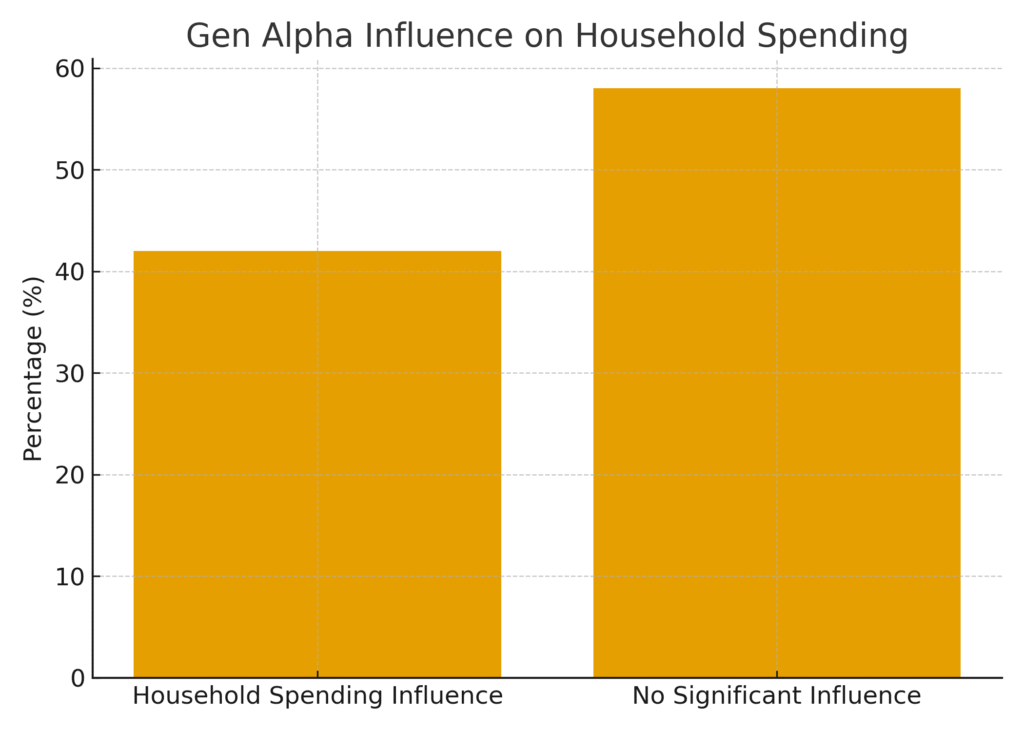
Gen Alpha Marketing Statistics #4: Influence on 42% of Household Spending
Gen Alpha influences an estimated 42% of household spending decisions. Their impact stretches beyond toys and food, extending into categories like travel and technology. Parents often consult with their kids before making major purchases. This makes them not just passive observers, but active contributors to family consumption patterns. Any brand ignoring this influence is missing out on one of today’s biggest hidden markets.
Gen Alpha Marketing Statistics #5: $28 Billion in Direct Spending Power
In the U.S. alone, Gen Alpha wields nearly $28 billion in direct spending power. With average weekly allowances around $22, this money often goes toward toys, snacks, and entertainment. While individually small, collectively this creates a massive and growing consumer segment. Companies that create affordable, high-appeal products gain loyalty early on. It’s clear that Gen Alpha is already an independent buying force, not just dependent on parental purchases.

Gen Alpha Marketing Statistics #6: 49% Trust Influencers Like Family
Nearly half of Gen Alpha say they trust influencers as much as they trust friends and family. This level of influence is almost unprecedented among previous generations. It demonstrates how digital relationships have blurred the lines between entertainment and trust. Children often look to influencers for guidance on what to buy, wear, or use. For marketers, building authentic partnerships with relatable creators is essential.
Gen Alpha Marketing Statistics #7: 55% Want Influencer-Endorsed Products
More than half of Gen Alpha say they would purchase a product if it was endorsed by their favorite influencer. This highlights the persuasive power of influencer marketing in shaping real buying decisions. Unlike celebrity culture in previous decades, these influencers often feel approachable. Children see them as role models and friends rather than distant figures. As a result, influencer collaborations often outperform traditional advertising among this generation.
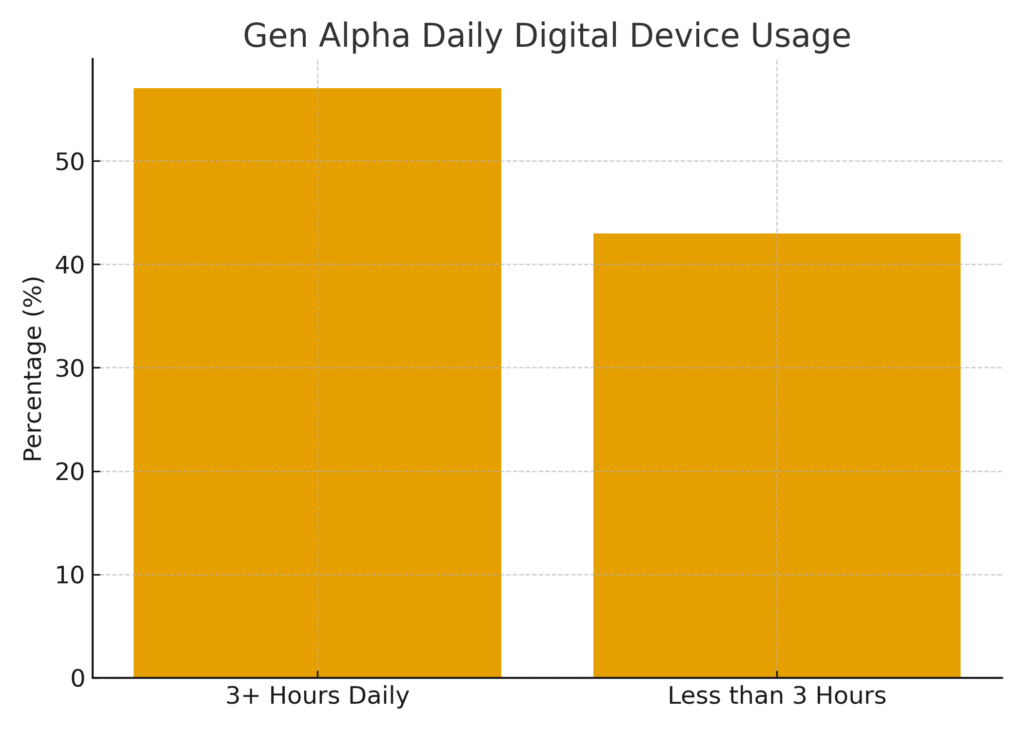
Gen Alpha Marketing Statistics #8: 57% Spend 3+ Hours Daily on Devices
Over half of Gen Alpha spends more than three hours per day on digital devices. This heavy screen time includes everything from gaming and YouTube to schoolwork. It means digital marketing channels dominate their daily lives. Offline ads alone are not enough to capture attention. Brands must design experiences tailored to long-term device engagement.
Gen Alpha Marketing Statistics #9: 66% Prefer Real-World Goods Over Virtual
Two-thirds of Gen Alpha prefer products they can use in real life compared to items that exist only online. Despite being digital natives, they still value tangible experiences. This insight challenges the assumption that virtual goods alone will dominate their spending. While gaming skins and NFTs are popular, real-world products continue to win favor. Companies blending physical and digital offerings are most likely to succeed.
Gen Alpha Marketing Statistics #10: 63% Prioritize Health and Sustainability
Surveys show that about 63% of Gen Alpha value health, wellbeing, and sustainability. They are growing up in an era where environmental and social awareness is normalized. Parents also reinforce these values in everyday decision-making. As a result, eco-friendly and ethical products resonate more strongly with this audience. Marketers ignoring these priorities risk losing long-term brand loyalty.
Gen Alpha Marketing Statistics #11: 49% Influence Parents’ Buying Behavior
Nearly half of parents report that their Gen Alpha children sway their buying choices. This is especially true for food, clothing, and tech products. Children’s opinions carry weight at the decision-making table. Marketers can’t afford to overlook the “pester power” and persuasive influence of these young voices. Campaigns designed to appeal to both parents and children see the strongest results.
Gen Alpha Marketing Statistics #12: 87% Are Highly Brand Attentive
An impressive 87% of Gen Alpha children are aware of and attentive to brands. They recognize logos, jingles, and marketing cues earlier than any previous generation. This attentiveness extends into luxury preferences, with 69% leaning toward high-end brands. Exposure to global branding from a young age builds recognition quickly. For businesses, this means brand identity must be strong and consistent.
Gen Alpha Marketing Statistics #13: 63% Value Having Latest Technology
Nearly two-thirds of Gen Alpha place importance on having the latest tech. They expect quick upgrades in gadgets, apps, and digital tools. This constant pursuit of innovation fuels demand for cutting-edge products. Brands that fail to keep up risk losing relevance. Tech companies especially must adapt to this fast-evolving consumer mindset.
Gen Alpha Marketing Statistics #14: 36 Million Young Internet Users in U.S.
By 2025, there are around 36.2 million Gen Alpha internet users in the U.S. alone. Of these, about 10.5 million already own smartphones. Early device adoption sets the stage for lifelong digital habits. Marketers have a direct channel to reach them through mobile apps and social platforms. The challenge is designing safe yet engaging experiences that resonate.
Gen Alpha Marketing Statistics #15: 58% of Kids Use YouTube Monthly
Over half of U.S. children watch YouTube at least once per month. For many, it is a daily habit that extends to content like gaming, unboxings, and product reviews. This makes YouTube an essential advertising channel for brands. Ignoring YouTube means losing out on consistent visibility among Gen Alpha. The platform remains a cornerstone of their digital entertainment ecosystem.
Gen Alpha Marketing Statistics #16: 66% Would Pay More for Real-Life Use
Two out of three Gen Alpha children say they’d pay more for products they can use offline. This reinforces the importance of physical experiences even in a digital-first world. From toys to fashion, tangible goods carry lasting value. Companies blending online promotion with offline usability are positioned for success. It’s a reminder that real-world utility still drives loyalty.
Gen Alpha Marketing Statistics #17: 48% of Parents Prioritize Mental Health
Almost half of parents with 11–14 year olds say mental health is a top concern. Marketing campaigns that acknowledge wellbeing resonate deeply with families. This emphasis shapes what products and services parents allow their kids to use. It also drives interest in wellness-focused apps, games, and education tools. Brands that support healthy lifestyles gain long-term trust.
Gen Alpha Marketing Statistics #18: Demand Authentic and Inclusive Branding
Gen Alpha expects brands to embrace authenticity, inclusivity, and diversity. They are more responsive to relatable creators than polished celebrity campaigns. Representation matters to them, and they value seeing people “like them” in ads. Brands that fail to showcase inclusivity risk alienating this audience. Authenticity is no longer optional; it’s a requirement.
Gen Alpha Marketing Statistics #19: 98% Parents Teach Budgeting Early
Almost all parents of Gen Alpha children are teaching financial literacy from a young age. Budgeting and saving are skills reinforced both at home and in schools. Some even begin investing strategies with their kids, teaching them long-term money habits. This creates a generation more financially aware than Gen Z or Millennials at the same age. Brands offering financial tools for kids are tapping into a growing need.
Gen Alpha Marketing Statistics #20: 48–57% Use Social Media for Deals
Between 48% and 57% of Gen Alpha children actively use social media to find deals. Platforms like TikTok and YouTube expose them to product discounts and trends. Even those under 10 are drawn to content showcasing “best buys.” This shows how shopping and social media are fully intertwined for this group. Marketers must create shareable, deal-driven campaigns to capture attention.

Final Thoughts on Gen Alpha Marketing Statistics
Looking at these insights, it’s hard not to feel both excited and challenged by the possibilities Gen Alpha brings to the marketing world. Their values, habits, and sheer influence on household decisions remind us that the future isn’t waiting—it’s already here. Personally, I believe the brands that thrive will be the ones that treat Gen Alpha not as passive consumers, but as active participants in shaping culture and commerce. By leaning into authenticity, embracing digital platforms, and listening closely, marketers can build relationships that last far beyond a single campaign. The data shows us the trends, but it’s the personal connections that will define true success.
SOURCES
- https://www.gwi.com/reports/gen-alpha (GWI)
- https://www.marketingdive.com/news/marketing-to-gen-alpha-how-brands-can-win-over-the-next-generation/747735/ (Marketing Dive)
- https://explodingtopics.com/blog/generation-alpha-stats (Exploding Topics)
- https://www.emarketer.com/learningcenter/guides/guide-generation-alpha/ (EMARKETER)
- https://www.demandsage.com/generation-alpha-stats/ (DemandSage)
- https://www.stagwellglobal.com/what-the-data-say-majority-of-gen-alpha-12-and-under-want-to-get-back-to-irl-in-real-life/ (Stagwell)
- https://basis.com/blog/generation-alpha-online-habits-and-media-preferences-by-the-numbers (Basis Technologies)
- https://www.razorfish.com/articles/perspectives/is-your-brand-ready-for-generation-alpha/ (Razorfish)
- https://pro.morningconsult.com/analysis/all-about-gen-alpha (Morning Consult Pro)
- https://pro.morningconsult.com/analyst-reports/gen-alpha-media-entertainment-trends-2024 (Morning Consult Pro)
- https://www.theshelf.com/the-blog/gen-alpha-stats/ (The Shelf)
- https://www.voguebusiness.com/story/beauty/the-sephora-kids-arent-going-anywhere (Vogue Business)
- https://www.axios.com/2025/08/06/gen-alpha-spending-influence-parents (Axios)
- https://www.voguebusiness.com/story/beauty/which-beauty-brands-and-influencers-won-on-social-media-in-2024? (Vogue Business)
- https://www.voguebusiness.com/beauty/beauty-is-aging-down-in-pursuit-of-gen-alpha-wheres-the-limit (Vogue Business)
- https://www.marketingdive.com/news/marketing-to-gen-alpha-how-brands-can-win-over-the-next-generation/747735/ (Marketing Dive)
- https://thelist.site