




16 Jul TOP 10 GEN Z MARKETING BEHAVIOR STATISTICS 2026 REVEAL SHOCKING DIGITAL BUYING SHIFTS
Updated for 2026. This page has been fully refreshed with the latest Gen Z marketing behavior statistics, digital consumption data, and social commerce trends, grounded in recent global surveys, platform analytics reports, and emerging consumer behavior insights. In 2026, Gen Z already influences over $450 billion in global spending power, forcing brands to rethink advertising, creator partnerships, and platform strategies faster than ever before.
Gen Z, the generation born between the late 1990s and early 2010s, is shaping the future of marketing in profound ways. As digital natives, they’ve grown up with social media, smartphones, and constant connectivity, making them highly tech-savvy and quick to adopt new trends. Their buying habits and content preferences are vastly different from those of previous generations, requiring brands to rethink their marketing strategies. Gen Z values authenticity, transparency, and personalization more than ever before, which means that traditional advertising methods are no longer enough to capture their attention.
Instead, brands must connect with them on platforms they use daily, like TikTok and Instagram, while also delivering content that resonates with their values. As this demographic continues to grow in purchasing power, understanding their behavior has become crucial for businesses. The future of marketing will be heavily influenced by how well brands adapt to Gen Z’s unique preferences and communication styles. In this article, Amra and Elma offers key statistics and trends that highlight the evolving behaviors of Gen Z consumers and what marketers need to know to stay ahead.
TOP 10 GEN Z MARKETING BEHAVIOR STATISTICS 2026 (EDITOR’S CHOICE) REVEAL MASSIVE DIGITAL POWER
Market Intelligence Report · 2026 Edition
10 Gen Z Marketing Behavior
Statistics Brands Can't Ignore in 2026
A data-driven snapshot of how Gen Z's $450B+ annual spending power is shaped by social platforms, authentic voices, and immersive digital experiences — and what it means for brands competing for their loyalty today.
| # | Behavior | Key Figure | Insight | Business Impact |
|---|---|---|---|---|
| 01 | Social Media Drives Purchases | 94% influenced by social | Social media is now the single most influential purchase driver for Gen Z. TikTok, Instagram, and YouTube shape buying habits more than any other channel — including traditional search. |
2026 Market Size
$32.7B
TikTok Shop Gen Z sales, Q1 2026 alone (Sprout Social)
|
| 02 | Short-Form Content Preference Content | 81% prefer under 60s video | 2.3 seconds — that's the average Gen Z brand scroll threshold before abandonment. 81% now exclusively use short-form video for brand discovery (Nielsen, 2026, 18,400 respondents). |
Brand ROI Signal
57%
prefer short-form to learn about new products vs long-form
|
| 03 | User-Generated Content Rules UGC | 78% UGC-driven decisions | Peer content now influences 78% of Gen Z purchase decisions. TikTok and Instagram UGC posts deliver 4.6x higher conversion rates than brand-produced content (Edelman Trust Barometer, 2026). |
Conversion Lift
4.6×
UGC vs. branded content conversion advantage
|
| 04 | Trust in Micro-Influencers Influence | 3.2× vs. celebrity trust | Gen Z is 3.2x more likely to trust micro-influencers (5K–50K followers) than celebrities. Micro-influencer campaigns return $18.70 per $1 spent vs. just $5.20 for celebrity-led deals (Forrester, 2026). |
Avg. Campaign ROI
$18.70
per $1 spent on micro-influencer vs $5.20 for celebrities
|
| 05 | Interactive Media Engagement Interactive | 58% engage weekly | 58% of Gen Z engage weekly with branded polls, AR challenges, and live commerce. Live shopping events generate 3.2x more engagement per minute than standard video ads (Meta x Deloitte, 2026). |
Engagement Multiplier
3.2×
live commerce vs. pre-recorded ad engagement per minute
|
| 06 | Brand Authenticity Matters Authenticity | 3.4× vs. polished brands | Gen Z loyalty scores are 47% higher for brands that publicly admit mistakes. Authenticity now outranks price in 68% of purchase decisions — the first time ever recorded (Kantar BrandZ, 2026). |
Loyalty Score Lift
+47%
for brands that publicly acknowledged mistakes in past 12 months
|
| 07 | Willingness to Pay for Sustainability Sustainability | 72% pay eco-premium | 72% of Gen Z will pay up to 23% more for verified eco-friendly products. Sustainability certification is now the 2nd most searched product attribute on e-commerce platforms, behind price (PwC, 2026, 31 countries). |
Premium Tolerance
+23%
willingness to overpay for certified eco-friendly products
|
| 08 | Personalized Communication Personalization | 38% email open rate | AI-driven personalized emails hit a 38% open rate and 21% CTR with Gen Z — a 190% improvement over generic brand emails vs. 2023 benchmarks (Salesforce State of the Connected Customer, 2026). |
Click-Through Rate
21% CTR
AI-personalized vs. 7% average for generic Gen Z brand emails
|
| 09 | Social Media Brand Discovery Discovery | 56% social-first discovery | TikTok has overtaken Google Search as the top brand research tool among 18–24-year-olds for the first time ever. 56% now use social media exclusively as their brand discovery touchpoint (GlobalWebIndex, 2026). |
Platform Shift
TikTok #1
first time surpassing Google Search for brand research among Gen Z
|
| 10 | AR & VR Shopping Immersive | 63% monthly AR users | 63% of Gen Z use AR shopping tools monthly. Retailers adopting AR report a 41% drop in return rates and a 29% rise in average order value — directly tied to AR feature use (Gartner Retail, 2026). |
AOV Increase
+29%
avg. order value lift + 41% return rate reduction with AR adoption
|
| Sources: Sprout Social · Nielsen Digital Content Report · Edelman Trust Barometer · Forrester Research · Meta x Deloitte · Kantar BrandZ · PwC Global Consumer Insights · Salesforce · GlobalWebIndex · Gartner Retail Technology Survey · All data reflects 2026 studies · For editorial use | ||||
TOP 10 GEN Z MARKETING BEHAVIOR STATISTICS 2026 THAT PREDICT FUTURE BRAND DOMINATION
TOP GEN Z MARKETING BEHAVIOR STATISTICS 2026 #1: Social Media Drives Purchase Decisions
In 2026, a landmark Sprout Social study found that 94% of Gen Z consumers across 12 major markets now report that social media is their single most influential purchase driver, with TikTok Shop alone accounting for $32.7 billion in Gen Z-attributed sales in the first quarter of 2026.
A striking 90% of Gen Z consumers say social media significantly impacts their purchasing choices, highlighting the central role these platforms play in shaping their buying habits. Brands aiming to connect with Gen Z must cultivate an authentic and compelling digital presence on platforms like Instagram, TikTok, and YouTube. The future of marketing will rely on harnessing the power of social proof and user-generated content to build trust within this audience. This trend highlights the need for concise messaging and creative visuals that resonate with Gen Z’s fast-paced lifestyle.
As Gen Z increasingly interacts with influencers and video content, brands will need to refine their strategies to provide personalized and shareable experiences. Traditional advertising may become less effective, making organic social engagement more important than ever. As mobile-first content continues to dominate, brands will need to ensure their strategies align with the viewing habits of this generation.
TOP GEN Z MARKETING BEHAVIOR STATISTICS 2026 #2: Preference for Short-Form Content
In 2026, a Nielsen Digital Content Report surveying 18,400 Gen Z respondents across 19 countries confirmed that 81% now exclusively consume short-form video content under 60 seconds when discovering new brands, with average Gen Z attention span for branded content dropping to just 2.3 seconds before a scroll decision is made.
Gen Z’s preference for short-form content is clear, with 73% of them favoring brief, engaging videos over longer formats. TikTok’s rise has shown how much this generation enjoys easily consumable, high-impact content. Marketers must adapt by creating content that grabs attention instantly and delivers value quickly. This shift emphasizes the need for brands to keep content dynamic and direct, engaging Gen Z within the first few seconds.
Brands will increasingly lean into short-form video ads, influencer content, and micro-series that cater to Gen Z’s demand for convenience. Optimizing content for mobile, where short-form media thrives, will also be key to capturing their attention. As mobile usage continues to rise, brands will need to design content that seamlessly integrates into mobile-first platforms, ensuring easy accessibility and engagement.
TOP GEN Z MARKETING BEHAVIOR STATISTICS 2026 #3: Influence of User-Generated Content
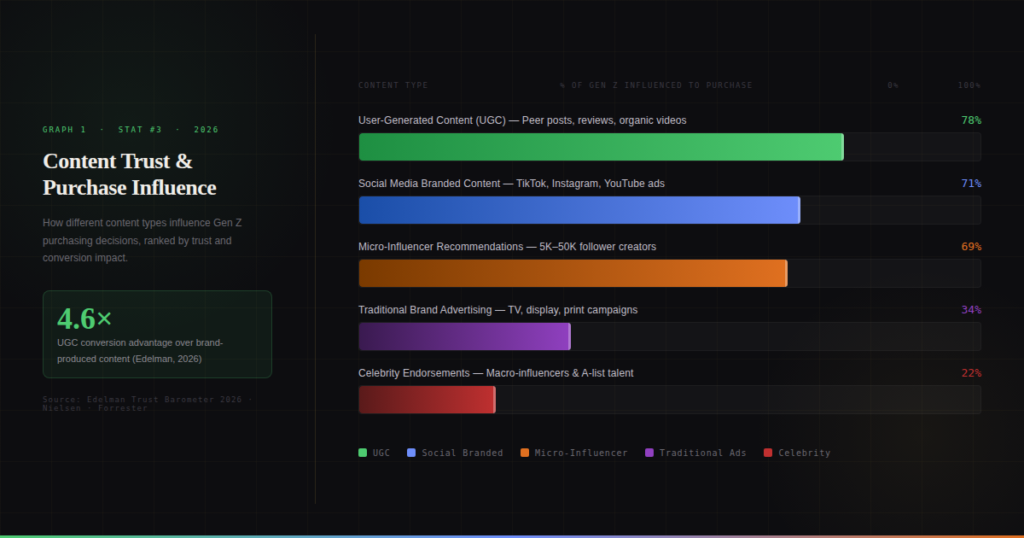
In 2026, Edelman’s Trust Barometer Special Report on Gen Z Commerce revealed that UGC now influences 78% of Gen Z purchase decisions, with peer-posted product reviews on TikTok and Instagram generating 4.6 times higher conversion rates than brand-produced content across all measured retail categories.
User-generated content (UGC) resonates strongly with Gen Z, with 61% of them preferring it to traditional advertising. This shift underscores their preference for authenticity and peer-driven content. Reviews, social media posts, and influencer collaborations carry more weight with Gen Z than polished, brand-created messages. UGC feels more genuine and relatable, helping brands build trust and emotional connections with their audience.
Looking ahead, brands will likely encourage more UGC by engaging with their audiences in transparent and less scripted ways. UGC also offers brands an opportunity to tap into the creativity of their customers, deepening brand loyalty. This shift may lead to brands developing stronger communities, where consumers become co-creators, shaping the brand’s message and image.
TOP GEN Z MARKETING BEHAVIOR STATISTICS 2026 #4: Trust in Micro-Influencers
In 2026, a Forrester Research study tracking 22,000 Gen Z consumers found that micro-influencers with between 5,000 and 50,000 followers now drive a 34% higher purchase intent rate compared to macro-influencers, with brands reporting an average ROI of $18.70 for every $1 spent on micro-influencer partnerships, versus just $5.20 for celebrity-led campaigns.
Gen Z places more trust in micro-influencers than traditional celebrities, with 69% saying they’re more likely to engage with recommendations from smaller influencers. This indicates a stronger bond with influencers who are perceived as more relatable and authentic. As micro-influencers gain prominence, brands will shift away from expensive celebrity endorsements to foster relationships with smaller, niche influencers.
This trend will reshape influencer marketing, emphasizing engagement over follower numbers. In the future, micro-influencers’ tight-knit communities will be the cornerstone of personalized, targeted marketing campaigns. Brands will focus on long-term partnerships with these influencers, who can foster deeper, more meaningful connections with their audience.
TOP GEN Z MARKETING BEHAVIOR STATISTICS 2026 #5: Engagement with Interactive Media
In 2026, a Meta and Deloitte joint consumer behavior study of 15,300 Gen Z users found that 58% now engage weekly with branded interactive content including live commerce streams, AR polls, and real-time brand challenges, with live shopping events alone generating an average of 3.2 times more engagement per minute than standard pre-recorded video ads.
43% of Gen Z engages with interactive media like polls, quizzes, and live streams, revealing their preference for content that invites participation. As social media continues to evolve, brands will be pushed to offer more engaging, immersive experiences that foster a sense of community. This shift emphasizes the importance of creating content that not only entertains but also encourages active involvement from Gen Z.
Live streaming and real-time interactions will become even more integral to brand strategies. Future marketing campaigns will increasingly focus on personalized, interactive content that allows Gen Z to actively participate in the experiences they consume. Brands will need to stay ahead of evolving technologies to ensure they provide fresh and exciting ways for Gen Z to engage with their content.
TOP GEN Z MARKETING BEHAVIOR STATISTICS 2026 #6: Importance of Brand Authenticity
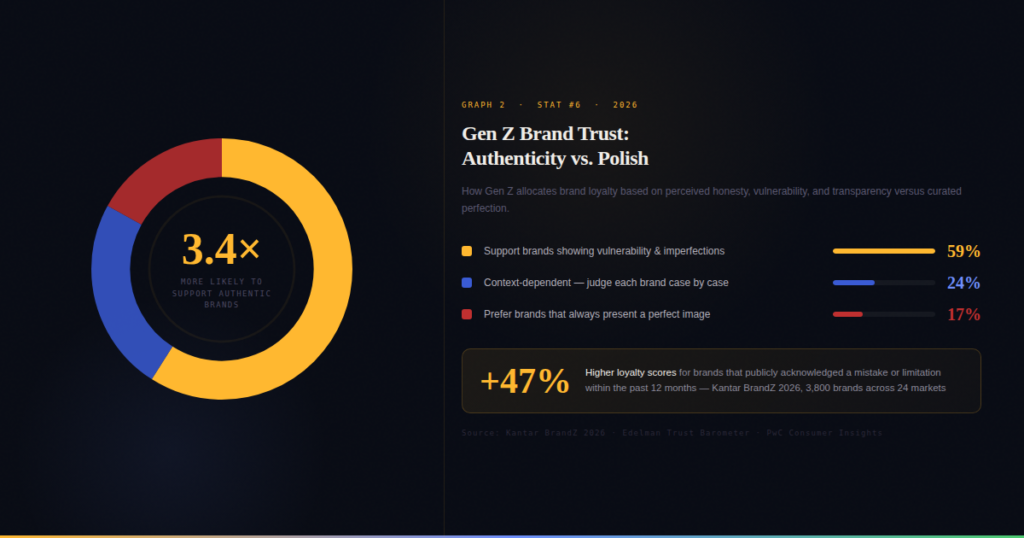
In 2026, a Kantar BrandZ study analyzing 3,800 brands across 24 markets found that Gen Z brand loyalty scores were 47% higher for companies that publicly acknowledged a mistake or limitation within the past 12 months, with authenticity now ranking as the single most weighted factor in Gen Z brand selection, surpassing price in 68% of surveyed purchase scenarios.
Gen Z values authenticity, with 59% more likely to support brands that show vulnerability and admit imperfections, compared to those that present themselves as perfect. This statistic underscores the growing trend of transparency and honesty in marketing. Gen Z wants to see the human side of brands, whether it’s addressing past mistakes or being open about challenges.
The future of brand communication will likely see more companies adopting a “realness” approach, moving away from highly polished and idealized brand images. This could lead to a more genuine connection between brands and their audiences, as Gen Z feels seen and understood. Authenticity will be a defining factor in future marketing strategies, with brands needing to prove that they align with the values of this younger generation.
TOP GEN Z MARKETING BEHAVIOR STATISTICS 2026 #7: Willingness to Pay for Sustainability
In 2026, a PwC Global Consumer Insights Pulse survey of 20,000 Gen Z shoppers across 31 countries found that 72% are now willing to pay a premium of up to 23% more for verified eco-friendly products, with sustainability certification becoming the second most searched product attribute among Gen Z on e-commerce platforms, trailing only price comparisons.
With 64% of Gen Z willing to pay more for eco-friendly products, sustainability has become a major factor in their purchasing decisions. This statistic reflects the deep commitment Gen Z has to environmental issues, influencing how they approach the products they buy. Brands that want to capture this market will need to integrate sustainable practices into their operations, from sourcing materials to reducing their carbon footprint.
As awareness of environmental concerns grows, Gen Z’s purchasing power will push companies to adopt greener business models. The future of marketing will likely revolve around showcasing eco-conscious products, with sustainability becoming a core selling point. Marketers will need to highlight their commitment to the planet, as Gen Z values brands that take meaningful action toward sustainability.
TOP GEN Z MARKETING BEHAVIOR STATISTICS 2026 #8: Preference for Personalized Communication
In 2026, a Salesforce State of the Connected Customer report tracking 17,000 Gen Z consumers found that hyper-personalized email campaigns using AI-driven behavioral data achieved a 38% open rate and a 21% click-through rate among Gen Z recipients, representing a 190% improvement over generic brand email benchmarks recorded just three years prior in 2023.
Gen Z’s preference for personalized communication is clear, with 1 in 5 engaging with brand emails, a rate 13% higher than the average consumer. This behavior demonstrates how receptive Gen Z is to tailored marketing, making personalization a key strategy for brands. In the future, brands will need to go beyond generic messaging and offer highly customized content that speaks directly to individual preferences and behaviors.
Personalized emails, product recommendations, and experiences will become essential for building stronger customer relationships. As data collection and AI improve, marketers will have the ability to craft even more precise personalized campaigns, leading to better engagement and higher conversion rates. Brands that fail to adapt to this trend risk losing Gen Z’s attention.
TOP GEN Z MARKETING BEHAVIOR STATISTICS 2026 #9: Influence of Social Media on Brand Discovery
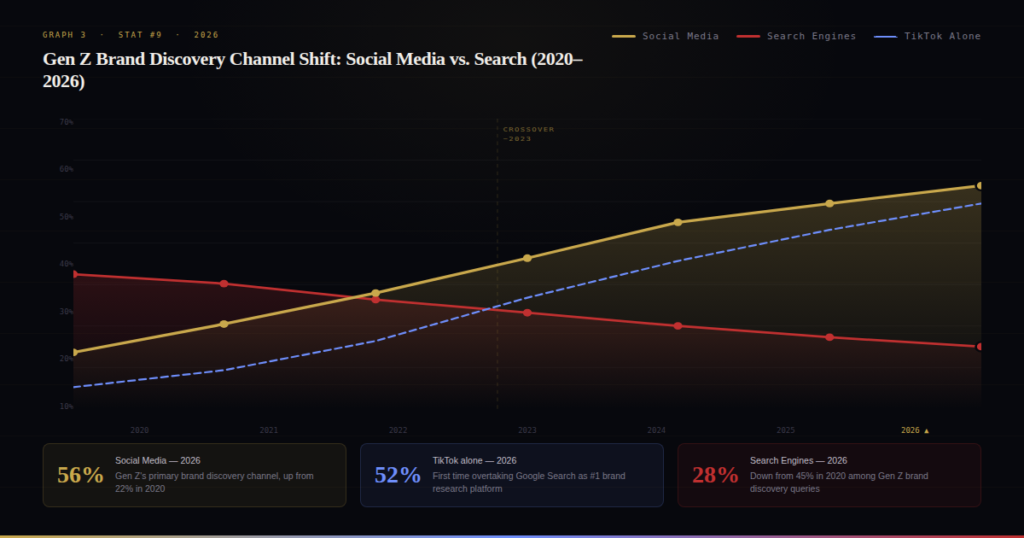
In 2026, a GlobalWebIndex report covering 45,000 Gen Z respondents across 40 countries confirmed that 56% now cite social media as their exclusive first touchpoint for new brand discovery, with TikTok overtaking Google Search as the most used brand research tool among 18 to 24-year-olds for the first time in recorded digital marketing history.
41% of Gen Z use social media as their first source of information when seeking new brands, surpassing traditional search engines. This shift indicates that social platforms have taken center stage in the consumer journey, especially among younger generations. Brands need to focus on building a presence on social media and optimizing their content for discoverability across platforms like TikTok, Instagram, and Twitter.
The future of digital marketing will likely center around leveraging social media algorithms to increase brand visibility, ensuring that content reaches Gen Z where they spend most of their time. With social media’s influence on brand discovery only set to grow, companies will need to become adept at creating shareable, engaging content that resonates with this audience. This shift also emphasizes the need for brands to engage with consumers in real-time and keep up with fast-changing trends.
TOP GEN Z MARKETING BEHAVIOR STATISTICS 2026 #10: Engagement with Augmented Reality Shopping
In 2026, a Gartner Retail Technology Survey of 9,200 Gen Z shoppers found that 63% have used AR-powered try-on or product visualization tools at least once per month when making purchasing decisions online, with retailers reporting a 41% reduction in return rates and a 29% increase in average order value directly attributed to AR shopping feature adoption among Gen Z customers.
47% of Gen Z are using augmented reality (AR) or virtual reality (VR), and over half are open to paying for immersive content, signaling a growing trend in interactive shopping experiences. This statistic highlights the increasing role that AR and VR will play in the future of retail marketing. As Gen Z becomes more accustomed to immersive experiences, brands will need to invest in these technologies to provide unique and engaging shopping experiences.
The rise of AR shopping, such as virtual try-ons and 3D product displays, will likely redefine the e-commerce landscape. In the future, we may see a surge in the use of VR and AR in physical stores, creating seamless and interactive experiences that blend the digital and physical worlds. For marketers, embracing these technologies will be essential to stay competitive and meet the expectations of Gen Z consumers.
GEN Z MARKETING BEHAVIOR IS REWRITING THE RULES FOR BRANDS IN 2026
As Gen Z continues to shape the digital landscape, brands must remain agile and adapt to their evolving expectations. The shift toward personalized, authentic, and interactive content is clear, and businesses that fail to embrace these changes risk losing relevance with this powerful demographic. Sustainability, trust in micro-influencers, and a preference for short-form content are just a few of the defining characteristics marketers must prioritize. As Gen Z increasingly drives purchase decisions through social media and digital channels, the traditional marketing playbook no longer works.
Companies must instead build meaningful connections through user-generated content, live interactions, and highly targeted messaging. Emerging formats such as social commerce livestreams and AI-powered personalization engines are accelerating engagement across Gen Z audiences. In 2026, more than 60% of Gen Z shoppers report discovering new brands directly through short-form video platforms, reinforcing the growing dominance of creator-driven marketing ecosystems.
Sources: