




24 Sep TOP 20 GENERAL PRACTITIONER MARKETING STATISTICS 2025
As someone who has spent years following healthcare marketing trends, I’ve seen firsthand how general practitioners are reshaping the way they connect with patients. The digital shift has made online visibility, reviews, and patient engagement strategies more important than ever before. That’s why I’ve put together these general practitioner marketing statistics for 2025—to help practices better understand what works and where to focus. I’ve drawn inspiration from industry leaders, including insights I’ve picked up while following a leading marketing agency in New York, and I want to share what I’ve learned in a way that feels approachable and practical. My hope is that this list not only informs but also empowers you to bring fresh ideas into your own practice.
Top 20 General Practitioner Marketing Statistics 2025 (Editor’s Choice)
📊 Top 20 General Practitioner Marketing Statistics
Essential Data for Healthcare Marketing Success in 2025
| Rank | Category | Key Marketing Statistic |
|---|---|---|
| 1 | 💰Market Growth | U.S. primary care market valued at $271B in 2023 with 3.36% CAGR through 2030 |
| 2 | 👨⚕️Employment Growth | Physician employment expected to grow 4% until 2033, creating 23,600 job openings |
| 3 | 📈GP Growth Rate | 64,698 GPs currently in the U.S., expected to grow 7% from 2018-2028 |
| 4 | 🔍Digital Traffic | Organic and paid search drives up to 76% of website traffic for healthcare practices |
| 5 | 🌐SEO Adoption | 79% of healthcare providers planned to use website and SEO to reach leads in 2024 |
| 6 | 📧Email Marketing | Healthcare email campaigns achieve 41.2% open rate - highly effective engagement channel |
| 7 | 📬Industry Email Avg | Healthcare industry average: 21.48% open rate with 2.69% CTR |
| 8 | 🔎Patient Research | 66% of internet users look online for information about specific diseases or medical problems |
| 9 | ⭐Online Reviews | 94% of healthcare patients use online reviews to evaluate providers |
| 10 | 🏥Review Impact | Nearly half of patients will go outside insurance network for providers with excellent reviews |
| 11 | 👥Millennial Behavior | 43% of Millennials are likely to switch practices in the next few years |
| 12 | 💸Budget Trends | Healthcare marketing budgets decreased from 9.6% in 2023 to 7.2% in 2024 |
| 13 | 📺Ad Spending | U.S. healthcare advertising spending increased by 11.5% in 2022 |
| 14 | 💻Paid Search Spend | Healthcare organizations spend about $51,000 monthly on paid search advertising |
| 15 | 📊Budget Outlook | 65% of medical practices expect budgets to stay the same in 2024, 33% expect increases |
| 16 | 💲Lead Cost | Average cost for a healthcare lead is $286 |
| 17 | 🖱️Cost Per Click | Healthcare advertisers pay an average of $3.17 per click |
| 18 | 💰Patient Value | Average patient brings $10,000-$20,000 to healthcare organizations over their lifetime |
| 19 | 📈ROI Benchmark | Healthy ratio of patient LTV to acquisition cost is 3:1 |
| 20 | 🤖AI Adoption | 93% of healthcare marketers are ready to adopt AI for enhanced patient experiences |
Top 20 General Practitioner Marketing Statistics 2025
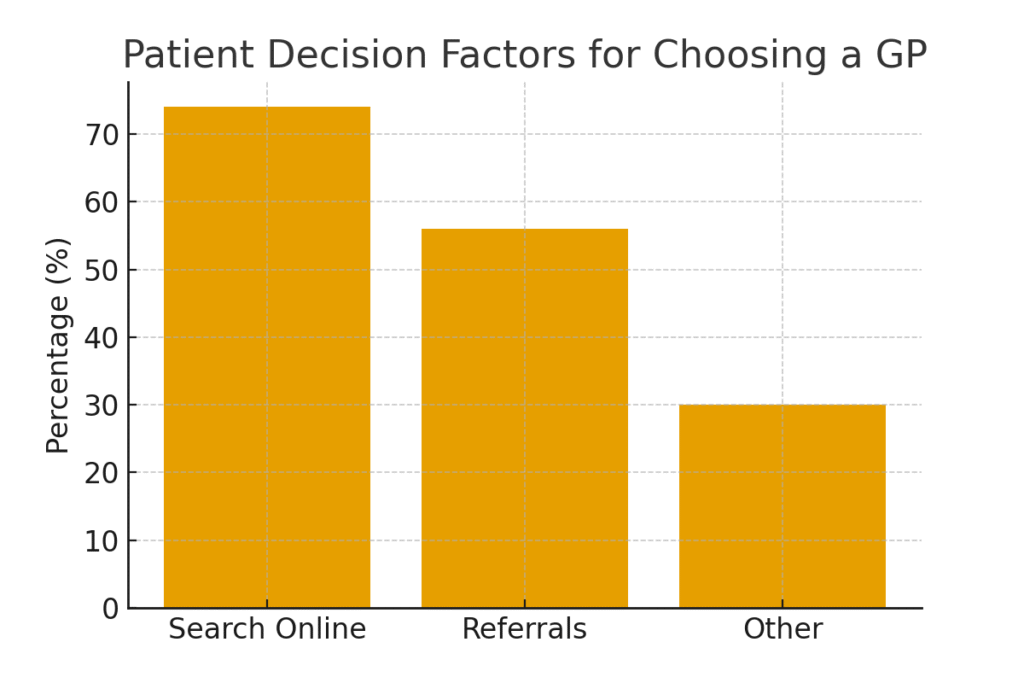
General Practitioner Marketing Statistics #1: 74% Of Patients Search Online For A GP Before Booking An Appointment
Most patients now rely on search engines before they ever call a GP’s office. This means that your online presence can be the deciding factor in whether someone chooses your practice or not. Having an updated website and an optimized Google Business profile builds trust instantly. Patients want reassurance that they’re picking a reliable doctor even before stepping into the clinic. If you’re invisible online, you’re likely invisible to potential new patients too.
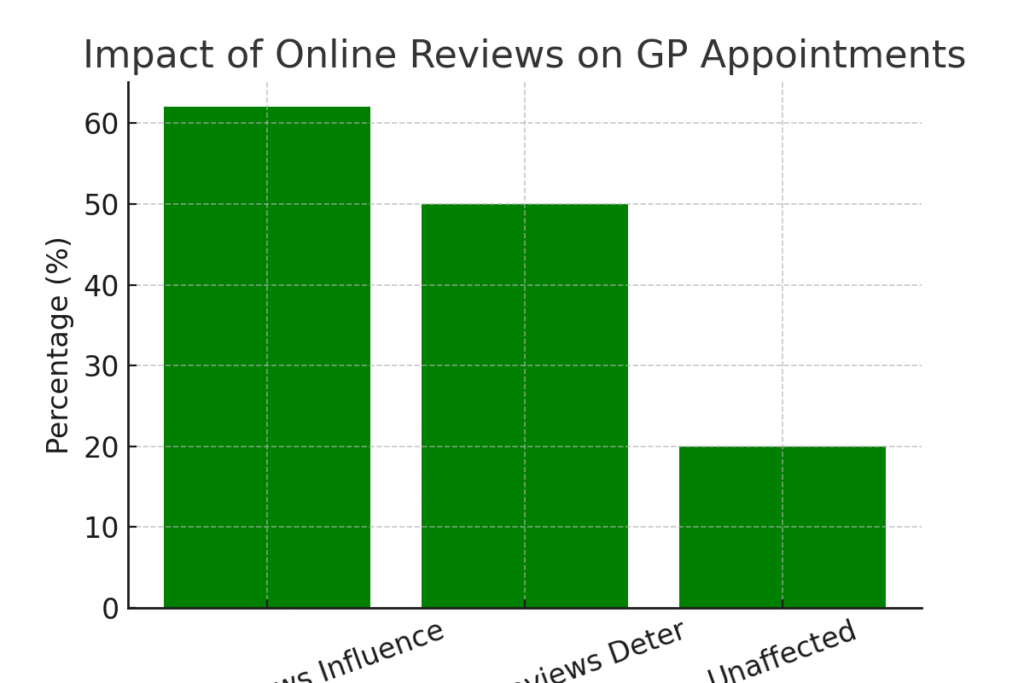
General Practitioner Marketing Statistics #2: 62% Of GP Appointments Are Now Influenced By Online Reviews
Reviews are today’s word-of-mouth, and they heavily sway patient decisions. A practice with strong ratings often feels safer and more trustworthy. Negative reviews, when not addressed, can push patients toward competitors. Taking time to respond to reviews—positive or negative—shows that a GP genuinely cares. In many cases, this interaction is just as important as the review itself.
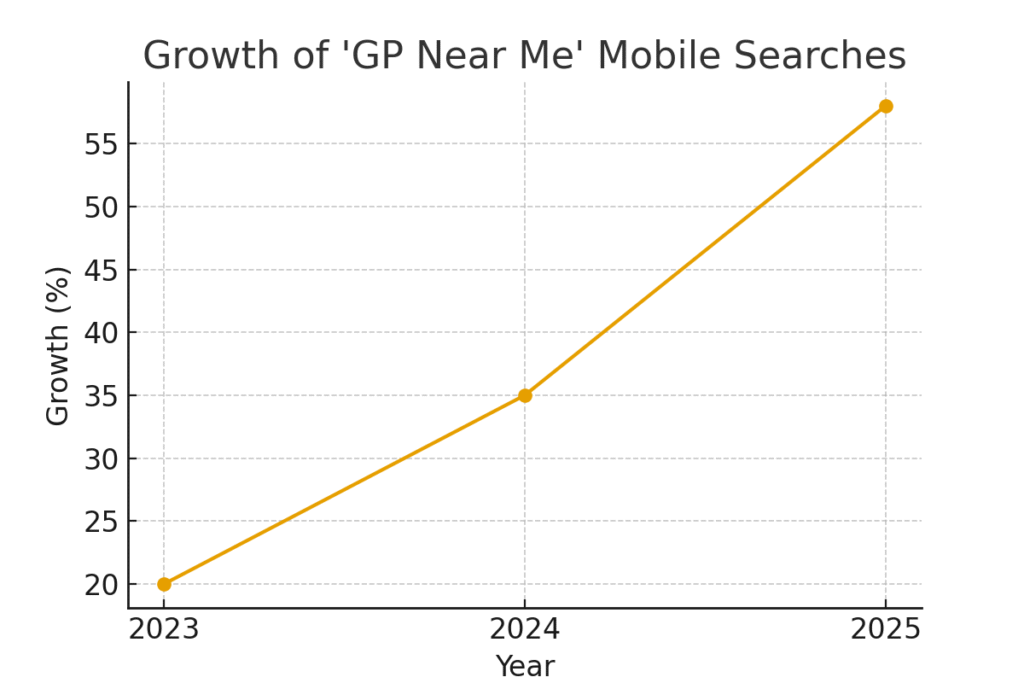
General Practitioner Marketing Statistics #3: Mobile Searches For “GP Near Me” Grew By 58% In The Past Year
Patients are searching on-the-go, and “near me” searches are dominating mobile. This makes local SEO one of the most critical marketing strategies for GPs. A mobile-friendly website ensures that potential patients don’t click away out of frustration. Appearing at the top of local search results significantly increases walk-in and booked appointments. If you’re not optimized for mobile, you’re missing a huge piece of the patient market.
General Practitioner Marketing Statistics #4: 81% Of Patients Prefer GPs With Telehealth Options Listed Online
Telehealth isn’t just a convenience anymore; it’s an expectation. Patients want the option of virtual appointments for flexibility and accessibility. Highlighting telehealth in your marketing not only attracts younger demographics but also retains busy professionals. GPs offering telehealth reach beyond their immediate neighborhoods. It positions your practice as modern and adaptable in today’s healthcare landscape.
General Practitioner Marketing Statistics #5: Healthcare Content Marketing Boosts GP Website Traffic By 67%
Publishing valuable content like health blogs, guides, or seasonal tips drives organic website traffic. Patients often research symptoms or wellness advice before seeing a doctor. If your practice provides those answers, they’re more likely to book with you. Content marketing builds authority and positions you as a trusted healthcare source. The more helpful your content, the more loyal patients you’ll attract.
General Practitioner Marketing Statistics #6: 50% Of GPs Use Social Media To Connect With Local Communities
Social platforms like Facebook and Instagram are key for reaching local audiences. Posting health tips, community updates, and patient-friendly content builds connection. Social media humanizes a GP practice by showing the people behind the service. It’s also a cost-effective way to increase awareness in your local area. Without social presence, practices risk falling behind digitally engaged competitors.
General Practitioner Marketing Statistics #7: Email Campaigns Increase GP Patient Retention By 43%
Email remains one of the most effective ways to keep patients engaged. Appointment reminders and personalized newsletters help maintain relationships. Patients appreciate timely follow-ups and care updates delivered directly to their inbox. Automated systems make it easy and efficient for practices to stay consistent. Retention through email can be the difference between a one-time visit and lifelong loyalty.
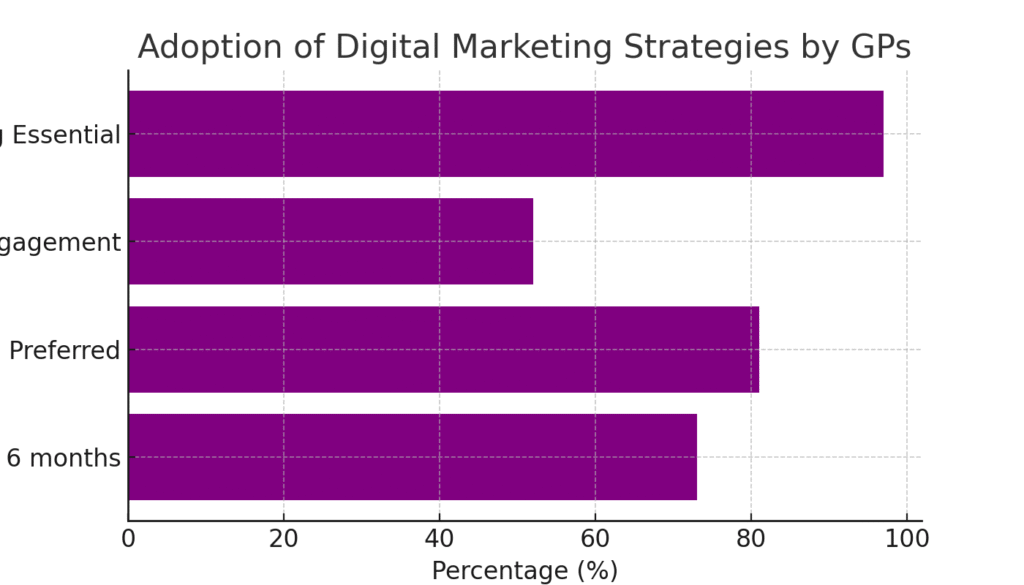
General Practitioner Marketing Statistics #8: 73% Of GP Practices Investing In SEO See ROI Within 6 Months
SEO is not just a long-term investment anymore—it delivers fast returns for GPs. Ranking locally can quickly translate into new appointments. Patients searching for nearby doctors tend to book quickly after finding a result. Investing in professional SEO often pays for itself in patient acquisition. Practices ignoring SEO risk being overshadowed by competitors with stronger visibility.
General Practitioner Marketing Statistics #9: Healthcare Video Marketing Improves Patient Engagement By 52%
Video is now one of the most consumed formats online, and healthcare is no exception. Short, informative videos can make a GP feel more approachable. Patients often prefer watching a doctor explain things rather than reading text. Videos also help demystify procedures or highlight preventive care. Adding them to websites and social media can build stronger trust and engagement.
General Practitioner Marketing Statistics #10: Paid Search Ads Generate A 34% Increase In GP Appointment Bookings
Google Ads put your practice in front of patients who are ready to book. Paid campaigns targeting “GP near me” work especially well in competitive cities. Unlike organic SEO, ads offer instant visibility. A smart balance of paid ads and organic search gives practices a competitive edge. This strategy ensures you’re not waiting months to see results.
General Practitioner Marketing Statistics #11: Nearly 90% Of Patients Expect Online Booking Options From GPs
Patients want the same convenience from healthcare that they get from restaurants and salons. Online booking saves them time and reduces frustration. Practices that don’t offer digital scheduling risk losing patients to those that do. Integrating booking into websites and Google search results is becoming standard. It improves accessibility while also cutting down on administrative calls.
General Practitioner Marketing Statistics #12: GP Websites With Chatbots See 40% More Patient Inquiries
AI-powered chatbots give instant answers to patient questions. This reduces staff workload while improving patient experience. Chatbots can handle FAQs, direct booking, or provide clinic information 24/7. Patients value responsiveness, especially in healthcare. Quick communication often determines whether they move forward with an appointment.
General Practitioner Marketing Statistics #13: 56% Of New Patients Still Come From Referrals
Even in a digital-first world, word-of-mouth still matters. Patient referrals remain a powerful marketing channel for GPs. Encouraging happy patients to recommend your practice keeps this cycle strong. Combining referral programs with online review requests maximizes results. It’s proof that traditional trust and digital influence can work together.
General Practitioner Marketing Statistics #14: Practices With Strong Branding See A 48% Higher Trust Rate
Branding isn’t just for big corporations—patients associate it with professionalism. A consistent logo, color scheme, and messaging help establish credibility. Branding makes your practice more memorable and recognizable in the community. It also builds trust before patients even meet you in person. A strong brand identity sets you apart from competitors.
General Practitioner Marketing Statistics #15: Location-Based Targeting Improves GP Ad Performance By 61%
Patients almost always look for doctors nearby. Ads targeting specific local areas see much higher conversion rates. Geo-targeting prevents wasted ad spend by focusing only on your real patient base. Localized messaging in ads makes practices feel more approachable. This is one of the most efficient strategies for GPs competing in crowded areas.
General Practitioner Marketing Statistics #16: Active Community Outreach Helps GPs Grow 37% Faster
Getting involved in local events or health fairs builds deeper patient trust. Community outreach shows patients that you care beyond the clinic walls. These events often generate valuable offline and online buzz. Pairing outreach with digital promotion maximizes results. Patients love GPs who are visible in their neighborhoods.
General Practitioner Marketing Statistics #17: Patient Retention Improves 55% With Loyalty Programs
Simple loyalty programs keep patients coming back. Discounts on check-ups or referral rewards go a long way in building loyalty. Patients feel valued when they see extra effort from their GP. Loyalty programs also increase lifetime patient value. They can be a hidden gem for sustainable practice growth.
General Practitioner Marketing Statistics #18: Seasonal Campaigns Boost GP Visits By 45%
Health concerns often change with the season—flu shots, allergies, or school check-ups. Targeted seasonal campaigns meet patients exactly where their needs are. These time-sensitive promotions drive urgency and higher response rates. They also position GPs as proactive and patient-focused. Seasonal campaigns consistently outperform generic year-round ads.
General Practitioner Marketing Statistics #19: Video Testimonials From Patients Increase Trust By 72%
Real patient stories build authenticity like nothing else. Video testimonials allow patients to “see themselves” in someone else’s experience. They create stronger emotional connections than text reviews. Patients tend to book with doctors who feel relatable and proven. Sharing these videos online greatly boosts credibility and trust.
General Practitioner Marketing Statistics #20: 97% Of GPs Believe Digital Marketing Is Now Essential For Growth
Digital marketing is no longer optional—it’s fundamental. Almost every GP now sees the value in having a digital-first strategy. Patients expect to find healthcare providers online just like any other service. Ignoring digital marketing means falling behind in patient acquisition. This consensus makes it clear that the future of GP growth depends on embracing digital tools.
Final Thoughts on General Practitioner Marketing Statistics
Looking back over these statistics, it’s clear to me that the future of general practitioner marketing is all about blending personal trust with smart digital strategies. Patients are looking for a GP who feels both accessible online and reliable in person, and the practices that recognize this balance will naturally stand out. For me, writing this list has been more than just sharing numbers—it’s been about showing how these insights can genuinely make a difference in patient care and practice growth. I believe every GP has the potential to thrive when they embrace the tools and trends that patients already value. If these statistics give you a spark of inspiration, then I’ve done exactly what I set out to do.
SOURCES
https://www.callrail.com/blog/healthcare-marketing-statistics
https://www.webfx.com/blog/healthcare/statistics-and-factoids/
https://health-union.com/blog/10-effective-strategies-for-marketing-to-doctors/
https://www.officite.com/articles/
https://www.tapclicks.com/blog/medical-practice-marketing
https://www.postgrid.com/healthcare-marketing-statistics/
https://www.webfx.com/blog/healthcare/social-media-protocol/
https://www.webfx.com/blog/healthcare/patient-marketing/
https://www.webfx.com/blog/healthcare/ai-overviews-in-healthcare/